China's Xiong'an New Area, about 100 kilometers from Beijing, has been fostering a thriving hub of sci-tech innovation since its establishment was announced in 2017.
Xiong'an is designed to absorb functions not essential to Beijing's role as the nation's capital and aims to become a significant part of the Beijing-Tianjin-Hebei region.
The country has also vowed to build Xiong'an, dubbed the "city of the future," into an innovative, green, smart and world-class city with blue skies, fresh air and clean water, in line with the country's high-quality development path.
Over the past few years, this strategic vision is gradually turning into reality.
Since the beginning of 2023, the area has attracted 104 secondary and tertiary subsidiaries of centrally-administered state-owned enterprises (SOEs), along with over 300 branch offices set up by central SOEs.
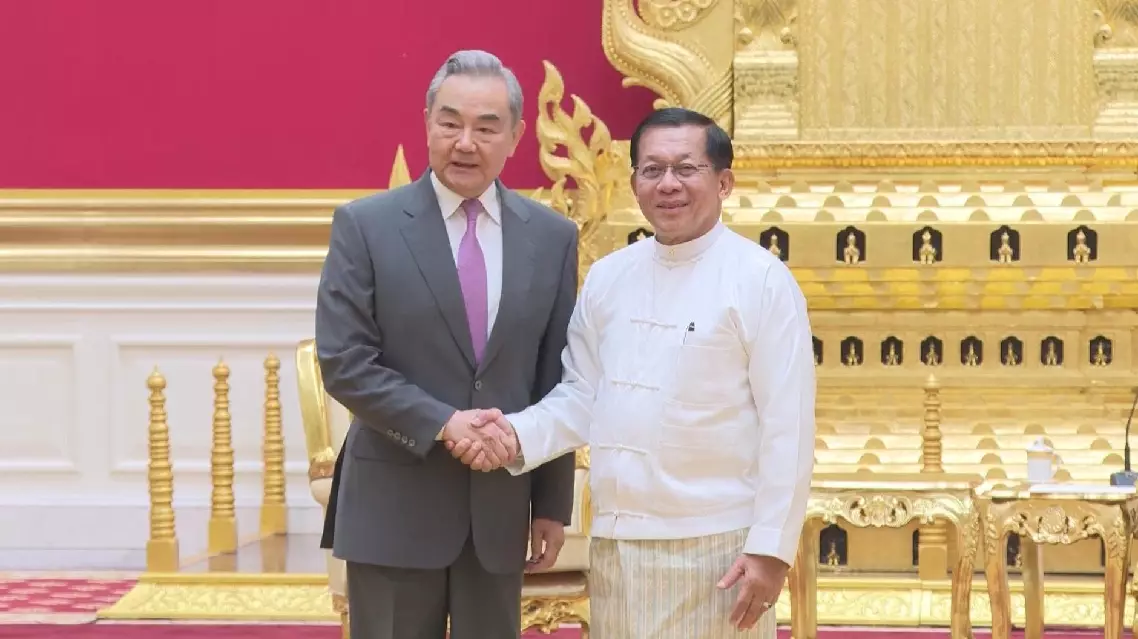
Last October, China Satellite Network Group officially opened its headquarters in Xiong'an, becoming the first central SOE headquarters to fully relocate to the new area. Four of its subsidiaries followed suit, and a new branch was launched specifically to support the new area's development.
"China Satellite Network Digital Technology is a joint venture of China Satellite Network Group and Xiong'an New Area. It has made many pioneering attempts in many areas like aerospace information data and the application of artificial intelligence," said Liu Peng, director of new branch's application business department.
Meanwhile, the headquarters buildings for Sinochem Holdings and China Huaneng Group are nearing completion. Construction on the headquarters for China Minmetals Corporation is in full swing.
The new area is also rapidly becoming a hub for innovation and entrepreneurship. It already boasts two national-level science and technology innovation institutions: the Xiongan Aerospace Laboratory and the Beijing-Tianjin-Hebei National Technology Innovation Center's Xiongan Center.
Over 1,000 sci-tech companies and institutions, including those specializing in niche sectors, have been drawn to Xiong'an.
This significant progress is fueled by the new area's unique resources and innovative environment, which provide a broad stage for sci-tech talents. At present, 17 academician-led projects have been established in the area.
One of them is a company led by Chinese Academy of Engineering academician Wang Huaming.
"Our research focuses on a transformative materials technology and its manufacturing process, which doesn't require traditional heavy industrial equipment. We mainly use additive manufacturing to produce high-performance, difficult-to-process, and critical components for major equipment. I think we are one step ahead of others globally," said Wang.
Xinlianxin Technology was the first company to move into the Xiong'an Science and Technology Innovation Center's pilot base. It is collaborating with the Xiongan Aerospace Information Research Institute on projects involving 5G and BeiDou.
"Our current product and technology development is geared towards emerging industries. As Xiong'an prioritizes these industries, more and more companies will gather here, leading to increased collaboration between upstream and downstream enterprises," said founder Chen Wei.
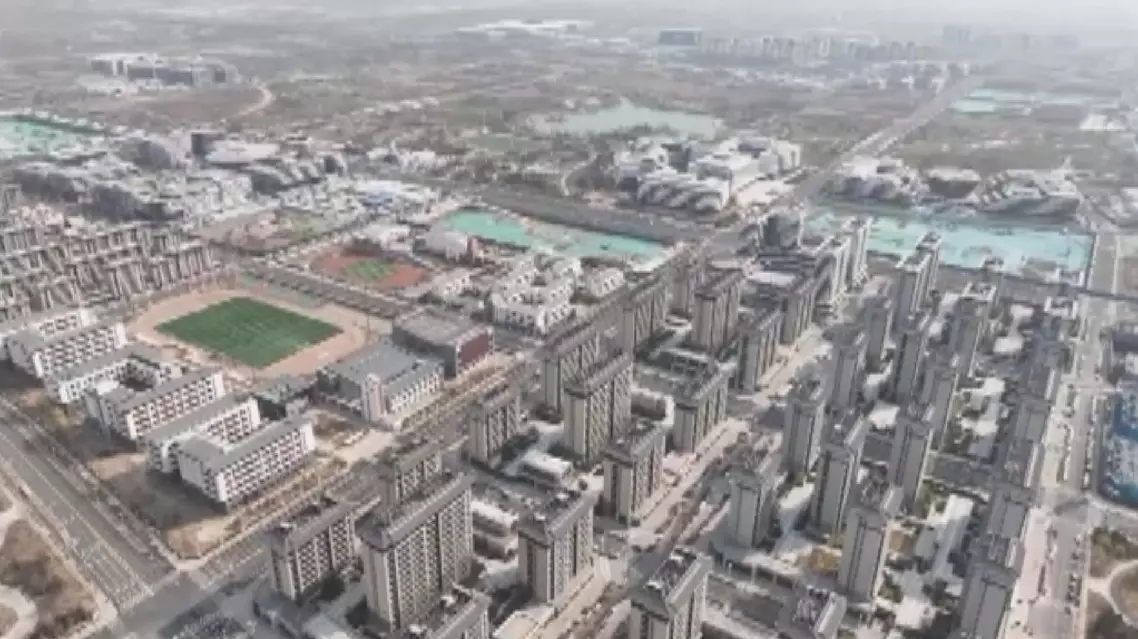
Xiong'an New Area attracts more central SOEs, fosters thriving hub of sci-tech innovation