SAN JOSE, Calif. & TEMPE, Ariz.--(BUSINESS WIRE)--Apr 1, 2025--
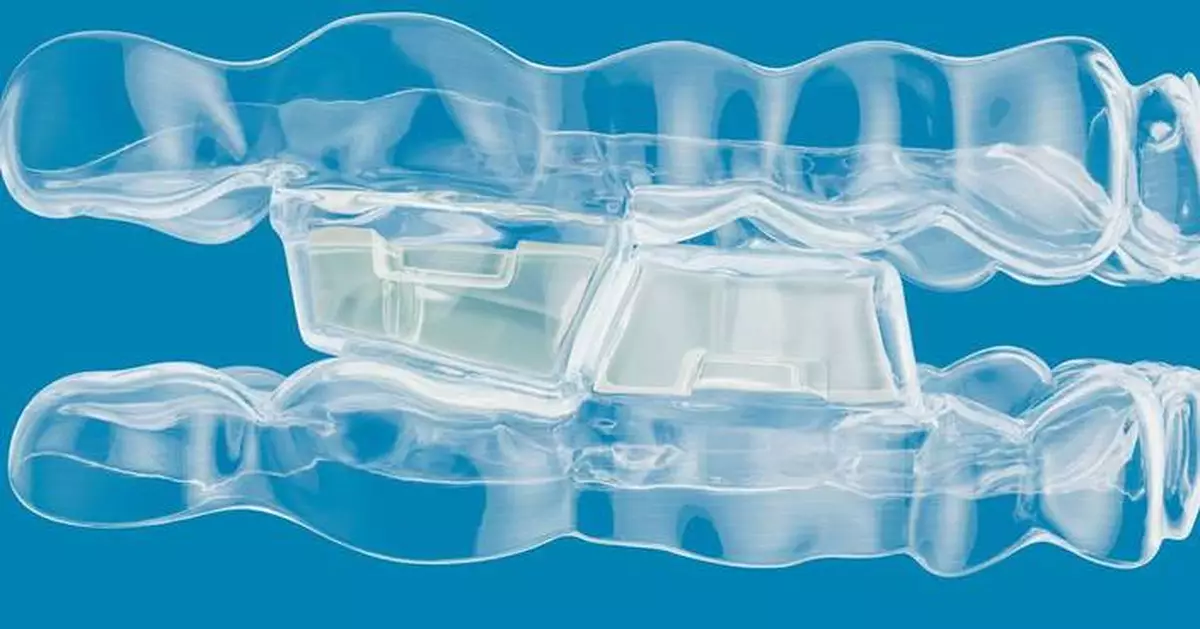
Align Technology, Inc. (Nasdaq: ALGN), a leading global medical device company that designs, manufactures, and sells the Invisalign® System of clear aligners, iTero™ intraoral scanners, and exocad™ CAD/CAM software for digital orthodontics and restorative dentistry, today announced commercial availability of the Invisalign System with mandibular advancement featuring occlusal blocks designed specifically to address Class II skeletal and dental correction by simultaneously advancing the mandible while aligning the teeth. This innovative solution is Align’s first clear aligner product with integrated solid occlusal blocks that delivers predictable mandibular advancement. Invisalign occlusal blocks provide durability, improve engagement, and enable vertical opening to offer earlier advancement of the mandible in cases like Class II deep bite to improve treatment efficiency.
This press release features multimedia. View the full release here: https://www.businesswire.com/news/home/20250401849577/en/
The Invisalign System with mandibular advancement featuring occlusal blocks is the latest clinical innovation that expands Align’s Class II treatment portfolio for growing patients by offering practitioners a comprehensive solution for treating growing patients with Class II malocclusions caused by mandibular retrusion. Class II malocclusion is one of the most common orthodontic problems, characterized by a discrepancy in jaw alignment where the lower jaw (mandible) is positioned too far back relative to the upper jaw (maxilla) and represents approximately 30-45% of malocclusions globally. This condition can lead to functional, aesthetic, and other challenges for patients if left untreated.
The Invisalign System with mandibular advancement featuring occlusal blocks is primarily intended for growing patients in the late mixed or early permanent dentition stages (ages 10-16), who are still experiencing growth. By leveraging the natural growth potential during pre-adolescence and adolescence, the Invisalign System with mandibular advancement featuring occlusal blocks facilitates effective correction of Class II malocclusions, helping to improve occlusal relationships, enhance facial aesthetics, and provide long-term functional benefits, including:
“The Invisalign System with mandibular advancement featuring occlusal blocks reflects Align’s continued commitment to expanding the capabilities of the Invisalign System, enabling doctors to treat a wider range of malocclusions with precision and efficiency, and helps to continue to advance clear aligners as the standard of care in digital orthodontics,” said Sreelakshmi Kolli, Align Technology EVP, chief product and digital officer. “This latest innovation demonstrates our significant investment in delivering digital orthodontic solutions to growing patients that empower doctors to achieve predictable outcomes while enhancing the patient experience.”
“The Invisalign System with mandibular advancement featuring occlusal blocks represents a breakthrough in Class II treatment with clear aligners by allowing doctors to simultaneously address dental and skeletal discrepancies in a more predictable and efficient manner,” said Dr. Mitra Derakhshan, Align Technology EVP and chief clinical officer, Global Treatment Planning and Clinical Services. “The integration of occlusal blocks enhances mandibular engagement as well as provides bite opening, making this a versatile solution for different Class II malocclusions, including deep bite or div 2. The Invisalign System with mandibular advancement featuring occlusal blocks gives doctors and patients a better option for Class II correction in growing patients while simultaneously straightening their teeth, including more options for feature placement, such as attachments on teeth underneath the blocks (3).”
“Treatment outcomes with the Invisalign System with mandibular advancement featuring occlusal blocks are on par with traditional Clark Twin Blocks,” said Dr. Ronald Sluiter, an orthodontist practicing in New Zealand who has treated 50 patients to date. “In addition, the enhanced comfort of the Invisalign occlusal blocks increases predictability-- because comfort leads to patient compliance–and compliance leads to better outcomes.”
“Class II correction in growing patients is smooth sailing with the Invisalign System with mandibular advancement featuring occlusal blocks,” said Dr. Steve Semaan, an orthodontist practicing in Australia. “The patients instinctively know how to bite, and it works, so I don’t see any crushed blocks. The fact that we see no crushing issues means patients can keep moving through treatment without any delays or additional appointments.”
“I’m very happy with the new Invisalign System with mandibular advancement featuring occlusal blocks design,” said Dr. Belinda Weltman, Vancouver, BC. “Patients can bite down easily without risk of damaging or distorting the blocks, and the mandibular advanced position is easy to maintain. My young patients have found it very easy to transition to this appliance with minimal discomfort, and compliance has been a breeze."
“The Invisalign System with mandibular advancement featuring occlusal blocks provides the ideal block engagement that helps hold the mandible in the proper position for patients that also have mandibular asymmetry. This allows for more efficient corrections when desired,” said Dr. Francis Janisse, Windsor, Ontario. “Invisalign occlusal blocks remove the need for auxiliary elastics, which removes one more obstacle for patients. In addition, the trays do not require palatal coverage like traditional removable Class ll correctors, and there are no changes in the insertion and removal process of the aligners. My younger patients love the ability to remove the aligners for eating, which is not commonly an option for patients that require fixed Class ll correctors or elastics.”
Availability and Ordering Information
Invisalign System with mandibular advancement featuring occlusal blocks is now commercially available to Invisalign-trained doctors in Australia and New Zealand, is available on a limited market release in North America, and most EMEA countries, and is expected to be introduced in additional markets throughout 2025. Along with the Invisalign® Palatal Expander System, Invisalign First™ and Invisalign System with mandibular advancement featuring enhanced precision wings, this latest innovation supports the commitment to establishing a unique and differentiated portfolio that supports growing patients throughout their continuum of care.
For more information about the Invisalign System with mandibular advancement featuring occlusal blocks, or to schedule a training session, please visit www.invisalign.com or contact your local Align Technology representative.
1. Compared to Invisalign aligners previously made from single-layer (EX30) material.
2. Studies show that patient discomfort with functional appliances affect patient compliance with the prescribed wear time and could lead to unsatisfactory outcomes. https://pubmed.ncbi.nlm.nih.gov/34949565/
3. In some cases, attachments may be removed on teeth under occlusal blocks due to interferences with other features.
About Align Technology, Inc.
Align Technology designs and manufactures the Invisalign® System, the most advanced clear aligner system in the world, iTero™ intraoral scanners and services, and exocad™ CAD/CAM software. These technology building blocks enable enhanced digital orthodontic and restorative workflows to improve patient outcomes and practice efficiencies for over 271.6 thousand doctor customers and are key to accessing Align’s 600 million consumer market opportunity worldwide. Over the past 28 years, Align has helped doctors treat approximately 19.5 million patients with the Invisalign System and is driving the evolution in digital dentistry through the Align™ Digital Platform, our integrated suite of unique, proprietary technologies and services delivered as a seamless, end-to-end solution for patients and consumers, orthodontists and GP dentists, and lab/partners. Visit www.aligntech.com for more information.
For additional information about the Invisalign System or to find an Invisalign doctor in your area, please visit www.invisalign.com. For additional information about the iTero digital scanning system, please visit www.itero.com. For additional information about exocad dental CAD/CAM offerings and a list of exocad reseller partners, please visit www.exocad.com.
Invisalign, iTero, exocad, Align, Align Digital Platform, and iTero Lumina are trademarks of Align Technology, Inc.
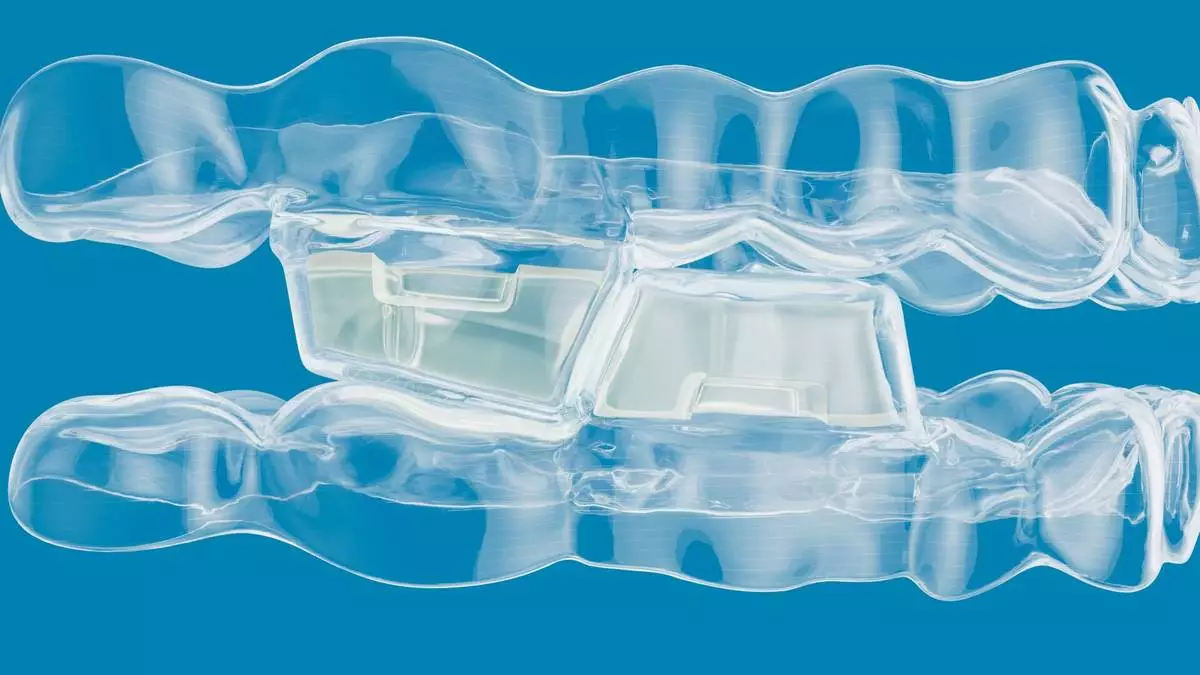
The Invisalign® System with mandibular advancement featuring occlusal blocks is the latest clinical innovation that expands Align’s Class II treatment portfolio for growing patients by offering practitioners a comprehensive solution for treating growing patients with Class II malocclusions caused by mandibular retrusion.