Having it all means different things to everyone, but a rent-controlled apartment in Manhattan is probably pretty close to a universal dream — even for non-New Yorkers. It’s easy enough, then, to understand the profound conundrum facing Iris (Naomi Watts), a writer and professor who suddenly finds herself with a 150-pound Great Dane ward after an unexpected death in “The Friend.”
Not only is her place a mere 500 square feet, but it’s also one of those pesky buildings in which dogs are not welcome. Not even the cute, well-behaved ones.
Dog lovers may find the choice simple (perhaps it should be) and the apartment rules cruelly restrictive, but this is a single woman living a writer’s life in one of the most expensive cities in the world. And now she’s grappling with the idea of saying goodbye to a major part of her identity because her dear friend and mentor Walter (Bill Murray) died without leaving behind a plan for his beloved dog Apollo (Bing). Or perhaps that’s not entirely true: Iris was the plan. Walter just didn’t tell her that before he killed himself. She’s not even a self-proclaimed dog person.
The film is an adaptation of Sigrid Nunez’s National Book Award-winning novel of the same name, made by filmmaking duo Scott McGehee and David Siegel (“What Maisie Knew”). Its appeal isn’t mysterious — it's a classic New York movie about the most romantic New York profession, writing, with actors like Murray and Watts (and Bing) leading the charge.
These are characters who’ve lived lives, too. Walter died a celebrated but problematic author, known for his womanizing and multiple marriages. He left behind not just Apollo but three ex-wives (Carla Gugino, Constance Wu and Noma Dumezweni), a grown daughter (Sarah Pidgeon) not conceived in wedlock and a misconduct accusation. Iris and Walter also had a dalliance at one point, but settled into a friendship — his deepest, we’re told.
This is perhaps the most mysterious element of the story — partially on purpose, since Walter is dead for most of the movie. We see him only in limited flashbacks and Murray wears the part well: a freewheeling, egotistical genius whose ways have skipped out of sync with the times but whose charisma keeps him surrounded by throngs of admirers. And afterward, Iris is questioning what it all meant and perhaps how well she really did know this man: It's a kind of grief, that of a friend, that isn't regularly explored in films.
Iris is the most radical of female characters, even, depressingly in 2025: a single woman of a certain age and no ambition to be anything else. Watts plays her with grace and dignity, as she struggles with her own writing. Even Apollo has a past: Walter found him alone in Central Park one day and took him in as his own. When Walter's gone, Apollo is perhaps the most outwardly depressed about the loss. His days are spent either sitting sadly on Iris' bed with literal hangdog eyes or acting out and destroying things in her apartment.
It’s no spoiler to say that they’ll both have to go on a journey to realizing that perhaps they can find solace in one another in the devastating absence of their larger-than-life friend. McGehee and Siegel avoid hokey dog movie cliches and easy jokes about ownership learning curves and instead present a rather straightforward portrait of what it’s like to suddenly inherit a very large living creature.
“The Friend” stretches on a bit too long, but it’s done with such care and a kind heart that it’s not hard to give it two hours of your time. It’s also one of those movies people complain they don’t make anymore, although its existence is a reminder that they do still make “them,” meaning smart, emotionally authentic stories about people who seem real. They just might require a little more effort to find than they used to.
“The Friend,” a Bleecker Street release now in limited release and in theaters nationwide Friday, is rated R by the Motion Picture Association for “a sexual reference and language.” Running time: 123 minutes. Three stars out of four.

Bing, a Great Dane from the film "The Friend," poses for a portrait in New York on March 24, 2024. (Photo by Taylor Jewell/Invision/AP)

Actor Naomi Watts poses for a portrait with her Great Dane co-star Bing, to promote the film "The Friend" on Monday, March 24, 2024, in New York. (Photo by Taylor Jewell/Invision/AP)

Actor Naomi Watts poses for a portrait with her Great Dane co-star Bing, to promote the film "The Friend" on Monday, March 24, 2024, in New York. (Photo by Taylor Jewell/Invision/AP)
TEHRAN, Iran (AP) — Israel struck a key petrochemical plant at Iran’s massive South Pars natural gas field and killed two paramilitary Revolutionary Guard commanders on Monday, potentially challenging a new 45-day ceasefire proposal for Tehran and the United States as President Donald Trump's ultimatum looms within hours.
The gas field attack was aimed at eliminating a major source of revenue for Iran, Israel said. The field is critical to Iran’s electricity production, but the strike appeared to be separate from Trump’s threats to target power plants and bridges if Tehran doesn't reopen the Strait of Hormuz to all shipping traffic.
Iran’s grip on the strait has caused oil prices to surge and shaken the world economy.
Israel's Defense Minister Israel Katz described “a powerful strike on the largest petrochemical facility in Iran." The gas field shared with Qatar is the world’s largest and sits under the Persian Gulf. Iran’s semiofficial Fars news agency and the judicary’s Mizan news agency reported the attack and blamed the U.S. and Israel.
The White House did not immediately comment, though Trump was set to speak to journalists at the White House Monday afternoon. After Israel’s attack on the field in March, Trump said Israel would not attack it again but warned that if Iran continued striking Qatar’s energy infrastructure, the United States would “massively blow up" the field.
Trump’s deadline for Tehran to reopen the Strait of Hormuz is set for Monday night Washington time.
Egyptian, Pakistani and Turkish mediators have sent Iranian Foreign Minister Abbas Araghchi and U.S. Mideast envoy Steve Witkoff a proposal calling for a 45-day ceasefire and the reopening of the strait, two Mideast officials told The Associated Press. The officials spoke on condition of anonymity to discuss the private negotiations.
Iran’s foreign ministry spokesman Esmail Baghaei told journalists in Tehran that messages are being exchanged with mediators but “negotiations are entirely incompatible with ultimatums, crimes, and threats of war crimes.”
Iranian officials have blasted Trump's weekend threats against infrastructure as incitement to war crimes.
In Islamabad, two senior officials said Pakistan’s efforts for a ceasefire are at an advanced stage but “several spoilers and detractors” are trying to sow confusion through disinformation. The officials spoke on condition of anonymity because they were not authorized to speak publicly about the talks.
Meanwhile, explosions boomed in Tehran and low-flying jets could be heard for hours.
Among those killed was the head of intelligence for Iran’s paramilitary Revolutionary Guard, Maj. Gen. Majid Khademi, according to Iranian state media and Israel’s defense minister.
Israel’s military said it also killed the leader of the Revolutionary Guard’s undercover unit in its expeditionary Quds Force, Asghar Bakeri.
Israel’s defense minister vowed to keep targeting top-ranking officials. “Iran’s leaders live with a sense of being targeted,” Katz said. “We will continue to hunt them down one by one.”
Kuwait, the United Arab Emirates and Saudi Arabia activated air defenses to intercept Iranian missiles and drones as Tehran kept up pressure on Gulf neighbors, which has included strikes against infrastructure like oil fields. In Israel, Iranian missiles hit the northern city of Haifa, where four people from one family were found dead in the rubble of a residential building.
Iran’s attacks on regional energy infrastructure and its hold on the Strait of Hormuz, through which a fifth of the world’s oil is shipped in peacetime, have sent global energy prices soaring.
Brent crude oil, the international standard, rose to $109 in Monday spot trading, about 50% higher than when the war started.
Under pressure at home as consumers worry, Trump has warned Iran that if no deal is reached to reopen the strait, the U.S. would hit power plants and other infrastructure and set the country “back to the stone ages.”
“Tuesday will be Power Plant Day, and Bridge Day, all wrapped up in one,” he threatened Sunday.
Trump has given multiple deadlines to Iran, and has posted: “Tuesday, 8:00 P.M. Eastern Time!” though it was not clear whether he had extended his deadline.
Former Iranian foreign minister Ali Akbar Velayatir urged Arab countries to discourage Trump from striking power plants, warning on social media that the entire region would go “dark” if that happens.
Following Trump’s expletive-laced post Sunday, Iran’s parliamentary Speaker Mohammad Bagher Qalibaf called threats of targeting Iran’s infrastructure “reckless.”
Iran has let some vessels through the strait since the war began with U.S. and Israeli attacks on Feb. 28, but none belong to those countries or ones perceived as helping them. Some have paid Iran for passage but the flow of traffic is down more than 90% over the same period last year.
Thick smoke rose near Tehran’s Azadi Square after an airstrike hit the grounds of the Sharif University of Technology. Multiple countries have sanctioned the university for its work with the military, particularly on Iran’s ballistic missile program.
Araghchi called university “the MIT of Iran,” posting on social media that “Aggressors will see our might.”
Iranian media reported damage to buildings and a natural gas distribution site next to campus. The university is empty as the war has forced all schools into online classes.
A strike near Eslamshar, southwest of Tehran, killed at least 15 people, authorities said. Five were killed in a residential area in Qom, and six were killed in strikes on other cities, the state-run IRAN daily newspaper reported. Three people were killed at a home in Tehran, state television reported.
In Lebanon, where Israel has launched air attacks and a ground invasion that it says target the Iran-linked Hezbollah militia, an airstrike hit an apartment in Ain Saadeh town east of Beirut. It killed an official in the Lebanese Forces, a Christian political party strongly opposed to Hezbollah, his wife and another woman.
More than 1,900 people have been killed in Iran since the war began, but the government has not updated the toll for days.
More than 1,400 people have been killed in Lebanon and more than 1 million people have been displaced. Eleven Israeli soldiers have died there.
In Gulf Arab states and the occupied West Bank, more than two dozen people have died, while 23 have been reported dead in Israel and 13 U.S. service members have been killed.
Rising reported from Bangkok and Magdy from Cairo. Munir Ahmed in Islamabad and Isabel DeBre in Ain Saadeh, Lebanon, contributed to this story.
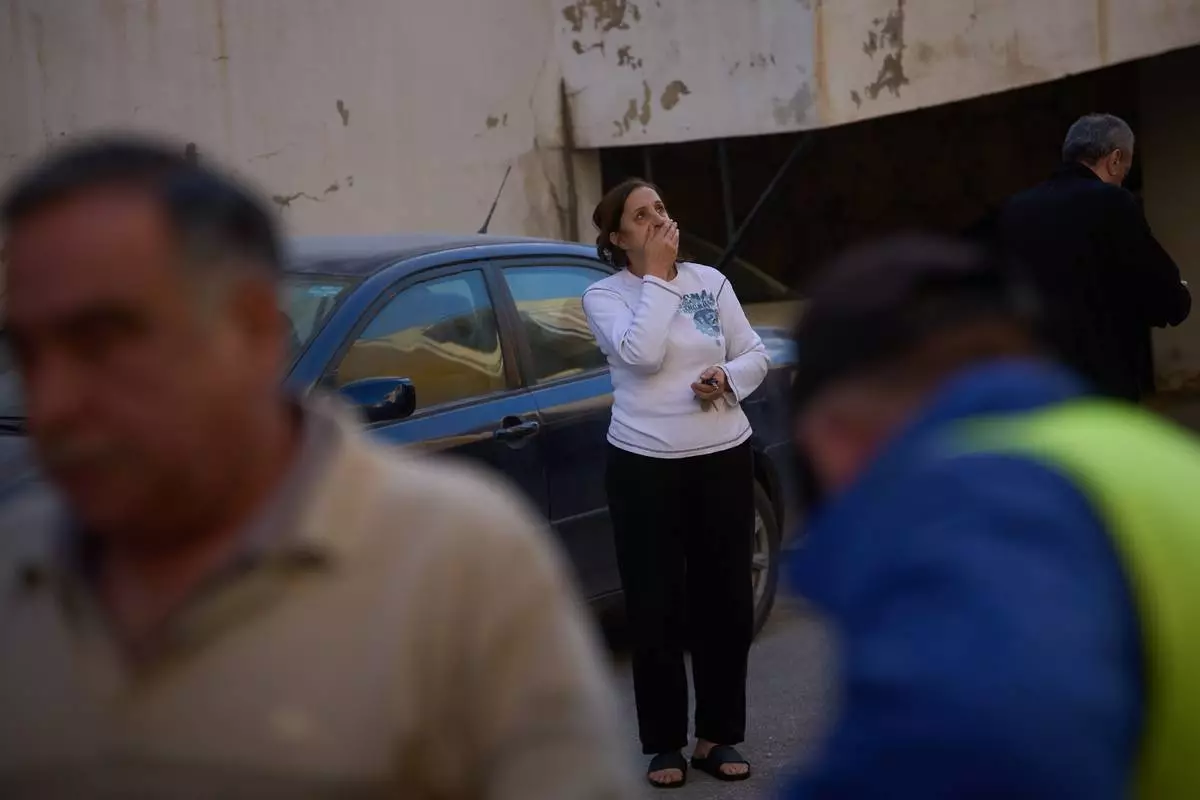
Nadine Naameh reacts as she looks at the damage to her home following an Israeli strike in the village of Ain Saadeh in the mountains east of Beirut, Lebanon, Monday, April 6, 2026. (AP Photo/Emilio Morenatti)
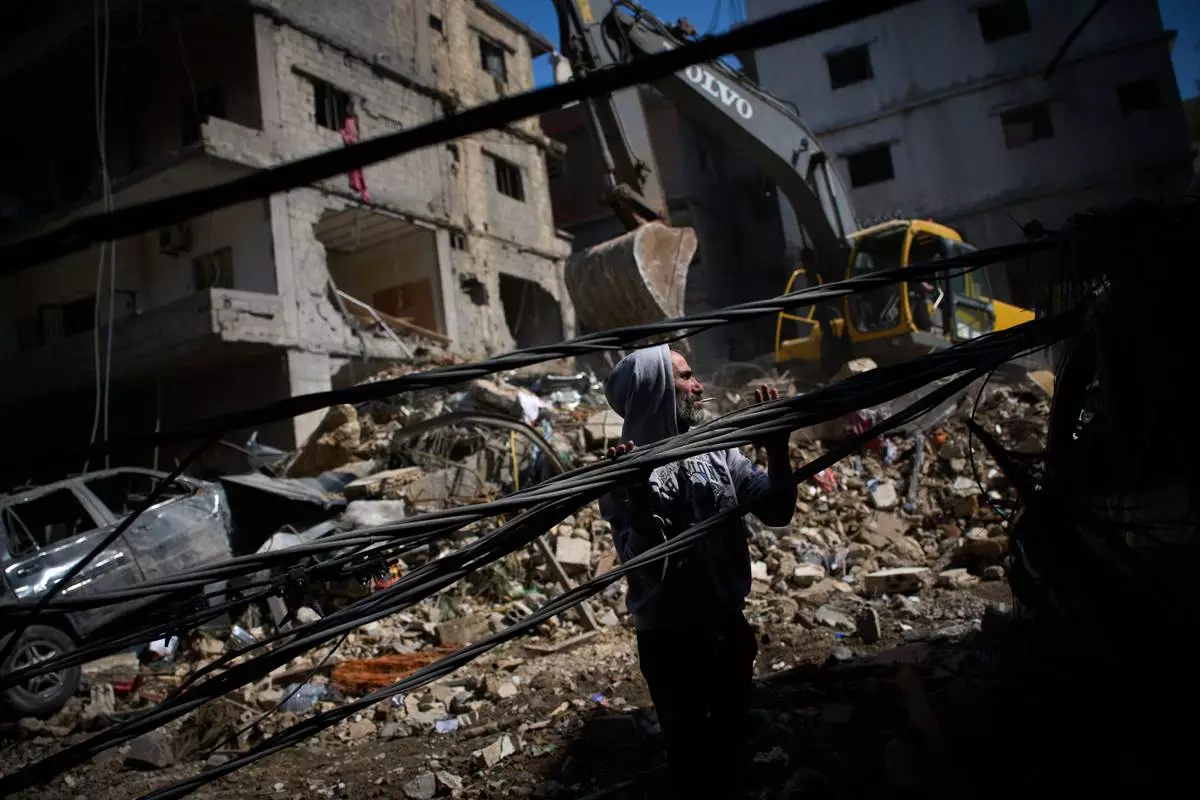
A man works at the site of Sunday's Israeli strike on a building in Beirut's Jnah neighborhood, Lebanon, Monday, April 6, 2026. (AP Photo/Emilio Morenatti)
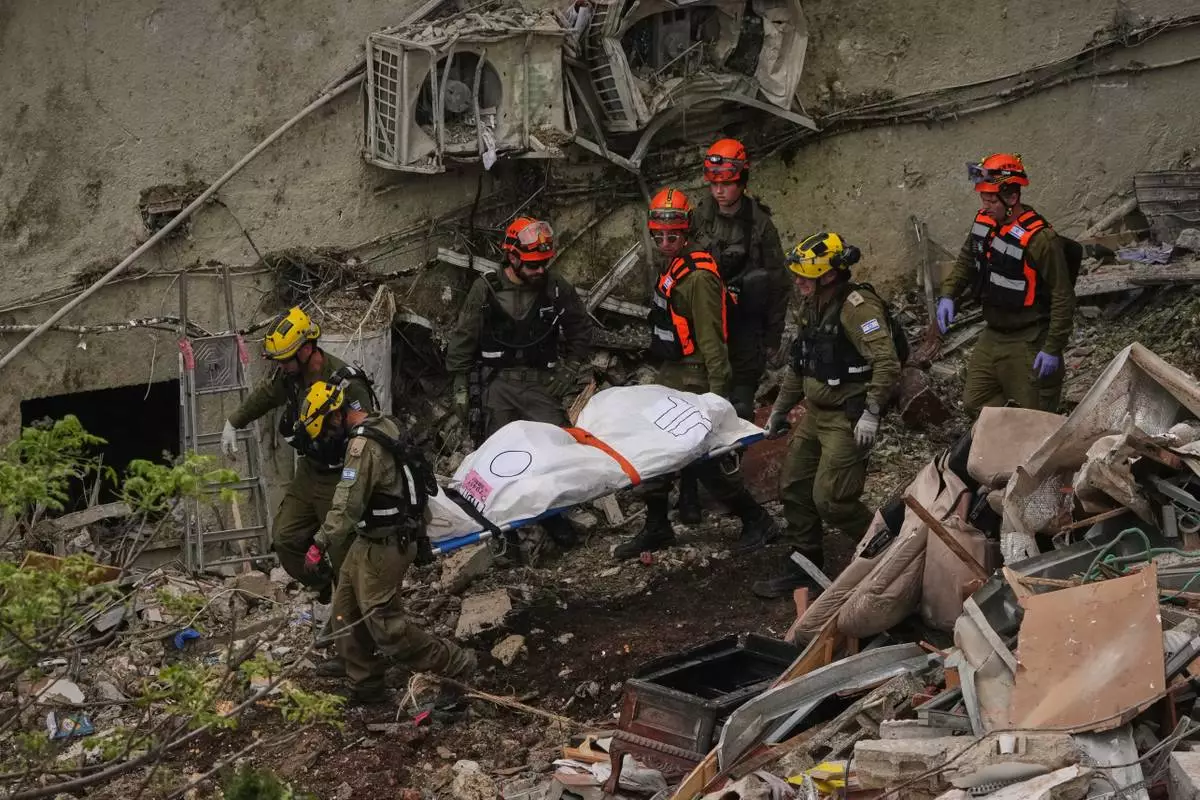
Rescue workers and military personnel carry a body of a victim from the rubble of a residential building a day after it was struck by an Iranian missile in Haifa, Israel, Monday, April 6, 2026. (AP Photo/Ariel Schalit)
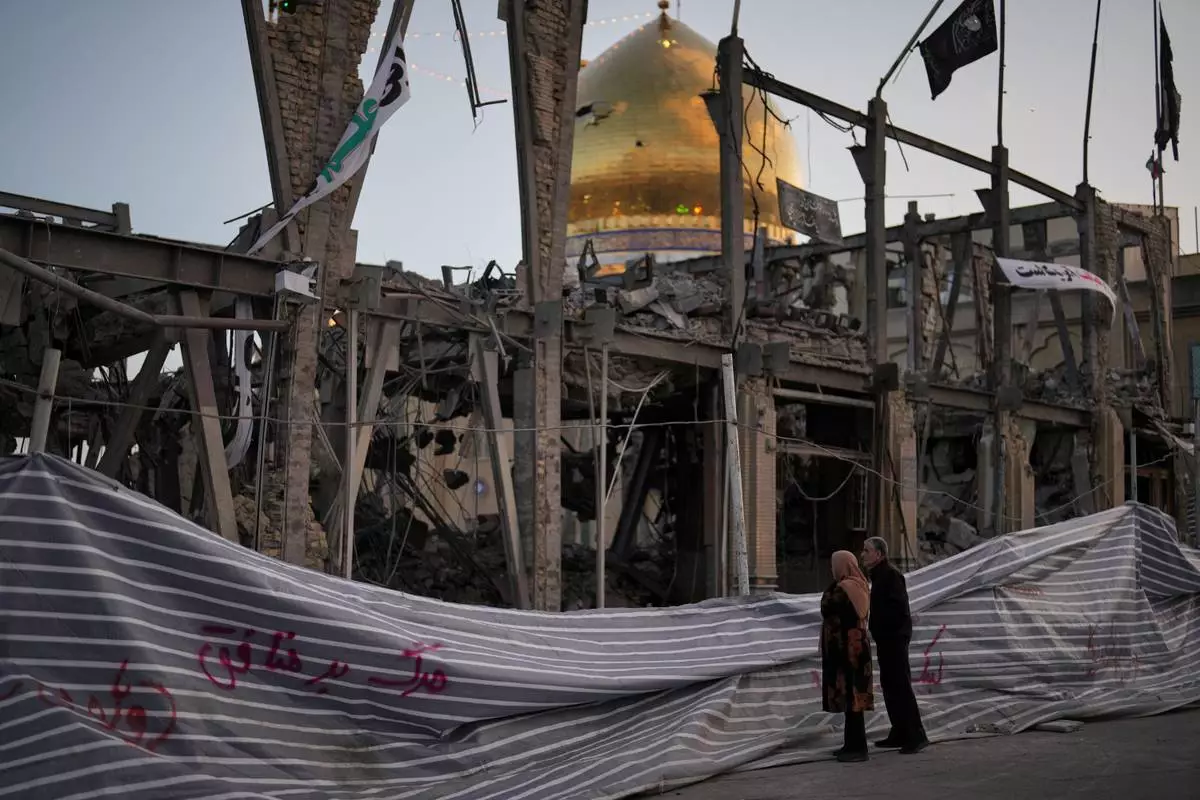
Pedestrians look at a destroyed building within the Grand Hosseiniyeh, with the mosque visible in the background, which officials at the site say was hit by U.S.-Israeli airstrikes Tuesday, in Zanjan, Iran, Saturday, April 4, 2026. (AP Photo/Francisco Seco)
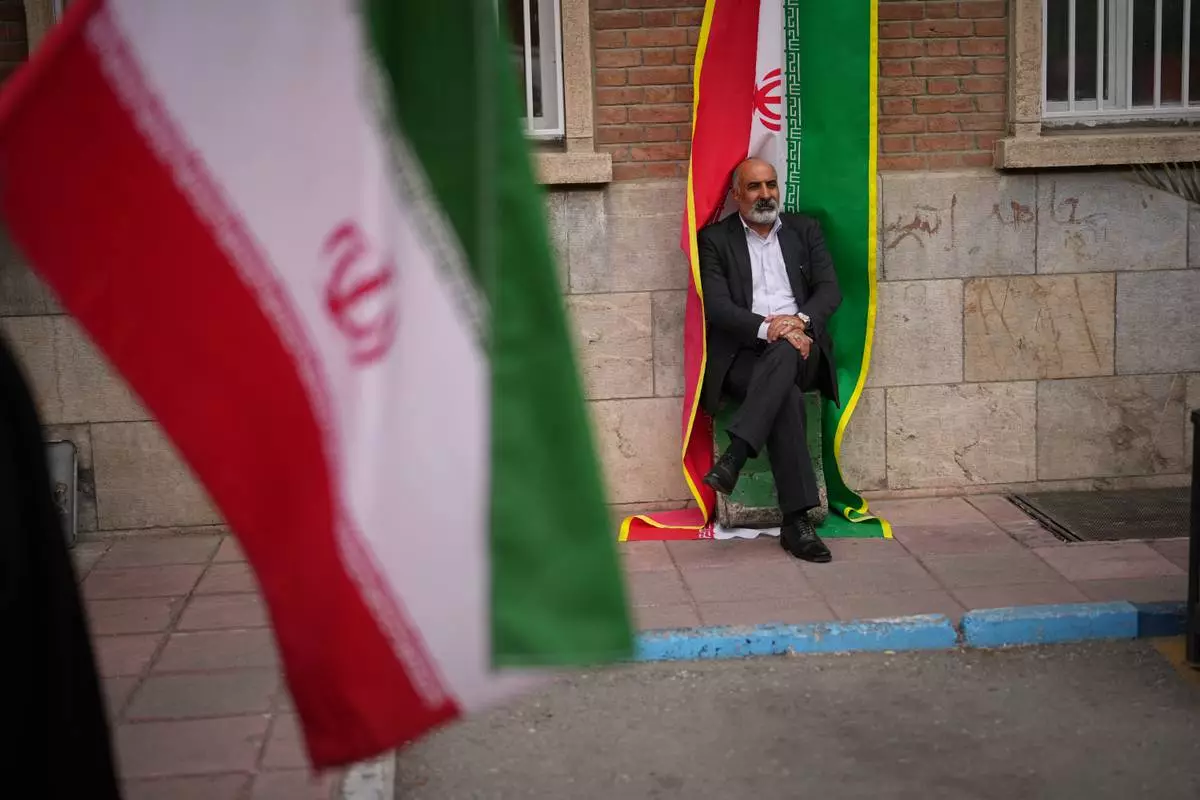
A man sits beside an Iranian flag banner during a government-sponsored protest attended by medical workers against the U.S.-Israeli military campaign outside Imam Khomeini Hospital in Tehran, Iran, Monday, April 6, 2026. (AP Photo/Francisco Seco)
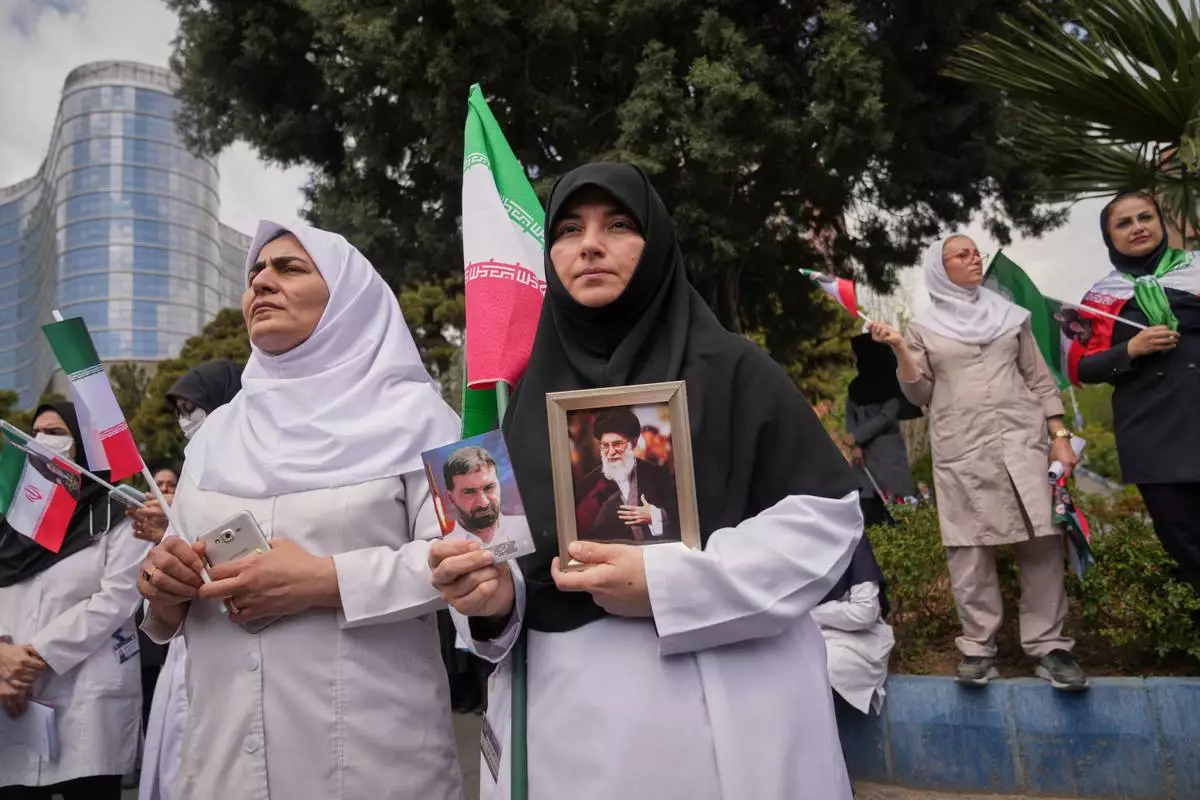
Medical workers attend a government-sponsored protest against the U.S.-Israeli military campaign outside Imam Khomeini Hospital in Tehran, Iran, Monday, April 6, 2026. (AP Photo/Francisco Seco)
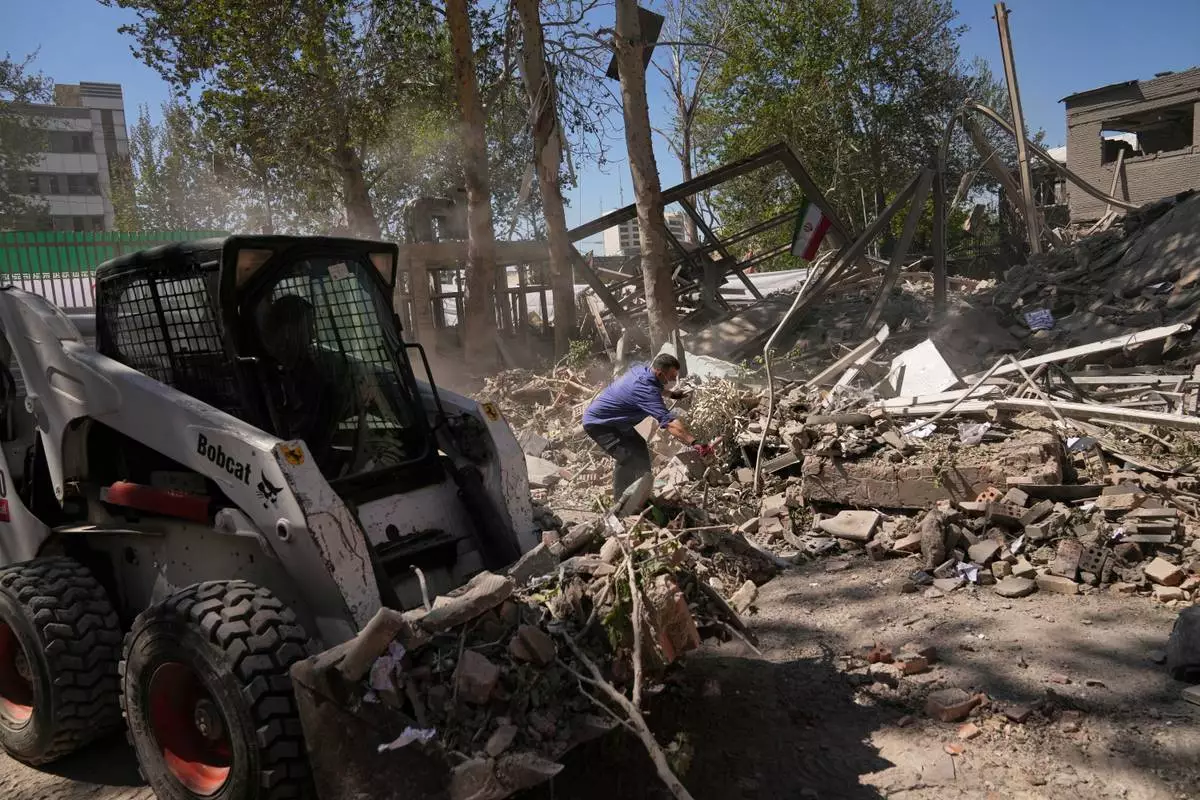
Workers remove debris at Tehran's Sharif University of Technology complex that Iranian authorities say was hit early Monday by a U.S.-Israeli strike, in Tehran, Iran, Monday, April 6, 2026. (AP Photo/Francisco Seco)
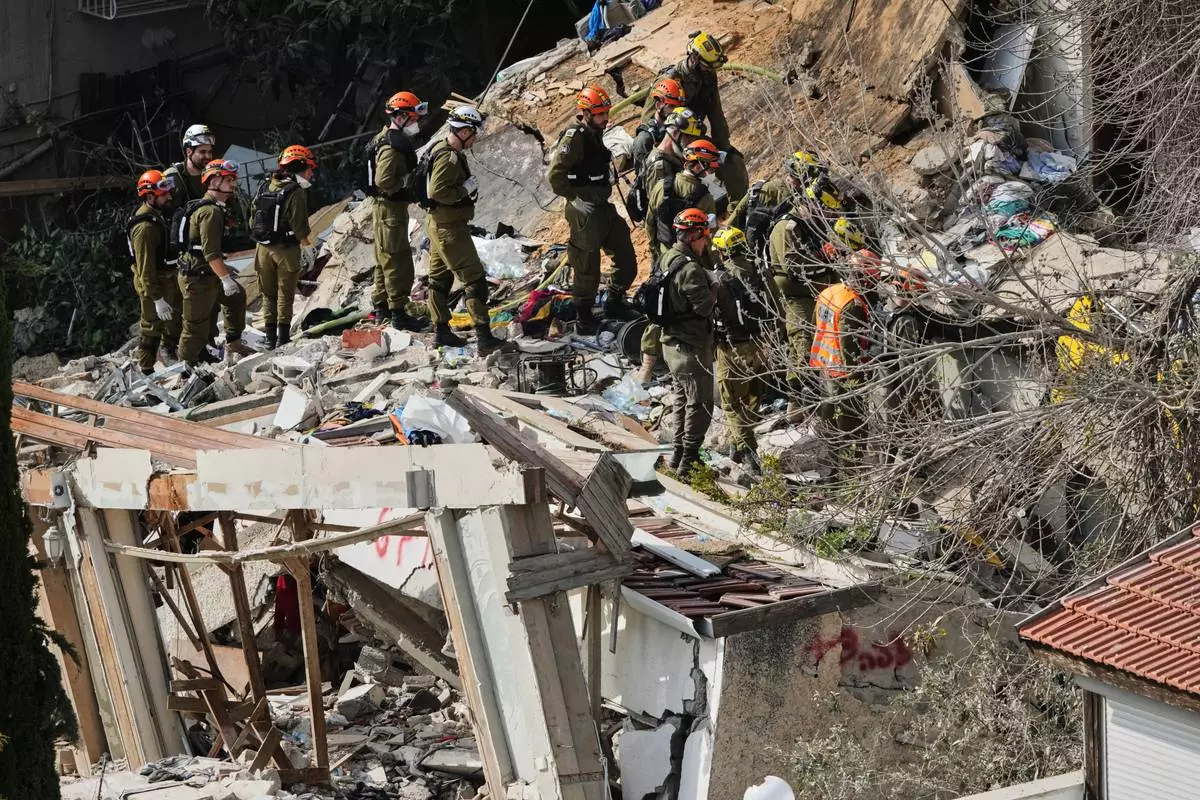
Israeli rescue teams search for missing people amid the rubble of a residential building a day after it was struck by an Iranian missile in Haifa, Israel, Monday, April 6, 2026. (AP Photo/Ariel Schalit)
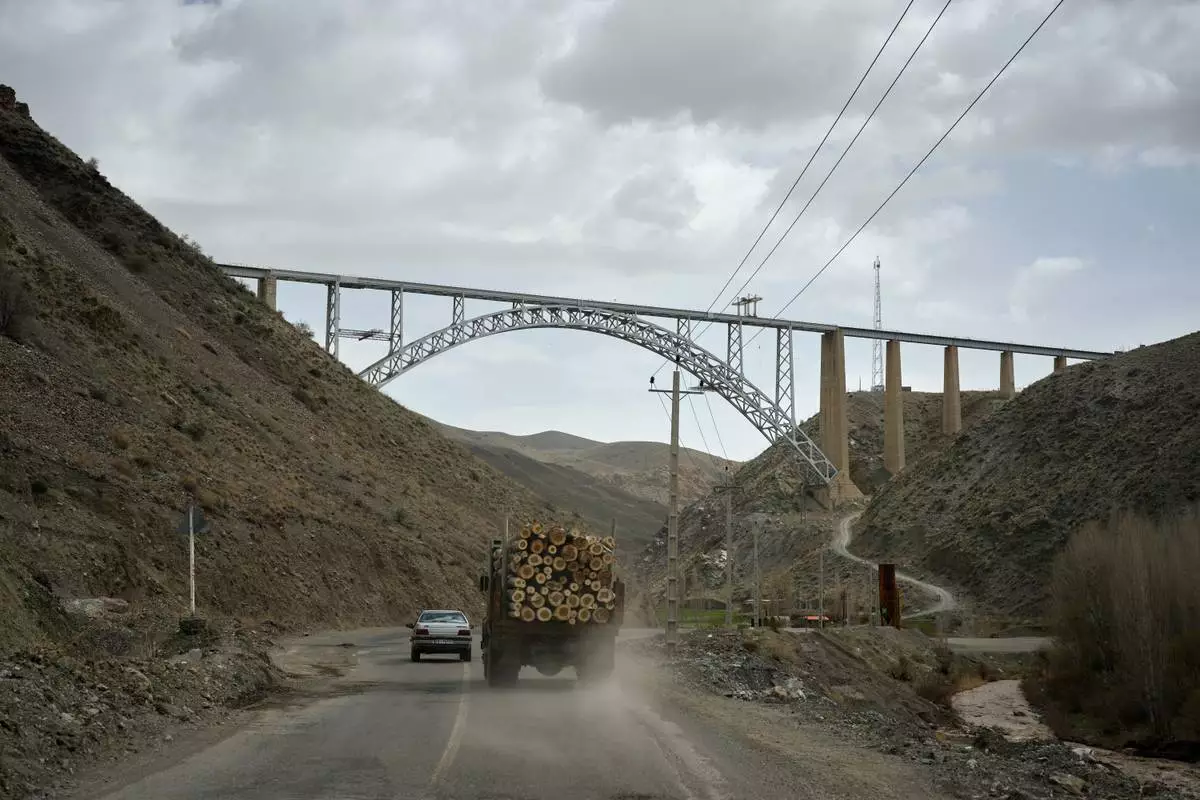
A truck loaded with logs and other vehicles drive along a road toward Tehran near the Turkish border on the outskirts of Razi, northwestern Iran, Saturday, April 4, 2026. (AP Photo/Francisco Seco)
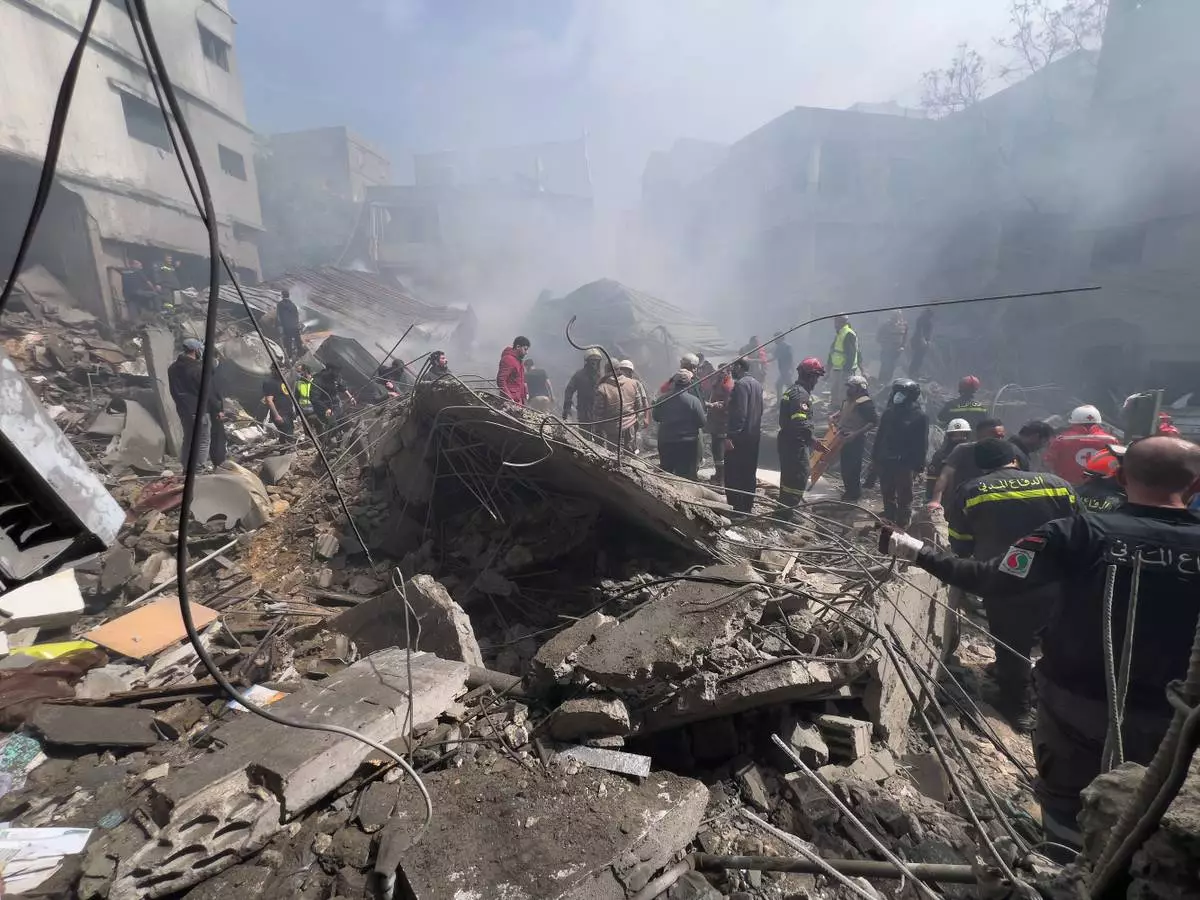
Rescue workers search for victims at the site of an Israeli airstrike that hit a crowded neighbourhood south of Beirut, Lebanon, Sunday, April 5, 2026. (AP Photo/Hussein Malla)
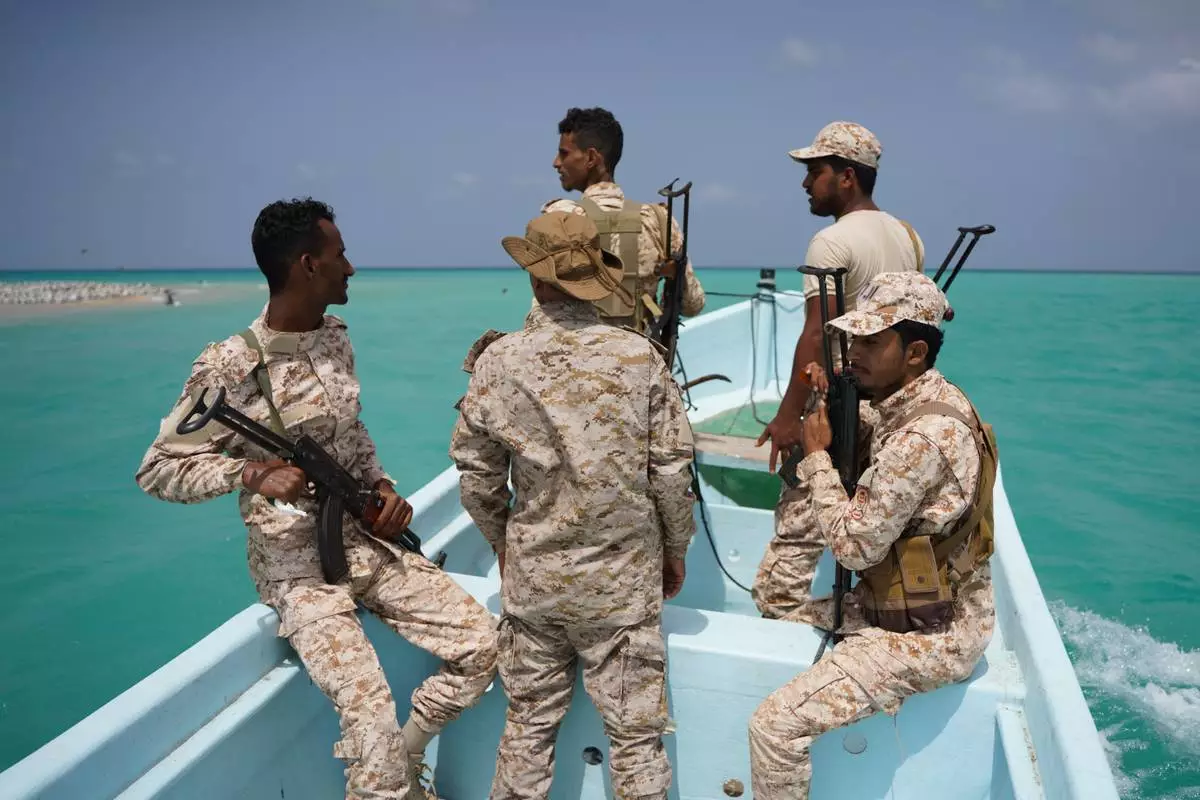
Yemeni soldiers patrol the strategic Bab el-Mandeb Strait, Yemen, Sunday, April 5, 2026. (AP Photo/Abdulnasser Alseddik)
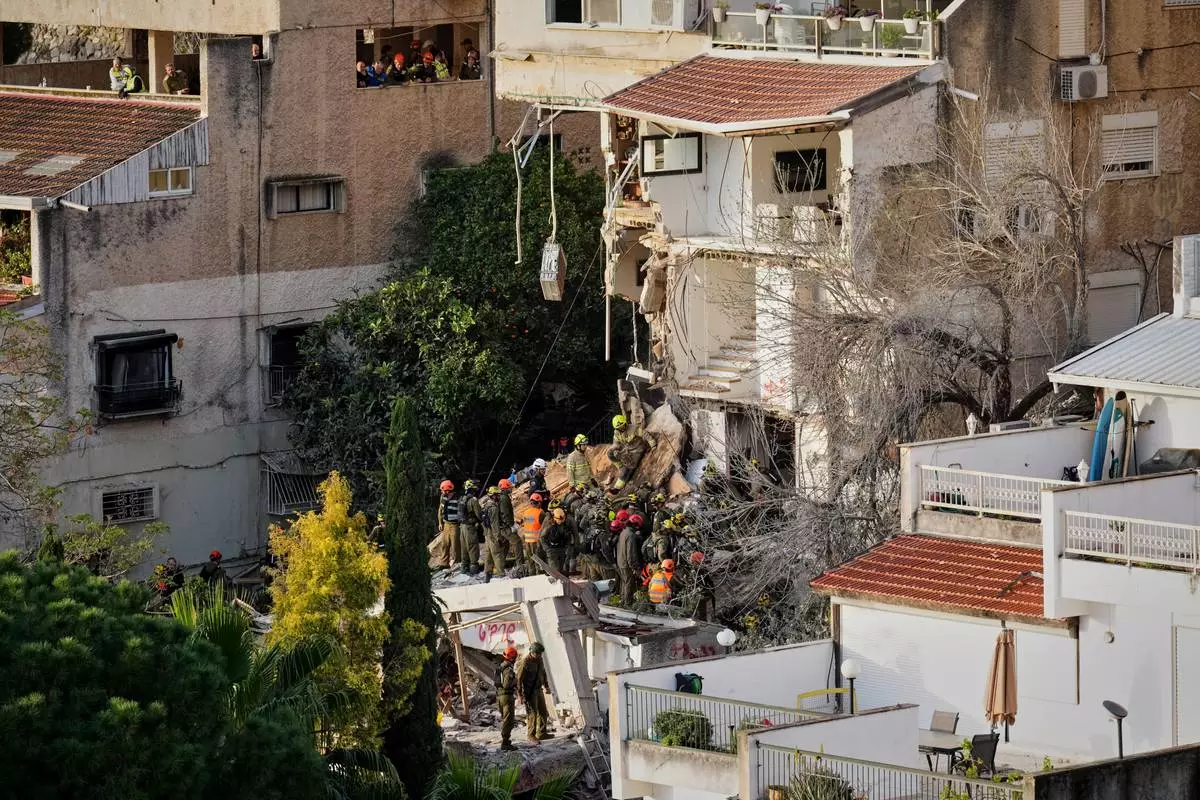
Israeli rescue teams search for missing people amid the rubble of a residential building a day after it was struck by an Iranian missile in Haifa, Israel, Monday, April 6, 2026. (AP Photo/Ariel Schalit)