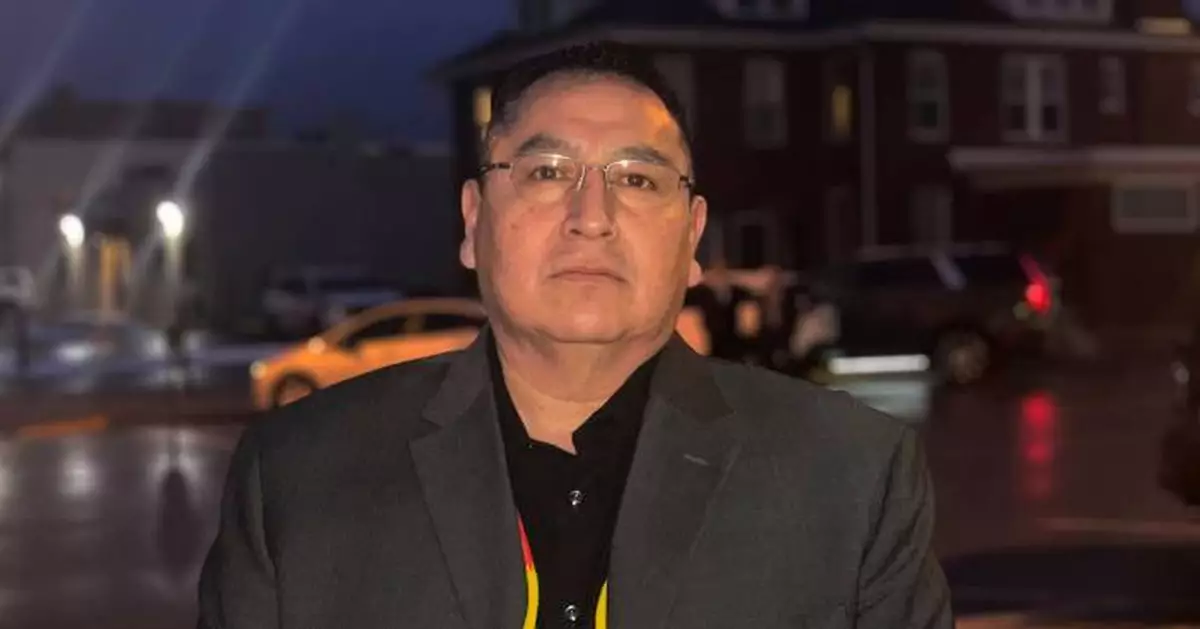
The president of the Oglala Sioux Tribe has walked back claims he made in a memo and press release earlier this week that immigration enforcement arrested four tribal members and that the federal government tried to extract an “immigration agreement” out of the tribe in return for information about their members' whereabouts.
The U.S. Department of Homeland Security said it can't verify claims that any of their officers arrested or “even encountered” members of the Oglala Sioux Tribe or found anyone in their detention centers claiming to be a tribal member. They denied asking the tribe for any kind of agreement.
Tribal President Frank Star Comes Out has not responded to repeated requests for comment, including after his updated memo was released on Thursday.
The accusations of arrests came at a time when many Native Americans are already concerned over the Trump administration’s immigration enforcement agenda and racial profiling by federal agents ensnaring them as well, and as some tribes have grappled with whether to engage in agreements with DHS tied to the crackdown.
Star Comes Out said Tuesday in a message on Facebook that the men were arrested in Minneapolis, where Immigration and Customs Enforcement has launched its biggest operation ever and is increasingly clashing with protesters and residents angry at the agency’s tactics.
Star Comes Out also said that when the tribe reached out about the arrests, “federal officials told us that the Tribe could access that information if we entered an immigration agreement with U.S. Immigration and Customs Enforcement and the U.S. Department of Homeland Security.”
But in the memo Thursday, Star Comes Out said his earlier statement had been “misinterpreted” and that there was no such demand from federal officials. He said the tribe had been in “cooperative communications” with federal officials about the issue and that federal officials had said that “one option for the Tribe to have easier access to information is to enter into an immigration agreement” with Immigration and Customs Enforcement and DHS. He did not specify what type of agreement.
He also said the tribe was “working with Tribal, State, and Federal officials to verify” reports that tribal members living in Minneapolis were arrested by ICE. Earlier in the week he said he had been “made aware that U.S. Immigration and Customs Enforcement (ICE) detained four Oglala Sioux tribal members in Minneapolis” and that the tribe had their first names. He called the arrests “a treaty violation.”
The Department of Homeland Security pushed back, saying that they “have not uncovered any claims by individuals in our detention centers that they are members of the Oglala Sioux Tribe” and haven’t been able to verify that their officers arrested anyone from the tribe. They also denied asking for any type of agreement from the tribe in return for giving out information.
“ICE did NOT ask the tribe for any kind of agreement, we have simply asked for basic information on the individuals, such as names and date of birth so that we can run a proper check to provide them with the facts,” Homeland Security spokeswoman Tricia McLaughlin said.
Last year, Navajo Nation President Buu Nygren said that several tribal citizens reported being stopped and detained by ICE officers in Arizona and New Mexico. He and other tribal leaders have advised their members to carry tribal IDs with them at all times.
Last November, Elaine Miles, a member of the Confederated Tribes of the Umatilla Indian Reservation in Oregon and an actress known for her roles in “Northern Exposure” and “The Last of Us,” said she was stopped by ICE officers in Washington state who told her that her tribal ID looked fake.
A member of the Salt River Pima-Maricopa Indian Community in Arizona was arrested in Iowa in November and was mistakenly slated to be turned over the ICE before the error was caught and she was released, according to local media reports.
There is a history of tension between the Oglala Sioux and DHS that dates back to when Homeland Security Secretary Kristi Noem was governor of South Dakota. In 2024, Star Comes Out banned Noem from the Pine Ridge Reservation in South Dakota after Noem said — without evidence — that cartels were infiltrating reservations in the state.
During her time as governor, Noem was banned from most of the nine reservations in the state.
Noem told federal lawmakers that a gang calling itself the Ghost Dancers was affiliated with drug cartels and was committing murder on the Pine Ridge Reservation.
Star Comes Out said at the time that he took deep offense at her reference, saying the Ghost Dance is one of the Oglala Sioux’s “most sacred ceremonies,” and was used by Noem "with blatant disrespect and is insulting to our Oyate," using the Lakota word for “people” or “nation.”
At the time Noem said Star Comes Out's decision was “unfortunate” and that her focus was on working together.
The controversy between the Oglala Sioux Tribe and ICE comes as some Native American tribes with contracts with Homeland Security are rethinking those agreements.
A tribal business entity associated with the Prairie Band Potawatomi Nation ended a nearly $30 million federal contract signed in October to come up with an early design for immigrant detention centers across the U.S, after the deal was derided online as “disgusting” and “cruel” by tribe members. Many questioned how a tribe whose own ancestors were uprooted two centuries ago from the Great Lakes region and corralled on a reservation south of Topeka could participate in the Trump administration’s mass deportation efforts.
In Alaska, Indigenous shareholders penned an op-ed in the Anchorage Daily News advocating that the Bering Straits Native Corporation — owned by thousands of Native American shareholders in Alaska — divest from all immigration detention centers across the country.
A spokesperson for the company didn’t respond to an e-mailed request for comment.
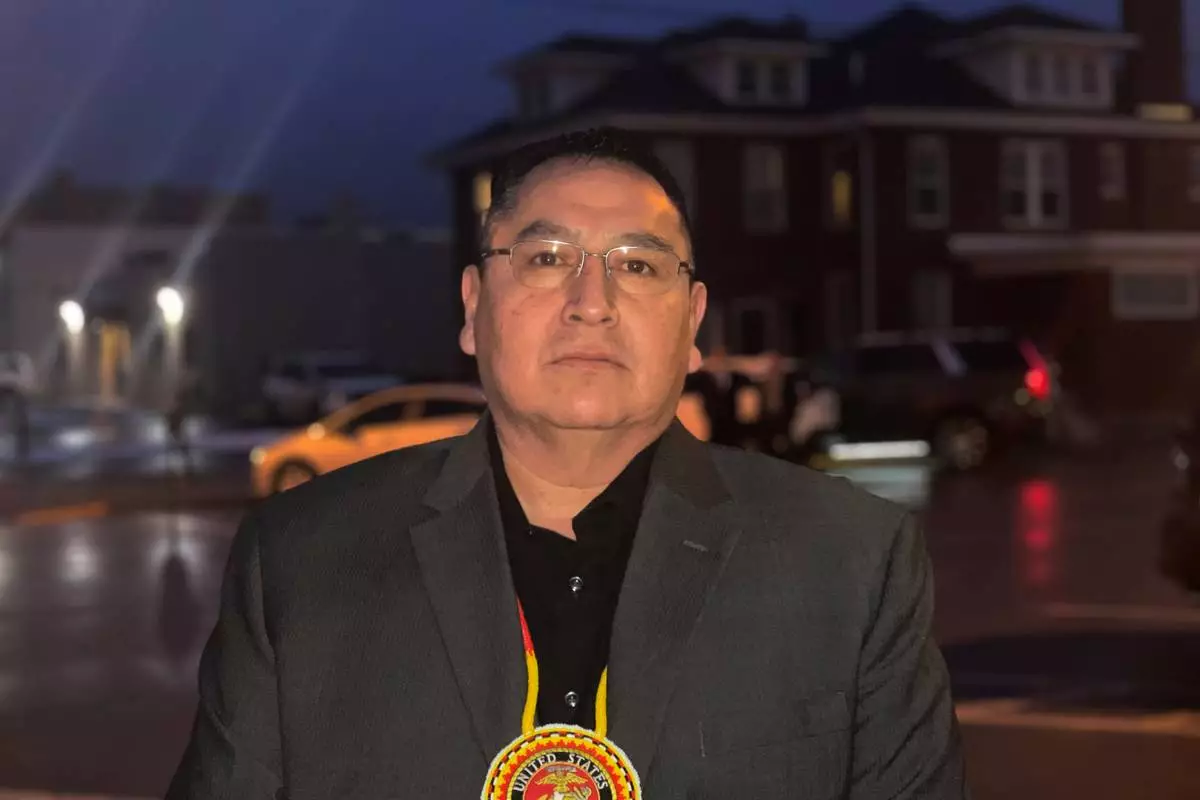
FILE - Oglala Sioux Tribe President Frank Star Comes Out stands outside the Andrew W. Bogue Federal Building and U.S. Courthouse in Rapid City, S.D., Feb. 8, 2023. (Kalle Benallie/Indian Country Today via AP, File)
Federal immigration agents deployed to Minneapolis have used aggressive crowd-control tactics that have become a dominant concern in the aftermath of the deadly shooting of a woman in her car last week.
They have pointed rifles at demonstrators and deployed chemical irritants early in confrontations. They have broken vehicle windows and pulled occupants from cars. They have scuffled with protesters and shoved them to the ground.
The government says the actions are necessary to protect officers from violent attacks. The encounters in turn have riled up protesters even more, especially as videos of the incidents are shared widely on social media.
What is unfolding in Minneapolis reflects a broader shift in how the federal government is asserting its authority during protests, relying on immigration agents and investigators to perform crowd-management roles traditionally handled by local police who often have more training in public order tactics and de-escalating large crowds.
Experts warn the approach runs counter to de-escalation standards and risks turning volatile demonstrations into deadly encounters.
The confrontations come amid a major immigration enforcement surge ordered by the Trump administration in early December, which sent more than 2,000 officers from across the Department of Homeland Security into the Minneapolis-St. Paul area. Many of the officers involved are typically tasked with arrests, deportations and criminal investigations, not managing volatile public demonstrations.
Tensions escalated after the fatal shooting of Renee Good, a 37-year-old woman killed by an immigration agent last week, an incident federal officials have defended as self-defense after they say Good weaponized her vehicle.
The killing has intensified protests and scrutiny of the federal response.
On Monday, the American Civil Liberties Union of Minnesota asked a federal judge to intervene, filing a lawsuit on behalf of six residents seeking an emergency injunction to limit how federal agents operate during protests, including restrictions on the use of chemical agents, the pointing of firearms at non-threatening individuals and interference with lawful video recording.
“There’s so much about what’s happening now that is not a traditional approach to immigration apprehensions,” said former Immigration and Customs Enforcement Director Sarah Saldaña.
Saldaña, who left the post at the beginning of 2017 as President Donald Trump's first term began, said she can't speak to how the agency currently trains its officers. When she was director, she said officers received training on how to interact with people who might be observing an apprehension or filming officers, but agents rarely had to deal with crowds or protests.
“This is different. You would hope that the agency would be responsive given the evolution of what’s happening — brought on, mind you, by the aggressive approach that has been taken coming from the top,” she said.
Ian Adams, an assistant professor of criminal justice at the University of South Carolina, said the majority of crowd-management or protest training in policing happens at the local level — usually at larger police departments that have public order units.
“It’s highly unlikely that your typical ICE agent has a great deal of experience with public order tactics or control,” Adams said.
DHS Secretary Tricia McLaughlin said in a written statement that ICE officer candidates receive extensive training over eight weeks in courses that include conflict management and de-escalation. She said many of the candidates are military veterans and about 85% have previous law enforcement experience.
“All ICE candidates are subject to months of rigorous training and selection at the Federal Law Enforcement Training Center, where they are trained in everything from de-escalation tactics to firearms to driving training. Homeland Security Investigations candidates receive more than 100 days of specialized training," she said.
Ed Maguire, a criminology professor at Arizona State University, has written extensively about crowd-management and protest- related law enforcement training. He said while he hasn't seen the current training curriculum for ICE officers, he has reviewed recent training materials for federal officers and called it “horrifying.”
Maguire said what he's seeing in Minneapolis feels like a perfect storm for bad consequences.
“You can't even say this doesn't meet best practices. That's too high a bar. These don't seem to meet generally accepted practices,” he said.
“We’re seeing routinely substandard law enforcement practices that would just never be accepted at the local level,” he added. “Then there seems to be just an absence of standard accountability practices.”
Adams noted that police department practices have "evolved to understand that the sort of 1950s and 1960s instinct to meet every protest with force, has blowback effects that actually make the disorder worse.”
He said police departments now try to open communication with organizers, set boundaries and sometimes even show deference within reason. There's an understanding that inside of a crowd, using unnecessary force can have a domino effect that might cause escalation from protesters and from officers.
Despite training for officers responding to civil unrest dramatically shifting over the last four decades, there is no nationwide standard of best practices. For example, some departments bar officers from spraying pepper spray directly into the face of people exercising Constitutional speech. Others bar the use of tear gas or other chemical agents in residential neighborhoods.
Regardless of the specifics, experts recommend that departments have written policies they review regularly.
“Organizations and agencies aren’t always familiar with what their own policies are,” said Humberto Cardounel, senior director of training and technical assistance at the National Policing Institute.
“They go through it once in basic training then expect (officers) to know how to comport themselves two years later, five years later," he said. "We encourage them to understand and know their training, but also to simulate their training.”
Adams said part of the reason local officers are the best option for performing public order tasks is they have a compact with the community.
“I think at the heart of this is the challenge of calling what ICE is doing even policing,” he said.
"Police agencies have a relationship with their community that extends before and after any incidents. Officers know we will be here no matter what happens, and the community knows regardless of what happens today, these officers will be here tomorrow.”
Saldaña noted that both sides have increased their aggression.
“You cannot put yourself in front of an armed officer, you cannot put your hands on them certainly. That is impeding law enforcement actions,” she said.
“At this point, I’m getting concerned on both sides — the aggression from law enforcement and the increasingly aggressive behavior from protesters.”
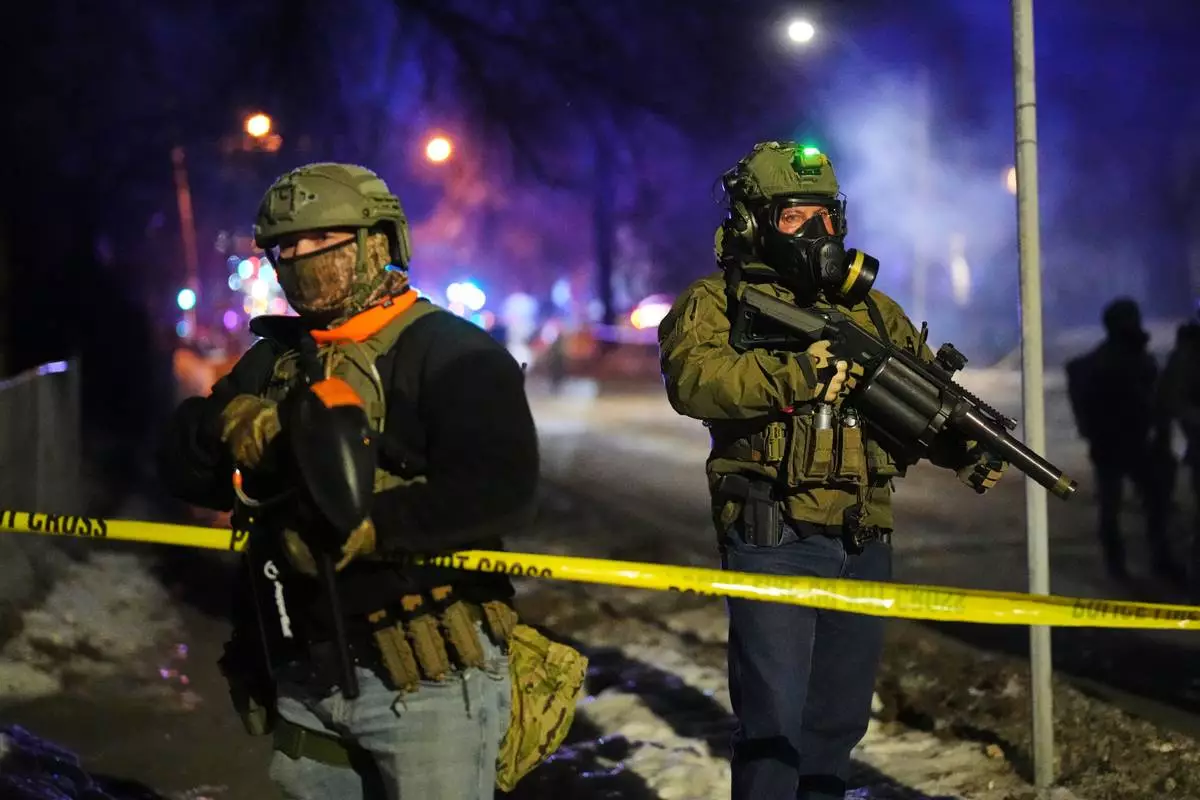
Law enforcement officers at the scene of a reported shooting Wednesday, Jan. 14, 2026, in Minneapolis. (AP Photo/Adam Gray)
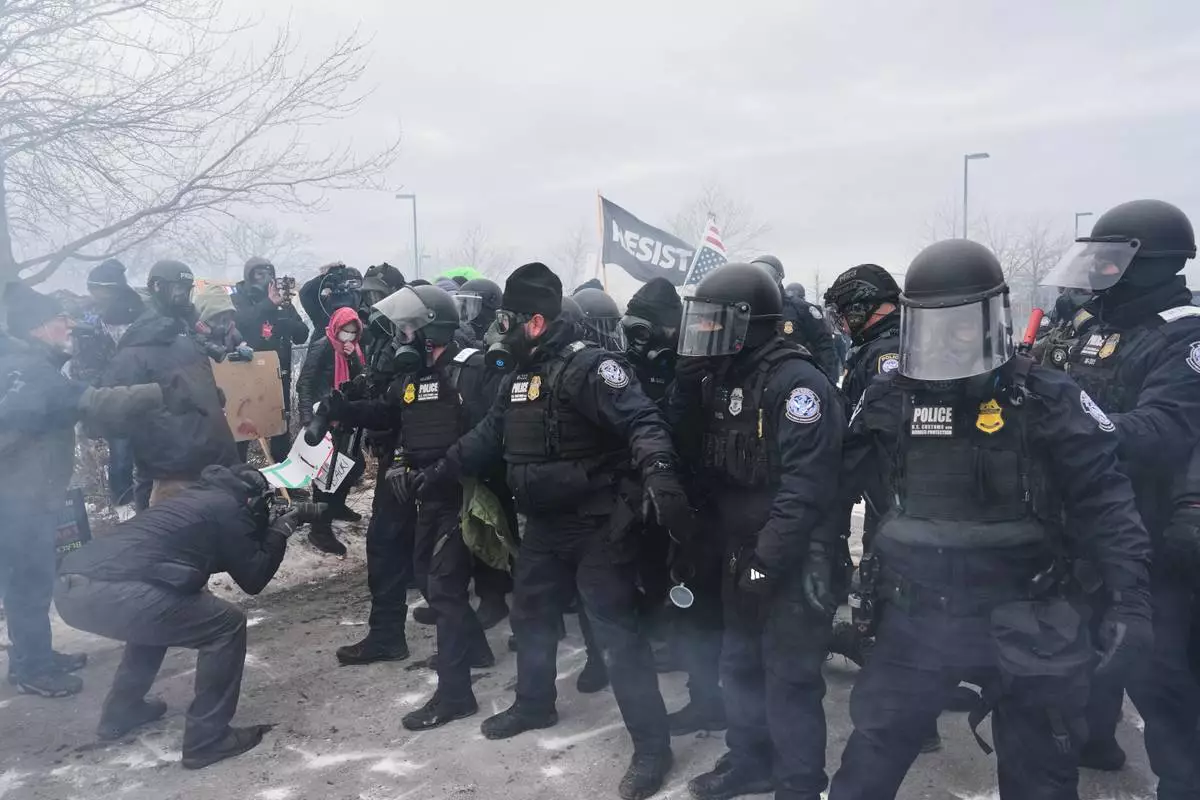
Federal immigration officers confront protesters outside Bishop Henry Whipple Federal Building, Thursday, Jan. 15, 2026, in Minneapolis. (AP Photo/Adam Gray)
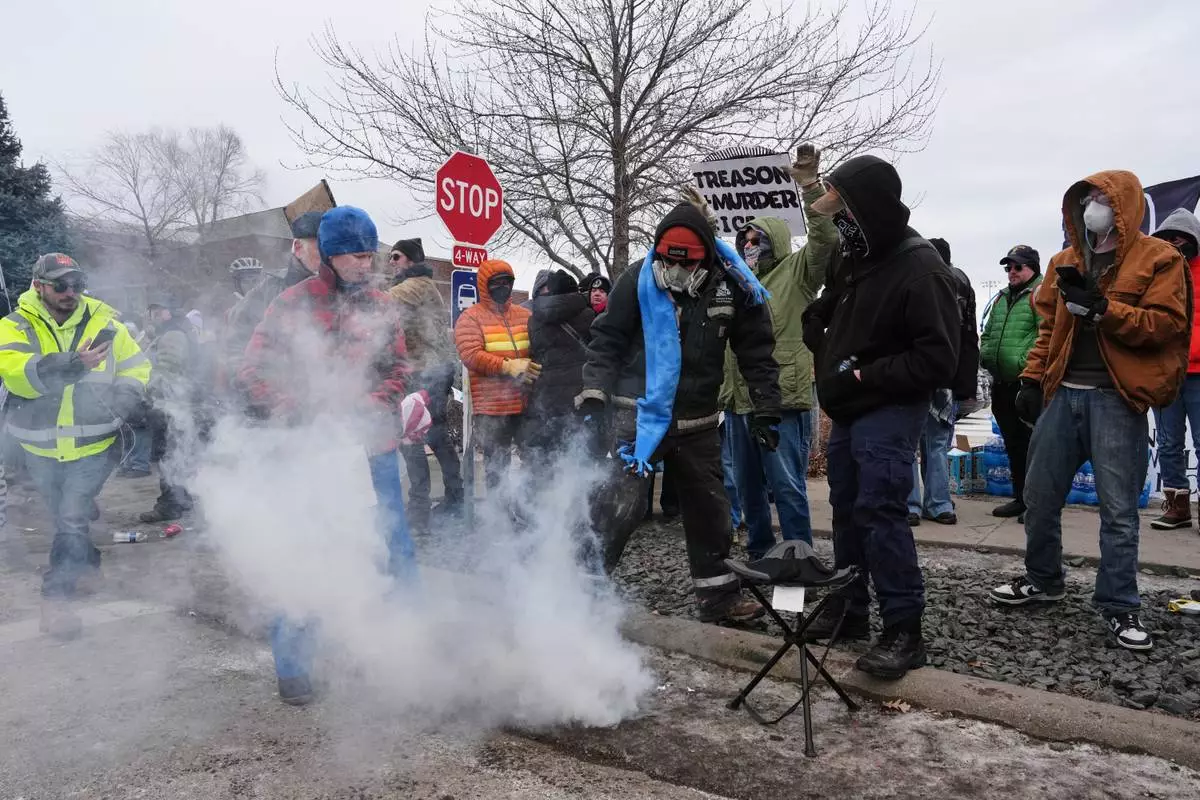
People cover tear gas deployed by federal immigration officers outside Bishop Henry Whipple Federal Building, Thursday, Jan. 15, 2026, in Minneapolis. (AP Photo/Adam Gray)
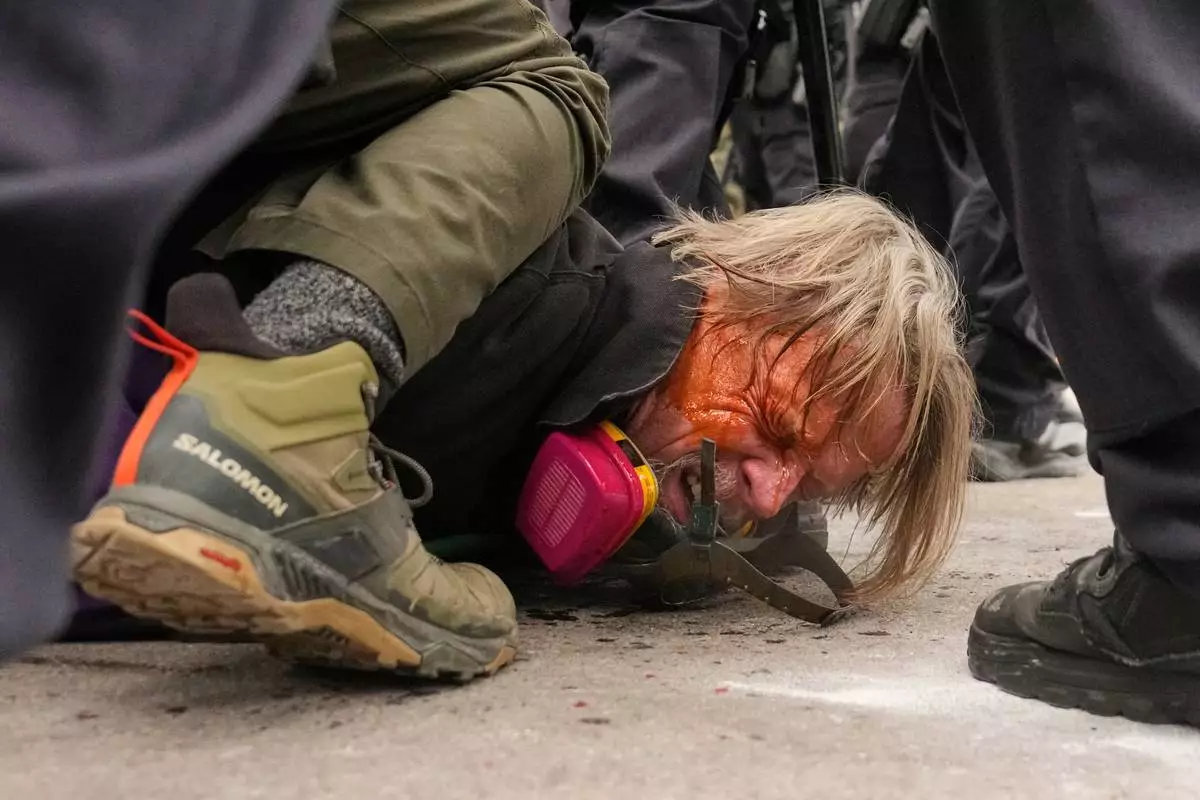
A man is pushed to the ground as federal immigration officers confront protesters outside Bishop Henry Whipple Federal Building, Thursday, Jan. 15, 2026, in Minneapolis. (AP Photo/John Locher)
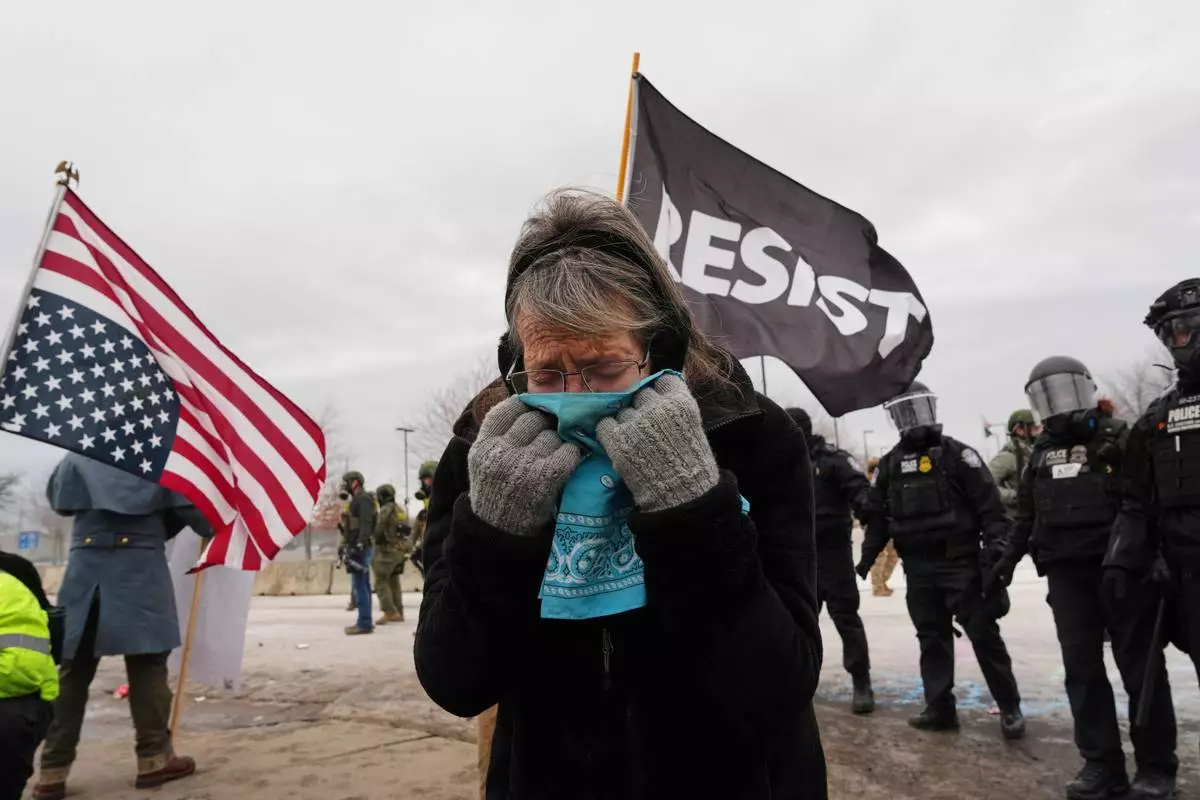
A woman covers her face from tear gas as federal immigration officers confront protesters outside Bishop Henry Whipple Federal Building, Thursday, Jan. 15, 2026, in Minneapolis. (AP Photo/Adam Gray)