Skip to Content Facebook Feature Image

US tariff hurts Mexico-US trade, raises costs, economic risks: Mexican insiders

China

China

China

US tariff hurts Mexico-US trade, raises costs, economic risks: Mexican insiders

2025-04-03 16:26 Last Updated At:17:27

The U.S. tariff is set to have a negative impact on cross-border trade between Mexico and the United States, driving up logistics costs and posing broader economic risks, said an industry expert and transport workers.

U.S. President Donald Trump on Wednesday signed an executive order on the so-called "reciprocal tariffs," imposing a 10-percent "minimum baseline tariff" and higher rates on certain trading partners.

For Canada and Mexico, United States-Mexico-Canada Agreement (USMCA) compliant goods will continue to see a 0 percent tariff, non-USMCA compliant goods will see a 25 percent tariff, and non-USMCA compliant energy and potash will see a 10 percent tariff, according to the White House.

A document released earlier by the White House stated that Trump had signed a proclamation invoking Section 232 of the Trade Expansion Act of 1962 to impose a 25 percent tariff on imports of automobiles and certain auto parts, citing "a critical threat to U.S. national security." The measure took effect on Wednesday, with tariff collection beginning on Thursday.

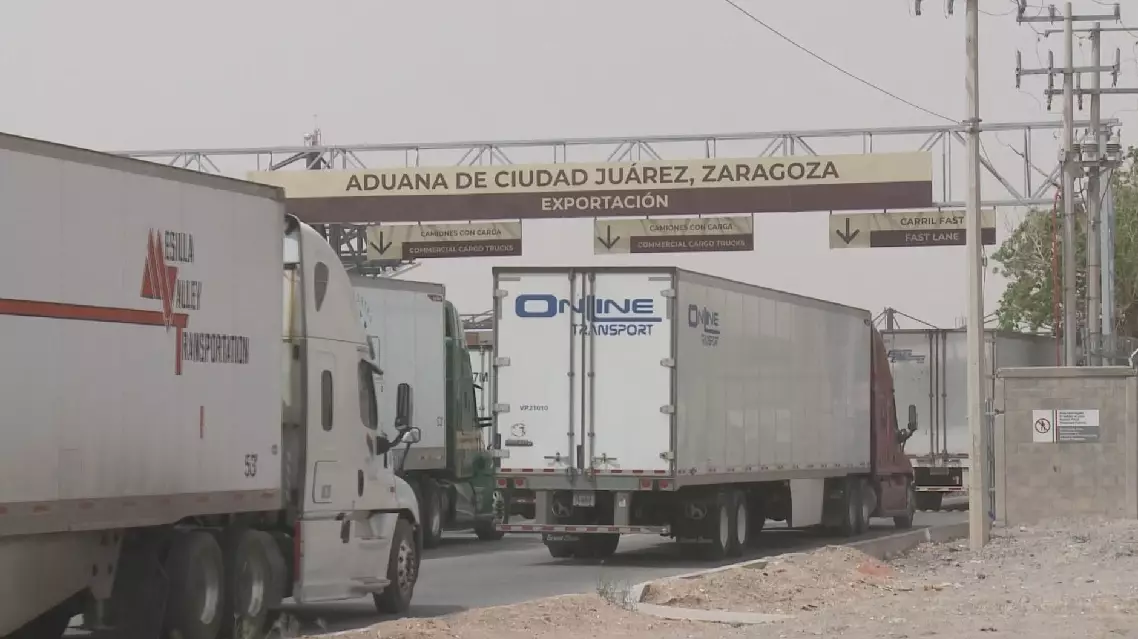
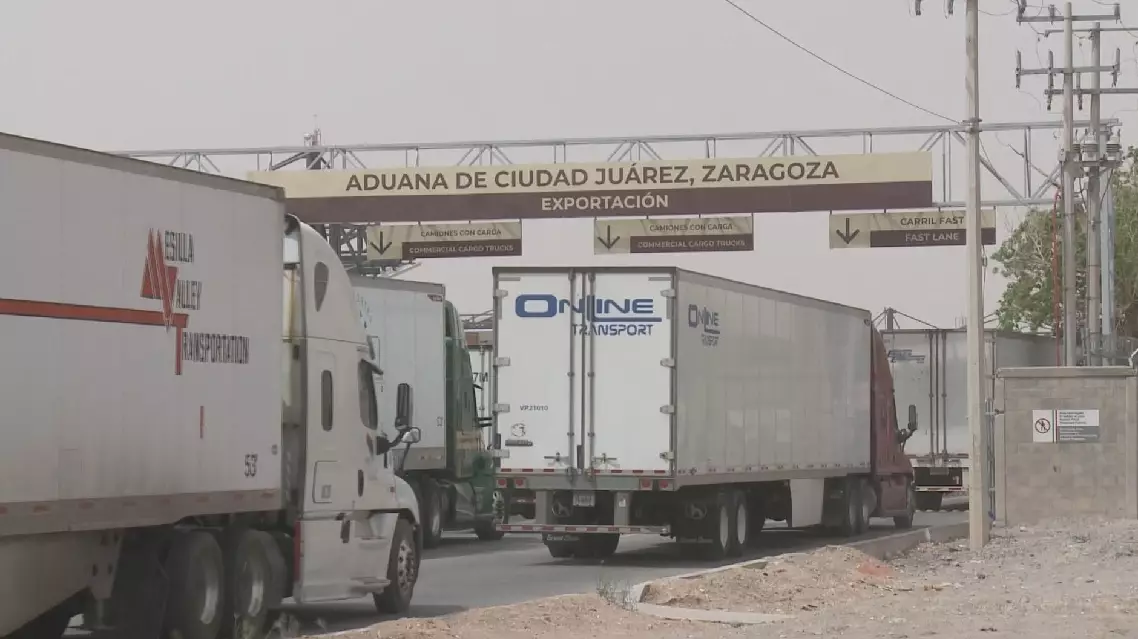
According to official statistics from the Mexican government, from November 2023 to the end of 2024, goods worth a total of 350 million U.S. dollars were exported by land from Mexico's northern border to the U.S., including about 77 million U.S. dollars worth of goods transported northward from Ciudad Juarez via road and rail to the North American market, primarily consisting of fully assembled automobiles and auto parts.

Since February, the U.S. has repeatedly shifted its stance on tariff measures, leaving many enterprises uncertain and fueling anxiety among drivers traveling between the two countries.

"I have been in this business for eight years. Recently, many companies have suspended deliveries, and many people are waiting to see if prices will rise," said a truck driver.

"I feel uncertain about the future, and imposing tariffs is actually harmful to both the U.S. and our country," said another truck driver.

Manuel Sotelo, Vice President of the National Chamber of Freight Transportation (CANACAR) in Northern Mexico, stated that U.S. tariffs on imported cars would have a notable impact on Mexico's vehicle and spare parts transportation, leading to a slight increase in logistics costs for enterprises. However, the uncertainty brought by tariff policies would pose a more significant threat to the economies of both Mexico and the U.S.

"I believe logistics costs will likely rise by about 10 to 15 percent. Mexico is the largest trading partner of the U.S., and also the country that purchases the most goods from the U.S. Any form of tariffs and the resulting cost increases will ultimately lead to inflation, impacting both economies," said Sotelo.
US tariff hurts Mexico-US trade, raises costs, economic risks: Mexican insiders
US tariff hurts Mexico-US trade, raises costs, economic risks: Mexican insiders

US tariff hurts Mexico-US trade, raises costs, economic risks: Mexican insiders
US tariff hurts Mexico-US trade, raises costs, economic risks: Mexican insiders

A former television host from Taiwan, Zhai Xuan, has made a pivotal decision to leave mainstream broadcasting in order to create content that provides a better understanding of the Chinese mainland and cross-strait relations.

Zhai, a seasoned television host with over a decade of experience in Taiwan's media landscape, recently addressed an audience at an event in Beijing, where she revealed her complete transition into independent online media.

In her remarks, she articulated her aspiration to bridge what she perceives as a significant information gap between audiences on both sides of the Strait, highlighting her commitment to fostering a deeper understanding and connection through her new endeavors.

"I was really surprised by all the fake news. There were stories saying people on the mainland can't afford tea eggs or that they live in mud houses and in Taiwan, this was the main information many people received," said Zhai.

Zhai said she initially began producing online videos to challenge such perceptions while continuing her work as a television host.

In April 2025, she travelled to the mainland with her father to fulfill her late grandfather's wish to return to his hometown. The trip, which reunited family members separated since 1949, was recorded in a video series titled "Journey to Find Our Roots", drawing attention from viewers in both Taiwan and the mainland.

"Many people in Taiwan told me that after watching, they wanted to apply for a mainland travel permit immediately and go looking for their relatives. Some had long forgotten these things, but after seeing my story, they began thinking about their hometowns and family members they had never met and decided to search for their roots," Zhai shared her story at the event.

By mid-2025, Zhai said she began to feel increasing pressure amid rising political tensions and a tightening atmosphere around cross-Strait exchanges in Taiwan.

After more than 12 years in the industry, Zhai resigned from her position, believing it was the right thing to do.

"At that moment, I felt this was a major issue,not just for me, but for Chinese people on both sides of the Strait. If I backed down then, I wouldn’t be standing on the right side," said Zhai.

Since leaving television, Zhai has broadened her online programming to encompass a range of daily-life topics, including practical guidance on applying for a mainland travel permit and using commonly employed mobile applications, in addition to content that delves into historical memory and cultural connections across the Strait.

As the debate over cross-Strait relations continues in Taiwan, Zhai said she remains committed to her current path.

Former Taiwan TV host bridges cross-Strait divide via online media

Former Taiwan TV host bridges cross-Strait divide via online media

Recommended Articles