ATLANTA (AP) — With one day left of the legislative session, Georgia Republicans mustered together a proposal to limit public access to records about state lawmakers' communications and police reports.
The bill sidestepped the usual lawmaking process by tacking a new proposal onto a bill without sending it to a regular committee, where lawmakers and members of the public could weigh in. Democrats in the House Rules Committee raised alarms about the last-minute effort without a clear motive.
Skeptics say the hurried process was especially concerning for a bill that could shield information about lawmakers' work from those who elect them and further restrict what police departments have to share with the public after they respond to a call about a crime.
Elberton Republican Rep. Rob Leverett said at the committee meeting the bill would simply “clean up” language related to public records issues that have come up in court. He called other added protections for legislators a “reasonable extension of existing law.”
The bill could get a vote Friday, the final day of the session. It was immediately sent back to the Rules Committee Wednesday, with Leverett telling The Associated Press on Thursday that there were disagreements over the bill. There could be more changes.
“Republicans are always trying to snake bad provisions in the dead of night without transparency and without public debate,” Democratic House Minority Whip Sam Park of Lawrenceville told AP. “They do this every time.”
Lawmakers are mostly exempt from the state's Open Records Act, but even fewer records would be available to the public under the bill. People wouldn't be able to access records of any communications involving members of the legislature or related staff, including with state agencies and officials and private companies.
The bill would also protect information about people’s entrance into and out of government buildings and data created for legislative activities. Agencies often prepare data such as how they spend money and present it to lawmakers.
“The First Amendment Foundation has always found it problematic that the legislature is protecting its own business, with a complete exemption from the law," said Sarah Brewerton-Palmer, president of the Georgia First Amendment Foundation. "But now they’re now trying to extend that even into records that currently are public and held by the executive branch.”
The original bill sought to clarify that people should request records from government agencies even if they contract with private companies that have the requested information. That measure was a response to a Georgia Supreme Court ruling last year.
Under current law, police departments don't have to share full records for pending criminal investigations. But initial incident reports are public record. Police departments under the bill would only have to disclose a first incident report before investigations close. Those are often less detailed than later reports.
The measure comes after Appen Media, which owns a chain of suburban news outlets, sued the Atlanta suburb of Sandy Springs for giving its reporters limited information from police reports. A Fulton County judge originally ruled the city's police department didn't violate the Open Records Act. The Georgia Court of Appeals in March ruled that decision was premature, but the bill “basically blesses the practice the Sandy Springs police department was taking,” said Brewerton-Palmer.
“If a police department wanted to, they could shield basically all information about incidents from the public,” Brewerton-Palmer said.
Charlotte Kramon is a corps member for The Associated Press/Report for America Statehouse News Initiative. Report for America is a nonprofit national service program that places journalists in local newsrooms to report on undercovered issues. Follow Kramon on X: @charlottekramon.

FILE - Georgia Rep. Rob Leverett, R-Elberton, speaks at the Georgia Capitol in Atlanta, Thursday, Dec. 7, 2023. (Arvin Temkar/Atlanta Journal-Constitution via AP, File)

FILE - The Georgia Capitol is shown on Tuesday, Feb. 27, 2024, in Atlanta. (AP Photo/Jeff Amy, File)
MINNEAPOLIS (AP) — President Donald Trump on Thursday threatened to invoke an 1807 law and deploy troops to quell persistent protests against the federal officers sent to Minneapolis to enforce his administration's massive immigration crackdown.
The threat comes a day after a man was shot and wounded by an immigration officer who had been attacked with a shovel and broom handle. That shooting further heightened the fear and anger that has radiated across the city since an Immigration and Customs Enforcement agent fatally shot Renee Good in the head.
Trump has repeatedly threatened to invoke the Insurrection Act, a rarely used federal law, to deploy the U.S. military or federalize the National Guard for domestic law enforcement, over the objections of state governors.
“If the corrupt politicians of Minnesota don’t obey the law and stop the professional agitators and insurrectionists from attacking the Patriots of I.C.E., who are only trying to do their job, I will institute the INSURRECTION ACT, which many Presidents have done before me, and quickly put an end to the travesty that is taking place in that once great State,” Trump said in social media post.
Presidents have invoked the law more than two dozen times, most recently in 1992 by President George H.W. Bush to end unrest in Los Angeles. In that instance, local authorities had asked for the assistance.
“I’m making a direct appeal to the President: Let’s turn the temperature down. Stop this campaign of retribution. This is not who we are,” Gov. Tim Walz, a Democrat, said on X.
Minnesota Attorney General Keith Ellison said he would challenge any such action in court. He's already suing to try to stop the surge by the Department of Homeland Security, which says officers have arrested more than 2,500 people since Nov. 29 as part of an immigration operation in the Twin Cities called Metro Surge.
The operation grew when ICE sent 2,000 officers and agents to the area early in January. ICE is a DHS agency.
In Minneapolis, smoke filled the streets Wednesday night near the site of the latest shooting as federal officers wearing gas masks and helmets fired tear gas into a small crowd. Protesters responded by throwing rocks and shooting fireworks.
Demonstrations have become common in Minneapolis since Good was fatally shot on Jan. 7. Agents who have yanked people from their cars and homes have been confronted by angry bystanders demanding they leave.
“This is an impossible situation that our city is presently being put in and at the same time we are trying to find a way forward to keep people safe, to protect our neighbors, to maintain order,” Minneapolis Mayor Jacob Frey said.
The American Civil Liberties Union of Minnesota filed a class-action lawsuit on behalf of three people who said they were questioned or detained in recent days. The lawsuit says two are Somali and one is Hispanic; all three are U.S. citizens. The lawsuit seeks an end to what the ACLU describes as a practice of racial profiling and warrantless arrests. The government did not immediately comment.
Homeland Security said in a statement that federal law enforcement officers on Wednesday stopped a driver from Venezuela who is in the U.S. illegally. The person drove off then crashed into a parked car before fleeing on foot, DHS said.
Officers caught up, then two other people arrived and the three started attacking the officer, according to DHS.
“Fearing for his life and safety as he was being ambushed by three individuals, the officer fired a defensive shot to defend his life,” DHS said. The confrontation took place about 4.5 miles (7.2 kilometers) from where Good was killed.
Police chief Brian O’Hara said the man who was shot did not have a life-threatening injury. O’Hara's account of what happened largely echoed that of Homeland Security, which later said the other two men were also in the U.S. illegally from Venezuela.
The FBI said several government vehicles were damaged and property inside was stolen when agents responded to the shooting. Photos show broken windows and insults made with paint. A reward of up to $100,000 is being offered for information. The FBI’s Minneapolis office did not immediately reply to messages seeking more details.
St. Paul Public Schools, with more than 30,000 students, said it would begin offering an online learning option for students who do not feel comfortable coming to school. Schools will be closed next week until Thursday to prepare for those accommodations.
Minneapolis Public Schools, which has a similar enrollment, is also offering temporary remote learning. The University of Minnesota will start a new term next week with different options depending on the class.
Madhani reported from Washington, D.C. Associated Press reporters Sophia Tareen in Chicago; Bill Barrow in Atlanta; Rebecca Santana in Washington; and Ed White in Detroit contributed.
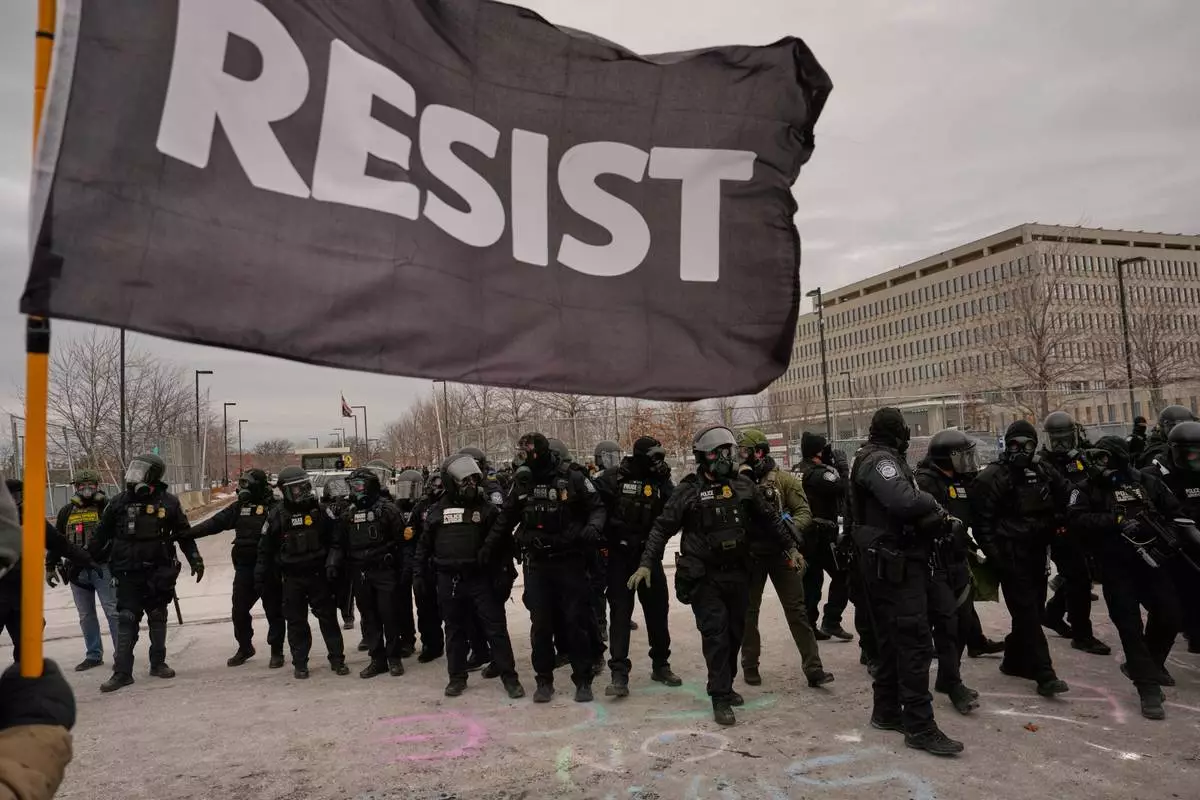
Federal immigration officers confront protesters outside Bishop Henry Whipple Federal Building, Thursday, Jan. 15, 2026, in Minneapolis. (AP Photo/John Locher)
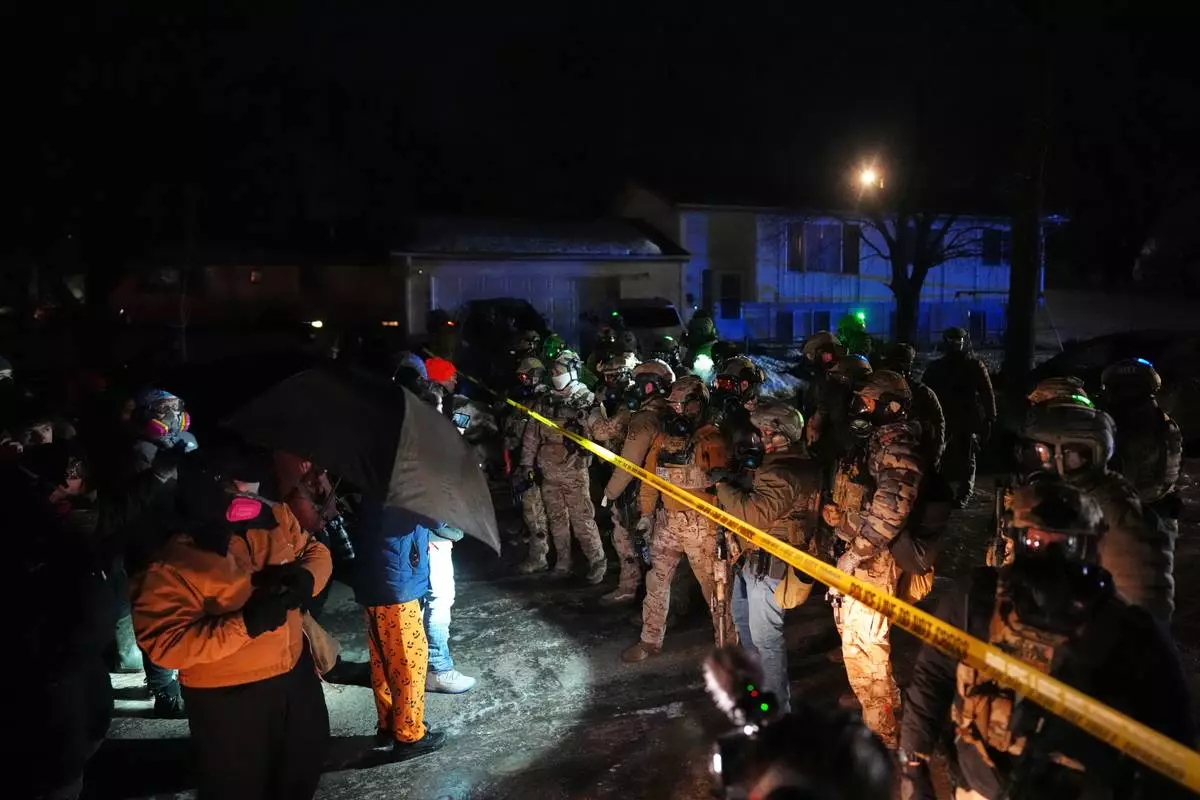
Law enforcement officers at the scene of a reported shooting Wednesday, Jan. 14, 2026, in Minneapolis. (AP Photo/Adam Gray)
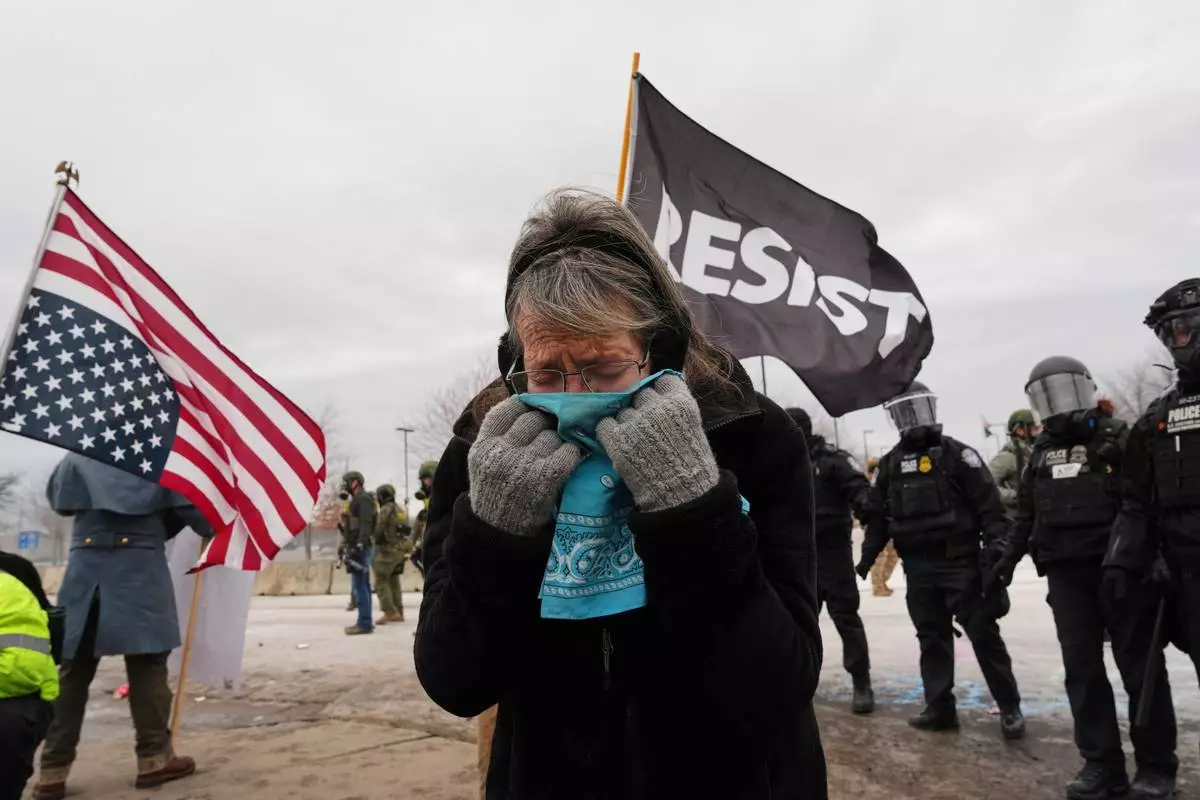
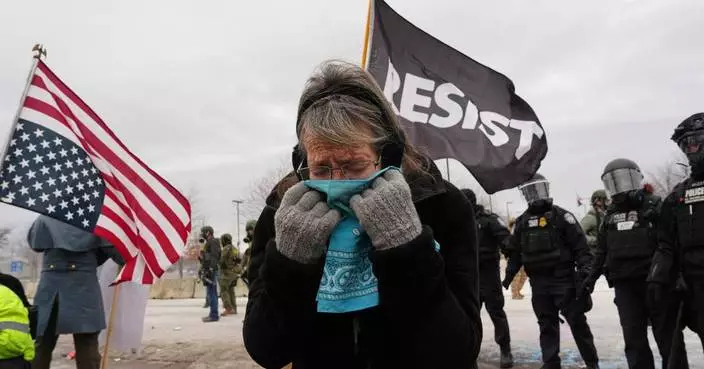
A woman covers her face from tear gas as federal immigration officers confront protesters outside Bishop Henry Whipple Federal Building, Thursday, Jan. 15, 2026, in Minneapolis. (AP Photo/Adam Gray)
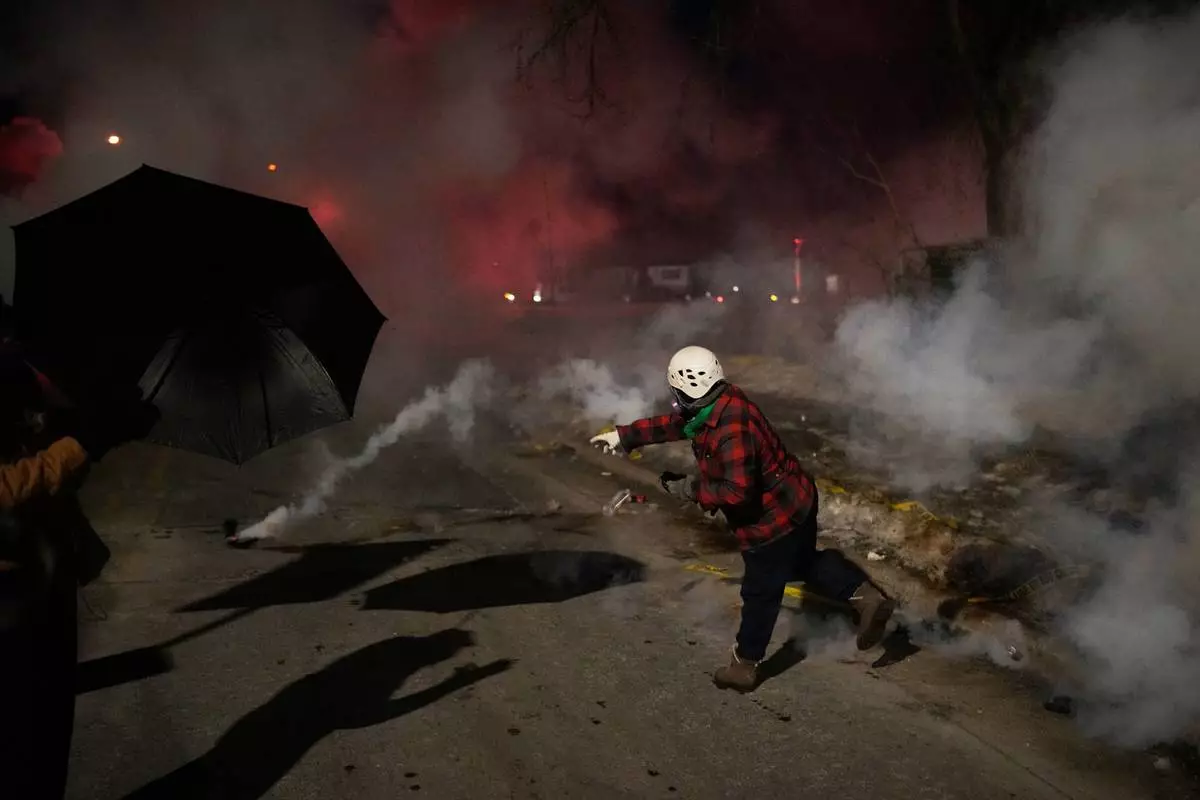
A protester throws back a tear gas canister during a protest after a shooting on Wednesday, Jan. 14, 2026, in Minneapolis. (AP Photo/John Locher)
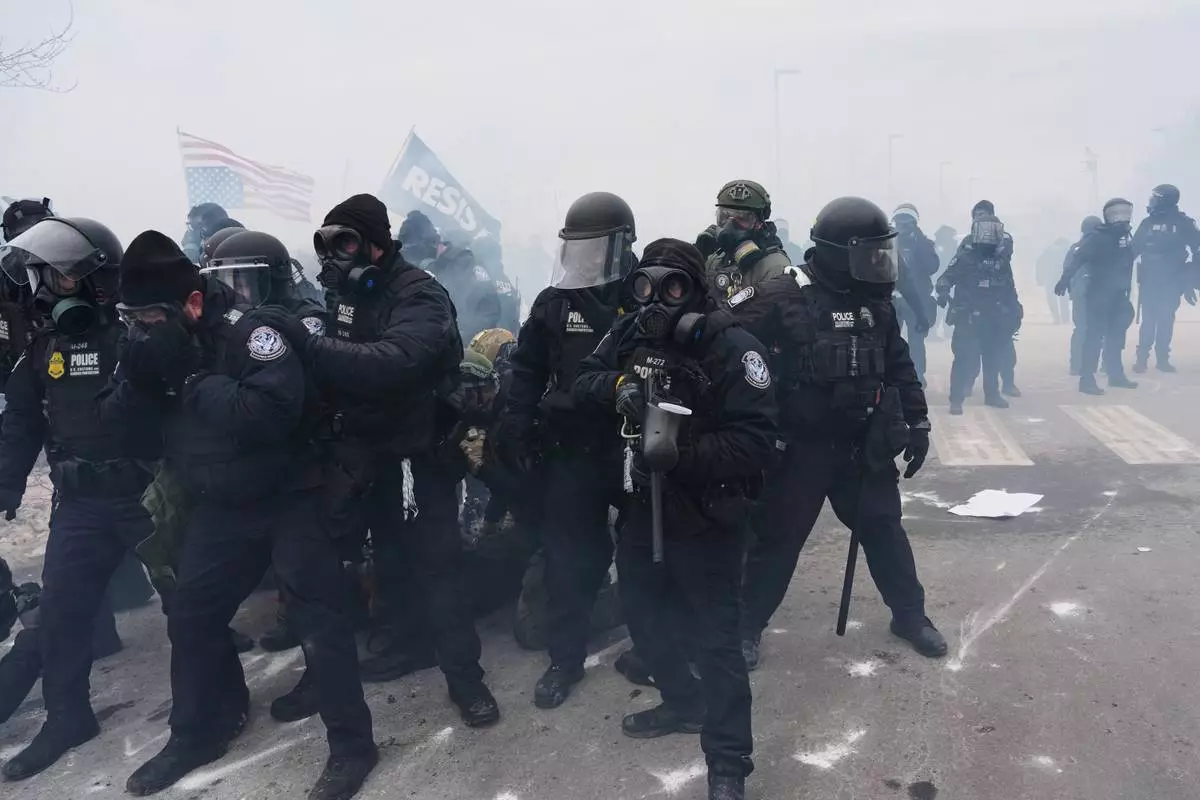
Federal immigration officers confront protesters outside Bishop Henry Whipple Federal Building, Thursday, Jan. 15, 2026, in Minneapolis. (AP Photo/Adam Gray)
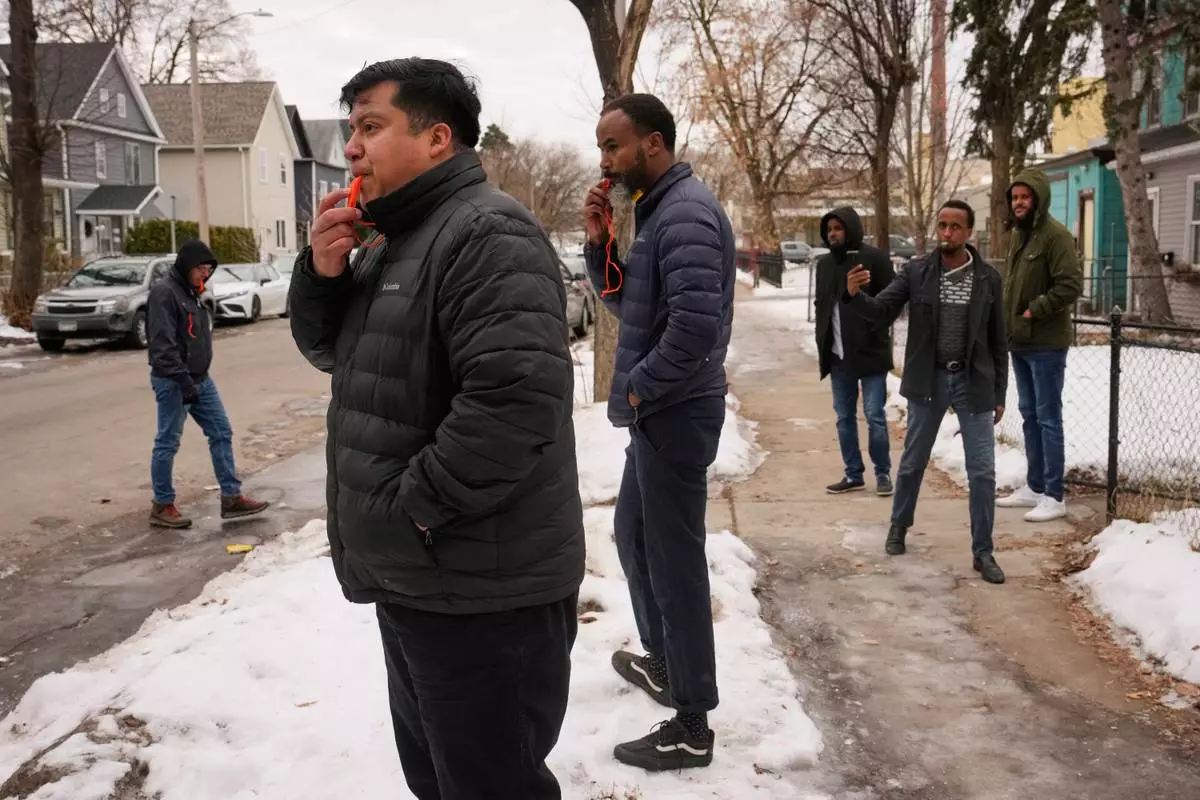
Minneapolis City Council Member Jason Chavez, second from left, blows a whistle with other activists to warn people of federal immigration officers Thursday, Jan. 15, 2026, in Minneapolis. (AP Photo/John Locher)
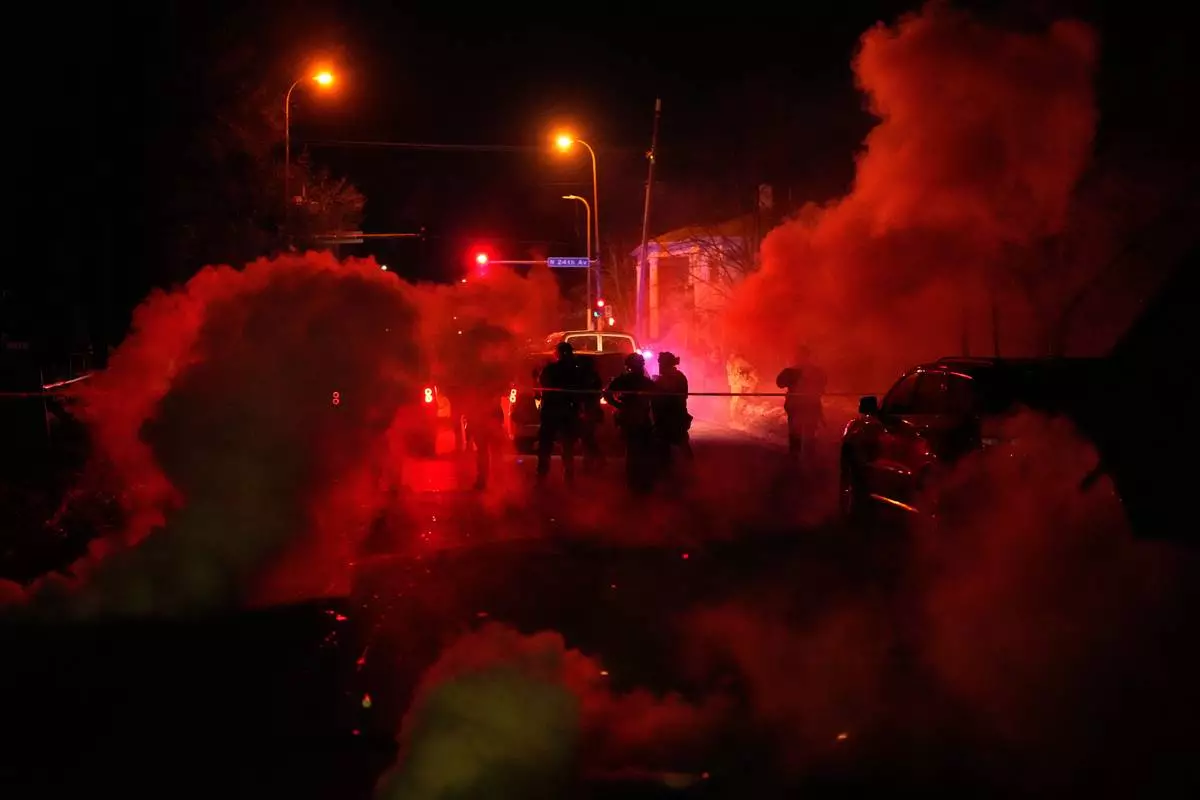
Tear gas surrounds federal law enforcement officers as they leave a scene after a shooting on Wednesday, Jan. 14, 2026, in Minneapolis. (AP Photo/John Locher)
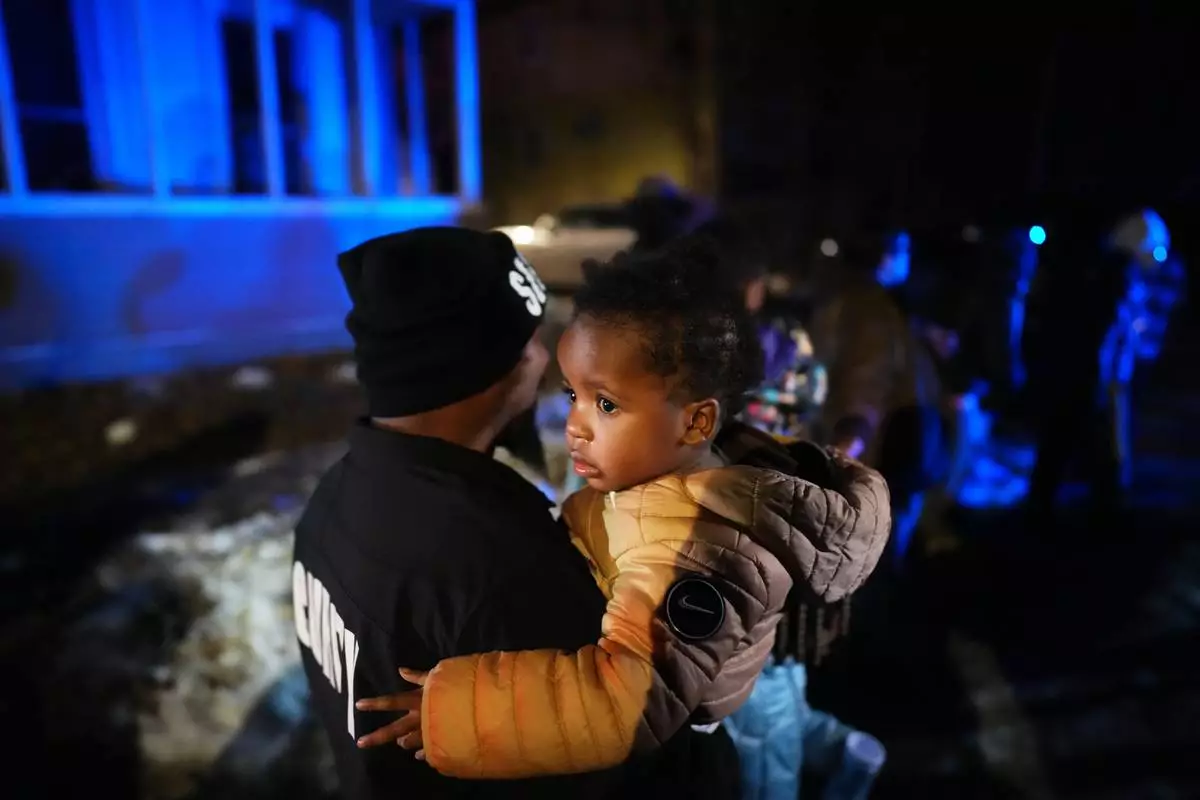
A child and family are escorted away after federal law enforcement deployed tear gas in a neighborhood during protests on Wednesday, Jan. 14, 2026, in Minneapolis. (AP Photo/Adam Gray)
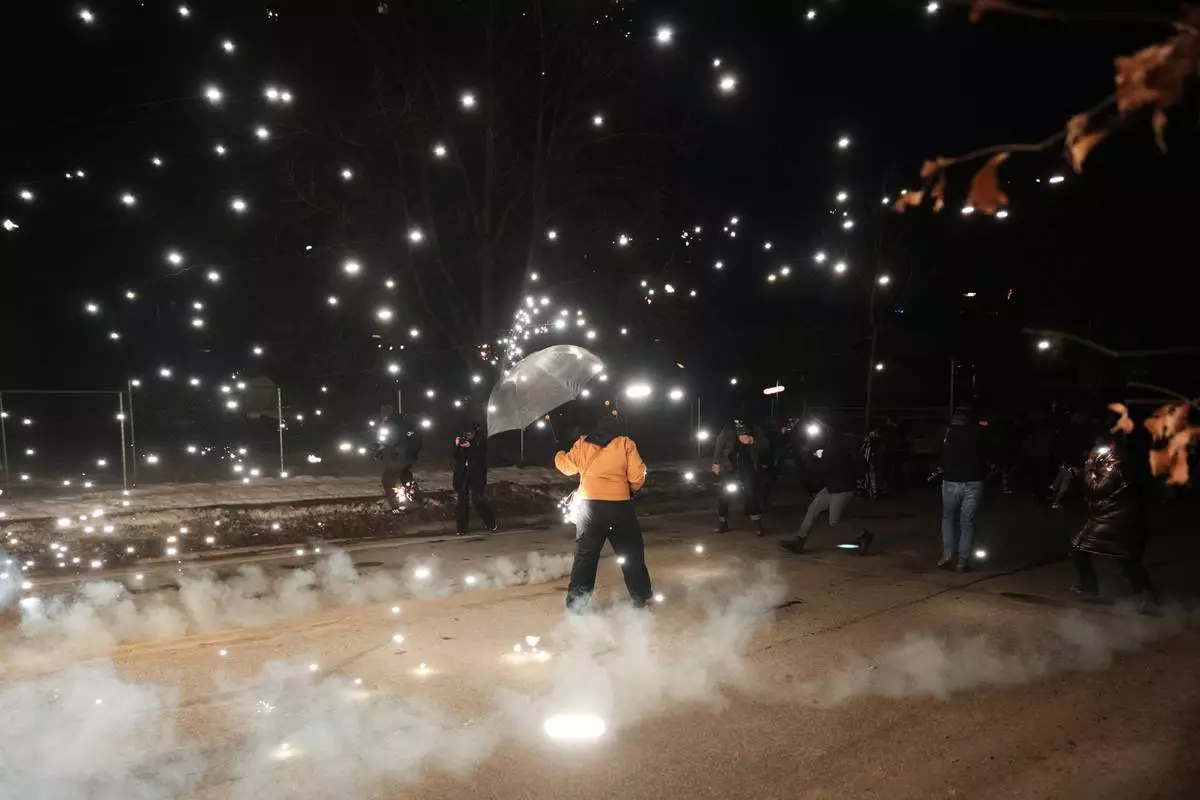
A protester holds an umbrella as sparks fly from a flash bang deployed by law enforcement on Wednesday, Jan. 14, 2026, in Minneapolis. (AP Photo/Adam Gray)
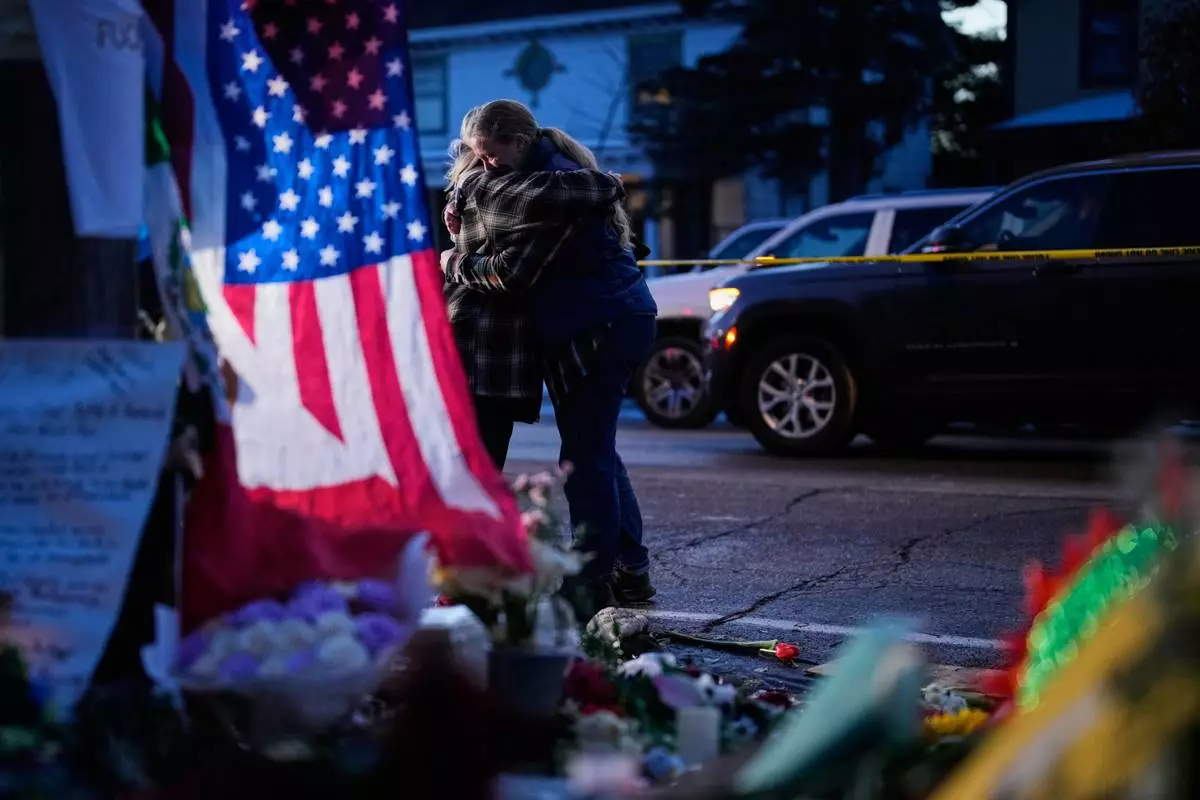
Monica Travis shares an embrace while visiting a makeshift memorial for Renee Good, who was fatally shot by an ICE officer last week, Monday, Jan. 12, 2026, in Minneapolis. (AP Photo/John Locher)
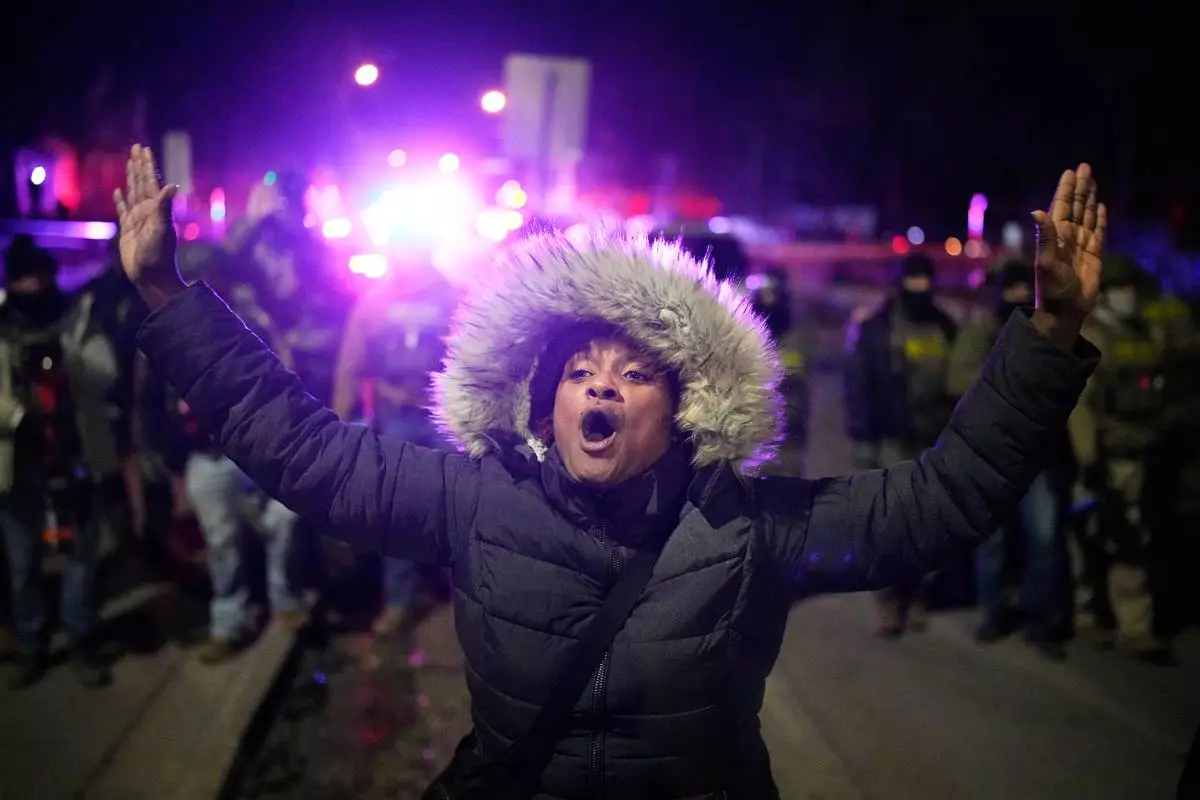
A protester yells in front of law enforcement after a shooting on Wednesday, Jan. 14, 2026, in Minneapolis. (AP Photo/John Locher)
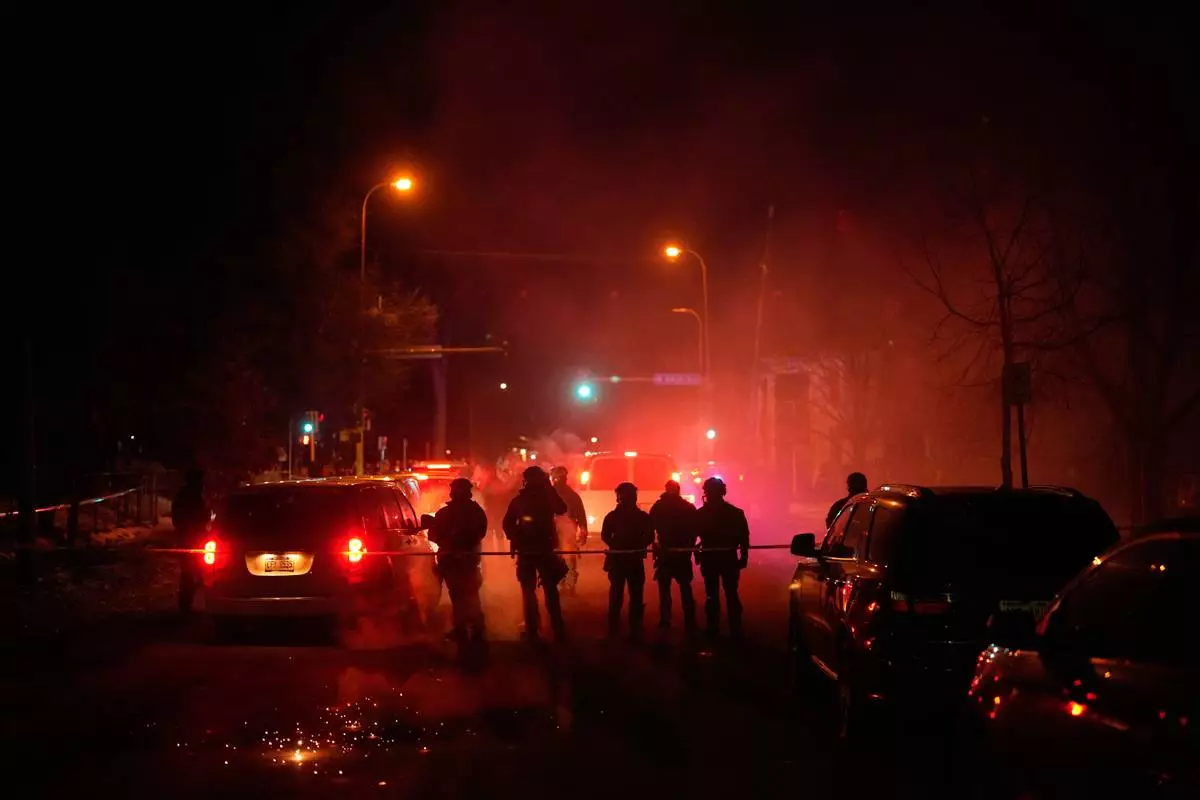
Tear gas surrounds federal law enforcement officers as they leave a scene after a shooting on Wednesday, Jan. 14, 2026, in Minneapolis. (AP Photo/John Locher)
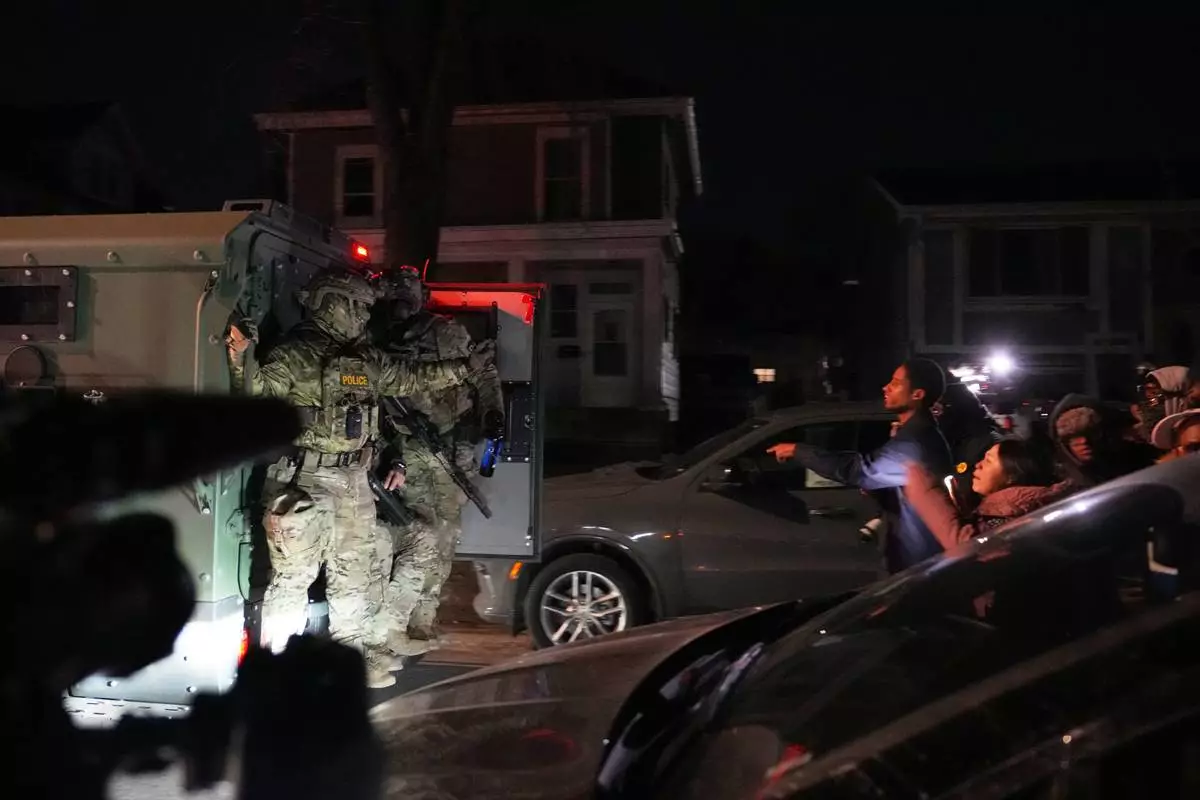
Protesters shout at law enforcement officers after a shooting on Wednesday, Jan. 14, 2026, in Minneapolis. (AP Photo/Abbie Parr)
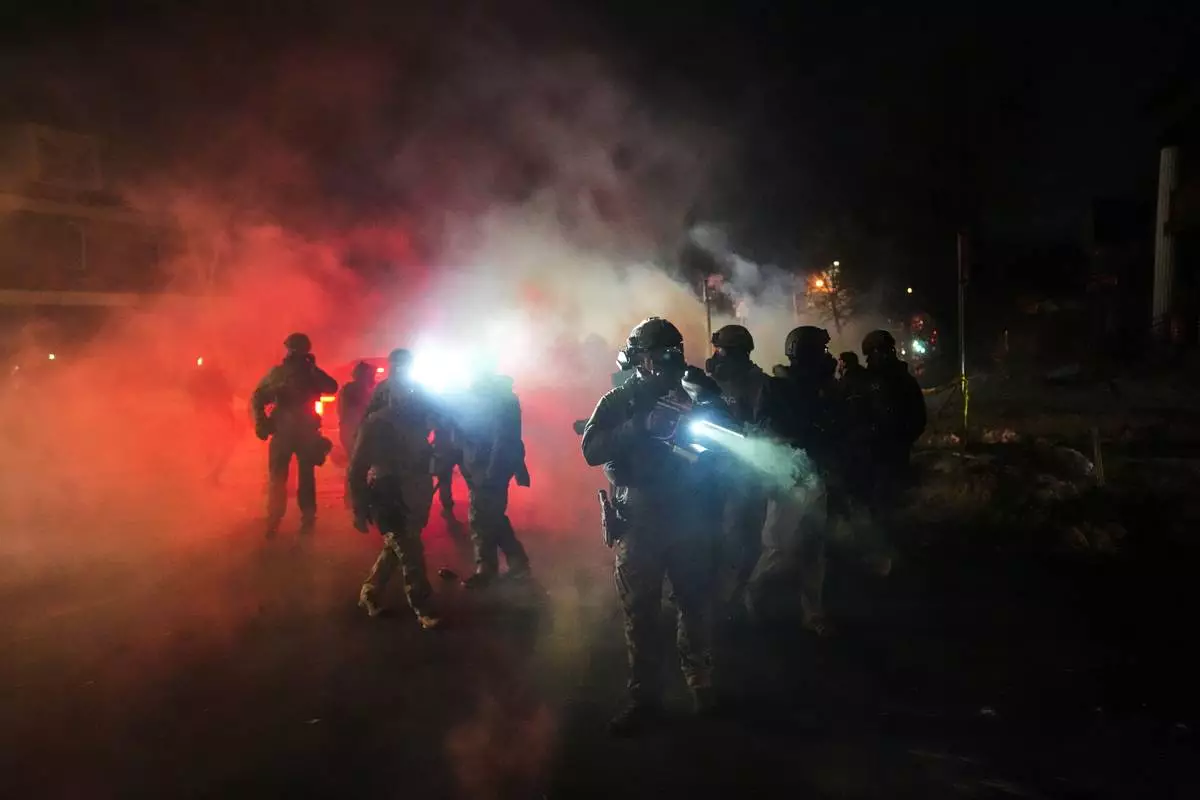
Law enforcement officers stand amid tear gas at the scene of a reported shooting Wednesday, Jan. 14, 2026, in Minneapolis. (AP Photo/Adam Gray)