LAS VEGAS (AP) — As Chicago roared through the 1985 NFL season, the Bears bullied opponents with the innovative “46 defense.”
Sports betting at that time was anything but innovative.
A point spread, money line and total. That was about it. Proposition bets were around, but not a central part of sports wagering.
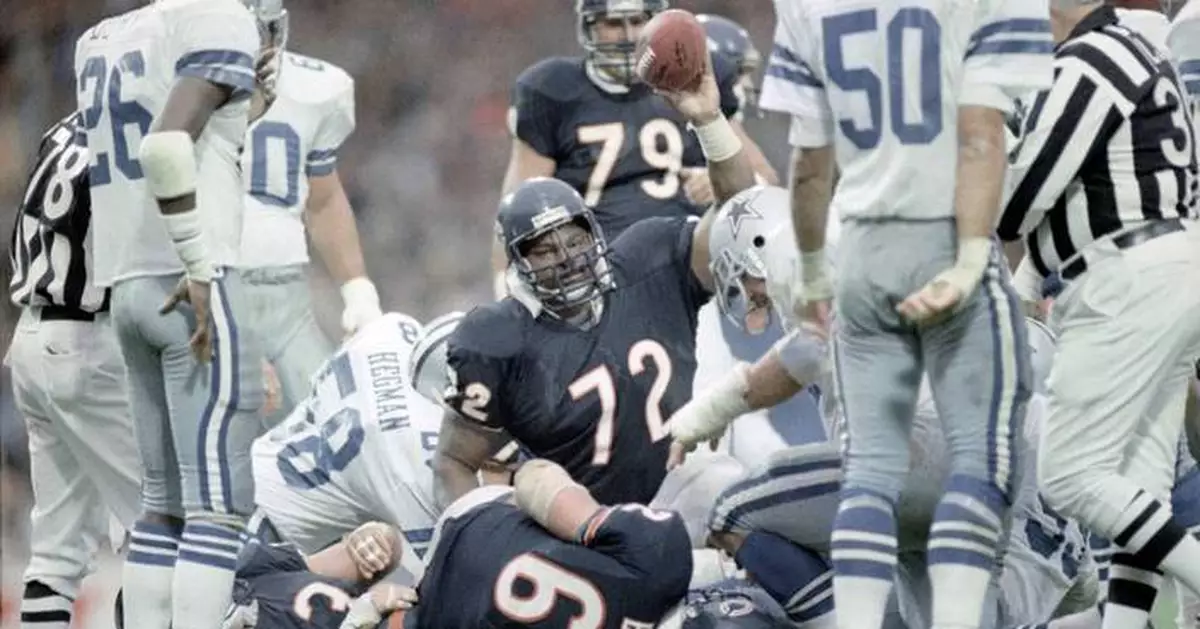
Then Art Manteris at Caesars Palace had an idea. The Bears were identified by their defense, and one of their tackles, William “Refrigerator” Perry, had created national buzz by lining up at fullback and scoring touchdowns on goal-line plays. So Manteris came up with a separate bet on whether the 340-pound Perry would score a touchdown in the Super Bowl against the New England Patriots.
“It was the biggest thing that ever happened to the prop bet because it made everybody say, ‘What the hell’s going on?'” said longtime oddsmaker Jimmy Vaccaro, who now works for South Point in Las Vegas.
Thus a wagering craze began to take hold, expanding into a monster during the leadup to the Super Bowl and moving on to other sports, such as the NCAA Tournament. The women's Final Four is Friday and the men play on Saturday, and there is no shortage of possibilities in markets where prop betting is legal on college sports.
At BetMGM Sportsbook, for example, Duke's Cooper Flagg is a +105 favorite to be named the tournament's Most Outstanding Player. UConn's Paige Bueckers is the -150 favorite on the women's side.
DraftKings Sportsbook offers odds such as whether there will be at least two buzzer-beaters on the men's side. That's +900 for someone willing to take a flyer. Someone could bet at +25000 that there will be at least a 25-point comeback on the women's side.
“It’s a game within a game, or several games within a game,” famed former oddsmaker Roxy Roxborough wrote in an email. “So, it allows bettors to have more action on the games. That’s fundamental.”
That was the thinking at Imperial Palace in the 1990s at a time when the Super Bowl was anything by super. The NFC dominated the AFC, winning 13 in a row with many games decided either by halftime or shortly afterward.
Sportsbook director Jay Kornegay and his team wanted to find a way to keep gamblers engaged even if the games became one-sided. Prop betting was that way.
“It was just to entertain everyone,” said Kornegay, who retired in November. “They became so popular that they became a revenue stream as well. So we thought, the more propositions we had, it would take some of that weight off the Super Bowl game itself because Super Bowl Sunday was a do-or-die situation for our operators back then. You won the game or lost the game.”
Now sportsbooks try to see if they can top each other during every Super Bowl — and other major sporting events.
Who can get more creative? Who can attract the most attention?
There also are concerns about prop betting, especially when it comes to wagering on college sports. Some states don't allow such wagers, and more than half of U.S. adults in a recent poll by The Associated Press-NORC Center for Public Affairs Research were against legalized professional betting on collegiate contests.
“Bookmakers will have to get pretty particular about props from this day forward because they’re under a lot of fire, especially in college sports,” Roxborough wrote. “Some states will likely restrict props, especially in college sports. However, the new bookmakers constantly push the limits on what they can and cannot do. I expect it to be a back-and-forth tussle with the regulators.”
Vaccaro remembered that 1985 Bears team and the Super Bowl prop that the rest of the Las Vegas Strip was forced to copy.
He opened the odds at about 40-1 at Golden Nugget and had to drop it to 10-1 when money poured in on the Fridge to score.
Which he did.
“I was glad he did, even though we took a beating on that game,” Vaccaro said. “It proved it was a nice prop.”
AP March Madness brackets: https://apnews.com/hub/ncaa-womens-bracket and https://apnews.com/hub/ncaa-mens-bracket and coverage: https://apnews.com/hub/march-madness. Get poll alerts and updates on the AP Top 25 throughout the season. Sign up here.
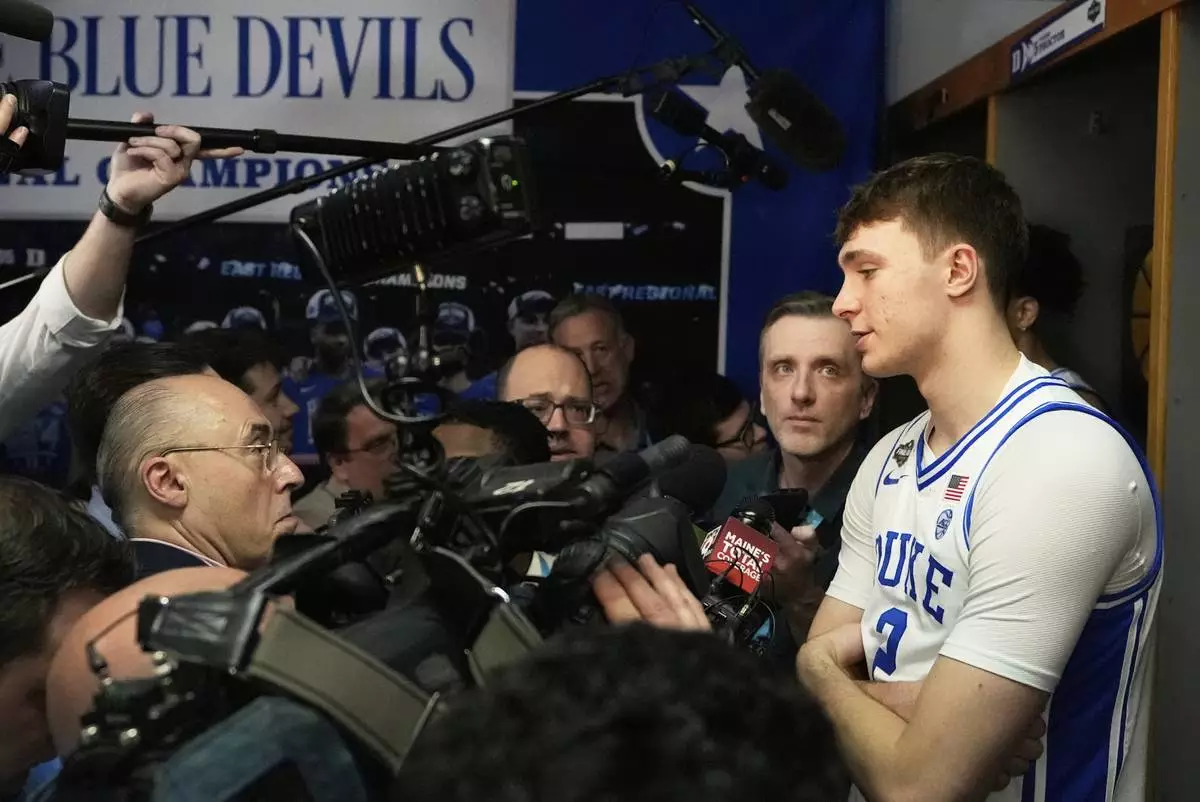
Duke forward Cooper Flagg is interviewed in the locker room during media day at the Final Four of the NCAA college basketball tournament, Thursday, April 3, 2025, in San Antonio. (AP Photo/Brynn Anderson )
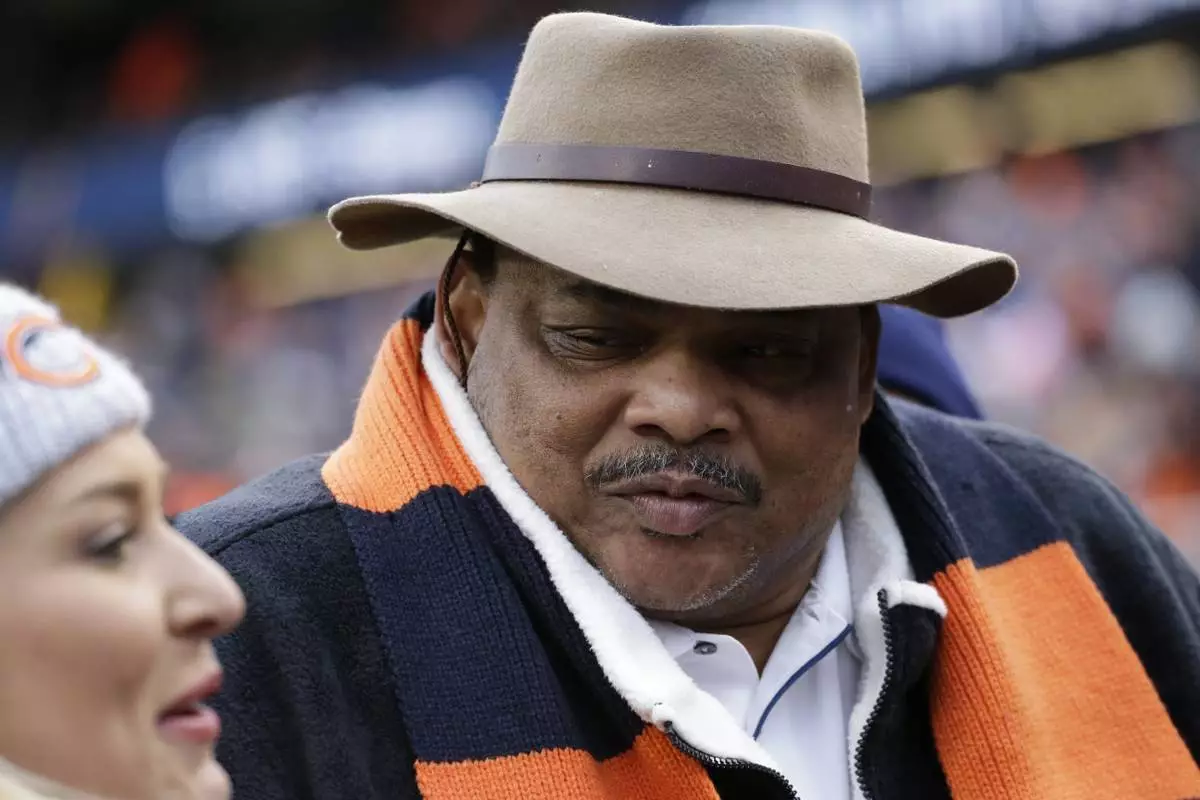
FILE - Former Chicago Bears player William Perry arrives during the first half of an NFL football game between the Bears and the Detroit Lions, Sunday, Jan. 3, 2016, in Chicago. (AP Photo/Nam Y. Huh,File)
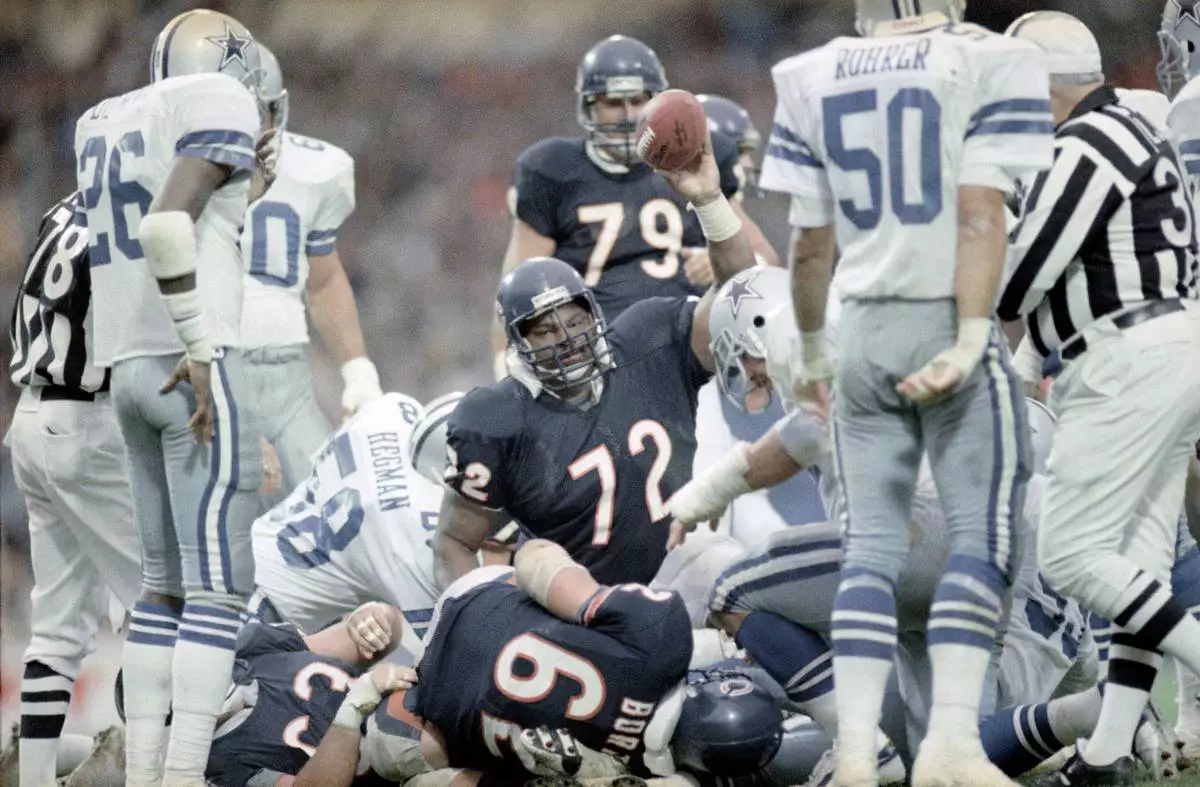
FILE - Chicago Bears William "The Refridgerator" Perry holds the ball to celebrate his touchdown from the Dallas one-yard line on Sunday, August 3, 1986 in the American Bowl at Wembley Stadium London. (AP Photo/Ron Heflin,File)
WASHINGTON (AP) — The world is getting more uptight about lending money to President Donald Trump’s government — causing interest rates to climb in ways that are worsening affordability pressures, hampering economic growth and creating a new risk for Republicans in November’s midterm elections.
The energy price spike triggered by the Iran war has seeped into the price of bonds that help fund the U.S. government. Interest rates on a 10-year U.S. Treasury note are topping 4.44%, up from 3.95% before the war started at the end of February. Average mortgage rates have climbed to their highest levels in nine months, while auto sales are slumping.
The challenge is global in scale, as interest rates have risen for multiple countries as the world has been adjusting to the prospect of higher inflation, mounting questions about the sustainability of government debt and a dramatic surge in investment in artificial intelligence.
Trump has tried to assure Americans that he has a plan to trim the roughly $1.8 trillion annual budget deficit. In the past, he has pointed to revenue from tariffs, payments from foreigners for his “Gold Card” visa, spending cuts made by the Department of Government Efficiency, and faster economic growth. Last week, he said the fraud task force led by Vice President JD Vance would be the key to unlocking massive savings.
“If he does really great, we’ll have a balanced budget without having to do anything,” Trump said.
Economists say Trump’s strategies to meaningfully curb the deficit are unlikely to deliver the promised results.
The cost of servicing the national debt has tripled since 2021 to more than $1 trillion annually, said Jessica Riedl, a budget and tax fellow at the Brookings Institution.
“President Trump signed a tax cut bill that will likely add $5 trillion to 10-year deficits — and tariffs are offsetting only a small fraction of those costs,” she said. “Budget deficits are still projected to soar past $4 trillion annually within a decade under current policies.”
Deficits are expected to grow over the next decade as the costs of Social Security and Medicare outstrip tax revenues.
The 10-year U.S. Treasury rate climbed as high as 4.67% in the middle of May and has since eased as negotiations over the Iran ceasefire continued — just as rates initially climbed in 2025 because of Trump's “Liberation Day” tariffs and then began to decline once Trump backed off the most extreme increases.
When Kent Smetters, faculty director of the Penn Wharton Budget Model, broke down the math tied to rising 30-year Treasury yields, he estimated that 60% of the increase had come from the expectation that America will continue its outsized borrowing and the other 40% was tied to the inflation driven by the Iran war and Trump’s tariffs.
Glenn Hubbard, a former chairman of the White House Council of Economic Advisers during the George W. Bush administration, worries that the U.S. may no longer have the same borrowing capacity as before to effectively combat an economic crisis, such as the 2008 crash or the coronavirus pandemic.
“I don’t think we have the space that we had in 2008 or 2020 to deal with it,” said Hubbard, now a professor at Columbia University's Business School. “Washington doesn’t seem to be full of ideas — good or bad — to solve it.”
Higher interest rates are giving Democratic candidates in the races to determine control of the House and Senate another line of attack at a time when voters are concerned about high costs for food and gasoline.
In Colorado’s fifth congressional district, Democrat Jessica Killin is leaning into the message that the persistent deficits and higher interest rates make it harder to buy or renovate a home, afford a new car or manage credit card debt.
“Things are already expensive,” said Killin, an Army veteran who was a top aide to Doug Emhoff, the former second gentleman. “We can already talk about gas, but the cost of borrowing only makes that worse.”
Joe Reagan, an Army veteran also seeking the Democratic nomination, said in an email that he is talking “a lot about fiscal stewardship” in his campaign. “Every dollar spent paying interest is a dollar that isn’t being invested in infrastructure, education, veterans’ services, or economic growth," he said.
They are challenging Republican Rep. Jeff Crank in a district that their party views as a potential pickup. Killin said the deficit is an example of how “Trump says one thing and does the opposite.”
In his March 2025 address to Congress, Trump declared that “in the near future, I want to do what has not been done in 24 years: balance the federal budget. We’re going to balance it.”
Crank, the Republican incumbent, did not reply to requests for comment.
The administration maintains that it is going to steadily reduce budget deficits. As a share of the overall economy, the deficit last year was lower than it was in 2024, though that drop depended in part on tariff revenues that are subject to refunds after the Supreme Court ruled them to be illegal.
Treasury Secretary Scott Bessent last week cited a report showing that there was as much as $500 billion annually in fraudulent government spending that could be eliminated, “so that would reduce the deficit substantially.”
Bessent appeared to draw that conclusion from a 2024 report by the Government Accountability Office that estimated there had been between $233 billion to $521 billion each year in fraudulent spending. But those numbers were drawn in part from the pandemic era when the government borrowed heavily to stabilize the economy.
The White House and Treasury did not respond to questions about the source of Bessent’s claims.
On deficits, Bessent told reporters at the White House that the administration was essentially dealt a bad hand from former President Joe Biden, a Democrat. “We inherited the worst budget deficit in history — in history — when we were not in a recession or not at war,” Bessent said.
Bessent had previously announced that the administration would aim to reduce the annual deficit to 3% of overall U.S. gross domestic product. It’s roughly double that percentage currently and Bessent did not directly answer a question about the timeline for hitting his target.
As of now, investors continue to buy shares in U.S. companies, causing the stock market to increase in value in a sign of confidence in America’s economic potential. But the increase in interest rates also suggests that investors view the national debt as a vulnerability for the U.S.
The financial markets might be able to inflict enough pain with higher rates in order to compel political leaders to address the systemic imbalances. Multiple economists said they expected that markets would force the deficit issue before voters would.
Hubbard emphasized that the whole bond market system rests on the trust that the debt will be repaid. He noted that the word “credit” is linked to a Latin term that is also the root of the word creed about a system of beliefs.
“That is what debt is about: I believe you will pay me back,” Hubbard said. “That works until it doesn’t.”
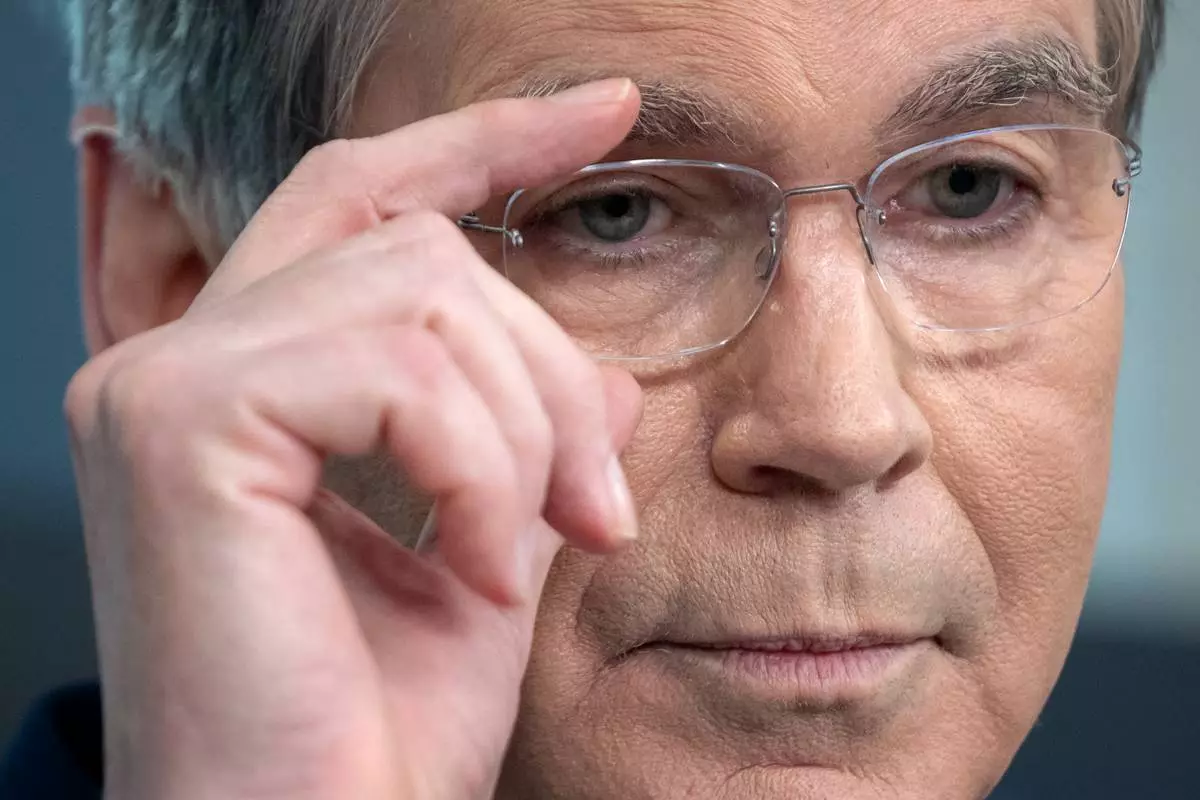
Treasury Secretary Scott Bessent listens to a reporter's question in the James Brady Press Briefing Room at the White House, Thursday, May 28, 2026, in Washington. (AP Photo/Mark Schiefelbein)
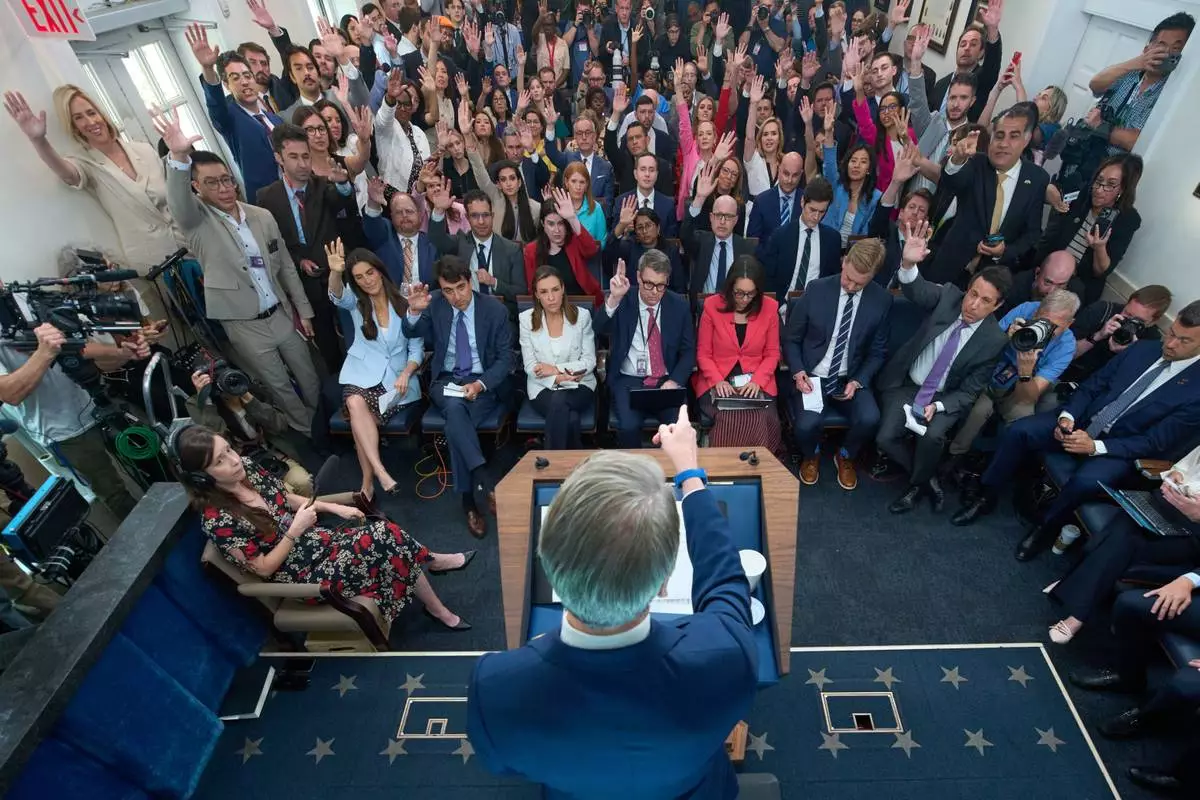
Treasury Secretary Scott Bessent calls on a reporter in the James Brady Press Briefing Room at the White House, Thursday, May 28, 2026, in Washington. (AP Photo/Jacquelyn Martin)
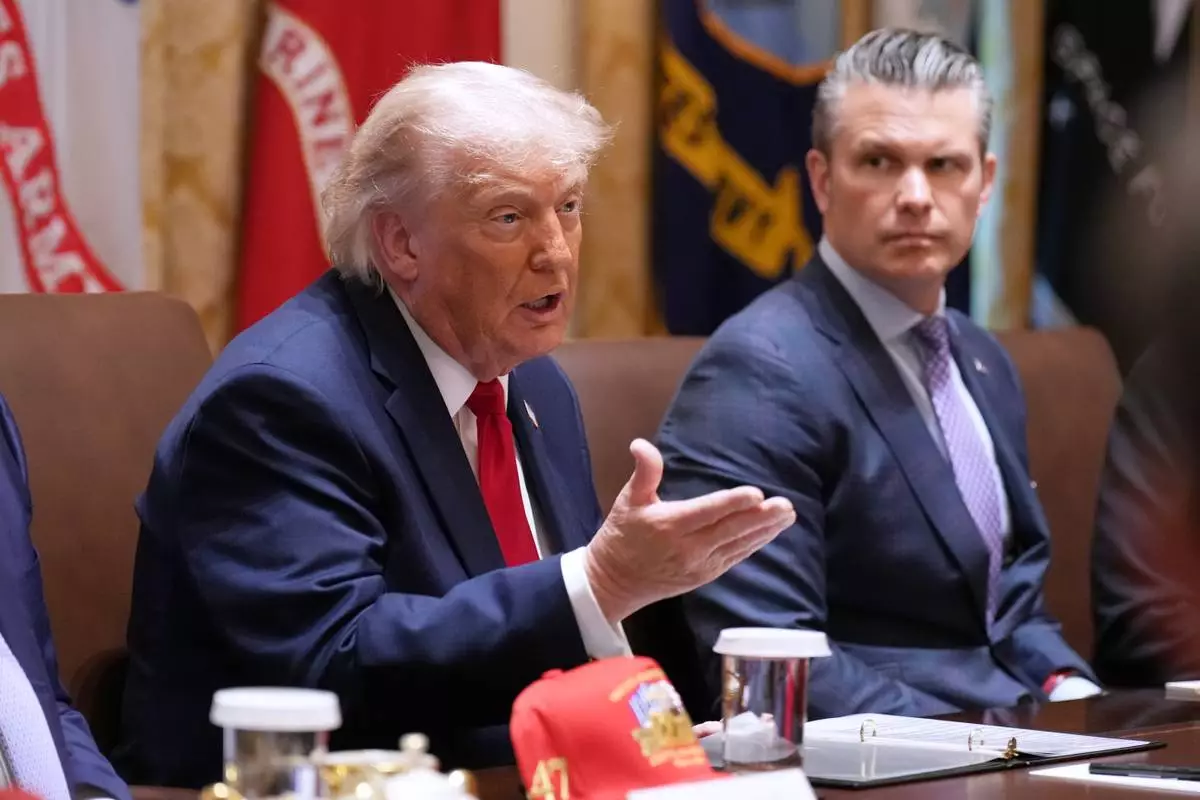
President Donald Trump speaks during a Cabinet meeting at the White House, Wednesday, May 27, 2026, in Washington, as Secretary of Defense Pete Hegseth, looks on. (AP Photo/Jacquelyn Martin)