
Skip to Content Facebook Feature Image

Hong Kong’s governance fairs “OK” in UK report

Blog

Hong Kong’s governance fairs “OK” in UK report
Blog

Blog

Hong Kong’s governance fairs “OK” in UK report

2025-04-04 15:09 Last Updated At:15:09

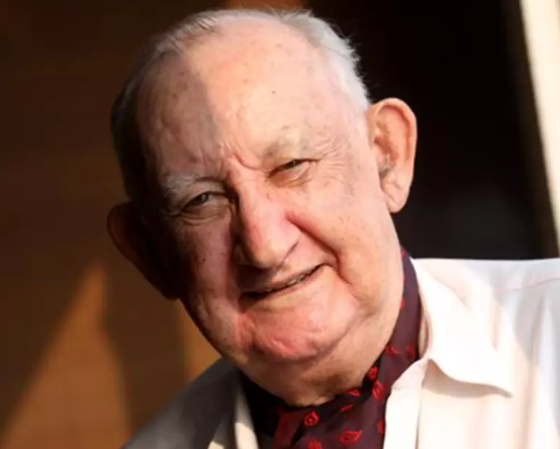
Mark Pinkstone/Former Chief Information Officer of HK government

When the “Question of Hong Kong” was raised in the mid-‘70s, Chinese paramount leader Deng Xiaoping came up with the “one country-two systems” concept. The world scoffed at the idea. How could a rip-roaring capitalist regime survive in a communist country?

Forty-one years after the signing of the Joint Declaration (which became the blueprint for Hong Kong’s future) in 1984 between the UK and China, the British government has virtually said that China has kept it’s promise that Hong Kong’s way of life would continue after 1997 as it was beforehand. While not openly applauding Hong Kong’s governance, nor was it openly critical, except for national security issues, the report was fairly balanced.

The 37-page report, a requirement stipulated by the parliament for the UK Foreign Affairs and Commonwealth Office (FCO) to submit six monthly reports on Hong Kong, could find little fault with the governance of Hong Kong.

The report reflected views of dissident groups without comment and drew attention to the Court of Final Appeal cases in favor of the plaintiffs. This should be seen as proof of a fair and trust-worthy legal system in Hong Kong.

However, it noted that since March 2021, and following the imposition of the 2020 National Security Law (NSL), the UK has declared China to be in a state of ongoing non-compliance with the Sino British Joint Declaration. But added: “The judicial system in place prior to the establishment of the Hong Kong SAR continued to be maintained in general. The prosecuting authority in Hong Kong remained within the Department of Justice. The courts continued to exercise independent judicial power, decide cases in accordance with the laws of the Hong Kong SAR and refer to precedents in other common law jurisdictions.”

The report was bullish about Hong Kong’s finances, its economy and monetary system, noting the Fraser Institute’s Economic Freedom of the World 2024 annual report rated Hong Kong as the freest economy out of 165 jurisdictions. It also recognized the positive aspects of Hong Kong’s shipping, civil aviation, education and trade.

UK Foreign Secretary David Lammy drew attention to the plight of 45 activists imprisoned for sedition, collusion with foreign governments, rioting and other national security charges. And that the trial of media mogul Jimmy Lai was “politically motivated”.

He also lamented on the arrest warrants by Hong Kong police on a number of individuals living in the UK. “The Prime Minister and I have met these individuals and heard about the wider chilling effect that transnational repression is having on the Hong Kong diaspora.” he said.

The issuance of international warrants for arrest are not uncommon. The UK National Criminal Agency (NCA) pleads: “We pursue wanted fugitives all around the world …” It is currently hunting 24 men wanted for various crimes in the UK, adding that there is a bounty out for a Russian national worth US$10 million (HK$78 million).

So, what is Lammy moaning about? He listens to people who have grievances, without checking the backgrounds of the individuals. He forgets Hong Kong was subjected to severe riots in 2019-20 when people were killed, the city was set alight, shops were ransacked and looted, people were threatened and living in fear, and mayhem was the order of the day. And while this was going on, political pundits were going around the world seeking sanctions against Hong Kong and drumming up support for Hong Kong’s independence. People and world leaders get jailed for that. Attempting to overthrow a government is a crime, not political persecution.

The Hong Kong SAR Government is naturally upset about the report saying it absolutely refutes the untruthful remarks, slanders and smears against various aspects of the report, which was compiled by the Hong Kong department in the FCO. Daily reports are submitted to the office by the UK Consulate General in Hong Kong.

Lammy and others in the west, often refer to the “Beijing-imposed” national security laws in Hong Kong as if it is something sinister. It is not! Beijing is the federal capital of Hong Kong, as is London in the UK, Washington in the US and Canberra in Australia. The NSL implementation was a natural reaction to a disastrous situation. Hong Kong was spinning out of control, spurred on by foreign forces, but contained by a very efficient and resourceful police force. Hong Kong needed a legal framework to deal with the dissidents.


Mark Pinkstone

** The blog article is the sole responsibility of the author and does not represent the position of our company. **

Hong Kong is facing a dilemma as more locals are spending their dollars outside of the city than what the visitors are bringing in.

Relaxed visa/permit restrictions for locals and foreign residents alike is making it easier for travel to the mainland while inbound traffic crossing the boundary is low budget and spending less on accommodation and food.

Tourism is an important pillar for Hong Kong’s economy. In pre-COVID times, tourism accounted for about four per cent of the territory’s Gross Domestic Product (GDP) and provided for about six per cent of total employment.

In Hong Kong’s heydays, the city saw about 65 million tourists in 2018, of which 51 million came from the mainland. It was boom time for retailers and restaurants. Long queues of mainland shoppers would line the streets along Canton Road and elsewhere waiting to buy luxury items from Gucci, Prada, Tiffany’s and other high-end stores which set up shop in Hong Kong to tap this lucrative market.

Today many restaurants and retail outlets are closing down, especially in the boundary towns of Sheung Shui and Yuen Long. The market is no longer there, and high rental costs make it almost impossible to survive.

During the 2025/2026 festive season, Hong Kong saw a 25.6 per cent rise in inbound trips on New Year’s Day 2026 (664,338 trips), but this was still countered by a massive 515,954 outbound exits on the same day.

Winston Yeung, chair of the Hong Kong Federation of Restaurants & Related Trades, told local media that business was sluggish during the Christmas holiday, with some restaurant owners calling it “the slowest business at Christmas over the past 10 years.”

Unfortunately, the local market is not propping up the tourism outlets. Instead, the locals are traveling in large numbers to Shenzhen and Macau and other parts of China for day trips or extended holidays, thereby providing a leakage in the local economy.

While Hong Kong received more than an estimated 45 million visitors last year, more than about 100 million departures were recorded by the Immigration Department of locals leaving Hong Kong by plane, train or bus mainly to the mainland (75 per cent), and to other major Asian destinations.

Hong Kong has 320 hotels offering 92,907 rooms, according to the Hong Kong Tourism Board. Despite mainlanders’ choice of more budget accommodation, occupancy rates for the hotel industry remained high at 88 per cent last year. The major hotels are not affected by the change in mainlanders’ preferences as they rely more on the affluent international tourist, visiting Hong Kong for business, conventions or holidays.

Property developer, Caldwell Banker Richard Ellis (CBRE) says Hong Kong’s hospitality market currently presents various investment-ready assets including rare investment opportunities for upper upscale and luxury hotels. These high-end properties are particularly attractive due to their resilience, as they are less reliant on Chinese group travelers and enjoy sustained spending power among affluent individual travelers and international visitors. This makes them attractive for investors seeking stable returns in a dynamic market.

To encourage locals to spend more at home and at the same time provide a bonus for tourists, Hong Kong has organised a series of mega events, many held in the new sports stadium on the site of the old Kai Tak airport in Kowloon. Traditional events in 2026 will include the French May Arts festival in March, Hong Kong Book Fair in July, Hong Kong performing Arts Expo in October, the World Snooker Grand Prix in February, and, of course, the international dragon boat races in June.

Blockbusters will include BlackPink World tour in January, the Hong Kong marathon, which draws in runners and their supports from around the world, and the Hong Kong Tennis Open also in January.

That is good for the inbound and outbound tourists alike. But more needs to be done to tip the tourism scales to a surplus for Hong Kong’s economy to grow at a faster pace. As the saying goes charity starts at home, so it is up to us as local residents who have reaped the benefits of the city to spend more in local restaurants and retail outlets than spend it elsewhere. Support local enterprises. After all, the restaurants in Hong Kong are ranked among the best in the world and are tax free as against a value-added tax applied to restaurants and shops in the mainland.

Recommended Articles