SAN ANTONIO (AP) — Alijah Martin still cringes at the memory of his freshman season at Florida Atlantic, played amid empty arenas, nose-swab testing and bubble protocols as the sporting world tried to operate in a COVID-19 world.
“You do all this practice the week of the game, you get to the game and that team is sick,” Martin said. “So now you don't have a game, you’re not playing, you’re not getting better, you're not getting film.”
Click to Gallery
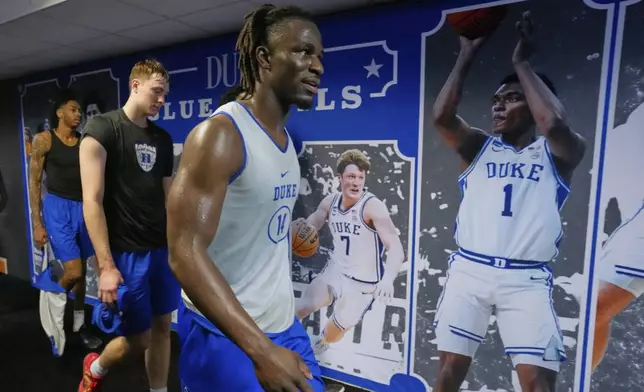
Duke's Sion James (14) walks past the team's locker room during media day at the Final Four of the NCAA college basketball tournament, Thursday, April 3, 2025, in San Antonio. (AP Photo/Eric Gay)
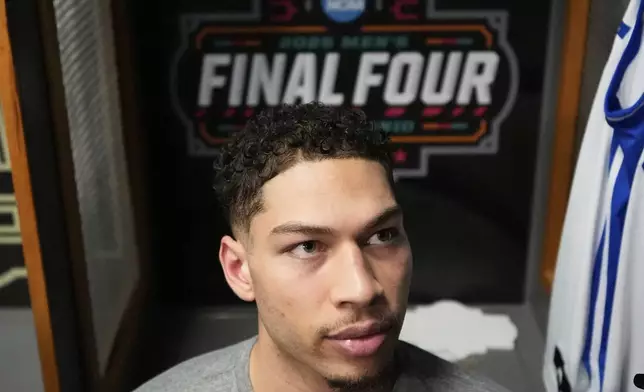
Duke forward Mason Gillis is interviewed in the locker room during media day at the Final Four of the NCAA college basketball tournament, Thursday, April 3, 2025, in San Antonio. (AP Photo/Brynn Anderson )
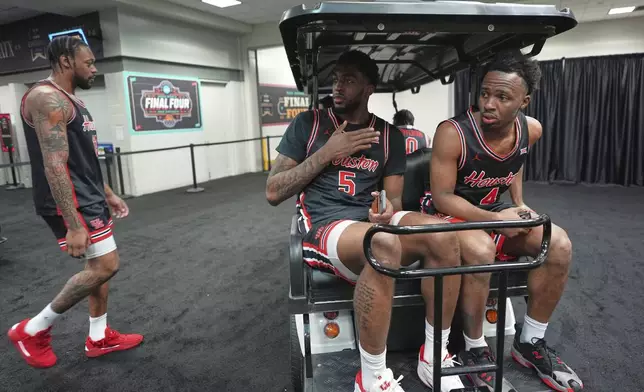
Houston's L.J. Cryer (4) and Ja'Vier Francis sit on the back of a cart as J'Wan Roberts, left, joins them during media day at the Final Four of the NCAA college basketball tournament, Thursday, April 3, 2025, in San Antonio. (AP Photo/Eric Gay)
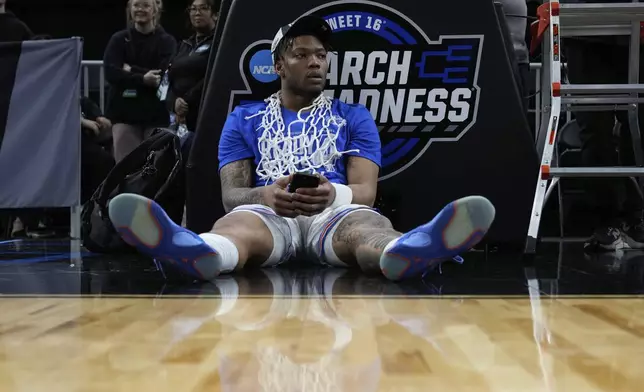
Florida guard Alijah Martin sits on the court after defeating Texas Tech in the Elite Eight of the NCAA college basketball tournament, Saturday, March 29, 2025, in San Francisco. (AP Photo/Godofredo A. Vásquez)
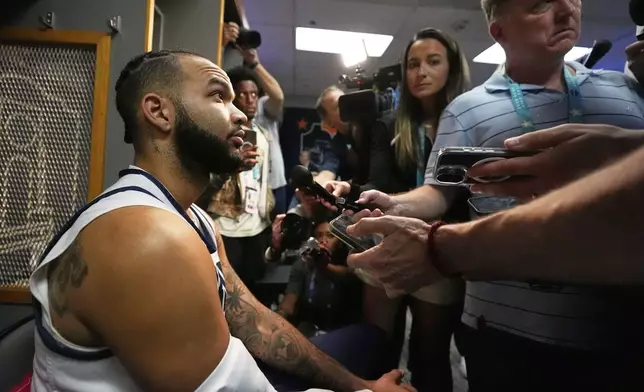
Auburn forward Johni Broome is interviewed in the locker room during media day at the Final Four of the NCAA college basketball tournament, Thursday, April 3, 2025, in San Antonio. (AP Photo/Brynn Anderson )
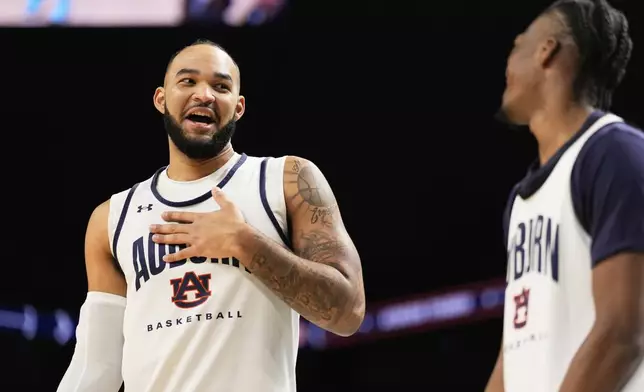
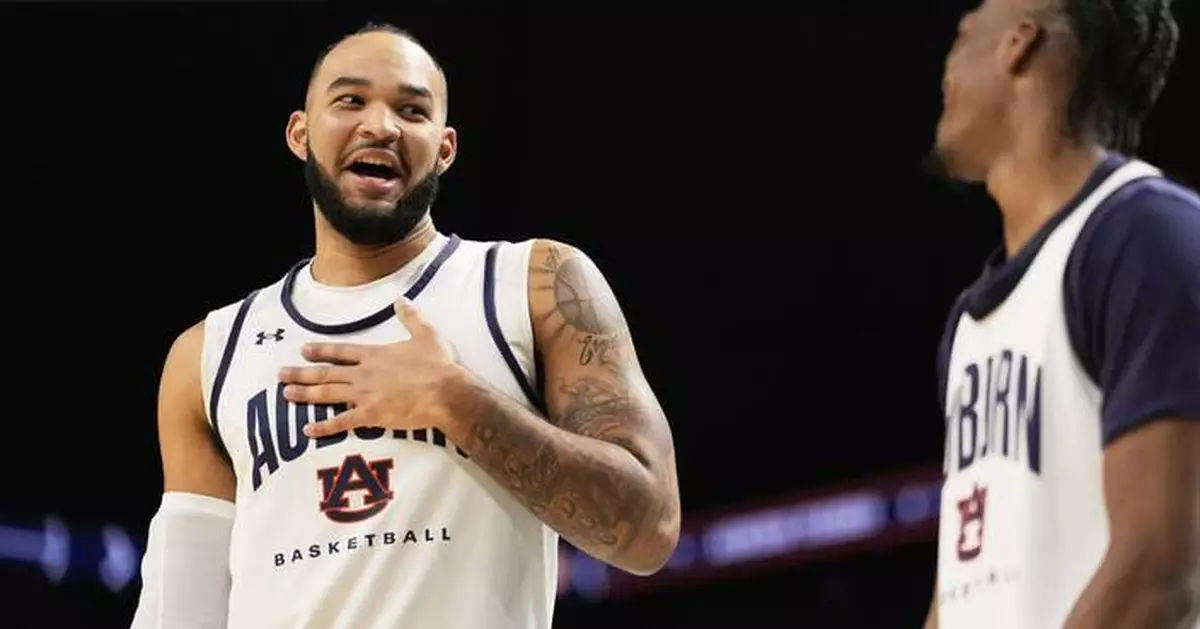
Auburn forward Johni Broome and guard Miles Kelly talks during practice at the Final Four of the NCAA college basketball tournament, Friday, April 4, 2025, in San Antonio. (AP Photo/Brynn Anderson )
Yet Martin could look back with appreciation, too. After all, he was standing Friday in Florida's busy Alamodome locker room as a fifth-year guard for a Gators team in the Final Four. The NCAA granted that year for Martin and others across the country who competed during those most unusual of times in the 2020-21 season, which proved to be landscape-altering change to the core structure of college athletics with players competing just four years.
But those “COVID years” have largely cycled out of men's and women's college basketball this season, so the semifinals Saturday and title game Monday night will mark a farewell of sorts for a time that has kept players like Martin, Auburn star Johni Broome, Baylor's LJ Cryer, and Duke's graduate-transfer duo of Sion James and Mason Gillis around the college game longer than usual.
“It's definitely a different era,” said Broome, the unanimous Associated Press first-team All-America selection who played his first two seasons at Morehead State before transferring for three years with Auburn. "A lot of guys who have been around a long time, their time is up.
“A couple of more guys, it will be in a week. I think it's going to be a different era in basketball now that all the fifth-year guys will be gone.”
Broome understands the journey well. His first year at Morehead State ended with a first-round loss to West Virginia in the bubbled 2021 NCAA Tournament. That game came in Lucas Oil Stadium, home to the NFL's Indianapolis Colts, with a giant curtain hanging in the center of the massive venue to allow for two courts on the stadium's floor.
And social-distancing rules meant it came in a largely empty setting.
Yet on the other side of that curtain that night, Gillis was a first-year player experiencing that altered form of March Madness. He lost, too, with North Texas upsetting Gillis' Purdue team.
In fact, there are eight fifth-year players at the Final Four in San Antonio when looking at the top-10 scorers for each of the Auburn, Florida, Duke and Houston rosters. Gillis and Broome were among four who played in that decidedly odd tournament four years ago, with Houston's LJ Cryer briefly appearing in Baylor's title-game victory over Gonzaga while teammate J'Wan Roberts has spent all five of his years with the Cougars and played briefly in Houston's loss to Cryer and Baylor in the national semifinals.
They're all elder statesmen now, their college careers down to two games at best depending on the outcomes of Saturday's games.
“I think it's good having guys stay,” Duke coach Jon Scheyer said. “I think there's a limit to it, though. I think we're getting to a place here were now four or five years is enough. For us, we have been able to take advantage of it, too. Having Mason Gillis has been an awesome thing for us.”
The availability of veteran talent through the transfer portal has offered an enticing pipeline to veteran talent for coaches, who have seen the value of getting older rather than developing freshmen who might opt to transfer out anyway.
According to NCAA data, the average experience level for Division I men’s players stood at 2.41 years for 2018-19, the last full season untouched by the pandemic. It had risen to 2.62 years for 2024-25. Yet that data is based on a four-year scale, meaning it doesn’t tell the full story on how players in fifth years or beyond would drive that figure even higher.
“I do know this time was unique because of how old players are and how much movement there is,” said James, who played four years at Tulane before transferring to play for the Blue Devils this season. “In a sense, players have more experience during this period of time than they may ever have in college basketball. For me, it’s been great as a competitor.”
It certainly seems to have played a role in the fact that this year marks only the second all-chalk set of 1-seeds at the Final Four, the other coming in 2008. And for the second straight year, each of the Final Four teams will have at least one fifth-year starter.
By Monday night, though, those journeys will be over. So, too, will the fifth-year era. And it's difficult to imagine a time when anything like it — an en masse granting of extra eligibility — could happen again.
“Going forward, you won’t see many more graduate students because of the COVID year,” Martin said. "We all got that year because of COVID. Unless another global sickness or illness comes back around, you won’t see too much of this happening.
AP March Madness bracket: https://apnews.com/hub/ncaa-mens-bracket and coverage: https://apnews.com/hub/march-madness. Get poll alerts and updates on the AP Top 25 throughout the season. Sign up here.
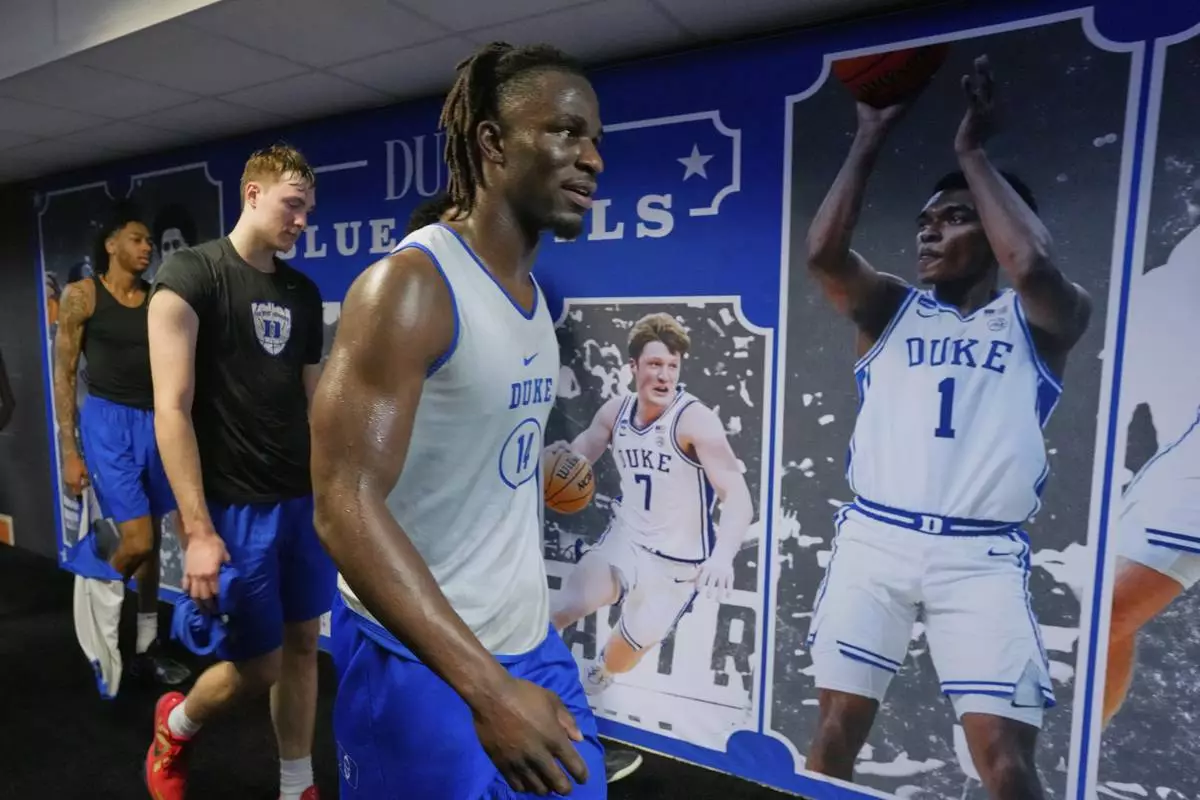
Duke's Sion James (14) walks past the team's locker room during media day at the Final Four of the NCAA college basketball tournament, Thursday, April 3, 2025, in San Antonio. (AP Photo/Eric Gay)
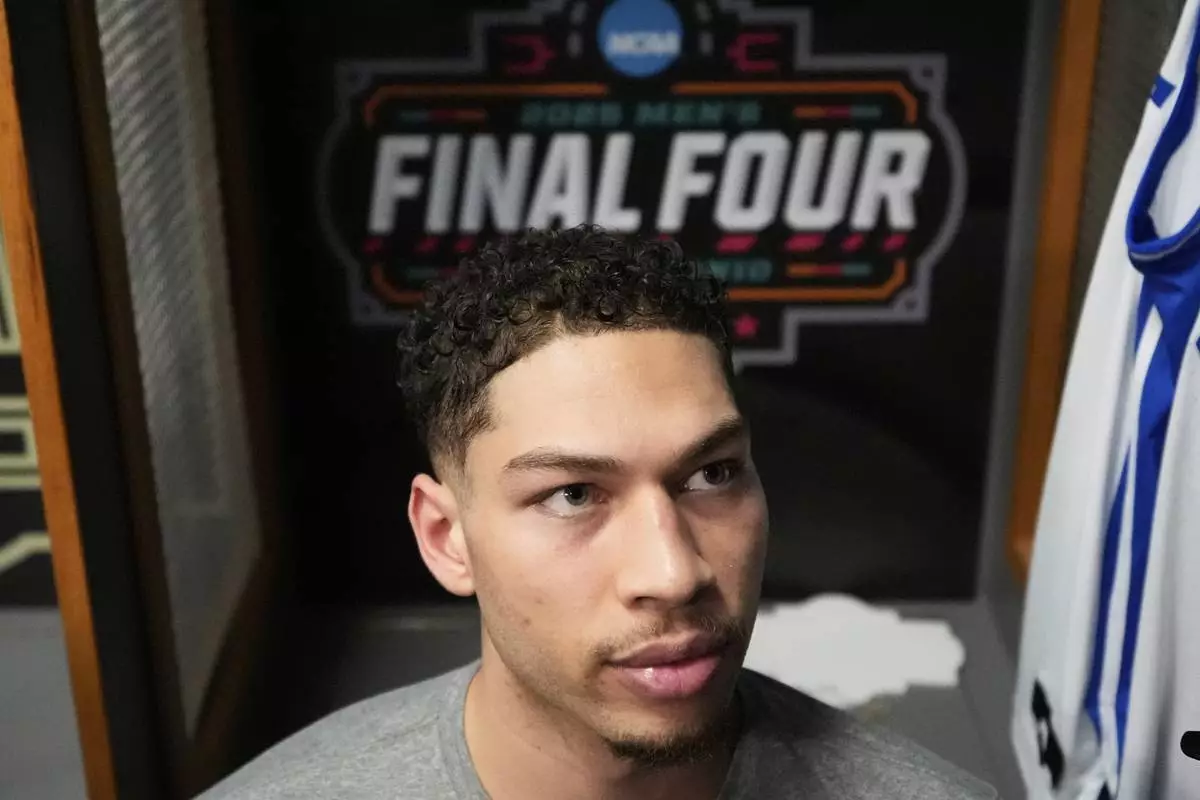
Duke forward Mason Gillis is interviewed in the locker room during media day at the Final Four of the NCAA college basketball tournament, Thursday, April 3, 2025, in San Antonio. (AP Photo/Brynn Anderson )
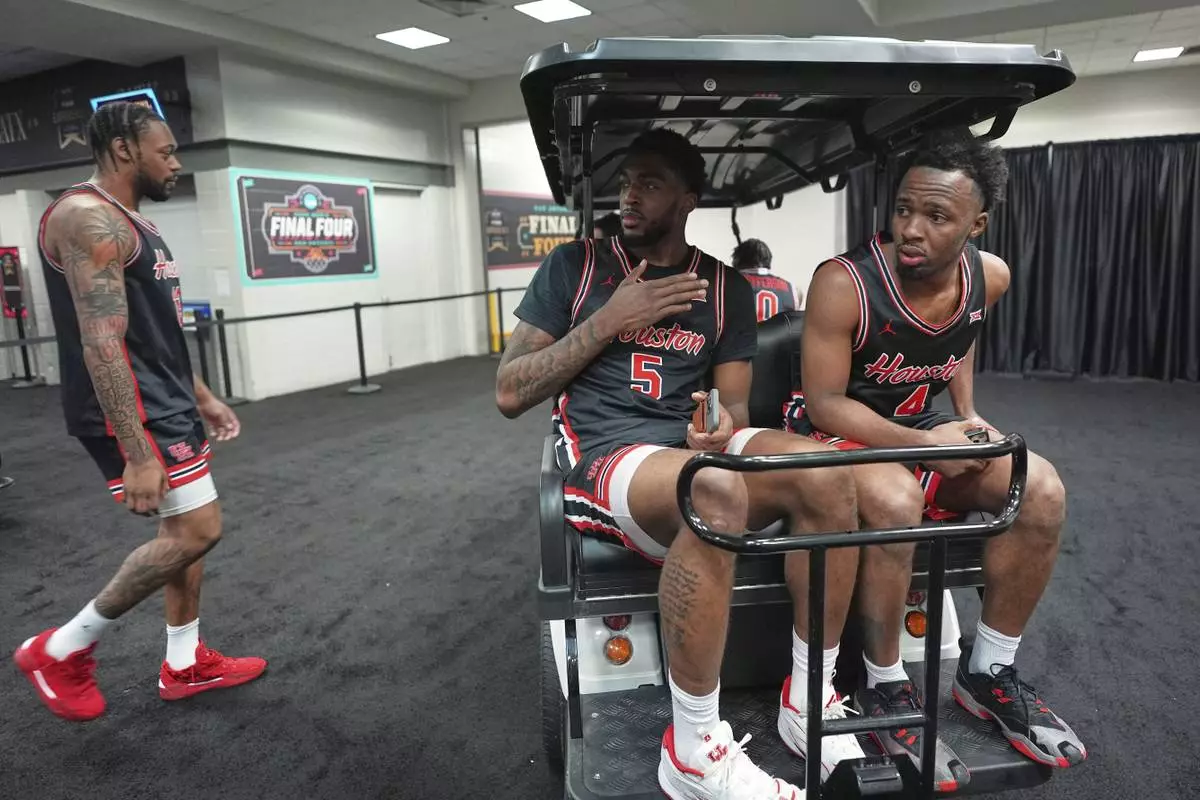
Houston's L.J. Cryer (4) and Ja'Vier Francis sit on the back of a cart as J'Wan Roberts, left, joins them during media day at the Final Four of the NCAA college basketball tournament, Thursday, April 3, 2025, in San Antonio. (AP Photo/Eric Gay)
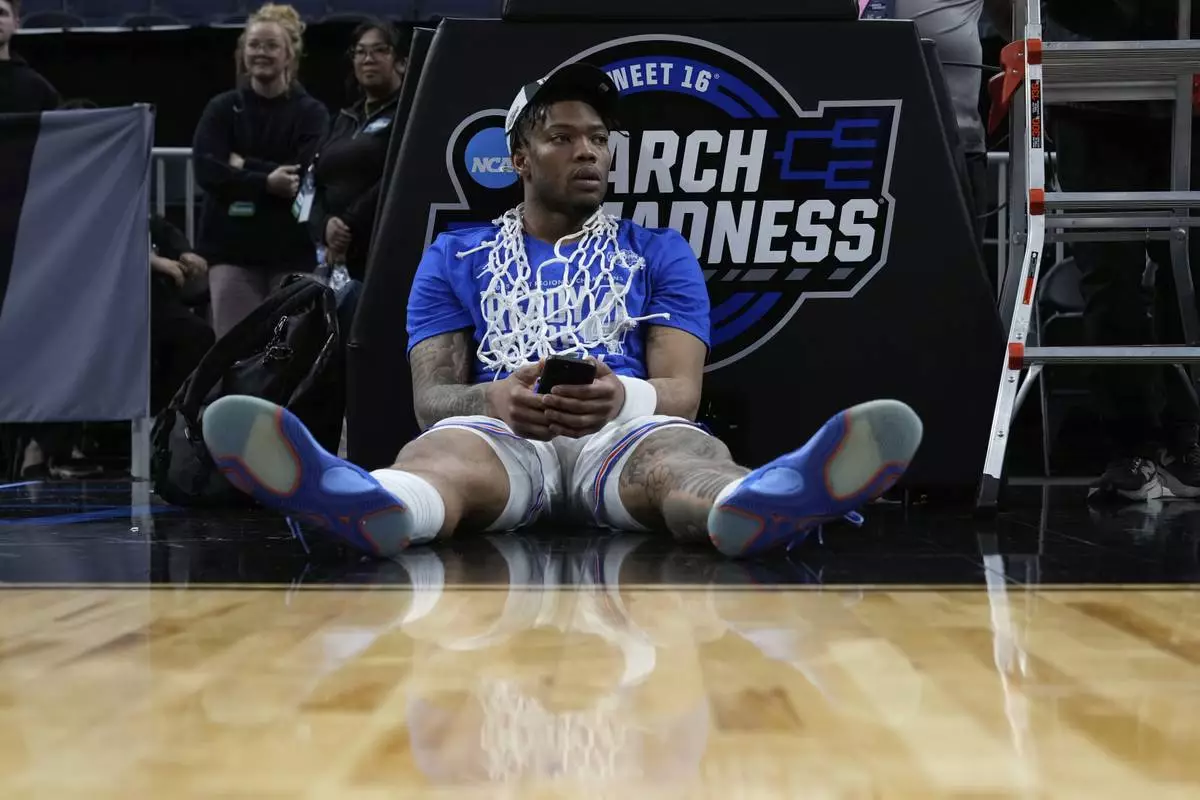
Florida guard Alijah Martin sits on the court after defeating Texas Tech in the Elite Eight of the NCAA college basketball tournament, Saturday, March 29, 2025, in San Francisco. (AP Photo/Godofredo A. Vásquez)
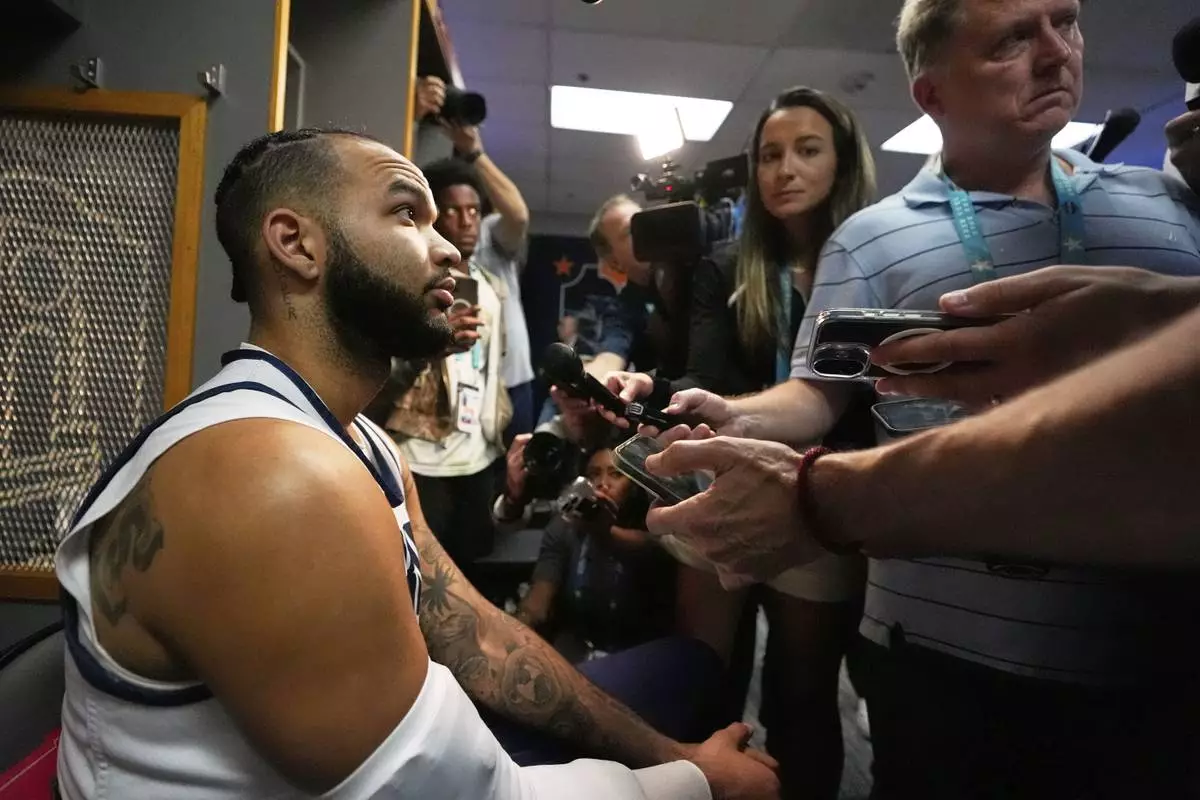
Auburn forward Johni Broome is interviewed in the locker room during media day at the Final Four of the NCAA college basketball tournament, Thursday, April 3, 2025, in San Antonio. (AP Photo/Brynn Anderson )
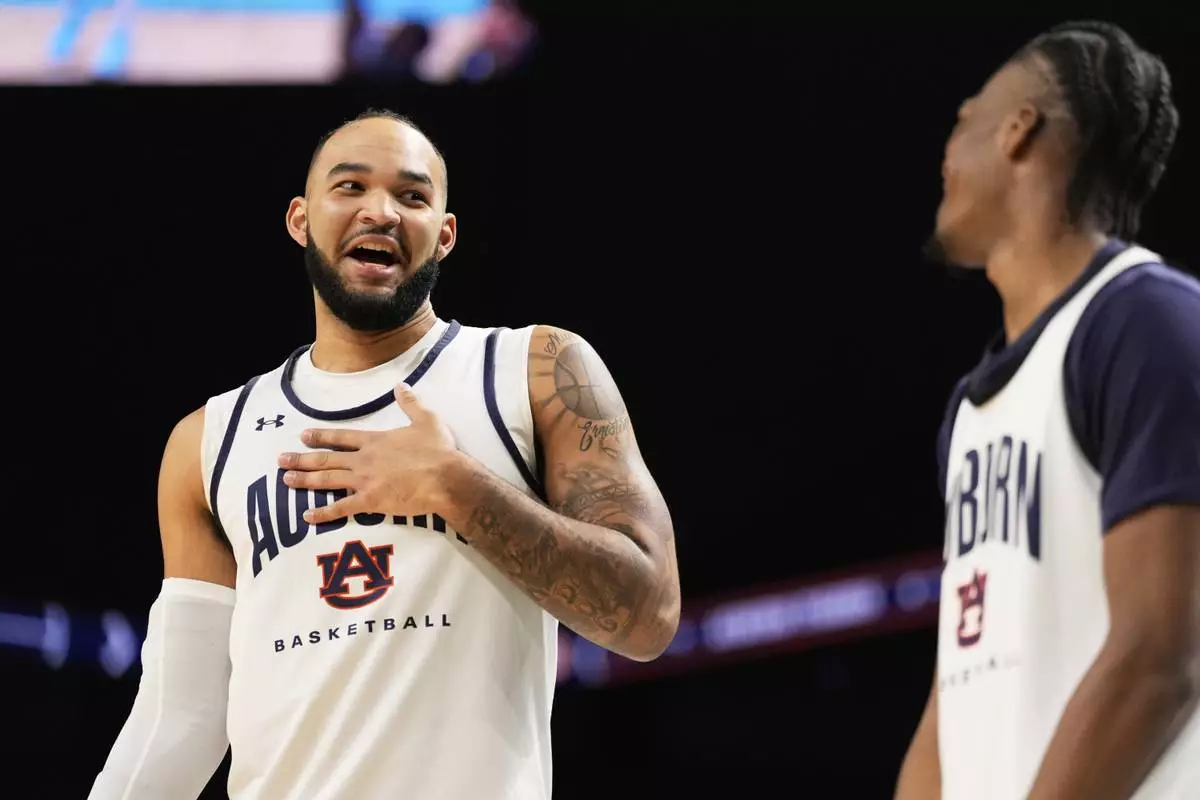
Auburn forward Johni Broome and guard Miles Kelly talks during practice at the Final Four of the NCAA college basketball tournament, Friday, April 4, 2025, in San Antonio. (AP Photo/Brynn Anderson )