U.S. President Donald Trump's 25-percent car tariffs, which took effect on Thursday, have spurred confusion and concern in Canada's automotive capital of Windsor.
As the latest duties came into force, carmaker Stellantis, which owns marques including Chrysler, Jeep and Dodge, confirmed it will shut down its assembly plant in the Canadian border city of Windsor for two weeks starting April 7.
Fear and anxiety are running high among Stellantis workers.
"It's hard to comprehend at first and then it's hard to see where things are going to go from here. I think that everyone is hoping that it won't be long, but I have a feeling that it could be years," said a worker.
"Little nervous to be honest. Right now, with the way things are going over in the United States, it definitely affects us and if we're not selling cars, we're not going to have a job," another worker said.
Stellantis also announced it would pause production at a plant in Mexico, and temporarily lay off some 900 workers in Midwestern states of Michigan and Indiana.
Experts warn that the tariffs will be likely to severely disrupt global supply chains and lead to production cutbacks and layoffs if they remain in place for any length of time.
"If vehicle sales stall, manufacturing will stop. The car companies will not keep building cars if they can't sell them. They just can't do that, and they won't. So if they're not building cars, they will lay the workers off. This will snowball through the entire economy of the globe," said Peter Frise, a professor of automotive engineering at the University of Windsor.
On Thursday, Canadian Prime Minister Mark Carney announced Canada will be responding by matching the U.S. approach with 25-percent tariffs on all vehicles imported from the United States that are not compliant with the Canada-U.S.-Mexico Agreement (CUSMA).
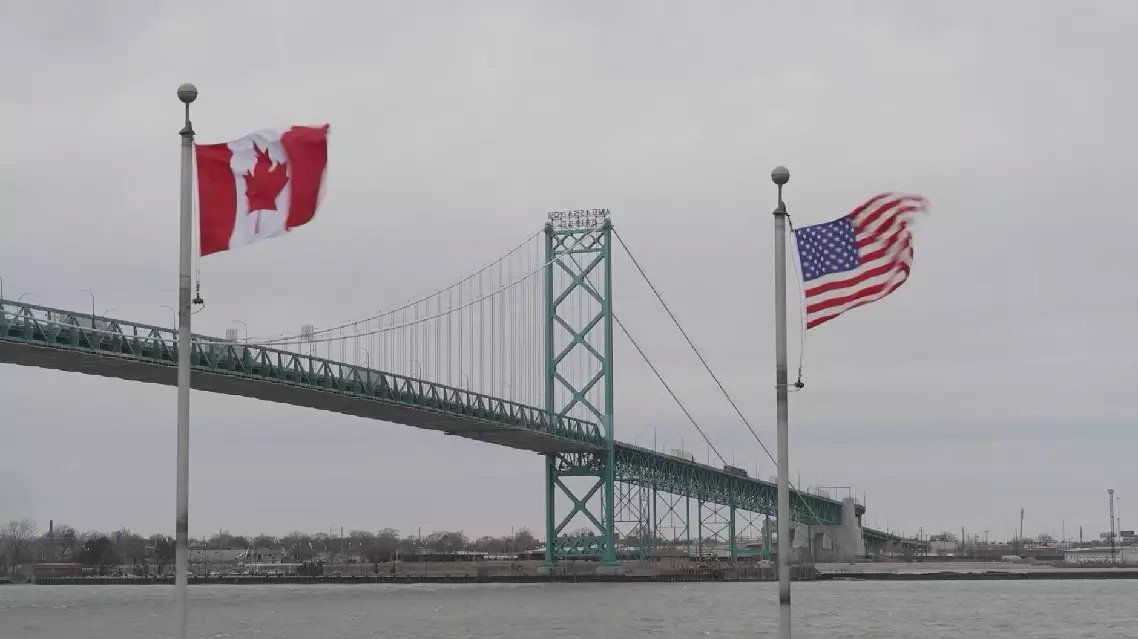
Canadian auto workers on edge following US tariffs