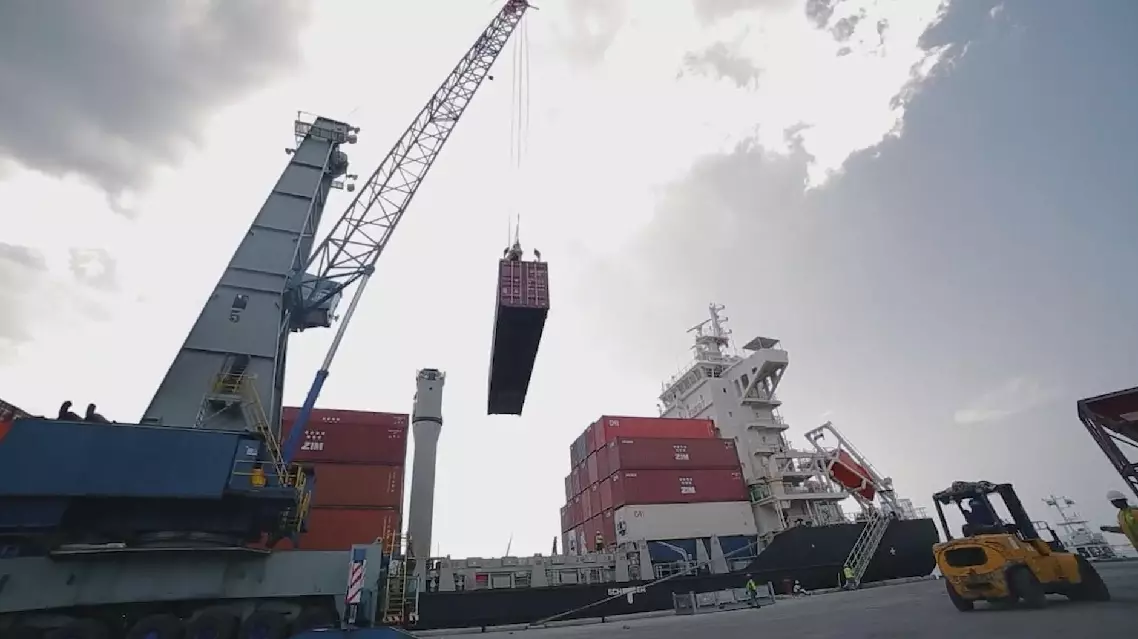
Economists of the Dominican Republic described the United States' sweeping new reciprocal tariffs on global trading partners as costly and detrimental, including a 10 percent tariff on imports from the Dominican Republic.
Amid growing international concern, U.S. President Donald Trump on Wednesday signed an executive order introducing a 10-percent "minimum baseline tariff" on all imports, with higher rates for selected nations.
The Dominican Republic is one of the countries affected by the tariff increases. However, the Caribbean island country is part of a free trade agreement signed in 2004 with the United States and five Central American countries.
President of the Dominican Republic Luis Abinader has stated that he hopes the free trade agreement, which aims to eliminate tariff barriers, will be respected.
In the opinion of economists of the Dominican Republic, the imposition of 10 percent tariffs violates the free trade agreement.
"I would rather think it's an injustice, taking into account what will happen. Next week, Dominican products will enter the U.S., paying 10 percent, but U.S. products will enter the DR, paying basically zero," said Henri Hebrard, an economist.
Trump is shooting himself in the foot with this escalating tariff policy, said Eduardo Klinger, another economist.
"This is a self-inflicted blow for Trump. The American economy is going to suffer; it is already suffering. The stock markets have plummeted, and the customs tariffs that business owners are going to pay will be passed on to the price of products. Therefore, there will be an increase in the price of consumer goods," he said.
This negative impact on the world economy, including the Dominican economy, is gaining strength, representatives of the Dominican business sector said.
"It's a complex process. No one knows if the United States will succeed with these measures. Everyone there will have to figure out how to be more of a winner than a loser. But when these profound processes are involved, there are winners and losers," Hebrard said.
"Problems should be resolved by negotiating, not by threatening or provoking a war that will be very costly for the entire world. The Dominican Republic exports mainly agricultural products and goods from the free trade zone to the United States. However, historically, imports from that North American country are higher, leading to a significant trade deficit for the island," said Klinger.
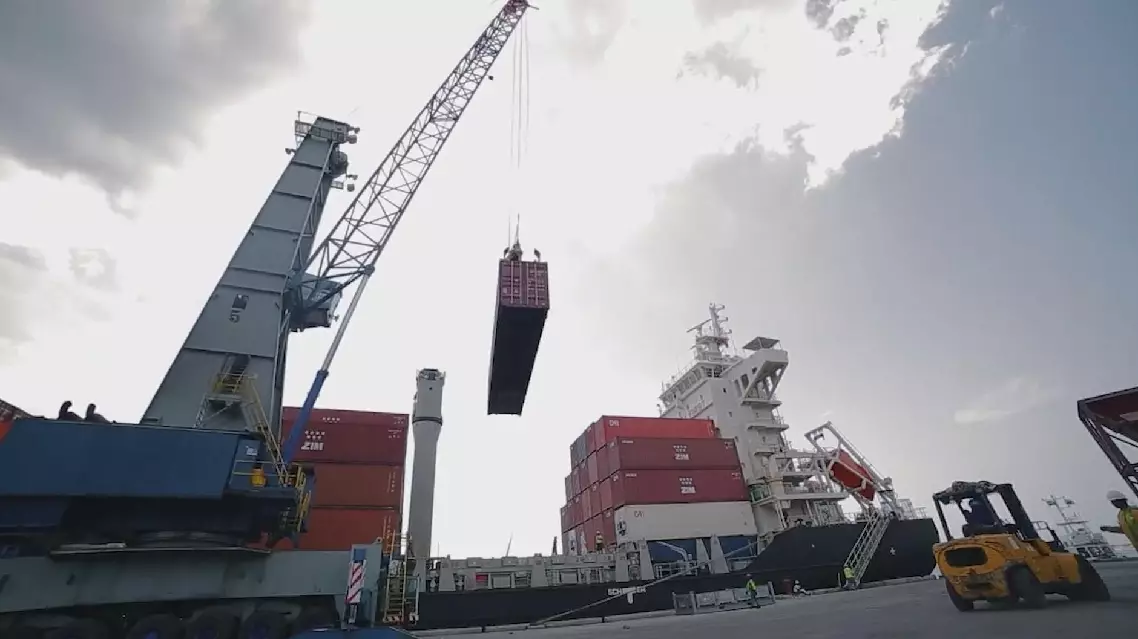
Dominican economists describe U.S. tariffs as costly, detrimental

Visiting Chinese Foreign Minister Wang Yi said Saturday China is willing to work with Lesotho to strengthen exchanges on governance experience, enhance coordination in multilateral affairs, and advance the China-Lesotho strategic partnership.
Wang, also a member of the Political Bureau of the Communist Party of China Central Committee, made the remarks when meeting with Lesotho Prime Minister Sam Matekane in the capital of Lesotho.
During the meeting, Wang congratulated Lesotho on the 60th anniversary of its independence this year, and spoke highly of Lesotho government's efforts to prioritize economic development and steer the African country onto a path of sustainable growth. Since the Beijing Summit of the Forum on China-Africa Cooperation (FOCAC) in 2024, the two sides have advanced cooperation under the 10 partnership action plans unveiled at the summit, successfully implementing a number of key projects to effectively promote Lesotho's development and revitalization, Wang said.
China stands ready to work with Lesotho to strengthen exchanges on governance experience, enhance coordination in multilateral affairs, and push for greater development of the China-Lesotho strategic partnership, he added.
Calling on the two sides to firmly support each other, Wang said that China will accelerate the implementation of its zero-tariff policy for African countries, including Lesotho, expand bilateral trade, investment and industrial cooperation, facilitate broader access of Lesotho's specialty products to the Chinese market, and continue to support Lesotho's national development.
China will continue to stand firmly with African countries, uphold justice for the Global South, including Lesotho, oppose unilateralism and acts of bullying, and work together to build a community with a shared future for humanity, Wang said.
On his part, Matekane said during the meeting that Lesotho cherishes its friendship with China and the strategic partnership between the two countries, and expressed gratitude for China's valuable support for the development of African countries, including Lesotho.
Lesotho firmly adheres to the one-China principle and resolutely supports China in safeguarding its core interests, he said, noting that his country stands ready to strengthen strategic mutual trust with China, expand people-to-people exchanges, jointly implement the outcomes of the FOCAC Beijing Summit, and deepen cooperation in areas such as infrastructure, manufacturing and energy.
Matekane stressed that China's zero-tariff policy for African products will inject new impetus into Lesotho's development. He also expressed Lesotho's willingness to strengthen solidarity and cooperation with China on multilateral platforms such as BRICS to jointly address global challenges.
On the same day, Wang also held talks with Lejone Mpotjoana, minister of foreign affairs and international relations of Lesotho.
China, Lesotho to strengthen exchanges, advance cooperation