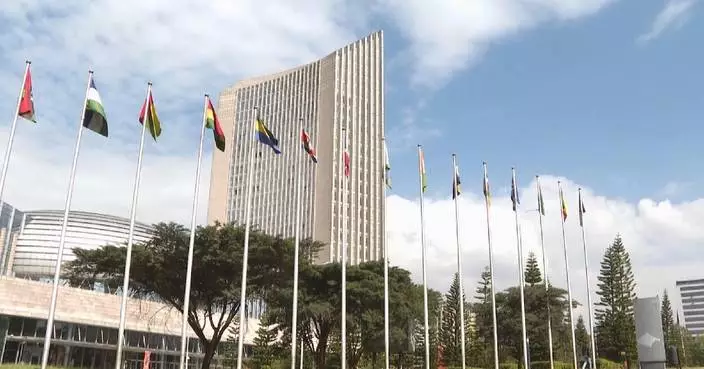
The unilateral imposition of "reciprocal tariffs" by the United States violates its free trade agreement with the Central American countries, and will harm the regional and its own economy, a former Guatemalan vice minister said in a recent interview with the China Global Television Network (CGTN).
Amid growing international concern, U.S. President Donald Trump on Wednesday signed an executive order introducing a 10-percent "minimum baseline tariff" on all imports, with higher rates for selected nations. The administration claimed the tariffs would level the playing field for American businesses.
"The tariff policy of the United States goes against all rules-based international trade norms. We [the Central American countries] have signed a free trade agreement with the United States, but it has violated this agreement," said Enrique Lacs, former vice minister of economy of Guatemala.
In May 2004, five Central American countries, namely Costa Rica, El Salvador, Guatemala, Honduras and Nicaragua, signed a free trade agreement with the United States. In August of the same year, the Dominican Republic also signed a free trade agreement with the United States.
According to data from the Central American Monetary Council, the United States was the largest trading partner of Central America and the Dominican Republic in 2024, with 33.7 percent of the region's imports coming from the United States and 39.5 percent of the region's exports destined for the United States. The former vice minster pointed out that the tariff policy not only affects the economies of other countries and regions, but also brings backlash to U.S. economic development.
"This tariff policy of the United States will not bring short-term benefits, it will only increase consumer costs in its domestic market," he said.
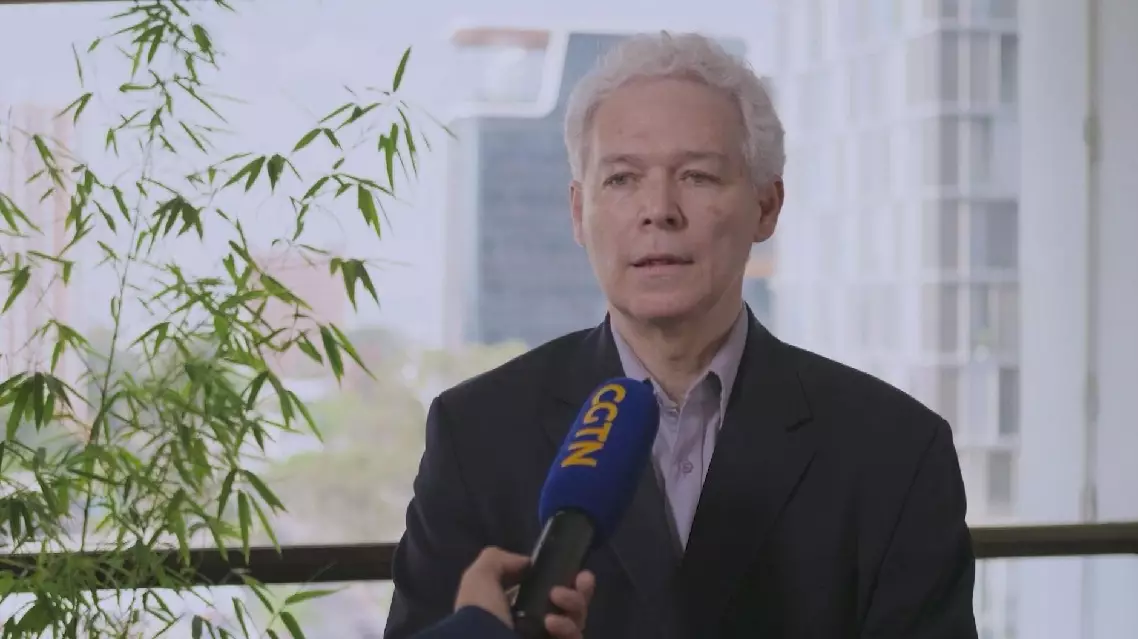
Former Guatemalan vice minister slams US tariffs as violation of regional free trade deal
A joint maritime exercise codenamed "Will for Peace 2026," which drew participation of BRICS member states including China, Russia, and South Africa, closed on Friday in the airspace and waters near South Africa.
The exercise, which ran from Jan 9 to 16 in the waters and airspace off Simon's Town, consisted of two main phases.
The port and shore operations phase from Jan 9 to 12 included the opening ceremony, ship tours, cultural and sports events, and professional exchanges.
This was followed by the sea phase from Jan 13 to 15, during which the participating vessels conducted drills on communication, formation maneuver, maritime strike, hijacked vessel rescue, helicopter-borne patient transfer and treatment, and other subjects.
The exercise concluded with a closing ceremony on Friday.
"The waters around Simon's Town is a maritime transportation hub connecting the Atlantic and Indian Oceans, and maritime transport of goods is indispensable in many countries' economic activities. So for the BRICS member states, the better use of military forces to maintain shipping safety in this vital sea area and keep it in a state of peace will not only better guarantee their economic development and social stability, but also make more and greater contributions to the whole world," said Wei Dongxu, a military observer.
The joint maritime exercise went through under the theme of "Joint Actions to Ensure the Safety of Key Shipping Lanes and Maritime Economic Activities."
Selected from the 48th Chinese naval escort taskforce, the Chinese participating force included guided-missile destroyer Tangshan (Hull 122) and comprehensive supply ship Taihu (Hull 889), as well as a ship-borne helicopter and several dozens of special operations troops.
The exercise aimed to further deepen military exchanges and cooperation among participating nations, enhance their collective capacity to address maritime threats, and contribute to jointly safeguarding regional peace and stability and building a community with a shared future for humanity and a maritime community with a shared future.
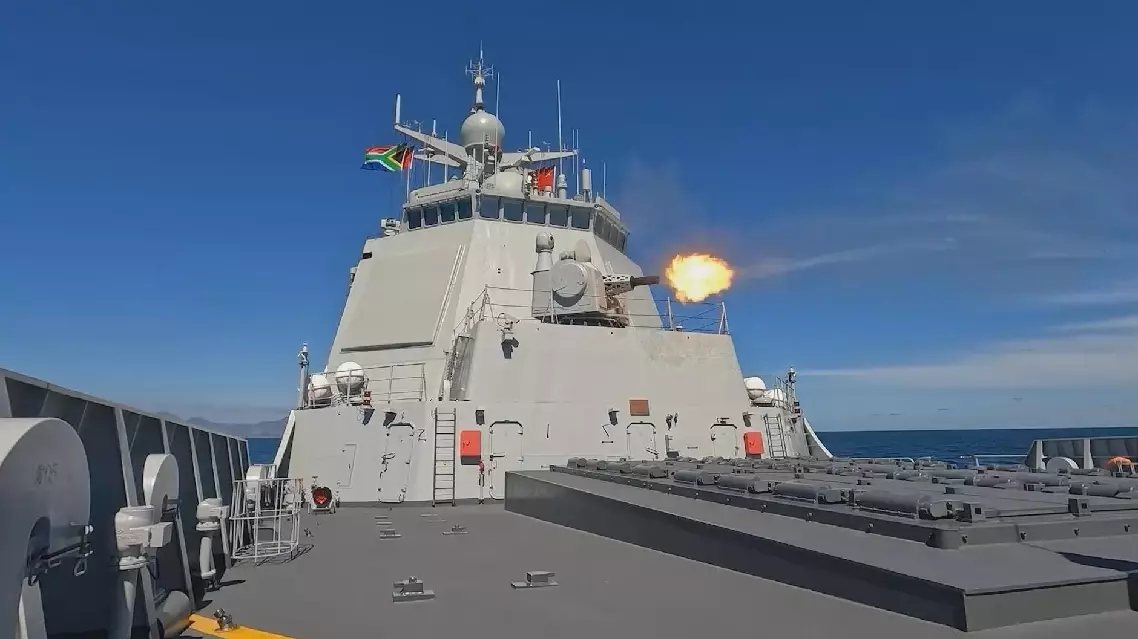
Joint BRICS maritime exercise closes