WASHINGTON--(BUSINESS WIRE)--Apr 7, 2025--
Saildrone, the world leader in maritime autonomy, today announced the appointment of Vice Admiral John Mustin as President of Saildrone Inc. In this role, Mustin will work alongside Richard Jenkins, Saildrone founder and CEO, to focus on growing the defense business at Saildrone.
This press release features multimedia. View the full release here: https://www.businesswire.com/news/home/20250407320846/en/
Mustin joins Saildrone following a distinguished 34-year career in the US Navy. He most recently served as the 15th Chief of Navy Reserve and Commander, Navy Reserve Force, where he led approximately 60,000 Reserve Component personnel supporting Navy, Marine Corps, and joint forces operations worldwide.
“John Mustin brings a truly unique blend of naval operational expertise and commercial experience to the company,” said Richard Jenkins, founder and CEO at Saildrone. “As naval demand for Saildrone services grows exponentially, John will deliver the leadership firepower I need to grow both the team and the defense business, ensuring our products continue to meet the demands of high-end naval warfare.”
Beyond his military service, Mustin brings significant commercial and entrepreneurial experience, having founded Wasabi Rabbit, a successful digital customer relationship management firm. As founder and CEO, he grew the company into a leading digital agency specializing in customer acquisition strategies and technology solutions for Fortune 500 clients. His ability to navigate complex organizational challenges while driving innovation and growth positions him perfectly to lead Saildrone’s next phase of expansion.
“I’m thrilled to join the Saildrone team at this critical moment for global maritime security characterized by a rapidly evolving geo-political environment," said Mustin. “Having spent my career focused on naval operations and technology innovation, I recognize Saildrone’s capabilities are transformational to delivering Naval strength to our warfighters at a time when our nation’s shipbuilding capacity is floundering. We, and our allies and partners, need high-capability platforms, delivered at scale, immediately. Saildrone defined the category and is the only operationally proven USV technology that is ready to scale today.”
Based out of Saildrone’s Washington, DC, office, Mustin will focus on accelerating the company’s defense and intelligence business growth to meet the significant increase in demand for Saildrone’s capabilities globally.
Mustin holds a Bachelor of Science in Weapons and Systems Engineering from the United States Naval Academy, a Master of Science in Operations Research from the Naval Postgraduate School, and a Master of Business Administration in Finance and Management from the FW Olin Graduate School of Business at Babson College.
About Saildrone
Saildrone is a maritime defense and oceanographic survey company creating a paradigm shift in how navies, law enforcement, civil government, and commercial organizations obtain the real-time, accurate data required to monitor and protect our oceans. Saildrone’s fleet of uncrewed surface vehicles (USVs) carries purpose-built payloads supporting border protection, critical infrastructure security, hydrographic survey, offshore energy, and metocean monitoring. Powered by renewable wind and solar energy, Saildrone USVs provide long-duration operations measured in months, not days. Proprietary software applications and machine learning technology transform collected data into actionable insights and intelligence. Saildrone has sailed more than 1,600,000 nautical miles from the High North to the Southern Ocean and spent over 46,000 days at sea in the harshest ocean conditions on the planet.
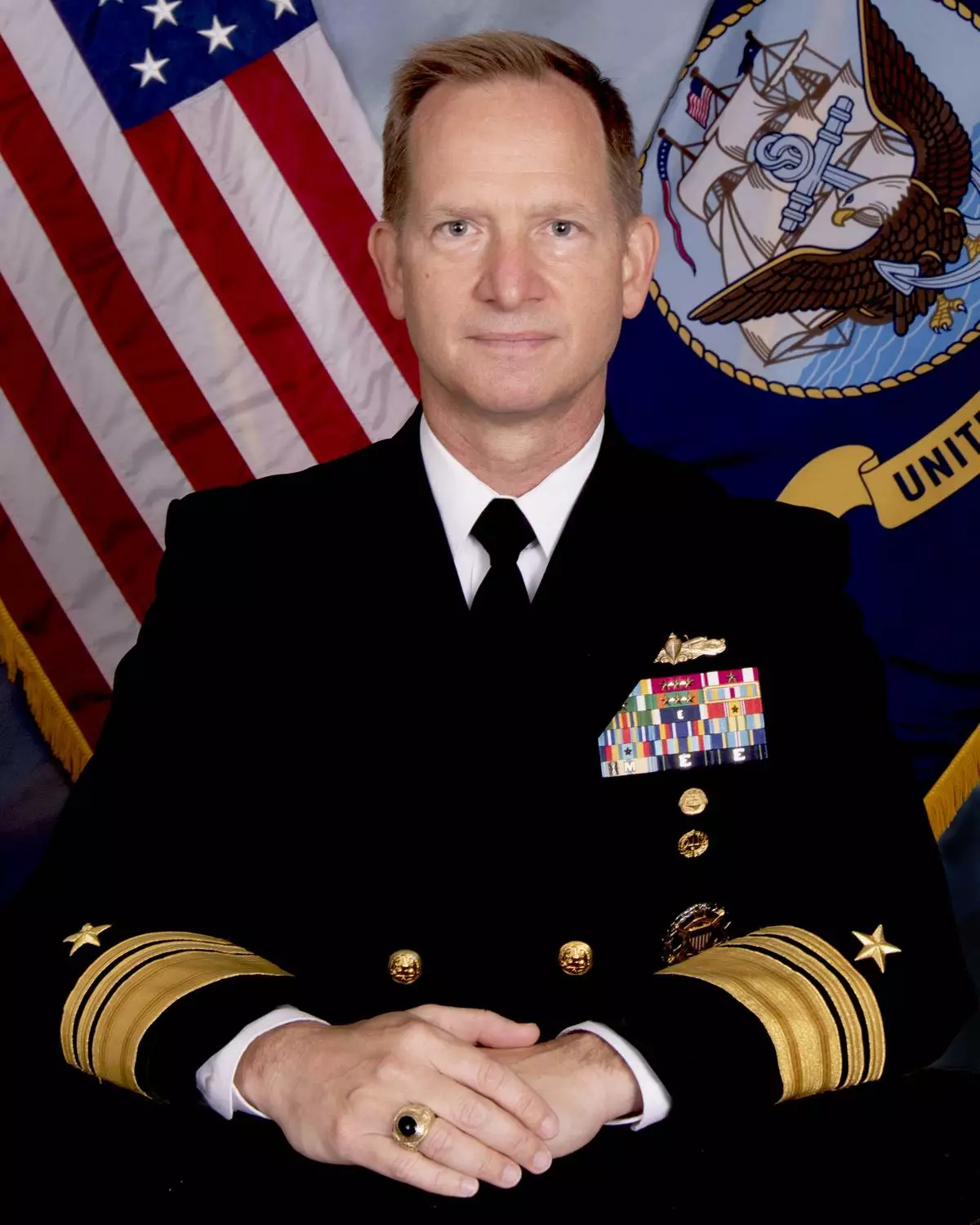
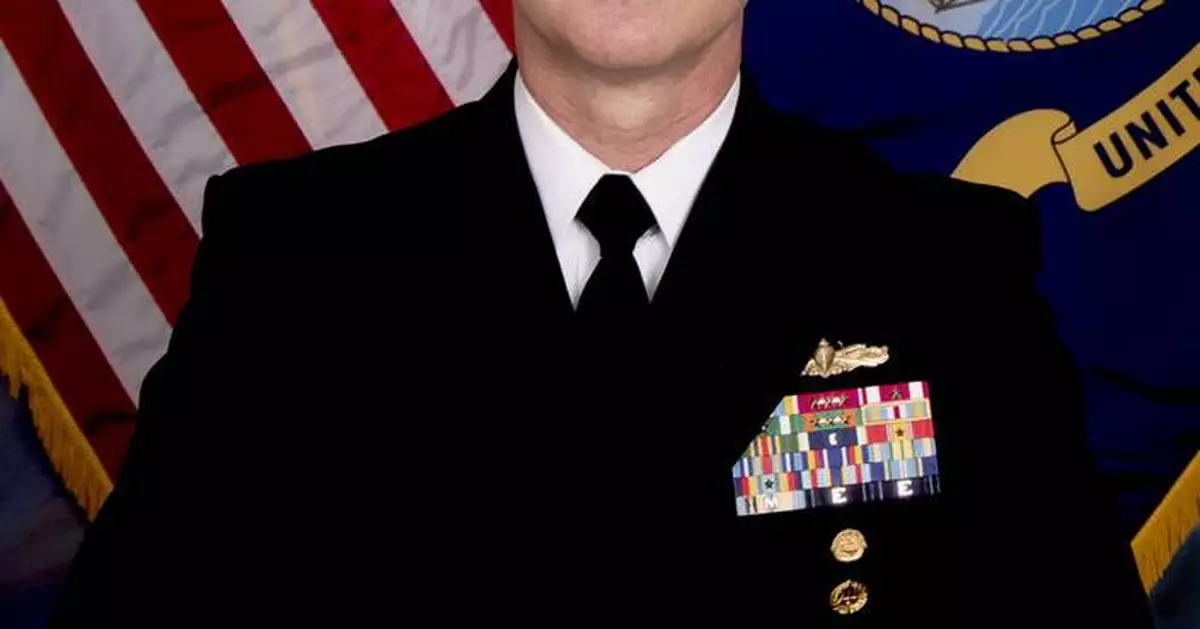
Vice Admiral John Mustin: Chief of Navy Reserve, N095, Office of the Chief of Naval Operations
The search is on for one missing U.S. service member while another was rescued after two U.S. warplanes went down in separate incidents including the first shoot-down since the Iran war began nearly five weeks ago.
The incidents occurred just two days after President Donald Trump said in a national address that the U.S. has “beaten and completely decimated Iran.”
One fighter jet was shot down in Iran, officials said. A U.S. crew member from that plane was rescued, but a second was missing, and a U.S. military search-and-rescue operation was underway.
Separately, Iranian state media said a U.S. A-10 attack aircraft crashed in the Persian Gulf after being struck by Iranian defense forces. A U.S. official, speaking on condition of anonymity to discuss a sensitive military situation, said it was not clear if the aircraft crashed or was shot down.
The war now entering its sixth week is destabilizing economies around the world as Iran responds to the U.S. and Israeli attacks by targeting the Gulf region's energy infrastructure and tightening its grip on oil and natural gas shipments through the Strait of Hormuz.
Here is the latest:
Iranian Foreign Minister Abbas Araghchi said in a social media post on Saturday that Iran has "never refused to go to Islamabad.”
He said what Iran cares about "are the terms of a conclusive and lasting END to the illegal war that is imposed on us.”
Pakistan said last week that it would soon host talks between the U.S. and Iran. It is not clear when or if the talks will take place.
Iranian Foreign Minister Abbas Araghchi posted on social media on Saturday that radioactive fallout from continued attacks on the Bushehr nuclear power plant “will end life” in regional capitals, not Tehran.
He accused Western governments of remaining silent about the repeated attacks on the plant.
The fourth attack on the Bushehr complex occurred Saturday, killing a security guard and damaging a support building. No increase in radiation levels was reported, according to the International Atomic Energy Agency.
Bushehr is located some 750 kilometers (465 miles) south of Iran’s capital, Tehran.
The facility uses low-enriched uranium from Russia, along with Russian technicians, to supply about 1,000 megawatts of power for Iran.
The finance ministers of Spain, Germany, Italy, Portugal and Italy say that a European Union-wide tax on energy companies’ profits would distribute the burden more fairly.
The call, made public Saturday, comes amid concerns that surging oil and gas prices driven by the Iran war will fuel inflation and strain households.
Europe is largely dependent on imported oil and gas, leaving it vulnerable to external shocks.
In 2022, turmoil in energy markets following Russia's full-scale invasion of Ukraine pushed inflation into double digits in many European countries.
Omar al-Waeli, head of Iraq’s Border Ports Authority, said on Saturday that the strike on the Shalamcheh border crossing killed one person and wounded five others.
Authorities did not offer further details on the strike. But trade and passenger traffic is suspended at the crossing, which is crucial for Iranian imports and Iranian pilgrims headed to Iraq’s Shiite shrines.
The Iraqi government said it was directing traders and travelers to alternative crossings.
The International Atomic Energy Agency said on Saturday that it has been informed by Iran about the strike near the premises of the Bushehr nuclear facility that killed a security guard and impacted a building in the complex.
“No increase in radiation levels was reported” following the strike, the IAEA said in a social media post.
Bahrain’s Defense Ministry reported the tally in a social media post on Saturday.
This brings the total number of projectiles fired at the country since the start of the war to 188 missiles and 453 drones.
Bahrain hosts the U.S. Navy’s 5th Fleet.
The Atomic Energy Organization of Iran said in a social media post Saturday that an airstrike near its Bushehr nuclear facility killed a security guard and damaged a support building.
It is the fourth time the facility has been targeted during the war.
The Bushehr nuclear power plant uses low-enriched uranium from Russia, along with Russian technicians, to supply about 1,000 megawatts of power for Iran.
Its pressurized-water reactor can power hundreds of thousands of homes and other businesses and industries. But it contributes only 1% to 2% of Iran’s total power needs.
Iran has been trying to expand the facility to multiple reactors. In 2019, it began a project that ultimately plans to add two additional reactors to the site, each adding another 1,000 megawatts apiece.
Italian Premier Giorgia Meloni has discussed with Saudi Prime Minister Mohammed bin Salman defensive military assistance that Italy is providing against Iranian reprisals to U.S.-Israeli attacks.
A brief statement from Meloni's office Saturday did not specify what type of assistance Italy is providing.
It also said the two discussed diplomatic efforts to end the war, the importance of opening the Strait of Hormuz and “more broadly how to promote a regional framework that can break free from the current cycle of conflict.”
Meloni will continue her visit in Qatar and the United Arab Emirates.
U.S. and Israeli warplanes continued to pound Iran Saturday, hitting several targets including a petrochemical facility, Iranian media reported.
Iran's official English-language newspaper Tehran Times reported that an airstrike hit a facility belonging to Iran’s Agriculture Ministry in the western city of Mehran.
The newspaper said another air raid struck Mahshahr Special Petrochemical Zone in the southwestern Khuzestan province.
The semiofficial Fars news agency reported several explosions heard late Saturday morning in the facility.
Mehr, another semiofficial news agency, reported that the strikes hit four companies within the zone.
Mohammad Bagher Qalibaf made the veiled threat in a social media post late Friday, asking about how busy oil tanker and container ship traffic is through the strait.
The 20-mile (32-kilometer) strait links the Red Sea with the Gulf of Aden and the Indian Ocean and is one of the busiest chokepoints in global trade, with more than a tenth of seaborne global oil and a quarter of container ships passing through it.
Iran has already greatly disrupted the flow of oil through the Strait of Hormuz, sending fuel prices skyrocketing and jolting the world economy.
Disrupting transit through the Bab el-Madeb would force shipping firms to route their vessels around the Cape of Good Hope at the southern tip of Africa, further hitting prices.
Israel’s rescue services said Saturday the man sustained glass shrapnel wounds after an Iranian missile hit the central city of Bnei Brak.
It wasn't clear if the glass shrapnel was caused by a direct strike or falling debris from an intercepted missile.
Israel’s Magen David Adom rescue services said it was taking the man to the hospital.
The Iranian judiciary's Mizan news agency said Saturday that the two men who were hanged belonged to the Iranian exile group Mujahedeen-e-Khalq.
The agency said Abul-Hassan Montazer and Vahid Bani-Amirian were convicted of “being members of a terrorist group.”
This brings to six the total number of MEK members executed since the start of the war.
Activists and rights groups say Iran routinely holds closed-door trials in which defendants are unable to challenge the accusations they face.
The Israeli military said on Saturday that its air force struck ballistic and and anti-aircraft missile storage sites in Tehran.
It said the strikes a day earlier included weapons manufacture sites as well as military research and development facilities in the Iranian capital.
It said the strikes are part of an ongoing phase to increase damage to Iran's “core systems and foundations.”
Authorities in Dubai said the facades of two buildings were damaged by debris from intercepted drones, including one belonging to U.S. tech firm Oracle. No injuries were reported.
Iran’s Revolutionary Guard has threatened to attack Oracle and 17 other U.S. companies after accusing them of being involved in “terrorist espionage” operations in Iran.
Previous Iranian drone strikes caused damage to three Amazon Web Services facilities in the United Arab Emirates and Bahrain.
As of Friday, 247 of the wounded were Army soldiers, 63 were Navy sailors, 19 were Marines and 36 were Air Force airmen, according to Pentagon data available online.
It is unclear if the data includes any of the service members involved in the downing of two combat aircraft reported Friday.
Most of the wounded — 200 — were also mid to senior enlisted troops, 85 were officers and 80 were junior enlisted service members.
The current death toll remains at 13 service members killed in combat.

Palestinian Muslims attend Friday prayers outside Jerusalem's Old City due to restrictions linked to the Iran war, April 3, 2026. (AP Photo/Mahmoud Illean)
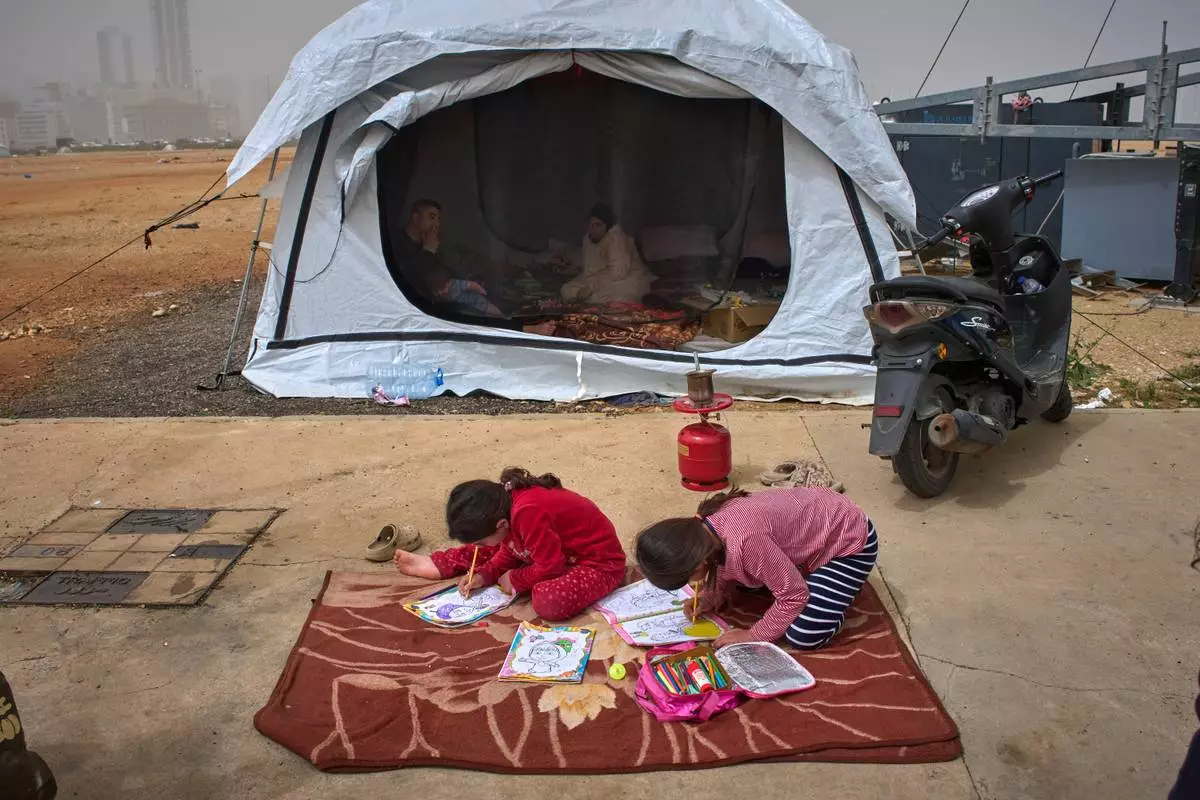
Tamara and her sister Amal color pictures on the floor as their parents, Sara and Ahmed, who fled their village of Khiyam in southern Lebanon due to Israeli bombardment, sit inside a tent used as a shelter in Beirut, Lebanon, Friday, April 3, 2026. (AP Photo/Emilio Morenatti)
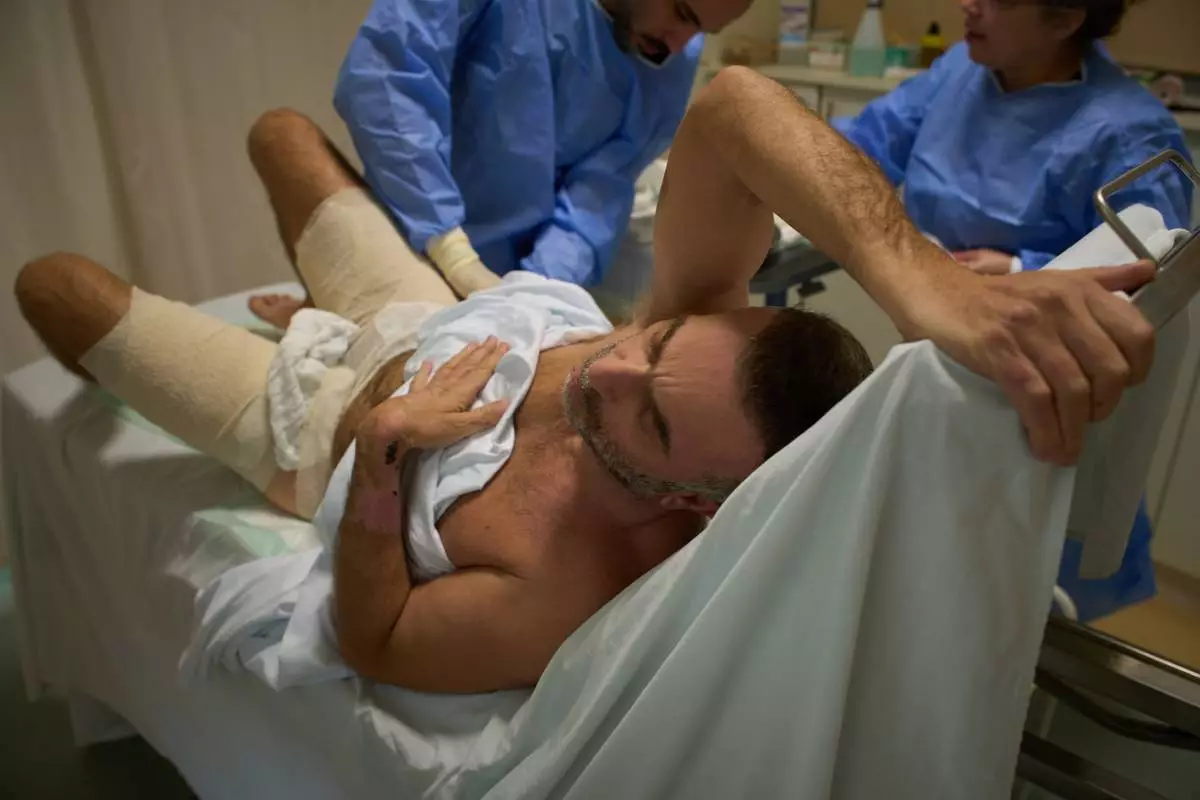
Mohammad Qubaisi, 53, with burn wounds from an Israeli airstrike on southern Lebanon undergoes surgery by Dr. Mohammed Ziara, left, and his team, at the Sidon Government Hospital in Sidon, Lebanon, Thursday, April 2, 2026. (AP Photo/Emilio Morenatti)
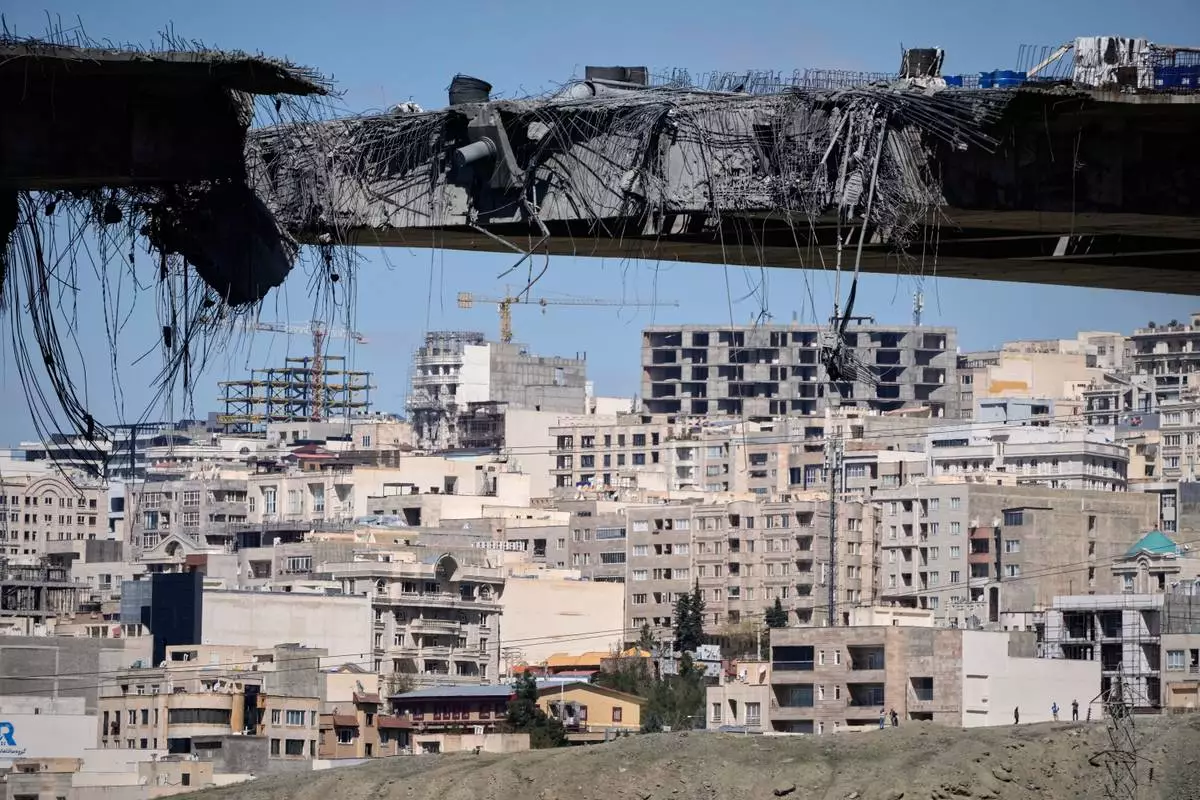
A bridge struck by U.S. airstrikes on Thursday is seen in the town of Karaj, west of Tehran, Iran, Friday, April 3, 2026. (AP Photo/Vahid Salemi)
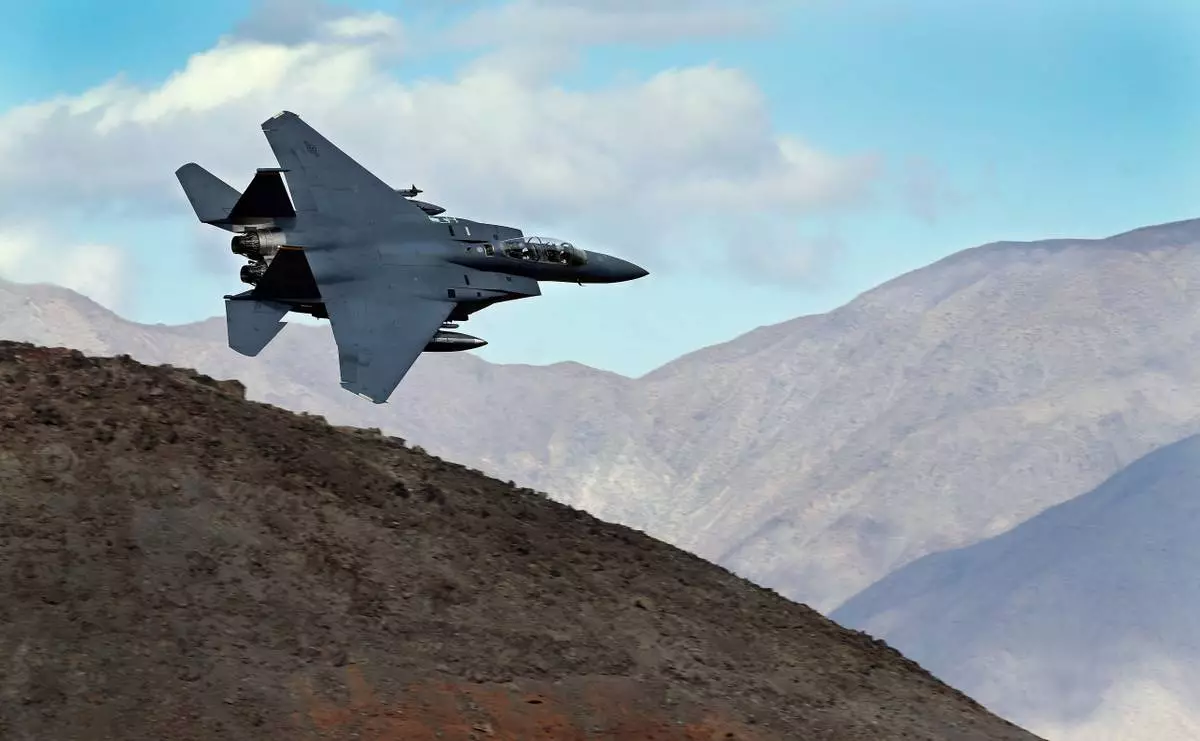
FILE - An F-15E Strike Eagle turns toward the Panamint range over Death Valley National Park, Calif., on Feb. 27, 2017. (AP Photo/Ben Margot, File)