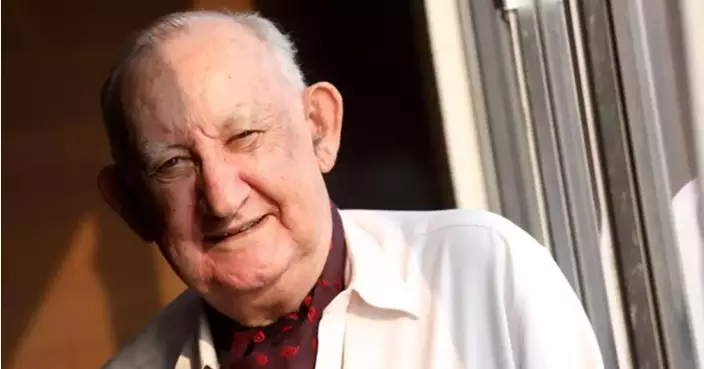
Mark Pinkstone/Former Chief Information Officer of HK government
The United States hierarchy is downright racist! How dare vice-president JD Vance call the Chinese people “peasants” in such a derogatory tone?
The arrogance of Vance emerged when he started accusing Haitian refugees of stealing and eating pets in Springfield in September last year. This was widely disputed. Then, he was involved in a very public slinging match with Ukraine president Volodymyr Zelensky in the White House in front of the world’s media on March 1. He demanded that Zelensky should be thankful for the help the US has given Ukraine. Zelensky said he had, many times.
The Vance outburst against the Chinese erupted during a Fox & Friends TV interview when he was speaking in support of Trump’s tariff measures. Vance said, "We borrow money from the Chinese peasants to buy things those Chinese peasants manufacture.”
How rude and disrespectful he is of the US’s largest trading partner. Although married to an Indian woman, his racism is reflected through his arrogance. Vance and his cronies in the White House are politicians, not bureaucrats. They go for sound bites and media exposure to boost their image.
He is an embarrassment to the American public, with practically all mainstream media denouncing his comments. He is, after all, the Vice President of the United States of America, a position that commands respect.
His comments are reverberating around the world and illustrate just how arrogant US officials, from the president down, are. This is how they teach their followers to disrespect their foreign neighbors.
There are about 48 million Chinese residing in the US, a country already shrouded in racial discrimination. Comments of degradation from Vance will not help social discord within the country, and only an apology from Vance or the president can help alleviate the fear of abuse.
The popular US news website BuzzFeed published a report titled "People are calling out JD Vance for his offensive comment about the US borrowing money from 'Chinese peasants,' and it's shocking even for him," stating in a now-viral clip that Vance discussed the Trump administration's foreign trade policies with China by directly insulting Chinese people.
The report commented, "If there's one thing Vice President JD Vance is going to do, it's to embarrass Americans everywhere."
Fox News reported that when asked about Vance’s comments on Tuesday, Chinese Foreign Ministry spokesperson Lin Jian said, "To hear words that lack knowledge and respect like those uttered by this vice president is both surprising and kind of lamentable.”
Lin said Vance’s comments produced reactions from the public in China, who were outraged by Vance's actions, and added that Vance’s statements obviously had a certain dose of hatred and arrogance, according to South Africa’s Financial World. In addition to China, many countries around the world are disappointed by the behavior of the US vice president, said the paper.
It added that most of the Chinese population emphasizes that Vance should be banned from visiting the country. “After such statements, it is certain that the US vice president is an undesirable figure among the Chinese population. Whether he will retract such statements or explain what he meant remains to be seen.”
The Chinese people are a hard-working lot and have been recognized worldwide for their ability to produce first-class goods and services at a reasonable price. It is difficult for the West to understand the Chinese work culture, which is steeped in tradition and innovation. The work-life balance varies, but dedication is common. Harmony and teamwork are prized, with a deep respect for authority. Building relationships (Guanxi) is crucial for success, and diligence is a hallmark.
This is something that Vance and his cronies fail to understand. They are not peasants!
Vance’s outburst came when trying, unsuccessfully, to explain Trump’s international tariff penalties, which in China’s case can reach 104 percent on all China goods imported into the US.
China’s total exports last year reached US$3.575 trillion worth of goods around the world. Some 14.7 percent of that went to the US ($524.9 billion), and 8.1 percent went to Hong Kong (second place) with a value of $291.4 billion. China’s imports from the US last year had dropped to $143.54 billion.
Mark Pinkstone
** 博客文章文責自負,不代表本公司立場 **
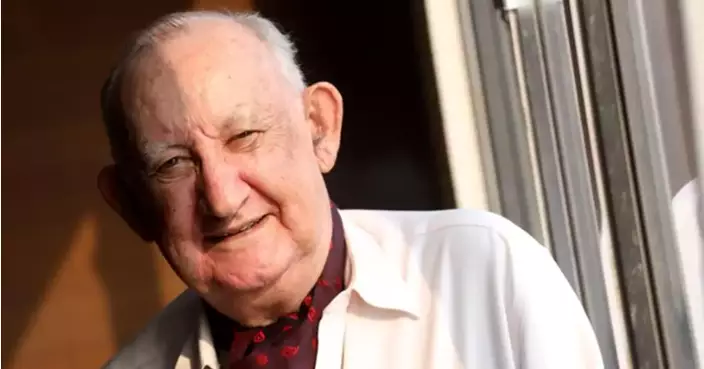
Mark Pinkstone/Former Chief Information Officer of HK government
When the “Question of Hong Kong” was raised in the mid-‘70s, Chinese paramount leader Deng Xiaoping came up with the “one country-two systems” concept. The world scoffed at the idea. How could a rip-roaring capitalist regime survive in a communist country?
Forty-one years after the signing of the Joint Declaration (which became the blueprint for Hong Kong’s future) in 1984 between the UK and China, the British government has virtually said that China has kept it’s promise that Hong Kong’s way of life would continue after 1997 as it was beforehand. While not openly applauding Hong Kong’s governance, nor was it openly critical, except for national security issues, the report was fairly balanced.
The 37-page report, a requirement stipulated by the parliament for the UK Foreign Affairs and Commonwealth Office (FCO) to submit six monthly reports on Hong Kong, could find little fault with the governance of Hong Kong.
The report reflected views of dissident groups without comment and drew attention to the Court of Final Appeal cases in favor of the plaintiffs. This should be seen as proof of a fair and trust-worthy legal system in Hong Kong.
However, it noted that since March 2021, and following the imposition of the 2020 National Security Law (NSL), the UK has declared China to be in a state of ongoing non-compliance with the Sino British Joint Declaration. But added: “The judicial system in place prior to the establishment of the Hong Kong SAR continued to be maintained in general. The prosecuting authority in Hong Kong remained within the Department of Justice. The courts continued to exercise independent judicial power, decide cases in accordance with the laws of the Hong Kong SAR and refer to precedents in other common law jurisdictions.”
The report was bullish about Hong Kong’s finances, its economy and monetary system, noting the Fraser Institute’s Economic Freedom of the World 2024 annual report rated Hong Kong as the freest economy out of 165 jurisdictions. It also recognized the positive aspects of Hong Kong’s shipping, civil aviation, education and trade.
UK Foreign Secretary David Lammy drew attention to the plight of 45 activists imprisoned for sedition, collusion with foreign governments, rioting and other national security charges. And that the trial of media mogul Jimmy Lai was “politically motivated”.
He also lamented on the arrest warrants by Hong Kong police on a number of individuals living in the UK. “The Prime Minister and I have met these individuals and heard about the wider chilling effect that transnational repression is having on the Hong Kong diaspora.” he said.
The issuance of international warrants for arrest are not uncommon. The UK National Criminal Agency (NCA) pleads: “We pursue wanted fugitives all around the world …” It is currently hunting 24 men wanted for various crimes in the UK, adding that there is a bounty out for a Russian national worth US$10 million (HK$78 million).
So, what is Lammy moaning about? He listens to people who have grievances, without checking the backgrounds of the individuals. He forgets Hong Kong was subjected to severe riots in 2019-20 when people were killed, the city was set alight, shops were ransacked and looted, people were threatened and living in fear, and mayhem was the order of the day. And while this was going on, political pundits were going around the world seeking sanctions against Hong Kong and drumming up support for Hong Kong’s independence. People and world leaders get jailed for that. Attempting to overthrow a government is a crime, not political persecution.
The Hong Kong SAR Government is naturally upset about the report saying it absolutely refutes the untruthful remarks, slanders and smears against various aspects of the report, which was compiled by the Hong Kong department in the FCO. Daily reports are submitted to the office by the UK Consulate General in Hong Kong.
Lammy and others in the west, often refer to the “Beijing-imposed” national security laws in Hong Kong as if it is something sinister. It is not! Beijing is the federal capital of Hong Kong, as is London in the UK, Washington in the US and Canberra in Australia. The NSL implementation was a natural reaction to a disastrous situation. Hong Kong was spinning out of control, spurred on by foreign forces, but contained by a very efficient and resourceful police force. Hong Kong needed a legal framework to deal with the dissidents.