Chinese stocks closed higher for the second consecutive day on Wednesday, bolstered by the buyback or shareholder stake increase plans announced by many A-share listed companies.
The benchmark Shanghai Composite Index rose 1.31 percent and closed at 3,186.81 points, while the Shenzhen Component Index closed 1.22 percent higher at 9,539.89 points.
The Beijing Stock Exchange (BSE) 50 Index saw a notable increase of 10.27 percent, reaching 1,206.75 points.
Meanwhile, the ChiNext Index and the STAR Market Composite Index also climbed by 0.98 percent and 3.78 percent respectively.
In the afternoon session, shares of Chinese companies operating duty-free stores saw a surge, and sectors such as low-altitude economy, deep-sea technology, computing power, AI applications, robotics, e-commerce, and consumer electronics led the gains.
From Monday to Tuesday, more than 200 A-share listed companies in China announced share buyback or shareholder stake increase plans, further boosting investor confidence.
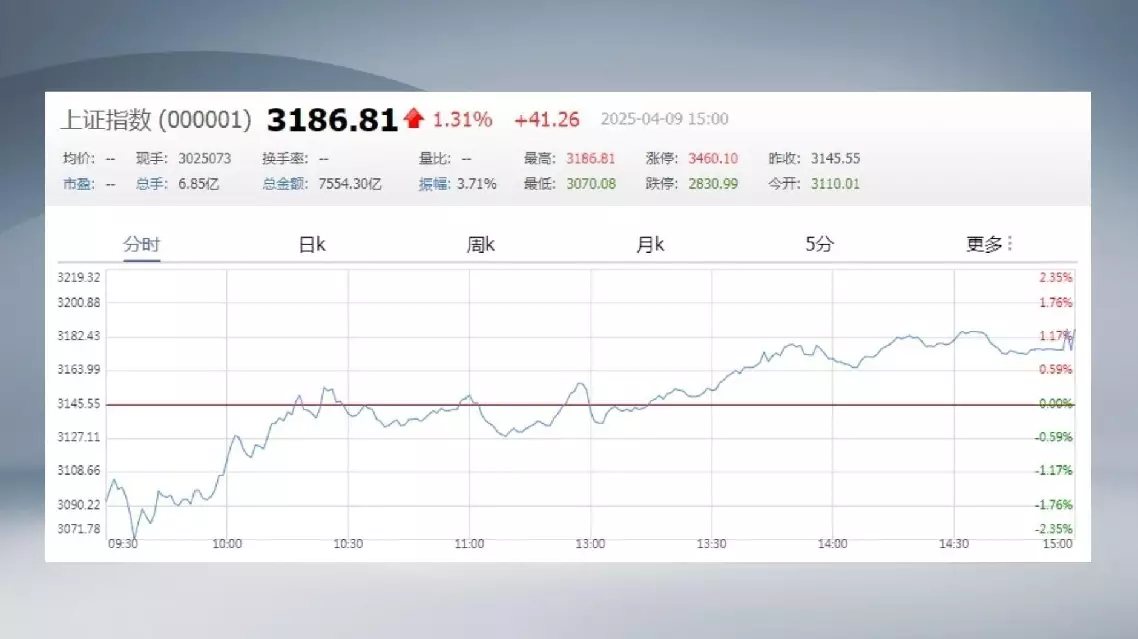
Chinese shares close higher for 2nd consecutive day on Wednesday
Nicaragua's co-foreign minister Valdrack Jaentschke has warned that militarism must never be allowed to rise again, as Japan's recent moves to lift its arms export ban and revise the pacifist Constitution continue to draw international concern.
This year marks the 80th anniversary of the opening of the Tokyo Trials, where Japan's Class-A war criminals from World War II were brought to justice.
In an interview with China Global Television Network (CGTN), Valdrack Jaentschke voiced his concern that today's world order is being undermined by interventionism and other challenges.
"It is necessary for us to remember that after the end of World War II, countries worked hard to build a new international order based on international law. However, regrettably, more than 80 years later, we are seeing that this once explored and attempted order is being challenged by interventionism, a confrontational mindset, and tendencies like 'might makes right.' These are precisely the conditions that gave rise to fascism and militarism in the past, which ultimately led to the tragedy of World War II," he said.
He said the international community has a responsibility to pursue a new international order -- one fundamentally grounded in peace.
"Looking back at the history more than eight decades ago and comparing it with today's reality, it is our responsibility to recognize that the world should, and must, build a new international order that is more just, fairer, rooted in international law, based on a logic of mutual benefit and shared success, and fundamentally grounded in peace," said the minister.
"Today, as we revisit the Tokyo Trials, it is meant to remind the world that such a tragedy must never be repeated -- and that we must do everything in our power to prevent it from happening again. We must stop that dark world -- born from militarism, interventionism, and fascism -- from ever returning," he said.

Nicaraguan FM warns of militarism revival