CAPE CANAVERAL, Fla. (AP) — Soil and rocks returned from the moon’s mysterious far side suggest it may be drier than the side constantly facing Earth, Chinese scientists reported Wednesday.
But they cautioned more samples are needed for a clearer picture.
A better understanding of the abundance of water in the lunar mantle can help explain how the moon evolved, the researchers noted. But it could also be all the more reason for astronauts to stick close to the near side of the moon as currently planned.
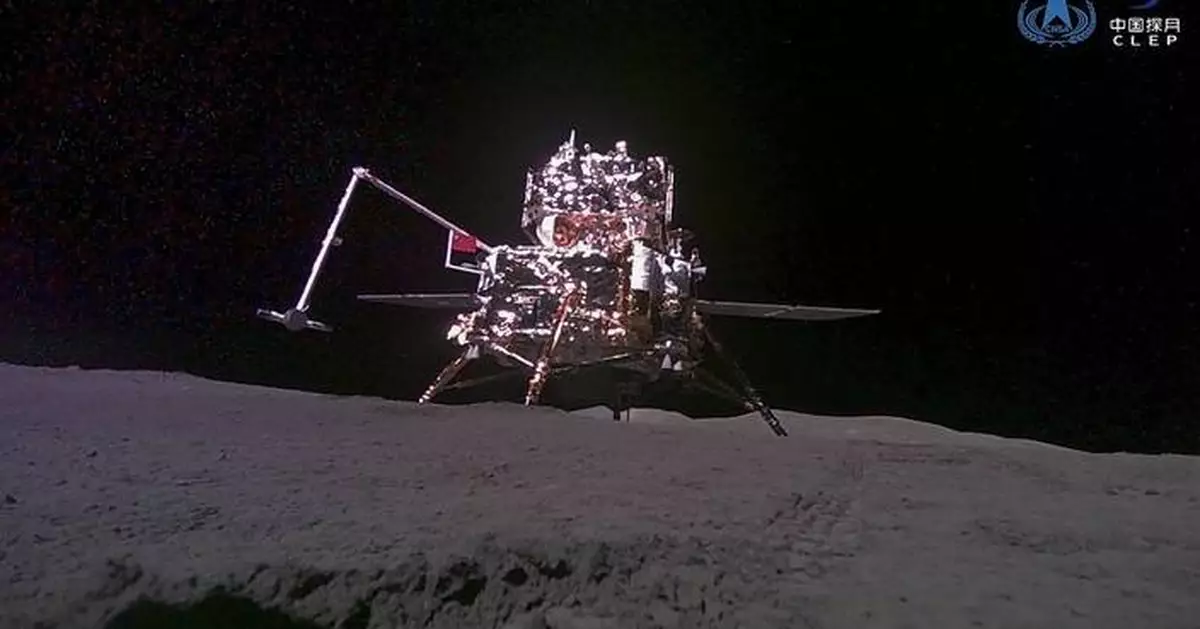
China became the first country to land on the moon’s far side last year. The Chang’e 6 spacecraft scooped up the volcanic rock and dirt from the ancient, sprawling South Pole-Aitken basin, one of the largest impact craters in the solar system.
The Chinese Academy of Sciences’ Sen Hu said he and his team received 5 grams of soil samples, then selected 578 particles for detailed analysis using electron microscopes.
They estimated the water abundance at less than 1.5 micrograms per gram, on the dry end of what’s been found in samples gathered over past decades from the moon’s near side. Measurements on samples from the near side have ranged between 1 microgram and 200 micrograms per gram.
Given the limited sampling, it’s uncertain how widespread this dry condition might be, the scientists noted in their study published in the journal Nature.
“More far side samples are required for testing and further unraveling" how much water there is, Hu said in an email.
It’s possible the impact that created this basin may have blasted water elements to the near side, leaving the far side depleted. Another possibility is that the vertical distribution of water could be different between the two hemispheres.
Even if confirmed, the findings shouldn’t drastically alter NASA’s plans to send astronauts to the moon’s south polar region, where permanently shadowed craters are believed to hold massive amounts of ice. This frozen water could be used for drinking, cooking and making rocket fuel.
NASA aims to send four astronauts around the moon next year under its Artemis program, the successor to Apollo, which put 12 men on the moon from 1969 through 1972. That would be followed by a landing near the lunar south pole by astronauts no earlier than 2027. China is seeking its own astronaut moon landing by 2030.
The Associated Press Health and Science Department receives support from the Howard Hughes Medical Institute’s Science and Educational Media Group and the Robert Wood Johnson Foundation. The AP is solely responsible for all content.
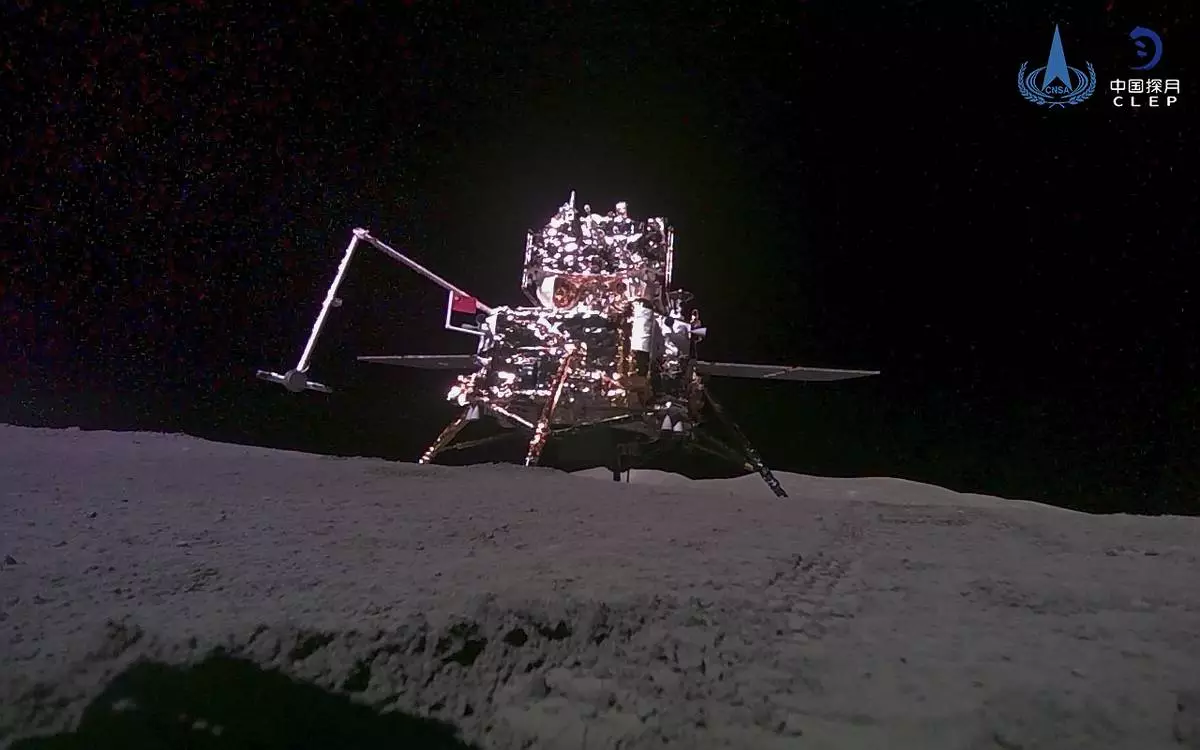
FILE - This China National Space Administration (CNSA) handout image released by Xinhua News Agency, shows the lander-ascender combination of Chang'e-6 probe taken by a mini rover after it landed on the moon surface, June 4, 2024. (CNSA/Xinhua via AP, File)
RABAT, Morocco (AP) — Tanzania and Tunisia secured the last two available spots in the Africa Cup of Nations last 16 on Tuesday, completing the lineup before half of the groups had concluded their final games.
Tanzania's 1-1 draw with Tunisia in Group C wrecked Angola's hopes of squeezing through as one of the best third-place finishers with just two points from Group B. Angola’s goal difference was better than that of Comoros, the third-place finisher in Group A.
Feisal Salum’s equalizer for Tanzania sent the Taifa Stars through. While Tanzania and Angola both finished with two points and a goal difference of minus 1, the goal scored by Salum, who is commonly known as Fei Toto, took Tanzania's tally to three — one better than Angola's two goals.
All the other group stage survivors were decided already on Monday because of Angola and Comoros’ relatively low points total. It meant teams that already had more than two points and were already assured of at least third place in their groups could be certain of reaching the last 16.
The four best third-place teams from the six groups progress, along with the top two in each. Head-to-head results are the first determining factor if two teams finish with the same amount of points in a group.
Here's a look at which teams went through from the six groups:
Host nation Morocco progressed as the winner of Group A, followed by second-place Mali with just three points from three draws. Morocco next faces a third-place finisher from Groups C, D or E on Sunday. More importantly for the Atlas Lions, they will continue their run to the final in the almost 70,000-capacity Prince Moulay Abdellah Stadium, which will also stage the final on Jan. 18. Mali awaits Tunisia for a showdown in Casablanca on Saturday.
Seven-time champion Egypt booked its place after two games and won Group B to advance with South Africa in second, ahead of Angola. Egypt stays in Agadir and next faces a third-place finisher from Groups A, C or D on Jan. 5. South Africa faces a likely tough game against the runner-up in Group F on Sunday.
Nigeria was already sure of topping Group C before its 3-1 win over Uganda on Tuesday. The Super Eagles will remain in Fez for their first knockout game against a third-place finisher from Groups A, B or F on Jan. 5. Tunisia faces Mali in the last 16, and Tanzania progressed as the fourth-best third-place finisher.
Senegal, Congo and Benin were already sure of progressing before their final group games late Tuesday. In the end, Senegal topped the group on goal difference after its 3-0 win over Benin, while Congo finished second after a 3-0 win over Botswana. Botswana had already lost to Senegal and Benin and was certain of finishing last.
Top spot ensured Senegal stays in Tangier for its first knockout game on Saturday against a third-place finisher from Groups B, E or F. But the 2021 champion will be without suspended captain Kalidou Koulibaly.
Congo next faces Algeria, and Benin – like the other surviving third-place finishers – will face one of the group winners.
Algeria is certain to win Group E before its final group games, and Burkina Faso and Sudan are certain to advance because they cannot finish below Equatorial Guinea, which lost both games against them. Algeria will play Congo, the second-place finisher from Group D, on Jan 6. in the same Rabat stadium where it has played all its games so far. On Wednesday, Sudan play Burkina Faso and Algeria plays Equatorial Guinea.
Defending champion Ivory Coast, five-time winner Cameroon, and Mozambique are assured of progress from Group F. Gabon, sure to finish last, was already eliminated before the last round of group games on Wednesday, when the order of the top three teams will be decided. Ivory Coast plays Gabon and Cameroon faces Mozambique.
AP at the Africa Cup: https://apnews.com/hub/africa-cup-of-nations

A DR Congo fans cheer prior to the Africa Cup of Nations group D soccer match between Botswana and DR Congo in Rabat, Morocco, Tuesday, Dec. 30, 2025. (AP Photo/Mosa'ab Elshamy)

A DR Congo fan cheers prior to the Africa Cup of Nations group D soccer match between Botswana and DR Congo in Rabat, Morocco, Tuesday, Dec. 30, 2025. (AP Photo/Mosa'ab Elshamy)

Morocco fans wait for the start of the Africa Cup of Nations group A soccer match between Zambia and Morocco in Rabat, Morocco, Monday, Dec. 29, 2025. (AP Photo/Themba Hadebe)

Tunisia's supporters wait for the start of the Africa Cup of Nations group C soccer match between Tanzania and Tunisia in Rabat, Morocco, Tuesday, Dec. 30, 2025. (AP Photo/Mosa'ab Elshamy)

A Moroccan fan waits for the start of the Africa Cup of Nations group A soccer match between Zambia and Morocco in Rabat, Morocco, Monday, Dec. 29, 2025. (AP Photo/Themba Hadebe)

A Moroccan fan waits for the start of the Africa Cup of Nations group A soccer match between Zambia and Morocco in Rabat, Morocco, Monday, Dec. 29, 2025. (AP Photo/Themba Hadebe)
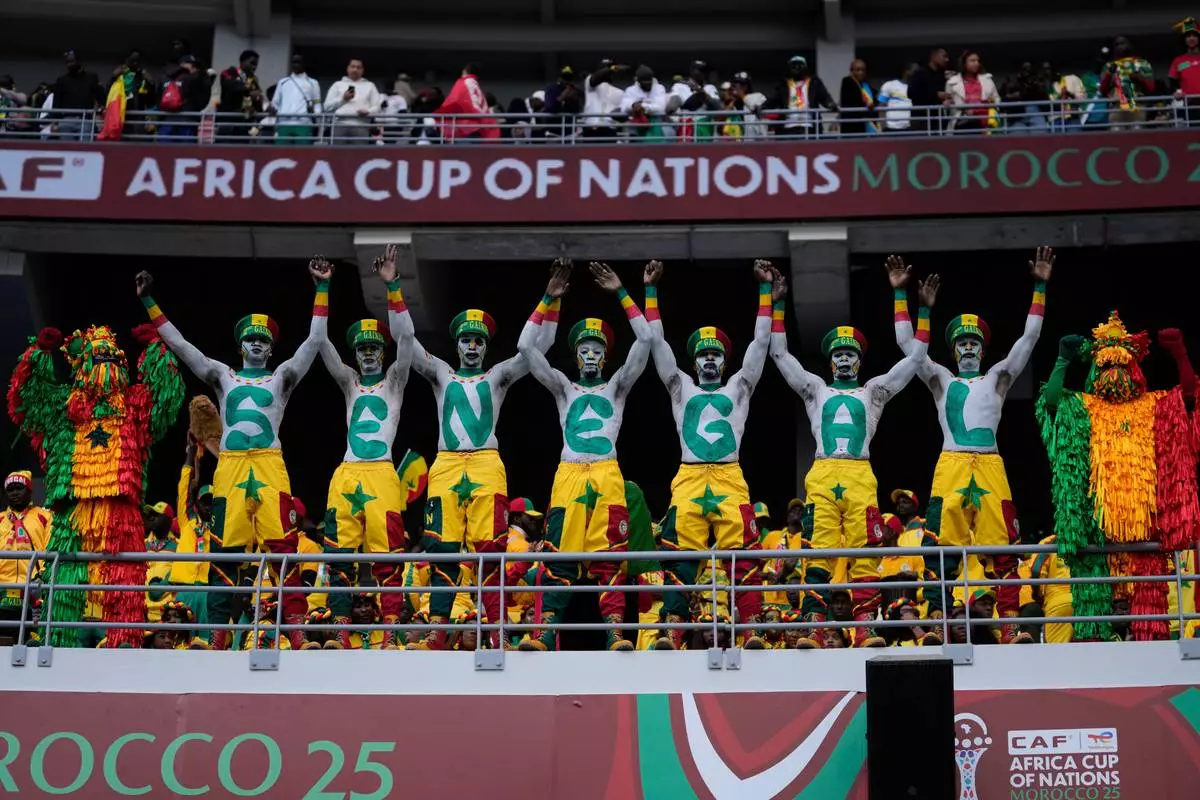
Senegal fans support their national team during the Africa Cup of Nations group D soccer match between Senegal and DR Congo in Tangier, Morocco, Saturday, Dec. 27, 2025. (AP Photo/Themba Hadebe)