SAN DIEGO & SAN FRANCISCO--(BUSINESS WIRE)--Apr 10, 2025--
Sharp HealthCare, the largest integrated health system in San Diego, is implementing the Abridge generative AI platform across the enterprise to create comprehensive, compliant, and billable documentation, enabling clinicians to fully focus on caring for patients. Abridge will now be deployed across Sharp HealthCare locations, which support more than one million patients annually.
This press release features multimedia. View the full release here: https://www.businesswire.com/news/home/20250410805726/en/
Medical records serve many purposes and stakeholders. They are the health record for patients, a guide for other clinicians on the care team, and a part of how clinicians receive compensation for the care provided.
“If you didn't write it down, it didn't happen,” said Dr. Brian Lichtenstein, a hospitalist and Associate Chief Medical Information Officer (CMIO) of Acute Care at Sharp HealthCare. “With Abridge, we’re picking up on additional conditions our clinicians are treating that might have otherwise been lost. Even when you're trying to be exhaustive in your notes, you may document eight of ten things that you did, which is good, but getting all ten is great and helps us realize more of the value of what we deliver.”
Abridge’s capability to support clinicians and health systems in capturing all of the value they deliver is enabled by the platform’s Contextual Reasoning Engine, an AI architecture that generates compliant, structured, and billable notes, in real-time, at the point of care.
“A colleague told me that Abridge more completely captures all the work he is doing,” said Dr. Elan Hekier, Pulmonary and Critical Care Medicine Physician and CMIO of Sharp Rees-Stealy Medical Group, a Sharp HealthCare physician practice. “It even captured a diagnosis he says he would have missed. It was during the exam and he had forgotten about it by the end of the long visit. But Abridge appropriately added that diagnosis.”
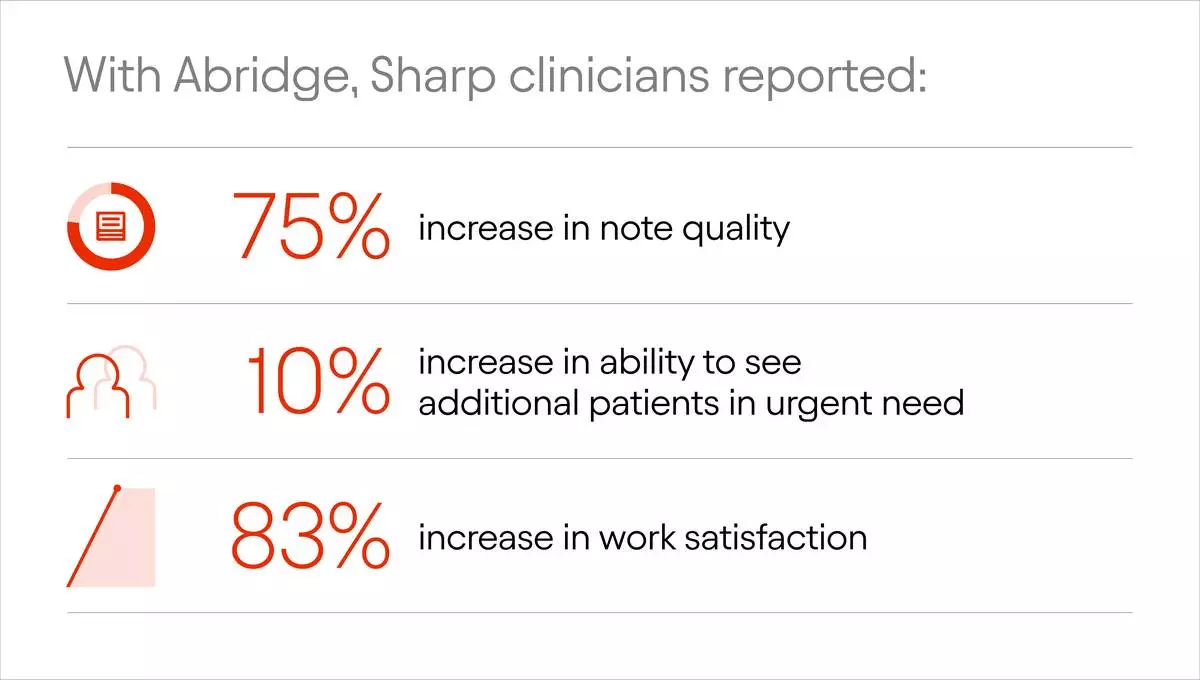
Following a pilot in which Abridge was rigorously tested across specialties, languages, and care settings, Sharp HealthCare clinicians experienced:
This data was collected using a pre-post survey and included a self-reported 10% increase in clinicians’ ability to see additional patients that needed urgent attention.
“I’m Spanish-speaking, and sometimes I speak in Spanglish with my patients. Abridge’s HPI and A&P always pick up way more than I used to catch, regardless of the language,” said Dr. Nicole Tremain, an internal medicine clinician as well as Associate CMIO at the Sharp Community Medical Group, another Sharp HealthCare physician practice.
Abridge is now trusted by more than 100 of the largest and most complex health systems to deliver highly accurate clinical documentation relied upon by clinicians, patients, and revenue cycle professionals every day.
“Enterprise-grade healthcare AI removes barriers between patients and clinicians and delivers ROI for healthcare systems,” said Dr. Shiv Rao, CEO and Founder of Abridge. “The clinicians and AI scientists who designed Abridge understand the anxiety creating compliant, billable documentation can cause among clinicians—our mission is to relieve that burden so they can focus on delivering exceptional patient care.”
About Sharp HealthCare
Sharp HealthCare, San Diego's largest and most comprehensive health care delivery system, is recognized for clinical excellence in cardiac, cancer, multi-organ transplantation, neuroscience, orthopedics, rehabilitation, behavioral health, women's health and hospice services. Sharp HealthCare has been widely acclaimed for its commitment to transform the health care experience for patients, physicians and staff through an organization-wide performance improvement initiative called The Sharp Experience. The Sharp HealthCare system includes four acute-care hospitals, four specialty hospitals, three affiliated medical groups, a health plan and numerous outpatient facilities and programs, including the Sharp Prebys Innovation & Education Center. To learn more about Sharp, visit Sharp Health News.
About Abridge
Abridge was founded in 2018 to power deeper understanding in healthcare. The enterprise-grade AI platform transforms medical conversations into clinically useful and billable documentation at the point of care, reducing administrative burden and clinician burnout while improving patient experience. With deep EHR integration, support for 28+ languages, and 50+ specialties, Abridge is used across a wide range of care settings, including outpatient, emergency department, and inpatient.
Abridge’s enterprise-grade AI platform is purpose-built for healthcare. Supported by Linked Evidence, Abridge is the only solution that maps AI-generated summaries to source data, helping clinicians quickly trust and verify the output. As a pioneer in generative AI for healthcare, Abridge is setting the industry standard for the responsible deployment of AI across health systems.
Abridge was recently awarded Best in KLAS for Ambient AI segment in addition to other accolades, including TIME Best Inventions of 2024, 2024 Forbes AI 50 List, and Fortune’s 2024 AI 50 Innovators.
Sharp HealthCare Chooses Abridge for Clinical Documentation, Enabling Clinicians to Focus on Care—Not Coding
Sharp HealthCare Chooses Abridge for Clinical Documentation, Enabling Clinicians to Focus on Care—Not Coding
NEW YORK (AP) — Stocks are rushing higher worldwide, and oil prices are easing Wednesday as hopes build that the war with Iran could end soon. That's even though some of the signals investors saw as hopeful are already under dispute, and several prior bouts of optimism in financial markets quickly got undercut by continued, fierce fighting in the war.
The S&P 500 rallied 0.9% and added to its leap from the day before, which was its best since last spring. That followed even bigger gains for stock markets across Europe and Asia, including an 8.4% surge in South Korea, which were catching up to Wall Street’s rally from Tuesday.
The Dow Jones Industrial Average was up 294 points, or 0.6%, as of 2:08 p.m. Eastern time, and the Nasdaq composite was 1.3% higher.
Oil prices also fell back toward $100 per barrel after President Donald Trump said late Tuesday that the U.S. military could end its offensive in two to three weeks.
That added to optimism following a couple tenuous signals of hope from earlier Tuesday that Wall Street latched onto, including a news report quoting Iran’s president as saying that it has “the necessary will to end the war” as long as certain requirements are met, including “guarantees to prevent a recurrence of aggression.”
The worry on Wall Street has been that the war may last a long time and keep oil and natural gas from the Persian Gulf out of global markets, which could create a brutal blast of inflation.
But hope has been quick to reverse to doubt on Wall Street, triggering manic swings back and forth for financial markets since the war with Iran began. Trump has also made statements that lifted markets, only to see the gains quickly disappear after increasing his military threats.
Shortly before Wall Street began trading on Wednesday, Trump claimed in a post on his social media network that Iran “has just asked the United States of America for a CEASEFIRE!”
“We will consider when Hormuz Strait is open, free, and clear. Until then, we are blasting Iran into oblivion or, as they say, back to the Stone Ages!!!”
But Iran’s Foreign Ministry spokesman, Esmail Baghaei, quickly called that claim “false and baseless,” according to a report on Iranian state television.
Oil prices also remain high, even if they’ve eased recently. The price for a barrel of Brent crude oil, the international standard, was sitting at $101.51 following its declines, which is still up from roughly $70 before the war began.
U.S. gasoline prices rose again overnight to a national average of $4.06 per gallon, according to the auto club AAA.
Iran, meanwhile, hit an oil tanker off the coast of Qatar and Kuwait’s airport on Wednesday while airstrikes battered Tehran as the fighting continued. Iran also continues to hold a grip on the Strait of Hormuz, where a fifth of the world’s traded oil passes during peacetime.
“De-escalation hopes have given markets a lift, but we think the effects of the war would, in many cases, persist even if the war did end soon,” Thomas Mathews, head of markets, Asia Pacific at Capital Economics, said in a research note Wednesday.
“It’s worth thinking through how markets might fare if the war were to end ‘very soon,’” he wrote. “Do markets have further to recover if sentiment continues to improve? The answer is almost certainly yes.”
The White House said Trump will deliver a public address Wednesday evening on the Iran war.
On Wall Street, most stocks rose as Big Tech powered the move higher. Gains of 3.8% for Alphabet and 0.8% for Nvidia were two of the strongest forces lifting the S&P 500.
Eli Lilly climbed 5.1% after U.S. regulators approved its GLP-1 pill for weight loss.
Such gains have pulled the S&P 500, which sits at the heart of many 401(k) accounts, back to within 5.6% of its all-time high set early this year. Just on Monday, the index briefly neared a 10% drop from its record, a steep-enough fall that professional investors have a name for it: a “correction.”
Nike sank 14.5% even though it reported a stronger profit for the latest quarter than expected. Analysts said it gave some lackluster financial forecasts.
Hasbro fell 4.8% after the toy company found someone had gained unauthorized access to its computer network and is working to assess the full impact.
Energy companies fell broadly as oil prices eased. Exxon Mobil slumped 5% and Chevron fell 4.9%.
In stock markets abroad, indexes leaped more than 2% in France and Germany. Asian markets had even bigger gains.
Tokyo’s Nikkei 225 jumped 5.2% after a survey showed business sentiment for major Japanese manufacturers improved despite worries about the Iran war.
In the bond market, Treasury yields held relatively steady after a report said U.S. retailers made more money in February than economists expected. A separate report said U.S. manufacturing growth last month was slightly faster than economists expected.
The 10-year Treasury yield rose to 4.32% from 4.30% late Tuesday.
AP Business Writers Chan Ho-him and Matt Ott contributed.
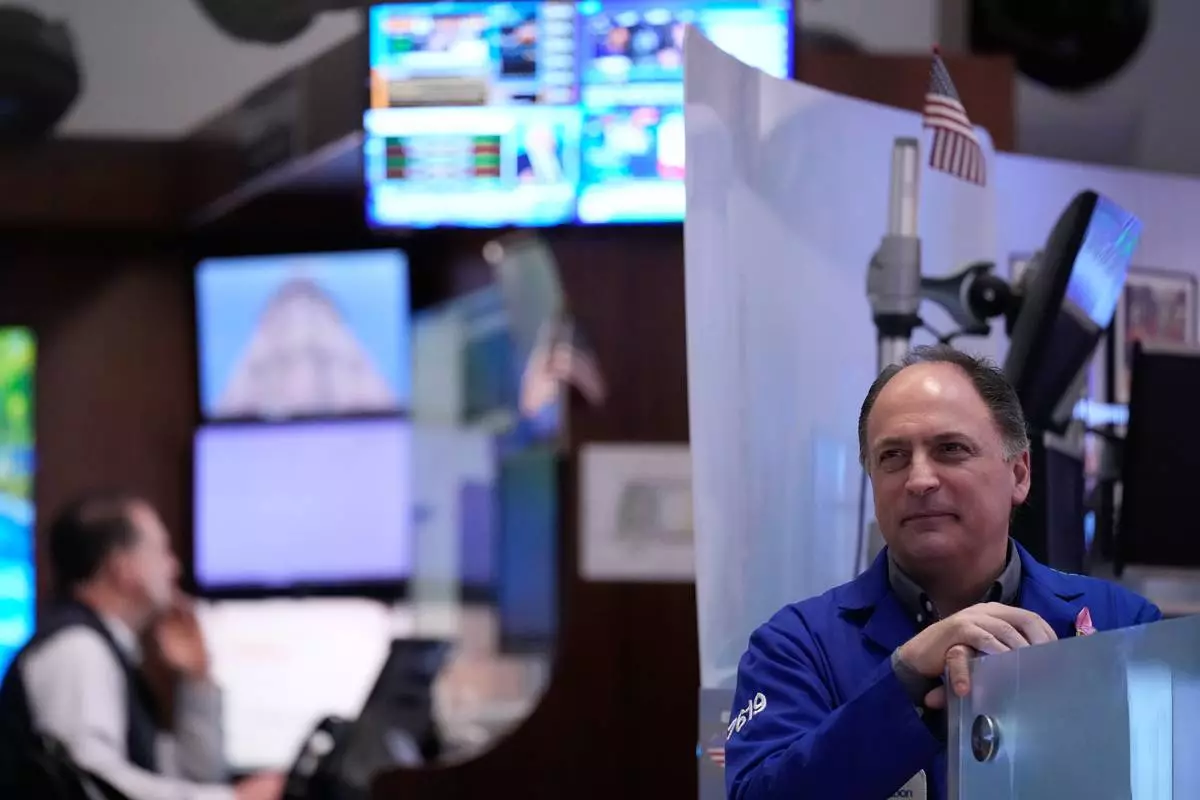
James Conti works on the floor at the New York Stock Exchange in New York, Tuesday, March 31, 2026. (AP Photo/Seth Wenig)
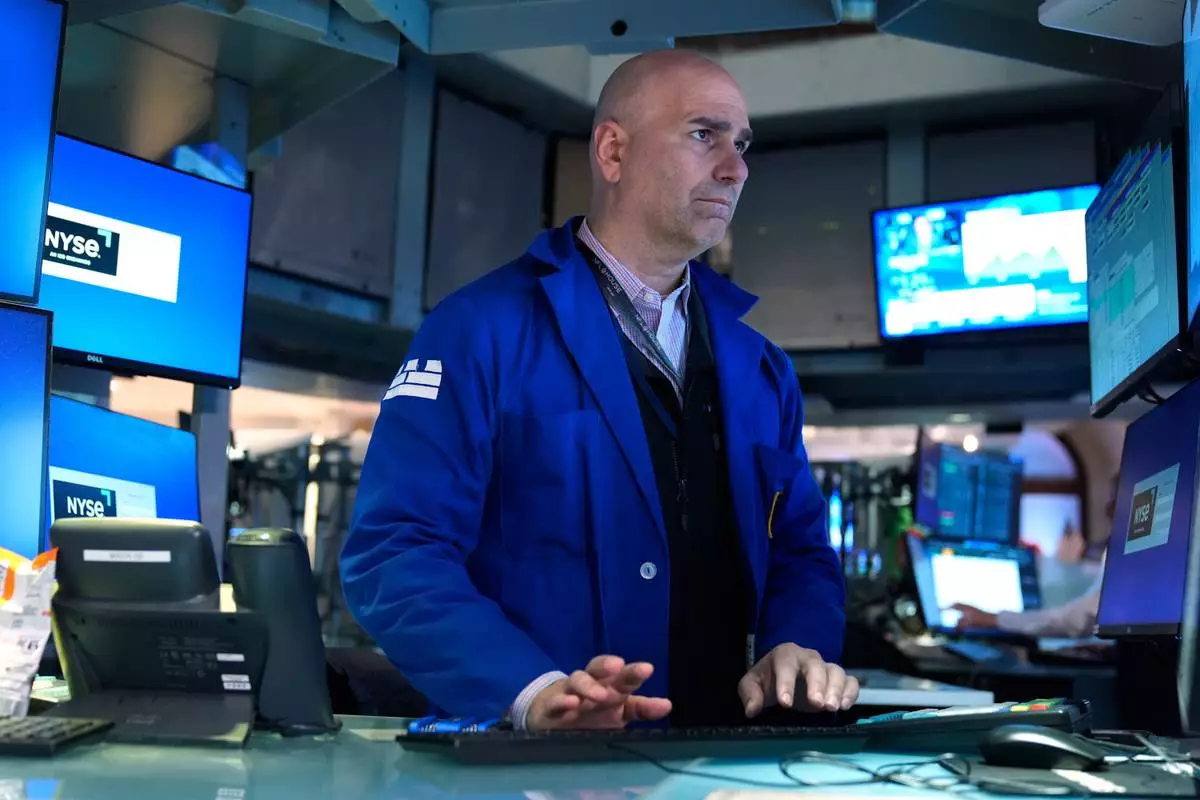
Philip Finale works on the floor at the New York Stock Exchange in New York, Tuesday, March 31, 2026. (AP Photo/Seth Wenig)
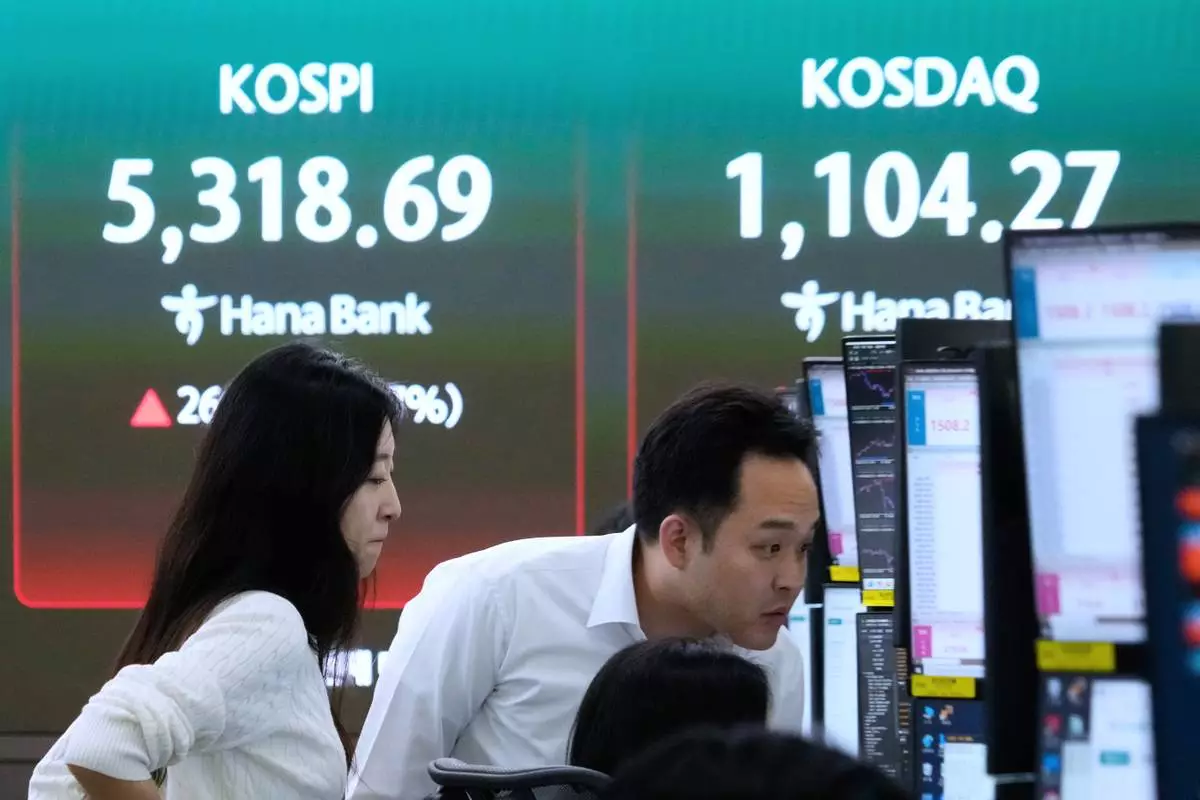
Currency traders watch monitors near a screen showing the Korea Composite Stock Price Index (KOSPI), left, at the foreign exchange dealing room of the Hana Bank headquarters in Seoul, South Korea, Wednesday, April 1, 2026. (AP Photo/Ahn Young-joon)
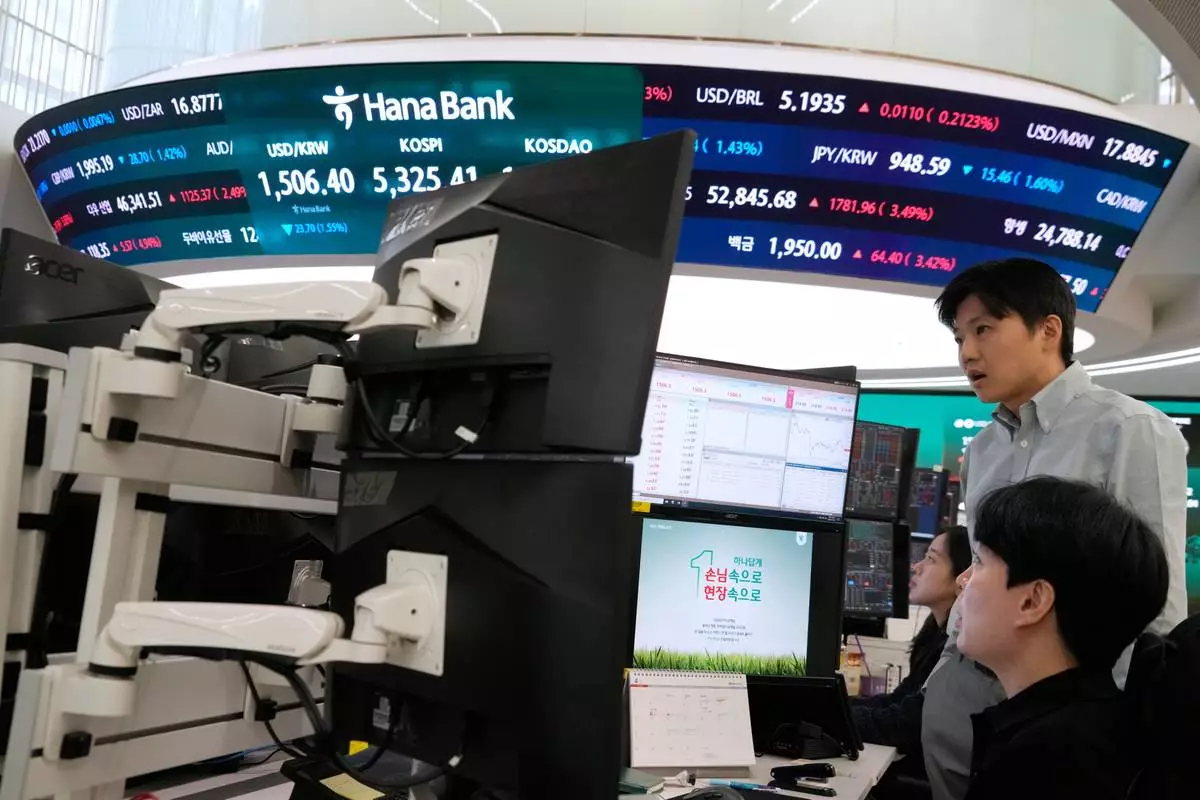
Currency traders watch monitors near a screen showing the Korea Composite Stock Price Index (KOSPI), top center, and the foreign exchange rate between U.S. dollar and South Korean won, top center left, at the foreign exchange dealing room of the Hana Bank headquarters in Seoul, South Korea, Wednesday, April 1, 2026. (AP Photo/Ahn Young-joon)
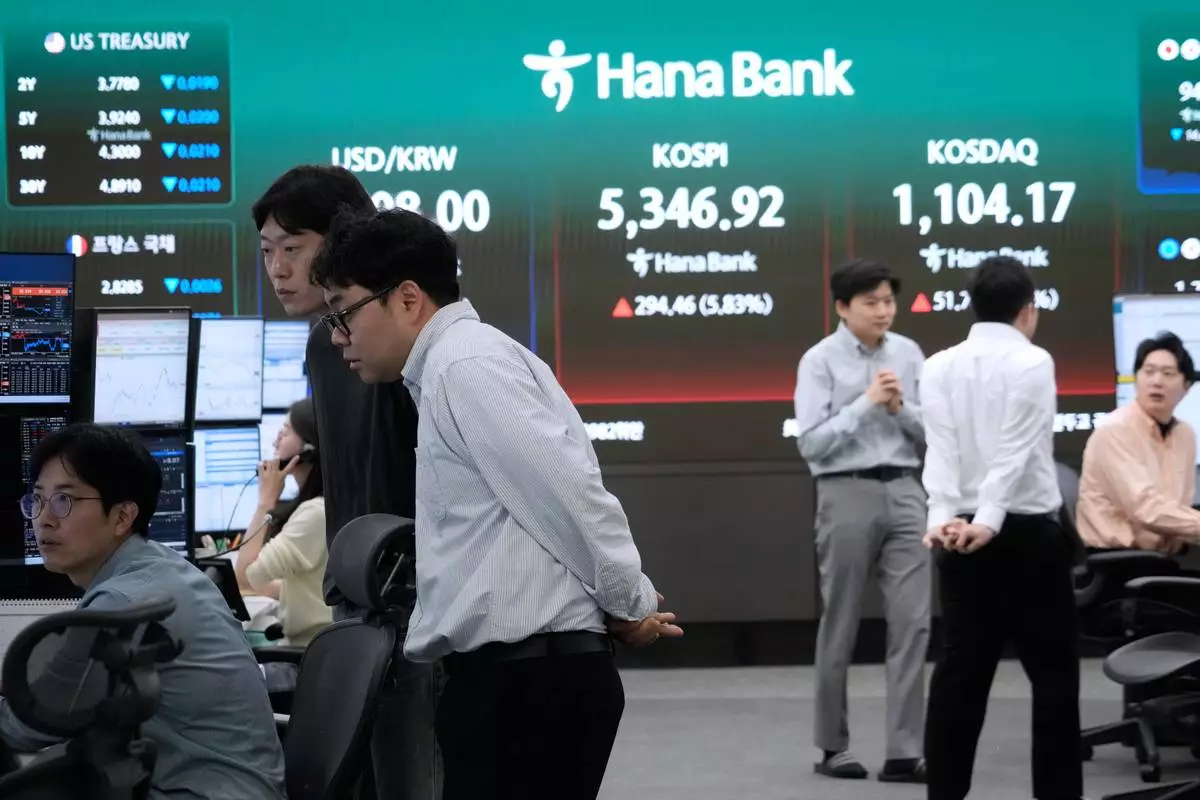
Currency traders work at the foreign exchange dealing room of the Hana Bank headquarters in Seoul, South Korea, Wednesday, April 1, 2026. (AP Photo/Ahn Young-joon)
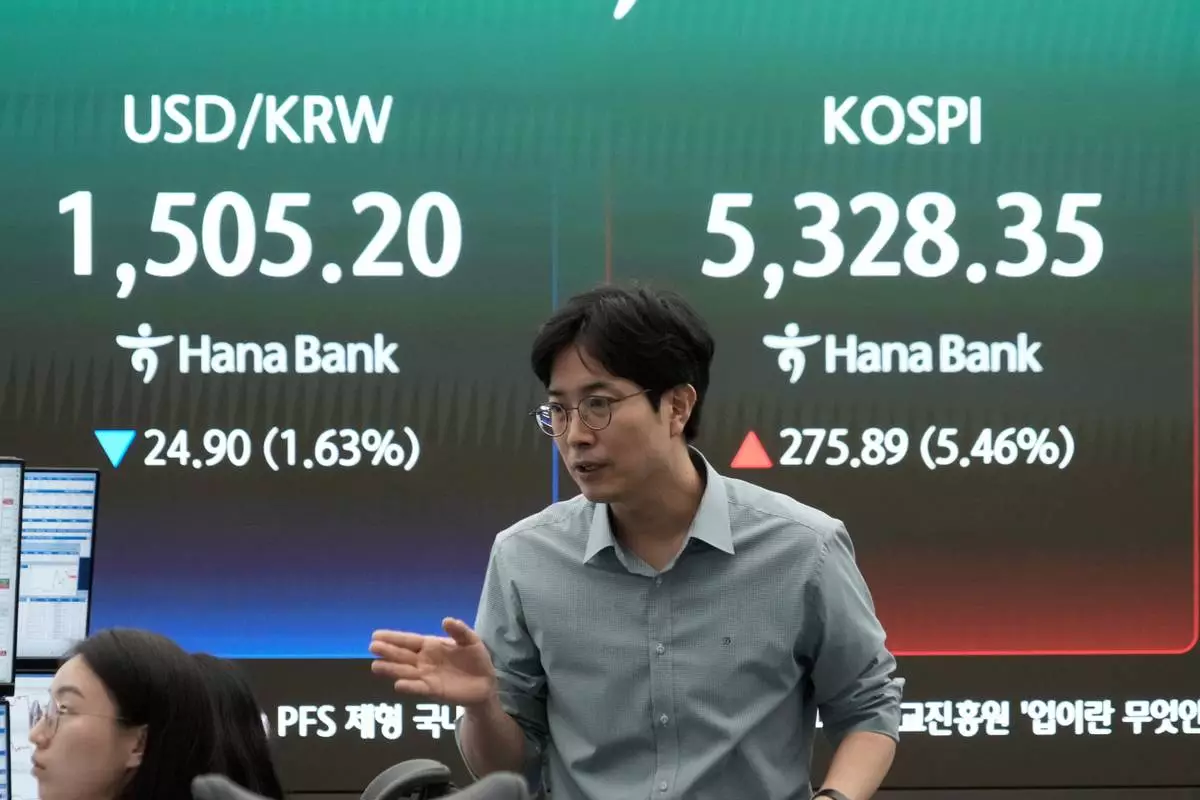
A currency trader reacts near a screen showing the Korea Composite Stock Price Index (KOSPI), right, and the foreign exchange rate between U.S. dollar and South Korean won at the foreign exchange dealing room of the Hana Bank headquarters in Seoul, South Korea, Wednesday, April 1, 2026. (AP Photo/Ahn Young-joon)

A screen displays financial information on the floor at the New York Stock Exchange in New York, Tuesday, March 31, 2026. (AP Photo/Seth Wenig)