BILLINGS, Mont. (AP) — President Donald Trump's nominee to oversee an agency that manages a quarter-billion acres of public land has withdrawn her nomination following revelations that she criticized the Republican president in 2021 for inciting the Jan. 6 attack on the U.S. Capitol.
The withdrawal of Kathleen Sgamma to lead the Interior Department's Bureau of Land Management was announced Thursday morning at the start of her confirmation hearing before the Senate Energy and Natural Resources Committee.
David Bernhardt, who served as interior secretary in Trump’s first term, suggested on X that Sgamma’s withdrawal was “self-inflicted” and he included a link to a website that posted her 2021 comments. Bernhardt indicated that people whose views don’t align with Trump’s should not seek political appointments in his administration.
“I am disgusted by the violence witnessed yesterday and President Trump’s role in spreading misinformation that incited it,” Sgamma said in the comments earlier reported by Documented, which describes itself as a watchdog journalism project.
Sgamma confirmed her withdrawal on LinkedIn and said it was an honor to have been nominated.
“I remain committed to President Trump and his unleashing American energy agenda and ensuring multiple-use access for all,” said Sgamma. Since 2006 she's been with the Denver-based Western Energy Alliance, an oil industry trade group, and has been a vocal critic of the energy policies of Democratic administrations.
White House spokesperson Liz Huston said the administration looked forward to naming another nominee but did not offer a timeline.
The longtime oil and gas industry representative appeared well-poised to carry out Trump's plans to roll back restrictions on energy development, including in Western states where the land bureau has vast holdings. The agency also oversees mining, grazing and recreation.
Sgamma's withdrawal underscored the Trump administration's creation of a “loyalty test” to weed out subordinates who are out of step with him, said Aaron Weiss, deputy director of the left-leaning Center for Western Priorities.
“That’s the world we're in — if that’s what happened — where being sane and acknowledging reality with the White House is enough to sink a nomination,” he said.
Trump has been testing how far Republicans are willing to go in supporting his supercharged “Make America Great Again” agenda. Few Republicans have criticized Trump after his sweeping pardons of supporters, including violent rioters, charged in the Jan. 6, 2021, attack on the Capitol.
Most congressional Republicans have played down the potential negative impact of Trump’s actions, including widespread tariffs on U.S. allies, and have stressed the importance of uniting behind him.
The Bureau of Land Management plays a central role in a long-running debate over the best use of government-owned lands, and its policies have swung sharply as control of the White House has shifted between Republicans and Democrats. Under President Joe Biden, a Democrat, it curbed oil drilling and coal mining on federal lands while expanding renewable power. The agency under Biden also moved to put conservation on more equal footing with oil drilling and other extractive industries in a bid to address climate change.
Trump is reversing the land bureau's course yet again.
On Thursday, officials announced that they will not comprehensively analyze environmental impacts from oil and gas leases on a combined 5,500 square miles (14,100 square kilometers) of bureau land in Colorado, Montana, New Mexico, North Dakota, South Dakota, Utah and Wyoming. The leases were sold to companies between 2015 and 2020 but have been tied up by legal challenges.
Also this week, Trump signed an executive order aimed at boosting coal production. That will end the Biden administration's ban on new federal coal sales on bureau lands in Wyoming and Montana, the nation's largest coal fields.
The land bureau had about 10,000 employees at the start of Trump’s second term, but at least 800 employees have been laid off or resigned amid efforts by the Trump administration to downsize the federal workforce.
It went four years without a confirmed director during Trump's first term. Trump moved the agency’s headquarters to Colorado before it was returned to Washington, D.C., under Biden.
Senate energy committee Chairman Mike Lee said he would work with the administration to find a new nominee for the bureau.
"Its work directly impacts millions of Americans — especially in the West — and its leadership matters," the Utah Republican said.
Utah officials last year launched a legal effort to wrest control of Bureau of Land Management property from the federal government and put it under state control. They were turned down by the U.S. Supreme Court.
Daly reported from Washington, D.C.
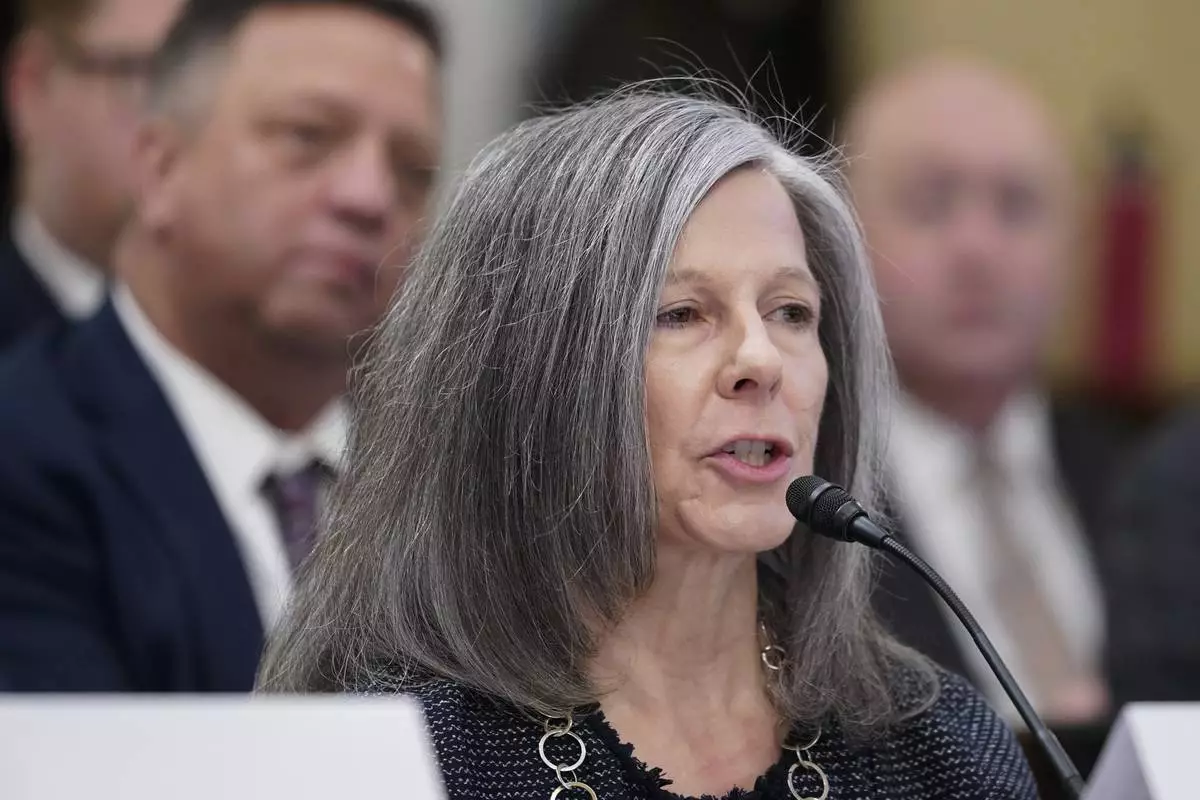
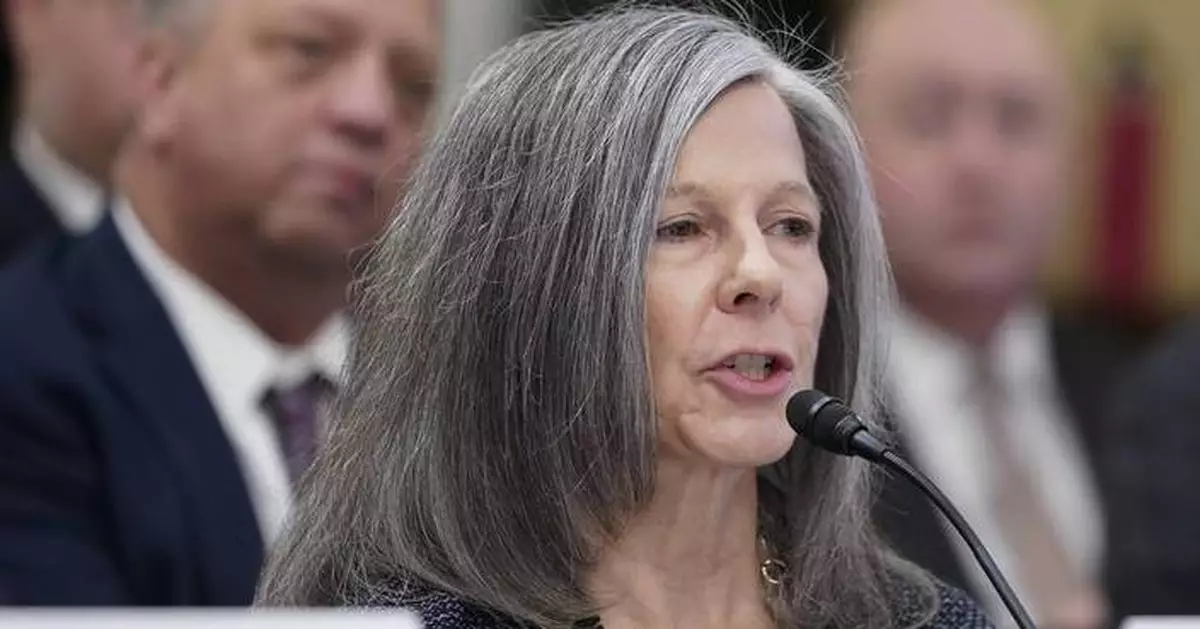
FILE - Kathleen Sgamma, President, Western Energy Alliance, speaks during a House Committee on Natural Resources hearing on America's Energy and Mineral potential, Feb. 8, 2023, on Capitol Hill in Washington. (AP Photo/Mariam Zuhaib, File)