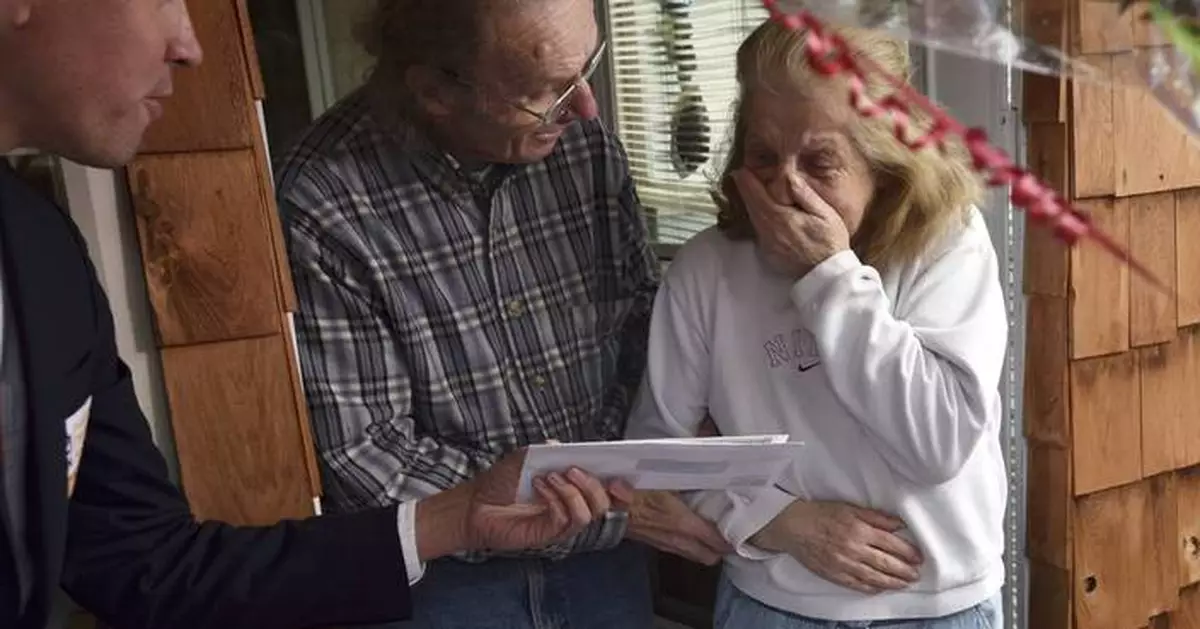
NEW YORK (AP) — Publishers Clearing House, a decades-old marketing and sweepstakes company known for doling out large “Prize Patrol” checks, has filed for Chapter 11 bankruptcy protection.
In an announcement this week, PCH said it was using the bankruptcy process to “finalize a shift away” from its legacy business of direct-mail, retail merchandise and magazine subscriptions. The company is hoping to instead transition to a “pure digital advertising" model, where it will continue to offer free-to-play entertainment and prizes.
The Chapter 11 proceedings, filed in New York on Wednesday, arrive amid growing financial strain for PCH — which has struggled with rising operational costs and changing consumer habits in recent years.
Pivoting from its old way of doing business will help the company break free from past constraints and “establish a strong foundation for our future," CEO Andy Goldberg said in a statement.
But that doesn't mean the famous sweepstakes are going away. PCH says it plans to operate in a "business-as-usual manner" throughout the bankruptcy process — noting that the “Prize Patrol” team will continuing to deliver awards across the U.S. The company says it's lined up debtor-in-possession financing from Prestige Capital to fund operations through its restructuring.
PCH's roots date back to 1953 — when Harold and LuEsther Mertz and their daughter, Joyce Mertz-Gilmore, formed a business out of their Long Island, New York home to send direct-to-consumer mailings that solicited subscribers for a number of magazines through one single offering.
The company later grew with chances for consumers to win money — first launching a direct mail sweepstakes in 1967 — and expanded its offerings to a wide variety of merchandise, from collectible figurines to houseware and “As Seen on TV” accessories, in the years that followed. Its in-person “Prize Patrol” team was formed in 1989.
PCH became known for surprising prize winners with oversized checks, which was often filmed and featured in TV commercials. In Wednesday court documents, the company said it has awarded over half a billion dollars in prizes and continues to attract millions of contestants today.
But its operations haven't been without financial strain — particularly in recent years.
“While PCH’s direct mail and e-commerce programs were profitable for decades, changing patterns of consumer behavior, costs and competition, along with a declining pool of new prospecting names, negatively impacted the business, resulted in losses beginning in 2022,” William H. Henrich, co-chief restructuring officer for PCH, wrote in a court declaration Wednesday.
Henrich pointed to a handful of cost pressures — including rising shipping and postal rates, inventory and supply chain challenges that have continued since the start of the COVID-19 pandemic and rising competition from major retailers today, like Walmart and Amazon, that have dominated the e-commerce space.
PCH also faced some scrutiny from regulators who previously raised concerns about consumers mistakenly believing that making purchases from the company would improve their chances at winning its sweepstakes. As a result, PCH has racked up several costly legal settlements over the years — most recently, Wednesday's court documents note, paying $18.5 million to resolve allegations from the Federal Trade Commission in 2018.
As of the end of March, PCH had total assets of nearly $11.7 million and total liabilities of about $65.7 million, court documents show. The company currently has 105 employees and an annual gross revenue of about $38 million.

FILE - Jo-Ann Snyder reacts when she see's the check from Publishers Clearing House at her home in Wilkes-Barre Twp., Feb. 23, 2018. (Aimee Dilger/The Times Leader via AP)/The Times Leader via AP, file)
KAMPALA, Uganda (AP) — Ugandan President Yoweri Museveni won his seventh term with 71.65% of votes, according to official results Saturday, in an election marred by internet shutdown and fraud claims by his youthful challenger, who rejected the outcome and called for peaceful protests.
The musician-turned-politician best known as Bobi Wine took 24.72% of the vote, the final results showed. Wine, whose real name is Kyagulanyi Ssentamu, has condemned what he described as an unfair electoral process and alleged abductions of his polling agents. He said he had rejected the “fake results” and urged Ugandans to peacefully protest until the “rightful results are announced.”
Wine said he had to escape to avoid arrest by security forces who stormed his house Friday night. His party said earlier he was forcefully taken away in an army helicopter but police denied it.
Police spokesperson Kituuma Rusoke said Wine was “not under arrest” and was free to leave his house, but there was “controlled access” for others trying to go into the property to prevent people from using the premises to incite violence.
Electoral officials face questions about the failure of biometric voter identification machines on Thursday, which caused delays in the start of voting in urban areas — including the capital, Kampala — that are opposition strongholds.
After the machines failed, in a blow to pro-democracy activists who have long demanded their use to curb rigging, polling officials used manual registers of voters. The failure of the machines is likely to be the basis for any legal challenges to the official result.
Museveni said he agreed with the electoral commission’s plan to revert to paper voter registration records after the biometric machines failed, but Wine alleged fraud, claiming that there was “massive ballot stuffing” and that his party’s polling agents were abducted to give an unfair advantage to the ruling party.
Museveni, 81, has stayed in power over the years by rewriting the rules. The last legal obstacle to his rule – term and age limits – have been removed from the constitution, and some of Museveni’s possible rivals jailed or sidelined. He has not said when he will retire.
Yusuf Serunkuma, an academic and columnist for the local Observer newspaper, told The Associated Press on Saturday that Wine “didn’t stand a chance” against the authoritarian Museveni. “He has quite successfully emasculated the opposition,” Serunkuma said of Museveni. “You would have to credit him for that.”
Even with Wine’s courageous challenge, Museveni faced “one of the weakest oppositions” in recent times, in part because opposition figures are not united while Museveni is the undisputed leader of his party and enjoys authority over the armed forces, Serunkuma said.
The security forces were a constant presence throughout the election campaign, and Wine said authorities followed him and harassed his supporters, using tear gas against them. He campaigned in a flak jacket and helmet due to his security fears.
Uganda has not witnessed a peaceful transfer of presidential power since independence from British colonial rule six decades ago.
Veteran opposition figure Kizza Besigye, a four-time presidential candidate, remains in prison after he was charged with treason in February 2025.

A traffic police officer sits in front of campaign posters of President Yoweri Museveni, the National Resistance Movement (NRM) presidential candidate, during the general election, in Kampala, Uganda, Thursday, Jan. 15, 2026. (AP Photo/Brian Inganga)
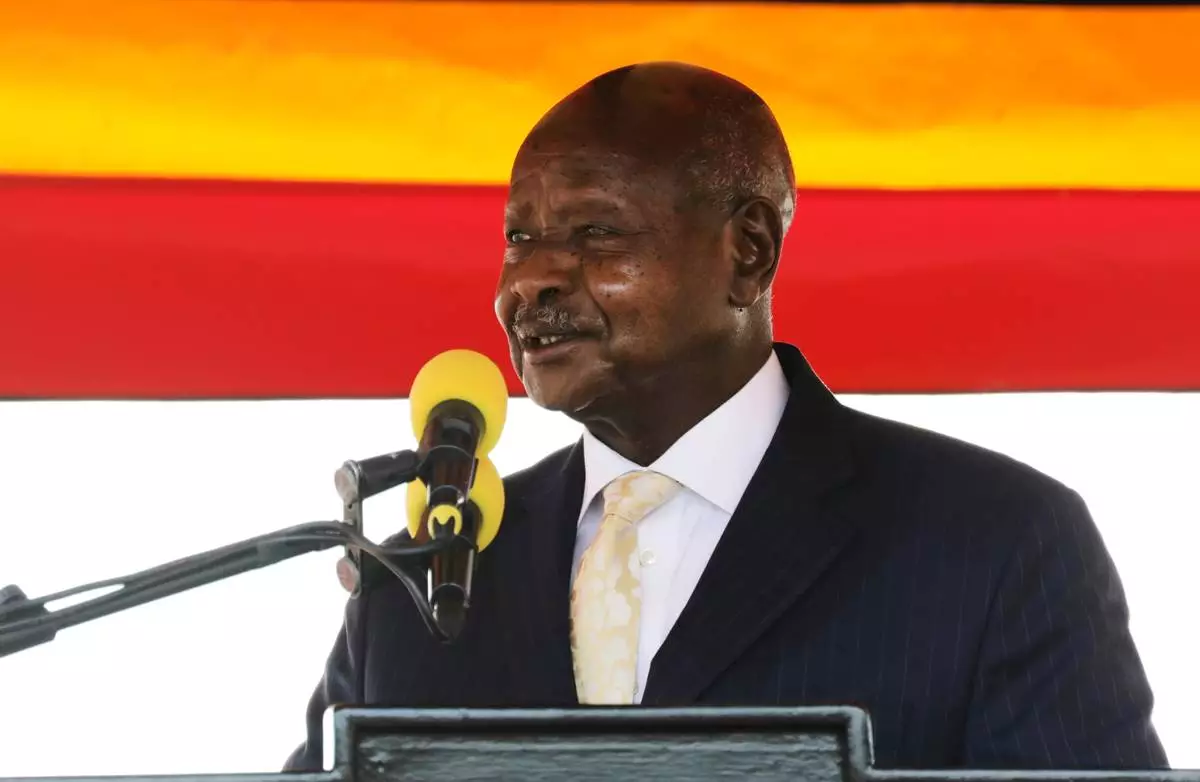
FILE - Ugandan President Yoweri Museveni speaks during the 60th Independence Anniversary Celebrations, in Kololo, Uganda, Sunday Oct. 9, 2022. (AP Photo/Hajarah Nalwadda, file)
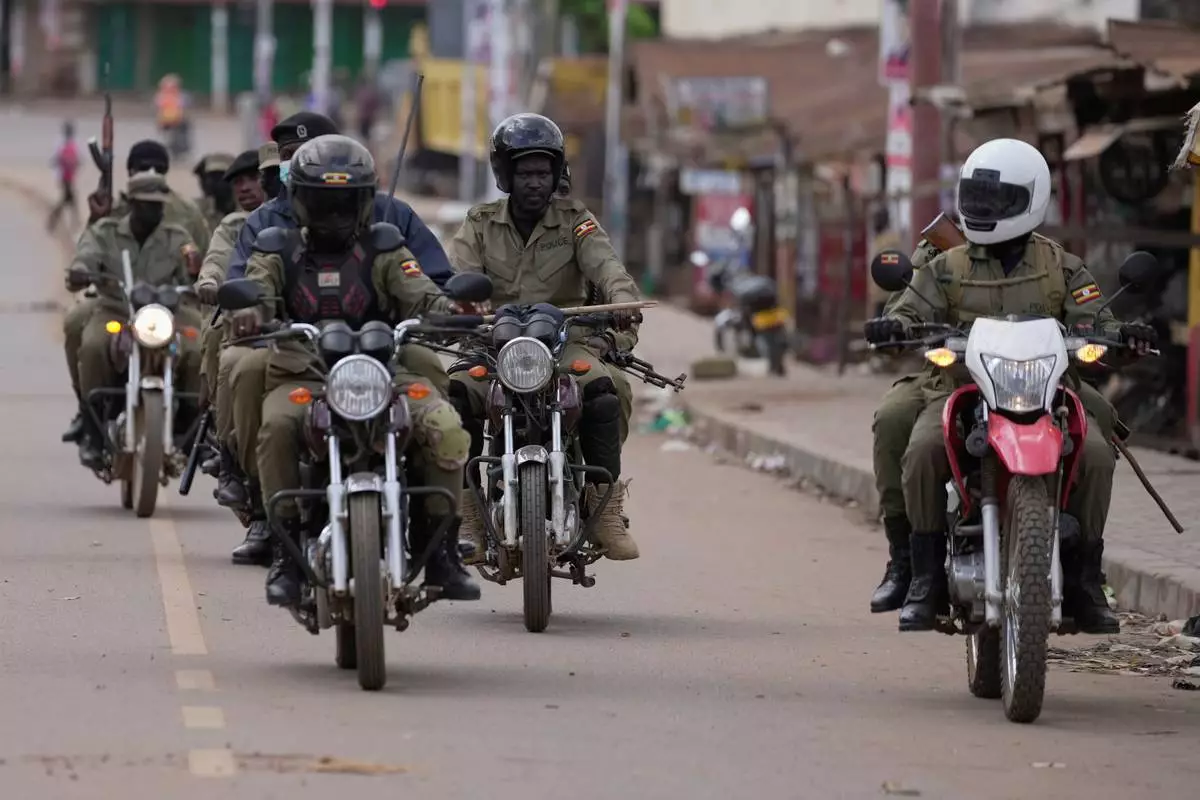
Uganda's security forces patrol a street during protests following the announcement of the preliminary results in Kampala, Uganda, Friday, Jan. 16, 2026. (AP Photo/Brian Inganga)
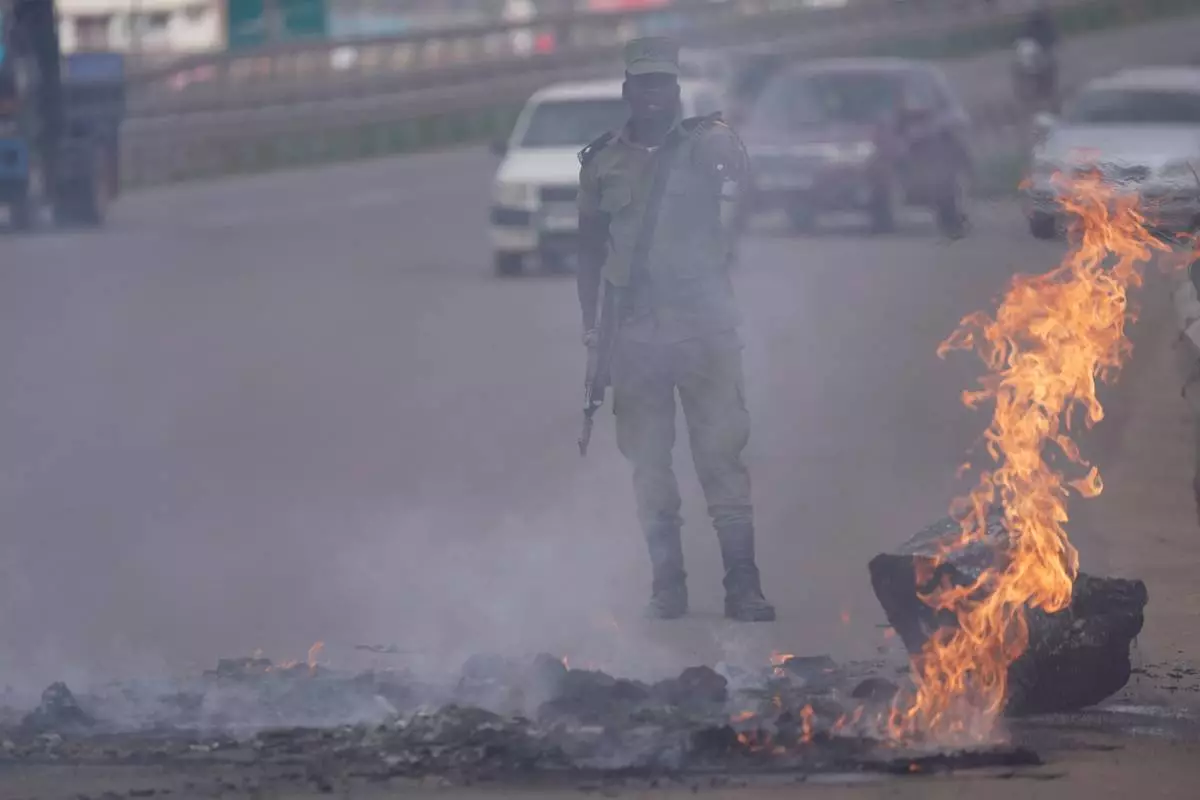
A Ugandan police officer makes a gesture behind a burning fire amid protests following the announcement of the preliminary results in Kampala, Uganda, Friday, Jan. 16, 2026. (AP Photo/Brian Inganga)
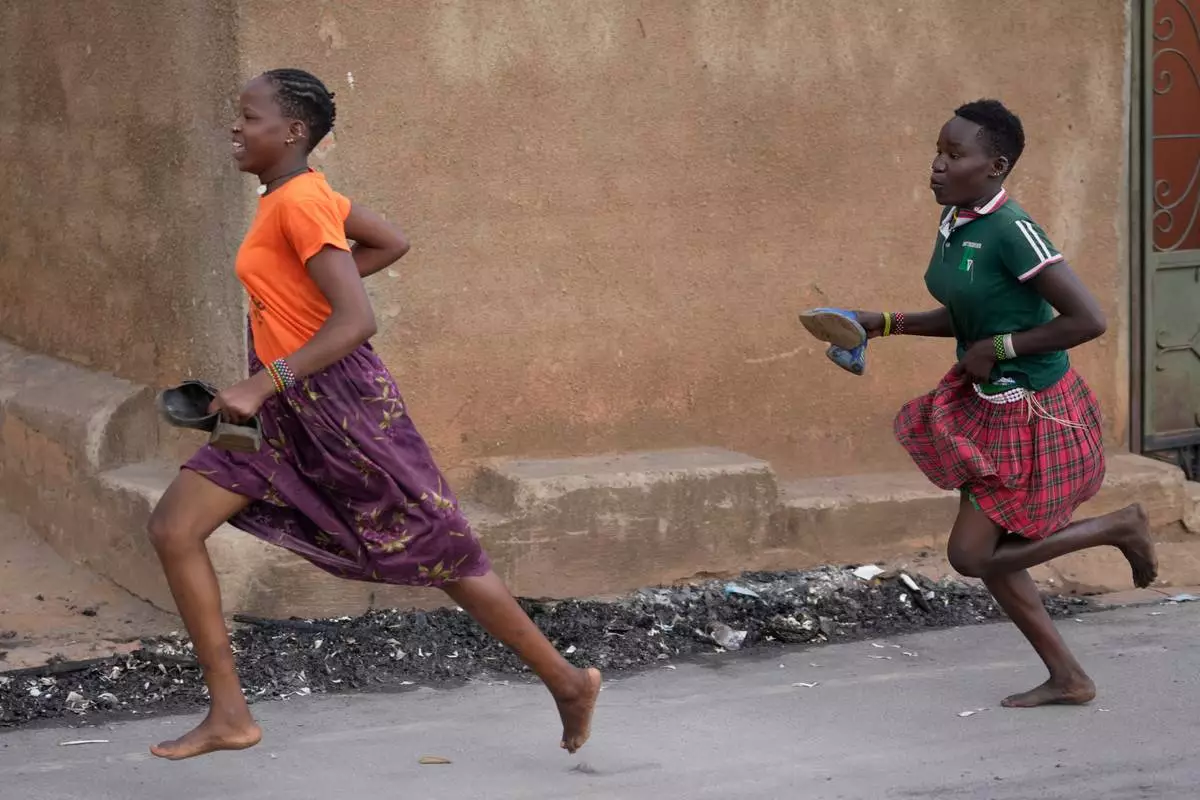
Girls run during protests following the preliminary results in Kampala, Uganda, Friday, Jan. 16, 2026. (AP Photo/Brian Inganga)