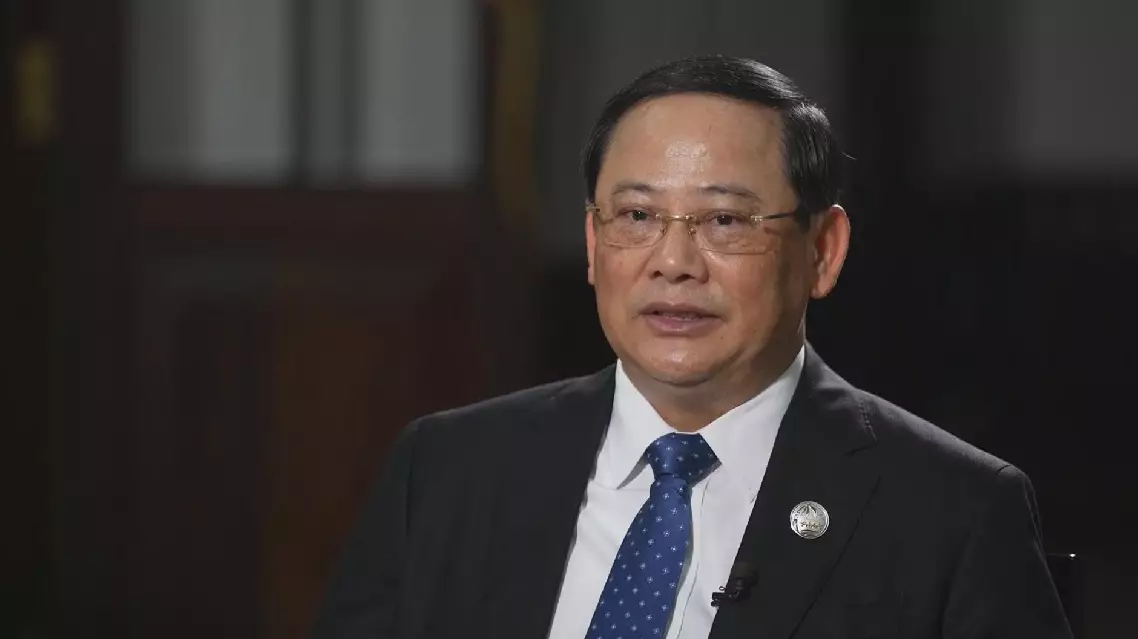
Laos has benefited from cooperation with China in the field of energy, accelerating the country's low-carbon energy transition and moving it closer towards its goal of becoming the "Battery of Southeast Asia", said Lao Prime Minister Sonexay Siphandone in a recent interview when he came to China for the Boao Foru for Asia Annual Conference 2025.
In April 2023, a groundbreaking ceremony for the 600 MW Monsoon Wind Power Project, the first of this kind in Laos, contracted by Power Construction Corporation of China (PowerChina), was held in Vientiane, the capital of Laos.
In February this year, the launch ceremony for the construction of the Lao section of the China-Laos 500 kV power interconnection project was held in Vientiane.
In early March, Laos' first photovoltaic and energy storage project was put into substantive operation.
Speaking with China Central Television (CCTV), Sonexay highlighted the significant role the electric power industry has played in the Lao economy.
"Electricity sector is undoubtedly one of the pillar industries in Laos. At present, Laos' installed power capacity has reached about between 11,000 and 12,000 megawatts, which can not only meet most of Laos' domestic electricity demand, but also export a large amount of the electricity to neighboring countries such as Thailand, Vietnam and Cambodia, and even to Malaysia and Singapore through Thailand," he said.
In the interview, Sonexay stressed that China has invested heavily in Laos' energy sector, which is conducive to the development of the nation's electric power sector.
"Among Laos' 53 sources of investment, China ranks the first in terms of investment. China mainly invests in Laos' energy, minerals, services, real estate, shopping malls, and other areas. Among them, China's investment in the energy field has played an important role in Laos' electricity production. For example, the China-invested Nam Ou River cascade hydropower station satisfy 33 percent of the country's electricity consumption. The Lao government is also promoting the development and utilization of alternative energy sources such as wind and sun," the prime minister said.
Laos benefits from energy cooperation with China: Lao PM