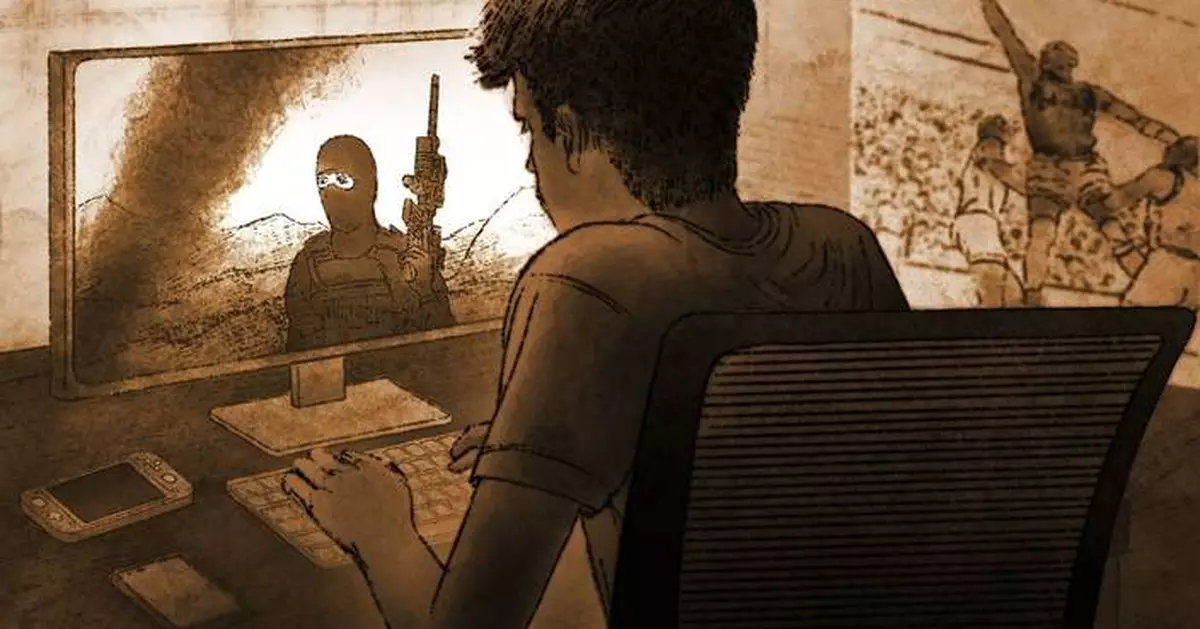
PARIS (AP) — After his arrest, the boy's mother was stunned to discover that her 12-year-old had been learning how to kill and gorging on videos of decapitation and torture so gruesome they made even case-hardened French court officials look away. The mother told criminal investigators that she'd thought her son had been playing video games and doing homework during the hours he spent in his room.
The child's descent into the internet's darkest recesses started innocently enough, with online searches about Islam after an aunt gave him a Quran as a gift, says the boy's lawyer. From there, more searching, automated algorithms that steer users' online experiences and the boy's curiosity ultimately led him to encrypted chats and ultraviolent propaganda pumped out by Islamic State militants and other extremist groups that are worming their way via apps, video gaming and social media into the minds of the very young.
Paul-Edouard Lallois, the French prosecutor who secured the boy's conviction on two terror-related charges last August, says the thousands of images and other extreme content that the child viewed so warped his understanding of the world and of right and wrong that "it will take years and years of work to enable this kid to recover normal bearings.”
The prosecutor believes that left unstopped, the boy was on a trajectory to possibly becoming a “completely dehumanized soldier” who risked joining the ranks of digitally radicalized teenagers in France and beyond who are hatching terror plots and expressing support for extremism. The huge library of violent content, several terabytes of data, that the boy amassed included video tutorials on bomb-making, the prosecutor said.
“It is possible to completely upend the mental bearings of such a young child,” he said. "Do that for a few years and, even before he has turned 18, he's already capable of, yes, committing an attack and the worst things with just a knife.”
Across Europe and further afield, the picture is similar: Counterterrorism agencies are grappling with a new generation of attackers, plotters and acolytes of extremism who are younger than ever and have fed on ultraviolent and potentially radicalizing content largely behind their screens. Some are appearing on police radars only when it's already too late — with knife in hand, as they're carrying out an attack.
Olivier Christen, France's national anti-terrorism prosecutor who handles the country's most serious terror investigations, has a firsthand view of the surging threat. His unit handed terror-related preliminary charges to just two minors in 2022. That number leapt to 15 in 2023 and again last year, to 19.
Some are “really very, very young, around 15 years old, which was something that was almost unheard of no more than two years ago,” Christen said in an interview with The Associated Press. It “demonstrates the strong effectiveness of the propaganda disseminated by terrorist organizations, which are quite good at targeting this age group.”
The so-called “Five Eyes" intelligence-sharing network that usually shuns the limelight, comprising U.S., U.K., Canadian, Australian and New Zealand security agencies, is so alarmed that it took the unusual step in December of calling publicly for collective action, saying: “Radicalized minors can pose the same credible terrorist threat as adults.”
In Germany, an Interior Ministry task force launched after deadly mass stabbings last year is focusing on teenagers’ social networks, aiming to counter their growing role in radicalization. In France, the domestic DGSI security agency says 70% of suspects detained for involvement in alleged terror plots are under the age of 21.
In Austria, security services say a 19-year-old suspect arrested in August, with an 18-year-old and a 17-year-old, for an alleged ISIS-inspired plot to slaughter Taylor Swift concertgoers, was radicalized online. So, too, was a suspected ISIS supporter, aged 14, detained this February for an alleged plan to attack a Vienna train station, Austrian authorities say.
The VSSE intelligence agency in Belgium says almost a third of suspects detained there for plotting attacks from 2022 to 2024 were minors — the youngest only 13. Extremist propaganda “is just a click away for young people in search of an identity or a purpose,” it said in a report in January, with radicalization occurring at speeds that are “nothing short of meteoric."
Counterterror investigators say the online radicalization of a child can sometimes take just months. Digitally nimble, kids are adept at covering their tracks and skirting parental controls. The 12-year-old's mother had no inkling that her boy was consulting extremist content, the family’s lawyer, Kamel Aissaoui, told The AP.
And unlike previous generations of militants who were easier for police to track and monitor because they interacted in the real world, their successors are often interacting only in digital spaces, including on encrypted chats to mask their identities and activities, investigators say.
"They live on their phones, their tablets, their computers, in contact with people they don’t know," said a senior official from a European intelligence agency who spoke to The AP on condition of anonymity to discuss its work combatting illegal extremist activity.
Some start "to imagine who they would attack, how they would go about it, doing actual reconnaissance, hunting for a weapon, consulting tutorials on how to make explosives,” the official said.
For some kids, the process starts with violent pornography or a fascination for gory images, counterterrorism investigators say. From there, more clicks can lead to grisly murder videos from Mexican drug cartels and ultimately to jihadi decapitations, throat-slitting and torture, in videos that are sometimes slickly produced with music and are shared on chat groups.
“Often they’re heavy consumers of everything that is broadcast on the Web and especially things that are forbidden,” said Christen, the French national anti-terror prosecutor. "It’s something of a chain reaction that gets them to the ultra-violence disseminated by jihadi movements.”
Aissaoui, the child's lawyer, said the trial was so tough on the 12-year-old that the hearing had to be paused twice because he was so distraught. He says the boy isn't violent and was simply a victim of apps and other digital tools that expose kids to extremist content.
“He was directed from site to site, and so on and so forth, until he came across things he should never have seen,” the lawyer said.
The boy is now in residential care without access to social networks, with specialized educators and regular visitation rights for his parents, the prosecutor told AP.
Counterterrorism investigators say they're dealing with kids from an array of backgrounds. Some have behavioral difficulties and some tend to be loners whose social interactions are largely virtual, but others raise no concerns with their behavior before it draws police attention.
Police analysis of the 12-year-old boy’s computer and phone found 1,739 jihadi videos, “a phenomenal quantity of scenes of decapitation, throat-slitting, shootings,” the prosecutor said. He also had how-to videos on bomb-making and killing, including one that appeared to show the real-life death of a tied-down man being methodically chopped into pieces.
“I have seen some horrible things in my career,” he said. “But this goes beyond all comprehension.”
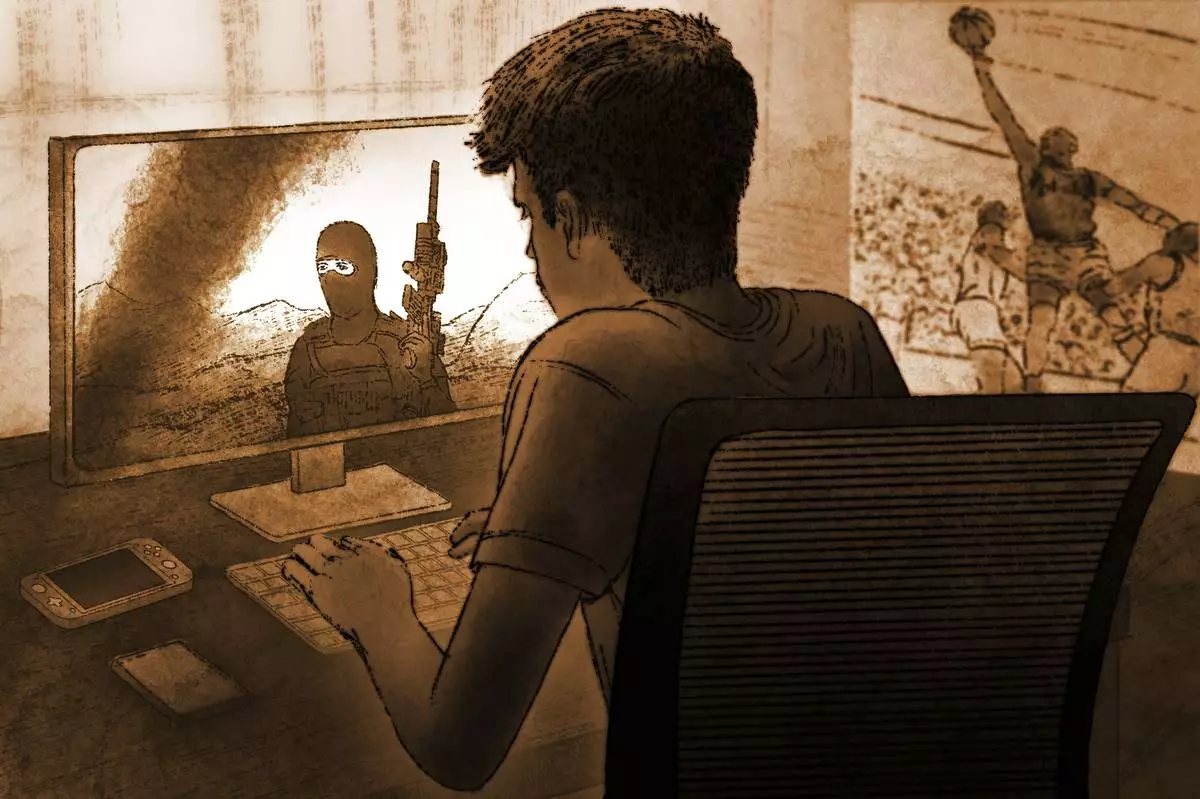
(AP Illustration / Peter Hamlin)
The title match in soccer’s biggest club competition is underway: Paris Saint-Germain vs. Arsenal in the Champions League final in Budapest, Hungary.
PSG is looking to win Europe’s elite competition for a second straight year while Arsenal is bidding to become European champion for the first time on its return to the final after a 20-year wait.
Both teams are coming off winning their own domestic leagues, in France and England, respectively.
Here's the latest:
Khvicha Kvaratskhelia has been fouled by Cristhian Mosquera in the area and the referee points to the penalty spot.
PSG is pushing forward and Arsenal is trying to slow things down. Arsenal defender Cristhian Mosquera is dragging his feet a bit too much at a throw-in and receives a yellow card for time wasting.
They do have potentially game-changing options on the bench, notably in France forward Bradley Barcola and Portugal striker Goncalo Ramos.
Ousmane Dembélé has been quiet – is he fully fit? – and has been snuffed out by Arsenal’s big center backs.
There’s also Senny Mayulu, a 20-year-old attacker who scored as a substitute for PSG in last year’s 5-0 win over Inter Milan in the final.
Arsenal has done a very good job of keeping PSG’s wide players quiet. Désiré Doué, the star of last year’s final, has been ineffective. So has Khvicha Kvaratskhelia.
PSG is having lots of possession, but keeps coming up against a red wall with so little space around the box.
PSG’s players also look unusually nervous on the ball. Perhaps a little too afraid to get caught on the break again after falling behind early in the first half.
An early goal, then defend the lead.
This final is going just how Arsenal manager Mikel Arteta might have dreamed.
There was an element of fortune about Kai Havertz’s goal. But Arsenal fans won’t care about that.
PSG has had one shot on goal – a speculative long-range effort in the final minute of the half.
The defending champions need to improve drastically.
We’re past the half-hour point in the final, and PSG still hasn’t had a shot on target.
The French champions have, though, had more than 70% possession. But it’s not getting them anywhere.
The coaches of the two finalists – PSG’s Luis Enrique and Arsenal’s Mikel Arteta – are both Spanish. And they go way back.
They were together at Barcelona in the late 1990s and early 2000s when Arteta was starting his professional career and Luis Enrique was coming toward the end of his.
Arteta has said he “learnt a lot of things” from Luis Enrique as a player and now as a coach, saying he has “this unbelievable power” and an approach to life that he really likes.
Arteta had a spell on loan at PSG in 2000-01, when he played alongside Ronaldinho and Nicolas Anelka.
PSG goalkeeper Matvey Safonov needs attention from team medics after receiving a blow to the head.
Backup keeper Lucas Chevalier is warming up but Safonov remains on the field for now. Chevalier lost his starting spot in favor of Safonov earlier this season and, due to his limited playing time, was not selected for the French national team for the World Cup.
The teams are taking a break for drinks at the midway point of the first half.
Things are going just as Arsenal would like, still leading 1-0.
The Germany forward becomes only the third player – after Cristiano Ronaldo (Manchester United and Real Madrid) and Mario Mandzukic (Juventus and Bayern Munich) — to score in a Champions League final for two different teams, according to stats supplier Opta.
Arsenal is sitting deep and PSG has all the possession.
Expect that to be the case while Arsenal leads.
There’s even a bit of time-wasting from Arsenal on goal kicks -- to the annoyance of PSG fans.
Kai Havertz makes it 1-0 for the Gunners in the sixth minute.
Marquinhos’ attempted clearance rebounds off Arsenal winger Leandro Trossard and into the path of Havertz, who strides through on goal from near halfway. His shot from a narrow angle goes into the roof of the net.
The players emerge from their huddles and the Champions League is underway with Arsenal taking the kickoff.
An English fan was taken to hospital Saturday afternoon after suffering what police called a “life-threatening” injury in an electric scooter accident, but wasn’t willing to let the injury keep him from the final.
Budapest police said the man “left the hospital without permission because he was adamant about going to the match.”
They added that they are looking for the man and trying to contact his family “because he requires immediate medical attention.”
Only Real Madrid has successfully defended the Champions League title since the competition was rebranded in 1992.
Can PSG be the second team to do so?
The Madrid team of Cristiano Ronaldo, Karim Benzema and Gareth Bale won the Champions League three times in a row (2016-18), under coach Zinedine Zidane.
Since then, no defending champion has reached the final until this PSG team, which beat Inter Milan 5-0 in Munich last year.
PSG and Arsenal have reached the title match adopting vastly different playing approaches.
PSG is the top-scoring team in the competition with 44 goals -- that’s an average of more than three per game.
Arsenal has the Champions League’s best defense, letting in just six goals in 14 games and keeping nine clean sheets, three more than any other team has registered.
▶ Read more
The man entrusted with being the referee for the biggest match in club soccer won’t even be going to next month's World Cup.
German ref Daniel Siebert was left off FIFA’s list of match officials for the World Cup – after going to the 2022 edition in Qatar – so handling the Champions League final is a consolation prize in a sense.
This will be the third straight round Siebert will have worked an Arsenal match.
Video review – or VAR, as it’s known in soccer circles — will be in operation for the final.
PSG: Matvey Safonov; Achraf Hakimi, Marquinhos, Willian Pacho, Nuno Mendes; Vitinha, João Neves, Fabian Ruiz; Khvicha Kvaratskhelia, Ousmane Dembélé, Désiré Doué.
Arsenal: David Raya; Cristhian Mosquera, William Saliba, Gabriel Magalhães, Piero Hincapié; Declan Rice, Myles Lewis-Skelly, Martin Odegaard; Leandro Trossard, Kai Havertz, Bukayo Saka.
Zohran Mamdani is a big Arsenal fan and the New York Mayor was seen wearing club-branded clothing when he joined residents across the city for Eid al-Adha prayers this week.
In an article he has written for The Athletic ahead of the final, Mamdani said he started supporting Arsenal from the age of 9 after his uncle “introduced me to a team with a cannon on its shirt.”
He says supporting the team “increasingly became an exercise in nostalgia” until the recent uplift under Mikel Arteta.
“Over these past two years, no matter how chaotic life became, Arsenal remained the constant,” he writes.
Mamdani acknowledges PSG is “brilliant” and “frustratingly well-managed” by Luis Enrique, but has a message for Arsenal and its fans: “Enjoy this moment, because they don’t come around often.”
Fans are making their way to the stadium under a cloudy, threatening sky in Budapest, and they’ll have a role to play in the final.
Not least with the rival chants that you might get to hear in your TV broadcast.
PSG’s most notable song will see their passionate Ultras bellow “Tous ensemble on chantera” (All together we will sing).
Arsenal fans have their own chant that has grown in popularity over the last few seasons in manager Arteta’s 6 ½-year reign, with a chorus taken from “The Angel (North London Forever)” -- written by singer and Arsenal fan Louis Dunford in 2022.
▶ Read more
This is the first European Cup final to be staged in Hungary and it comes at an interesting time for the Central European country, a few weeks after right-wing populist leader Viktor Orbán‘s heavy defeat in the elections.
Péter Magyar is the prime minister and is set to attend the match at the 67,000-seat Puskas Arena, a stadium that opened in 2019 and was built on the same site as the previous Ferenc Puskas Stadion — named after the Hungarian and Real Madrid great who won three European Cups as a player.
Orbán is a massive soccer fan and attempted to bring back the glory days of the 1950s, when Hungary had one of the world’s top teams.
To that end, the arena, located a few kilometers east of central Budapest, has become a well-known host for European games. The stadium staged the UEFA Super Cup in 2020, as well as a slew of Champions League group games and four European Championship matches in 2021. In 2023, it hosted the Europa League final won by Sevilla.
Pre-match entertainment is being provided by American rock band The Killers, who are best known for songs like “Mr. Brightside,” “Smile Like You Mean It” and “Somebody Told Me.”
It differs from the Super Bowl, where artists perform in a halftime show.
The Killers, who hail from Las Vegas, predicted an “epic match” when they were announced to be performing – though at the time, they didn’t know who the finalists would be.
In previous years, Linkin Park, Lenny Kravitz and Dua Lipa have been headliners in Champions League finals.
Some 48,000 fans are expected to fill PSG’s stadium in Paris, the Parc des Princes, to watch the match on giant screens.
PSG said Paris mayor Emmanuel Gregoire is among the officials expected to attend.
Former players, including Zlatan Ibrahimovic, Claude Makélélé and Ronaldinho, have been invited to Budapest for the final.
It’s the first time in 55 years that clubs from two different capital cities are competing in the final of Europe’s biggest club competition.
The last was Ajax (of Amsterdam) vs. Panathinaikos (of Athens) in 1971.
There were only two before that: Benfica (Lisbon) vs. Real Madrid in 1962 and Real Madrid vs. Partizan Belgrade in 1966.
This is also the first major European final featuring teams from France and England.
It’s the last match of the European club season – and World Cup coaches will be watching on with a mixture of intrigue and nervousness.
The World Cup begins in 12 days, and the squads of both PSG and Arsenal are bulging with players heading to the tournament being held in the United States, Canada and Mexico.
Any injuries sustained in the final could be devastating so close to the big kickoff.
Arsenal manager Mikel Arteta says winning the Premier League has whetted the players’ appetite for more trophies.
Nothing comes bigger than the Champions League.
“The ambition is bigger,” Arteta said in his pre-match news conference. “We have one, and we want the second one ... there has to be a platform to reach bigger destinations.”
Arsenal captain Martin Odegaard was the first player in the squad to get his hands on the Premier League trophy, and he liked it.
“When you get the taste of winning and lifting a trophy,” Odegaard says, “you know how nice it feels. And we want to do it again.”
Many of soccer’s superstar players will be taking the field at Puskas Arena – not least PSG forward Ousmane Dembélé, the most recent world player of the year.
Désiré Doué, the 20-year-old forward who lit up last year’s final with two goals in the record 5-0 win over Inter Milan, is still a shining light for PSG along with Georgia winger Khvicha Kvaratskhelia and three of Cristiano Ronaldo’s top teammates with Portugal – Vitinha, Nuno Mendes and Joao Neves.
Arsenal has England stars Bukayo Saka and Declan Rice in midfield and the striker who has just sent Sweden to the World Cup – Viktor Gyökeres.
Groups of fans got physical late Friday in Budapest’s frequented party area, leading police to launch an investigation over disorderly conduct.
Videos on social media showed several dozen people throwing punches and kicks, driving another group down Király street in the capital’s District 7.
One fan held a burning red flare before throwing it toward the other group, which was retreating down the street. Budapest police said in a statement that the violence erupted shortly after midnight, and that it was using surveillance footage to try to identify participants.
__ AP soccer: https://apnews.com/hub/soccer
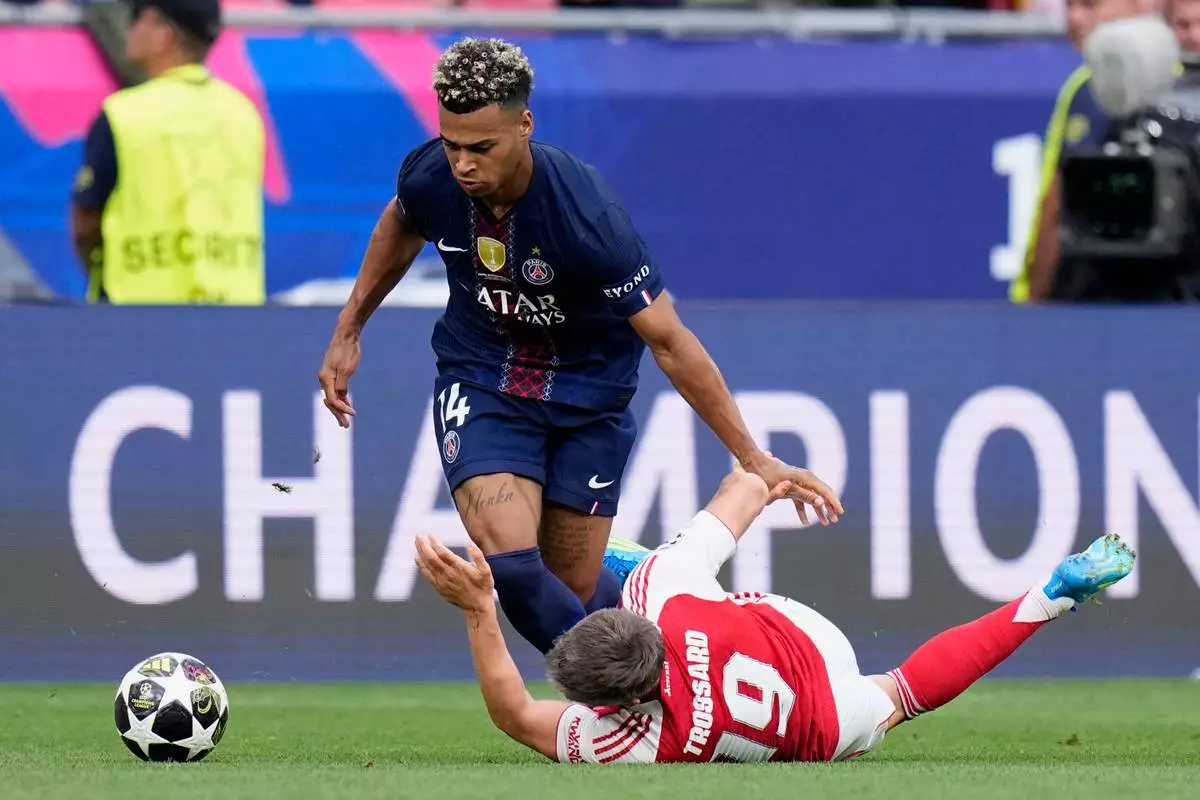
Arsenal's Leandro Trossard falls to the ground in a clash with PSG's Desire Doue during the Champions League final soccer match between Paris Saint-Germain and Arsenal in Budapest, Hungary, Saturday, May 30, 2026. (AP Photo/Petr Josek)
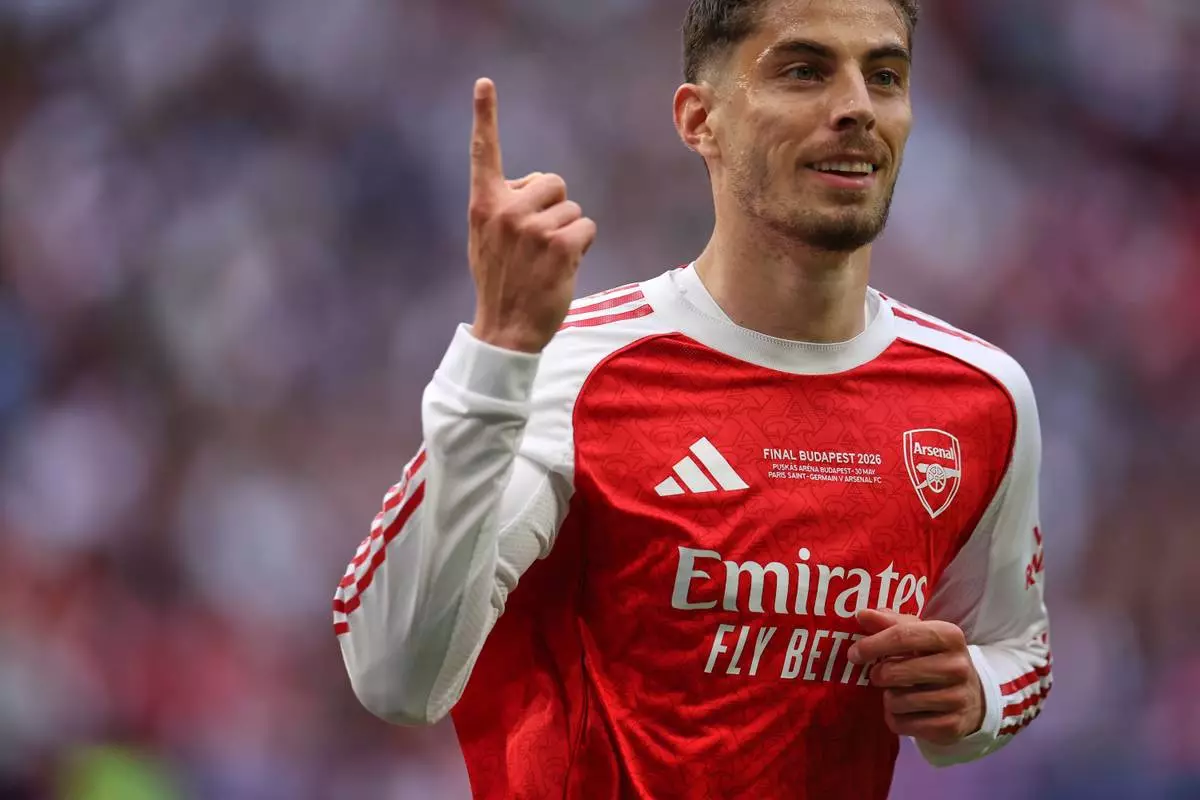
Arsenal's Kai Havertz celebrates after scoring during the Champions League final soccer match between Paris Saint-Germain and Arsenal in Budapest, Hungary, Saturday, May 30, 2026. AP Photo/Armin Durgut)
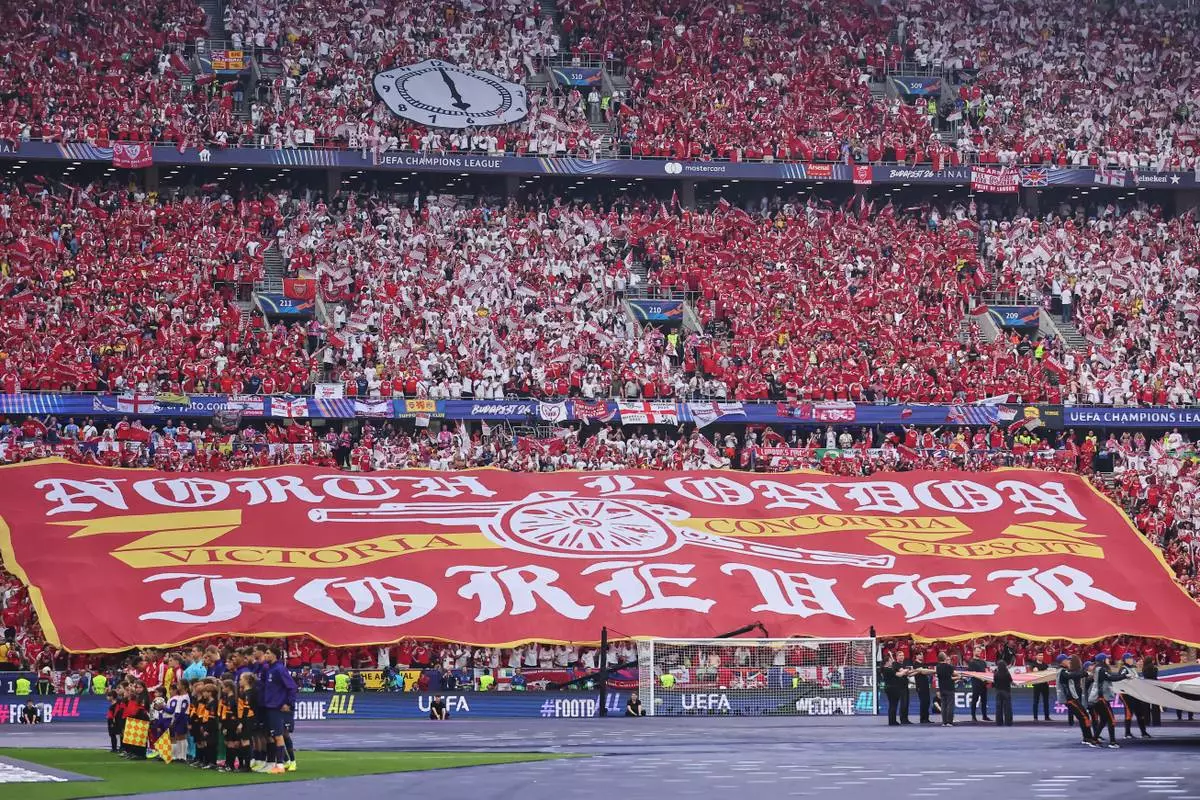
Arsenal fans cheers before the Champions League final soccer match between Paris Saint-Germain and Arsenal in Budapest, Hungary, Saturday, May 30, 2026. AP Photo/Armin Durgut)
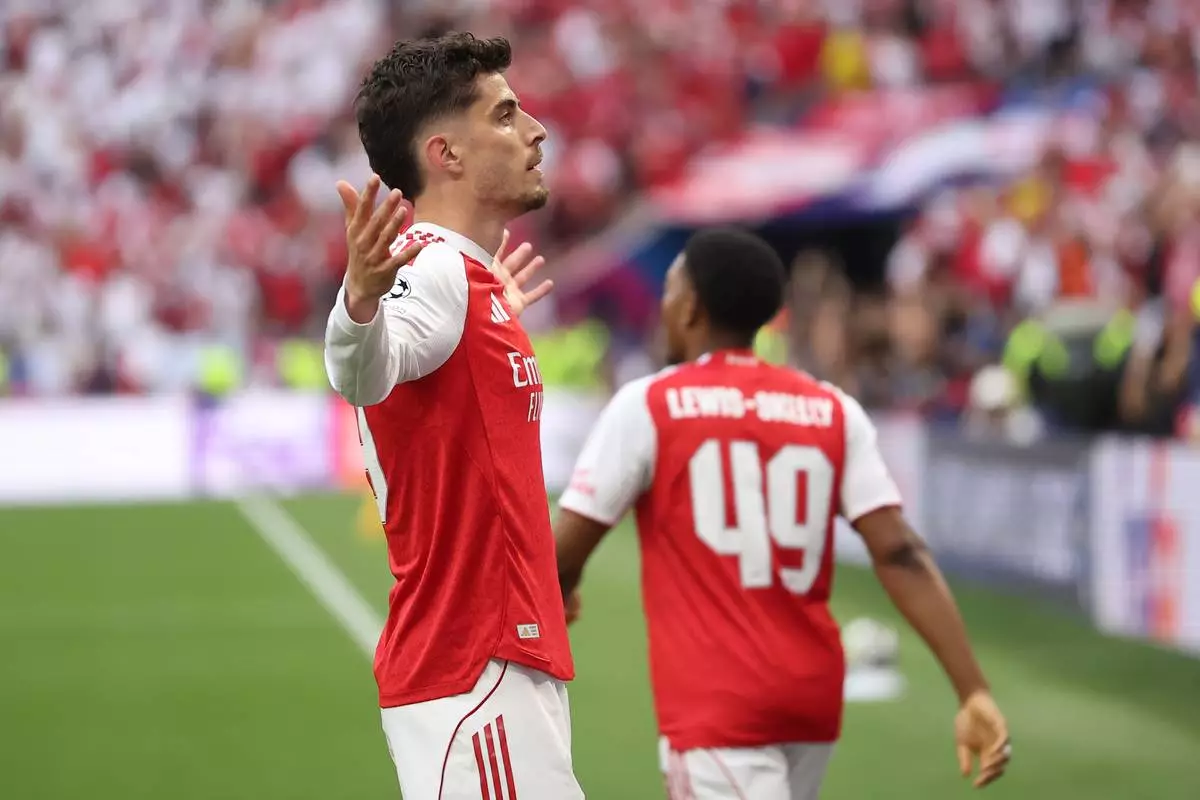
Arsenal's Kai Havertz celebrates after scoring during the Champions League final soccer match between Paris Saint-Germain and Arsenal in Budapest, Hungary, Saturday, May 30, 2026. AP Photo/Armin Durgut)
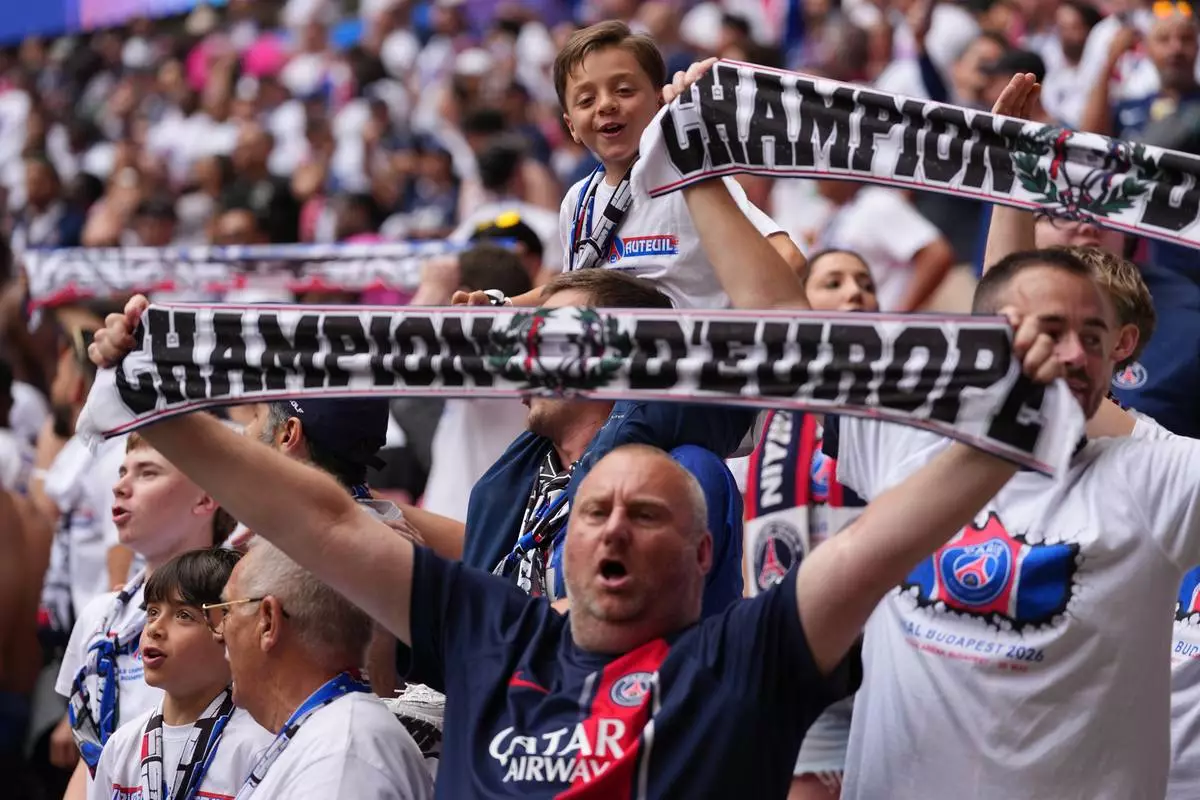
PSG fans hold up their scarves before the Champions League final soccer match between Paris Saint-Germain and Arsenal in Budapest, Hungary, Saturday, May 30, 2026. (AP Photo/Andreea Alexandru)
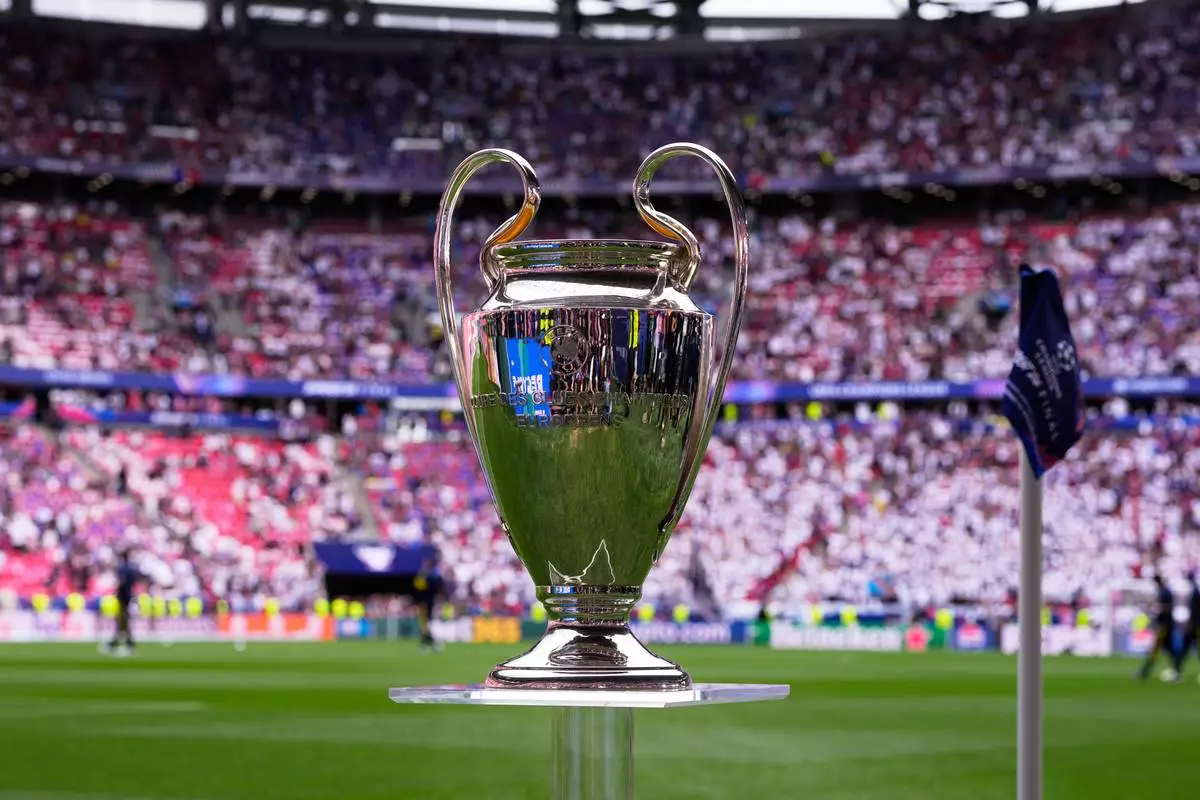
The trophy is displayed on the pitch before the Champions League final soccer match between Paris Saint-Germain and Arsenal in Budapest, Hungary, Monday, Jan. 1, 2024. (AP Photo/Petr Josek)
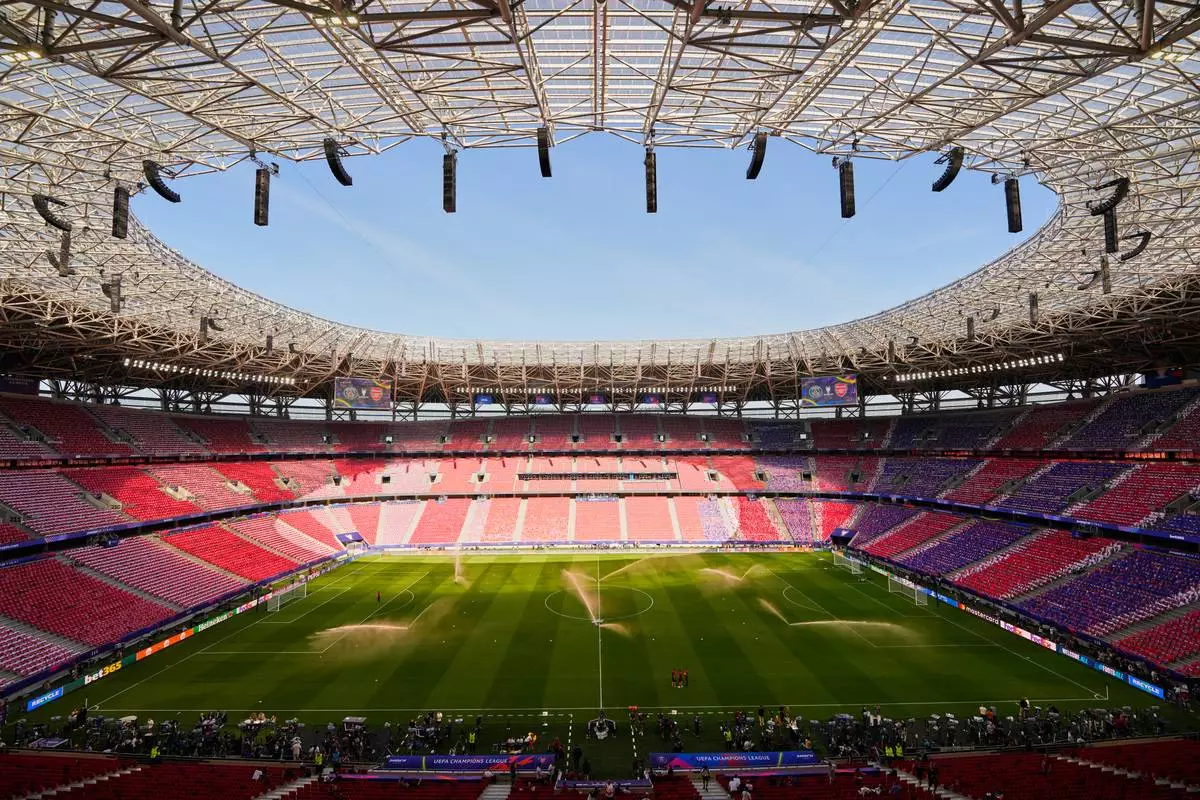
Generel view of the Puskas Arena a day ahead of the Champions League final soccer match between Paris Saint-Germain and Arsenal in Budapest, Hungary, Friday, May 29, 2026. (AP Photo/Vadim Ghirda)
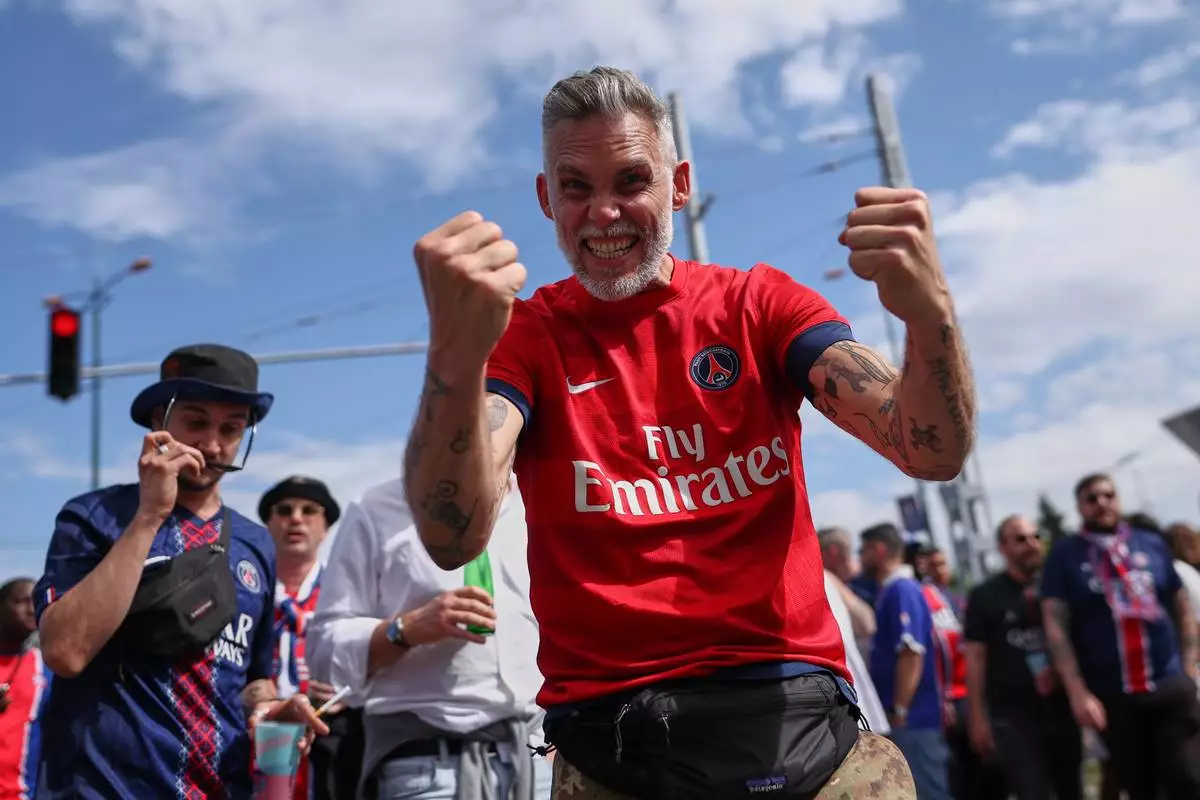
PSG supporters react as they make their way to the stadium ahead of the Champions League final soccer match between Paris Saint-Germain and Arsenal in Budapest, Hungary, Saturday, May 30, 2026. (AP Photo/Rudolf Karancsi-Albert)
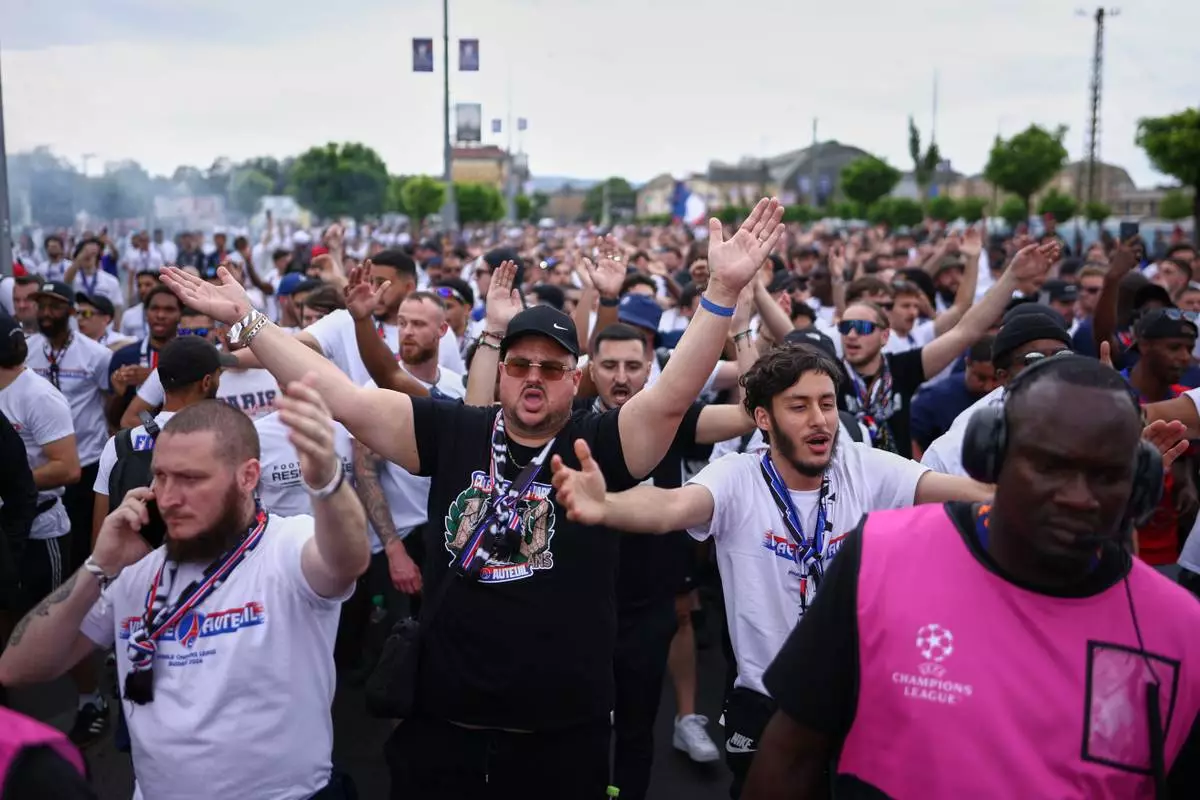
PSG supporters are accompanied by security ahead of the Champions League final soccer match between Paris Saint-Germain and Arsenal in Budapest, Hungary, Saturday, May 30, 2026. (AP Photo/Rudolf Karancsi-Albert)