Two geological wonders from western China have been designated UNESCO Global Geoparks, the National Forestry and Grassland Administration announced on Friday.
With these additions, China now boasts 49 UNESCO-recognized geoparks, more than any other country in the world.
The two geoparks, one named Kanbula in northwest China's Qinghai Province, a high-altitude marvel, and the other a prehistoric "dinosaur kingdom" named Yunyang in southwest China's Chongqing Municipality, exemplify the country's commitment to harmonizing geological conservation with cultural and ecological sustainability.
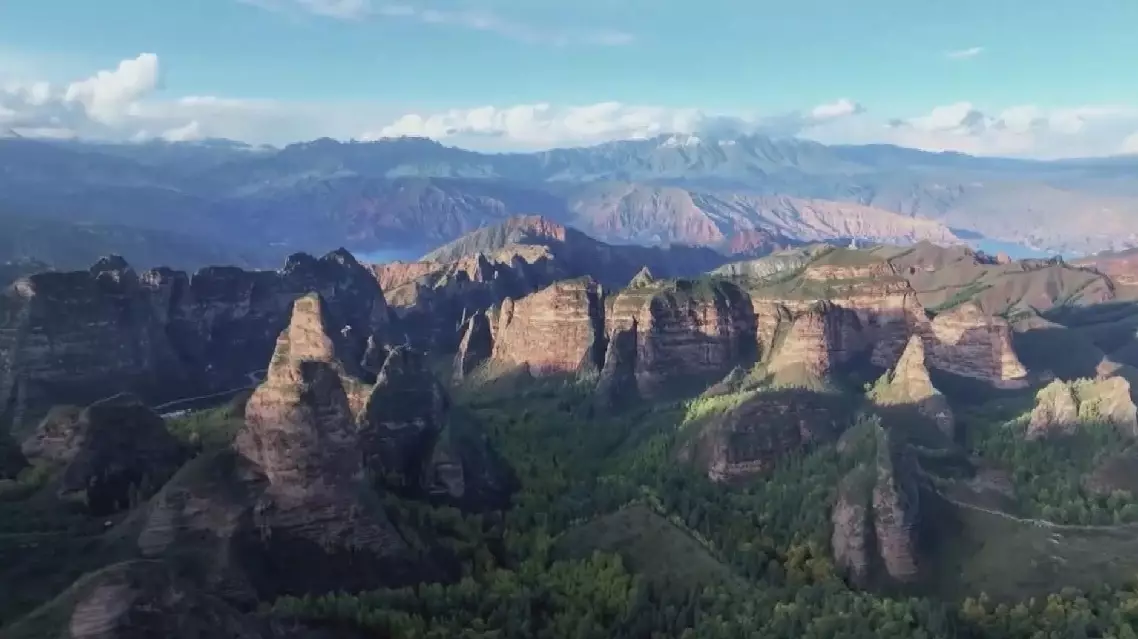
Nestled on the northeastern edge of the Qinghai-Tibet Plateau, the Kanbula National Geopark spans roughly 3,149 square kilometers with striking fiery-red Danxia landforms, towering jagged peaks, hidden caves, and emerald lakes. Beyond its visual splendor, the park's true value lies beneath the surface, serving as a premier location for geoscientific research and public science education. Culturally, Kanbula is the heartland of Tibetan regong arts and Huangnan Tibetan opera, which are UNESCO-listed intangible cultural heritages. It is rare in the world that integrates high-precision geoscience research, multi-cultural experience, and plateau ecological preservation.
Local officials say the UNESCO status will boost eco-tourism while maintaining ecological balance.
"The successful designation of Kanbula as a UNESCO Global Geopark will enable full utilization of its role as an international platform, showcase, and bridge, foster domestic and international exchanges/cooperation, boost local tourism-driven economic growth, and advance ecological civilization development through achievement demonstration," said Tashi Tsering, director of Kanbula Scenic Area Management Committee.
In stark contrast to Kanbula's highland grandeur, Yunyang Geopark unveils a prehistoric saga. Yunyang in Chongqing is located in the hinterlands of the Three Gorges reservoir area -- the world's largest dam -- and covers an area of about 112,400 hectares.
It has well-protected dinosaur fossils, karst landforms, and rare animal species, and the historical relics and cultures of the Tu ethnic group are also well-preserved.
The 2014 discovery of dinosaur fossils by a local youth initiated years of excavation that uncovered the world's largest Jurassic fossil wall, measuring 150 meters in length and 6 to 10 meters in height.
The fossils found here are of global scientific importance, as they contribute valuable insights into the evolutionary history of dinosaurs during the Middle Jurassic period, particularly in its early phase.
"Seizing this opportunity of Yunyang's designation as a UNESCO Global Park, we will plan a series of campaigns through an omnichannel, multi-layered promotional network combined with holistic cultural and tourism marketing," said Wu Xuemei, deputy director of Yunyang Cultural and Tourism Commission.
UNESCO defines Global Geoparks as "single, unified geographical areas where sites and landscapes of international geological significance are managed with a holistic concept of protection, education, and sustainable development." These geoparks also involve sustainable coexistence of environmental conservation and local communities' lives.
Back in 2015, UNESCO unveiled the International Geoscience and Geoparks Programme to protect the world's geological heritages and natural landscapes. As of July, UNESCO listed 213 sites in 48 countries as Global Geoparks, and the number has increased to 229 sites in 50 countries so far this year.
Two Chinese parks added to UNESCO Global Geoparks list
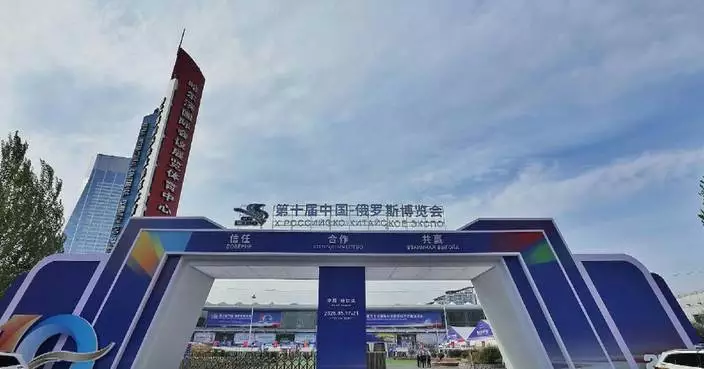
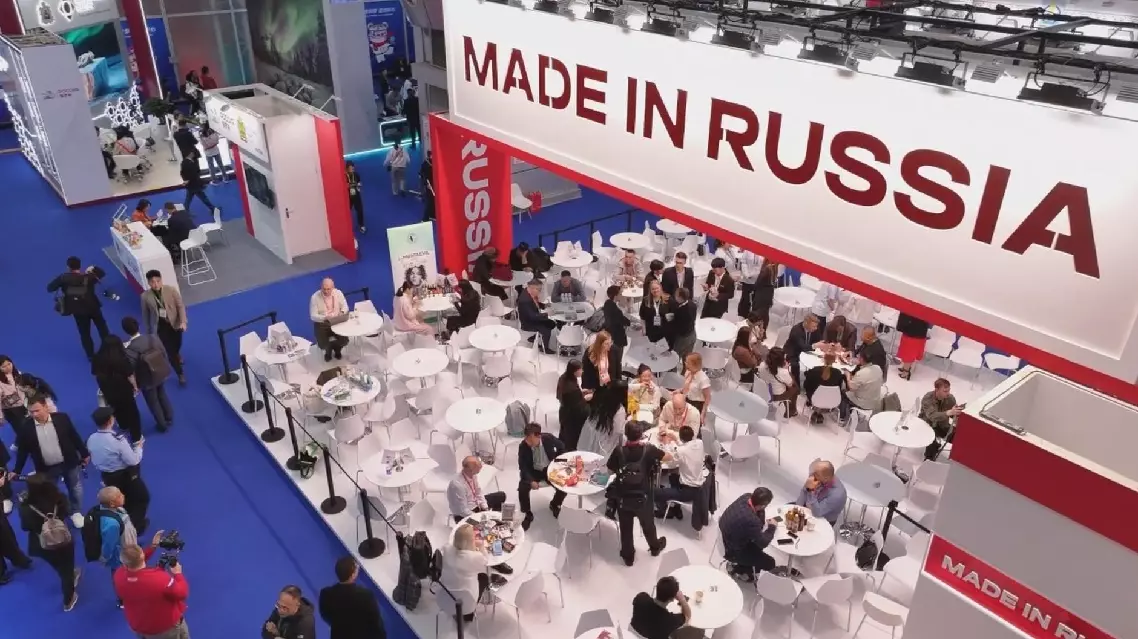
The 10th China-Russia Expo opened on Sunday in Harbin, the provincial capital of Heilongjiang in northeast China, highlighting the resilience, vitality and mutual benefits of China-Russia economic ties.
Held from May 17 to 21, this year's expo covers a floor space of 55,000 square meters, with more than 1,500 companies from 46 countries and regions taking part. Nearly 300 Russian companies are attending, while over 5,000 buyers are expected.
Since 2014, the event has attracted more than 7,200 Chinese and Russian companies and over a million visitors.
The China-Russia Expo is the largest comprehensive exhibition platform between the two countries.
President Xi Jinping and Russian President Vladimir Putin each sent congratulatory letters to the event, encouraging all sectors from both countries to seize the opportunity, make full use of their geographical proximity and economic complementarity, and further expand all-round practical cooperation.
"Leaders of the two countries have signed agreements to deepen practical cooperation, which we fully support. Russia and China stand side by side for common development, benefiting young people and all people. Such cooperation is timely and far-reaching. We are here in Harbin for the China-Russia Expo, coming from Russia's Sakha Republic. Our region is dominated by agriculture. We are seeking advanced farming technologies including irrigation equipment and harvesters. We hope to reach deals in the coming days to boost local development," said Vasiliy Petrovich Alexeev, head of Ust-Aidan Region of the Russian Federation.
"We are greatly inspired by the congratulatory letters from the heads of state of China and Russia. We will keep building targeted and efficient cooperation platforms, and smooth channels for sub-national exchanges between China and Russia," said Chen Shijun, president of Heilongjiang Council for the Promotion of International Trade.
China-Russia trade volume has surpassed 200 billion U.S. dollars for three consecutive years. China has been Russia's largest trading partner for 16 years running.
In the first quarter of this year, bilateral trade volume hit 60 billion U.S. dollars, a year-on-year increase of more than 14 percent.
This year's Expo features eight major exhibition zones. Beyond the exhibition halls, Russian delegations have also conducted field visits to Chinese companies. A delegation from the Republic of Buryatia visited one of northeast China's largest building materials distribution centers to explore potential areas of cooperation.
"Regular China-Russia economic and trade events continuously bring fresh cooperation opportunities for both sides. This field trip to Xilong Building Materials Market has helped us explore more practical directions and modes for bilateral cooperation," said Alexei Tsydenov, head of the Republic of Buryatia of the Russian Federation.
"Relying on Buryatia's abundant mineral resources and sound logistics conditions, we plan to build industrial parks focusing on home building materials, mineral resources and energy sectors in Russia. We will introduce advanced Chinese technologies and management models to drive coordinated industrial upgrading between the two countries," said Wu Jinrong, vice president of Harbin Xilong International Trade and Logistics Park.
From everyday consumer goods to advanced helicopters, and from mineral resources to intelligent robotics, China-Russia cooperation now spans a wide range of sectors. Economic ties and people-to-people exchanges between the two countries continue to advance toward higher-quality development and broader prospects.
China-Russia Expo promotes trust, cooperation, mutual benefit