Skip to Content Facebook Feature Image

China's financial opening up attracts growing number of foreign institutions

China

China

China

China's financial opening up attracts growing number of foreign institutions

2025-04-14 19:33 Last Updated At:04-15 00:07

China's ongoing financial reform and opening up has attracted an increasing number of foreign financial institutions to establish and expand their operations in the country.

China has the presence of 24 global systemically important banks so far, and nearly half of the world's top 40 insurance companies have established branches in the country.

Last month, four foreign financial institutions in securities and reinsurance opened new branches in Shanghai, including Hannover Re, a German reinsurer.

The company obtained its permit to open in less than four months after China's policies to allow foreign reinsurer branches to set up reinsurance centers in Shanghai's Lingang Special Area at the China (Shanghai) Pilot Free Trade Zone, according to Lye Fook Kong, general manager of Hannover Re Shanghai branch. "They specifically made it possible for us. I know it was an issue to begin with, but they molted it down and they spent time and they really worked hard on it. There was a lot of discussions. Everybody's working very sensibly. Imagine that. I have received calls from them over the weekends, I mean discussing with them. And everybody's working overtime just to get it done," said Lye.

So far, five foreign institutions have gotten the approval to open reinsurance centers, and two brokerage firms received approval for reinsurance branches.

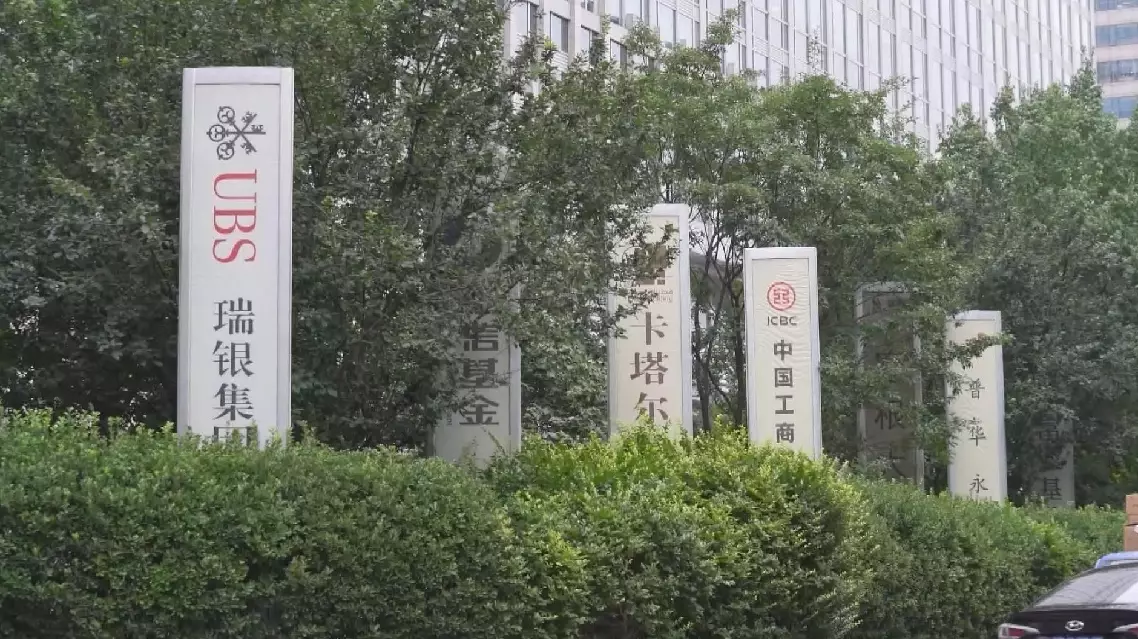
Now, Shanghai's Lujiazui area is home to more than 150 foreign financial institutions, many of which have moved there in the past two years.

China has introduced more than 50 measures to ease market access for foreign financial institutions.

In January this year, the People's Bank of China and other four departments rolled out 20 measures, allowing foreign financial institutions to start new services, streamlining approvals, and supporting cross-border services. These measures, piloted in cities such as Shanghai and Guangdong, have created a fair, transparent, and predictable market for foreign financial institutions.

"In recent years, China has greatly expanded market access in the financial services sector, completely removed foreign ownership caps, and expanded cross-border investment and financing channels. Foreign financial institutions in banking, securities, insurance, and asset management are entering the Chinese market at a faster speed. The financial opening up has paced up remarkably to a higher level," said Dong Ximiao, a chief researcher of Merchants Union Consumer Finance Company, Ltd.

China's financial sector has developed a multi-channel, multi-layered opening up, covering stocks, bonds, derivatives, and foreign exchange markets. Its bond market, the second largest globally, has 4.3 trillion yuan (about 589.68 billion U.S. dollars) worth of outstanding bonds of foreign institutions held in custody.
China's financial opening up attracts growing number of foreign institutions


China's financial opening up attracts growing number of foreign institutions

China will strengthen fiscal and financial coordination to amplify policy effectiveness, experts said as the draft central and local budgets for 2026 were unveiled on Friday at the ongoing fourth session of the 14th National People's Congress.

According to the draft central and local budgets for 2026, 1.3 trillion yuan (190 billion U.S. dollars) of ultra-long special treasury bonds will be issued to provide continued support for the implementation of major national strategies and security capacity-building in key areas and for large-scale equipment upgrades and consumer goods trade-in programs.

Ultra-long special treasury bonds totaling 800 billion yuan will be allocated to support the implementation of major national strategies and security capacity-building in key areas, and 250 billion yuan in ultra-long special treasury bonds will be earmarked for consumer goods trade-in programs.

The country will refine these programs in terms of their scope and subsidy standards, and continue to support the scrapping and replacement of automobiles, home appliance trade-in schemes, and purchases of new digital and smart products.

China will also set up a 100-billion-yuan fiscal-financial coordination fund to boost domestic demand. The fund will support consumption and private investment through loan interest subsidies, financing guarantee, and risk compensation.

"Fiscal and monetary policies are the two major macroeconomic tools for macro-control, and their coordination is crucial. For instance, fiscal funds primarily serve as a guiding role, while financial institutions provide the capital. When fiscal guidance and financial resources are combined, the synergistic effect creates a result greater than the sum of its parts," said Yang Zhiyong, director of the Chinese Academy of Fiscal Sciences.

"By leveraging interest subsidies, we can mobilize substantial credit from financial institutions, thereby naturally stimulating consumption. The Ministry of Finance, in collaboration with the People's Bank of China, has introduced highly innovative measures, such as providing guarantees for the issuance of corporate bonds by small and medium-sized enterprises (SMEs), and compensating investors for losses. I believe the leveraging effect, making minimal efforts for maximum results, will become even more potent," said Yao Dongmin, director of the Center for China Fiscal Development under the Central University of Finance and Economics.

China's top legislature opened its annual session on Thursday morning at the Great Hall of the People in Beijing, with Chinese President Xi Jinping and other Party and state leaders attending the opening meeting alongside more than 2,700 NPC deputies. This year's NPC session is scheduled to run till March 12.

China to strengthen fiscal, financial coordination to amplify policy effectiveness: experts

China to strengthen fiscal, financial coordination to amplify policy effectiveness: experts

Recommended Articles