LONDON--(BUSINESS WIRE)--Apr 16, 2025--
Acuity Knowledge Partners (Acuity), a leading provider of bespoke research, analytics, talent and technology solutions to the financial services industry, announced today the appointment of Kelvin Cheema as Managing Director, Global Transformation & Change and Interim Global Chief Information Officer.
This press release features multimedia. View the full release here: https://www.businesswire.com/news/home/20250415520549/en/
Kelvin is tasked with driving technology leadership, an ambitious, company-wide digital transformation initiative that integrates cutting-edge technologies and data-driven decision-making processes across the organisation.
In this pivotal role, Kelvin will lead Acuity’s strategic technological advancement, ensuring seamless integration of technology, data and operations to enhance client outcomes and operational efficiency. His leadership is anticipated to be instrumental in leveraging artificial intelligence and automated solutions to refine business processes, and bolster risk management frameworks.
“Kelvin’s joining marks a significant evolution in our strategic direction,” remarked Ian Mullen, Chief Financial Officer, Acuity Knowledge Partners. “His deep expertise in orchestrating global transformations and his visionary approach are critical as we navigate through this era of digital acceleration. Acuity is at a critical juncture; our ability to harness data, insights, and automation will differentiate us and drive sustainable growth. We are confident that Kelvin’s leadership will be pivotal in fostering innovation and making informed, strategic decisions for our clients globally.”
Kelvin brings over two decades of experience in driving transformation across a spectrum of industries, including prominent stints at the Royal Bank of Scotland, HSBC, Lloyds Banking Group, Kingfisher, Convatec Group, Heathrow Airport Holdings, Domino’s Pizza and the Big 4 management consulting firms. Kelvin is an alumnus of Oxford Business School and INSEAD.
“By consolidating our capabilities in IT, HR, M&A, Sales, Delivery, and all enablement supporting teams into a cohesive, insight-driven framework, we are positioning Acuity for sustained growth, agility, and impactful market presence,” stated Kelvin. “I am eager to advance our transformation agenda to further strengthen Acuity as the foremost data, analytics, and AI-led technology solution provider to global financial customers.”
In this new role, Kelvin will spearhead a global portfolio of enterprise-wide business and technology transformative initiatives, boosting data-driven intelligence, AI innovation and M&A integration.
About Acuity Knowledge Partners:
Acuity Knowledge Partners (Acuity) is a leading provider of bespoke research, data management, analytics, talent, and technology solutions to the financial services industry, including asset managers, corporate and investment banks, private equity and venture capital firms, hedge funds and consulting firms. Its global network of over 6,000 analysts and industry experts, combined with proprietary technology, supports more than 650 financial institutions and consulting companies to operate more efficiently and unlock their human capital and transforming operations. Acuity is headquartered in London and operates from 16 locations worldwide. Acuity was established as a separate business from Moody’s Corporation in 2019, following its acquisition by Equistone Partners Europe (Equistone). In January 2023, funds advised by global private equity firm Permira acquired a majority stake in the business from Equistone, which remains invested as a minority shareholder.
For further information, please visit www.acuitykp.com.

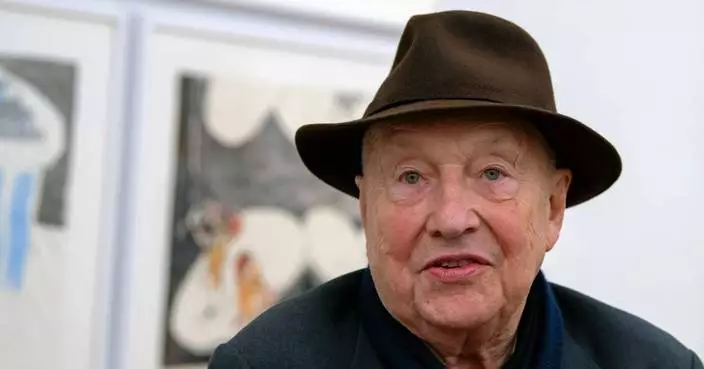
Kelvin Cheema, Managing Director, Global Transformation & Change and Interim Global CIO, Acuity Knowledge Partners
Kelly Pannek was so determined to carve out a future in hockey while still at college, the forward made the conscious decision to sacrifice offense to focus on her shutdown skills.
The choice led to Pannek becoming a U.S. national team fixture as a three-time Olympian, beginning in 2018, and establish herself as one of women's hockey's best defensive forwards.
Some eight years later, Pannek discovered she hasn’t lost her scoring touch in closing her third PWHL season with Minnesota.
In a league featuring proven offensive stars in Hilary Knight and Marie-Philip Poulin, and teammates Taylor Heise and Kendall Coyne Schofield, Pannek topped them all as the two-time defending Walter Cup champion Frost open the playoffs at Montreal on Saturday.
Pannek led the PWHL with 16 goals and a league-record 33 points, and was one assist from completing what would have been rare hockey triple crown — for men or women.
“I think more than anything, it’s reassuring and confidence-building to know that I used to be someone who was often relied on to provide offense for teams, and I still am that player,” Pannek said by phone this week. “I just needed to kind of re-find it, I guess.”
Her 33 points in 30 games this year surpassed her total production in her first two seasons, when she combined for seven goals and 27 points in 54 games.
And the offensive output didn’t hinder Pannek’s defensive play.
She finished sixth in the PWHL with a plus-13 plus-minus rating. She also won 341 of 575 faceoffs for a 59.3% success rate, third among players with 200 or more attempts.
“I don’t want to say no, because I think she’s a great player,” Frost coach Ken Klee said when asked whether he expected this much production from Pannek.
“From the beginning of the year, she seemed different. Our very first coach’s meeting, we had her in the office, and she just seemed lighter, she seemed more energetic," Klee added. “I really think she just said, ‘Hey, I’m going to play free, and if it's time to play offense, I'm going to play offense.' She's just really taken a next step.”
There are several reasons behind Pannek flipping the offensive switch.
An offseason roster shake-up caused by Minnesota losing talent in the expansion process led to Pannek realizing she was going to have to contribute more offensively.
Another factor was Pannek growing in confidence while turning 30 in December.
In her early Team USA days, Pannek stuck to defense and shied away from opening up on offense in fear of making mistakes that could cost her ice time or even her roster spot.
In the PWHL, Pannek came to realize she had more job security and, with it, the leeway to make a mistake or two over a 30-game season, as opposed to the pressure that comes with competing in two-week international tournaments where miscues are magnified.
“There’s a lot of implications with points and stuff on the line, but you also accept that you’re going to make mistakes, and goals are going to go in and it’s not life or death,” Pannek said of PWHL play. “I’ll still be on the team if I have a bad game and if I have a great game. ... So I think a lot of it was a little bit of a mentality shift.”
She's had far more good games than bad, and called this season “invigorating.”
Former U.S. star Meghan Duggan is not surprised by Pannek’s development: “She always had it in her, but it just started to come out as of late.”
What stood out to Duggan was the maturity and reliability Pannek brought to the ice even as a 22-year-old.
“Kelly Pannek is a player I would choose 10 times out of 10 to go into the biggest game with right by my side, because I know what she’s going to bring: stability, predictability, high character,” said Duggan, now the New Jersey Devils' player development director. “Kelly to me is the type of player that you win championships with, and she's done that multiple times.”
Pannek was a two-way star during her four college seasons at Minnesota, where she won two national titles and finished with 72 goals and 186 points in 157 career games. At the Olympics, she won gold in 2018 and 2026, along with a silver in 2022.
“I’ve changed as a player over these last almost eight years, but also my role has changed,” Pannek said. “I pride myself on being someone who can do any role up and down the lineup.”
Today, her sole focus is on the upcoming playoffs.
“Whatever it takes," Pannek said. “If I have zero points the rest of the playoffs and we win — it’s all about the winning.”
AP women’s hockey: https://apnews.com/hub/womens-hockey
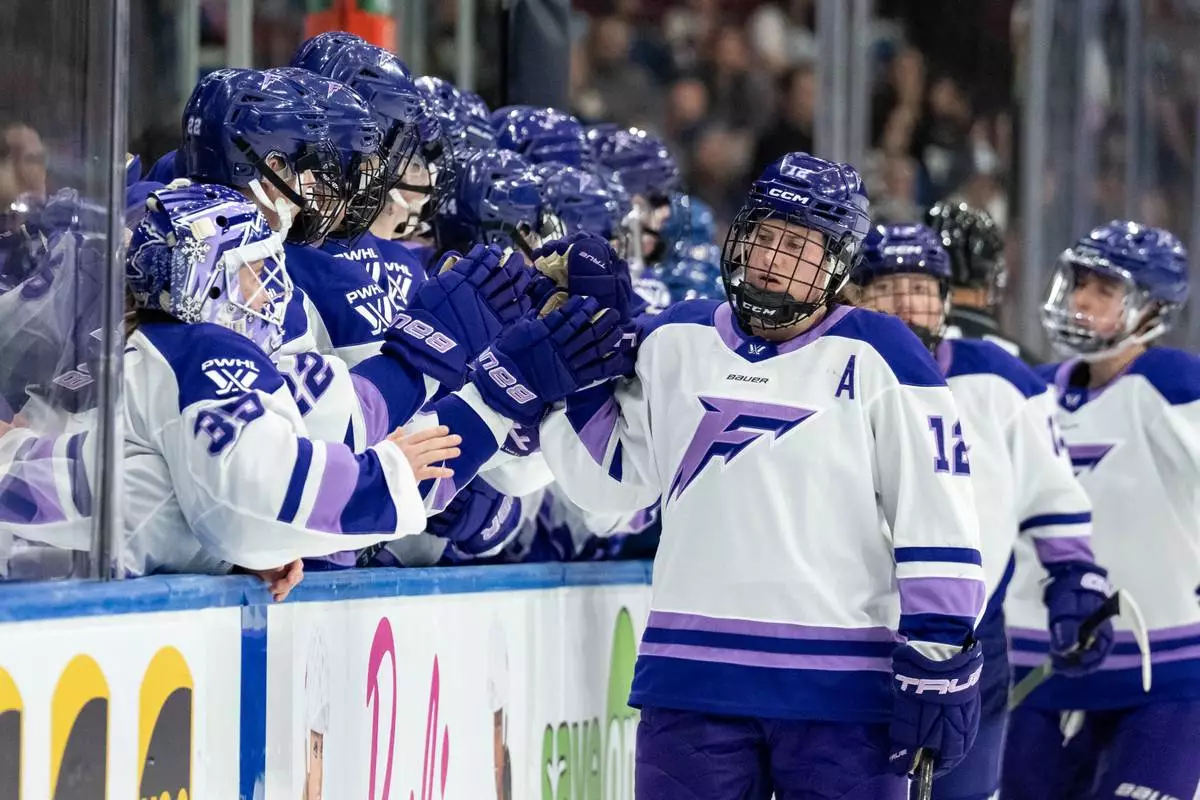
Minnesota Frost's Kelly Pannek (12) celebrates with teammates after her goal against the Vancouver Goldeneyes during the third period of a PWHL hockey game in Vancouver, British Columbia, Saturday, April 25, 2026. (Ethan Cairns/The Canadian Press via AP)