PHOENIX--(BUSINESS WIRE)--Apr 16, 2025--
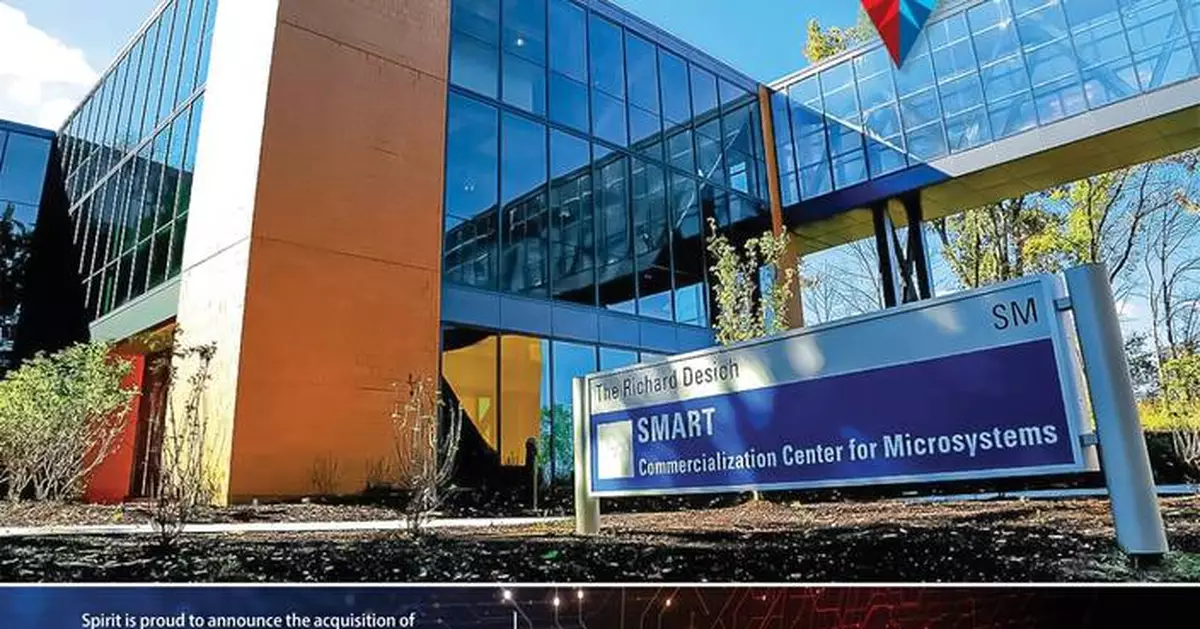
As part of its strategic commitment to strengthening domestic semiconductor manufacturing, Spirit Electronics has acquired SMART Microsystems, located at Lorain County Community College (LCCC) in Ohio. This expansion into Northeast Ohio marks a significant step in fostering academic and industry collaboration to accelerate innovation and workforce development in the U.S. semiconductor sector.
This press release features multimedia. View the full release here: https://www.businesswire.com/news/home/20250416235353/en/
“This acquisition supports our mission to expand U.S. semiconductor capacity with secure, high-reliability solutions,” said Marti McCurdy, CEO of Spirit Electronics. “Partnering with LCCC allows us to invest directly in the future talent pipeline and emerging technologies that are critical to national security and domestic innovation.”
Located within the LCCC campus, SMART Microsystems will serve as a hub for advanced research and education in materials, MEMS, and advanced packaging technologies, including 2.5D and 3D integration.
“We are proud to collaborate with Spirit Electronics to bring new opportunities to Northeast Ohio,” said Dr. Marcia Ballinger, President of Lorain County Community College. “This partnership enhances our ability to prepare students for high-tech careers while contributing to the growth of a robust semiconductor ecosystem in our region and beyond.”
Together, Spirit Electronics and LCCC are laying the foundation for a resilient, innovation-driven semiconductor future.
About Spirit Electronics
Spirit Electronics is an end-to-end supply chain services company headquartered in Phoenix, AZ. Spirit offers MIL-STD-883 testing, circuit card assembly, device analysis, ASIC programs, foundry services and franchised distribution of high-reliability electronic components. Spirit’s supply chain solutions have changed the definition of distribution by providing full-turnkey OSAT (outsourced semiconductor assembly and test) services to deliver products to aerospace and defense customers fully qualified and ready for use. Spirit is a veteran-owned, woman-owned small business (VOWOSB) founded in 1979. Learn more at spiritelectronics.com.
About SMART Microsystems
SMART Microsystems works with design engineers who need high-quality, low volume microelectronic sub-assemblies for their innovative new products. As North America’s leading full-service microelectronic assembly supplier, SMART Microsystems takes complete responsibility for custom process development for your new design, taking it from prototyping through launch in less overall time and cost than other package assembly suppliers. SMART’s facilities boast 5,000 sq. ft. of world-class ISO 6 (class 1000) and ISO 5 (class 100) cleanrooms. ISO 9001:2015 certified. Learn more about SMART at smartmicrosystems.us.
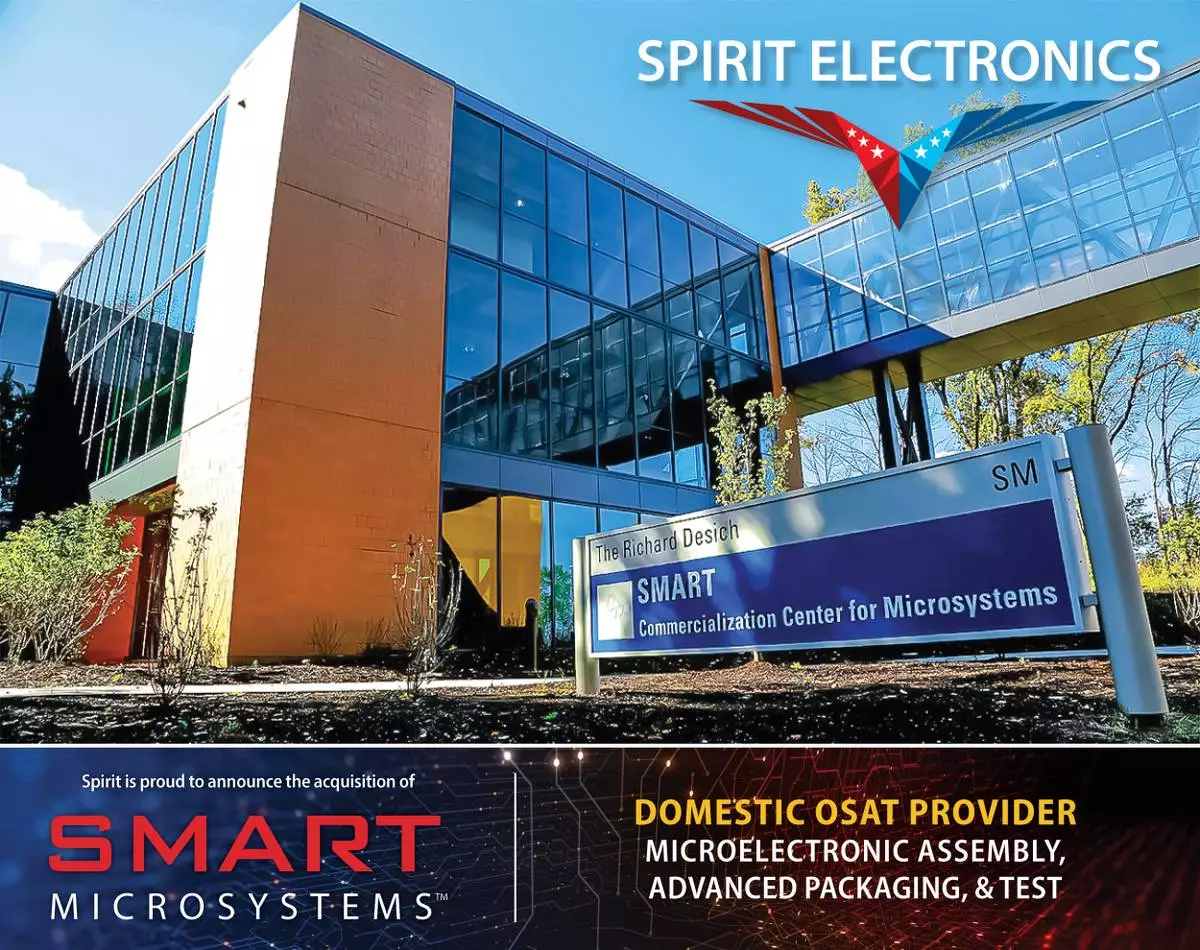
Spirit Electronics Expands U.S. Semiconductor Capacity with Acquisition of SMART Microsystems
LAS VEGAS (AP) — With the start of the New Year squarely behind us, it's once again time for the annual CES trade show to shine a spotlight on the latest tech companies plan on offering in 2026.
The multi-day event, organized by the Consumer Technology Association, kicks off this week in Las Vegas, where advances across industries like robotics, healthcare, vehicles, wearables, gaming and more are set to be on display.
Artificial intelligence will be anchored in nearly everything, again, as the tech industry explores offerings consumers will want to buy. AI industry heavyweight Jensen Huang will be taking the stage to showcase Nvidia's latest productivity solutions, and AMD CEO Lisa Su will keynote to “share her vision for delivering future AI solutions.” Expect AI to come up in other keynotes, like from Lenovo's CEO, Yuanqing Yang.
The AI industry is out in full force tackling issues in healthcare, with a particular emphasis on changing individual health habits to treat conditions — such as Beyond Medicine's prescription app focused on a particular jaw disorder — or addressing data shortages in subjects such as breast milk production.
Expect more unveils around domestic robots too. Korean tech giant LG already has announced it will show off a helper bot named “ CLOiD,” which allegedly will handle a range of household tasks. Hyundai also is announcing a major push on robotics and manufacturing advancements. Extended reality, basically a virtual training ground for robots and other physical AI, is also in the buzz around CES.
In 2025, more than 141,000 attendees from over 150 countries, regions, and territories attended the CES. Organizers expect around the same numbers for this year’s show, with more than 3,500 exhibitors across the floor space this week.
The AP spoke with CTA Executive Chair and CEO Gary Shapiro about what to expect for CES 2026. The conversation has been edited for clarity and length.
Well, we have a lot at this year's show.
Obviously, using AI in a way that makes sense for people. We’re seeing a lot in robotics. More robots and humanoid-looking robots than we’ve ever had before.
We also see longevity in health, there’s a lot of focus on that. All sorts of wearable devices for almost every part of the body. Technology is answering healthcare’s gaps very quickly and that’s great for everyone.
Mobility is big with not only self-driving vehicles but also with boats and drones and all sorts of other ways of getting around. That’s very important.
And of course, content creation is always very big.
You are seeing humanoid robots right now. It sometimes works, sometimes doesn’t.
But yes, there are more and more humanoid robots. And when we talk about CES 5, 10, 15, 20 years now, we’re going to see an even larger range of humanoid robots.
Obviously, last year we saw a great interest in them. The number one product of the show was a little robotic dog that seems so life-like and fun, and affectionate for people that need that type of affection.
But of course, the humanoid robots are just one aspect of that industry. There’s a lot of specialization in robot creation, depending on what you want the robot to do. And robots can do many things that humans can’t.
AI is the future of creativity.
Certainly AI itself may be arguably creative, but the human mind is so unique that you definitely get new ideas that way. So I think the future is more of a hybrid approach, where content creators are working with AI to craft variations on a theme or to better monetize what they have to a broader audience.
We’re seeing all sorts of different devices that are implementing AI. But we have a special focus at this show, for the first time, on the disability community. Verizon set this whole stage up where we have all different ways of taking this technology and having it help people with disabilities and older people.
Well, there’s definitely no bubble when it comes to what AI can do. And what AI can do is perform miracles and solve fundamental human problems in food production and clean air and clean water. Obviously in healthcare, it’s gonna be overwhelming.
But this was like the internet itself. There was a lot of talk about a bubble, and there actually was a bubble. The difference is that in late 1990s there were basically were no revenue models. Companies were raising a lot of money with no plans for revenue.
These AI companies have significant revenues today, and companies are investing in it.
What I’m more concerned about, honestly, is not Wall Street and a bubble. Others can be concerned about that. I’m concerned about getting enough energy to process all that AI. And at this show, for the first time, we have a Korean company showing the first ever small-scale nuclear-powered energy creation device. We expect more and more of these people rushing to fill this gap because we need the energy, we need it clean and we need a kind of all-of-the-above solution.
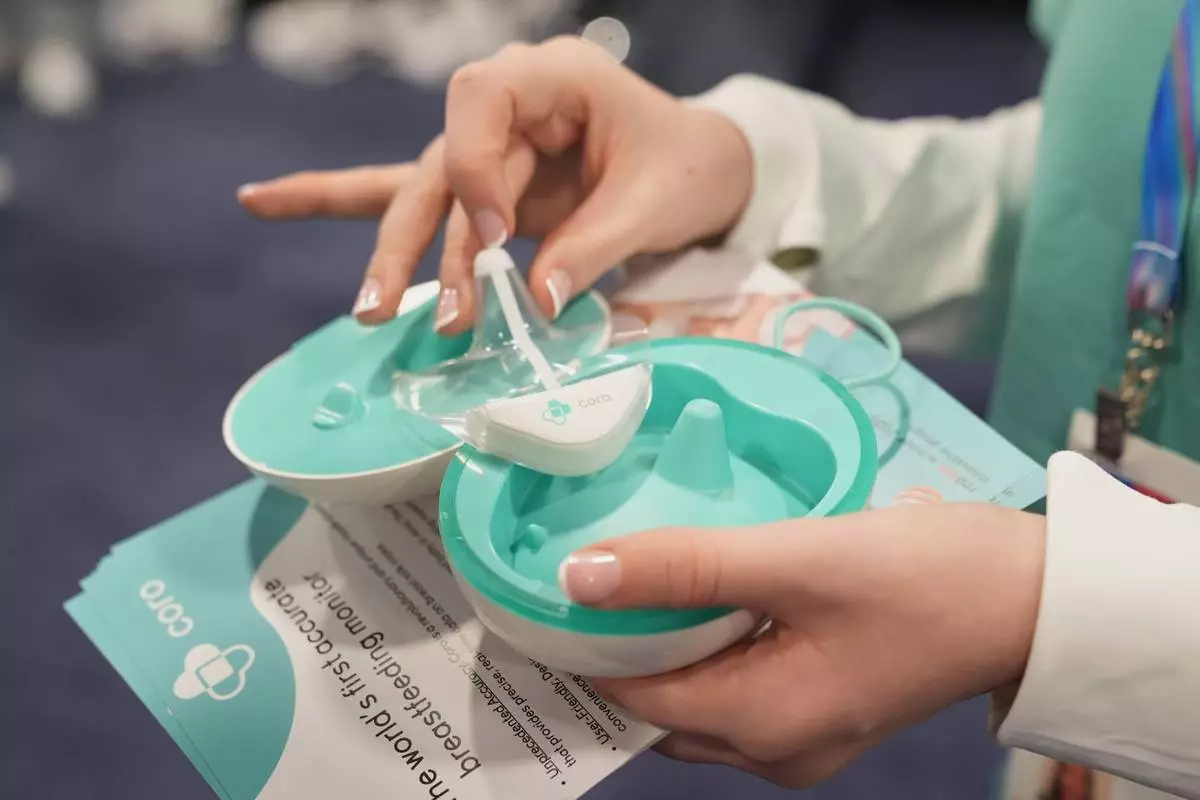
A Coro breastfeeding monitor is pictured at a Coroflo booth during the CES Unveiled tech show Sunday, Jan. 4, 2026, in Las Vegas. (AP Photo/Abbie Parr)
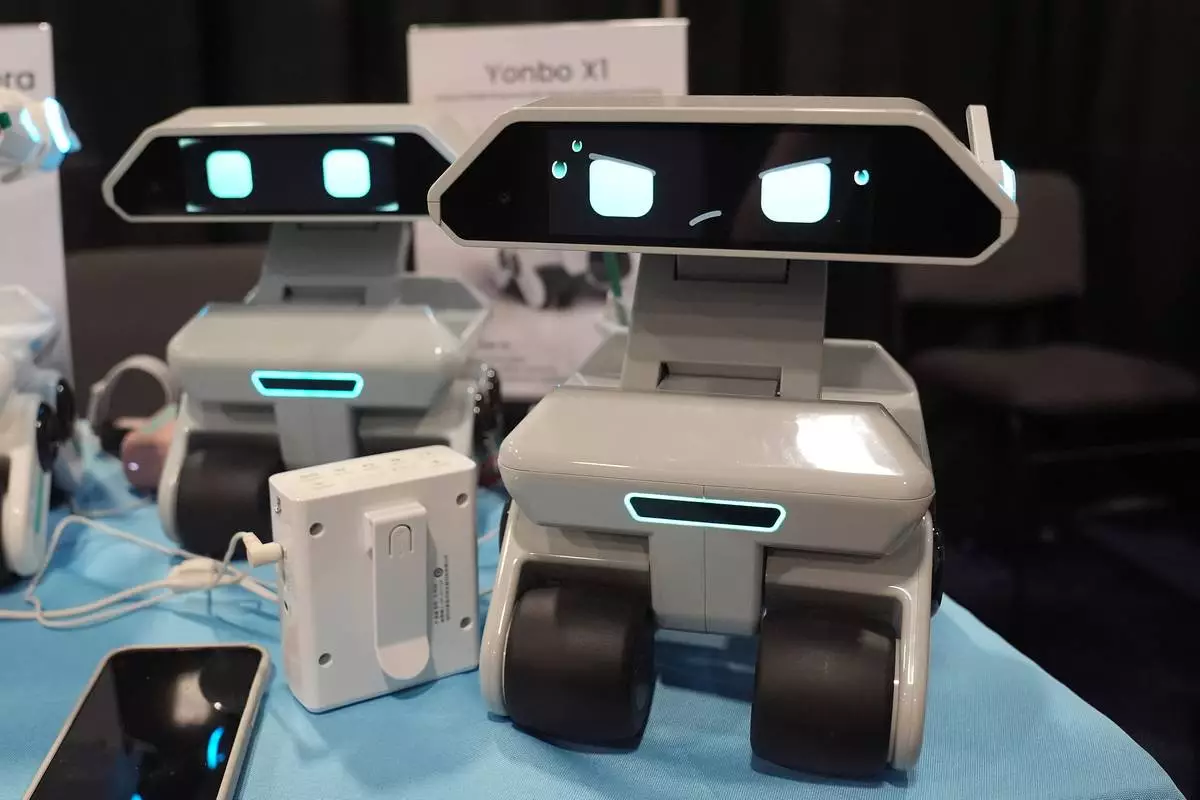
Yonbo X1 robots are pictured at the X-Orgin booth during the CES Unveiled tech show Sunday, Jan. 4, 2026, in Las Vegas. (AP Photo/Abbie Parr)

A Tombot robotic puppy is pictured at a Tombot booth during the CES Unveiled tech show Sunday, Jan. 4, 2026, in Las Vegas. (AP Photo/Abbie Parr)

People arrive at the CES Unveiled tech show Sunday, Jan. 4, 2026, in Las Vegas. (AP Photo/Abbie Parr)