NEW YORK (AP) — A federal judge on Thursday said she would wait to decide whether to grant a preliminary injunction to national Democrats and voting rights groups that are challenging President Donald Trump’s recent executive order on elections.
U.S. District Judge Colleen Kollar-Kotelly in Washington, D.C., said she would consider each party's responses to her questions and aim for a ruling in the next week.
The Democratic National Committee, the League of United Latin American Citizens, the League of Women Voters Education Fund and others are seeking to block Trump's sweeping overhaul of federal election processes, which, among other changes, would require proof of citizenship to register to vote in federal elections.
The Republican president’s executive order says the U.S. has failed “to enforce basic and necessary election protections” and calls on states to work with federal agencies to share voter lists and prosecute election crimes. It threatens to pull federal funding from states where election officials don’t comply.
It also aims to mandate major changes to election processes, including adding a proof-of-citizenship requirement to the federal voter registration form and requiring all mail ballots to be received, rather than just postmarked, by Election Day nationwide.
The plaintiffs argue Trump’s order is illegal because it asserts power that he does not have over an independent agency. That agency, the U.S. Election Assistance Commission, sets voluntary voting system guidelines and maintains the federal voter registration form.
The plaintiffs also argue the order violates the Constitution, which says that states — not the president — get to decide the “times, places and manner” of how elections are run. The Constitution's so-called Elections Clause also gives Congress the power to “make or alter” election regulations, at least for federal office, but it doesn’t mention any presidential authority over election administration.
During the hearing, Danielle Lang, counsel for the nonpartisan groups suing the Trump administration, said requiring citizenship proof would complicate her clients’ voter registration drives at grocery stores and other public places.
It would make them “far more cumbersome, far more difficult, and far less effective,” she said.
Aria Branch, counsel for the Democrats, said her clients would face similar harms. She also argued a provision in the executive order to tighten mail ballot deadlines would irreparably harm her clients by forcing them to reallocate resources to help voters navigate the changes.
“That’s time, money and organizational resources and strategy that can’t be recouped,” she said. “And with elections, I’m sure your honor knows, every single day is important.”
The judge asked Michael Gates, counsel for the Trump administration, if it would constitute harm if a federal voter registration agency declined to provide a voter registration form to an eligible person because they could not immediately assess citizenship.
“They can go down the street to the DMV,” Gates said. “Inconvenience is not a harm.”
Also at issue during the hearing was whether the government has already begun implementing the documentary proof-of-citizenship requirement in the order. The plaintiffs pointed to an April 11 letter from the U.S. Election Assistance Commission to states “seeking consultation” on how they would want to see it implemented.
Gates said the official process to implement the provision hasn't begun.
“The executive order hasn't been implemented, and the federal form won't be updated for many, many, many many months," he said. “That alone undermines the need for an injunction.”
The hearing comes as other lawsuits against Trump’s executive order are pending.
Earlier this month, 19 Democratic attorneys general asked the court to reject Trump’s executive order. The following day, Washington and Oregon, two states that hold all-mail elections, followed up with their own lawsuit against the order.
Associated Press writer Christina A. Cassidy in Atlanta contributed to this report.
The Associated Press receives support from several private foundations to enhance its explanatory coverage of elections and democracy. See more about the AP’s democracy initiative here. The AP is solely responsible for all content.
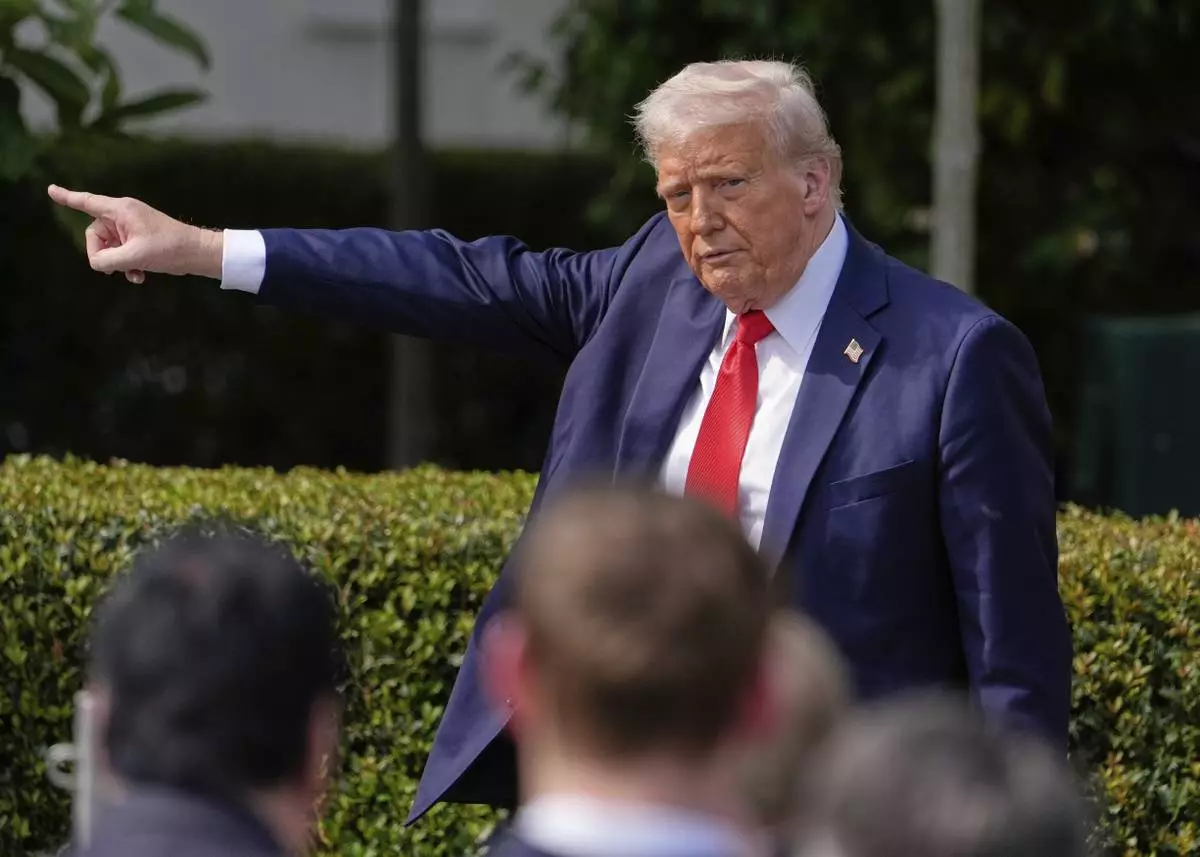
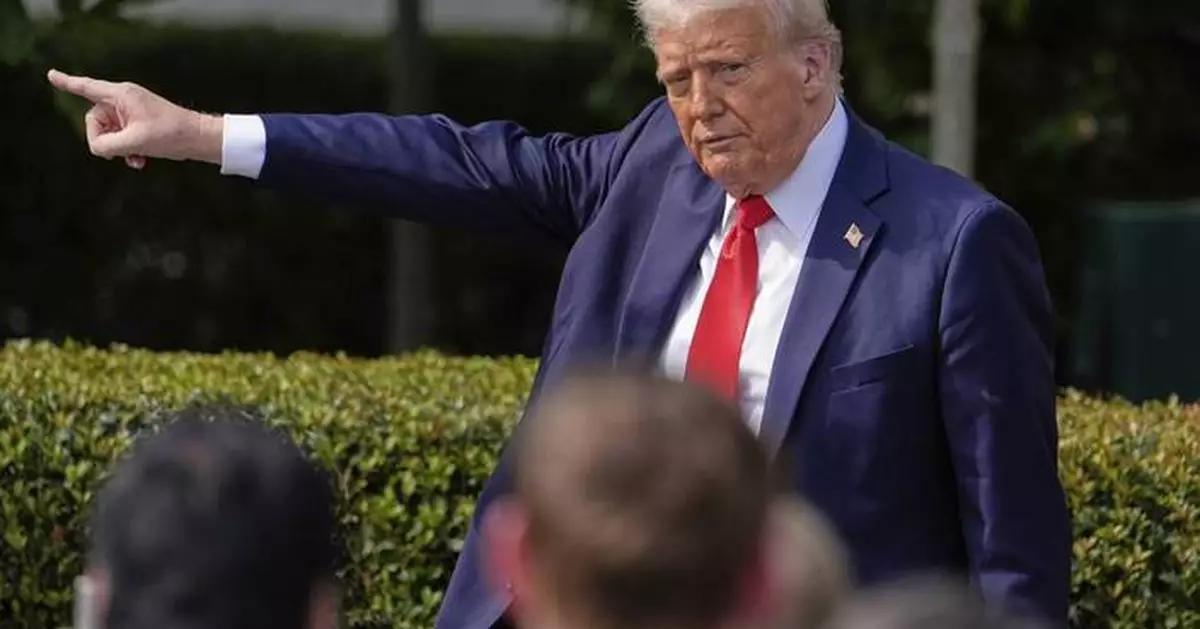
President Donald Trump gestures to the crowd as he departs after welcoming the 2025 College Football National Champions, the Ohio State University football team, during an event on the South Lawn of the White House, Monday, April 14, 2025, in Washington. (AP Photo/Manuel Balce Ceneta)
SURIN, Thailand (AP) — Fighting continued to rage Saturday morning along the border of Thailand and Cambodia, even after U.S. President Donald Trump, acting as a mediator, declared that he had won agreement from both countries for a ceasefire.
Thai officials have said they did not agree to a ceasefire, and Cambodia has not commented on Trump’s claim. Its defense ministry instead said Thai jets carried out airstrikes Saturday morning. Cambodian media reported Trump’s claim without elaborating.
The latest large-scale fighting was set off by a skirmish on Dec. 7 that wounded two Thai soldiers and derailed a ceasefire promoted by Trump that ended five days of earlier combat in July over longstanding territorial disputes.
The July ceasefire was brokered by Malaysia and pushed through by pressure from Trump, who threatened to withhold trade privileges unless Thailand and Cambodia agreed. It was formalized in more detail in October at a regional meeting in Malaysia that Trump attended.
About two dozen people have officially been reported killed in this past week’s fighting, while hundreds of thousands have been displaced on both sides of the border.
The Thai military acknowledges 11 of its troops have been killed, while estimating there have been 165 fatalities among Cambodian soldiers. Cambodia has not announced military casualties, but has said at least 11 civilians have been killed and 76 wounded.
Trump on Friday, after speaking to Thai Prime Minister Anutin Charnvirakul and Cambodian Prime Minister Hun Manet, had announced an agreement to restart the ceasefire.
“They have agreed to CEASE all shooting effective this evening, and go back to the original Peace Accord made with me, and them, with the help of the Great Prime Minister of Malaysia, Anwar Ibrahim,” Trump said in his Truth Social post.
Trump’s claim came after midnight in Bangkok. Thai Prime Minister Anutin had after his call with Trump said he had explained Thailand’s reasons for fighting and said peace would depend on Cambodia ceasing its attacks first. The Thai foreign ministry later explicitly disputed Trump’s claim that a ceasefire had been reached. Anutin's busy day on Friday including dissolving Parliament so new elections could be held early next year.
Cambodian Prime Minister Hun Manet, in comments posted early Saturday morning, also made no mention of a ceasefire.
He said he held phone conversations on Friday night with Trump, and a night earlier with Malaysia’s Prime Minister Anwar Ibrahim, and thanked both “for their continuous efforts to achieve a long-lasting peace between Cambodia and Thailand.”
“Cambodia is ready to cooperate in any way that is needed,' Hun Manet wrote.
Thailand has been carrying out airstrikes on what it says are strictly military targets, while Cambodia has been firing thousands of medium-range BM-21 rockets that have caused havoc but relatively few casualties.
BM-21 rocket launchers can fire up to 40 rockets at a time with a range of 30-40 kilometers (19-25 miles). These rockets cannot be precisely targeted and have landed largely in areas from where most people have already been evacuated.
However, the Thai army announced Saturday that BM-21 rockets had hit a civilian area in Sisaket province, seriously injuring two civilians who had heard warning sirens and had been running toward a bunker for safety.
——
Peck reported from Bangkok. Sopheng Cheang in Serei Saophoan, Cambodia, and Matthew Lee in Washington contributed to this report.
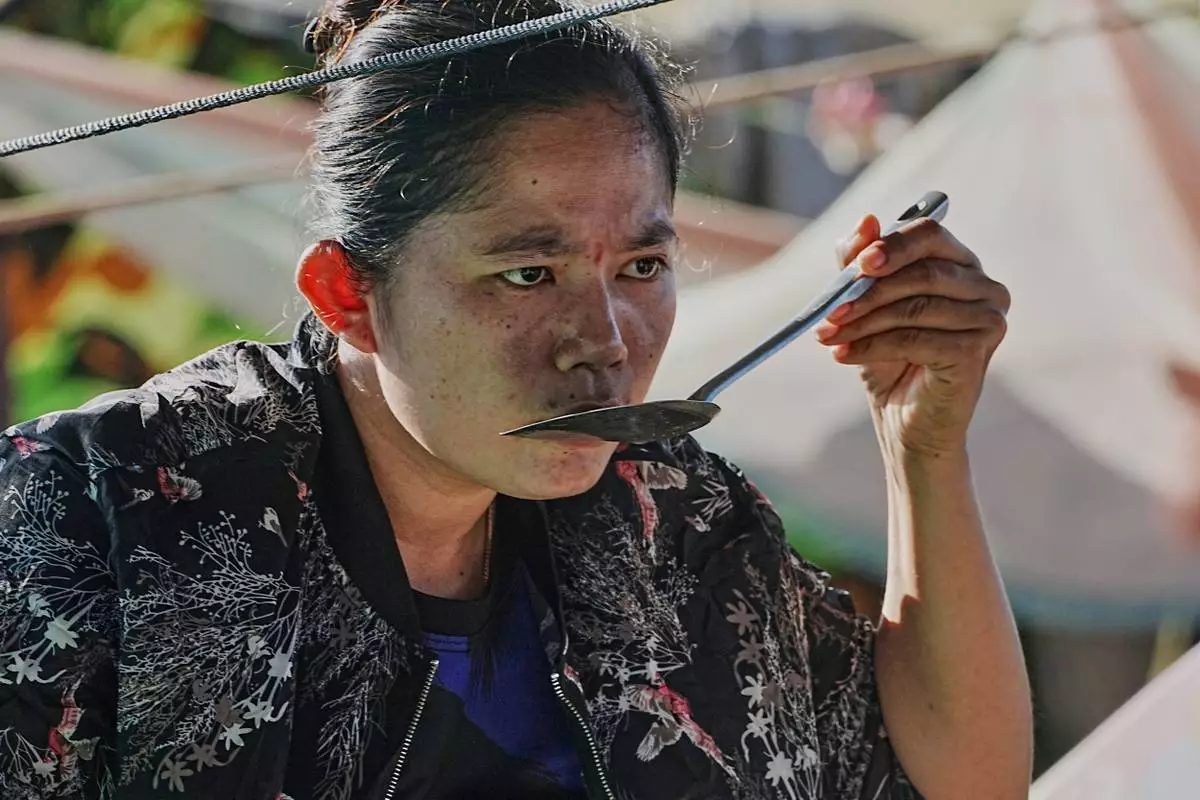
An evacuee tastes soup as she takes refuge in Banteay Menchey provincial town, Cambodia, Saturday, Dec. 13, 2025, after fleeing from home following fighting between Thailand and Cambodia. (AP Photo/Heng Sinith)
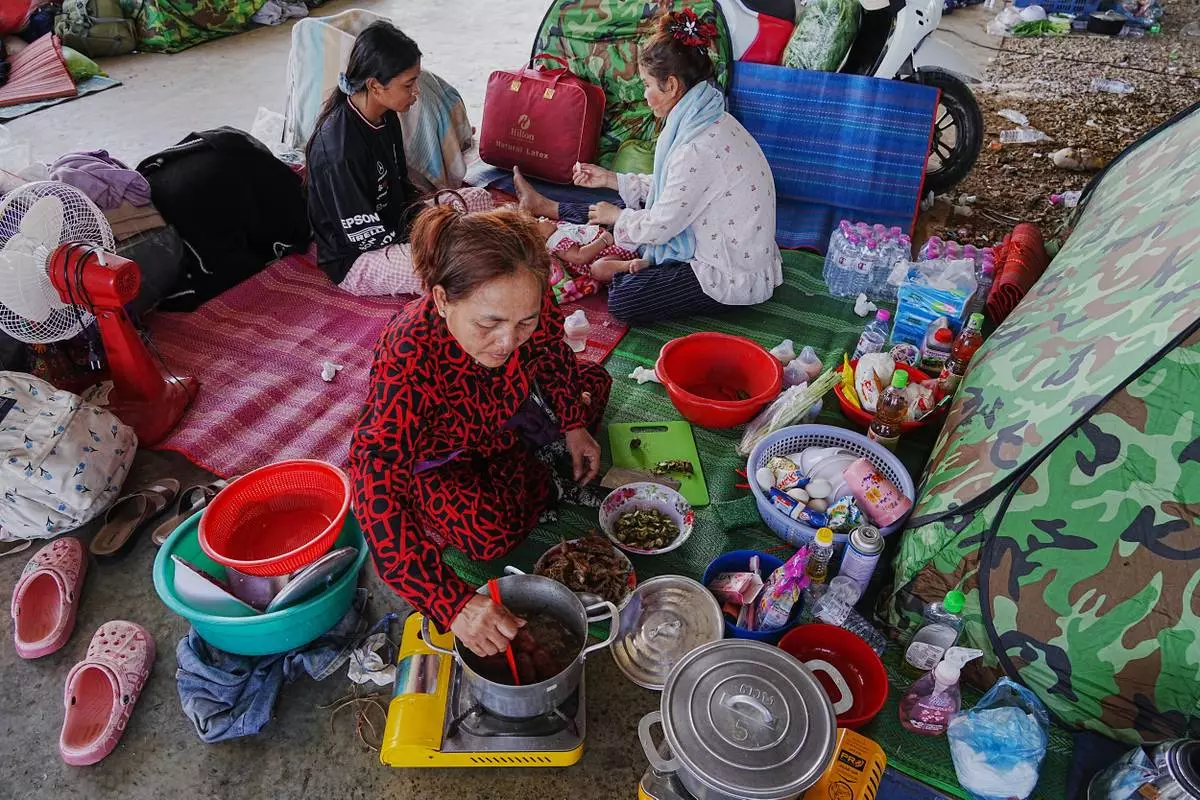
Evacuees cook food as they take refuge in Banteay Menchey provincial town, Cambodia, Saturday, Dec. 13, 2025, after fleeing homes following fighting between Thailand and Cambodia. (AP Photo/Heng Sinith)
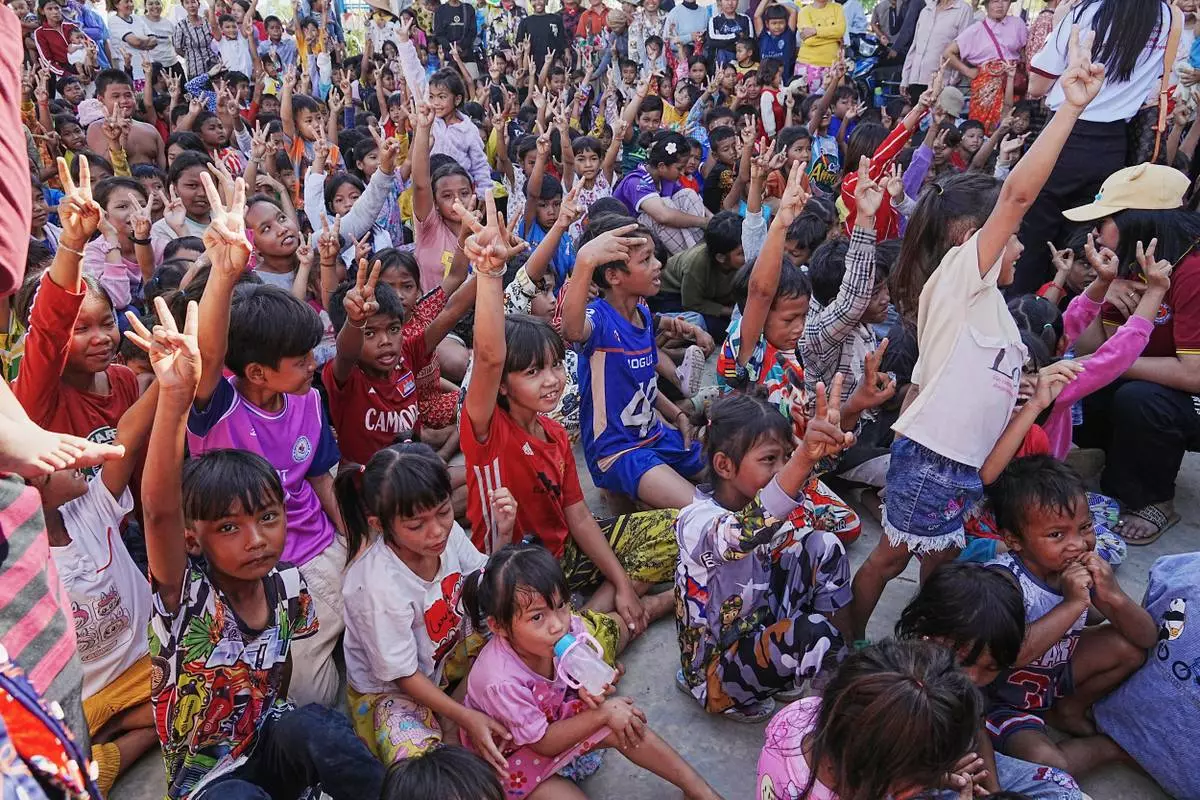
Children raise their hands while receiving donation from charity as they take refuge in Banteay Menchey provincial town, Cambodia, Saturday, Dec. 13, 2025, after fleeing homes following fighting between Thailand and Cambodia. (AP Photo/Heng Sinith)
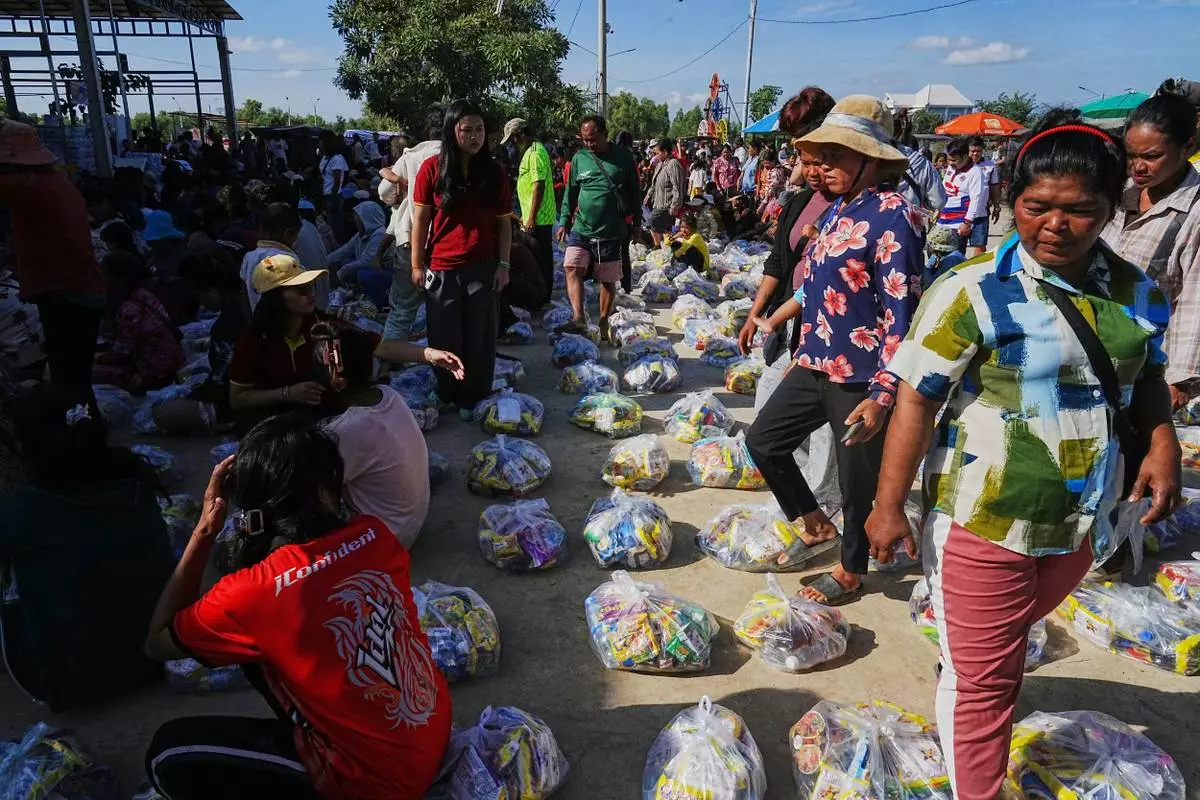
Evacuees wait to receive donation from local charity as they take refuge in Banteay Menchey provincial town, Cambodia, Saturday, Dec. 13, 2025, after fleeing homes following fighting between Thailand and Cambodia. (AP Photo/Heng Sinith)
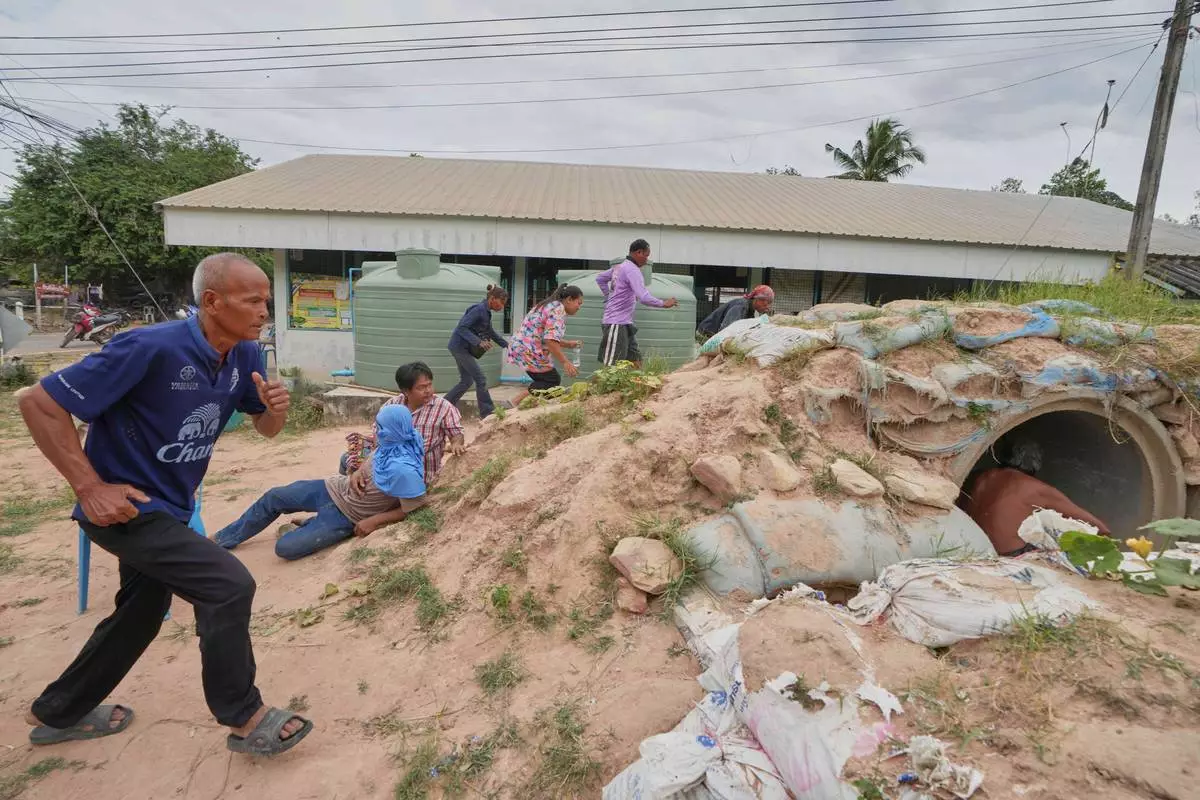
Village security volunteers and resident run into shelter while the blasts sounded too close in Buriram province, Thailand, Friday, Dec. 12, 2025, following renewed border conflict between Thailand and Cambodia. (AP Photo/Sakchai Lalit)