Skip to Content Facebook Feature Image

Gaza amputees struggle to rebuild lives as the enclave faces shortages of prosthetic limbs

News

Gaza amputees struggle to rebuild lives as the enclave faces shortages of prosthetic limbs
News

News

Gaza amputees struggle to rebuild lives as the enclave faces shortages of prosthetic limbs

2025-12-13 13:13 Last Updated At:13:21

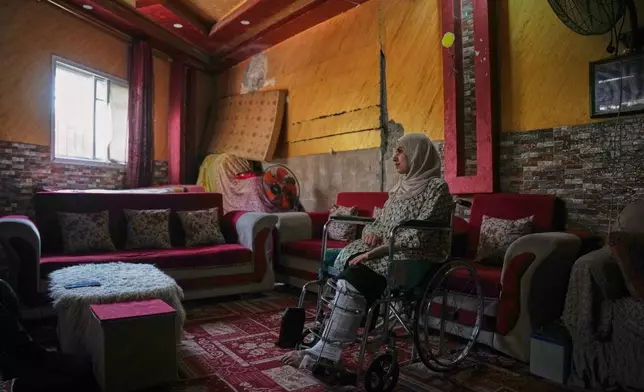
NUSEIRAT, Gaza Strip (AP) — Sitting in her wheelchair, Haneen al-Mabhouh dreams of rebuilding her family, of cradling a new baby. She dreams of walking again. But with her leg gone, her life in Gaza is on hold, she says, as she waits to go abroad for further treatment.

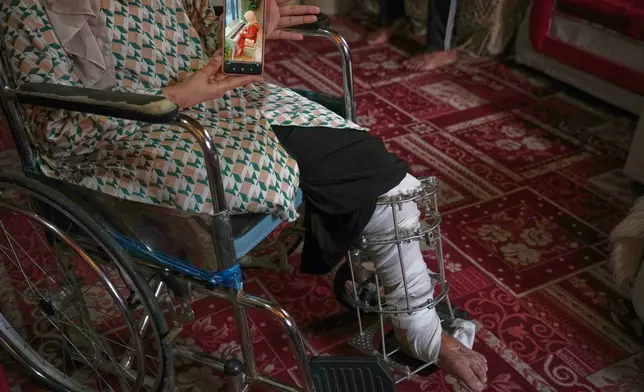
An Israeli airstrike in July 2024 smashed her home in central Gaza as she and her family slept. All four of her daughters were killed, including her 5-month-old baby. Her husband was severely burned. Al-Mabhouh’s legs were crushed under the rubble, and doctors had to amputate her right leg above the knee.

More Images
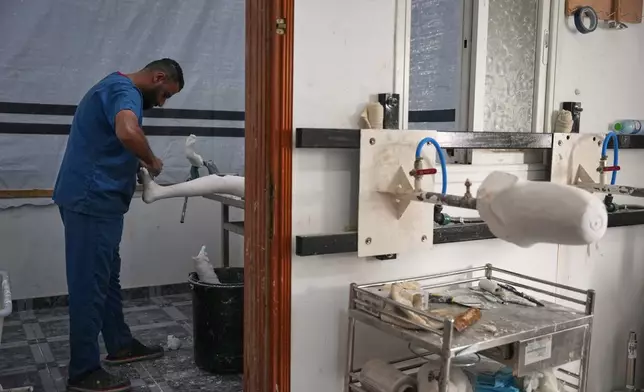
Prosthetic limb technician Ahmed Al-Ashqar, 34, prepares a leg amputation splint in the first stage of building an artificial leg at Hamad Hospital in Zawaida, central Gaza Strip, Thursday, Nov. 27, 2025. (AP Photo/Abdel Kareem Hana)
Prosthetic limb technician Ahmed Al-Ashqar, 34, prepares a leg amputation splint in the first stage of building an artificial leg at Hamad Hospital in Zawaida, central Gaza Strip, Thursday, Nov. 27, 2025. (AP Photo/Abdel Kareem Hana)

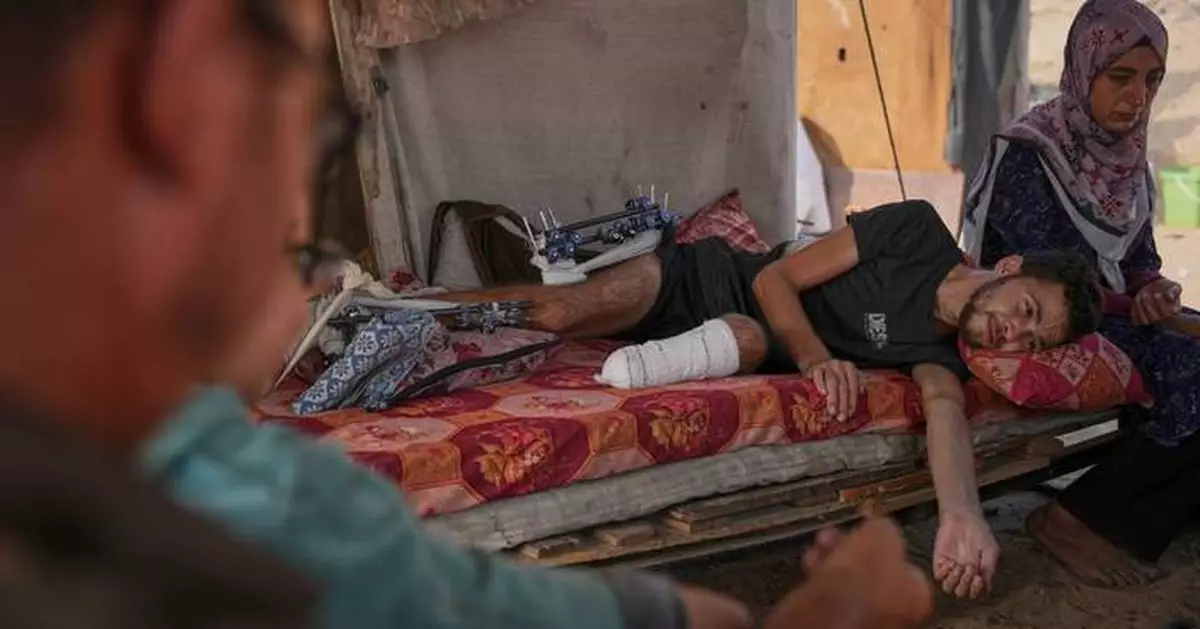
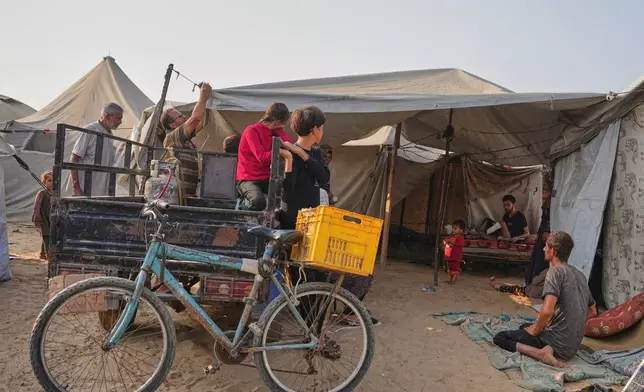
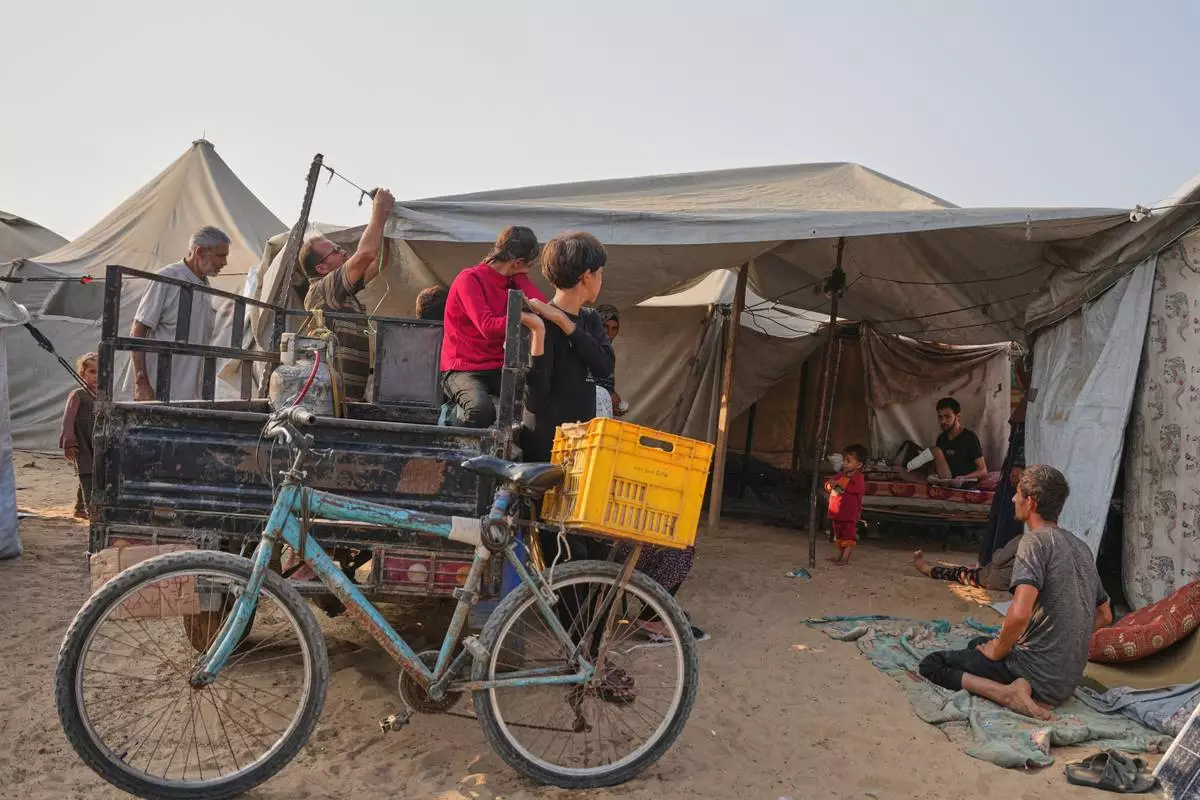
Yassin Marouf, 23, second from right, who lost his left foot and suffered a severe injury to his right leg after Israeli shelling in May, sits on a mattress in a tent surrounded by family and neighbors in Zawaida, central Gaza, Thursday, Nov. 6, 2025. (AP Photo/Abdel Kareem Hana)
Yassin Marouf, 23, second from right, who lost his left foot and suffered a severe injury to his right leg after Israeli shelling in May, sits on a mattress in a tent surrounded by family and neighbors in Zawaida, central Gaza, Thursday, Nov. 6, 2025. (AP Photo/Abdel Kareem Hana)

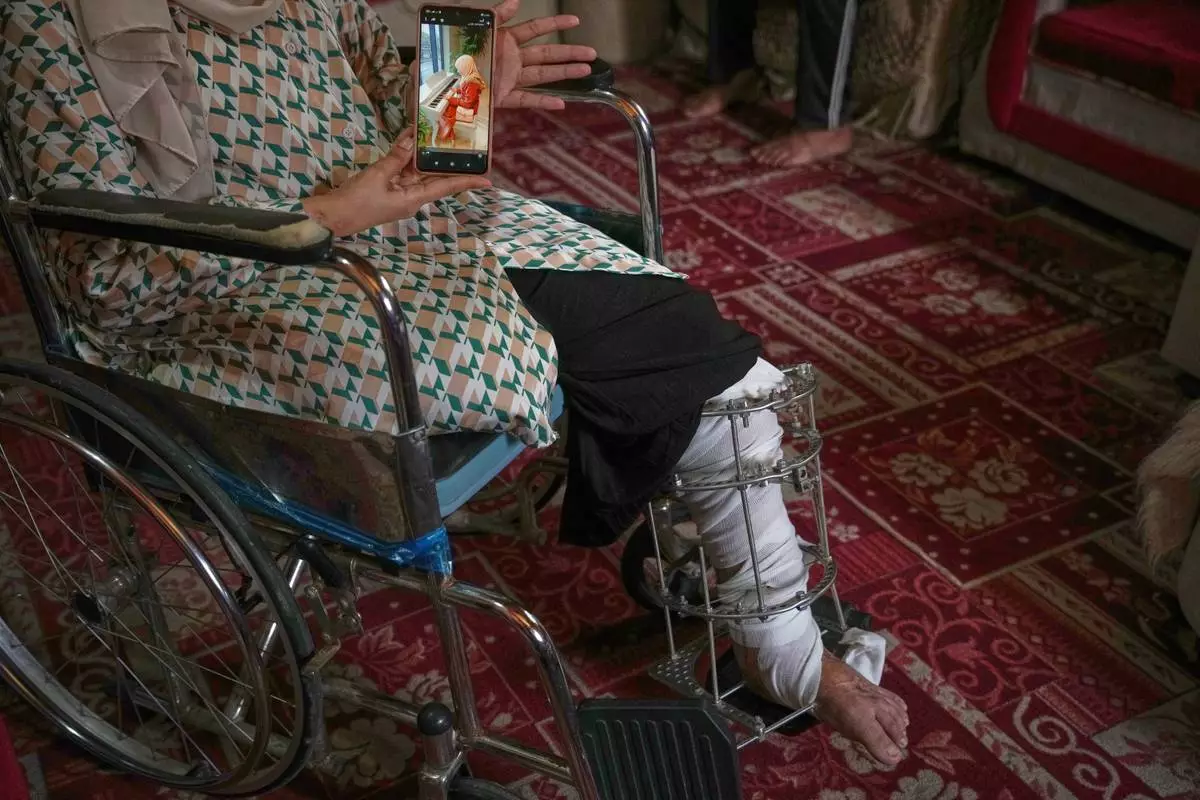
Haneen al-Mabhouh, 34, who lost her leg in an Israeli strike on her home that also killed all four of her daughters, including her 5-month-old baby, shows a photo of one of her daughters on a cellphone while sitting in a wheelchair in her family home in Nuseirat, central Gaza Strip, Thursday, Nov. 6, 2025. (AP Photo/Abdel Kareem Hana)
Haneen al-Mabhouh, 34, who lost her leg in an Israeli strike on her home that also killed all four of her daughters, including her 5-month-old baby, shows a photo of one of her daughters on a cellphone while sitting in a wheelchair in her family home in Nuseirat, central Gaza Strip, Thursday, Nov. 6, 2025. (AP Photo/Abdel Kareem Hana)
Haneen al-Mabhouh, 34, who lost her leg in an Israeli strike on her home that also killed all four of her daughters, including her 5-month-old baby, sits in a wheelchair in her family home in Nuseirat, central Gaza Strip, Thursday, Nov. 6, 2025. (AP Photo/Abdel Kareem Hana)

Haneen al-Mabhouh, 34, who lost her leg in an Israeli strike on her home that also killed all four of her daughters, including her 5-month-old baby, sits in a wheelchair in her family home in Nuseirat, central Gaza Strip, Thursday, Nov. 6, 2025. (AP Photo/Abdel Kareem Hana)

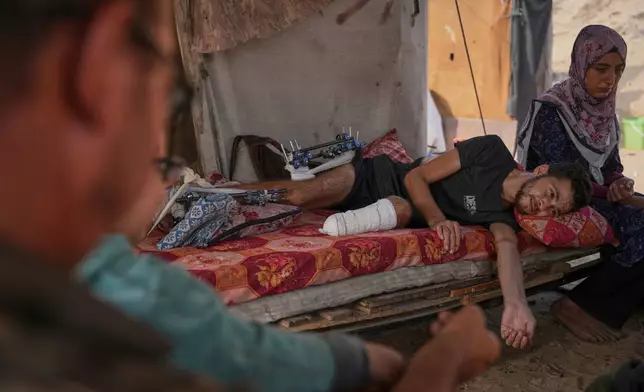
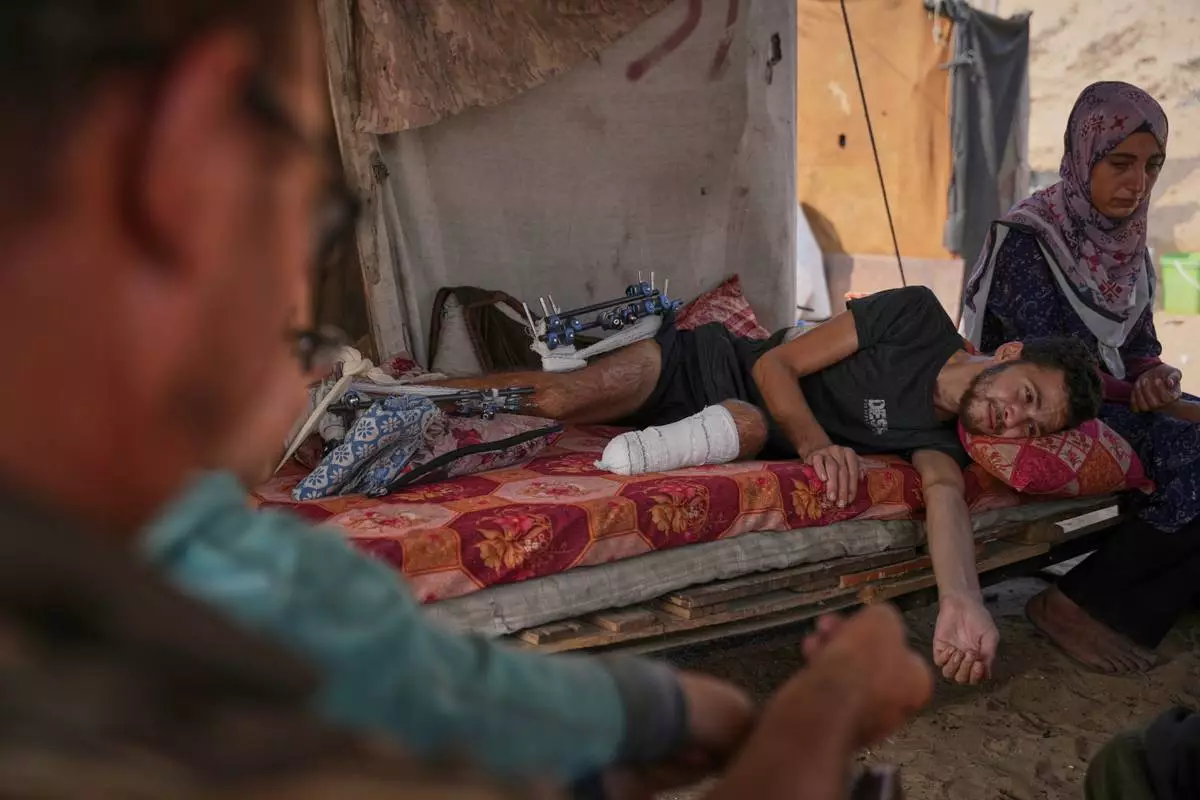
Yassin Marouf, 23, who lost his left foot and suffered a severe injury to his right leg after being hit by Israeli shelling in May, lies in a tent surrounded by his family in Zawaida, central Gaza, Thursday, Nov. 6, 2025. (AP Photo/Abdel Kareem Hana)

Yassin Marouf, 23, who lost his left foot and suffered a severe injury to his right leg after being hit by Israeli shelling in May, lies in a tent surrounded by his family in Zawaida, central Gaza, Thursday, Nov. 6, 2025. (AP Photo/Abdel Kareem Hana)

“For the past year and a half, I have been unable to move around, to live like others. For the past year and a half, I have been without children,” she said, speaking at her parents’ home.

The 2-month-old ceasefire in Gaza has been slow to bring help for thousands of Palestinians who suffered amputations from Israeli bombardment over the past two years. The World Health Organization estimates there are some 5,000 to 6,000 amputees from the war, 25% of them children.

Those who lost limbs are struggling to adapt, faced with a shortage of prosthetic limbs and long delays in medical evacuations out of Gaza.

The WHO said a shipment of essential prosthetic supplies recently made it into Gaza. That appears to be the first significant shipment for the past two years.

Previously, Israel had let in almost no ready-made prosthetic limbs or material to manufacture limbs since the war began, according to Loay Abu Saif, the head of the disability program at Medical Aid for Palestinians, or MAP, and Nevin Al Ghussein, acting director of the Artificial Limbs and Polio Center in Gaza City.

The Israeli military body in charge of coordinating aid, known as COGAT, did not respond when asked how many prosthetic supplies had entered during the war or about its policies on such supplies.

Al-Mabhouh was asleep with her baby girl in her arms when the strike hit their home in Nuseirat, she said. For several weeks while recovering in the hospital, al-Mabhouh had no idea her children had been killed.

She underwent multiple surgeries. Her hand still has difficulty moving. Her remaining leg remains shattered, held together with rods. She needs a bone graft and other treatments that are only available outside of Gaza.

She was put on the list for medical evacuation 10 months ago but still hasn’t gotten permission to leave Gaza.

Waiting for her chance to go, she lives at her parents’ house. She needs help changing clothes and can’t even hold a pen, and remains crushed by grief over her daughters. “I never got to hear her say ‘mama,’ see her first tooth or watch her take her first steps,” she said of her baby.

She dreams of having a new child but can’t until she gets treatment.

“It’s my right to live, to have another child, to regain what I lost, to walk, just to walk again,” she said. “Now my future is paralyzed. They destroyed my dreams.”

The ceasefire has hardly brought any increase in medical evacuations for the 16,500 Palestinians the U.N. says are waiting to get vital treatment abroad — not just amputees, but patients suffering many kinds of chronic conditions or wounds.

As of Dec. 1, 235 patients have been evacuated since the ceasefire began in October, just under five a day. In the months before that, the average was about three a day.

Israel last week said it was ready to allow patients and other Palestinians to leave Gaza via the Israeli-held Rafah crossing between Gaza and Egypt. But it's unsure that will happen because Egypt, which controls the crossing’s other side, demands Rafah also be opened for Palestinians to enter Gaza as called for under the ceasefire deal.

Dr. Richard Peeperkorn, the WHO's representative in the occupied Palestinian territory, told The Associated Press that the backlog is caused by the lack of countries to host the evacuated patients. He said new medevac routes need to be opened, especially to the Israeli-occupied West Bank and east Jerusalem, where hospitals are ready to receive patients.

Yassin Marouf lies in a tent in central Gaza, his left foot amputated, his right leg barely held together with rods.

The 23-year-old and his brother were hit by Israeli shelling in May as they returned from visiting their home in northern Gaza that their family had been forced to flee. His brother was killed. Marouf lay bleeding on the ground, as a stray dog attacked his mangled left leg.

Doctors say his right leg will also need to be amputated, unless he can travel abroad for operations that might save it. Marouf said he can’t afford painkillers and can’t go to the hospital regularly to have his bandages changed as they’re supposed to.

“If I want to go to the bathroom, I need two or three people to carry me,” he said.

Mohamed al-Naggar had been pursuing an IT degree at the University of Palestine before the war.

Seven months ago, shrapnel pierced his left leg during strikes on the house where his family was sheltering. Doctors amputated his leg above the knee. His right leg was also badly injured and shrapnel remains in parts of his body.

Despite four surgeries and physical therapy, the 21-year-old al-Naggar can’t move around.

“I’d like to travel abroad and put on a prosthetic and graduate from college and be normal like young people outside Gaza,” he said.

Some 42,000 Palestinians have suffered life-changing injuries in the war, including amputations, brain trauma, spinal cord injuries and major burns, the WHO said in an October report.

The situation has “improved slightly” for those with assistance needs but “there is still a huge overall shortage of assistive products,” such as wheelchairs, walkers and crutches. Gaza has only eight prosthetists able to manufacture and fit artificial limbs, the WHO said in a statement to the AP.

The Artificial Limbs and Polio Center in Gaza City, one of two prosthetics centers still operating in the territory, received a shipment of material to manufacture limbs just before the war began in 2023, said its director, Al Ghussein. Another small shipment entered in December 2024, but nothing since.

The center has been able to provide artificial limbs for 250 cases over the course of the war, but supplies are running out, Al Ghussein said.

No pre-made prosthetic legs or arms have entered, according to Abu Saif of MAP, who said Israel does not ban them, but its procedures cause delays and “in the end they ignore it.”

Ibrahim Khalif wants a prosthetic right leg so he can get a job doing manual labor or cleaning houses to support his pregnant wife and children.

In January, he lost his leg when an Israeli airstrike hit Gaza City while he was out getting food.

“I used to be the provider for my kids, but now I’m sitting here," Khalif said. "I think of how I was and what I’ve become.”
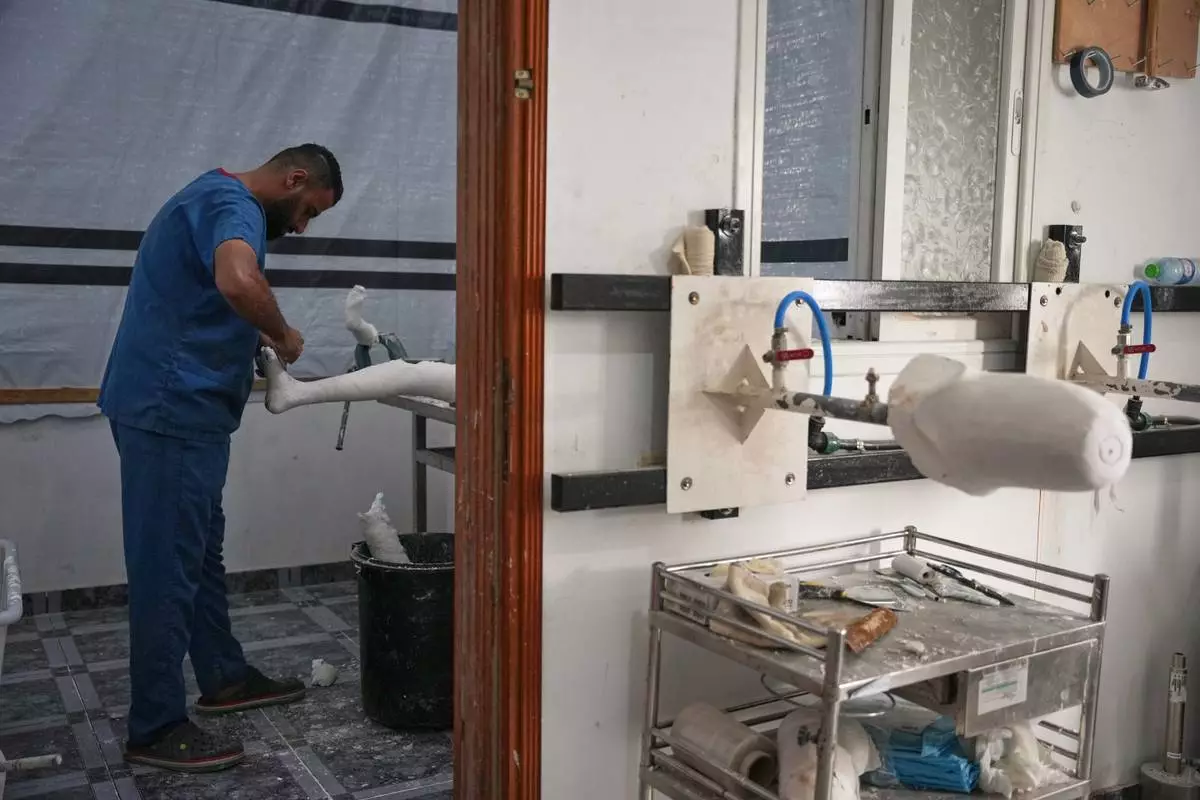
Prosthetic limb technician Ahmed Al-Ashqar, 34, prepares a leg amputation splint in the first stage of building an artificial leg at Hamad Hospital in Zawaida, central Gaza Strip, Thursday, Nov. 27, 2025. (AP Photo/Abdel Kareem Hana)
Prosthetic limb technician Ahmed Al-Ashqar, 34, prepares a leg amputation splint in the first stage of building an artificial leg at Hamad Hospital in Zawaida, central Gaza Strip, Thursday, Nov. 27, 2025. (AP Photo/Abdel Kareem Hana)

Yassin Marouf, 23, second from right, who lost his left foot and suffered a severe injury to his right leg after Israeli shelling in May, sits on a mattress in a tent surrounded by family and neighbors in Zawaida, central Gaza, Thursday, Nov. 6, 2025. (AP Photo/Abdel Kareem Hana)
Yassin Marouf, 23, second from right, who lost his left foot and suffered a severe injury to his right leg after Israeli shelling in May, sits on a mattress in a tent surrounded by family and neighbors in Zawaida, central Gaza, Thursday, Nov. 6, 2025. (AP Photo/Abdel Kareem Hana)

Haneen al-Mabhouh, 34, who lost her leg in an Israeli strike on her home that also killed all four of her daughters, including her 5-month-old baby, shows a photo of one of her daughters on a cellphone while sitting in a wheelchair in her family home in Nuseirat, central Gaza Strip, Thursday, Nov. 6, 2025. (AP Photo/Abdel Kareem Hana)
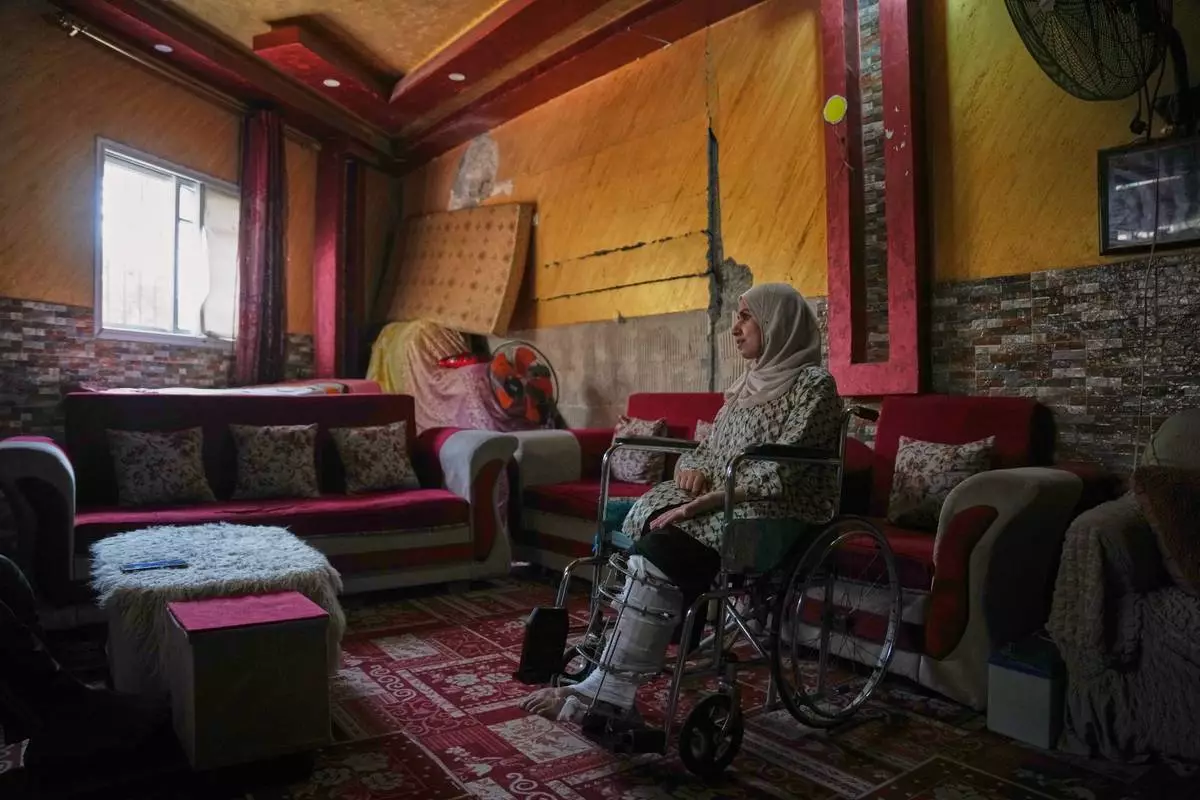
Haneen al-Mabhouh, 34, who lost her leg in an Israeli strike on her home that also killed all four of her daughters, including her 5-month-old baby, shows a photo of one of her daughters on a cellphone while sitting in a wheelchair in her family home in Nuseirat, central Gaza Strip, Thursday, Nov. 6, 2025. (AP Photo/Abdel Kareem Hana)
Haneen al-Mabhouh, 34, who lost her leg in an Israeli strike on her home that also killed all four of her daughters, including her 5-month-old baby, sits in a wheelchair in her family home in Nuseirat, central Gaza Strip, Thursday, Nov. 6, 2025. (AP Photo/Abdel Kareem Hana)

Haneen al-Mabhouh, 34, who lost her leg in an Israeli strike on her home that also killed all four of her daughters, including her 5-month-old baby, sits in a wheelchair in her family home in Nuseirat, central Gaza Strip, Thursday, Nov. 6, 2025. (AP Photo/Abdel Kareem Hana)

Yassin Marouf, 23, who lost his left foot and suffered a severe injury to his right leg after being hit by Israeli shelling in May, lies in a tent surrounded by his family in Zawaida, central Gaza, Thursday, Nov. 6, 2025. (AP Photo/Abdel Kareem Hana)

Yassin Marouf, 23, who lost his left foot and suffered a severe injury to his right leg after being hit by Israeli shelling in May, lies in a tent surrounded by his family in Zawaida, central Gaza, Thursday, Nov. 6, 2025. (AP Photo/Abdel Kareem Hana)
COLUMBIA, S.C. (AP) — The Rev. Jesse Jackson Sr. never stopped fighting for civil rights around the world. This includes South Carolina, the state where he was born and raised, and where he first experienced state-sanctioned racial discrimination.

Jackson's body lay in state Monday inside the South Carolina Capitol. It started with a rousing version of the Black national anthem, “Lift Every Voice and Sing,” that reverberated through the Statehouse — a building that was partially destroyed in 1865 during the Civil War, which South Carolina started to keep slavery.

Before the doors opened to the public, politicians and other guests remembered a man who grew up in segregated Greenville and, in 1960, led seven Black high school students into the whites-only library branch. They sat down, quietly read books and magazines, and were arrested. And Jackson's civil rights career began.

“Because of his efforts, I can sit where I am today,” said Democratic U.S. Rep. Jim Clyburn, who has served 33 years in Congress and first met Jackson when they were on rival high school sports teams in segregated South Carolina. They forged a lifelong friendship through the civil rights struggle.

Jackson died Feb. 17 at age 84 after battling a rare neurological disorder that affected his mobility and ability to speak in his later years.

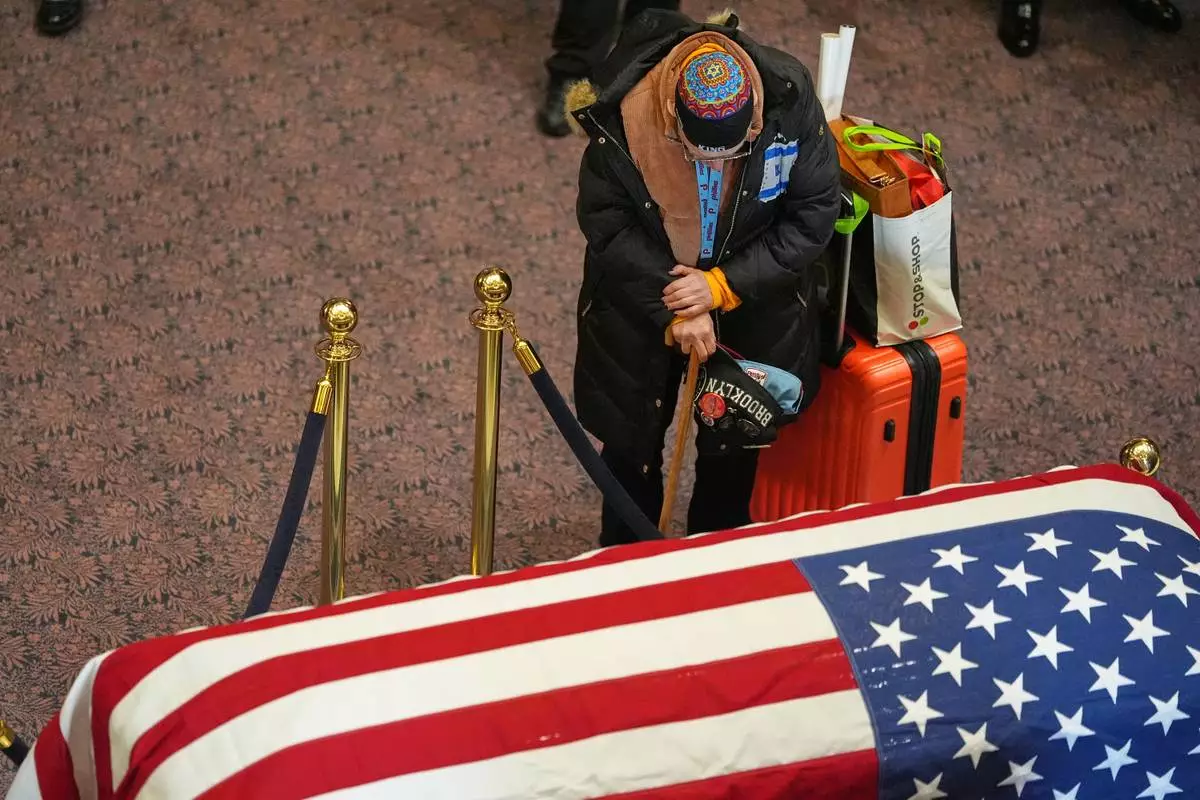
His casket, draped in an American flag, arrived at the South Carolina Statehouse on a horse-drawn caisson on a chilly, cloudy morning. A special white-gloved Highway Patrol honor guard escorted Jackson inside the Statehouse and to the second floor, where well over 100 people packed under the rotunda for a ceremony before the public was invited in to pay their respects. Behind Jackson's casket, with his back turned, was a statue of former U.S. Vice President John C. Calhoun, a zealous defender of slavery.

When the Statehouse doors opened to the public, a line seven blocks long was waiting. People walked up to the second floor and were given a moment to pray or take a picture or a selfie before a trooper in a dress uniform politely asked them to keep moving.

The South Carolina services are part of two weeks of events. It began with Jackson’s body lying in repose last week at his Rainbow PUSH Coalition’s Chicago headquarters.

After South Carolina, Jackson will be returned to Chicago for a large celebration of life gathering at a megachurch and the final homegoing services at the Rainbow PUSH headquarters. Plans for a service in Washington, D.C., to honor him have been postponed until a later date.

Nationally and internationally, Jackson advocated for the poor and underrepresented for voting rights, job opportunities, education and health care. He scored diplomatic victories with world leaders.

Through his Rainbow PUSH Coalition, he channeled cries for Black pride and self-determination into corporate boardrooms, pressuring executives to make America a more open and equitable society. He was the Civil Rights Movement’s torchbearer after the Rev. Martin Luther King Jr.’s assassination, and would run for the Democratic presidential nomination in 1984 and 1988.

Jackson was present in 2015 when the South Carolina House voted to finally remove the Confederate flag from the Capitol grounds. Several were placed there during the 1960s in opposition to the federal government's push for integration.

South Carolina’s longest-serving legislator found Jackson in the celebration. Democratic Rep. Gilda Cobb-Hunter said he pulled her aside.

“It’s great to take down the Confederate flag. But what about the Confederate agenda,” Cobb-Hunter recalled him saying. “What I want people to remember is there is still much work to do.”

Jackson also pushed in 2003 for Greenville County to honor King by matching the federal holiday in his honor.

It's not just Black South Carolinians who owe Jackson a debt of gratitude. Anyone who enjoys the rewards of a rapidly growing state, thanks in part to manufacturers like luxury carmaker BMW and airplane maker Boeing locating here, owes him, Greenville Mayor Knox White said.

“Can you imagine a BMW or a Boeing would locate in a segregated South Carolina? Of course not,” White said. “He freed us all.”

Jackson is just the second Black man to lie in state at the South Carolina Capitol. State Sen. Clementa Pinckney was honored in 2015 after he was shot and killed in the Charleston church shooting that led to the removal of the Confederate flag from Statehouse grounds.

Associated Press writer Sophia Tareen in Chicago contributed to this report.

People gather inside the South Carolina Statehouse as the Rev. Jesse Jackson lies in state Monday, March 2, 2026, in Columbia, S.C. (AP Photo/Matt Kelley, Pool)

People gather inside the South Carolina Statehouse as the Rev. Jesse Jackson lies in state Monday, March 2, 2026, in Columbia, S.C. (AP Photo/Matt Kelley, Pool)

People pay their respects to the Rev. Jesse Jackson inside the South Carolina Statehouse as he lies in state Monday, March 2, 2026, in Columbia, S.C. (AP Photo/Matt Kelley, Pool)

People pay their respects to the Rev. Jesse Jackson inside the South Carolina Statehouse as he lies in state Monday, March 2, 2026, in Columbia, S.C. (AP Photo/Matt Kelley, Pool)

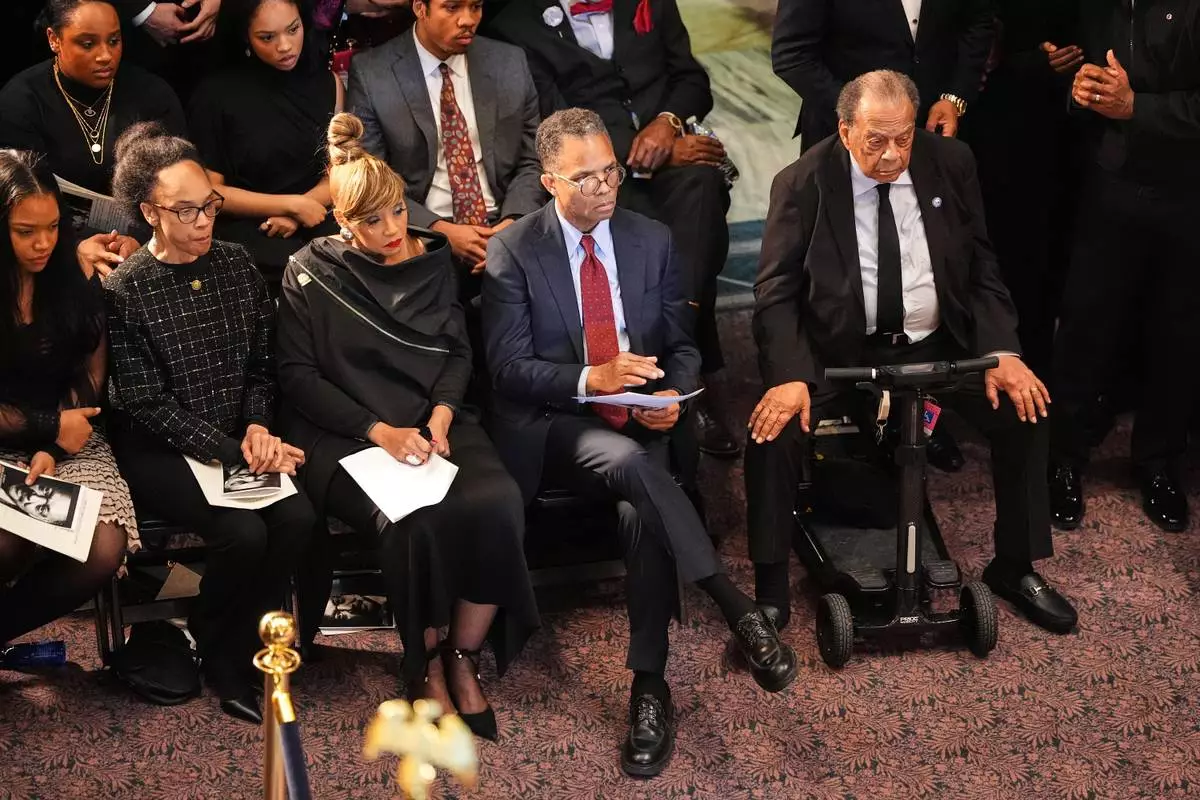
Santita Jackson, third from left, Jesse Jackson Jr., center, and Andrew Young, right, gather with others inside the South Carolina Statehouse as the Rev. Jesse Jackson lies in state Monday, March 2, 2026, in Columbia, S.C. (AP Photo/Matt Kelley, Pool)

Santita Jackson, third from left, Jesse Jackson Jr., center, and Andrew Young, right, gather with others inside the South Carolina Statehouse as the Rev. Jesse Jackson lies in state Monday, March 2, 2026, in Columbia, S.C. (AP Photo/Matt Kelley, Pool)

Rev. Reginald Sharpe speaks to people inside the South Carolina Statehouse as the Rev. Jesse Jackson lies in state Monday, March 2, 2026, in Columbia, S.C. (AP Photo/Matt Kelley, Pool)

Rev. Reginald Sharpe speaks to people inside the South Carolina Statehouse as the Rev. Jesse Jackson lies in state Monday, March 2, 2026, in Columbia, S.C. (AP Photo/Matt Kelley, Pool)

Jesse Jackson Jr., center, arrives at the South Carolina Statehouse, where his father, the Rev. Jesse Jackson, will lie in state Monday, March 2, 2026, in Columbia, S.C. (AP Photo/Matt Kelley, Pool)

Jesse Jackson Jr., center, arrives at the South Carolina Statehouse, where his father, the Rev. Jesse Jackson, will lie in state Monday, March 2, 2026, in Columbia, S.C. (AP Photo/Matt Kelley, Pool)

People gather inside the South Carolina Statehouse as the Rev. Jesse Jackson lies in state Monday, March 2, 2026, in Columbia, S.C. (AP Photo/Matt Kelley, Pool)

People gather inside the South Carolina Statehouse as the Rev. Jesse Jackson lies in state Monday, March 2, 2026, in Columbia, S.C. (AP Photo/Matt Kelley, Pool)

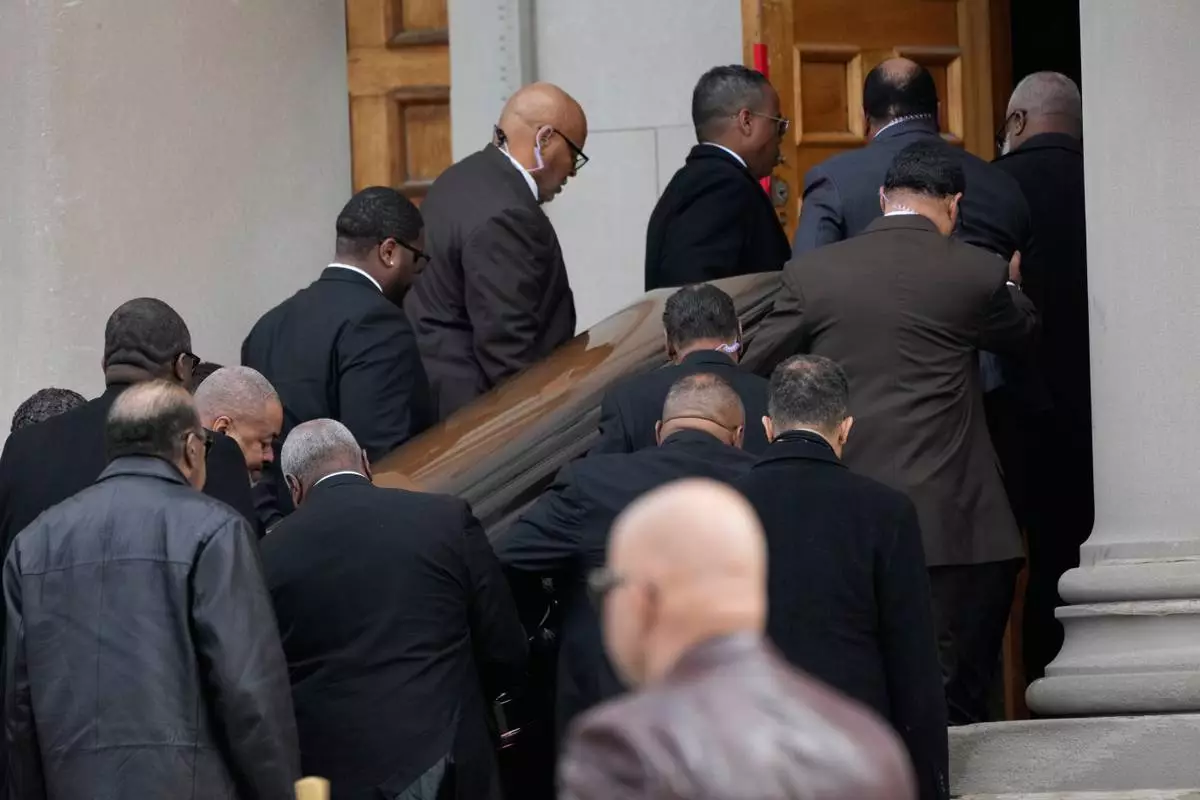
The casket of the Rev. Jesse Jackson is carried to the South Carolina Statehouse, where he will lie in state, Monday, March 2, 2026, in Columbia, S.C. (AP Photo/Matt Kelley, Pool)

The casket of the Rev. Jesse Jackson is carried to the South Carolina Statehouse, where he will lie in state, Monday, March 2, 2026, in Columbia, S.C. (AP Photo/Matt Kelley, Pool)

The casket of the Rev. Jesse Jackson arrives for public visitation at Rainbow PUSH Coalition headquarters in Chicago, Friday, Feb. 27, 2026. (AP Photo/Nam Y. Huh)

The casket of the Rev. Jesse Jackson arrives for public visitation at Rainbow PUSH Coalition headquarters in Chicago, Friday, Feb. 27, 2026. (AP Photo/Nam Y. Huh)

FILE - Jesse Jackson is joined by his daughter, Santita, and son Jonathan, far right, and unidentified youngster at the Los Angeles Hilton Hotel, June 8, 1988 after falling in defeat to Massachusetts Gov. Michael Dukakis in the California Democratic primary. (AP Photo/John Duricka, File)

FILE - Jesse Jackson is joined by his daughter, Santita, and son Jonathan, far right, and unidentified youngster at the Los Angeles Hilton Hotel, June 8, 1988 after falling in defeat to Massachusetts Gov. Michael Dukakis in the California Democratic primary. (AP Photo/John Duricka, File)

Recommended Articles