International and Chinese exhibitors at the just concluded 5th China International Consumer Products Expo (CICPE) are giving warm feedback to the event, calling it a new effective gateway to emerging markets and business opportunities.
CICPE is China's first national-level exhibition focused on consumer goods, staged in Haikou, the country's southernmost island province of Hainan. This year's edition ran from April 13 to 18 and has seen record-breaking participation, with 1,767 companies and 4,209 consumer brands from 71 countries and regions.
The event has also drawn over 60,000 professional buyers, marking a more than 10 percent increase compared to last year's.
Through business matching sessions and other networking activities, 52 tentative agreements were signed, totaling an estimated value of 92 billion yuan, or approximately 12.6 billion U.S. dollars.
Switzerland, represented at the expo for the fifth consecutive year, emphasized the event's significance for Swiss businesses.
"It's the fifth edition already of a Swiss pavilion at the Hainan Expo. We were here at the first one as a country of honor. And the fact that we have been here for five times now in a row shows actually the significance of Hainan Expo for Swiss exhibitors and Swiss companies," said Joel Saurina, Counselor and Head of Swiss Business Hub China.
Zhang Han, a representative of a U.S. firm, also expressed optimism about the Chinese market, particularly in the context of cutting-edge technologies.
"China's technological advancements, including AI and robots, are undoubtedly globally leading. We are confident that these technologies will have a positive impact on the consumer industry and are very optimistic about the prospect of the Chinese market," she said.
Domestic exhibitors have leveraged the expo to forge partnerships and upgrade supply chains.
"Chinese consumers are increasingly demanding personalized products. And they are becoming more mature, leading to more segmented markets," exhibitor Guo Luo noted.
Another exhibitor Xu Biwei showcased how ceramic innovations redefine traditions while pursuing cross-industry collaborations to expand globally.
"We brought a range of consumer products to demonstrate how ceramics can be reinvented in new forms. We are working to diversify our product lines, expand into new markets and industries, and actively pursue cross-industry integration," Xu said.
CICPE not only highlighted the appeal of the Chinese market but also injected new momentum into the global consumer market with its innovative spirit and openness.
"Having conversations and learning more about new brands, new brands to the Chinese market, and be able to tell our stories to a new consumer who's so educated, and we're hoping to introduce that to the Chinese market soon," said Jon Hosty from a British clothing brand.
A Thai-based food company said CICPE provides a key platform for businesses to learn about evolving consumer demands.
"Through this platform, we've gained a deeper understanding of overseas and Chinese market demands, allowing us to better align [products]with the rising living standards and growing pursuit of quality life among Chinese consumers. We are eager to further collaborate with the CICPE and work together toward mutual growth and prosperity," said Xue Zengyi, the exhibitor.
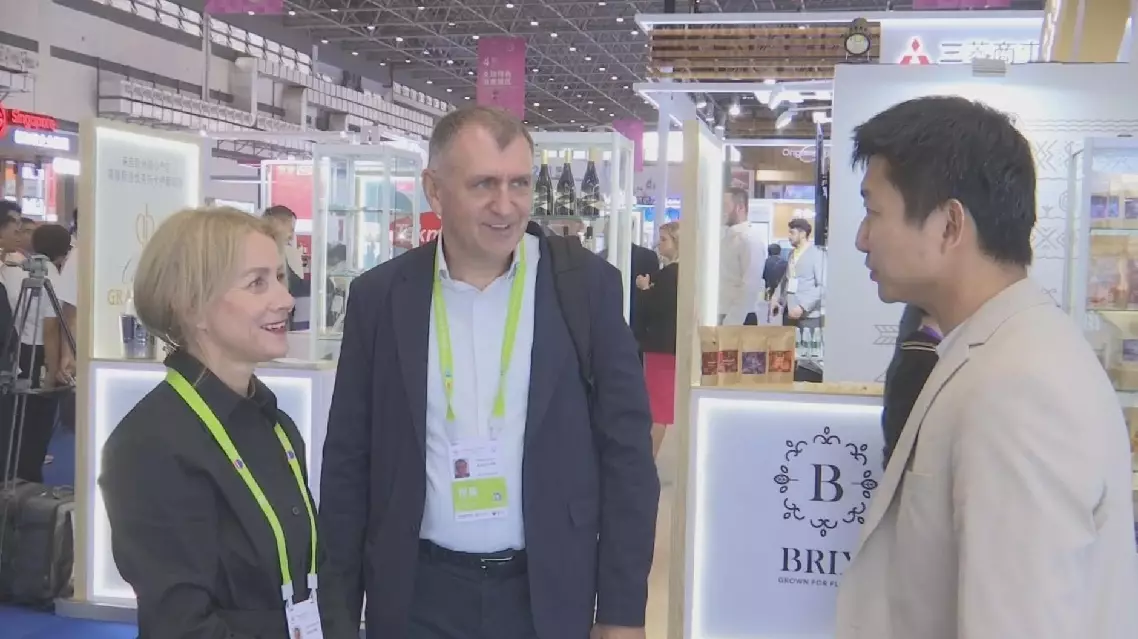
Global exhibitors hail business opportunities at Hainan consumer products expo
A new round of trade-in subsidy program is energizing China's consumer market these days, with provinces across the country seeing a surge in demand for cars, home appliances and digital devices.
In north China's Shanxi Province, the new trade-in subsidy program, which started on January 9, has further helped boost sales in home appliances and digital devices which are covered by the new round of subsidies.
To enjoy the subsidies, six types of home appliances, including refrigerators and washing machines, must meet national Level 1 energy-efficiency or water-efficiency standards. Digital and smart products include four types, such as mobile phones and tablets, with a sales price cap of 6,000 yuan (about 800 U.S. dollars) per item.
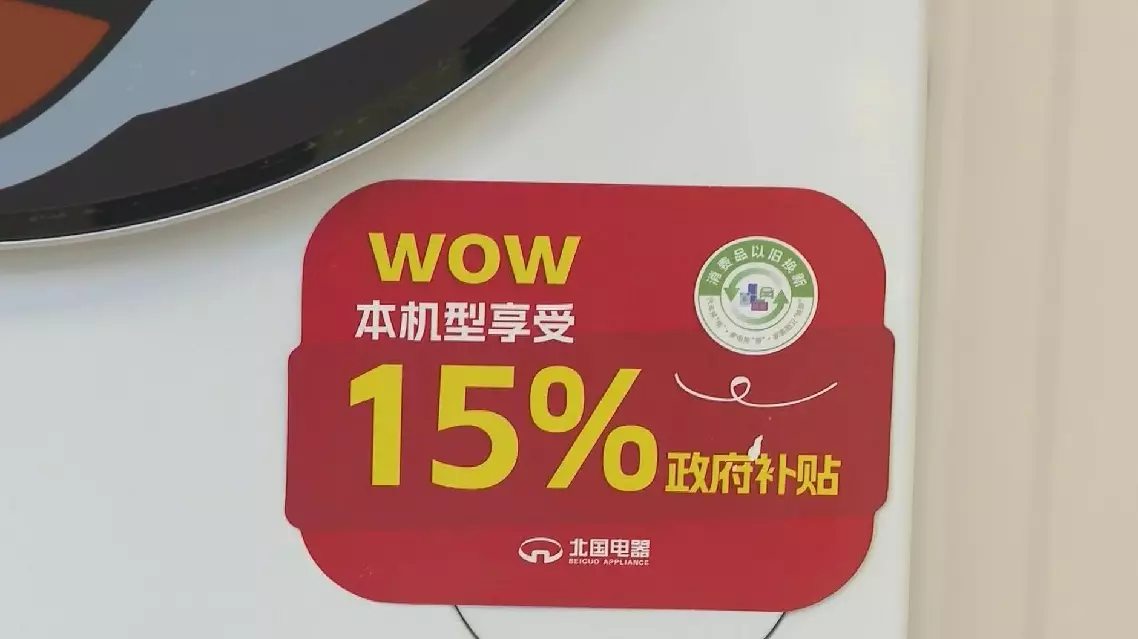
In both categories, subsidies are set at 15 percent of the final transaction price. For home appliances, the maximum subsidy is 1,500 yuan per item. For digital products, the cap is 500 yuan per item. Each consumer can receive a subsidy for one unit in each category.
Neighboring Shanxi, Hebei Province kicked off the year of 2026 with the new round of trade-in subsidy program starting on January 1.
The subsidies cover automobiles, home appliances, and digital products. Individual consumers who purchase designated Level 1 energy-efficiency appliances or eligible digital products priced at no more than 6,000 yuan can receive subsidies equal to 15 percent of the transaction price. The maximum subsidy is 1,500 yuan per appliance and 500 yuan per digital or smart device, with each person limited to one subsidized item in each category.
Data showed that from Jan 1 to 9, Hebei's home appliance trade-in program alone disbursed more than 130 million yuan in subsidies, driving sales of over 920 million yuan.
In east China's Jiangsu Province, the new trade-in subsidy program, taking effect for two weeks, has brought the province a boom in trade-in.
At a local 4S store in Jiangsu's Suqian City, showroom traffic has spiked as salespeople walked customers through the new benefits from the trade-in subsidy program.
"Under the scrappage-and-replacement scheme, customers who buy a new energy vehicle (NEV) can receive a subsidy worth 12 percent of the vehicle price, capped at 20,000 yuan (about 2,860 U.S. dollars). For combustion-engine cars, the subsidy is 10 percent, with an upper limit of 15,000 yuan. For trade-ins, NEVs are able to receive a subsidy worth 8 percent of the vehicle price, up to 15,000 yuan, while combustion-engine cars will receive a 6-percent subsidy, with a cap of 13,000 yuan," said Sun Yue, a saleswoman at the store.
In the home appliance sector, Jiangsu's policy this year stipulates that only products that meet China's Level 1 energy-efficiency standard are eligible for subsidies. The scheme covers six major categories, including refrigerators and washing machines.
Consumers who purchase qualifying appliances can receive a subsidy equal to 15 percent of the final retail price, up to a maximum of 1,500 yuan per item. Each person is limited to one subsidized unit per product category.
Four types of digital and smart products, such as mobile phones and tablets, are eligible for a 15-percent subsidy capped at 500 yuan per unit, with a retail price no more than 6,000 yuan.
"With the national subsidy policy back in place this year, I went to the store to check what discounts I could get. It knocked 500 yuan off the price. [The discounted price is] very reasonable," said Wang Kang, a resident of Jiangsu's Xuzhou Province.
To enhance the shopping experience for consumers, many retailers are pairing subsidies with "one-stop" services that combine the delivery of new products with on-site collection of old ones.
"After consumers place an order for new home appliances, our staff will schedule a time to pick up the old units. Recycling the old appliance can also further offset the purchase price of the new one," said Yang Jie, a sales supervisor at a major home appliance company.
China's new trade-in program sparks consumption boom