The first Tunisian National Pavilion in China opened on Friday in Wuhan, the capital of central Hubei Province, serving as a new platform for promoting economic and trade cooperation, as well as cultural exchanges between China and countries participating in the Belt and Road Initiative.
The newly inaugurated pavilion is located in the Huazhong Service Trade Zone, which hosts pavilions from 52 countries and regions, including Russia, Kazakhstan, Iran, and Uruguay.
More than 30 exhibitors and 40 locally distinctive brands were featured at the newly opened pavilion.
According to experts, Tunisia's agricultural resources, cultural heritage, and green energy are highly complementary to Wuhan's industrial strengths.
"It provides a new window and opportunity for the economic and trade development between China and Tunisia. Iit also promotes mutual understanding of people's opinions and cultural exchanges between the two sides, so as to jointly copes with the impact of anti-globalization and uncertainty in the world economy," said Cai Tongjuan, director of the Macro Research Department of the Chongyang Institute for Financial Studies at Renmin University of China.
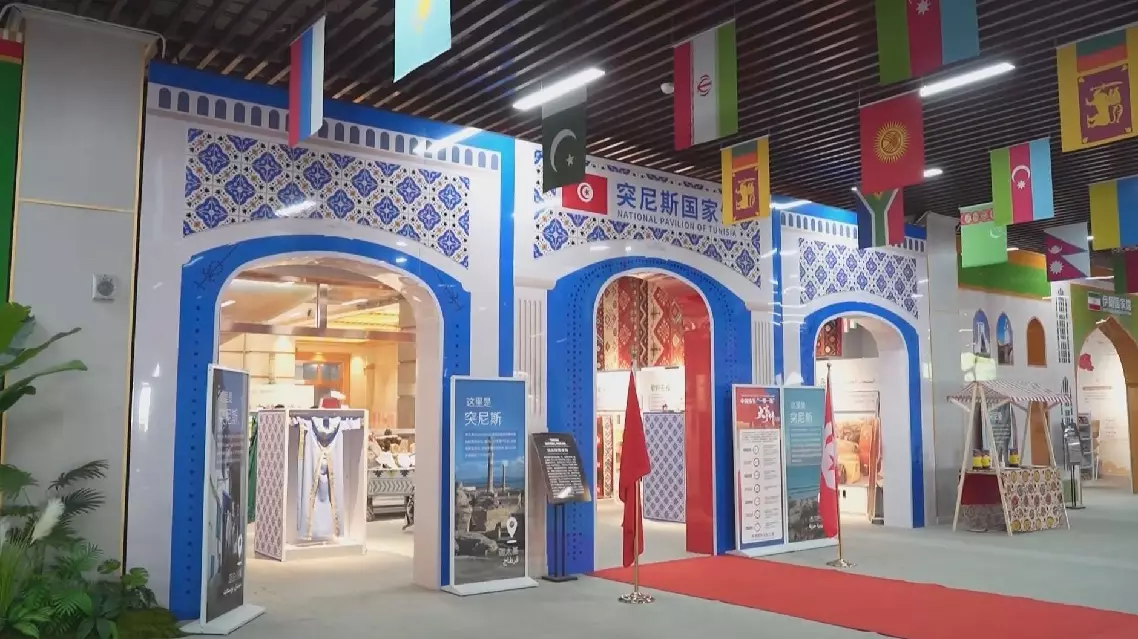
Tunisia opens National Pavilion in China to promote economic cooperation
China's movie industry is increasingly deriving its earnings from broader consumer economy.
Released during the 2025 summer season, the film "Nobody" became China's highest-grossing two-dimensional animated film -- and its success went beyond theaters.
Through licensing and brand partnerships, the movie has generated 2.5 billion yuan (about 358.3 million U.S. dollars) in retail sales to consumers, with more than 800 licensed products on the market.
Ranging from plush toys to food and home goods, the movie-related merchandise can be purchased from over 3,000 online and offline outlets.
Meanwhile, souvenir stores are crowded at Shanghai Disneyland's Zootopia themed land, with hats, plush toys, and collectibles seeing steady demand from visitors.
"China's film industry is no longer defined by box office revenue alone. It has become a new growth engine that links and energizes multiple cultural sectors. At the heart of every successful film is strong storytelling. High-quality productions create cultural value, which in turn enhances the commercial value of intellectual property and opens up new consumption opportunities. I believe China's film industry delivered an outstanding performance in the past year," said Chen Xiaoda, vice dean of Shanghai Vancouver Film School.
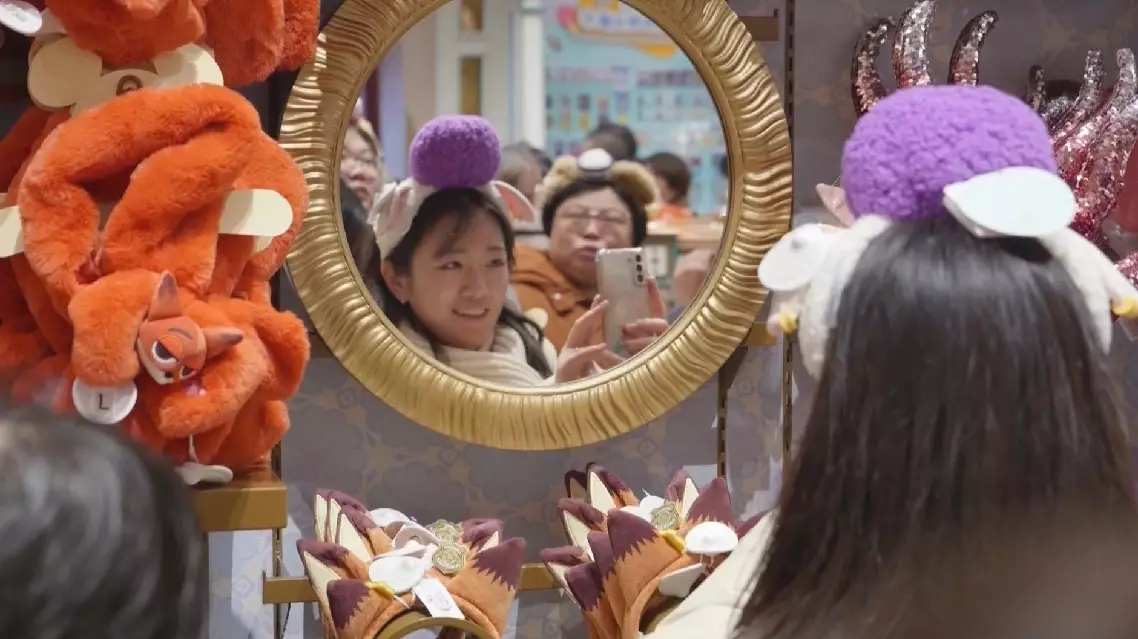
Film IP fuels expansion of consumer market