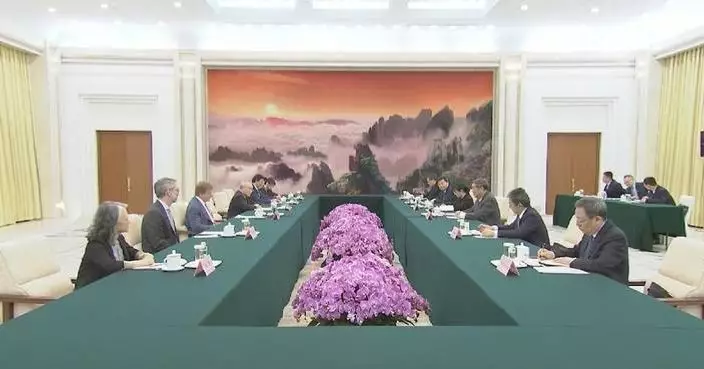
Shanghai's Pudong New Area on Friday unveiled a package of new measures to promote high-level reform and opening, as it marks the 35th anniversary of its birth, a bold national initiative that turned an empty riverside into one of China's most dynamic engines.
The newly unveiled measures are mainly intended to attract foreign investment, and support young talents in innovation and entrepreneurship, with the launch of a number of service platforms for supporting corporate innovation, facilitating financing and helping Chinese enterprises go global.
"The purpose is to better cope with the complex and severe external environment through higher-level reform and opening up, and to accelerate the construction of a pioneer region for socialist modernization with more pragmatic and efficient actions," said Zheng Haiao, deputy director of the Shanghai Pudong New Area Development and Reform Commission. Established in 1990, the Pudong New Area has evolved into a hub of innovation and progress from a stretch of farmland on the east bank of the Huangpu River, symbolizing the spirit of China's reform and opening-up.
In 2024, the GDP of the Pudong New Area reached 1.78 trillion yuan (243 billion U.S. dollars), with the total output value of its major industrial enterprises reaching 1.32 trillion yuan (180.8 billion U.S. dollars), the business revenue of its social service sector exceeding 1.2 trillion yuan (164.38 billion U.S. dollars), and its imports and exports coming in at 2.6 trillion yuan (356.15 billion U.S. dollars).
Pudong's industrial capacity and core competitiveness were further improved as the size of its three leading industries, namely integrated circuits, biomedicine, and artificial intelligence exceeded 830 billion yuan (113.7 billion U.S. dollar) last year.
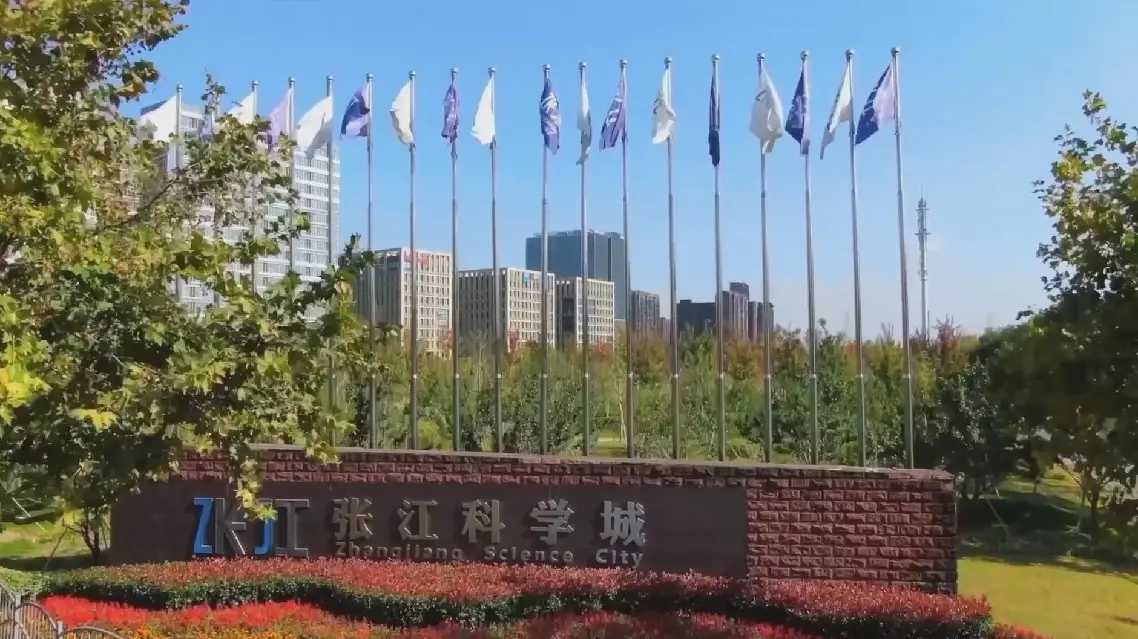
In the Zhangjiang Science City in Pudong, local startups are breaking new ground in robotics and artificial intelligence.
"Pudong provides a relatively three-dimensional environment with universities, research institutions, chipmakers, and AI firms all within reach. It's this three-dimensional ecosystem that helps accelerate the transformation of research and development achievements in the true sense," said Gu Jie, CEO of Shanghai Fourier Intelligence Co., Ltd., an industry-leading general purpose robotics company.
As an important carrier for promoting innovation and entrepreneurship services in the Zhangjiang Science City, Zhangjiang Hi-Tech 895 Incubator has incubated more than 1,000 local innovative companies.
Over time, Pudong, a test bed for policy and system innovation, has also emerged as a bridge linking China with the global economy. In Lujiazui of Pudong, hundreds of multinational companies established their Asia-Pacific headquarters.
Shanghai MAHLE Thermal Systems Co., Ltd., headquartered in Germany, moved to the Pudong New Area in 2004. Over the past 21 years, its sales have climbed from 200 million yuan (27.4 million U.S. dollars) in its early days to nearly 4 billion yuan (550 million U.S. dollars) today. It has established nine factories and a research and development center in China.
"Because of Pudong's comprehensive business-friendly positioning, its policies for international enterprises, human resources, and corporate services are very consistent with our (development) strategy in all aspects," said Lydia Shen Liangyu, president of MAHLE China.
Today, Pudong is home to 28,000 foreign-invested enterprises and branches. It's not only a gateway for foreign investment, but also a launchpad for Chinese enterprises going global.
Looking forward, Pudong will strive to enhance local enterprises' global competitiveness, planning to foster 400 pioneer enterprises that are global market-oriented, and become home to the headquarters of 100 enterprises that are global market-oriented by the end of the 15th Five-Year Plan period (2026-2030).
Shanghai's Pudong unveils new measures to propel high-level reform, opening up