DAMASCUS, Syria (AP) — Syria’s president on Saturday received a Republican member of Congress in the first visit to the country by American legislators since the ouster of former leader Bashar Assad in December.
State news agency SANA did not give details about the meeting between President Ahmad al-Sharaa and Rep. Cory Mills of Florida in the capital Damascus. It said the meeting was attended by Syrian Foreign Minister Asaad al-Shibani, and comes in the wake of calls by Syria's new rulers for the lifting of sanctions imposed by the U.S. and other Western nations early in the conflict.
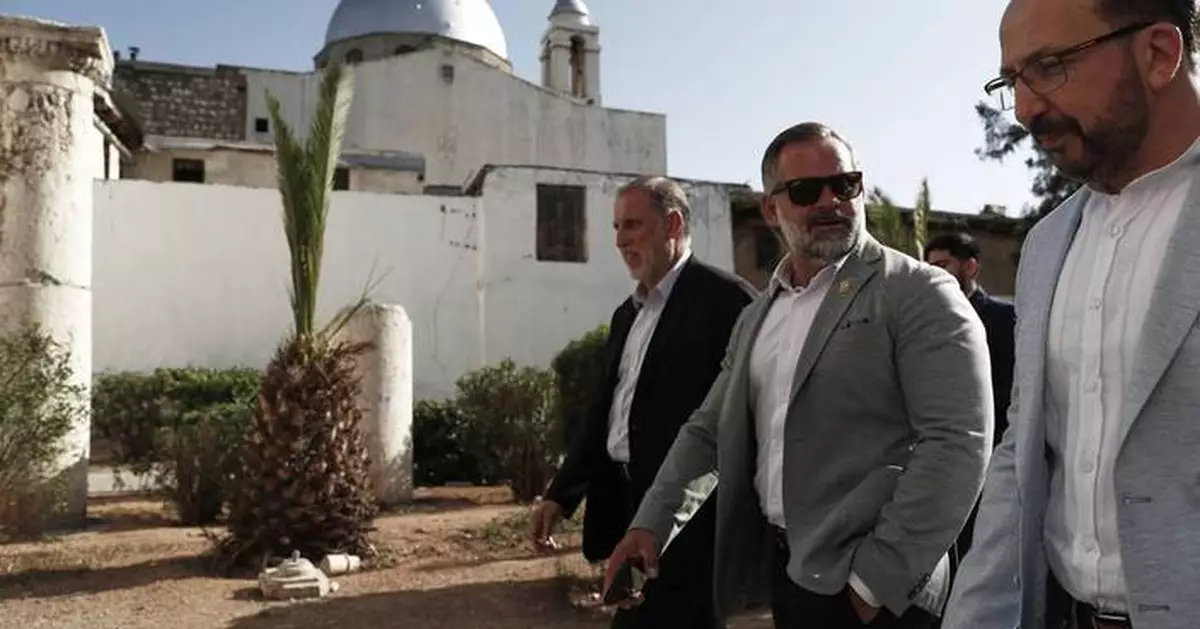
Since arriving in Syria on an unofficial visit Friday, Mills and Rep. Marlin Stutzman of Indiana toured parts of Damascus, including the old quarter as well as one of the oldest synagogues in the world that was badly damaged and looted during the country’s 14-year conflict that killed half a million people.
On Saturday, Stutzman visited the country’s notorious Saydnaya Prison near Damascus, where tens of thousands of people were subjected to killings and torture during the 54-year rule of the Assad family.
Al-Sharaa’s Islamist Hayat Tahrir al-Sham group led the offensive that captured Damascus in early December, forcing Assad and his family to flee to his ally Russia, where he was given asylum.
Days after Assad was removed from power, the then-Biden administration decided not to pursue a $10 million reward it had offered for the capture of al-Sharaa, a former leader of al-Qaida’s branch in Syria. The announcement in December followed a meeting between al-Sharaa and then top U.S. diplomat for the Middle East, Barbara Leaf, who led the first U.S. diplomatic delegation into post-Assad Syria.
The Trump administration has yet to officially recognize the current Syrian government and Washington has not yet lifted harsh sanctions that were imposed during Assad’s rule.
After visiting the prison, Stutzman told reporters that he saw that the people of Syria now have energy and optimism, adding that as the country's new government makes decisions, “it will be very helpful having the United States understand what the changes are here and that the sanctions lifted would be a huge economic boom.” Any move to lift sanctions “would be President Trump’s decision,” he said.
“As a member of Congress, I can go back home and share with my colleagues, share with the president and others, and tell the story of the changes that are happening in Syria and we want to be here to support that,” Stutzman said. “We would not want to see Syria fall back in the hands of another dictator.”
After the fall of Assad, the U.S. eased some restrictions on Syria to allow the entry of humanitarian aid. The U.S. Treasury issued a general license, lasting six months, that authorizes certain transactions with the Syrian government, including some energy sales and incidental transactions.
Syrian officials have been calling for the lifting of Western sanctions but the U.S. administration has been demanding steps by the country’s new authorities including protecting the rights of religious and ethnic minorities.
“I think lifting the sanctions will be very beneficial and I understand why the people that I’m encountering and traveling with want the sanctions lifted,” Stutzman said.
Mroue reported from Beirut.
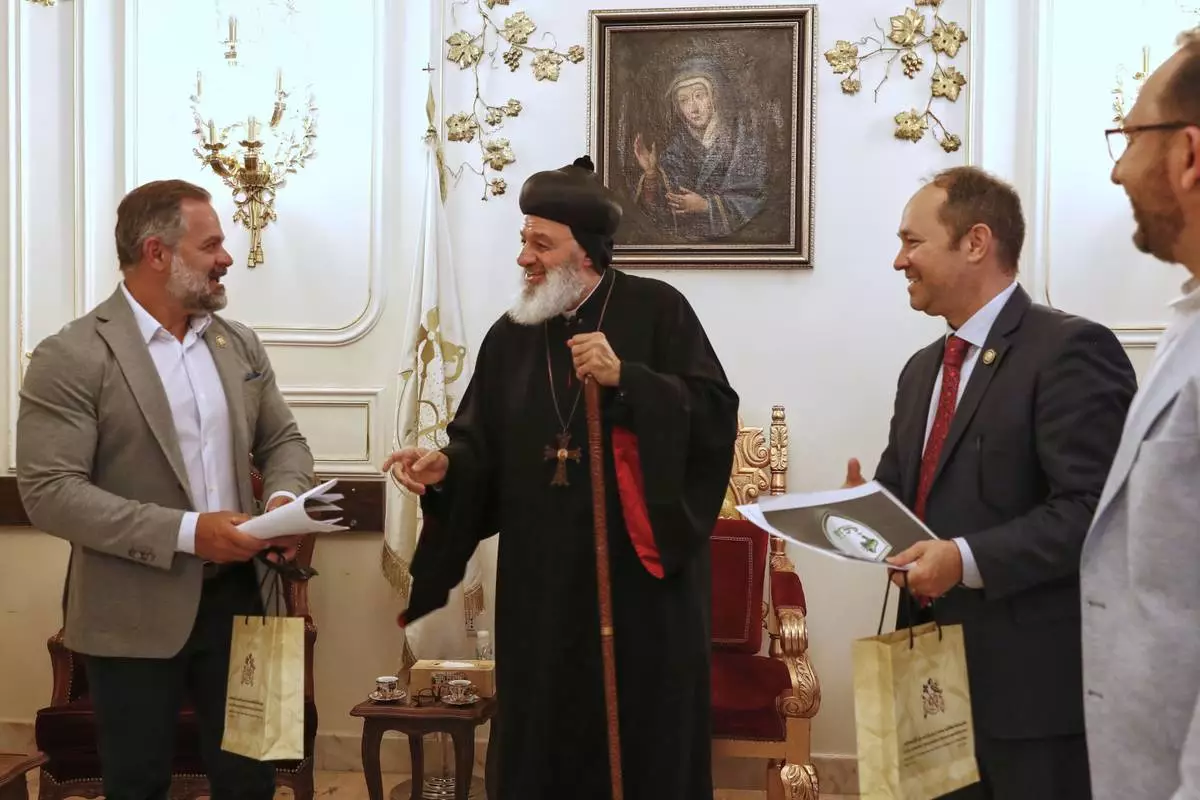
U.S. congressmen Cory Mills (R-FL), left, and Martin Stutzman (R-IN), second from right, meet Mor Ignatius Aphrem II, a Syrian-American Christian prelate serving as the Patriarch of the Syriac Orthodox Church in Damascus Friday, April 18, 2025. Mills and Stutzman arrived on an unofficial visit organized by a Syrian-American nonprofit, the first visit by U.S. legislators since the fall of former Syrian President Bashar Assad in December.(AP Photo/Omar Sanadiki)
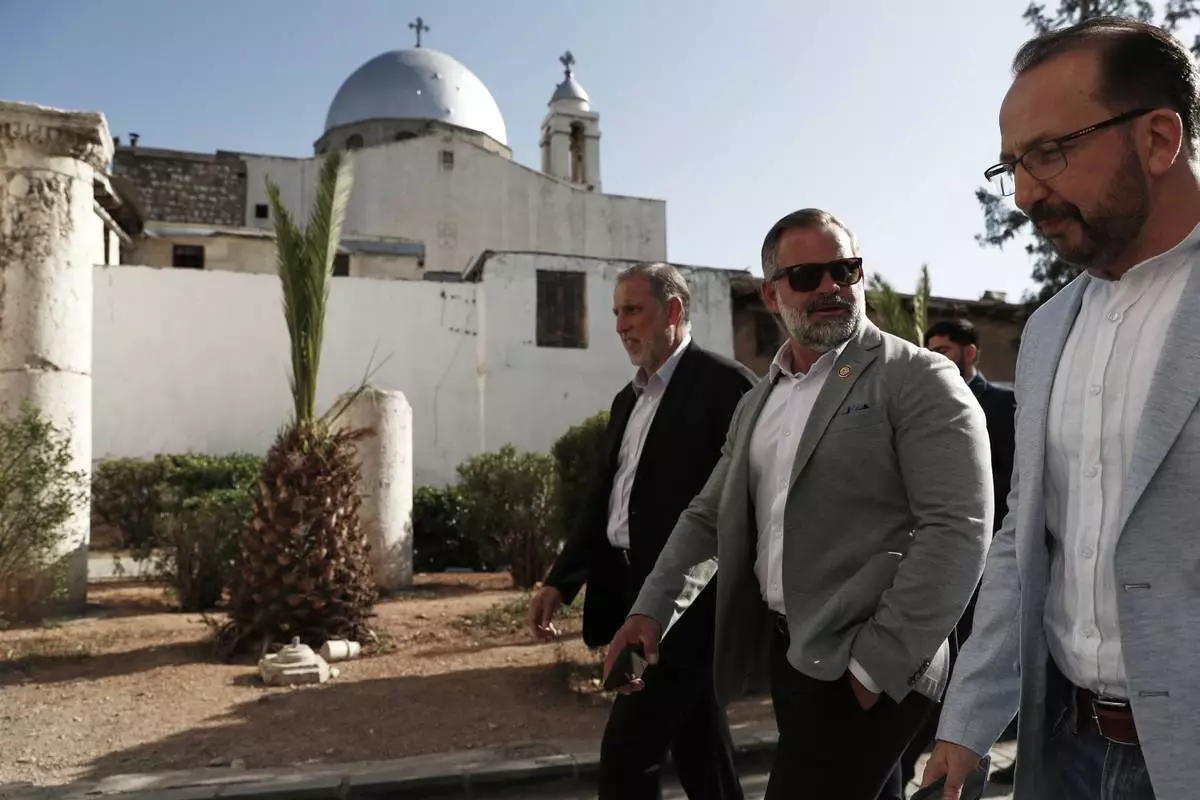
Accompanied by unidentified members of the delegation, U.S. congressman Cory Mills (R-FL), second from right, walks in the Old City of Damascus Friday, April 18, 2025. Mills is in Damascus in an unofficial visit organized by a Syrian-American nonprofit, the first visit by U.S. legislators since the fall of former Syrian President Bashar Assad in December.(AP Photo/Omar Sanadiki)
WASHINGTON (AP) — The Trump administration proposed 25% tariffs on imports from Brazil, charging that the world’s 10th-biggest economy engages in trade practices that are “unreasonable’’ and that “burden or restrict U.S. commerce.’’
Brazil's President Luiz Inácio Lula da Silva said he received the decision “with indignation.” He also blamed the decision by the U.S. administration on his rival in October's elections, Sen. Flávio Bolsonaro, who visited Washington last week. The senator is the son of former President Jair Bolsonaro, once nicknamed “the Trump of the Tropics” by his allies.
The announcement late Monday came after an investigation by the Office of the U.S. Trade Representative, charging Brazil with lax anti-corruption enforcement and unfair tariffs of its own, among other things.
The U.S. has had a goods trade surplus with Brazil for years.
U.S Trade Representative Jamieson Greer said that he and President Donald Trump had “constructive’’ meetings with Lula and other Brazilian officials. But he said that “we continue to have substantial differences in resolving the issues identified in this investigation.’’
Lula on Tuesday cited other reasons for the punishing tariff proposal. For the first time he named an American official as a hurdle to his relations with Trump and once again he threatened to retaliate.
“I spoke to President Trump for three hours, and that Marco Rubio guy, the head of the State Department, he is anti-Latin American,” Lula said. “He is a deadly enemy of Cuba, a deadly enemy of many Latin American countries. I already told Trump that he does not like Brazil.”
The U.S. State Department did not immediately respond a request for comment from The Associated Press on Tuesday.
Brazil’s government said in a statement that its dialogue with American counterparts, which includes “personal involvement of Presidents Lula and Trump,” is being ”sabotaged by merely electoral and family matters” of the Bolsonaros.
It added that it hopes “the recommendations do not become effective tariffs.”
“But we stress we will adopt every measure that is capable of reducing the damage that might be caused to the national economy, to the jobs and the income of Brazilians,” the country's government said.
Last year, Trump had slapped Brazil with a 50% tariff, mainly to protest its prosecution of Jair Bolsonaro for trying to overturn his electoral defeat in 2022. His relationship with Lula seemed to have improved early May, when the Brazilian visited the White House.
But last week, the Trump administration designated two Brazilian gangs as terrorist organizations, after Sen. Bolsonaro's visit. Lula opposes the designation, which analysts say could bolster his political rival.
Greer’s office has scheduled a public hearing July 6 on the proposed tariffs.
Trade lawyer Ryan Majerus, a partner at King & Spalding, noted said that the administration’s plan excludes more than half of U.S. imports from Brazil, including aircraft and key minerals.
The Trump administration invoked Section 301 of the Trade Act of 1974 to launch the investigation into Brazil’s trade practices.
Sen. Bolsonaro travelled to meet officials in Washington last week in the wake of a scandal at home in which he admitted receiving funds from a disgraced banker. Another son, former lawmaker Eduardo Bolsonaro was also present.
“These sons of Bolsonaro can be worse than him. They are actually sell outs of our country, they went there to ask a foreign nation to meddle in Brazilian affairs,” Lula said in a speech to residents of the city of Catalao, south of capital Brasilia. “They are traitors.”
The U.S. Supreme Court ruled in February that Trump overstepped his authority by using a different law – the International Emergency Economic Powers Act (IEEPA) of 1977 – to impose sweeping tariffs on U.S. trading partners, including Brazil.
However, Section 301 tariffs have survived legal challenges, and the administration is likely to use that authority to impose other tariffs and to recoup some of the tax revenue lost when the Supreme Court rejected the IEEPA tariffs.
Brazil’s president said that during a visit to Washington early May, he handed Trump documents showing that the U.S. has a trade surplus with Brazil.
Documents published by the U.S. Trade Representative show that last year, U.S. exports to Brazil rose nearly 11% to $54.4 billion. Brazilian exports to the U.S. fell 5.7% to $39.9 billion, meaning the U.S. had a trade surplus of more than $14 billion.
The trade imbalance for services is more lopsided in favor of the U.S., with services exports in 2024 reaching $29.6 billion, quadruple the Brazilian services exports to the U.S.
“I am not going to cry about it,” Lula said. “If they (the U.S.) don’t want to buy from us, we will sell to someone else.”
China has been Brazil’s biggest trading partner for about a decade.
Mauricio Savarese reported from Sao Paulo.
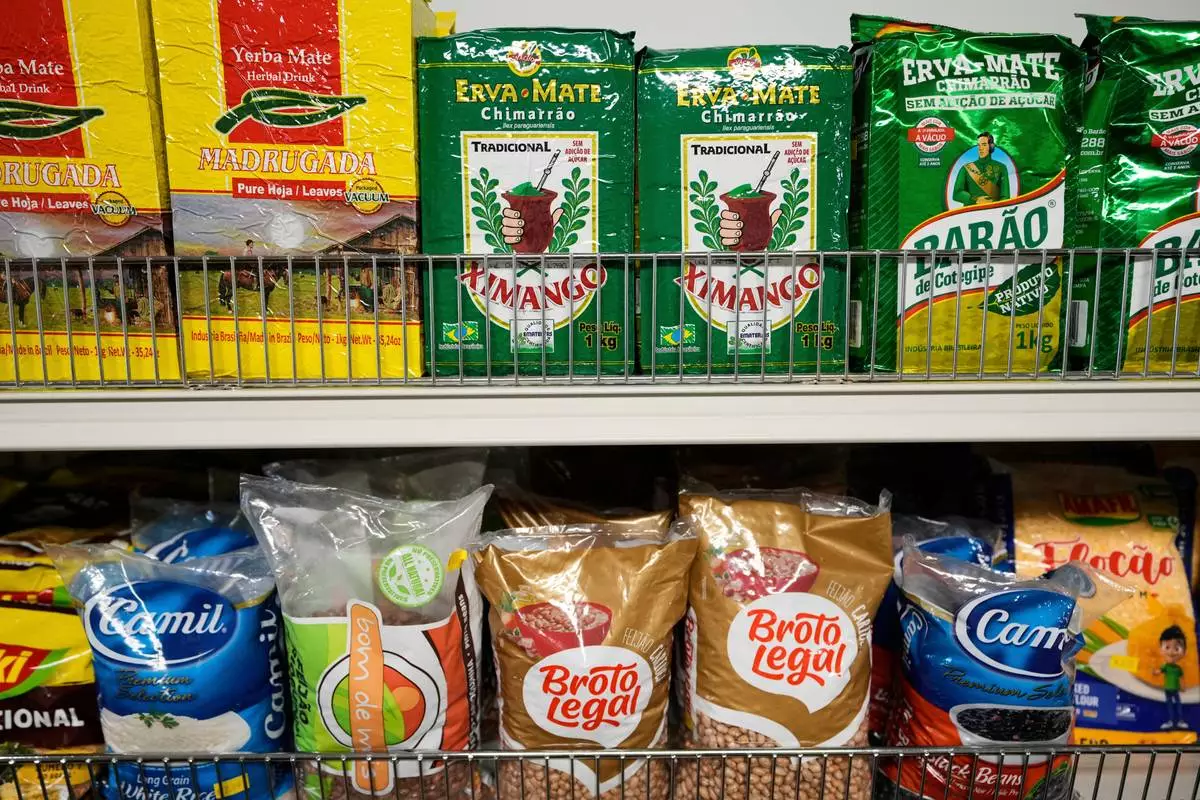
FILE - Goods imported from Brazil are displayed at Amazonia Brasil, a Brazilian goods store, in Newark, N.J., Aug. 7, 2025. (AP Photo/Seth Wenig, File)
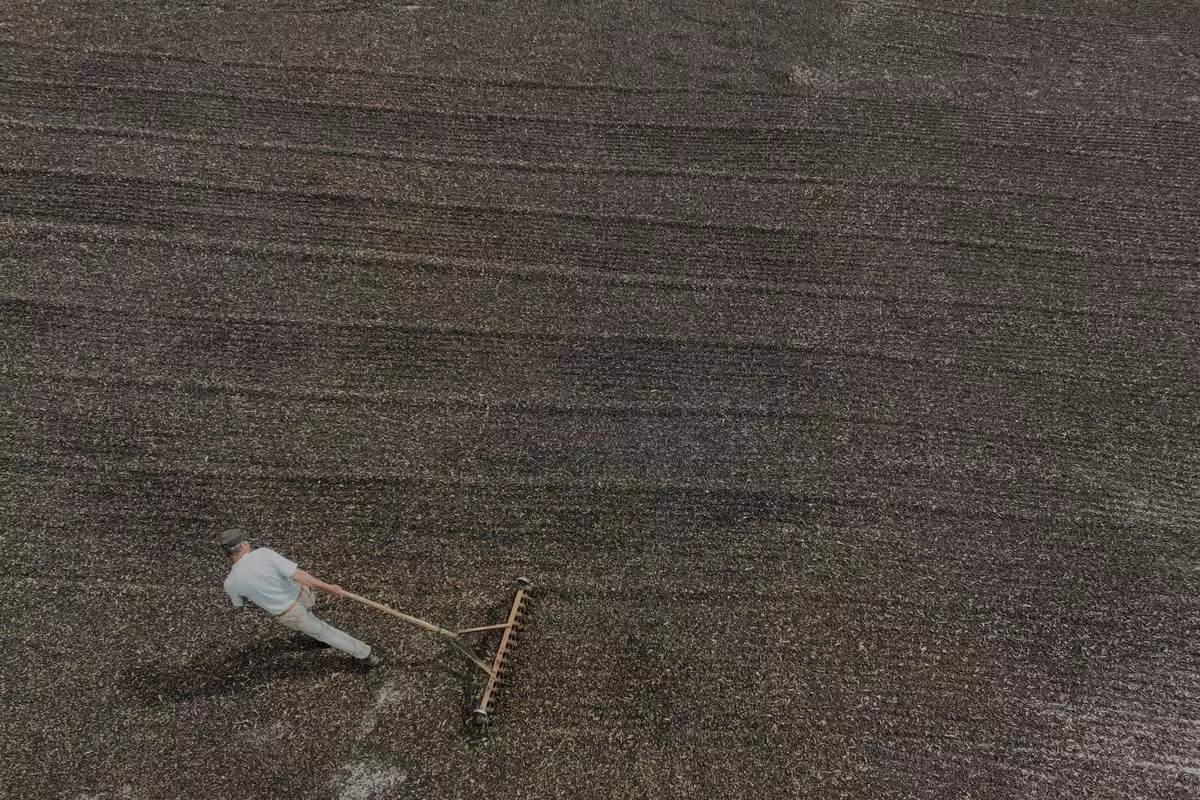
FILE - A farm employee processes coffee berries at Boa Esperanca farm in Braganca Paulista, Brazil, Aug. 4, 2025. (AP Photo/Andre Penner, File)