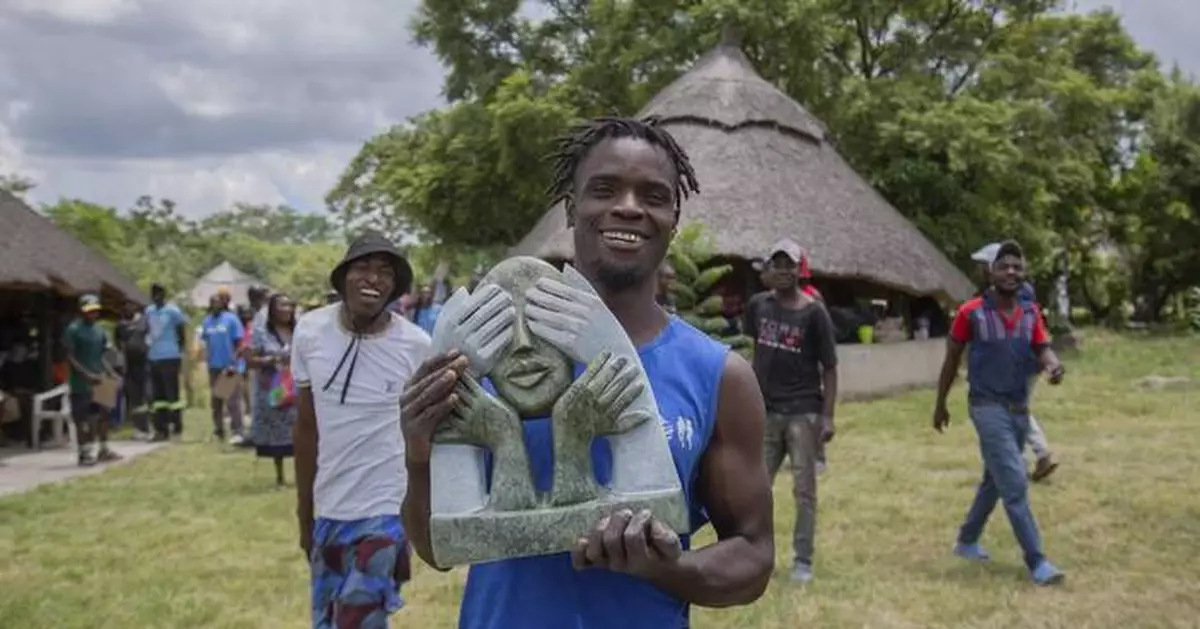
CHITUNGWIZA, Zimbabwe (AP) — A pair of white hands blinding a Black face. A smiling colonizer with a Bible, crushing the skull of a screaming native with his boot. Chained men in gold mines, and a pregnant woman.
These stone sculptures from Zimbabwe will take center stage at an upcoming exhibition at Oxford University in Britain, aiming to “contextualize” the legacy of British imperialist Cecil John Rhodes with depictions of religious deception, forced labor and sexual abuse.
Click to Gallery
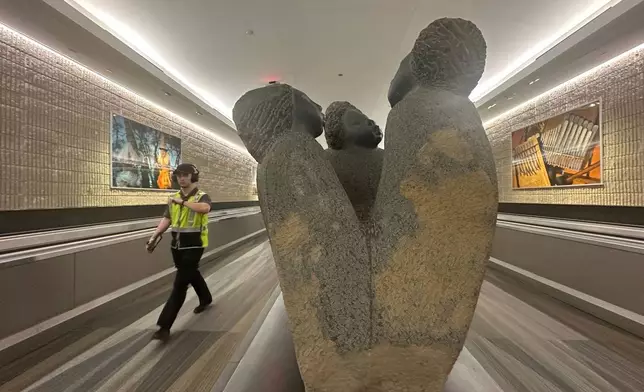
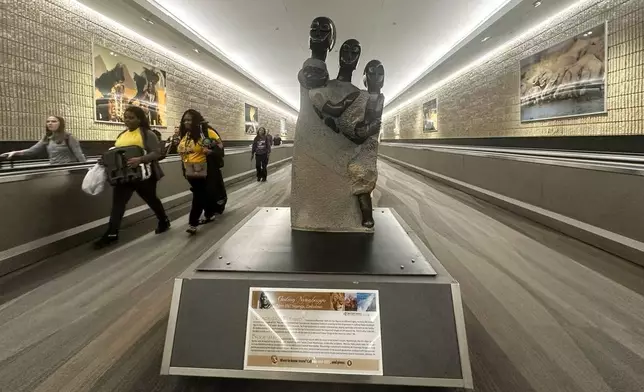
A person walks by a Zimbabwean stone art/sculpture piece at Hartsfield-Jackson Atlanta International Airport, Friday, Feb. 28, 2025, in Atlanta. (AP Photo/Ravi Nessman)
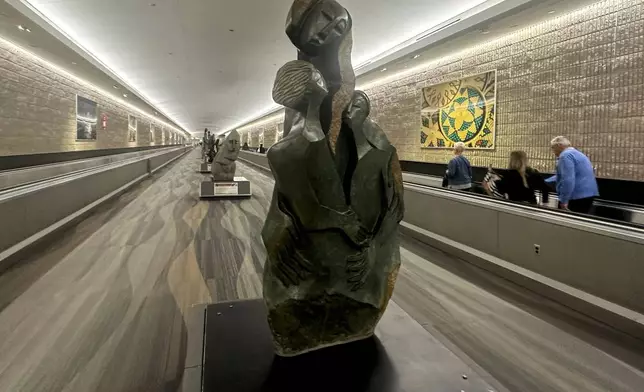
People walk by Zimbabwean sculpture piece at Hartsfield-Jackson Atlanta International Airport, Friday, Feb. 28, 2025, in Atlanta. (AP Photo/Ravi Nessman)
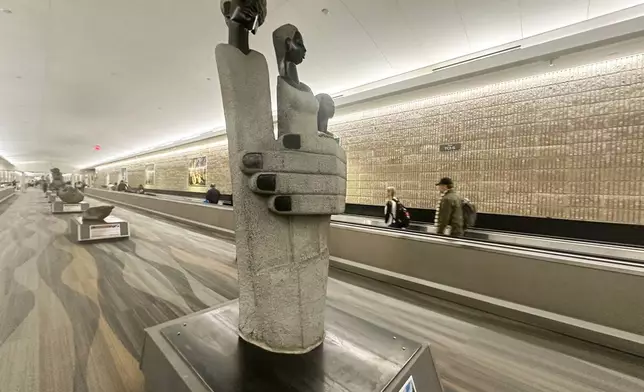
People walk by a Zimbabwean sculpture piece at Hartsfield-Jackson Atlanta International Airport, Friday, Feb. 28, 2025, in Atlanta. (AP Photo/Ravi Nessman)
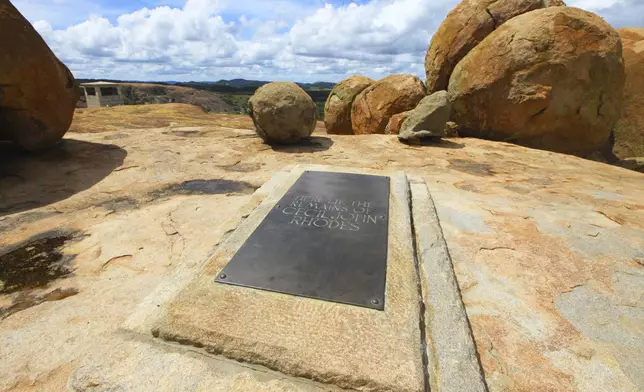
FILE - The burial site of Cecil John Rhodes is seen at Matobo National Park in Zimbabwe, Feb. 26, 2017. (AP Photo/Tsvangirayi Mukwazhi, file)
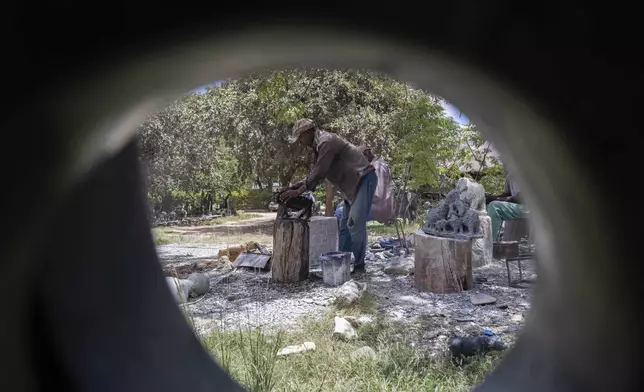
A sculptor works on a piece that will be part of an upcoming exhibition at Oxford University aiming to contextualize the legacy of British imperialist Cecil John Rhodes, at the Chitungwiza Arts Centre near Harare, Zimbabwe, on March 4, 2025. (AP Photo/Aaron Ufumeli)
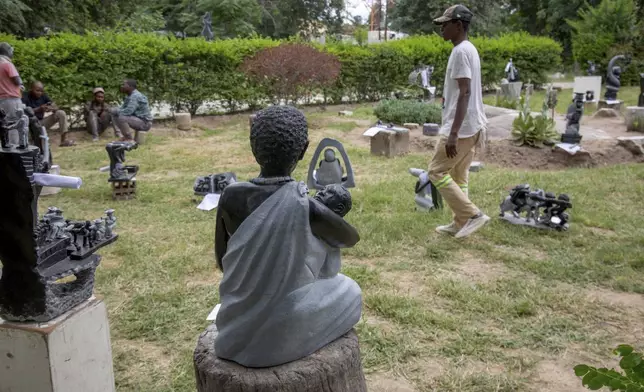
People walk past sculptures that will be part of an upcoming exhibition at Oxford University aiming to contextualize the legacy of British imperialist Cecil John Rhodes, at the Chitungwiza Arts Centre near Harare, Zimbabwe, Tuesday, March 4, 2025. (AP Photo/Aaron Ufumeli)
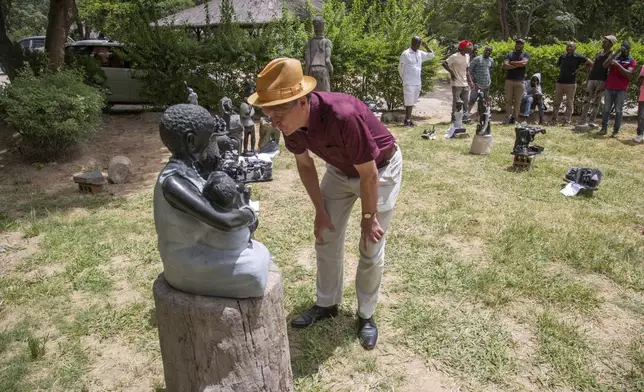
Richard Pantlin, founder of the Oxford Zimbabwe Arts Project, checks a sculpture that will be part of an upcoming exhibition at Oxford University aiming to contextualize the legacy of British imperialist Cecil John Rhodes, at the Chitungwiza Arts Centre near Harare, Zimbabwe, March 4, 2025. (AP Photo/Aaron Ufumeli)
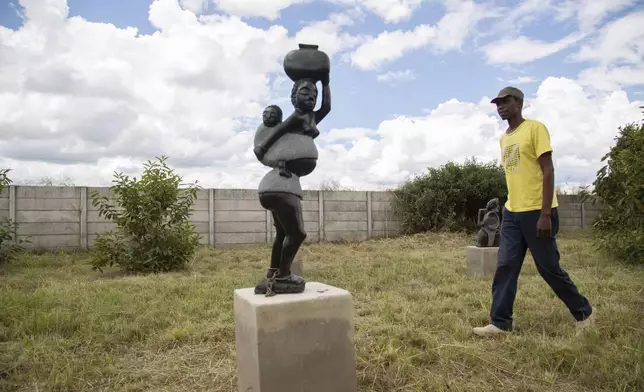
Derrick Fombe walks by his winning sculpture that will be part of an upcoming exhibition at Oxford University aiming to contextualize the legacy of British imperialist Cecil John Rhodes, at the Chitungwiza Arts Centre, near Harare, Zimbabwe, on March 8, 2025. (AP Photo/Aaron Ufumeli)
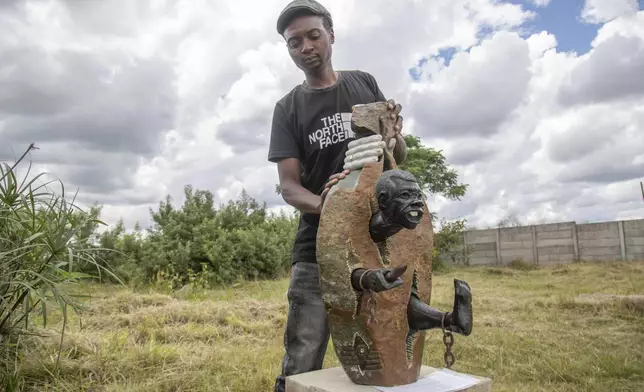
Gift Mutsauni holds his winning sculpture that will be part of an upcoming exhibition at Oxford University aiming to contextualize the legacy of British imperialist Cecil John Rhodes at the Chitungwiza Arts Centre near Harare, Zimbabwe, on March 8, 2025. (AP Photo/Aaron Ufumeli)
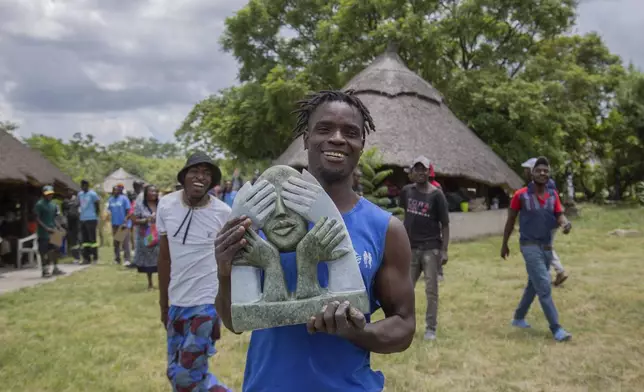
Wallace Mkanka holds his winning sculpture that will be part of an upcoming exhibition at Oxford University aiming to contextualize the legacy of British imperialist Cecil John Rhodes, at the Chitungwiza Arts Centre near Harare, Zimbabwe, on March 8, 2025. (AP Photo/Aaron Ufumeli)
Rhodes conquered large parts of southern Africa in the late 19th century. He made a fortune in gold and diamond mining and grabbed land from the local population. His grave lies under a slab of stone atop a hill in Zimbabwe.
Oxford’s Oriel College, where the exhibition will be held in September, is a symbolic setting. A statue of Rhodes stands there despite protests against it since 2015. Rhodes, who died in 1902, was an Oriel student who left 100,000 pounds (now valued at about 10.5 million pounds, or $13.5 million) to the school. His influence endures through a scholarship for students from southern African countries.
For Zimbabwean stone carvers at Chitungwiza Arts Center near the capital, Harare, the exhibition is more than an opportunity for Western audiences to glimpse a dark history. It is also a chance to revive an ancient but struggling art form.
Stone sculpture, once a thriving local industry, has suffered due to vast economic challenges and declining tourism.
“This will boost business. Buyers abroad will now see our work and buy directly from the artists,” said sculptor Wallace Mkanka. His piece, depicting the blinded Black face, was selected as the best of 110 entries and will be one of four winning sculptures on display at Oxford.
Zimbabwe, meaning “House of Stone,” derives its identity from the Great Zimbabwe ruins, a 1,800-acre Iron Age city built with precision-cut stones delicately stacked without mortar. It is a UNESCO World heritage site.
The southern African country has long used stone sculpture as a form of storytelling to immortalize history. The craft survived close to a century of colonial rule that sought to erase local traditions, religion and art forms.
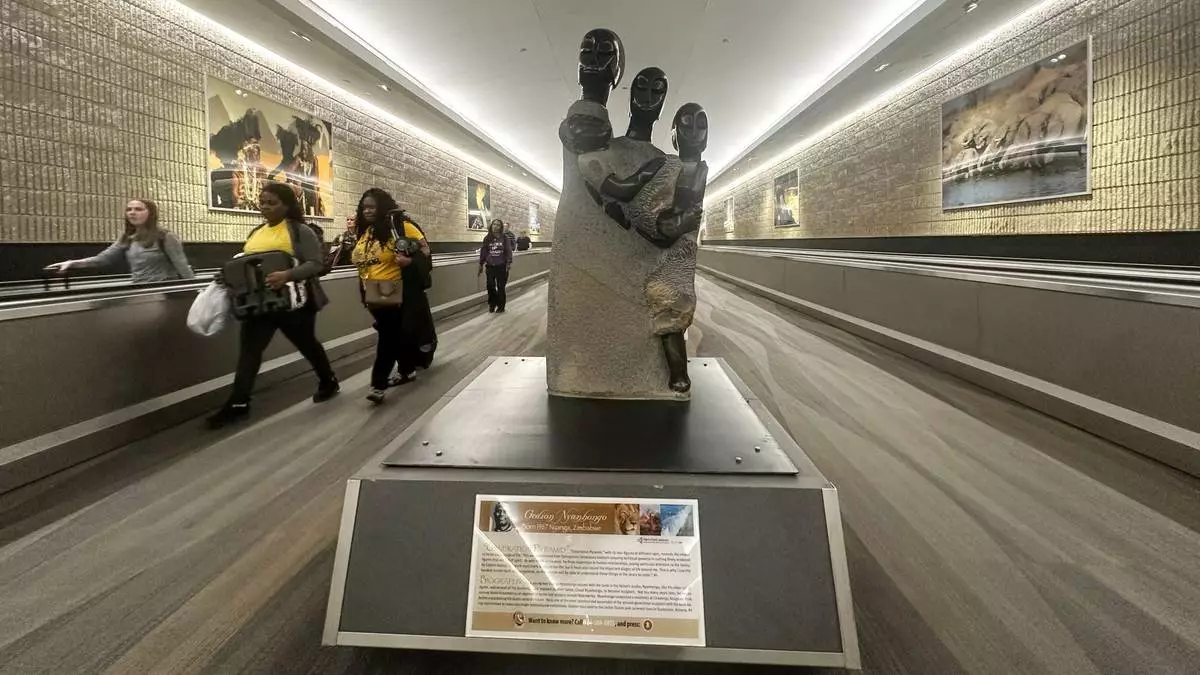
It thrived internationally instead. Thousands of pieces were plundered from Africa. Some later became subjects of repatriation campaigns. Others became prized by tourists and collectors. A permanent collection of 20 Zimbabwean stone sculptures is displayed in a pedestrian tunnel at Hartsfield-Jackson Atlanta International Airport, one of the world’s busiest.
At its peak following independence, Zimbabwe’s stone sculpture industry thrived, with local white farmers purchasing pieces for their homes and facilitating international sales.
“Customers were everywhere. They would pay up front, and I always had a queue of clients,” recalled Tafadzwa Tandi, a 45-year-old sculptor whose work will feature in the Oxford exhibition.
However, the industry has struggled over the past two decades.
Zimbabwe’s global image suffered after controversial land reforms more than two decades ago displaced over 4,000 white farmers to redistribute land to about 300,000 Black families, according to government figures. Late ruler Robert Mugabe defended the reforms as necessary to address colonial-era inequities, but they had unintended economic consequences.
“Many of our customers were friends of the farmers. That is where the problem originated from,” said Tendai Gwaravaza, chairman of Chitungwiza Arts Center.
At the center, the sound of grinders filled the air as sculptors carved. Hundreds of finished pieces, ranging from small carvings to life-sized sculptures, waited for buyers.
“The only solution now is to get out there to the markets ourselves. If we don’t, no one will,” Gwaravaza said.
The Oxford exhibition represents such an opportunity for exposure, he said.
It is the brainchild of the Oxford Zimbabwe Arts Partnership, formed in response to the “Rhodes Must Fall” campaign during the Black Lives Matter protests in the U.S.
The group, consisting of Zimbabwean artists, an Oxford alumnus and a professor of African history, initially envisioned a larger project titled “Oxford and Rhodes: Past, Present, and Future.” It included enclosing Rhodes’ statue in glass, installing 100 life-size bronze statues of African liberation fighters and creating a collaborative sculpture using recycled materials to represent the future.
However, the project required an estimated 200,000 pounds, far beyond available resources. Eventually, Oriel College provided 10,000 pounds for a scaled-down exhibition.
“It’s still my hope that one day it could happen, but for now we have just accepted something very small to make a start and to do something,” said Richard Pantlin, the Oxford alumnus and OZAP co-founder.
For more on Africa and development: https://apnews.com/hub/africa-pulse
The Associated Press receives financial support for global health and development coverage in Africa from the Gates Foundation. The AP is solely responsible for all content. Find AP’s standards for working with philanthropies, a list of supporters and funded coverage areas at AP.org.
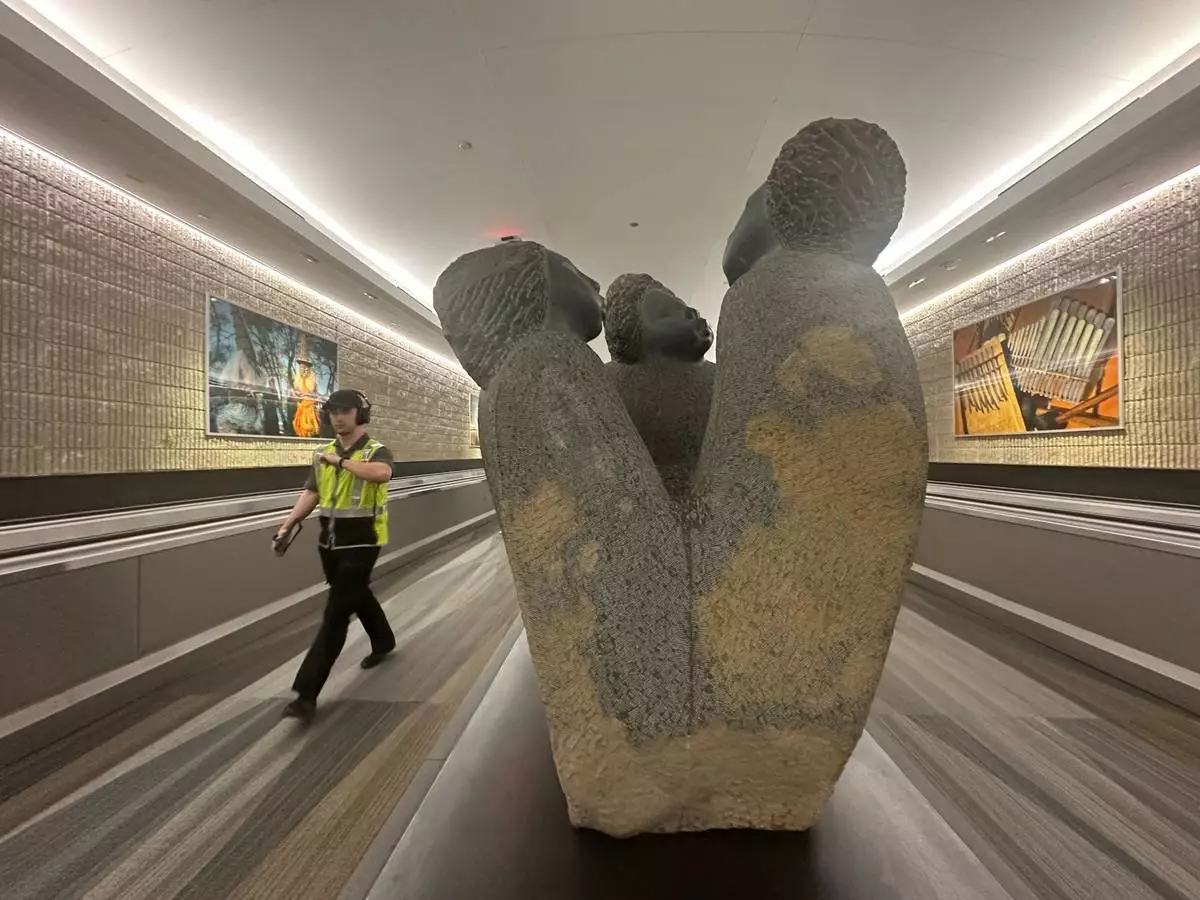
A person walks by a Zimbabwean stone art/sculpture piece at Hartsfield-Jackson Atlanta International Airport, Friday, Feb. 28, 2025, in Atlanta. (AP Photo/Ravi Nessman)
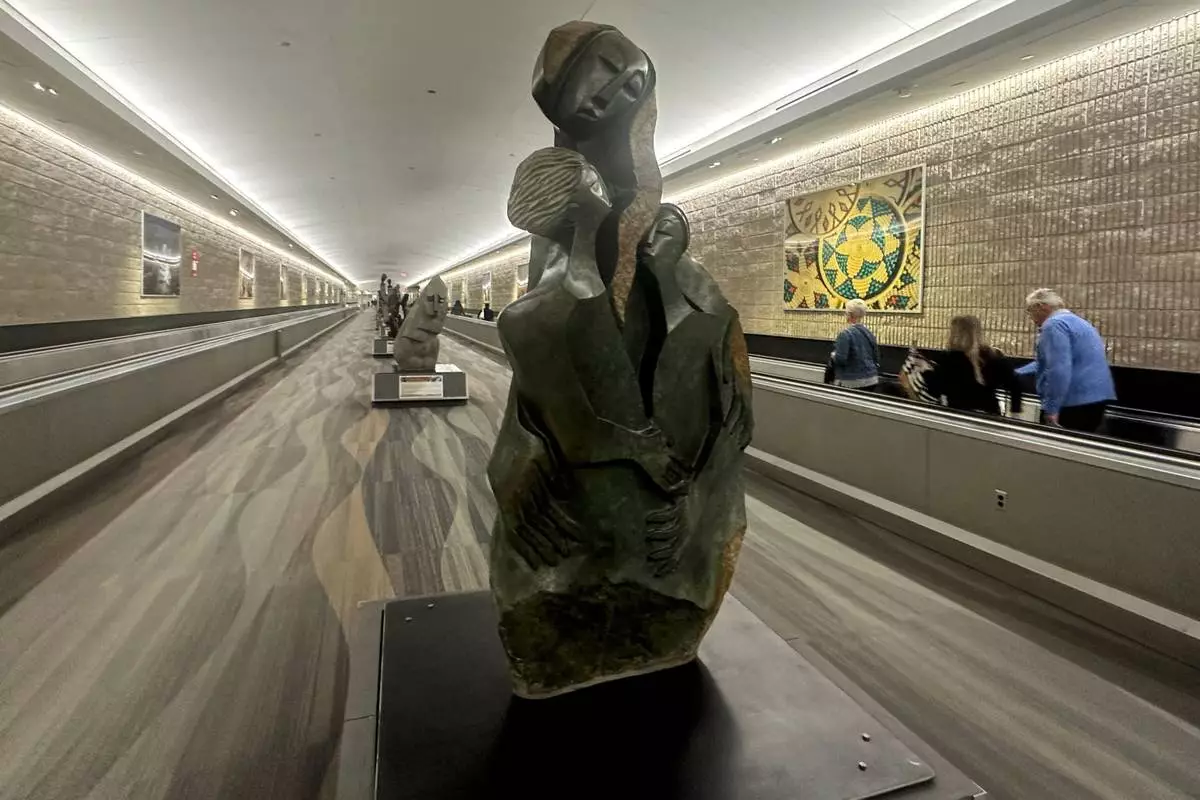
People walk by Zimbabwean sculpture piece at Hartsfield-Jackson Atlanta International Airport, Friday, Feb. 28, 2025, in Atlanta. (AP Photo/Ravi Nessman)
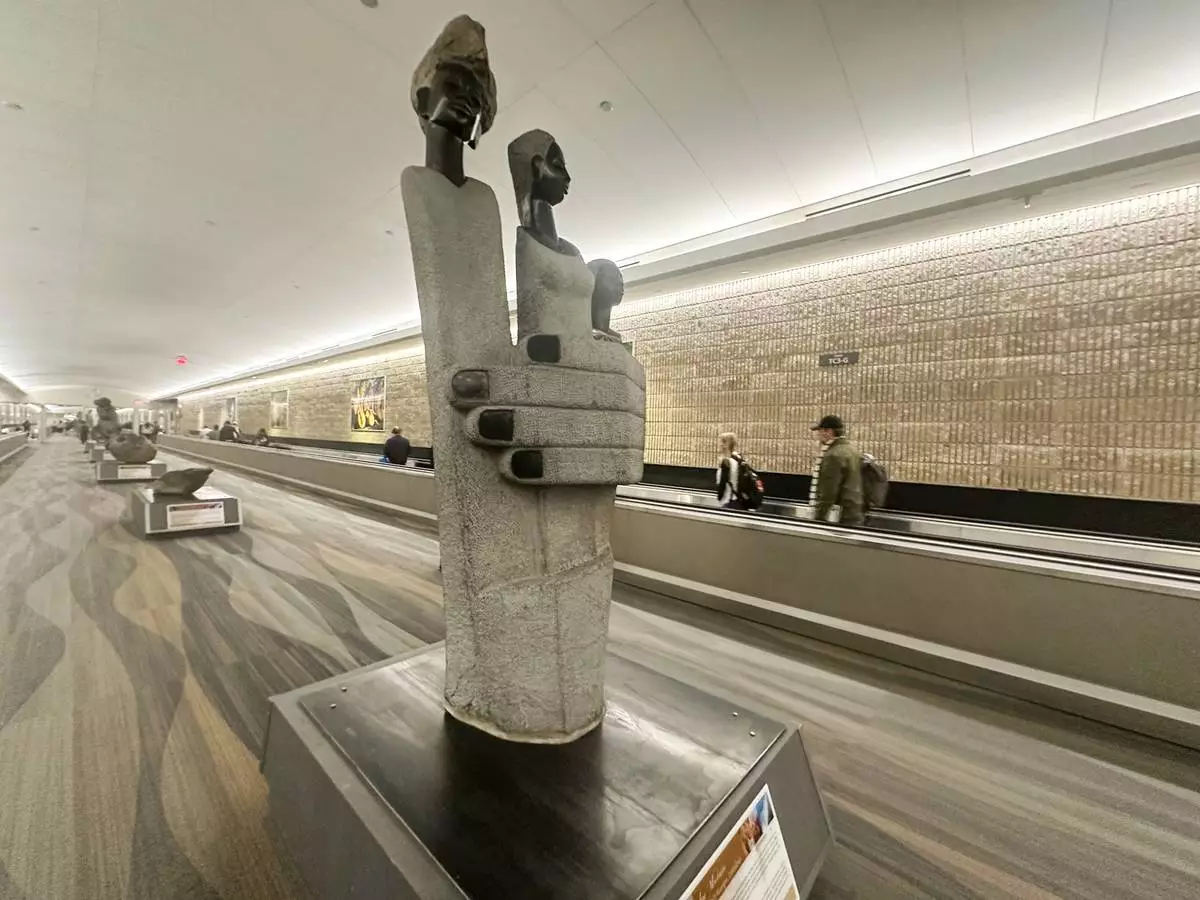
People walk by a Zimbabwean sculpture piece at Hartsfield-Jackson Atlanta International Airport, Friday, Feb. 28, 2025, in Atlanta. (AP Photo/Ravi Nessman)
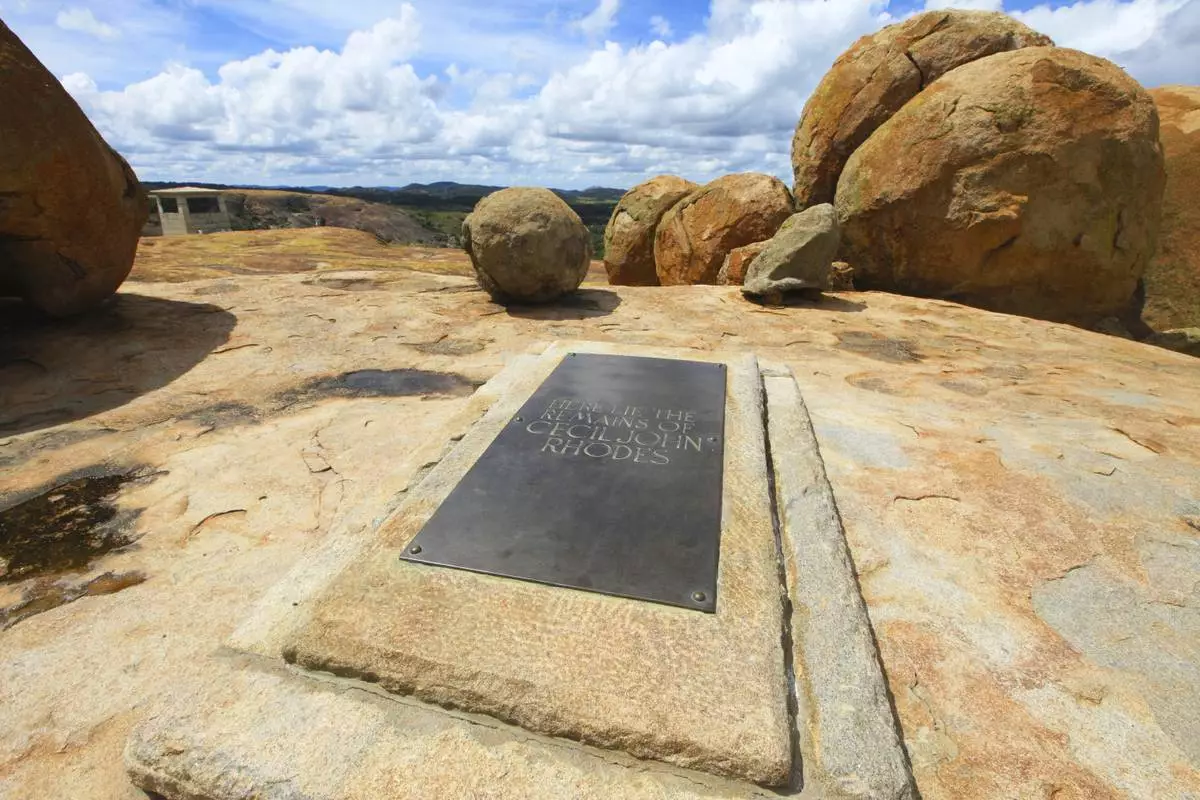
FILE - The burial site of Cecil John Rhodes is seen at Matobo National Park in Zimbabwe, Feb. 26, 2017. (AP Photo/Tsvangirayi Mukwazhi, file)
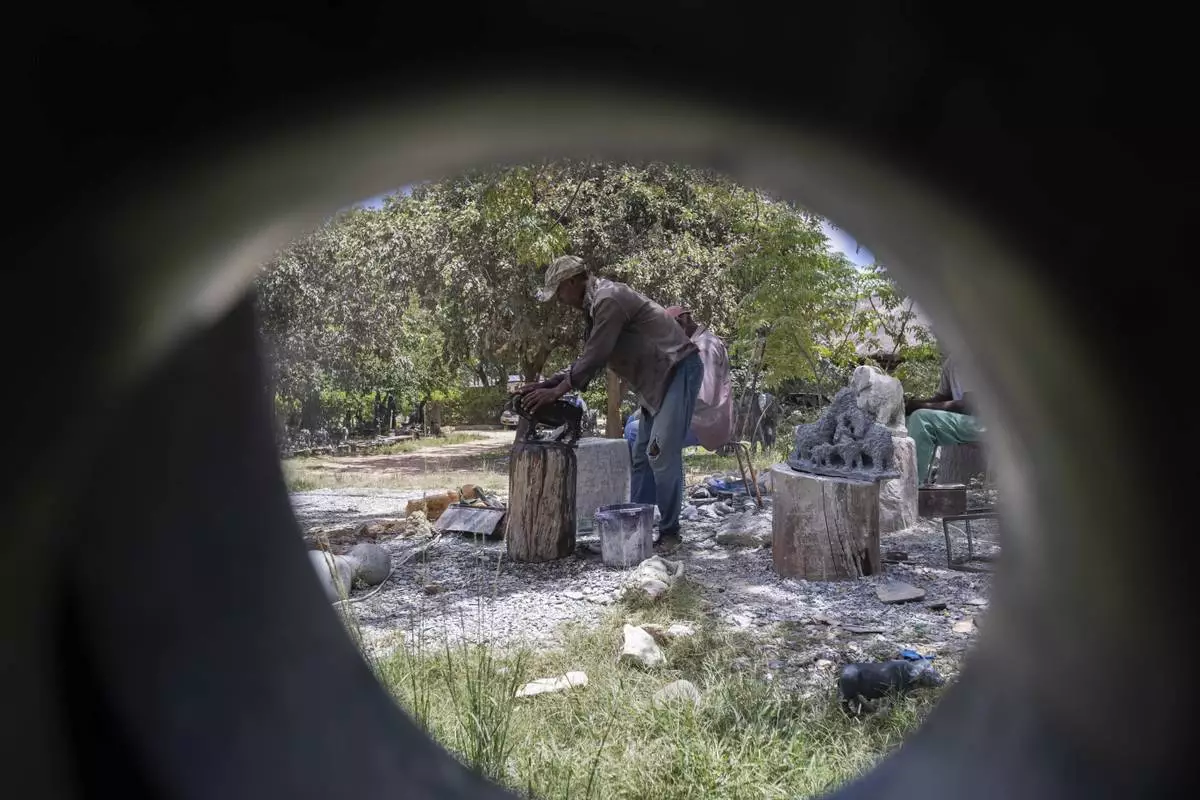
A sculptor works on a piece that will be part of an upcoming exhibition at Oxford University aiming to contextualize the legacy of British imperialist Cecil John Rhodes, at the Chitungwiza Arts Centre near Harare, Zimbabwe, on March 4, 2025. (AP Photo/Aaron Ufumeli)
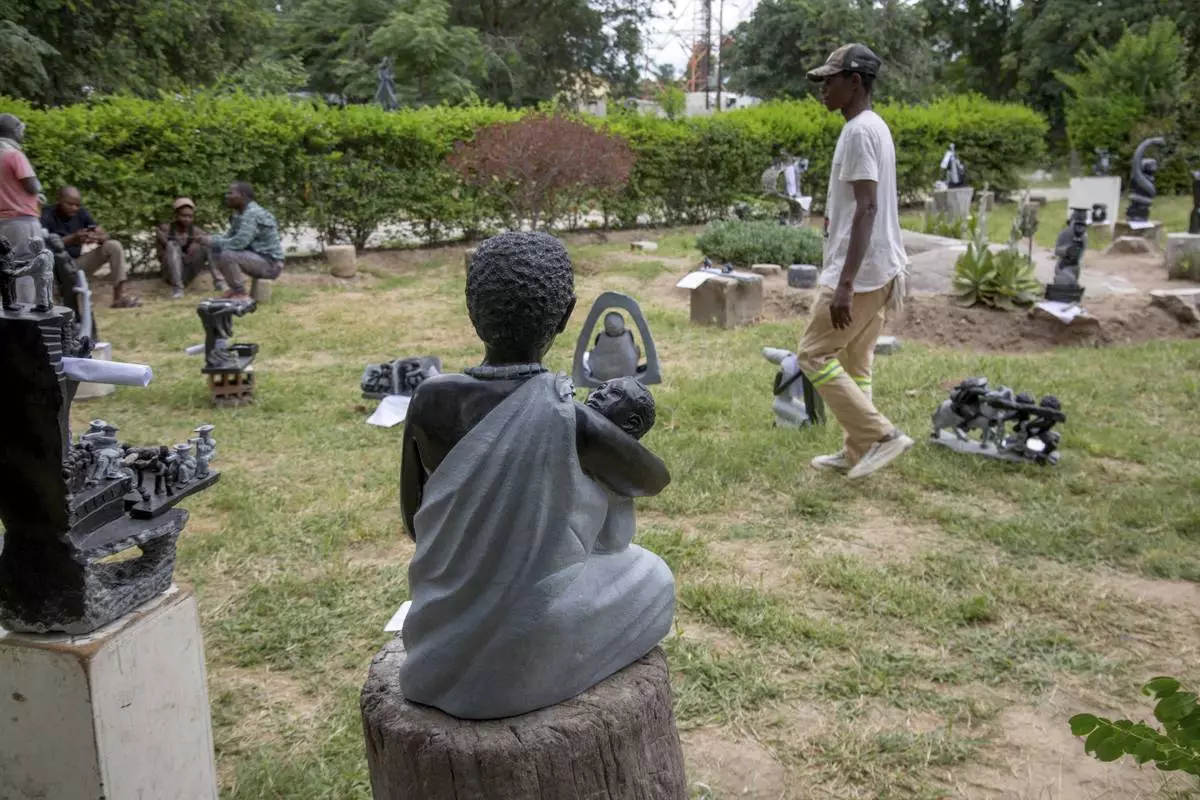
People walk past sculptures that will be part of an upcoming exhibition at Oxford University aiming to contextualize the legacy of British imperialist Cecil John Rhodes, at the Chitungwiza Arts Centre near Harare, Zimbabwe, Tuesday, March 4, 2025. (AP Photo/Aaron Ufumeli)
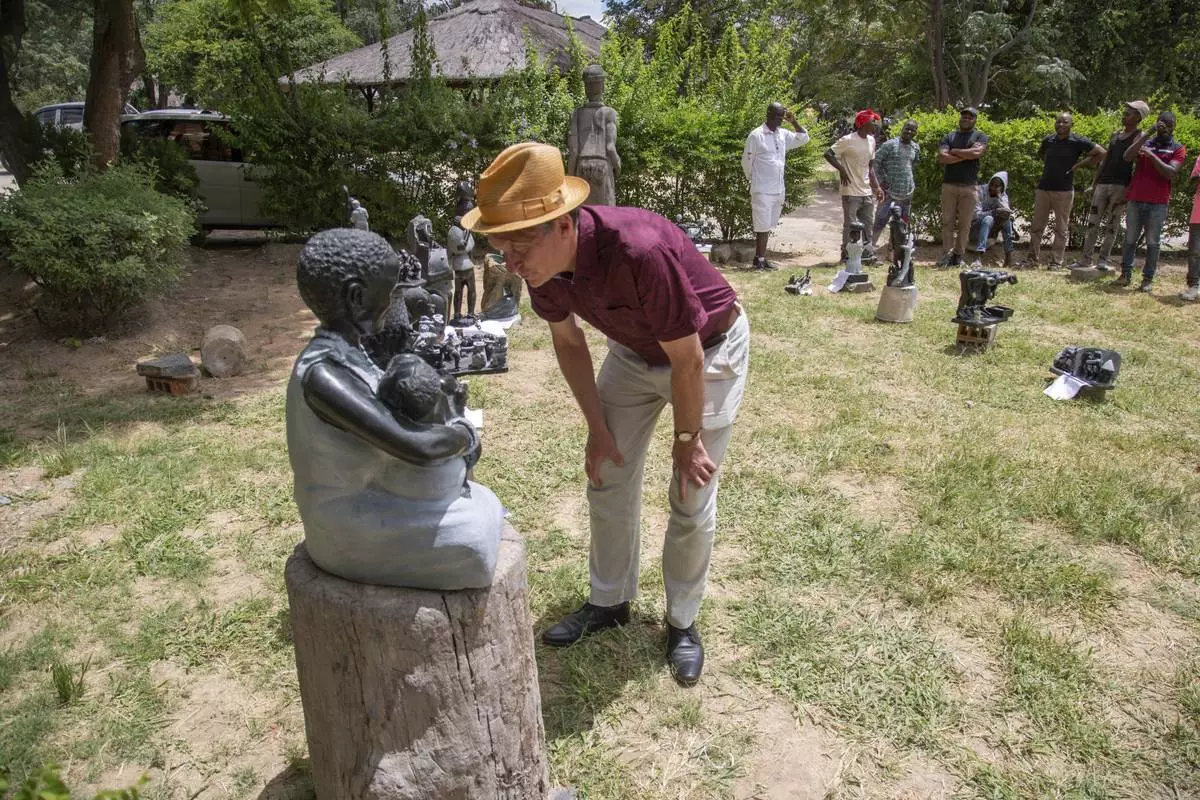
Richard Pantlin, founder of the Oxford Zimbabwe Arts Project, checks a sculpture that will be part of an upcoming exhibition at Oxford University aiming to contextualize the legacy of British imperialist Cecil John Rhodes, at the Chitungwiza Arts Centre near Harare, Zimbabwe, March 4, 2025. (AP Photo/Aaron Ufumeli)
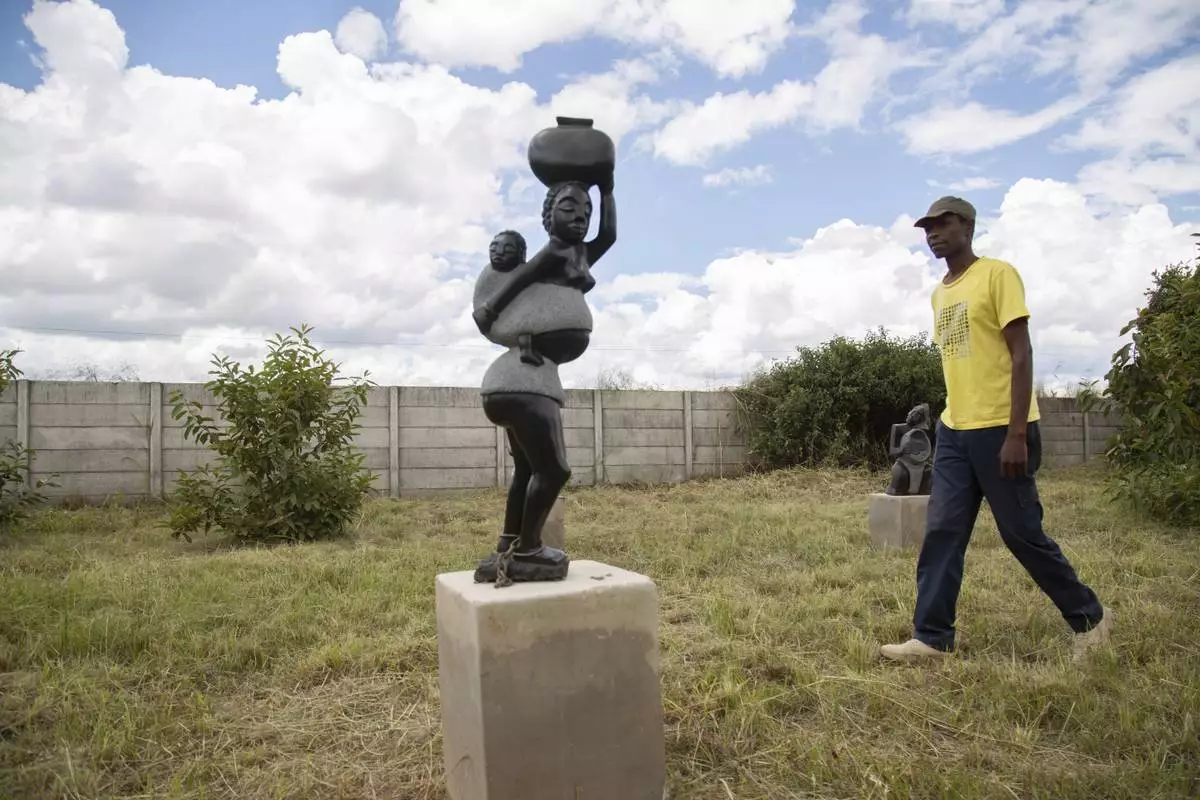
Derrick Fombe walks by his winning sculpture that will be part of an upcoming exhibition at Oxford University aiming to contextualize the legacy of British imperialist Cecil John Rhodes, at the Chitungwiza Arts Centre, near Harare, Zimbabwe, on March 8, 2025. (AP Photo/Aaron Ufumeli)
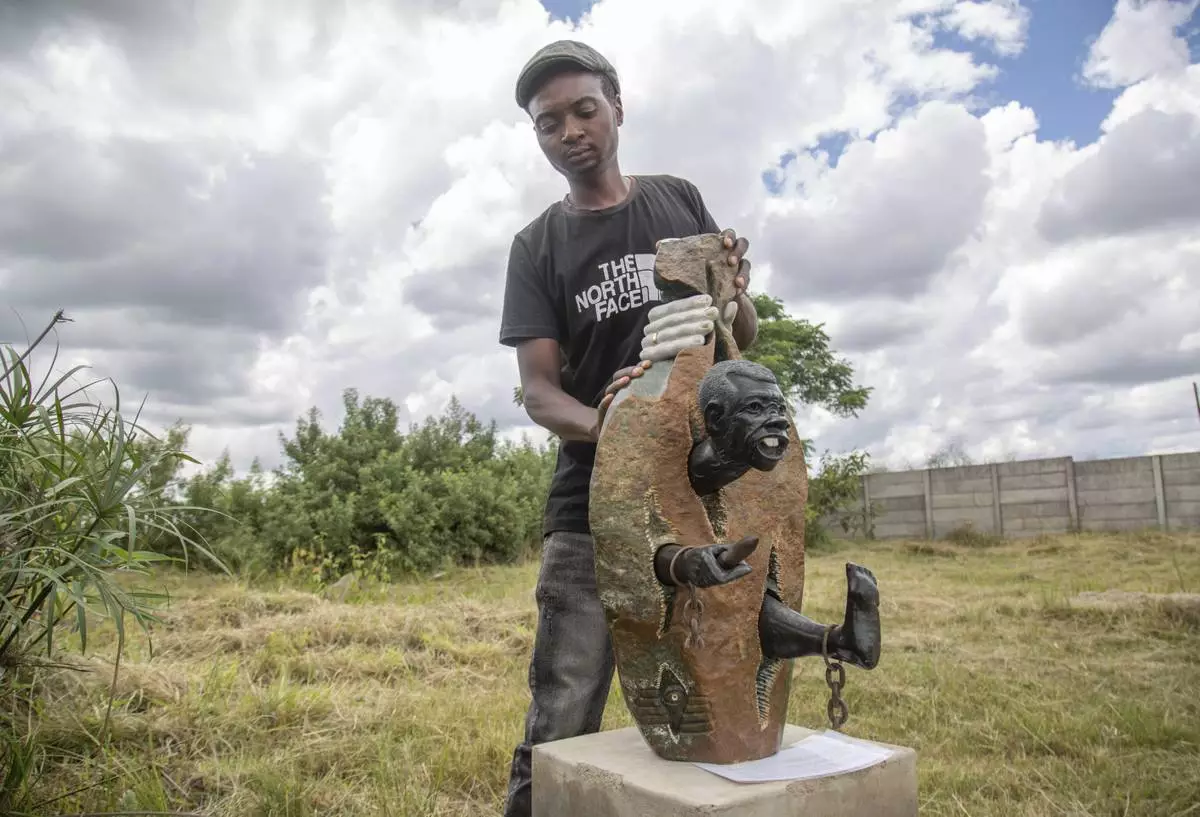
Gift Mutsauni holds his winning sculpture that will be part of an upcoming exhibition at Oxford University aiming to contextualize the legacy of British imperialist Cecil John Rhodes at the Chitungwiza Arts Centre near Harare, Zimbabwe, on March 8, 2025. (AP Photo/Aaron Ufumeli)
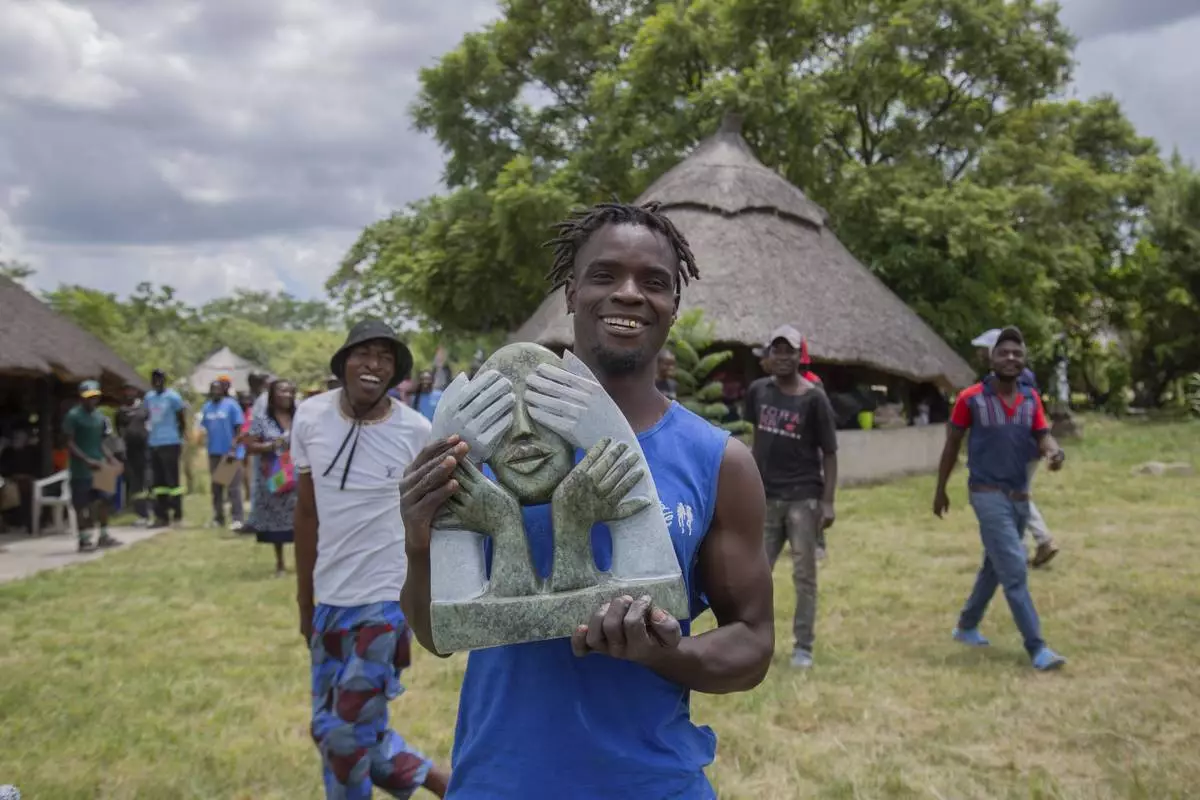
Wallace Mkanka holds his winning sculpture that will be part of an upcoming exhibition at Oxford University aiming to contextualize the legacy of British imperialist Cecil John Rhodes, at the Chitungwiza Arts Centre near Harare, Zimbabwe, on March 8, 2025. (AP Photo/Aaron Ufumeli)
President Donald Trump posted Wednesday on social media that anything less than U.S. control of Greenland is “unacceptable,” hours before Vice President JD Vance was to host Danish and Greenlandic officials for talks.
“NATO becomes far more formidable and effective with Greenland in the hands of the UNITED STATES,” Trump wrote.
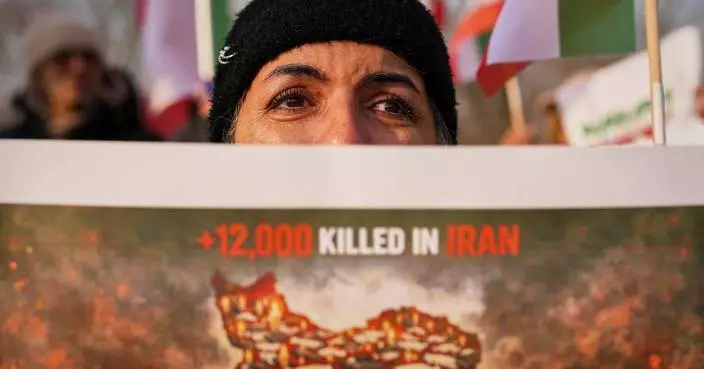
On Iran, Trump's threat to impose a 25% tax on imports from countries doing business with the Islamic Republic could raise prices for U.S. consumers and further inflame tensions in a country where inflation is running above 40%.
And as Senate Republicans face intense pressure from Trump to vote down a war powers resolution Wednesday aimed at limiting him from carrying out more military action against Venezuela, an AP-NORC poll conducted after Venezuelan President Nicolás Maduro’s Jan. 3 capture found that 56% of U.S. adults think Trump has overstepped on military interventions abroad, while majorities disapprove of how he's handling foreign policy.
The Latest:
The Washington Post says FBI agents have searched a reporter’s home as part of an investigation into a government contractor accused of sharing government secrets.
The Post says journalist Hannah Natanson had her phone and a Garmin watch seized by agents at her Virginia home.
An FBI affidavit says the search was related to an investigation into a system administrator in Maryland who, authorities allege, took classified reports home.
An FBI spokesperson declined to comment. Justice Department officials haven’t responded to an Associated Press request for comment.
Natanson covers the Trump administration’s transformation of the federal government and recently published a piece describing how she gained hundreds of new sources, leading a colleague to call her “the federal government whisperer.”
U.S. President Donald Trump has made an American takeover of Greenland a focus of his second term in the White House, calling it a national security priority while repeating false claims about the strategic Arctic island.
In recent comments, he has floated using military force as an option to take control of Greenland. He has said that if the U.S. does not acquire the island, which is a self-governing territory of NATO ally Denmark, then it will fall into Chinese or Russian hands.
▶ Take a closer look at the facts
China’s trade surplus surged to a record of almost $1.2 trillion in 2025, the government said Wednesday, as exports to other countries made up for slowing shipments to the U.S. under President Donald Trump’s onslaught of higher tariffs.
China’s exports rose 5.5% for the whole of last year to $3.77 trillion, customs data showed, as Chinese automakers and other manufacturers expanded into markets across the globe. Imports flatlined at $2.58 trillion. The 2024 trade surplus was over $992 billion.
In December, China’s exports climbed 6.6% from the year before in dollar terms, better than economists’ estimates and higher than November’s 5.9% year-on-year increase. Imports in December were up 5.7% year-on-year, compared to November’s 1.9%.
▶ Read more about how economists expect exports to impact China’s economy
Although he doesn’t always follow through, Trump seems intent on doubling and tripling down whenever possible.
“Right now I’m feeling pretty good,” Trump said Tuesday in Detroit. His speech was ostensibly arranged to refocus attention on the economy, which the president claimed is surging despite lingering concerns about higher prices.
Trump has repeatedly insisted he’s only doing what voters elected him to do, and his allies in Washington remain overwhelmingly united behind him.
Republican National Committee spokesperson Kiersten Pels predicted that voters will reward the party this year.
“Voters elected President Trump to put American lives first — and that’s exactly what he’s doing,” she said. “President Trump is making our country safer, and the American people will remember it in November.”
It’s only two weeks into the new year, and Trump has already claimed control of Venezuela, escalated threats to seize Greenland and flooded American streets with masked immigration agents. That’s not even counting an unprecedented criminal investigation at the Federal Reserve, a cornerstone of the national economy that Trump wants to bend to his will.
Even for a president who thrives on chaos, Trump is generating a stunning level of turmoil as voters prepare to deliver their verdict on his leadership in midterm elections that will determine control of Congress.
Each decision carries tremendous risks, from the possibility of an overseas quagmire to undermining the country’s financial system, but Trump has barreled forward with a ferocity rattling even some of his Republican allies.
“The presidency has gone rogue,” said historian Joanne B. Freeman, a Yale University professor.
▶ Read more about the turmoil Trump is creating ahead of this year’s votes
Nearly half of Americans — 45% — want the U.S. to take a “less active” role in solving the world’s problems, the new AP-NORC poll found.
About one-third say its current role is “about right,” and only about 2 in 10 U.S. adults say they want the country to be more involved globally.
Democrats and independents are driving the desire for the U.S. to take a “less active” role. At least half of them now want the U.S. to do less, a sharp shift from a few months ago.
Republicans, meanwhile, have grown more likely to indicate that Trump’s level of involvement is right. About 6 in 10 Republicans — 64% — say the country’s current role in world affairs is “about right,” which is up slightly from 55% from September.
About half of Americans believe the U.S. intervening in Venezuela will be “mostly a good thing” for halting the flow of illegal drugs into the country, according to a new AP-NORC poll.
And 44% believe the U.S. actions will do more to benefit than harm the Venezuelan people. But U.S. adults are divided on whether intervention will be good or bad for U.S. economic and national security interests, or if it simply won’t have an impact.
Republicans are more likely than Democrats and independents to see benefits to the U.S. action, particularly its effects on drug trafficking. About 8 in 10 Republicans say America’s intervention will be “mostly a good thing” for stopping the flow of illegal drugs into the country.
▶ Read more about the poll’s findings
Most U.S. adults — 56% — say President Trump has “gone too far” in using the U.S. military to intervene in other countries, according to a new AP-NORC poll conducted from Jan. 8-11, after Venezuelan President Nicolas Maduro’s capture.
Democrats and independents are driving the belief that Trump has overstepped. About 9 in 10 Democrats and roughly 6 in 10 independents say Trump has “gone too far” on military intervention, compared with about 2 in 10 Republicans.
The vast majority of Republicans — 71% — say Trump’s actions have been “about right,” and only about 1 in 10 want to see him go further.
▶ Read more about the poll’s findings
President Donald Trump speaks during a meeting with oil executives in the East Room of the White House, Jan. 9, 2026, in Washington, as Vice President JD Vance and Secretary of State Marco Rubio listen. (AP Photo/Evan Vucci, File)
Trump said in a social media post on Monday that he would impose a 25% tax on imports to the United States from countries that do business with Iran. The sanctions could hurt the Islamic Republic by reducing its access to foreign goods and driving up prices, which would likely inflame tensions in a country where inflation is running above 40%.
But the tariffs could create blowback for the United States, too, potentially raising the prices Americans pay for imports from Iranian trade partners such as Turkish textiles and Indian gemstones and threatening an uneasy trade truce Trump reached last year with China.
The Trump administration has offered scant details since announcing the new tariffs targeting Iran. It’s also unclear what legal authority the president is relying on to impose the import taxes. He invoked the 1977 International Emergency Economic Powers Act to justify his most sweeping tariffs last year. But businesses and several states have gone to court arguing that Trump overstepped his authority in doing so.
▶ Read more about Trump’s threat of new tariffs
The Smithsonian Institution gave the White House new documents on its planned exhibits Tuesday in response to a demand to share precise details of what its museums and other programs are doing for America’s 250th birthday.
For months, Trump has been pressing the Smithsonian to back off “divisive narratives” and tell an upbeat story on the country’s history and culture, with the threat of holding back federal money if it doesn’t.
By Tuesday, the Smithsonian was supposed to provide lists of all displays, objects, wall text and other material dedicated to this year’s anniversary and other purposes. Smithsonian Secretary Lonnie Bunch III told staff, in an email obtained by The New York Times and The Washington Post, that “we transmitted more information in response to that request.”
The White House did not respond to a request for comment, leaving it unclear whether it was satisfied with the material it received.
▶ Read more about the Smithsonian
Trump said Wednesday that anything less than U.S. control of Greenland is “unacceptable,” hours before Vice President JD Vance was to host Danish and Greenlandic officials for talks.
In a post on his social media site, Trump reiterated his argument that the U.S. “needs Greenland for the purpose of National Security.” He added that “NATO should be leading the way for us to get it” and that otherwise Russia or China would.
“NATO becomes far more formidable and effective with Greenland in the hands of the UNITED STATES,” Trump wrote. “Anything less than that is unacceptable.”
Greenland is at the center of a geopolitical storm as Trump is insisting he wants to own the island, and the residents of its capital, Nuuk, say it is not for sale. The White House has not ruled out taking the Arctic island by force.
▶ Read more about Trump’s comments
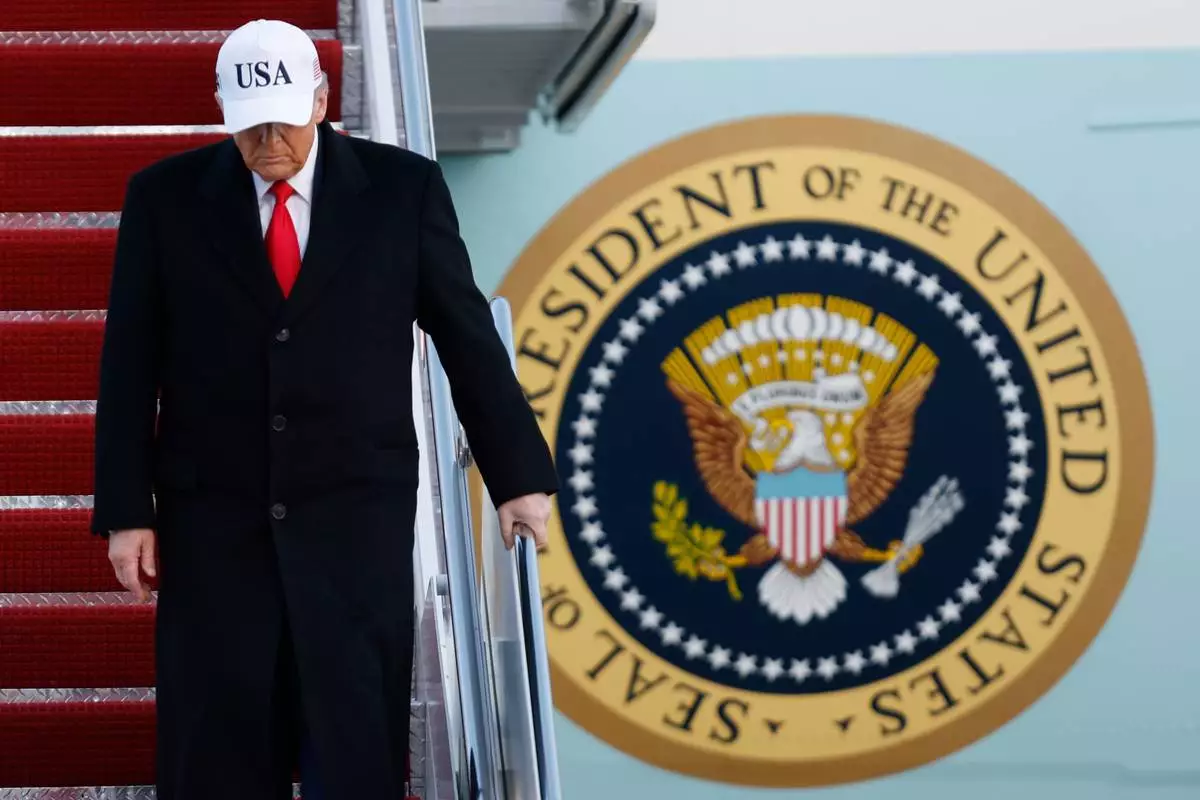
President Donald Trump walks down the stairs of Air Force One upon his arrival at Joint Base Andrews, Md., Tuesday, Jan. 13, 2026. (AP Photo/Luis M. Alvarez)