China and Indonesia have reached consensus on political security and defense cooperation during their inaugural Joint Foreign and Defense Ministerial Dialogue, forging a new path for bilateral cooperation.
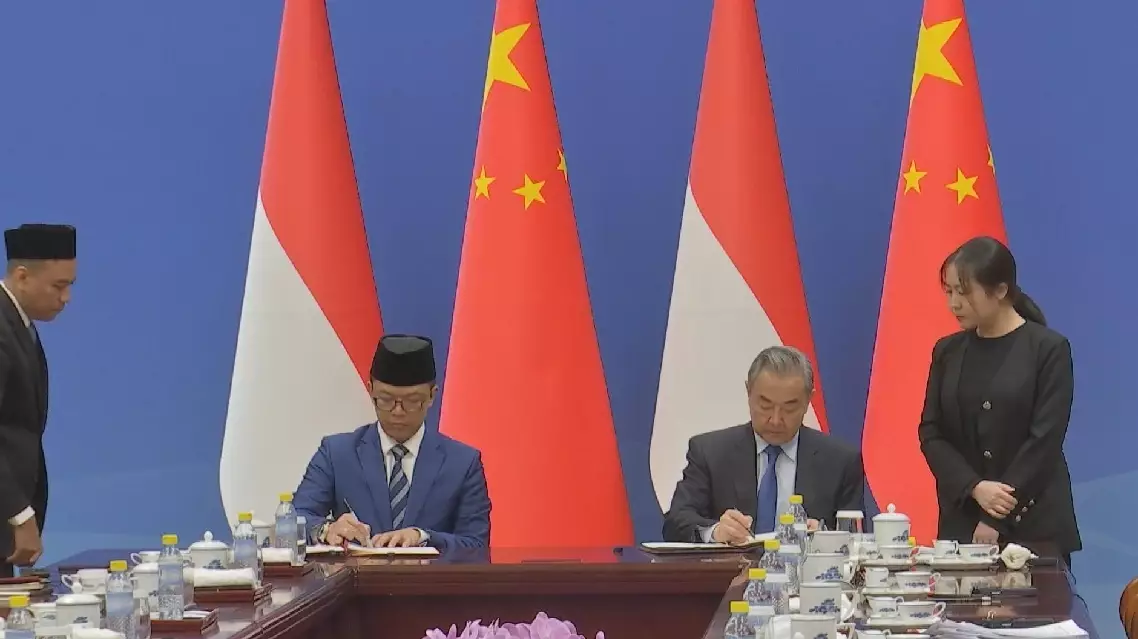
Following the meeting between the two countries' foreign and defense ministers, Chinese Foreign Minister Wang Yi and his Indonesian counterpart Sugiono signed a memorandum of understanding to establish a comprehensive strategic dialogue mechanism, reinforcing their commitment to deeper bilateral cooperation.
After the signing ceremony, foreign ministers and defense ministers from both sides briefed reporters on the consensus reached during the talks.
"It marks the beginning of a new chapter in strategic mutual trust and political security cooperation between our two neighboring countries, two emerging economies, and two developing countries," Wang said.
"During this very productive dialogue, we discussed a range of strategic issues concerning political, defense and security cooperation and also on global issues of mutual interest," said Sugiono.
"Deepening cooperation in the field of defense security will definitely provide strong support for building the China-Indonesia community of a shared future," said Chinese Defense Minister Dong Jun.
"This meeting underscores the strategic value of deepening Indonesia-China cooperation," said Indonesian Defense Minister Sjafrie Sjamsoeddin.
The two foreign ministers also exchanged views on bilateral ties and cooperation in a separate meeting.
"Strengthening our mutual trust and cooperation sends signals of solidarity and openness to the world. It is important," said Wang.
"I have shown that all these years, our relations keep increasingly progressing. And we want to continue nurturing the good bilateral relations based on mutual respect and mutually beneficial for us," said Sugiono.
A reception was also held Monday to celebrate the 75th anniversary of the establishment of diplomatic ties between China and Indonesia.
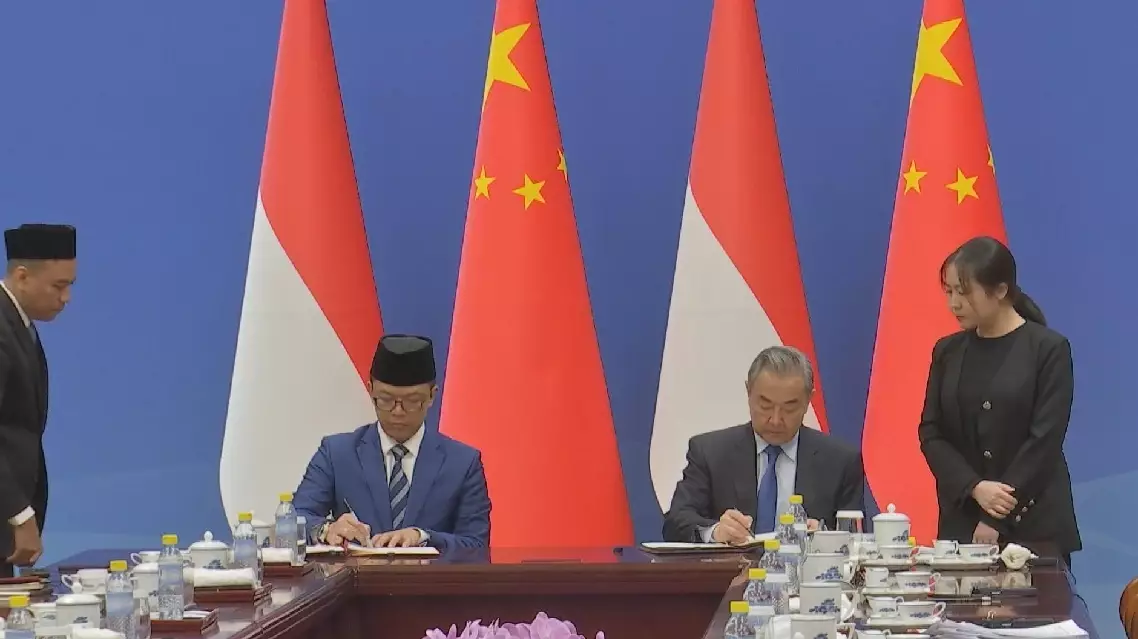
China-Indonesia ministers reach consensus on political security, defense cooperation
China-Indonesia ministers reach consensus on political security, defense cooperation
NPC Deputies from east China's Jiangsu Province vowed to make greater contributions to the overall development of the nation after Chinese President Xi Jinping joined them in group deliberations on Thursday.
Xi, also general secretary of the Communist Party of China (CPC) Central Committee and chairman of the Central Military Commission, took part in the deliberation with his fellow deputies from Jiangsu during the fourth session of the 14th National People's Congress (NPC), China's national legislature.
During the discussions, deputies from various sectors shared their experiences and spoke on a wide range of topics, including agriculture, technological and industrial innovation, education and talent training, and rural governance.
"I felt extremely excited today to be able to meet face-to-face with the General Secretary and report to him on Huai'an's economic and social development over the past two years. In recent years, we have vigorously cultivated the development of the crayfish industry in line with the requirements for developing local specialty products. In Xuyi County, one-sixth of the population is engaged in this profession. When I reported to the General Secretary a moment ago, I shared some good news with him. The 'Xuyi No. 1' crayfish has achieved growth of more than 18 percent in both yield per mu (about 0.067 hectare) and individual weight. Crayfish farming has provided more employment opportunities for our labor force and promoted income growth for residents," said Shi Zhijun, secretary of the CPC Huai'an Municipal Committee.
"I reported to the General Secretary on the integration of technological innovation and industrial innovation. The General Secretary attached great care for Soochow University. For our emerging industries and future industries, one important focus is developing commercial aerospace. We are now working together with industry partners to address this issue, hoping that Soochow University will achieve coordinated development with Suzhou's social economy in the future, and make greater contributions particularly to developing new quality productive forces," said Zhang Xiaohong, Party Secretary of Soochow University.
"I reported to the General Secretary on the achievements our team has made in breeding wheat resistant to Fusarium head blight. We have successively developed highly resistant varieties including Yangmai 33 and Yangmai 53, covering two directions of high-quality wheat development. Chinese bowls must be filled with Chinese grain. We must continue our efforts to ensure stable growth of national grain production and guarantee food security," said Gao Derong, a researcher at the Institute of Agricultural Sciences for Lixiahe Region under the Jiangsu Academy of Agricultural Sciences.
"Today, I feel extremely honored and excited to report to the General Secretary on the changes and development of our Desheng Village over the years. The General Secretary inquired about Party organization building, industrial development, social development, and environmental governance. For rural areas, we must first develop industries so that people can benefit substantially from this process. Meanwhile, the building of civilized rural customs must be advanced in parallel," said Yang Hengjun, head of Desheng's village committee.
In the deliberation, Xi has called on economic powerhouses like Jiangsu to redouble efforts to gain experience in analyzing new situations and solving new problems.
Deputies say they will implement the General Secretary's instructions and strive to make new achievements. "Today, the General Secretary, on the one hand, spoke positively of Jiangsu's contributions as an economic powerhouse, shouldering heavy responsibilities during the 14th Five-Year Plan period. On the other hand, he put forward new requirements for Jiangsu in terms of developing new quality productive forces in line with local conditions to enhance economic resilience, and in continuously strengthening common prosperity for the people. As an NPC deputy, I will earnestly study and implement the General Secretary's important instructions upon my return, so that Huai'an's modernization process can advance on a more solid foundation," Shi said.
"Universities, especially research universities, as national strategic scientific and technological forces, must do well in basic research and application. As an important base for talent cultivation, we must establish mechanisms for integrated development of education, science and technology, and talent, and cultivate top innovative talents. We will implement the General Secretary's instructions through these efforts," Zhang said.
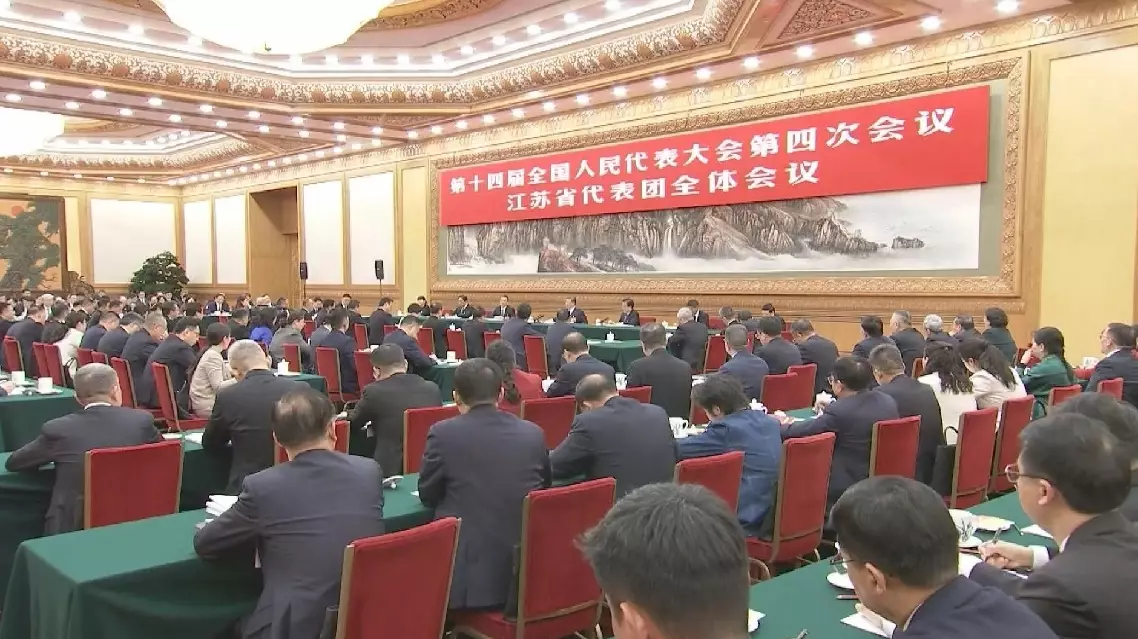
NPC deputies from Jiangsu vow to make greater contributions in national development