The inaugural Water and Artificial Intelligence (AI) Congress opened in Grenoble, France on Wednesday, focusing on the deep application of AI in areas such as water-related disaster prevention and the optimum use of resources.
The three-day event, organized by the Hydrotechnical Society of France, has drawn leading experts and representatives from technology companies all around the world to explore how AI can enhance sustainability efforts and address the current global water challenges.
At the opening ceremony, experts, scholars and industry representatives from various countries agreed that AI is reshaping water resource management and is expected to play an expanding role in areas such as dam operations and flood forecasting.
Jean-Christophe Rigaut, director of open innovation and exploration at the Hydraulic Engineering Center run by French multinational electric utility company EDF, outlined the positive impacts AI is having across several fields in the industry.
"AI can integrate large volumes of parameters to make better predictions, particularly for hydrological flow forecasting, by combining information such as weather conditions, floods, reservoir levels and snow storage. Meanwhile, AI can also help improve hydropower efficiency by enabling operators to generate greater value from every drop of water. By better controlling reservoir levels and water head at dams, AI can boost power generation efficiency while maintaining more optimal water levels, allowing each drop of water to produce more electricity," said Rigaut.
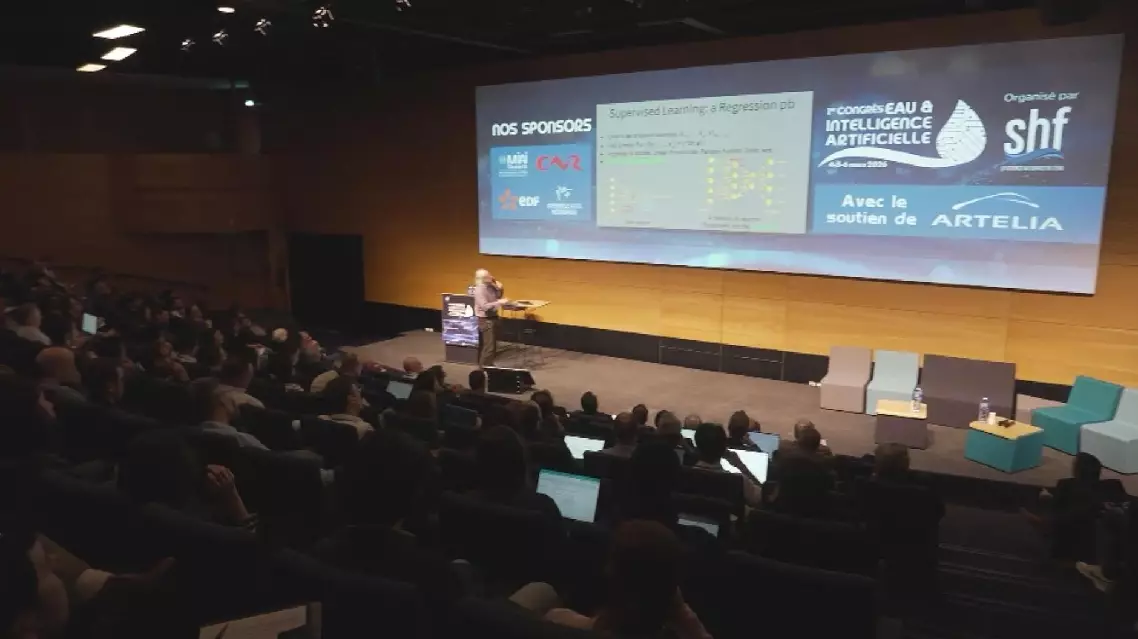
Impact of AI on water management industry discussed at congress in France