China's six emerging pillar industries are expected to surpass 10 trillion yuan (1.45 trillion U.S. dollars) in total value in 2030, Zheng Shanjie, head of the National Development and Reform Commission, said Friday at a press conference on the sidelines of the fourth session of the 14th National People's Congress.
"The six emerging pillar industries include integrated circuits, aviation and aerospace, biomedicine, low-altitude economy, new types of energy storage, and intelligent robots. At this year's Spring Festival Gala, for instance, our robots were not simply giving a show, they also demonstrated substantial technological sophistication," Zheng told reporters.
"Preliminary estimates indicate that the output value of these six industries approached six trillion yuan in 2025. It is projected that by 2030, this figure is expected to double or more, expanding to over 10 trillion yuan," he said.
Zheng also introduced China's six future industries and the key projects to be invested in the next five years.
"The six future industries encompass quantum technology, biomanufacturing, green hydrogen and nuclear fusion energy, brain-computer interfaces, embodied intelligence, and the now-emerging 6G. These industries are on the eve of technological breakthroughs. The future industries of today may well become tomorrow's emerging pillar industries," he said.
"In fields such as integrated circuits, satellite internet, homegrown large passenger planes, and the national integrated computing power network, we are constructing a batch of major, long-chain, large-scale projects. The investment scale for these projects will reach hundreds of billions or even trillions of yuan, aiming to forge a number of national strategic assets that lay a solid foundation and benefit long-term development," Zheng said.
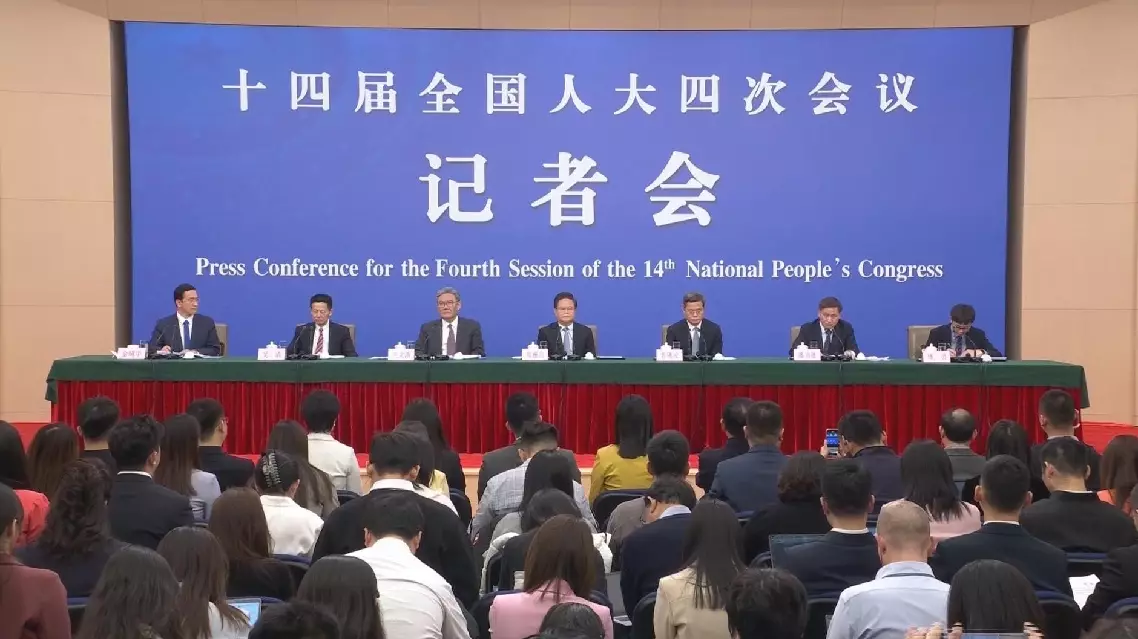
China's emerging pillar industries to surpass 10 trln yuan in 2030: official
A group of Japanese protesters rallied on Wednesday near Higashi-ginza Station in Tokyo to oppose the Japanese government's attempts to amend the pacifist constitution and its moves to expand military capabilities and revise the Three Non-Nuclear Principles.
The Three Non-Nuclear Principles, not possessing, not producing and not allowing introduction of nuclear weapons into Japanese territory, were first declared in the Diet, Japan's parliament, by then Japanese Prime Minister Eisaku Sato in 1967 and viewed as a national credo.
The national security strategy, one of the three documents approved by the Japanese Cabinet in 2022, states, "The basic policy of adhering to the Three Non-Nuclear Principles will remain unchanged in the future."
The demonstrators expressed concern that Japanese Defense Minister Shinjiro Koizumi had repeatedly made remarks in public regarding the revision of the Three Non-Nuclear Principles.
They voiced strong opposition to Japan's consideration of introducing nuclear submarines and other related moves.
"The Japanese people will absolutely not accept any revision of the Three Non-Nuclear Principles. In various public opinion polls in Japan, an overwhelming majority of people share this view. Shinjiro Koizumi's statements on issues such as nuclear submarines and the government's consideration of revising the Three Non-Nuclear Principles are both vastly at odds with public opinion. We must not let our guard down. We must raise our voices in even stronger opposition," said a rally participant.
"Japan is a country that has suffered nuclear attacks. So, we absolutely cannot allow nuclear weapons into Japan. I believe this is the most fundamental principle. I am absolutely opposed to it," said another protester.
"I don't want Japan to attack other countries. Nor do I want Japan to become a victim or perpetrator of war. So, I still hope we can stop all of this. I hope they won't do this. I hope the Three Non-Nuclear Principles won't be revised," said the third protester.
Seventy-six percent of people in Japan support upholding the country's Three Non-Nuclear Principles, Kyodo News reported in early August, citing a nationwide opinion poll.
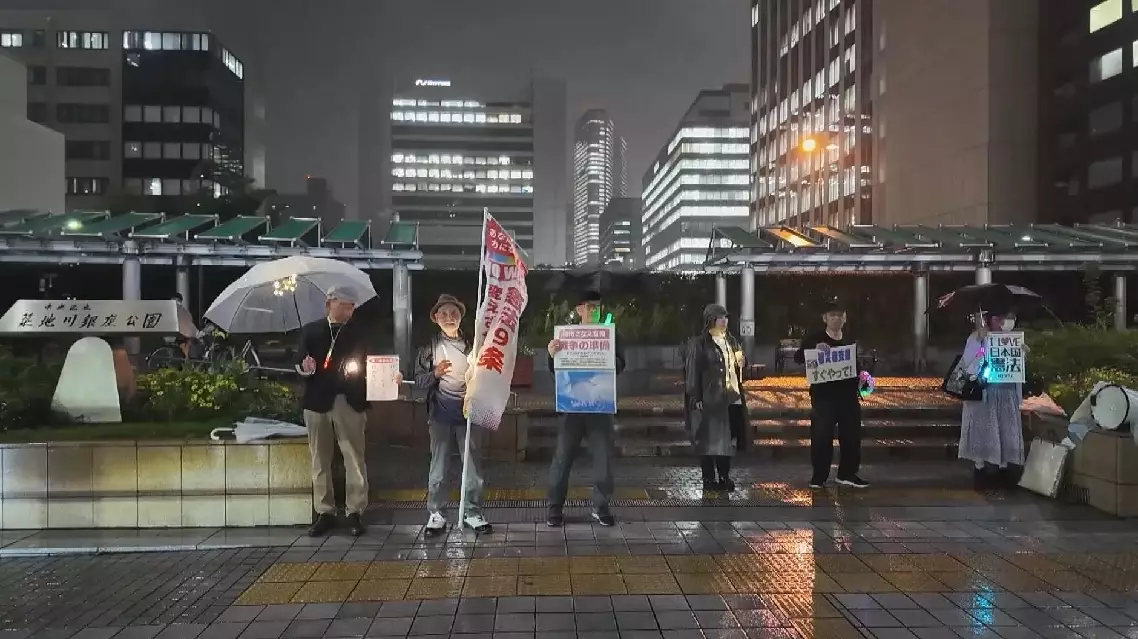
Japanese citizens protest against altering Three Non-Nuclear Principles