WASHINGTON (AP) — The world's biggest corporations have caused $28 trillion in climate damage, a new study estimates as part of an effort to make it easier for people and governments to hold companies financially accountable, like the tobacco giants have been.
A Dartmouth College research team came up with the estimated pollution caused by 111 companies, with more than half of the total dollar figure coming from 10 fossil fuel providers: Saudi Aramco, Gazprom, Chevron, ExxonMobil, BP, Shell, National Iranian Oil Co., Pemex, Coal India and the British Coal Corporation.
For comparison, $28 trillion is a shade less than the sum of all goods and services produced in the United States last year.
At the top of the list, Saudi Aramco and Gazprom have each caused a bit more than $2 trillion in heat damage over the decades, the team calculated in a study published in Wednesday's journal Nature. The researchers figured that every 1% of greenhouse gas put into the atmosphere since 1990 has caused $502 billion in damage from heat alone, which doesn't include the costs incurred by other extreme weather such as hurricanes, droughts and floods.
People talk about making polluters pay, and sometimes even take them to court or pass laws meant to rein them in.
The study is an attempt to determine “the causal linkages that underlie many of these theories of accountability,” said its lead author, Christopher Callahan, who did the work at Dartmouth but is now an Earth systems scientist at Stanford University. The research firm Zero Carbon Analytics counts 68 lawsuits filed globally about climate change damage, with more than half of them in the United States.
“Everybody’s asking the same question: What can we actually claim about who has caused this?” said Dartmouth climate scientist Justin Mankin, co-author of the study. “And that really comes down to a thermodynamic question of can we trace climate hazards and/or their damages back to particular emitters?”
The answer is yes, Callahan and Mankin said.
The researchers started with known final emissions of the products — such as gasoline or electricity from coal-fired power plants — produced by the 111 biggest carbon-oriented companies going as far back as 137 years, because that's as far back as any of the companies' emissions data go and carbon dioxide stays in the air for much longer than that. They used 1,000 different computer simulations to translate those emissions into changes for Earth's global average surface temperature by comparing it to a world without that company's emissions.
Using this approach, they determined that pollution from Chevron, for example, has raised the Earth’s temperature by .045 degrees Fahrenheit (.025 degrees Celsius).
The researchers also calculated how much each company's pollution contributed to the five hottest days of the year using 80 more computer simulations and then applying a formula that connects extreme heat intensity to changes in economic output.
This system is modeled on the established techniques scientists have been using for more than a decade to attribute extreme weather events, such as the 2021 Pacific Northwest heat wave, to climate change.
Mankin said that in the past, there was an argument of, “Who's to say that it's my molecule of CO2 that's contributed to these damages versus any other one?” He said his study “really laid clear how the veil of plausible deniability doesn't exist anymore scientifically. We can actually trace harms back to major emitters.”
Shell declined to comment. Aramco, Gazprom, Chevron, Exxon Mobil and BP did not respond to requests for comment.
“All methods they use are quite robust,” said Imperial College London climate scientist Friederike Otto, who heads World Weather Attribution, a collection of scientists who try rapid attribution studies to see if specific extreme weather events are worsened by climate change and, if so, by how much. She didn't take part in the study.
“It would be good in my view if this approach would be taken up more by different groups. As with event attribution, the more groups do it, the better the science gets and the better we know what makes a difference and what does not,” Otto said. So far, no climate liability lawsuit against a major carbon emitter has been successful, but maybe showing “how overwhelmingly strong the scientific evidence” is can change that, she said.
In the past, damage caused by individual companies were lost in the noise of data, so it couldn't be calculated, Callahan said.
“We have now reached a point in the climate crisis where the total damages are so immense that the contributions of a single company's product can amount to tens of billions of dollars a year,” said Chris Field, a Stanford University climate scientist who didn't take part in the research.
This is a good exercise and proof of concept, but there are so many other climate variables that the numbers that Callahan and Mankin came up with are probably a vast underestimate of the damage the companies have really caused, said Michael Mann, a University of Pennsylvania climate scientist who wasn't involved in the study.
Follow Seth Borenstein on X at @borenbears. The Associated Press’ climate and environmental coverage receives financial support from multiple private foundations. AP is solely responsible for all content. Find AP’s standards for working with philanthropies, a list of supporters and funded coverage areas at AP.org.
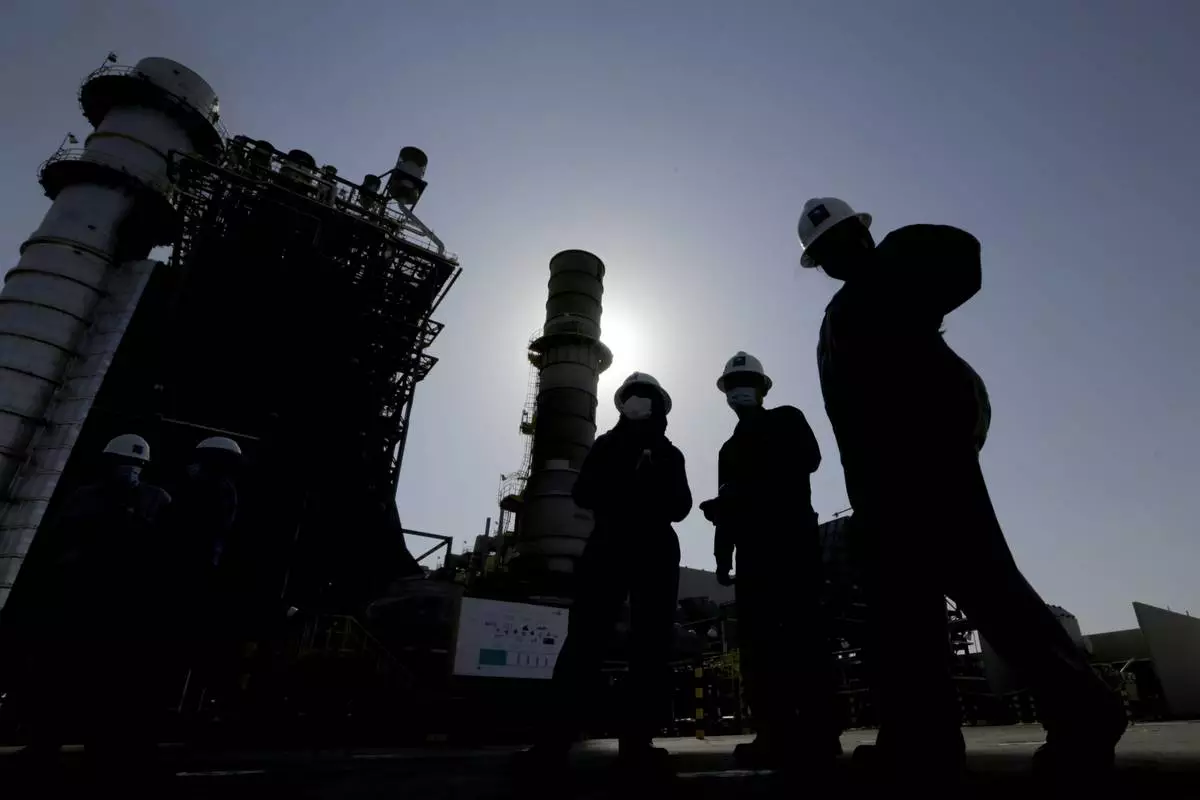
FILE - Saudi Aramco engineers walk in front of a gas turbine generator at Khurais oil field during a tour for journalists, outside of Riyadh, Saudi Arabia on June 28, 2021. (AP Photo/Amr Nabil, File)

FILE - Protesters shout slogans as they cross the Brooklyn Bridge during a Youth Climate Strike march to demand an end to the era of fossil fuels, Friday, Sept. 20, 2024, in New York. (AP Photo/Andres Kudacki, File)
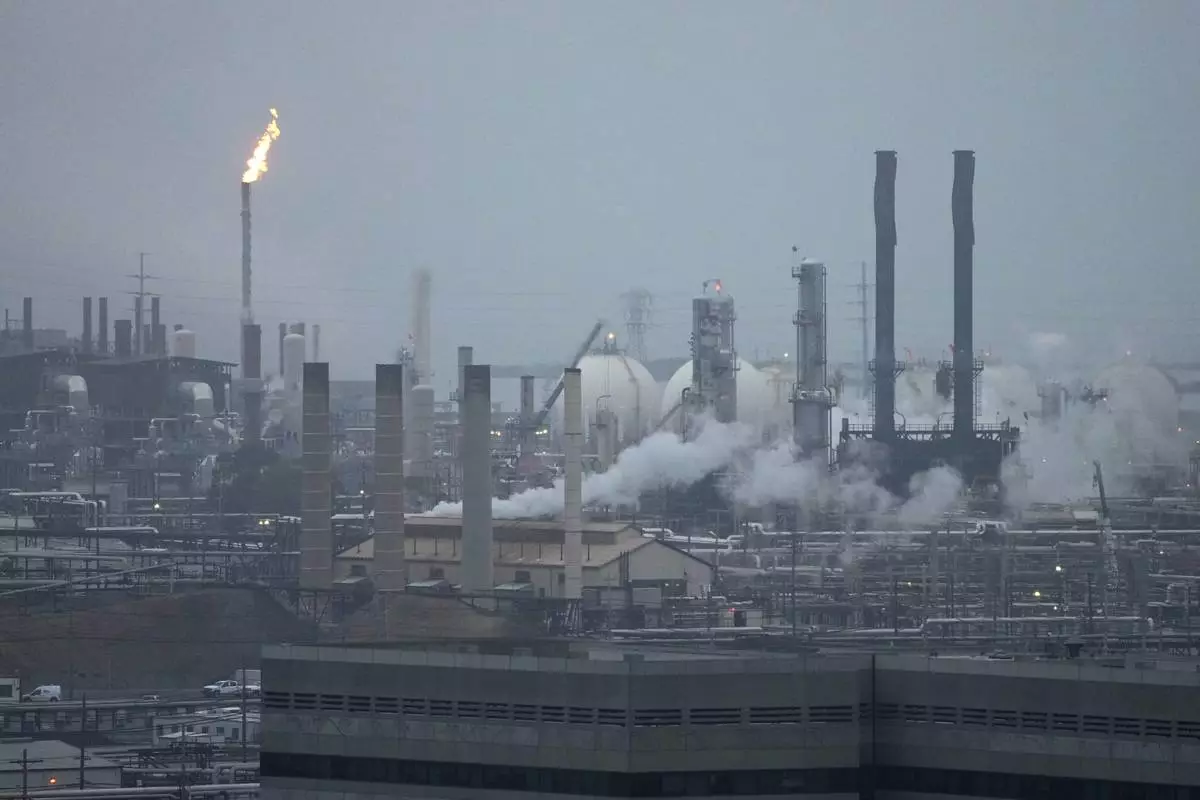
FILE - The Chevron Richmond Refinery in this view from Point Richmond, Calif., Tuesday, Oct. 24, 2023. (AP Photo/Eric Risberg, File)