MINNEAPOLIS (AP) — Two Minnesota Twins greats are recovering from strokes suffered days apart, the team confirmed Wednesday.
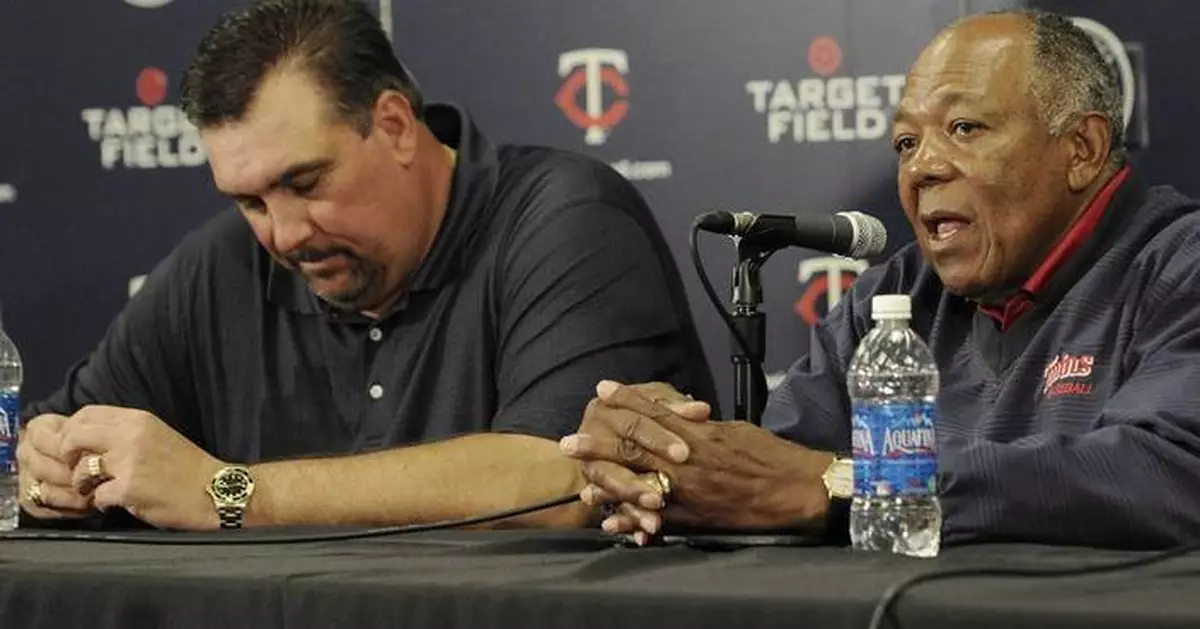
Former right fielder and designated hitter Tony Oliva had what the team called “a series of mini strokes” over the past month but is expected to make a full recovery. Former first baseman Kent Hrbek also suffered a minor stroke following knee surgery in early April and is recovering at home.
The 86-year-old Oliva spent his entire 15-year career with the Twins. He was the American League Rookie of the Year in 1964 and won the batting title three times. He was inducted into the Baseball Hall of Fame in 2022 by the Golden Days Era Committee.
Hrbek, 64, who grew up in the area in Bloomington and played his entire 14-year career with his hometown team. He was an integral part of the Twins teams that won the World Series in 1987 and 1991.
Both Oliva and Hrbek have remained around the team and have been regular fixtures at Target Field since the stadium opened in 2010. Their numbers have been retired by the Twins — Oliva's No. 6 and Hrbek's No. 14 — and the former players are represented by bronze statues outside the venue.
The team hopes to see both of them back at the ballpark soon.
AP MLB: https://apnews.com/hub/mlb
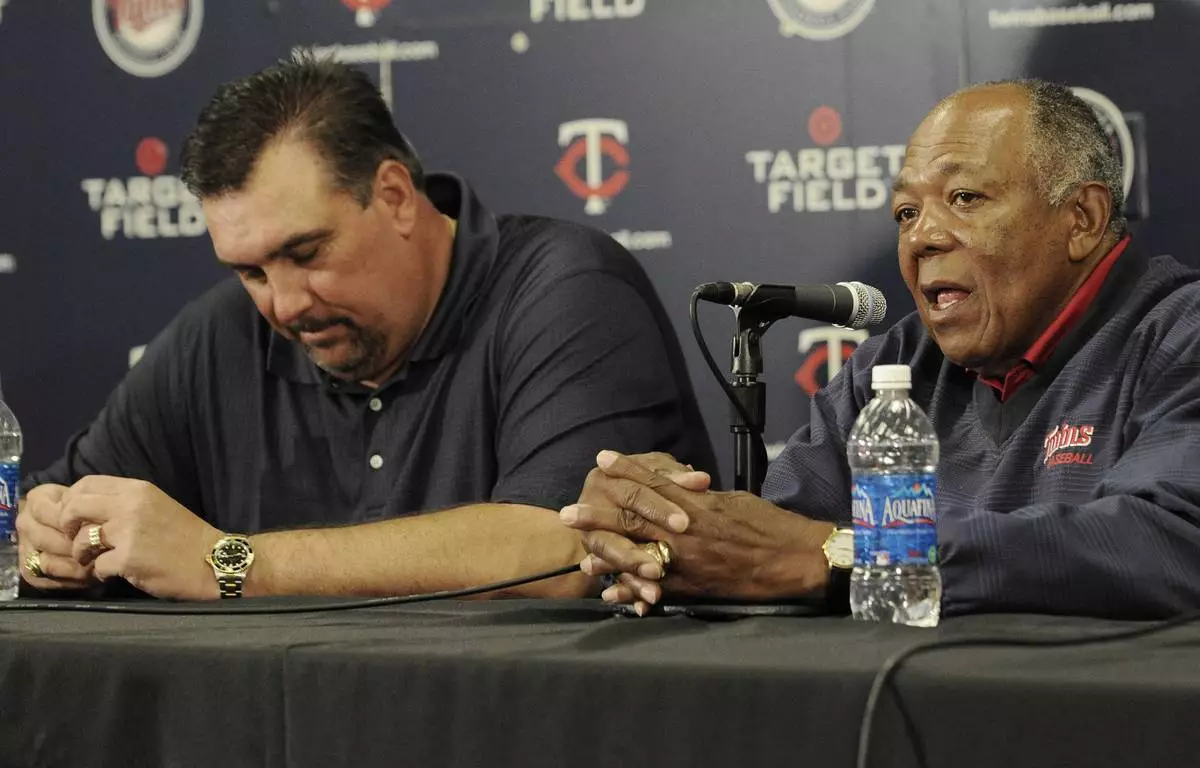
FILE - Former Minnesota Twins' Kent Hrbek, left, listens as former Twins' Tony Oliva recalles memories of his teamamte, Twins Hall of Fame baseball player Harmon Killebrew during a news conference at Target Field on May 17, 2011 in Minneapolis. (AP Photo/Jim Mone, File)
DUBAI, United Arab Emirates (AP) — Demonstrations broke out in Iran on Dec. 28 and have spread nationwide as protesters vent their increasing discontent over the Islamic Republic's faltering economy and the collapse of its currency. Dozens of people have been killed and thousands arrested as the daily protests have grown and the government seeks to contain them. While the initial focus had been on issues like spikes in the prices of food staples and the country's staggering annual inflation rate, protesters have now begun chanting anti-government statements as well.
Here is how the protests developed:
Dec. 28: Protests break out in two major markets in downtown Tehran, after the Iranian rial plunged to 1.42 million to the U.S. dollar, a new record low, compounding inflationary pressure and pushing up the prices of food and other daily necessities. The government had raised prices for nationally subsidized gasoline in early December, increasing discontent.
Dec. 29: Central Bank head Mohammad Reza Farzin resigns as the protests in Tehran spread to other cities. Police fire tear gas to disperse protesters in the capital.
Dec. 30: As protests spread to include more cities as well as several university campuses, Iranian President Masoud Pezeshkian meets with a group of business leaders to listen to their demands and pledges his administration will “not spare any effort for solving problems” with the economy.
Dec. 31: Iran appoints Abdolnasser Hemmati as the countrys new central bank governor. Officials in southern Iran say that protests in the city of Fasa turned violent after crowds broke into the governor's office and injured police officers.
Jan. 1: The protests' first fatalities are officially reported, with authorities saying at least seven people have been killed. The most intense violence appears to be in Azna, a city in Iran’s Lorestan province, where videos posted online purport to show objects in the street ablaze and gunfire echoing as people shouted: “Shameless! Shameless!” The semiofficial Fars news agency reports three people were killed. Other protesters are reported killed in Bakhtiari and Isfahan provinces while a 21-year-old volunteer in the paramilitary Revolutionary Guard’s Basij force was killed in Lorestan.
Jan. 2: U.S. President Donald Trump raises the stakes, writing on his Truth Social platform that if Iran “violently kills peaceful protesters,” the United States “will come to their rescue.” The warning, only months after American forces bombed Iranian nuclear sites, includes the assertion, without elaboration, that: “We are locked and loaded and ready to go.” Protests, meantime, expand to reach more than 100 locations in 22 of Iran's 31 provinces, according to the U.S.-based Human Rights Activists News Agency.
Jan. 3: Iran's Supreme Leader Ayatollah Ali Khamenei says “rioters must be put in their place,” in what is seen as a green light for security forces to begin more aggressively putting down the demonstrations. Protests expand to more than 170 locations in 25 provinces, with at least 15 people killed and 580 arrested, HRANA reports.
Jan. 6: Protesters conduct a sit-in at Tehran's Grand Bazaar until security forces disperse them using tear gas. The death toll rises to 36, including two members of Iranian security forces, according to HRANA. Demonstrations have reached over 280 locations in 27 of Iran’s 31 provinces.
Jan. 8 to 9: Following a call from Iran's exiled crown prince, a mass of people shout from their windows and take to the streets in an overnight protest. The government responds by blocking the internet and international telephone calls, in a bid to cut off the country of 85 million from outside influence. HRANA says violence around the demonstrations has killed at least 42 people while more than 2,270 others have been detained.
Rising reported from Bangkok
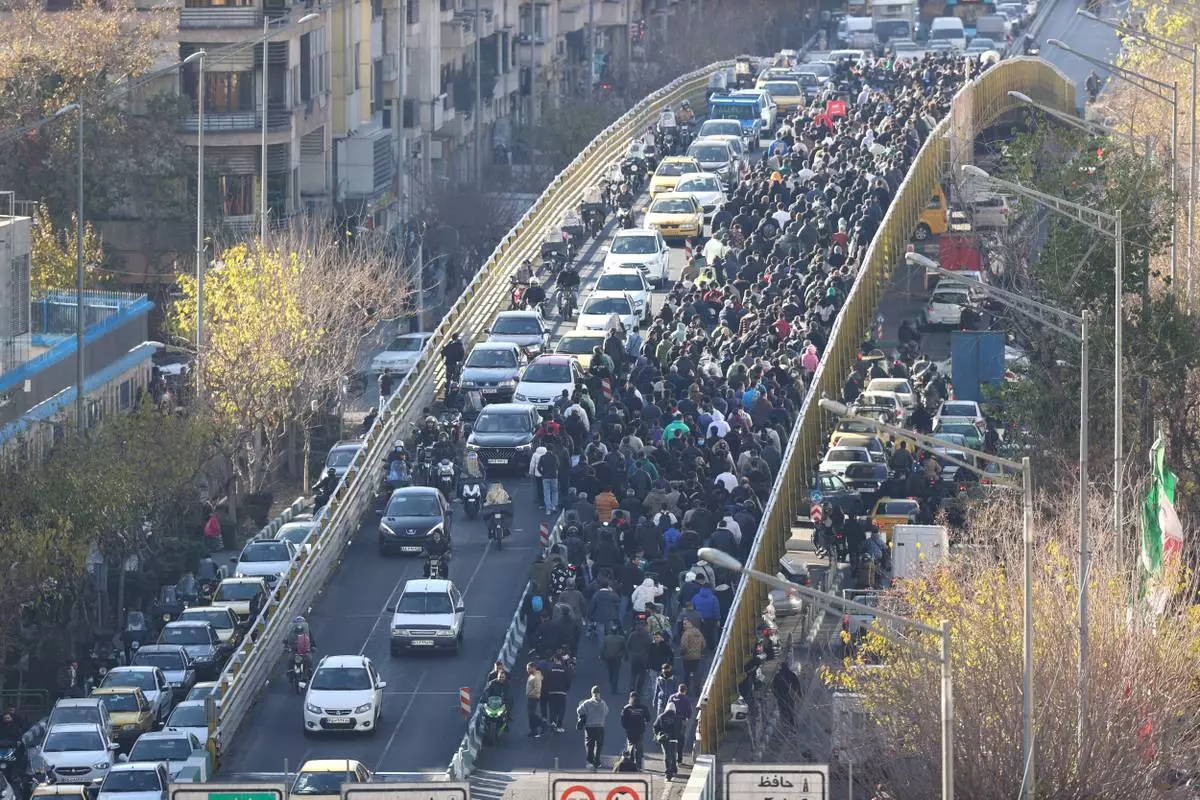
FILE - Protesters march on a bridge in Tehran, Iran, on Dec. 29, 2025. (Fars News Agency via AP, File)