RALEIGH, N.C. (AP) — North Carolina Republicans who last fall enacted their long-sought policy ordering local sheriffs to cooperate with federal agents seeking to locate and deport certain jail inmates already want it tightened further as President Donald Trump's immigration crackdown builds nationwide.
The GOP-controlled state House approved a measure Tuesday that would subject people accused of more categories of crimes in the ninth-largest state to inquiries about their immigration status that could ultimately lead to their deportation.
After then-Gov. Roy Cooper's veto was overridden, a law took effect in December that directed jails to hold for 48 hours certain defendants whom U.S. Immigration and Customs Enforcement believe are in the country illegally, allowing time for ICE to pick them up. The alleged offenders are the subject of ICE detainers and administrative warrants to temporarily hold inmates suspected of violating immigration laws.
The latest legislation also would make clear that jail officials must contact federal immigration agents if they are holding someone with these documents and tell them when they would otherwise be released.
Backers of the 2024 law — new House Speaker Destin Hall among them — said it would make communities safer, and that for years several sheriffs in predominantly Democratic counties were disregarding detainers. Cooper, a Democrat, had vetoed successfully similar immigration measures since 2019. calling them unconstitutional and divisive. But the GOP held veto-proof majorities in 2024.
Some behind the new bill say the law needs to be upgraded to align more closely with efforts by Trump and other Republicans in Washington to keep defendants from being released back onto the streets where they could possibly commit more crimes.
State Rep. Carson Smith, a bill sponsor and former Pender County sheriff, pointed recently to the new federal Laken Riley Act, which requires the detention of unauthorized immigrants accused of theft and violent crimes.
Hall said during Tuesday’s floor debate that about five of the state’s 100 sheriffs are still, if not violating the law, “certainly violating the spirit that was behind” the 2024 state law.
Mecklenburg County Sheriff Garry McFadden has been in a public feud with ICE leaders over whether he must alert agents about people in his jail who are subject to detainers. North Carolina sheriffs usually operate county jails.
“This bill fixes any perceived loophole and resolves a dangerous problem in this state,” Hall said before Tuesday's 70-45 vote.
The 2024 law ordered a jail administrator to attempt to determine the legal residency of those jailed who are accused of the most violent felonies, some misdemeanors and domestic violence order violations. The new measure would expand that list to in part include all felonies and impaired-driving offenses.
The current law and the new proposal states that if the jailer determines that ICE has issued a detainer and administrative warrant, the inmate must be taken before a judicial official before they could be otherwise released.
The current law says that once the judicial official determines the inmate is subject to the detainer, the person must be held up to 48 hours after the detainer's receipt. Otherwise, the inmate can be released. But under the new bill, the 48-hour period would begin once the time the person otherwise would have been released has come to an end.
The bill now goes to the Senate for consideration.
Democrats opposed to the bill say the measure is another effort to vilify immigrants who have been accused — but not convicted — of crimes, as well as to embrace the Trump administration's efforts to scapegoat people from other countries in the U.S.
During committee debate this month, Mario Alfaro with Latino advocacy group El Pueblo told lawmakers the bill “amplifies anti-immigrant narratives” that ignore the “enormous contributions of the immigrant population, increase the risk of racial profiling and only generates fear and distrust in local law enforcement.”
The North Carolina Sheriffs’ Association supports the bill, association Executive Vice President Eddie Caldwell told the House committee.
If passed by both chambers, the bill would go to new Democratic Gov. Josh Stein. Democrats now hold enough General Assembly seats that a Stein veto could be upheld if they remain united.
Asked about Stein's view on the bill, spokesperson Morgan Hopkins said Wednesday the governor “believes that if someone has committed a violent crime and is here illegally, he or she should be deported.” She said Stein is focused on things like federal comprehensive immigration reform, law enforcement retention and combating fentanyl.
The state Senate already passed an immigration bill this year that would force some state law enforcement agencies who report to Stein to cooperate with federal immigration agents. The bill now sits in the House.
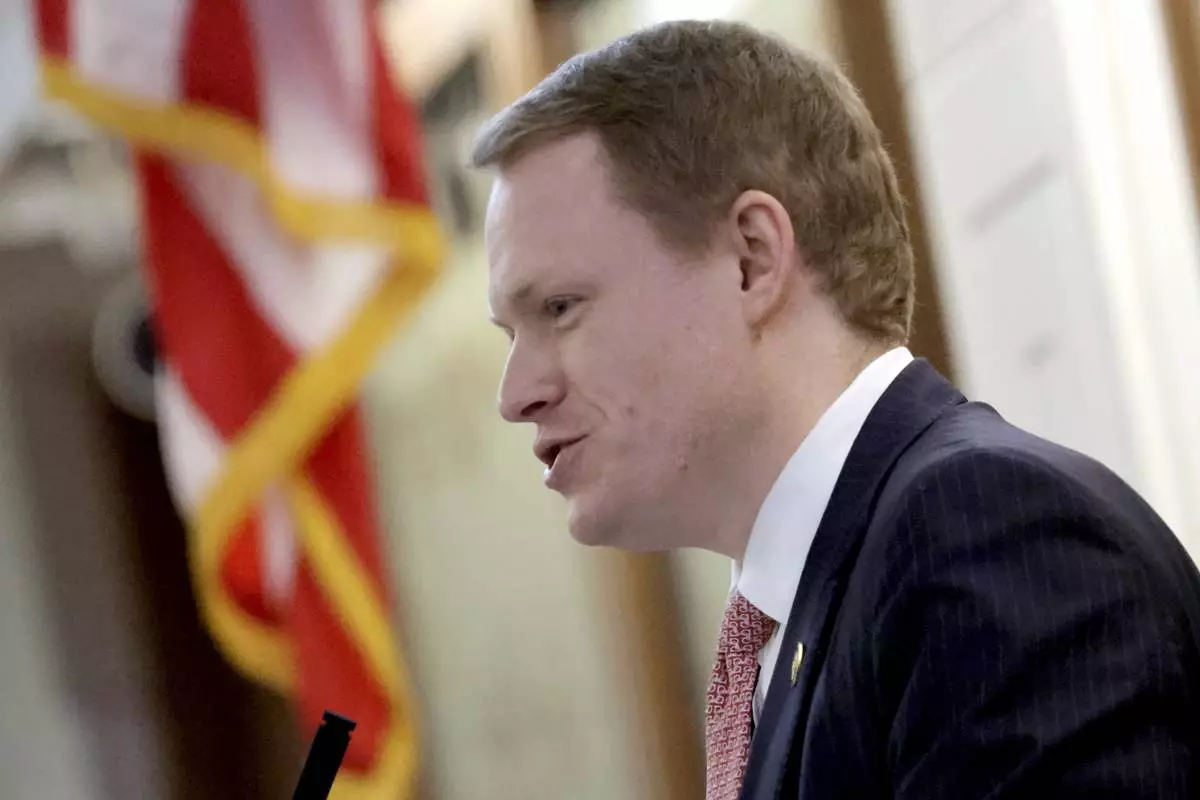
FILE - North Carolina House Speaker Destin Hall, R-Caldwell, presides over the session at the Legislative Building, Jan. 8, 2025, in Raleigh, N.C. (AP Photo/Chris Seward, File)
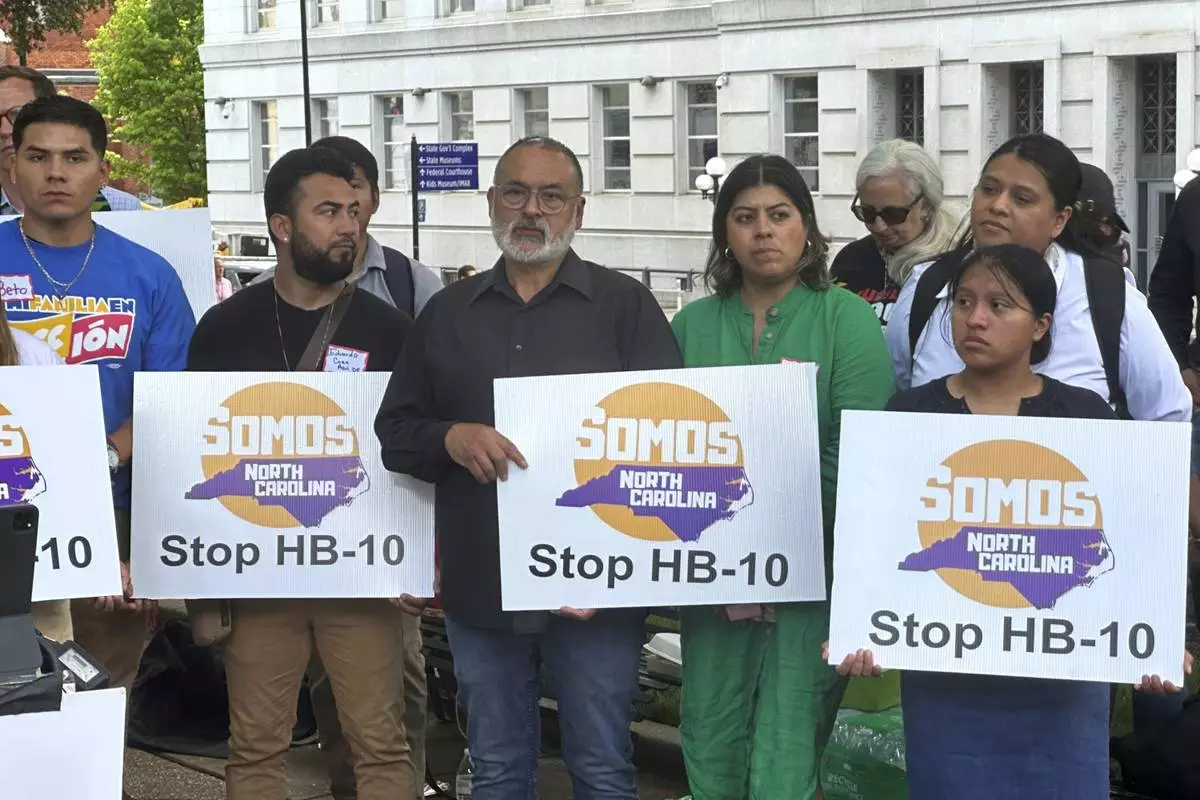
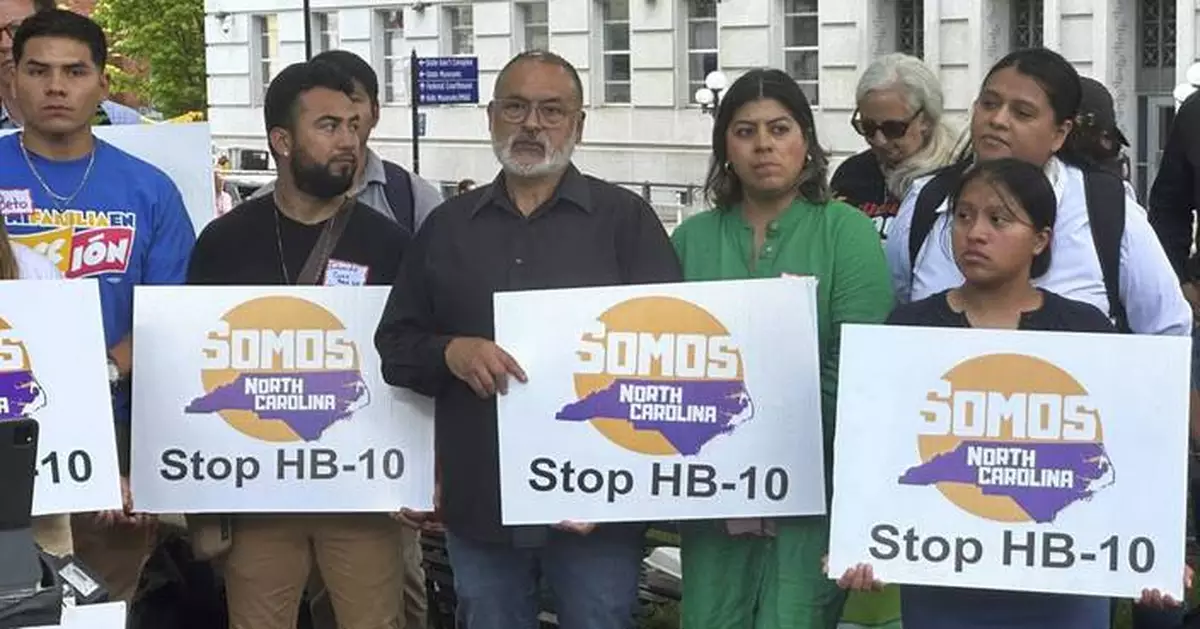
FILE - Opponents of a measure debated by the North Carolina General Assembly that would force local sheriffs to comply with requests by federal agents interested in picking up jail inmates believed to be in the country illegally hold placards against the bill during a rally on May 1, 2024, outside the old Capitol Building in Raleigh, N.C. (AP Photo/Gary D. Robertson, File)
DUBAI, United Arab Emirates (AP) — Iranians made phone calls abroad for the first time in days Tuesday after authorities severed communications during a crackdown on nationwide protests that activists say killed at least 646 people, giving a glimpse of life after being cut off from the outside world.
Witnesses described a heavy security presence in central Tehran, burned-out government buildings, smashed ATMs and few passersby. Meanwhile, people remain concerned about what comes next, including the possibility of strikes after U.S. President Donald Trump said he could possibly use the military to defend peaceful protesters. Trump also has said Iran wants to negotiate with Washington.
“My customers talk about Trump’s reaction while wondering if he plans a military strike against the Islamic Republic,” said shopkeeper Mahmoud, who gave only his first name out of concerns for his safety. “I don’t expect Trump or any other foreign country cares about the interests of Iranians.”
Reza, a taxi driver who also gave just his first name, said protests remain on many people's minds. “People — particularly young ones — are hopeless but they talk about continuing the protests,” he said.
Several people in Tehran were able to call The Associated Press on Tuesday morning and speak to a journalist there. The AP bureau in Dubai, United Arab Emirates, was unable to call those numbers back. The witnesses said text messaging still was down and that internet users in Iran could connect to government-approved websites locally but nothing abroad.
Anti-riot police officers, wearing helmets and body armor, carried batons, shields, shotguns and tear gas launchers, according to the witnesses. Police stood watch at major intersections. Nearby, the witnesses saw members of the Revolutionary Guard's all-volunteer Basij force, who similarly carried firearms and batons. Security officials in plainclothes were visible in public spaces as well.
Several banks and government offices were burned during the unrest, they said. Banks struggled to complete transactions without the internet, the witnesses added.
However, shops were open, though there was little foot traffic in the capital. Tehran's Grand Bazaar, where the demonstrations began Dec. 28, was to open Tuesday. However, a witness described speaking to multiple shopkeepers who said the security forces ordered them to reopen no matter what. Iranian state media had not acknowledged that order.
The witnesses spoke on condition of anonymity for fear of reprisal.
Meanwhile, it appeared that security service personnel were searching for Starlink terminals as people in northern Tehran reported authorities raiding apartment buildings with satellite dishes. While satellite television dishes are illegal, many in the capital have them in their homes and officials broadly had given up on enforcing the law in recent years.
On the streets, people also could be seen challenging plainclothes security officials, who were stopping passersby at random.
State television also read a statement about mortuary and morgue services being free — a signal some likely charged high fees for the release of bodies amid the crackdown.
Iranian Foreign Minister Abbas Araghchi, speaking to the Qatar-funded satellite news network Al Jazeera in an interview aired Monday night, said he continued to communicate with U.S. envoy Steve Witkoff.
The communication “continued before and after the protests and are still ongoing," Araghchi said. However, “Washington’s proposed ideas and threats against our country are incompatible.”
White House press secretary Karoline Leavitt said Iran’s public rhetoric diverges from the private messaging the administration has received from Tehran in recent days.
“I think the president has an interest in exploring those messages,” Leavitt said. “However, with that said, the president has shown he’s unafraid to use military options if and when he deems necessary, and nobody knows that better than Iran.”
Meanwhile, pro-government demonstrators flooded the streets Monday in support of the theocracy, a show of force after days of protests directly challenging the rule of 86-year-old Supreme Leader Ayatollah Ali Khamenei. Iranian state television aired chants from the crowd, which appeared to number in the tens of thousands, who shouted “Death to America!” and “Death to Israel!”
Others cried out, “Death to the enemies of God!” Iran’s attorney general has warned that anyone taking part in protests will be considered an “enemy of God,” a death-penalty charge.
Trump announced Monday that countries doing business with Iran will face 25% tariffs from the United States. Trump announced the tariffs in a social media posting, saying they would be “effective immediately.”
It was action against Iran for the protest crackdown from Trump, who believes exacting tariffs can be a useful tool in prodding friends and foes on the global stage to bend to his will.
Brazil, China, Russia, Turkey and the United Arab Emirates are among economies that do business with Tehran.
Trump said Sunday that his administration was in talks to set up a meeting with Tehran, but cautioned that he may have to act first as reports of the death toll in Iran mount and the government continues to arrest protesters.
“I think they’re tired of being beat up by the United States,” Trump said. “Iran wants to negotiate.”
Iran, through the country’s parliamentary speaker, warned Sunday that the U.S. military and Israel would be “legitimate targets” if Washington uses force to protect demonstrators.
More than 10,700 people also have been detained over the two weeks of protests, said the U.S.-based Human Rights Activists News Agency, which has been accurate in previous unrest in recent years and gave the latest death toll early Tuesday. It relies on supporters in Iran cross-checking information. It said 512 of the dead were protesters and 134 were security force members.
With the internet down in Iran, gauging the demonstrations from abroad has grown more difficult. The Associated Press has been unable to independently assess the toll. Iran’s government hasn’t offered overall casualty figures.
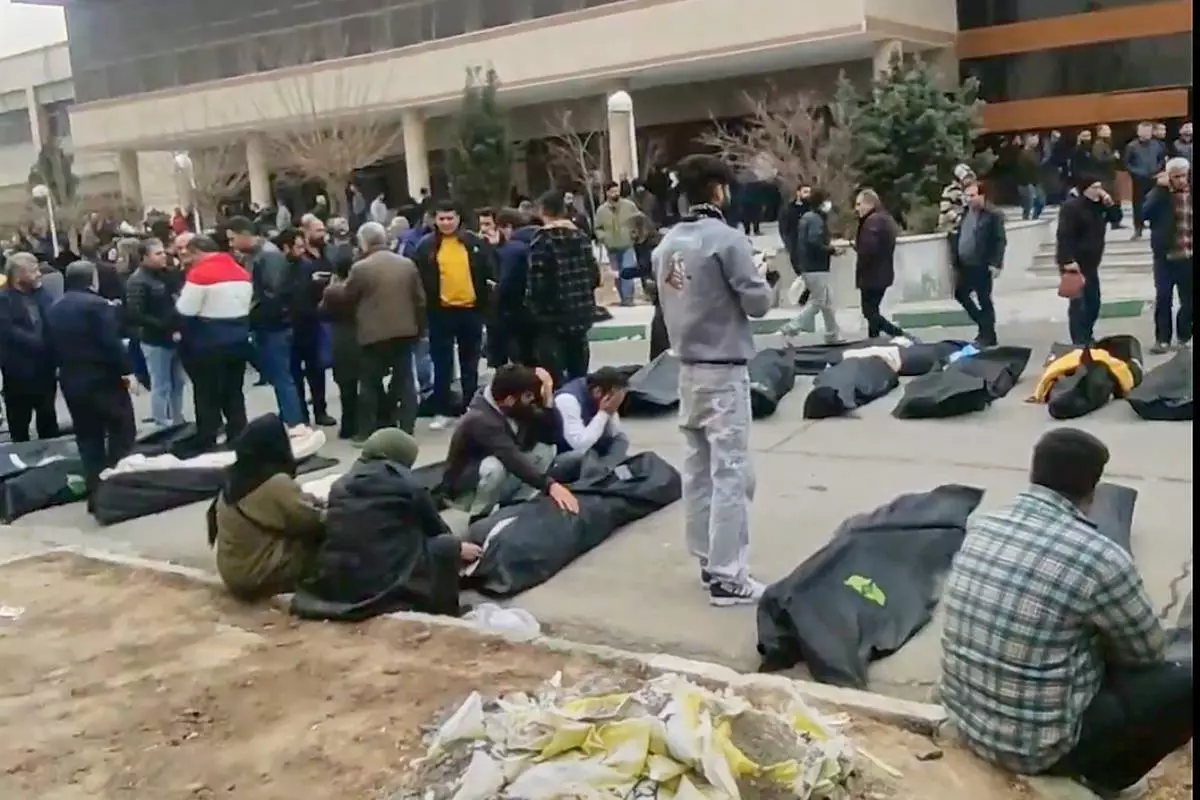
This frame grab from videos taken between Jan. 9 and Jan. 11, 2026, and circulating on social media purportedly shows images from a morgue with dozens of bodies and mourners after crackdown on the outskirts of Iran's capital, in Kahrizak, Tehran Province. (UGC via AP)
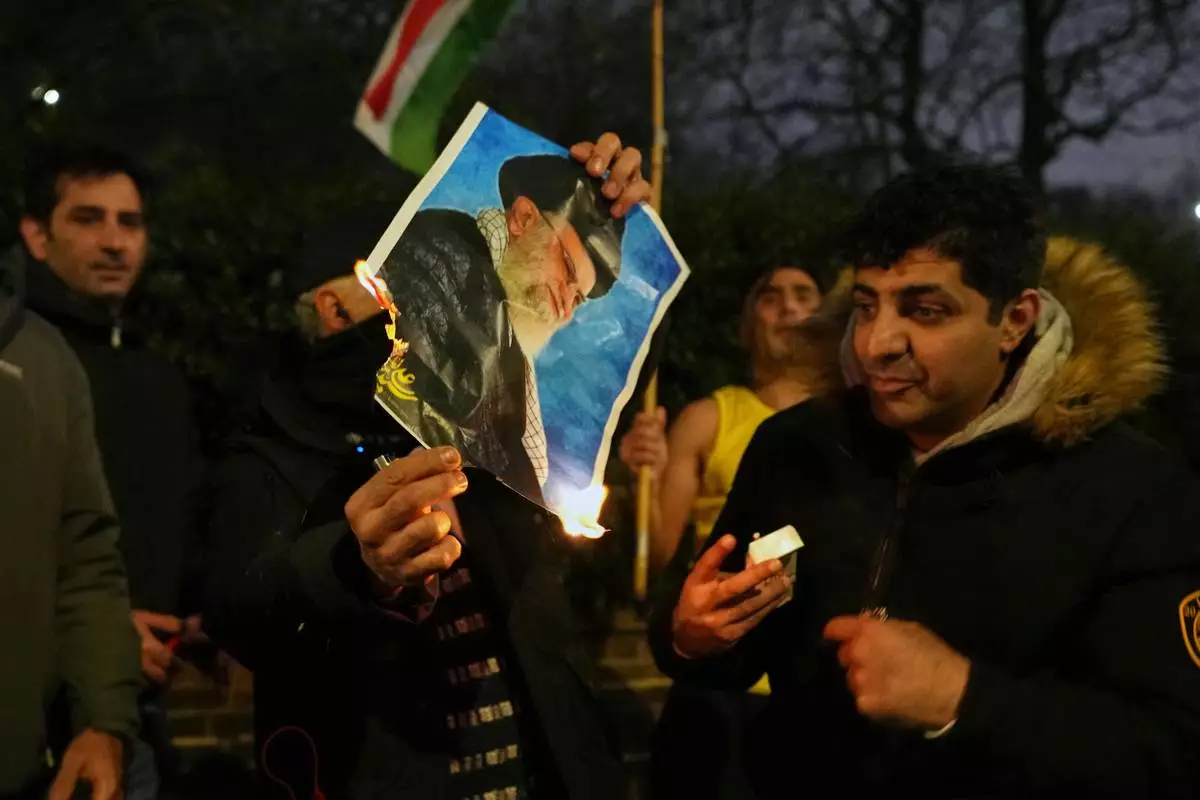
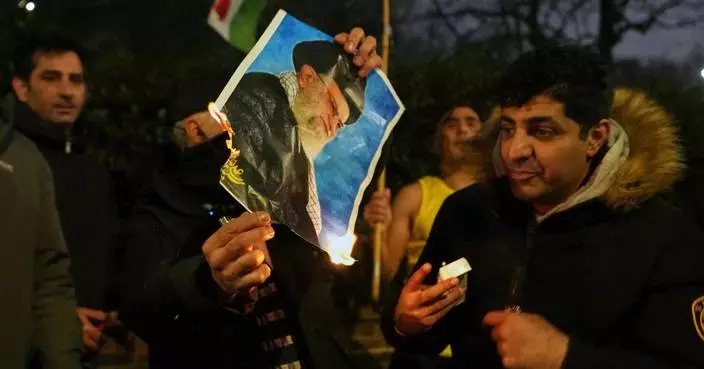
A picture of Ayatollah Ali Khamenei is set alight by protesters outside the Iranian Embassy in London, Monday, Jan. 12, 2026. (AP Photo/Alastair Grant)
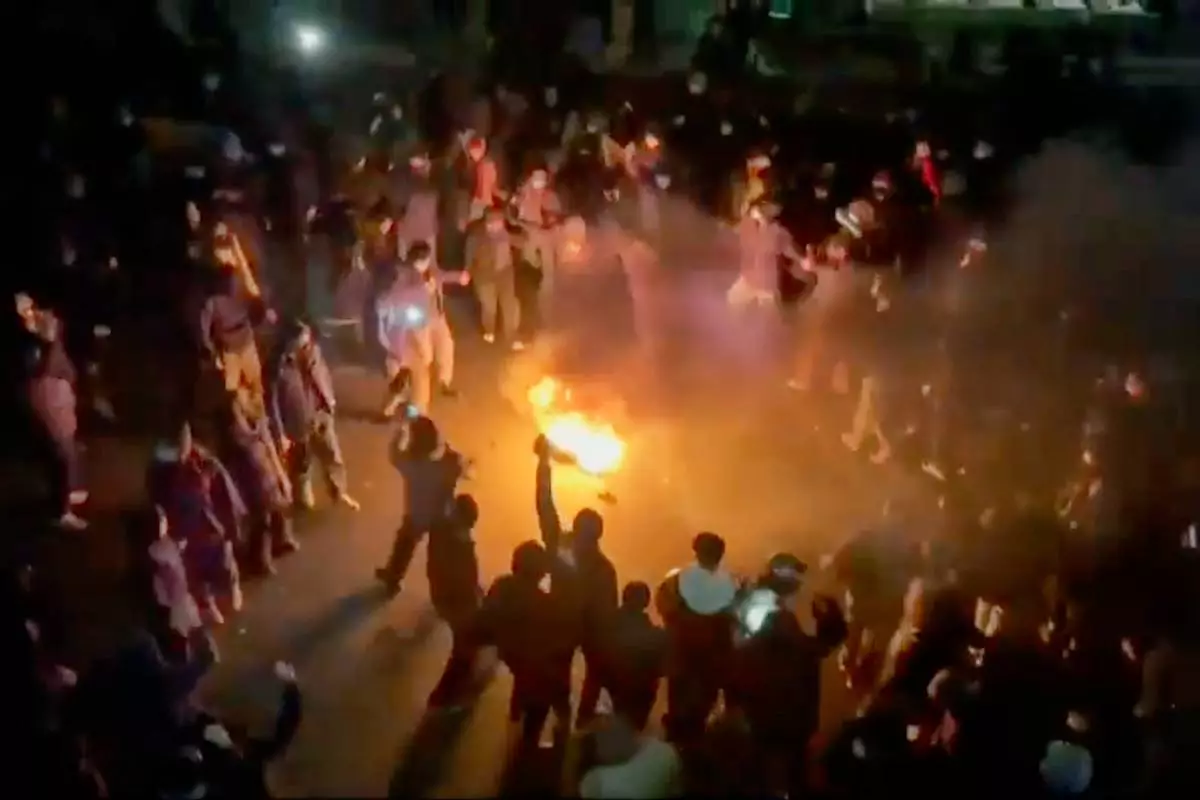
In this frame grab from footage circulating on social media shows protesters dancing and cheering around a bonfire as they take to the streets despite an intensifying crackdown as the Islamic Republic remains cut off from the rest of the world, in Tehran, Iran, Friday, Jan. 9, 2026.(UGC via AP)
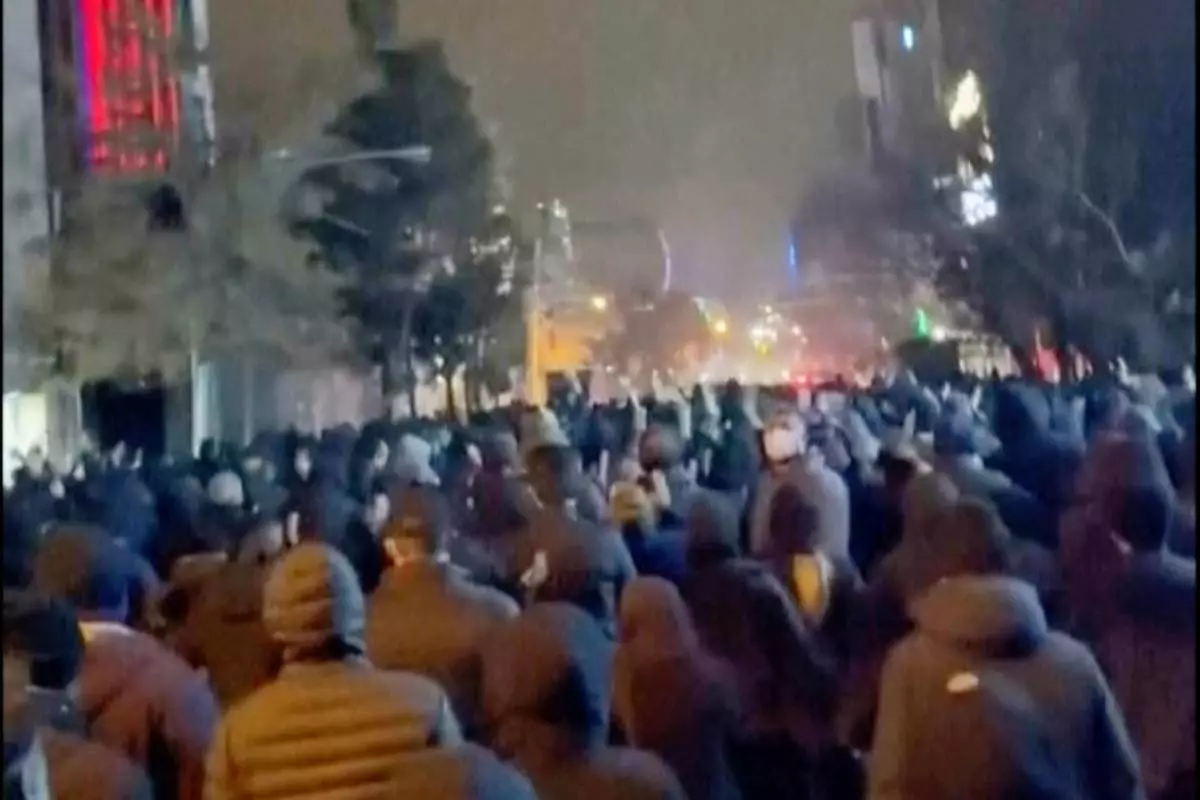
In this frame grab from footage circulating on social media from Iran showed protesters once again taking to the streets of Tehran despite an intensifying crackdown as the Islamic Republic remains cut off from the rest of the world in Tehran, Iran, Saturday Jan. 10, 2026. (UGC via AP)
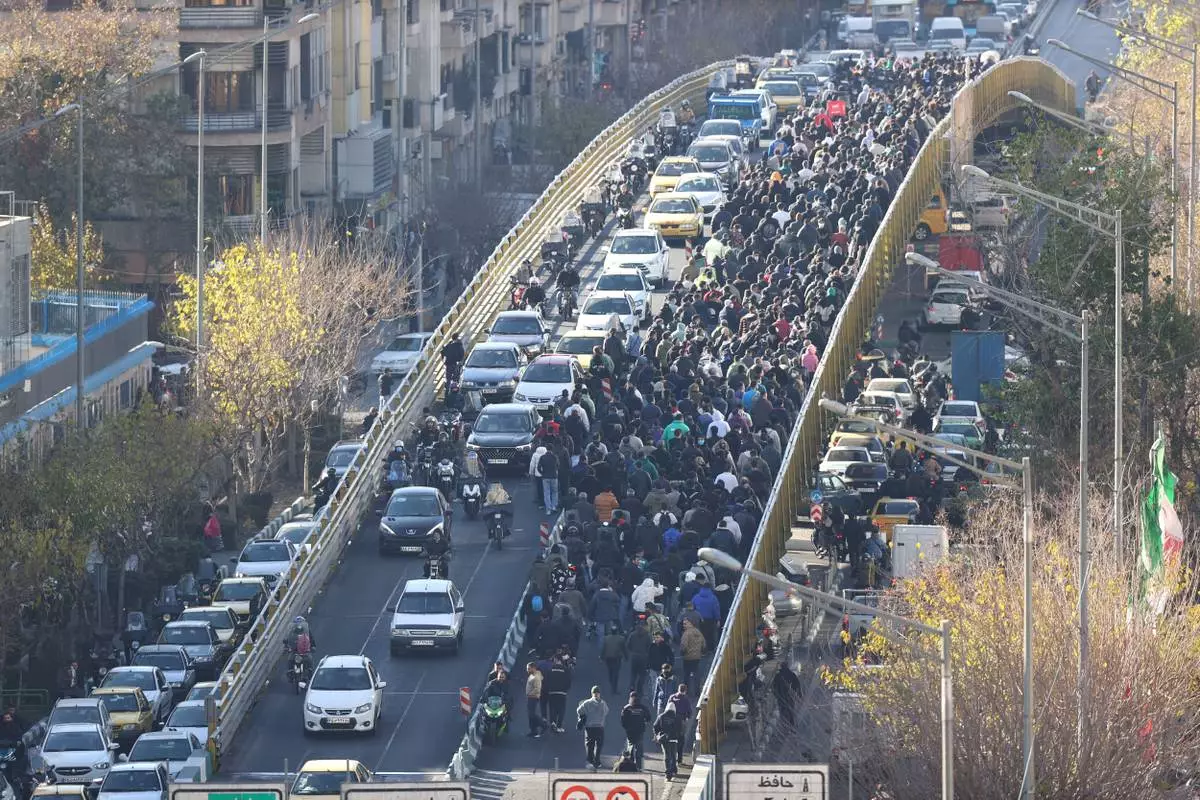
FILE - Protesters march on a bridge in Tehran, Iran, on Dec. 29, 2025. (Fars News Agency via AP, File)