Skip to Content Facebook Feature Image

Takeaways from AP's report on how Trump's immigration crackdown resonates in the Texas Panhandle

News

Takeaways from AP's report on how Trump's immigration crackdown resonates in the Texas Panhandle
News

News

Takeaways from AP's report on how Trump's immigration crackdown resonates in the Texas Panhandle

2025-04-30 23:35 Last Updated At:23:42

PANHANDLE, Texas (AP) — After his inauguration, President Donald Trump issued a series of orders ending legal pathways for immigrants to live and work in the U.S.

Those orders resonate powerfully in the Texas Panhandle, where nearly half of workers in the meatpacking industry are thought to be foreign-born.

More Images
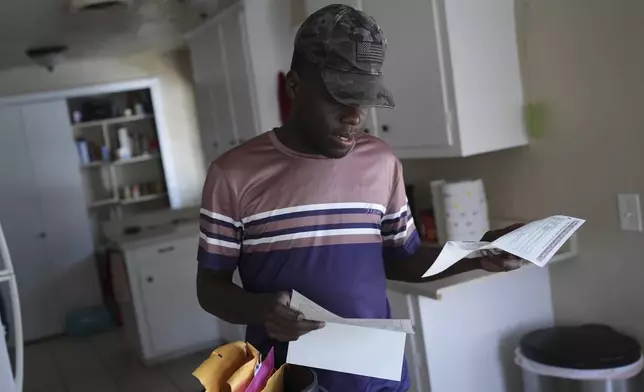
Haitian immigrants Kevenson Jean, a truck driver, looks over papers at his home, Monday, April 14, 2025, in Panhandle, Texas. (AP Photo/Eric Gay)
Haitian immigrants Kevenson Jean, a truck driver, looks over papers at his home, Monday, April 14, 2025, in Panhandle, Texas. (AP Photo/Eric Gay)

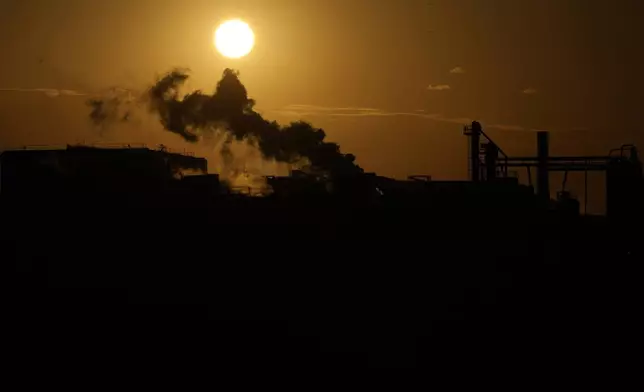
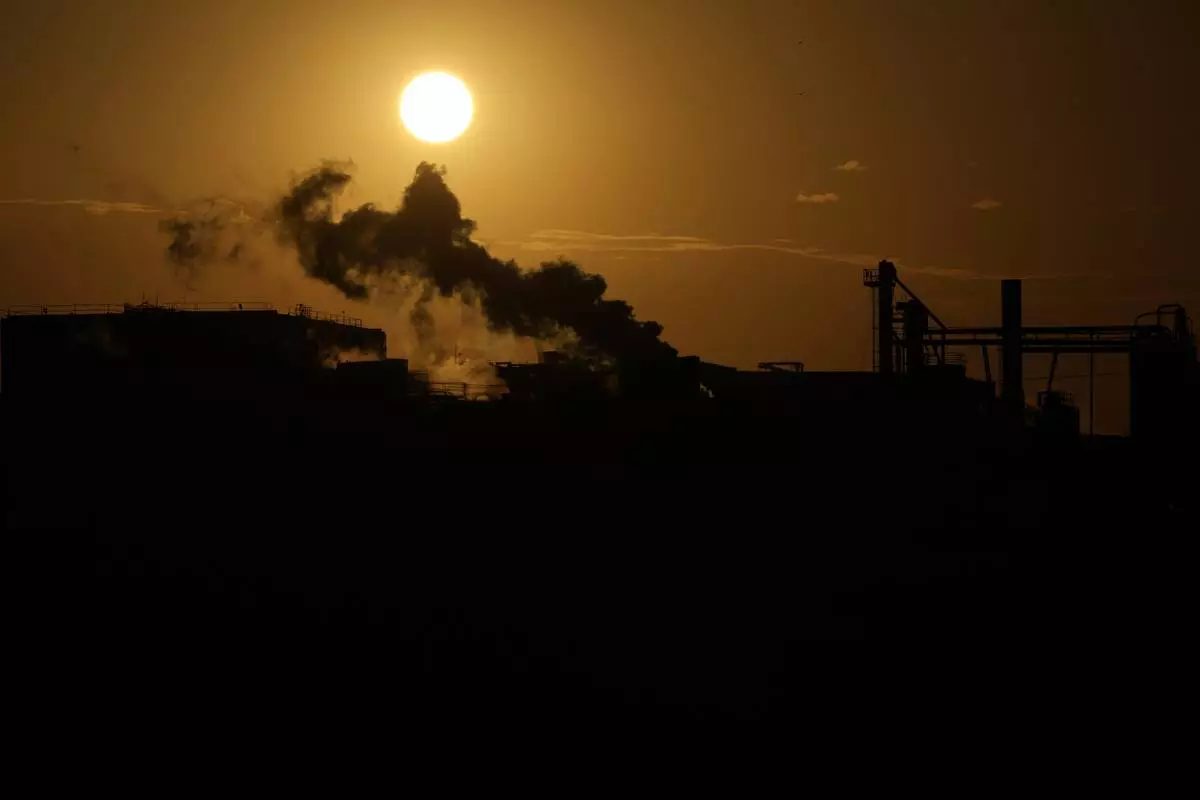
The sun rises behind the JBS meat processing plant, Wednesday, April 16, 2025, in Panhandle, Texas. (AP Photo/Eric Gay)

The sun rises behind the JBS meat processing plant, Wednesday, April 16, 2025, in Panhandle, Texas. (AP Photo/Eric Gay)

Cattle are penned at a feedlot, Tuesday, April 15, 2025, in Cactus, Texas. (AP Photo/Eric Gay)
Cattle are penned at a feedlot, Tuesday, April 15, 2025, in Cactus, Texas. (AP Photo/Eric Gay)

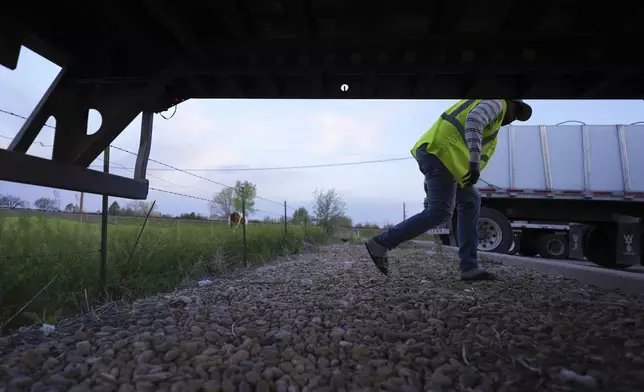
Haitian immigrant Kevenson Jean, a truck driver, checks his truck before a road trip, Tuesday, April 15, 2025, in Panhandle, Texas. (AP Photo/Eric Gay)
Haitian immigrant Kevenson Jean, a truck driver, checks his truck before a road trip, Tuesday, April 15, 2025, in Panhandle, Texas. (AP Photo/Eric Gay)

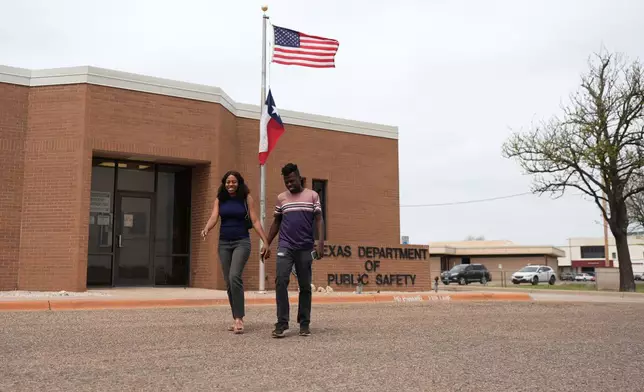
Haitian immigrants Kevenson Jean, a truck driver, and wife Sherlie Jean, a fast food worker, leave the Texas Department of Public Safety, April 14, 2025, in Pampa, Texas. (AP Photo/Eric Gay)
Haitian immigrants Kevenson Jean, a truck driver, and wife Sherlie Jean, a fast food worker, leave the Texas Department of Public Safety, April 14, 2025, in Pampa, Texas. (AP Photo/Eric Gay)

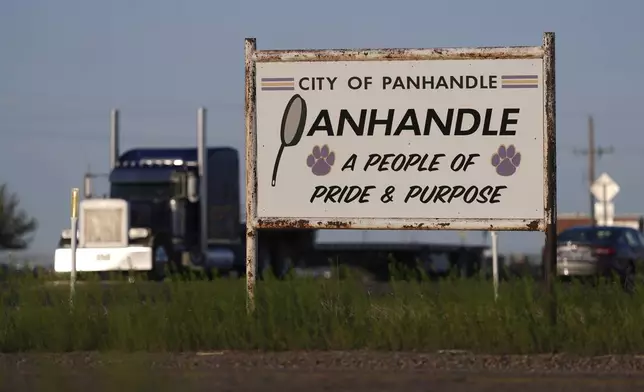
A truck passes through Panhandle, Texas, Tuesday, April 15, 2025. (AP Photo/Eric Gay)

A truck passes through Panhandle, Texas, Tuesday, April 15, 2025. (AP Photo/Eric Gay)

Three months into the new administration, confusing government directives and court rulings have left vast numbers of immigrants unsure of what to do.

Immigrants have long been drawn to the meatpacking industry, back to at least the late 1800s when multitudes of Europeans — Lithuanians, Sicilians, Russian Jews and others — filled Chicago’s Packingtown neighborhood.

For generations, immigrants have come to the Panhandle to work in its immense meatpacking plants, which developed as the state became the nation’s top cattle producer.

Those Panhandle plants were originally dominated by Mexicans and Central Americans. They gave way to waves of people fleeing poverty and violence around the world, from Somalia to Cuba.

They come because the pay in the Panhandle plants starts at roughly $23, and English skills aren’t very important in facilities where thunderous noise often means most communication is done in an informal sign language.

What workers need is a willingness to work very hard.

“It’s time for you to leave the United States,” said the Department of Homeland Security email sent in early April to some immigrants living legally in the U.S. “Do not attempt to remain in the United States — the federal government will find you.”

This is what President Donald Trump had long promised.

America listened when Trump insisted during the campaign that immigrants were an existential threat. Immigration into the U.S., both legal and illegal, surged during the Biden administration, and Trump spun that into an apocalyptic vision that proved powerful with voters.

What was often left out, though, was the reality of those immigrants.

Because while the White House focuses publicly on the relatively small number of immigrants they say are gang members, there are roughly 2 million immigrants living legally in the U.S. on various forms of temporary status.

More than 500,000 Cubans, Nicaraguans, Venezuelans and Haitians were told they would lose their legal status on April 24, though a federal judge's order put that on hold - temporarily. About 500,000 Haitians are scheduled to lose a different protected status in August.

“It’s all so confusing,” said Lesvia Mendoza, a 53-year-old special education teacher who came with her husband from Venezuela in 2024, moving in with her son who lives in Amarillo, the panhandle’s largest city, and who is in the process of getting U.S. citizenship.

Now, an industry dependent on immigrant labor is looking toward a future where it could have to let go of thousands of immigrants.

“We’re going to be back in this situation of constant turnover,” said Mark Lauritsen, who runs the meatpacking division for the United Food and Commercial Workers International Union, which represents thousands of Panhandle workers. “That’s assuming you have labor to replace the labor we’re losing.”

Trucking seemed to be the key to the American dream for a Haitian immigrant named Kevenson Jean.

Kevenson Jean's truck had taken him across immense swaths of America, taught him about snow, the dangers of high winds and truckstop etiquette. His employer owns the truck, but he understands it like no one else.

He laughs and pats the hood: “I love her.”

He and his wife came to the U.S. in 2023, sponsored by a Panhandle family whose small nonprofit employed him to run a school and feeding center for children in rural Haiti.

“We are not criminals. We’re not taking American jobs,” said Jean, whose work moving meat and other products doesn’t attract as many U.S.-born drivers as it once did.

“We did everything that they required us to do, and now we’re being targeted.”

On a Tuesday in mid-April, Kevenson left Panhandle on what he thought would be his final haul.

He looked miserable as he made his checks: oil, cables, brakes. Eventually, he sat in the driver’s seat took off his baseball cap and prayed, as he always does before setting off.

Then he put his hat back on, buckled his seat belt and drove away, heading west on Route 60.

Days later, Kevenson got word that he could keep his job.

No one could tell him how long the reprieve would last.

Haitian immigrants Kevenson Jean, a truck driver, looks over papers at his home, Monday, April 14, 2025, in Panhandle, Texas. (AP Photo/Eric Gay)
Haitian immigrants Kevenson Jean, a truck driver, looks over papers at his home, Monday, April 14, 2025, in Panhandle, Texas. (AP Photo/Eric Gay)

The sun rises behind the JBS meat processing plant, Wednesday, April 16, 2025, in Panhandle, Texas. (AP Photo/Eric Gay)

The sun rises behind the JBS meat processing plant, Wednesday, April 16, 2025, in Panhandle, Texas. (AP Photo/Eric Gay)

Cattle are penned at a feedlot, Tuesday, April 15, 2025, in Cactus, Texas. (AP Photo/Eric Gay)

Cattle are penned at a feedlot, Tuesday, April 15, 2025, in Cactus, Texas. (AP Photo/Eric Gay)

Haitian immigrant Kevenson Jean, a truck driver, checks his truck before a road trip, Tuesday, April 15, 2025, in Panhandle, Texas. (AP Photo/Eric Gay)

Haitian immigrant Kevenson Jean, a truck driver, checks his truck before a road trip, Tuesday, April 15, 2025, in Panhandle, Texas. (AP Photo/Eric Gay)

Haitian immigrants Kevenson Jean, a truck driver, and wife Sherlie Jean, a fast food worker, leave the Texas Department of Public Safety, April 14, 2025, in Pampa, Texas. (AP Photo/Eric Gay)

Haitian immigrants Kevenson Jean, a truck driver, and wife Sherlie Jean, a fast food worker, leave the Texas Department of Public Safety, April 14, 2025, in Pampa, Texas. (AP Photo/Eric Gay)

A truck passes through Panhandle, Texas, Tuesday, April 15, 2025. (AP Photo/Eric Gay)


A truck passes through Panhandle, Texas, Tuesday, April 15, 2025. (AP Photo/Eric Gay)

CRANS-MONTANA, Switzerland (AP) — In the aftermath of a fire inside a Swiss Alpine bar that killed 40 people celebrating the new year, survivors, friends and family members, the region’s top authorities and even Pope Leo have spoken to the public in remarks in French, Italian, German and English, reflecting the tradition of Swiss multilingualism.

Another 119 people were injured in the blaze early Thursday as it ripped through the busy Le Constellation bar at the ski resort of Crans-Montana, authorities said. It was one of the deadliest tragedies in Switzerland’s history.

Investigators said Friday that they believe sparkling candles atop Champagne bottles ignited the fatal fire when they came too close to the ceiling of the crowded bar.

Here’s a look at what people said in the wake of the disaster:

— “I’m looking everywhere. The body of my son is somewhere,” Laetitia Brodard told reporters Friday in Crans-Montana as she searched for her son, 16-year-old Arthur. “I want to know, where is my child, and be by his side. Wherever that may be, be it in the intensive care unit or the morgue.”

— “We were bringing people out, people were collapsing. We were doing everything we could to save them, we helped as many as we could. We saw people screaming, running,” Marc-Antoine Chavanon, 14, told The Associated Press in Crans-Montana on Friday, recounting how he rushed to the bar to help the injured. “There was one of our friends: She was struggling to get out, she was all burned. You can’t imagine the pain I saw.”

— “It was hard to live through for everyone. Also probably because everyone was asking themselves, ‘Was my child, my cousin, someone from the region at this party?’” Eric Bonvin, general director of the regional hospital in Sion that took in dozens of injured people, told AP on Friday. “This place was very well known as somewhere to celebrate the new year,” Bonvin said. “Also, seeing young people arrive — that’s always traumatic.”

— “I have seen horror, and I don’t know what else would be worse than this,” Gianni Campolo, a Swiss 19-year-old who was in Crans-Montana on vacation and rushed to the bar to help first responders, told France's TF1 television.

—“You will understand that the priority today is truly placed on identification, in order to allow the families to begin their mourning,” Beatrice Pilloud, the Valais region's attorney general, told reporters Friday during a news conference in Sion.

Pope Leo said in a telegram Friday to the bishop of Sion that he " wishes to express his compassion and concern to the relatives of the victims. He prays that the Lord will welcome the deceased into His abode of peace and light, and will sustain the courage of those who suffer in their hearts or in their bodies.”

— “We have numerous accounts of heroic actions, one could say of very strong solidarity in the moment,” Cantonal head of government Mathias Reynard told RTS radio Friday. "In the first minutes it was citizens — and in large part young people — who saved lives with their courage.”

— “Switzerland is a strong country not because it is sheltered from drama, but because it knows how to face them with courage and a spirit of mutual help," Swiss President Guy Parmelin, speaking on his first day in the position that changes hands annually, told reporters Thursday.

People bring flowers near the sealed off Le Constellation bar in Crans-Montana, Swiss Alps, Switzerland, Friday, Jan. 2, 2026, where a devastating fire left dead and injured during the New Year's celebrations. (AP Photo/ Antonio Calanni)

People bring flowers near the sealed off Le Constellation bar in Crans-Montana, Swiss Alps, Switzerland, Friday, Jan. 2, 2026, where a devastating fire left dead and injured during the New Year's celebrations. (AP Photo/ Antonio Calanni)

A woman holding a stuffed animal, whose daughter is missing, gather with others near the sealed-off Le Constellation bar in Crans-Montana, Switzerland, Friday, Jan. 2, 2026, where a devastating fire left dead and injured during the New Year's celebrations. (AP Photo/Baz Ratner)

A woman holding a stuffed animal, whose daughter is missing, gather with others near the sealed-off Le Constellation bar in Crans-Montana, Switzerland, Friday, Jan. 2, 2026, where a devastating fire left dead and injured during the New Year's celebrations. (AP Photo/Baz Ratner)

People light candles near the sealed off Le Constellation bar in Crans-Montana, Swiss Alps, Switzerland, Friday, Jan. 2, 2026, where a devastating fire left dead and injured during the New Year's celebrations. (AP Photo/ Antonio Calanni)

People light candles near the sealed off Le Constellation bar in Crans-Montana, Swiss Alps, Switzerland, Friday, Jan. 2, 2026, where a devastating fire left dead and injured during the New Year's celebrations. (AP Photo/ Antonio Calanni)

Recommended Articles