SAN FRANCISCO (AP) — Former Vice President Kamala Harris used a high-profile speech to sharply criticize President Donald Trump amid speculation about whether she will mount another presidential campaign or opt to run for California governor.
In her most extensive public remarks since leaving office in January following her defeat to Trump, Harris said Wednesday she’s inspired by Americans fighting Trump’s agenda despite threats to their freedom or livelihood.
Click to Gallery
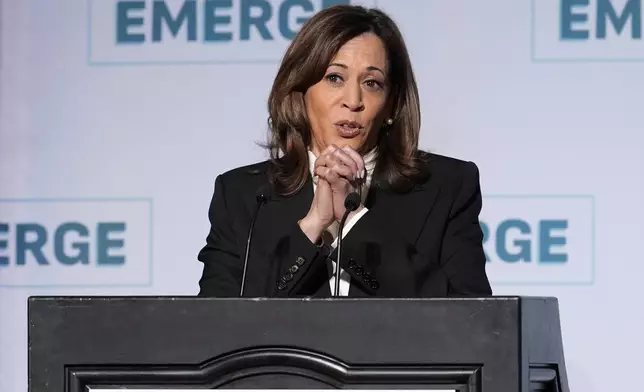
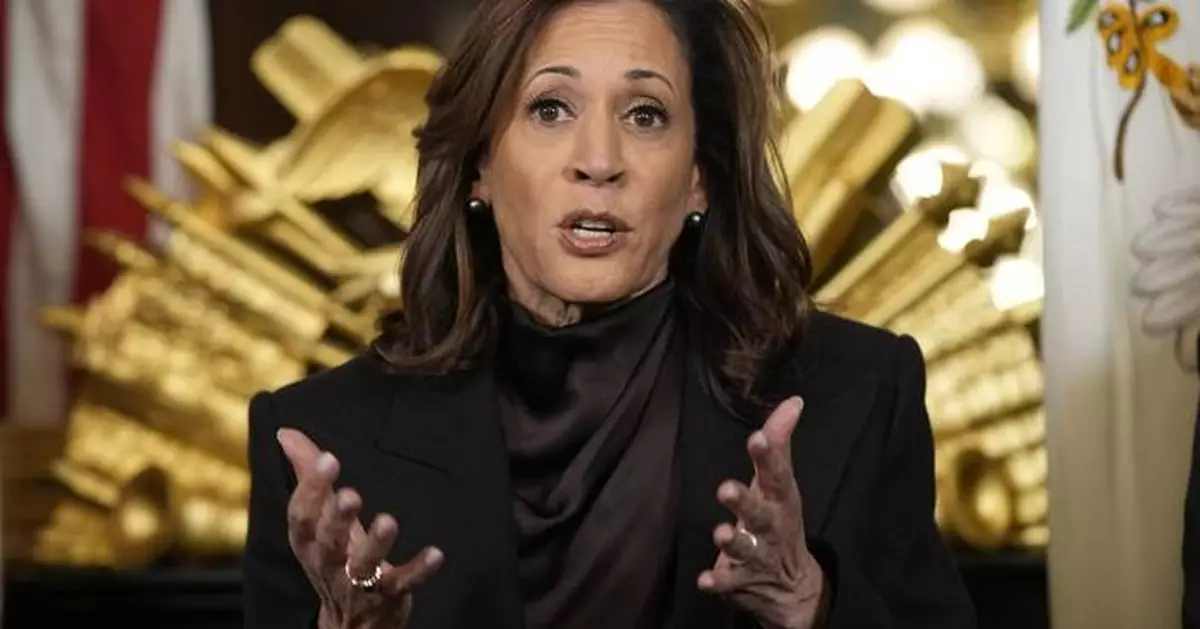
Former Vice President Kamala Harris delivers the keynote speech at the Emerge 20th Anniversary Gala in San Francisco, Wednesday, April 30, 2025. (AP Photo/Godofredo A. Vásquez)
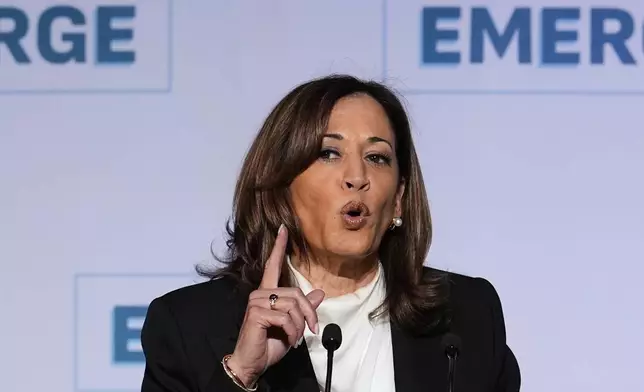
Former Vice President Kamala Harris delivers the keynote speech at the Emerge 20th Anniversary Gala in San Francisco, Wednesday, April 30, 2025. (AP Photo/Godofredo A. Vásquez)
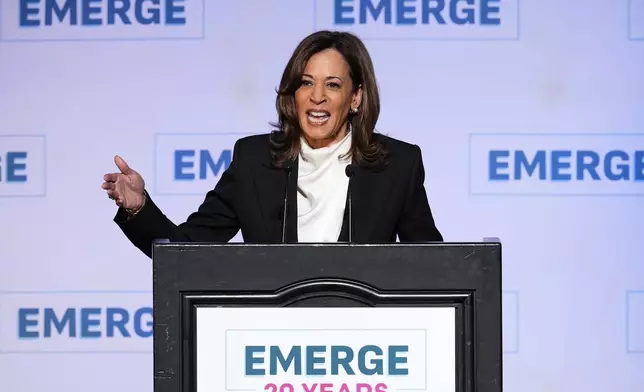
Former Vice President Kamala Harris delivers the keynote speech at the Emerge 20th Anniversary Gala in San Francisco, Wednesday, April 30, 2025. (AP Photo/Godofredo A. Vásquez)
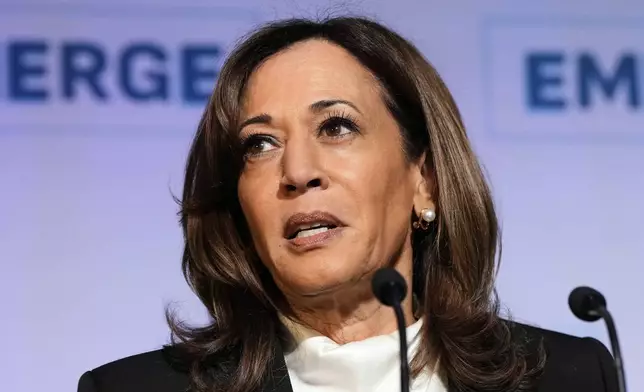
Former Vice President Kamala Harris delivers the keynote speech at the Emerge 20th Anniversary Gala in San Francisco, Wednesday, April 30, 2025. (AP Photo/Godofredo A. Vásquez)
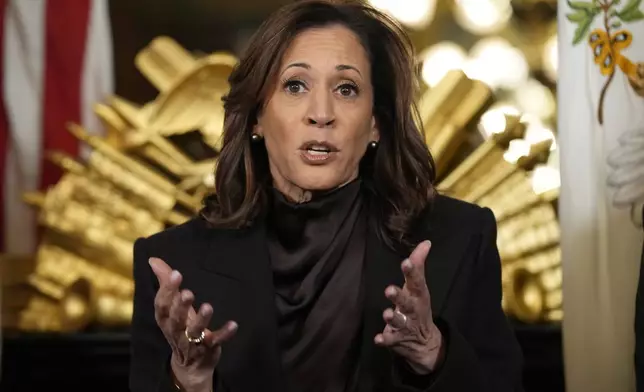
FILE - Vice President Kamala Harris speaks before signing the desk drawer in her ceremonial office, a long-standing tradition for Vice Presidents, in the Eisenhower Executive Office Building on the White House complex in Washington, Jan. 16, 2025. (AP Photo/Susan Walsh, File)
“Instead of an administration working to advance America’s highest ideals, we are witnessing the wholesale abandonment of those ideals,” Harris said a day after Trump reached 100 days in office.
Before Wednesday, Harris had barely mentioned Trump by name since she conceded defeat to him in November.
In a 15-minute speech, she spoke to the anxiety and confusion that have gripped many of her supporters since Trump took office but discouraged despair.
“They are counting on the notion that if they can make some people afraid, it will have a chilling effect on others. But what they have overlooked is that fear is not the only thing that’s contagious,” Harris said. “Courage is contagious.”
Trump went after Harris in a campaign-style rally Tuesday marking his 100th day in office. He sarcastically called her a “great border czar" and a “great candidate" and repeated some of the applause lines he routinely delivered during the campaign.
Until Harris replaced Joe Biden atop the Democratic ticket last summer, Trump said, “I knew nothing about her."
White House press secretary Karoline Leavitt said Thursday, “I think I speak for everyone at the White House: We encourage Kamala Harris to continue going out and do speaking engagements.”
Harris cautioned Americans against viewing Trump’s administration as merely chaotic, casting it instead as a “high-velocity event,” the culmination of extensive work on the right to remake government.
“A vessel is being used for the swift implementation of an agenda that has been decades in the making," Harris said. “An agenda to slash public education. An agenda to shrink government and then privatize its services. All while giving tax breaks to the wealthiest among us.”
Harris chose a friendly audience for her return to the political arena, addressing the 20th anniversary gala for Emerge America, an organization that recruits and trains Democratic women to run for office. It grew in part from Harris’ run for San Francisco district attorney in the early 2000s.
The speech was delivered below luminous chandeliers in a gold-trimmed ballroom in the landmark Palace Hotel.
Harris is ramping up her public presence as Democrats nationally search for a path forward after November's election, in which Republicans also won control of Congress. While a slate of high-profile Democrats — from governors to businessmen — seek leadership roles within the party, the former vice president retains unique influence and would reshape any future race she chooses to enter.
She praised Democrats who have been especially prolific in criticizing Trump, name-dropping lawmakers diverse in their ideology and style: Sens. Cory Booker, Chris Van Hollen, Chris Murphy and Bernie Sanders along with Reps. Jasmine Crockett, Maxwell Frost and Alexandria Ocasio-Cortez.
But she did not take a stand in one of her party's central divides, neither calling for mass mobilization like Illinois Gov. JB Pritzker or questioning Democratic positioning on key issues like California Gov. Gavin Newsom.
“I’m not here tonight to offer all the answers,” Harris said. “But I am here to say this: You are not alone and we are all in this together.”
But she warned that things will probably get worse before they get better.
“The one check, the one balance, the one power that must not fail is the voice of the people,” she said.
Harris, a former state attorney general and U.S. senator from California, has not discouraged speculation that she might enter the race to replace the term-limited Newsom, himself a potential contender for president. And she has not ruled out another run for the White House.
She did not address her future Wednesday.
She continues to fundraise, using a joint committee that includes Harris for President, the Democratic National Committee and state Democratic parties. The committee, the Harris Victory Fund, reported having about $4.5 million on hand at the end of March, according to federal records.
In recent fundraising emails, Harris has been blunt about the need for Democrats to unify ahead of the 2026 midterm elections.
Democrats need to “organize and stop Trump’s agenda while electing Democrats everywhere,” she wrote in recent emails. “There has never been a more important time for a strong Democratic Party — one that is willing to stand up to Donald Trump, Elon Musk and what they are doing to this country.”
The event marks a homecoming of sorts. Harris lives in Los Angeles but she is from the San Francisco Bay Area, where her political career is rooted. For her first major speech since the election, she chose familiar terrain and a friendly, in some ways familial, crowd.
Lisa Gotbhi, a health care executive in San Francisco, said Harris' loss last year was a “shock," but “she’s a voice we need and a leader we need. Let’s get back in the fight.”
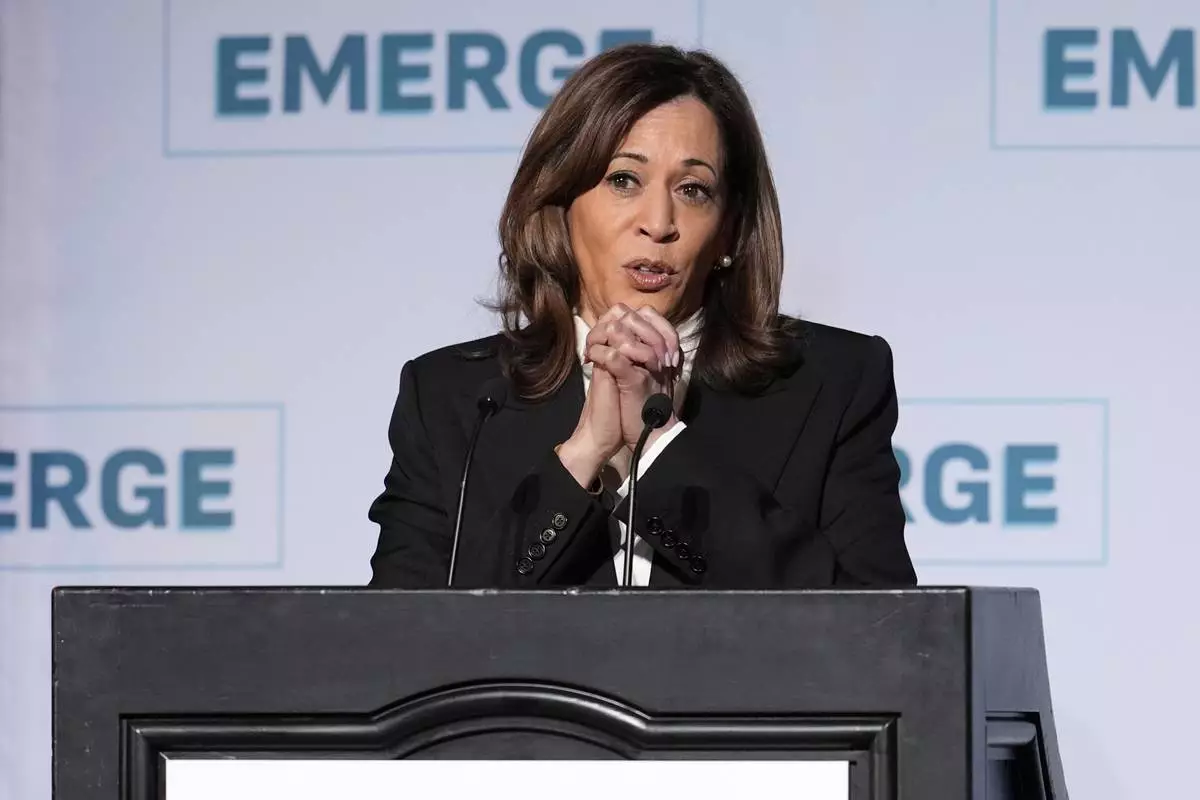
Former Vice President Kamala Harris delivers the keynote speech at the Emerge 20th Anniversary Gala in San Francisco, Wednesday, April 30, 2025. (AP Photo/Godofredo A. Vásquez)
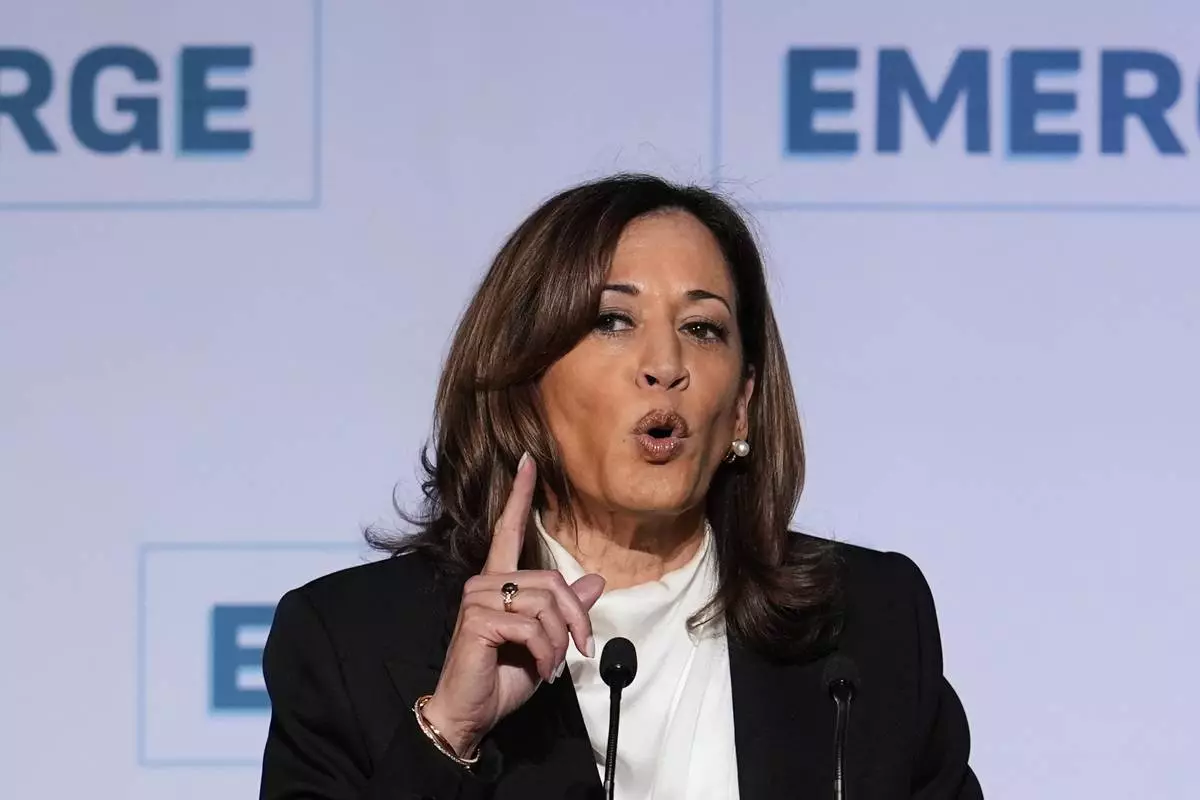
Former Vice President Kamala Harris delivers the keynote speech at the Emerge 20th Anniversary Gala in San Francisco, Wednesday, April 30, 2025. (AP Photo/Godofredo A. Vásquez)
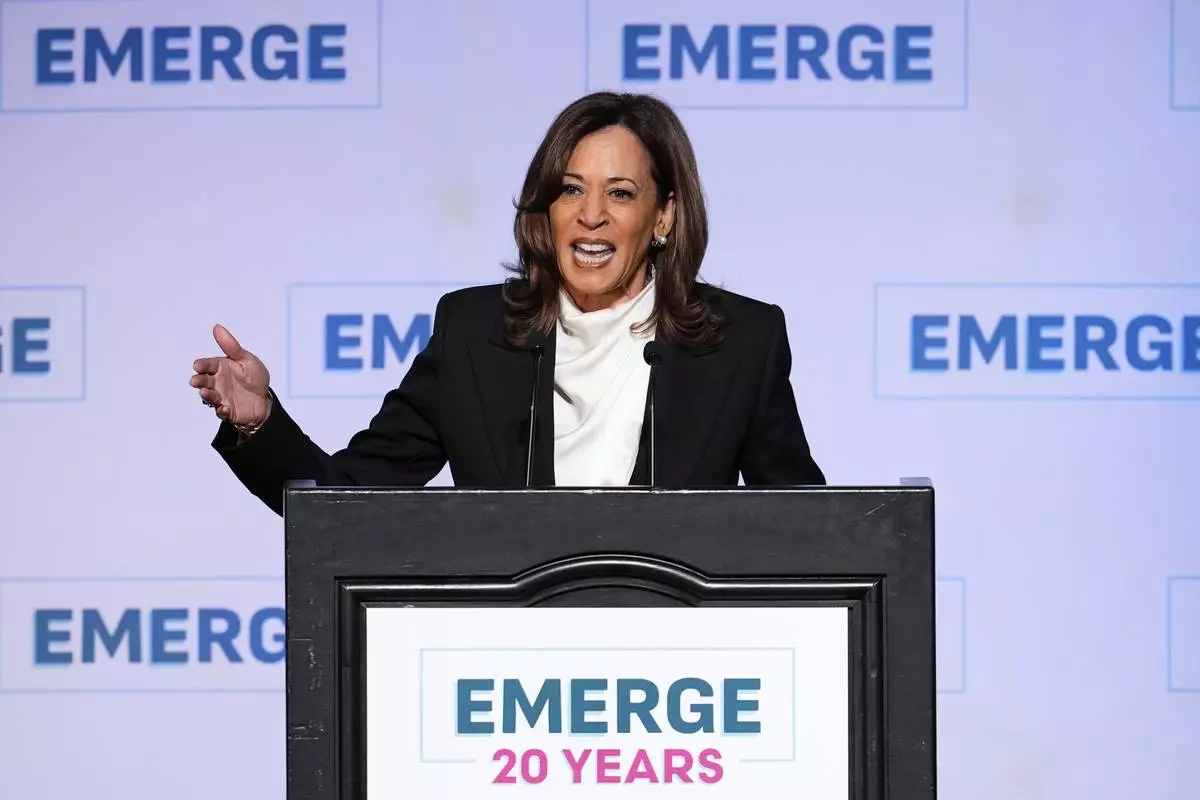
Former Vice President Kamala Harris delivers the keynote speech at the Emerge 20th Anniversary Gala in San Francisco, Wednesday, April 30, 2025. (AP Photo/Godofredo A. Vásquez)
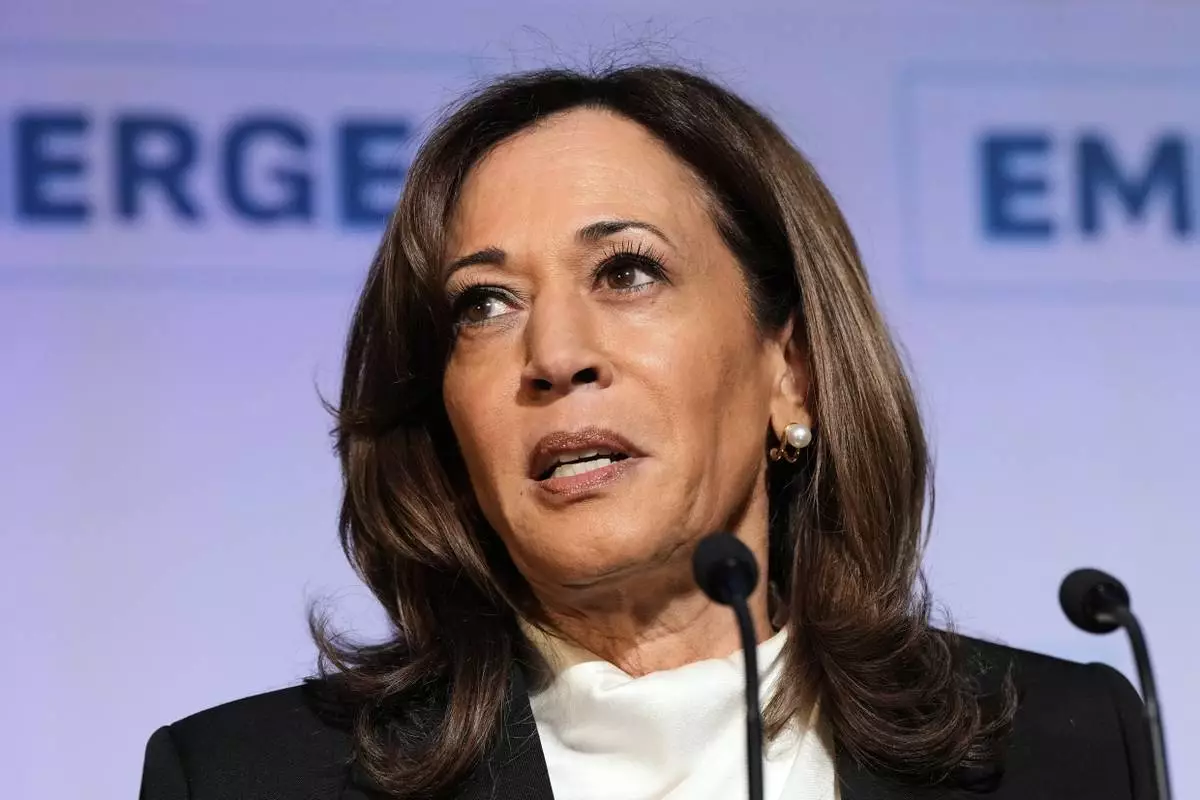
Former Vice President Kamala Harris delivers the keynote speech at the Emerge 20th Anniversary Gala in San Francisco, Wednesday, April 30, 2025. (AP Photo/Godofredo A. Vásquez)
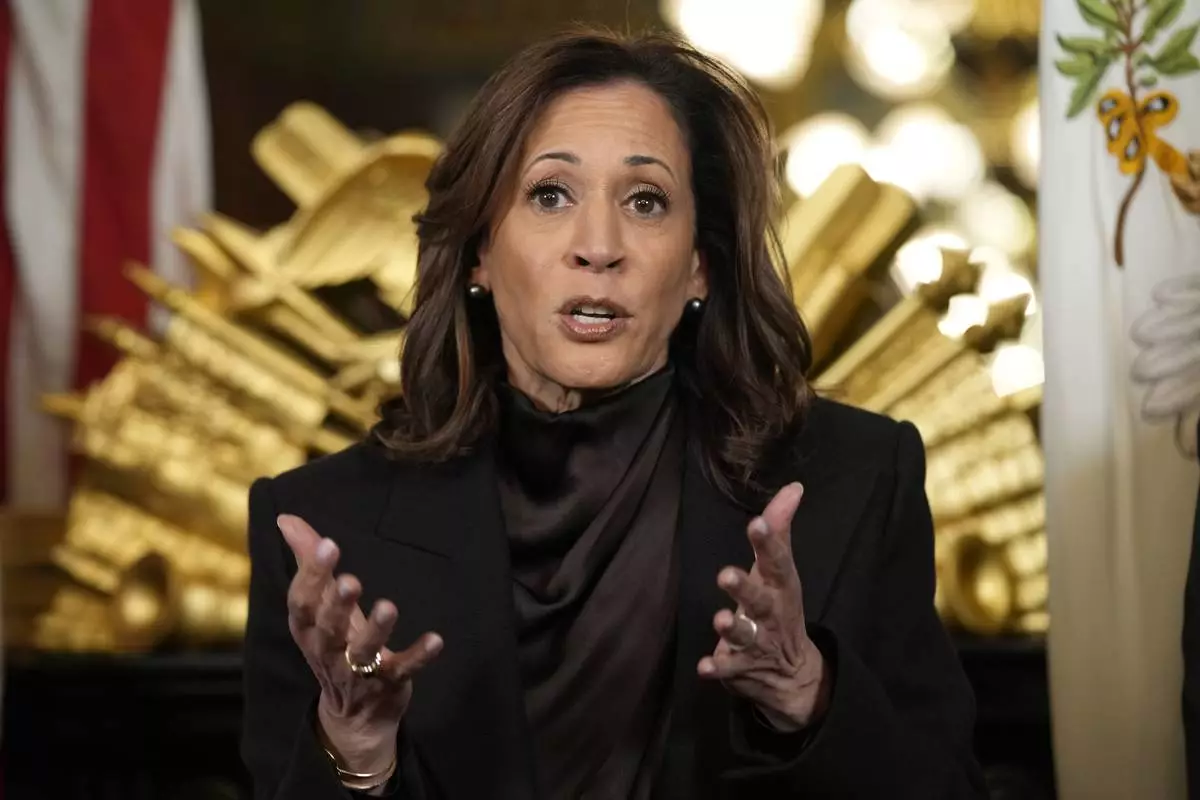
FILE - Vice President Kamala Harris speaks before signing the desk drawer in her ceremonial office, a long-standing tradition for Vice Presidents, in the Eisenhower Executive Office Building on the White House complex in Washington, Jan. 16, 2025. (AP Photo/Susan Walsh, File)