Artificial intelligence “agents” are supposed to be more than chatbots. The tech industry has spent months pitching AI personal assistants that know what you want and can do real work on your behalf.
So far, they're not doing much.
Visa hopes to change that by giving them your credit card. Set a budget and some preferences and these AI agents — successors to ChatGPT and its chatbot peers — could find and buy you a sweater, weekly groceries or an airplane ticket.
“We think this could be really important,” said Jack Forestell, Visa’s chief product and strategy officer, in an interview. “Transformational, on the order of magnitude of the advent of e-commerce itself.”
Visa announced Wednesday it is partnering with a group of leading AI chatbot developers — among them U.S. companies Anthropic, Microsoft, OpenAI and Perplexity, and France's Mistral — to connect their AI systems to Visa's payments network. Visa is also working with IBM, online payment company Stripe and phone-maker Samsung on the initiative. Pilot projects begin Wednesday, ahead of more widespread usage expected next year.
The San Francisco payment processing company is betting that what seems futuristic now could become a convenient alternative to our most mundane shopping tasks in the near future. It has spent the past six months working with AI developers to address technical obstacles that must be overcome before the average consumer is going to use it.
For emerging AI companies, Visa's backing could also boost their chances of competing with tech giants Amazon and Google, which dominate digital commerce and are developing their own AI agents.
The tech industry is already full of demonstrations of the capabilities of what it calls agentic AI, though few are yet found in the real world. Most are still refashioned versions of large language models — the generative AI technology behind chatbots that can write emails, summarize documents or help people code. Trained on huge troves of data, they can scour the internet and bring back recommendations for things to buy, but they have a harder time going beyond that.
“The early incarnations of agent-based commerce are starting to do a really good job on the shopping and discovery dimension of the problem, but they are having tremendous trouble on payments,” Forestell said. “You get to this point where the agents literally just turn it back around and say, ‘OK, you go buy it.’
Visa sees itself as having a key role in giving AI agents easier and trusted access to the cash they need to make purchases.
“The payments problem is not something the AI platforms can solve by themselves," Forestell said. “That’s why we started working with them.”
The new AI initiative comes nearly a year after Visa revealed major changes to how credit and debit cards will operate in the U.S., making physical cards and their 16-digit numbers increasingly irrelevant.
Many consumers are already getting used to digital payment systems such as Apple Pay that turn their phones into a credit card. A similar process of vetting someone's digital credentials would authorize AI agents to work on a customer's behalf, in a way Forestell says must assure buyers, banks and merchants that the transactions are legitimate and that Visa will handle disputes.
Forestell said that doesn't mean AI agents will take over the entire shopping experience, but it might be useful for errands that either bore some people — like groceries, home improvement items or even Christmas lists — or are too complicated, like travel bookings. In those situations, some people might want an agent that “just powers through it and automatically goes and does stuff for us,” Forestell said.
Other shopping experiences, such as for luxury goods, are a form of entertainment and many customers still want to immerse themselves in the choices and comparisons, Forestell said. In that case, he envisions AI agents still offering assistance but staying in the background.
And what about credit card debt? The credit card balances of American consumers hit $1.21 trillion at the end of last year, according to the Federal Reserve of New York.
Forestell says consumers will give their AI agents clear spending limits and conditions that should give them confidence that the human is still in control. At first, the AI agents are likely to come back to buyers to make sure they are OK with a specific airplane ticket. Over time, those agents might get more autonomy to “go spend up to $1,500 on any airline to get me from A to B," he said.
Part of what is attracting some AI developers to the Visa partnership is that, with a customer's consent, an AI agent can also tap into a lot of data about past credit card purchases.
“Visa has the ability for a user to consent to share streams of their transaction history with us,” said Dmitry Shevelenko, Perplexity's chief business officer. “When we generate a recommendation -- say you’re asking, ‘What are the best laptops?’ — we would know what are other transactions you’ve made and the revealed preferences from that.”
Perplexity's chatbot can already book hotels and make other purchases, but it's still in the early stages of AI commerce, Shevelenko says. The San Francisco startup has also, along with ChatGPT maker OpenAI, told a federal court it would consider buying Google's internet browser, Chrome, if the U.S. forces a breakup of the tech giant in a pending antitrust case.

FILE - A Visa logo is displayed on a credit card in New Orleans, Aug. 11, 2019. (AP Photo/Jenny Kane, File)
HOUSTON (AP) — Former Uvalde, Texas, schools police Officer Adrian Gonzales was among the first officers to arrive at Robb Elementary after a gunman opened fire on students and teachers.
Prosecutors allege that instead of rushing in to confront the shooter, Gonzales failed to take action to protect students. Many families of the 19 fourth-grade students and two teachers who were killed believe that if Gonzales and the nearly 400 officers who responded had confronted the gunman sooner instead of waiting more than an hour, lives might have been saved.
More than 3½ years since the killings, the first criminal trial over the delayed law enforcement response to one of the deadliest school shootings in U.S. history is set to begin.
It’s a rare case in which a police officer could be convicted for allegedly failing to act to stop a crime and protect lives.
Here’s a look at the charges and the legal issues surrounding the trial.
Gonzales was charged with 29 counts of child endangerment for those killed and injured in the May 2022 shooting. The indictment alleges he placed children in “imminent danger” of injury or death by failing to engage, distract or delay the shooter and by not following his active shooter training. The indictment says he did not advance toward the gunfire despite hearing shots and being told where the shooter was located.
Each child endangerment count carries a potential sentence of up to two years in prison.
State and federal reviews of the shooting cited cascading problems in law enforcement training, communication, leadership and technology and questioned why officers from multiple agencies waited so long before confronting and killing the gunman, Salvador Ramos.
Gonzales’ attorney, Nico LaHood, said his client is innocent and public anger over the shooting is being misdirected.
“He was focused on getting children out of that building,” LaHood, said. “He knows where his heart was and what he tried to do for those children.”
Jury selection in Gonzales’ trial is scheduled to begin Jan. 5 in Corpus Christi, about 200 miles (320 kilometers) southeast of Uvalde. The trial was moved after defense attorneys argued Gonzales could not receive a fair trial in Uvalde.
Gonzales, 52, and former Uvalde schools police chief Pete Arredondo are the only officers charged. Arredondo was charged with multiple counts of child endangerment and abandonment. His trial has not been scheduled, and he is also seeking a change of venue.
Prosecutors have not explained why only Gonzales and Arredondo were charged. Uvalde County District Attorney Christina Mitchell did not respond to a request for comment.
It’s “extremely unusual” for an officer to stand trial for not taking an action, said Sandra Guerra Thompson, a University of Houston Law Center professor.
“At the end of the day, you’re talking about convicting someone for failing to act and that’s always a challenge,” Thompson said, “because you have to show that they failed to take reasonable steps.”
Phil Stinson, a criminal justice professor at Bowling Green State University who maintains a nationwide database of roughly 25,000 cases of police officers arrested since 2005, said a preliminary search found only two similar prosecutions.
One involved a Florida sheriff’s deputy, Scot Peterson, who was charged after the 2018 Parkland school massacre for allegedly failing to confront the shooter — the first such prosecution in the U.S. for an on-campus shooting. He was acquitted by a jury in 2023.
The other was the 2022 conviction of former Baltimore police officer Christopher Nguyen for failing to protect an assault victim. The Maryland Supreme Court overturned that conviction in July, ruling prosecutors had not shown Nguyen had a legal duty to protect the victim.
The justices in Maryland cited a prior U.S. Supreme Court decision on the public duty doctrine, which holds that government officials like police generally owe a duty to the public at large rather than to specific individuals unless a special relationship exists.
Michael Wynne, a Houston criminal defense attorney and former prosecutor not involved in the case, said securing a conviction will be difficult.
“This is clearly gross negligence. I think it’s going to be difficult to prove some type of criminal malintent,” Wynne said.
But Thompson, the law professor, said prosecutors may nonetheless be well positioned.
“You’re talking about little children who are being slaughtered and a very long delay by a lot of officers,” she said. “I just feel like this is a different situation because of the tremendous harm that was done to so many children.”
Associated Press writer Jim Vertuno in Austin, Texas, contributed.
Follow Juan A. Lozano: https://x.com/juanlozano70
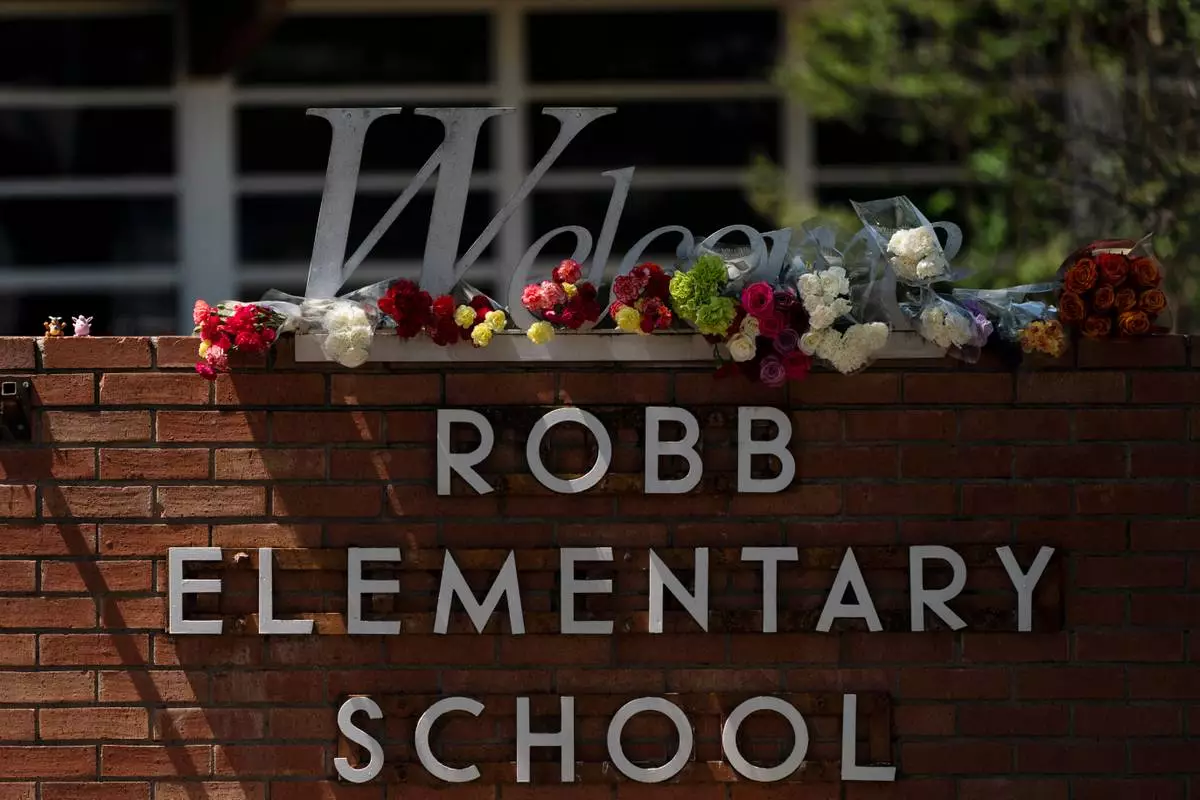
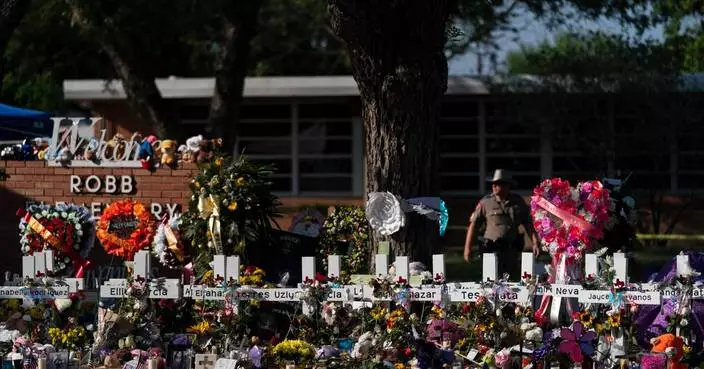
FILE - Flowers are placed around a welcome sign outside Robb Elementary School in Uvalde, Texas, May 25, 2022, to honor the victims killed in a shooting at the school. (AP Photo/Jae C. Hong, File)
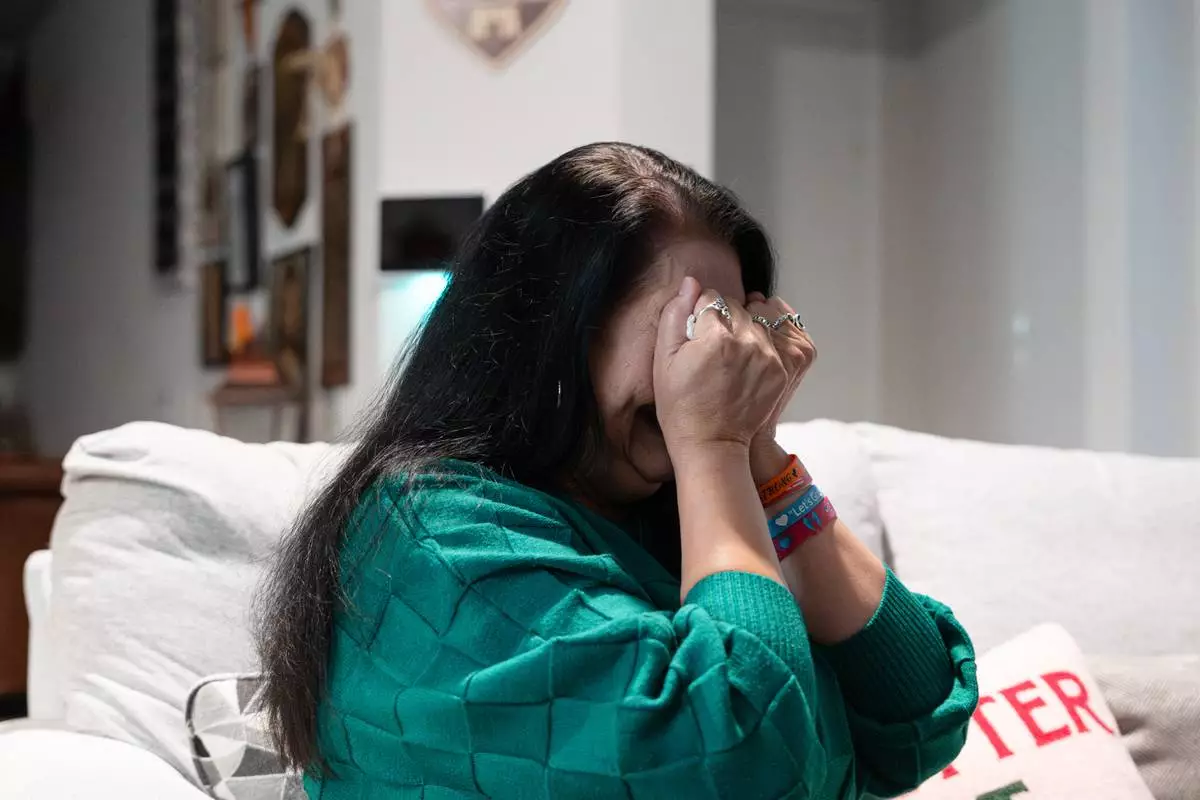
Velma Lisa Duran, sister of Robb Elementary teacher Irma Garcia, cries as she reflects on the 2022 Uvalde, Texas, school shooting during an interview on Dec. 19, 2025, in San Antonio. (AP Photo/Kin Man Hui)
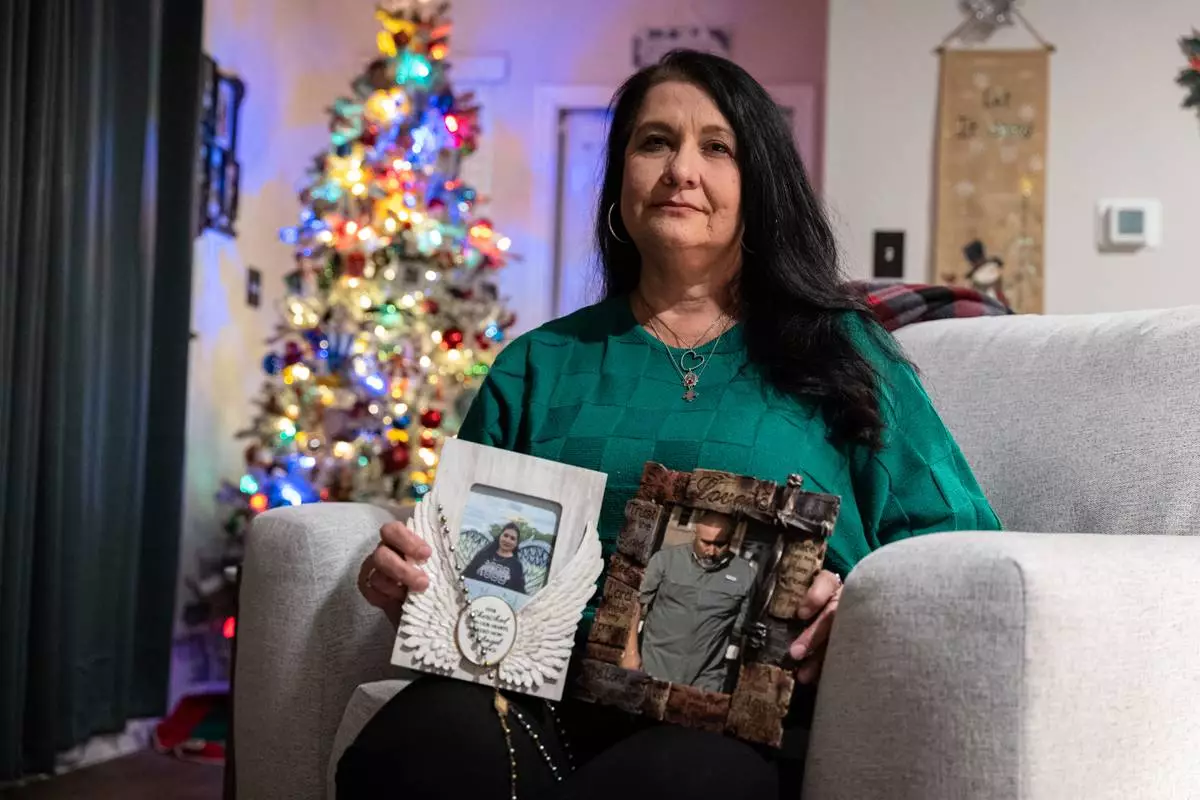
Velma Lisa Duran, sister of Robb Elementary teacher Irma Garcia, poses with photos of her sister and brother-in-law, Joe Garcia, as she reflects on the 2022 Uvalde, Texas, school shooting on Dec. 19, 2025, in San Antonio. (AP Photo/Kin Man Hui)
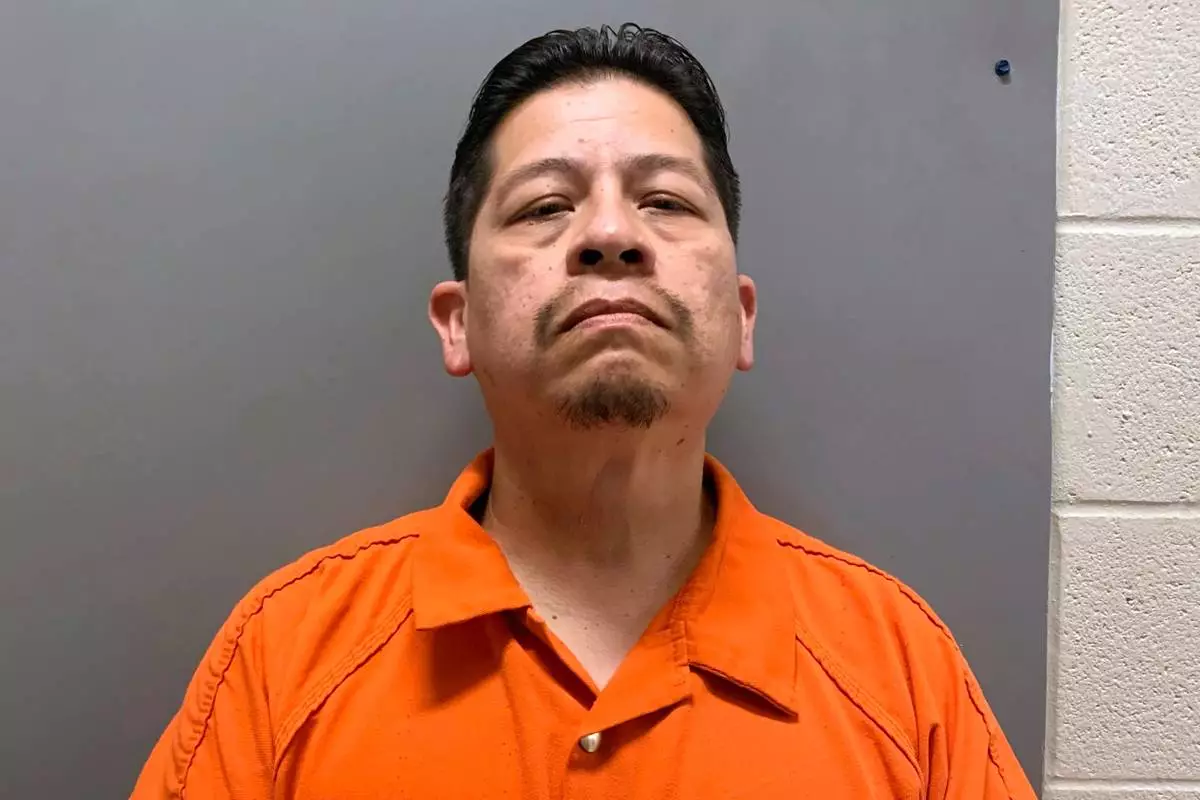
FILE - This booking image provided by the Uvalde County, Texas, Sheriff's Office shows Adrian Gonzales, a former police officer for schools in Uvalde, Texas. (Uvalde County Sheriff's Office via AP, File)
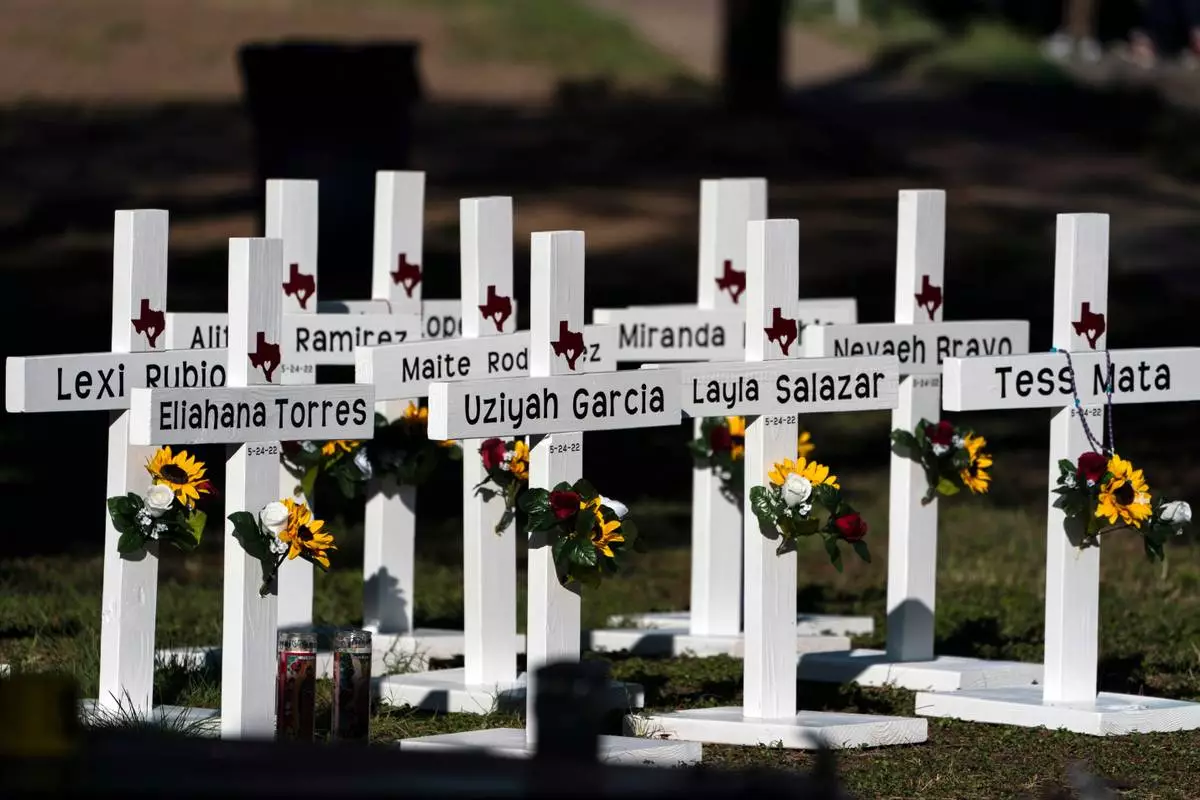
FILE - Crosses with the names of shooting victims are placed outside Robb Elementary School in Uvalde, Texas, May 26, 2022. (AP Photo/Jae C. Hong, File)