Skip to Content Facebook Feature Image

Judge bars deportations of Venezuelans from South Texas under the Alien Enemies Act

News

Judge bars deportations of Venezuelans from South Texas under the Alien Enemies Act
News

News

Judge bars deportations of Venezuelans from South Texas under the Alien Enemies Act

2025-05-02 07:15 Last Updated At:07:21

A federal judge on Thursday barred the Trump administration from deporting any Venezuelans from South Texas under an 18th-century wartime law and said President Donald Trump's invocation of it was “unlawful.”

U.S. District Court Judge Fernando Rodriguez Jr. is the first judge to rule that the Alien Enemies Act cannot be used against people who, the Republican administration claims, are gang members invading the United States. Rodriguez said he wouldn't interfere with the government's right to deport people in the country illegally through other means, but it could not rely on the 227-year-old law to do so.

More Images
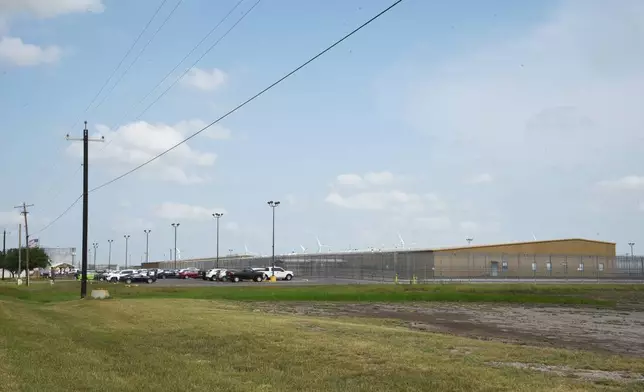
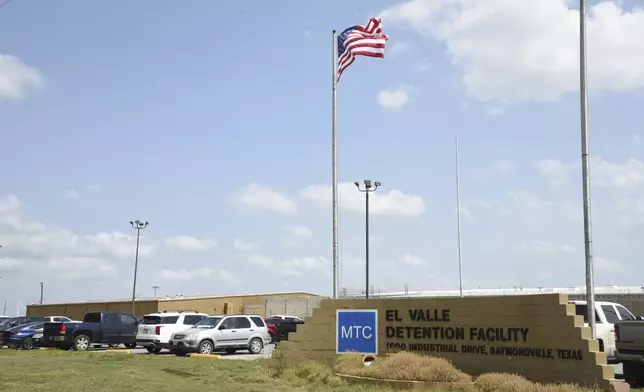
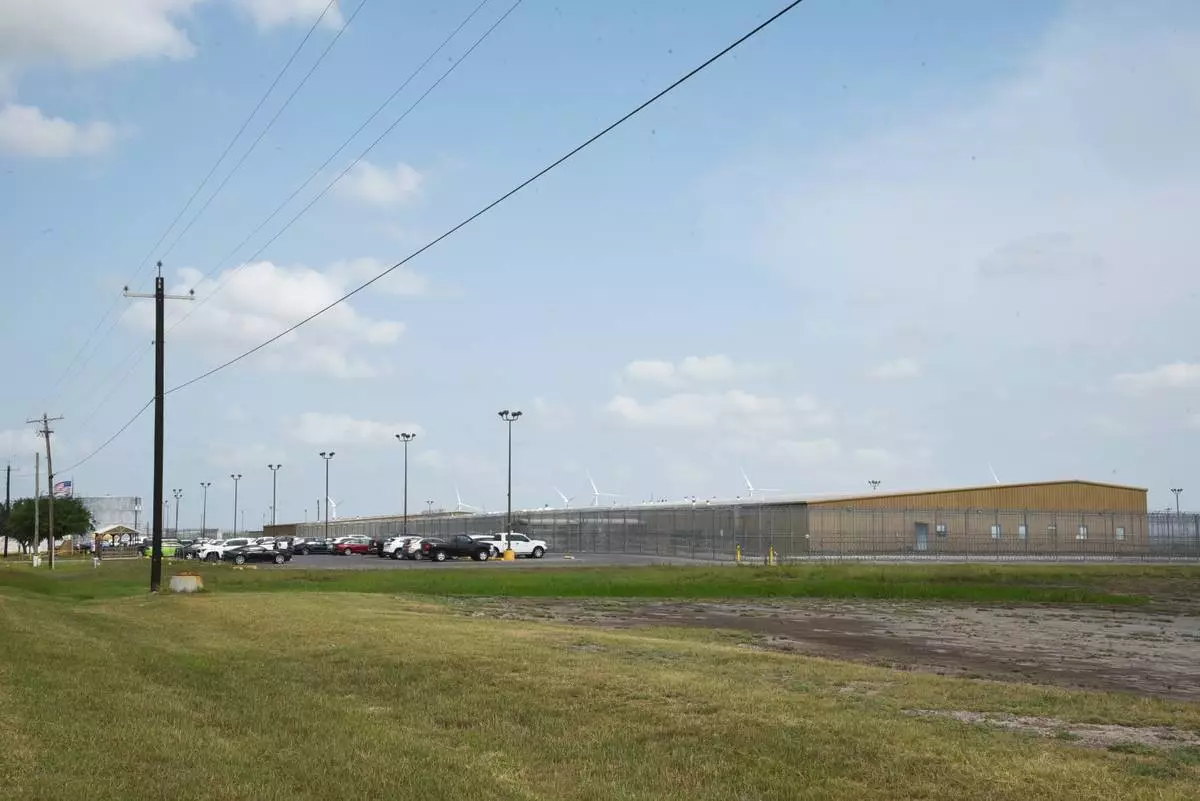
The El Valle Detention Center in Raymondville, Texas is pictured, Thursday, May 1, 2025, after a federal judge in the district barred the Trump administration from deporting any Venezuelans at the south Texas detention center under the Alien Enemies Act, an 18th-century wartime law. (AP Photo/Valerie Gonzalez)
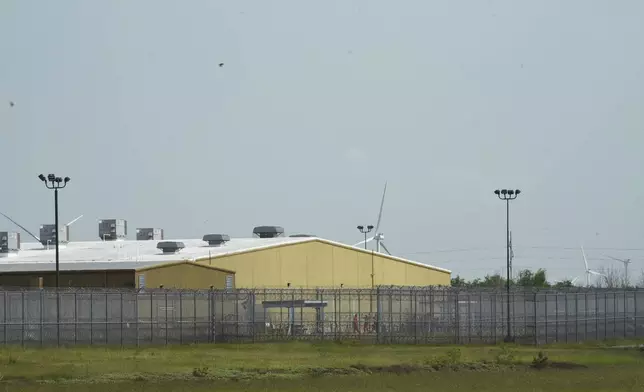
The El Valle Detention Center in Raymondville, Texas is pictured, Thursday, May 1, 2025, after a federal judge in the district barred the Trump administration from deporting any Venezuelans at the south Texas detention center under the Alien Enemies Act, an 18th-century wartime law. (AP Photo/Valerie Gonzalez)

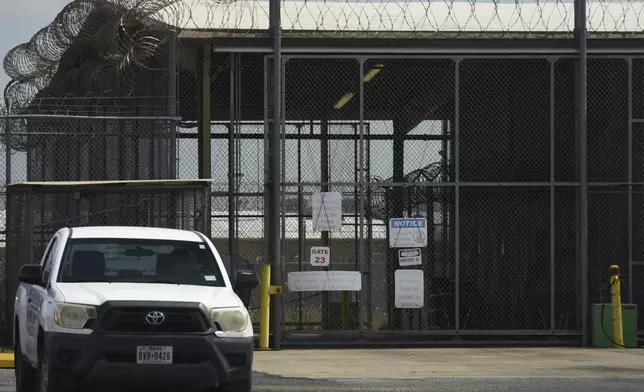
Detainees held at El Valle Detention Center in Raymondville, Texas are seen outside briefly, Thursday, May 1, 2025, after a federal judge in the district barred the Trump administration from deporting any Venezuelans from South Texas under the Alien Enemies Act, an 18th-century wartime law. (AP Photo/Valerie Gonzalez)
Detainees held at El Valle Detention Center in Raymondville, Texas are seen outside briefly, Thursday, May 1, 2025, after a federal judge in the district barred the Trump administration from deporting any Venezuelans from South Texas under the Alien Enemies Act, an 18th-century wartime law. (AP Photo/Valerie Gonzalez)

The El Valle Detention Center in Raymondville, Texas is pictured, Thursday, May 1, 2025, after a federal judge in the district barred the Trump administration from deporting any Venezuelans at the south Texas detention center under the Alien Enemies Act, an 18th-century wartime law. (AP Photo/Valerie Gonzalez)
The El Valle Detention Center in Raymondville, Texas is pictured, Thursday, May 1, 2025, after a federal judge in the district barred the Trump administration from deporting any Venezuelans at the south Texas detention center under the Alien Enemies Act, an 18th-century wartime law. (AP Photo/Valerie Gonzalez)
The El Valle Detention Center in Raymondville, Texas is pictured, Thursday, May 1, 2025, after a federal judge in the district barred the Trump administration from deporting any Venezuelans at the south Texas detention center under the Alien Enemies Act, an 18th-century wartime law. (AP Photo/Valerie Gonzalez)

The El Valle Detention Center in Raymondville, Texas is pictured, Thursday, May 1, 2025, after a federal judge in the district barred the Trump administration from deporting any Venezuelans at the south Texas detention center under the Alien Enemies Act, an 18th-century wartime law. (AP Photo/Valerie Gonzalez)

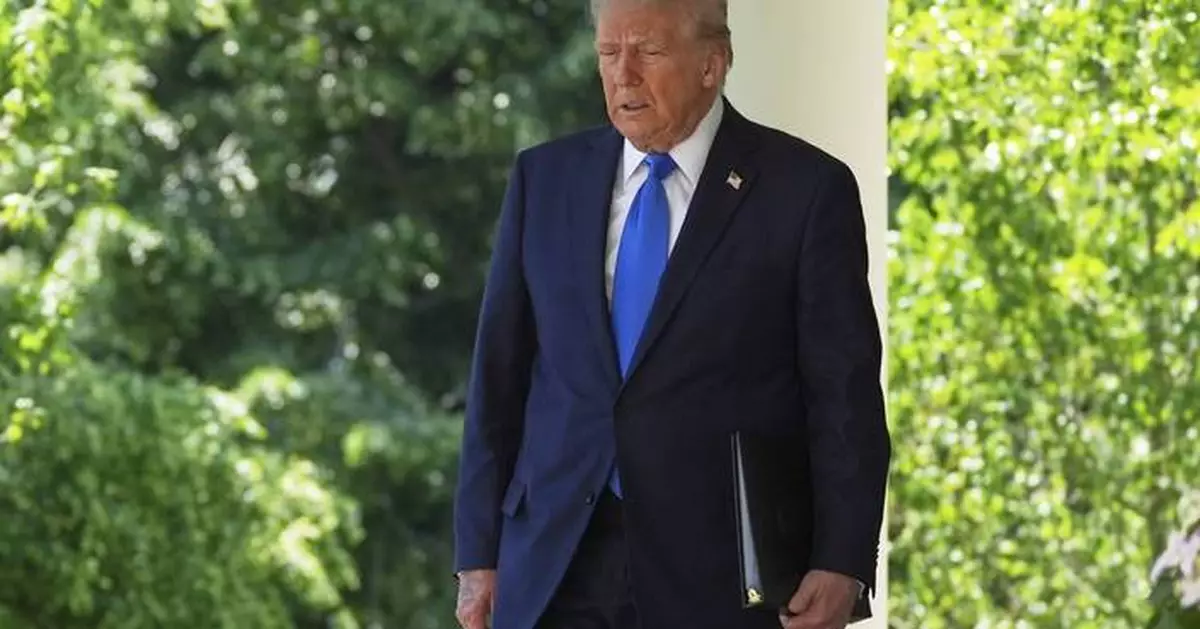
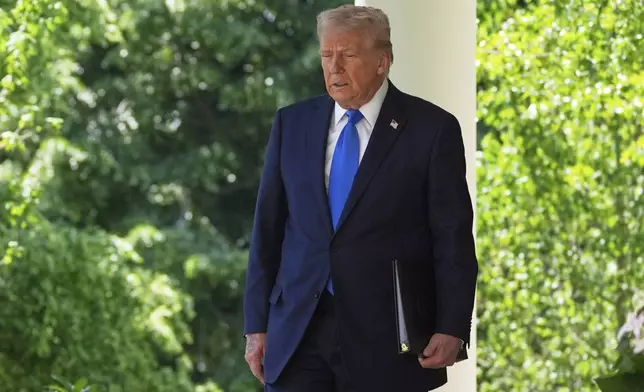
President Donald Trump arrives to speak during a National Day of Prayer event in the Rose Garden of the White House, Thursday, May 1, 2025, in Washington. (AP Photo/Evan Vucci)

President Donald Trump arrives to speak during a National Day of Prayer event in the Rose Garden of the White House, Thursday, May 1, 2025, in Washington. (AP Photo/Evan Vucci)

“Neither the Court nor the parties question that the Executive Branch can direct the detention and removal of aliens who engage in criminal activity in the United States,” wrote Rodriguez, who was nominated by Trump in 2018. But, the judge said, "the President’s invocation of the AEA through the Proclamation exceeds the scope of the statute and is contrary to the plain, ordinary meaning of the statute’s terms.”

In March, Trump issued a proclamation claiming that the Venezuelan gang Tren de Aragua was invading the U.S. He said he had special powers to deport immigrants, identified by his administration as gang members, without the usual court proceedings.

"The Court concludes that the President’s invocation of the AEA through the Proclamation exceeds the scope of the statute and, as a result, is unlawful,” Rodriguez wrote.

In an interview on Fox News, Vice President JD Vance said the administration will be “aggressively appealing” the ruling and others that hem in the president's deportation power.

“The judge doesn’t make that determination, whether the Alien Enemies Act can be deployed,” Vance said. “I think the president of the United States is the one who determines whether this country is being invaded.”

The chair of the Congressional Hispanic Caucus, Rep. Adriano Espaillat, D-N.Y., said in a statement the judge had made clear “what we all knew to be true: The Trump administration illegally used the Alien Enemies Act to deport people without due process.”

The Alien Enemies Act has only been used three times before in U.S. history, most recently during World War II, when it was cited to intern Japanese-Americans.

The proclamation triggered a flurry of litigation as the administration tried to ship migrants it claimed were gang members to a notorious prison in El Salvador.

Rodriguez’s ruling is significant because it is the first formal permanent injunction against the administration using the AEA and contends the president is misusing the law. "Congress never meant for this law to be used in this manner,” said Lee Gelernt, the ACLU lawyer who argued the case, in response to the ruling.

Rodriguez agreed, noting that the provision has only been used during the two World Wars and the War of 1812. Trump claimed Tren de Aragua was acting at the behest of the Venezuelan government, but Rodriguez found that the activities the administration accused it of did not amount to an invasion or “predatory incursion,” as the statute requires.

“The Proclamation makes no reference to and in no manner suggests that a threat exists of an organized, armed group of individuals entering the United States at the direction of Venezuela to conquer the country or assume control over a portion of the nation,” Rodriguez wrote. “Thus, the Proclamation’s language cannot be read as describing conduct that falls within the meaning of ‘invasion’ for purposes of the AEA.”

If the administration appeals, it would go first to the New Orleans-based 5th U.S. Circuit Court of Appeals. That is among the nation’s most conservative appeals courts and it also has ruled against what it saw as overreach on immigration matters by both the Obama and Biden administrations. In those cases, Democratic administrations had sought to make it easier for immigrants to remain in the U.S.

The administration, as it has in other cases challenging its expansive view of presidential power, could turn to appellate courts, including the U.S. Supreme Court, in the form of an emergency motion for a stay pending an appeal.

The Supreme Court already has weighed in once on the issue of deportations under the AEA. The justices held that migrants alleged to be gang members must be given “reasonable time” to contest their removal from the country. The court has not specified the length of time.

It’s possible that the losing side in the 5th Circuit would file an emergency appeal with the justices that also would ask them to short-circuit lower court action in favor of a definitive ruling from the nation’s highest court. Such a decision likely would be months away, at least.

The Texas case is just one piece of a tangle of litigation sparked by Trump's proclamation.

The ACLU initially filed suit in the nation's capital to block deportations. U.S. District Judge James E. Boasberg issued a temporary hold on removals and ordered the administration turn around planes that had left with detainees headed to El Salvador, a directive that was apparently ignored. Later, the Supreme Court weighed in.

The justices stepped in again late last month with an unusual postmidnight order halting deportations from North Texas, where the ACLU contended the administration was preparing for another round of flights to El Salvador.

Riccardi reported from Denver. Associated Press writers Lindsay Whitehurst and Mark Sherman contributed to this report.
The El Valle Detention Center in Raymondville, Texas is pictured, Thursday, May 1, 2025, after a federal judge in the district barred the Trump administration from deporting any Venezuelans at the south Texas detention center under the Alien Enemies Act, an 18th-century wartime law. (AP Photo/Valerie Gonzalez)
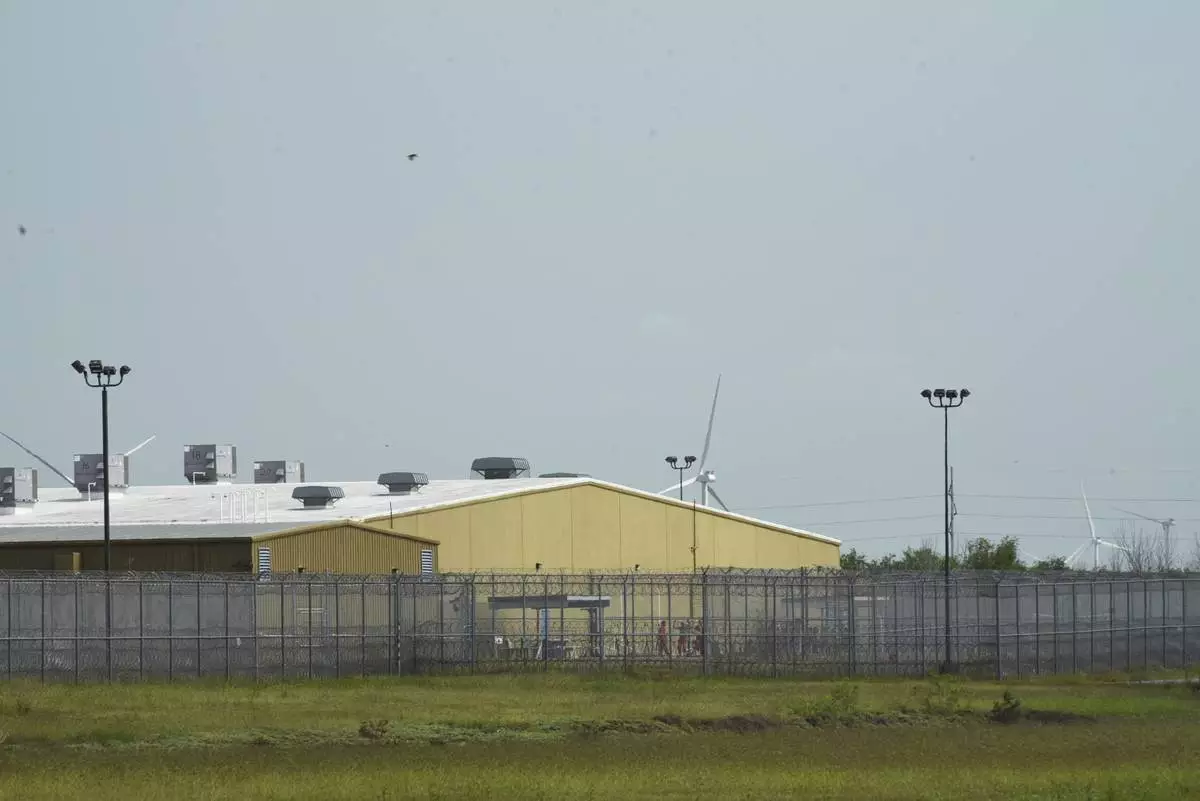
The El Valle Detention Center in Raymondville, Texas is pictured, Thursday, May 1, 2025, after a federal judge in the district barred the Trump administration from deporting any Venezuelans at the south Texas detention center under the Alien Enemies Act, an 18th-century wartime law. (AP Photo/Valerie Gonzalez)

Detainees held at El Valle Detention Center in Raymondville, Texas are seen outside briefly, Thursday, May 1, 2025, after a federal judge in the district barred the Trump administration from deporting any Venezuelans from South Texas under the Alien Enemies Act, an 18th-century wartime law. (AP Photo/Valerie Gonzalez)
Detainees held at El Valle Detention Center in Raymondville, Texas are seen outside briefly, Thursday, May 1, 2025, after a federal judge in the district barred the Trump administration from deporting any Venezuelans from South Texas under the Alien Enemies Act, an 18th-century wartime law. (AP Photo/Valerie Gonzalez)

The El Valle Detention Center in Raymondville, Texas is pictured, Thursday, May 1, 2025, after a federal judge in the district barred the Trump administration from deporting any Venezuelans at the south Texas detention center under the Alien Enemies Act, an 18th-century wartime law. (AP Photo/Valerie Gonzalez)
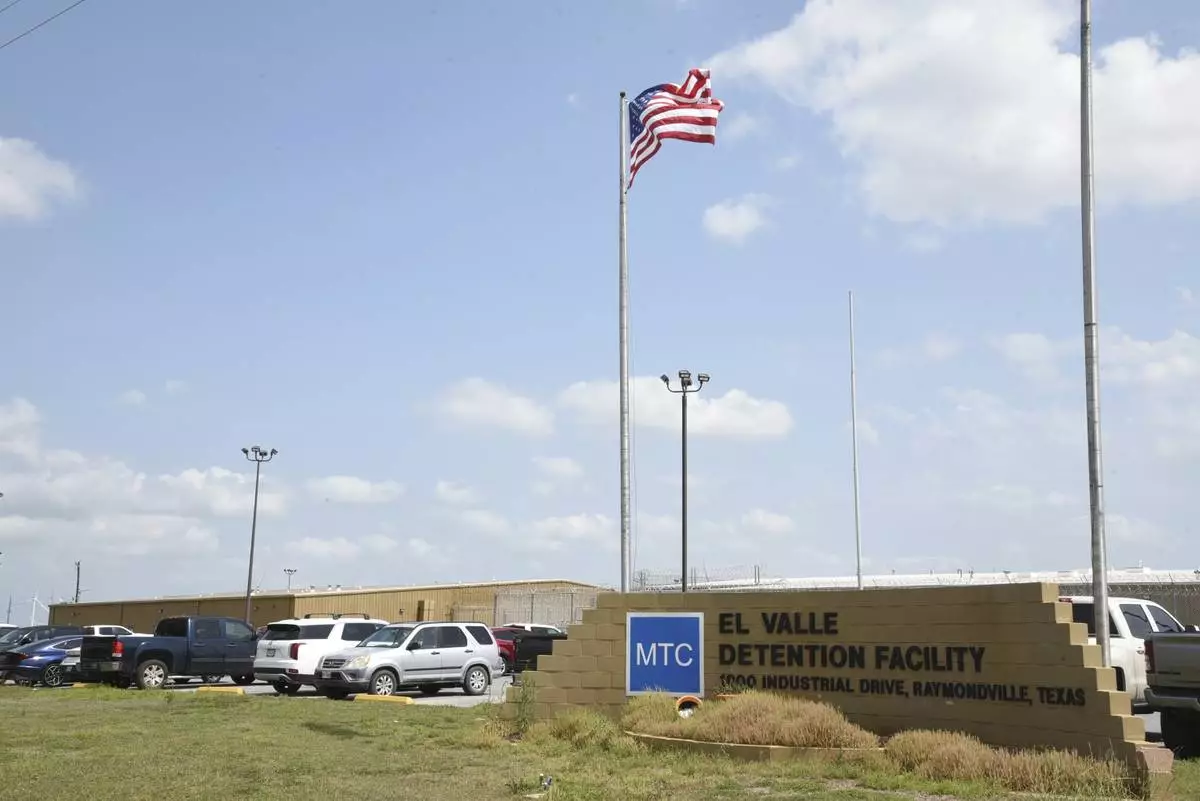
The El Valle Detention Center in Raymondville, Texas is pictured, Thursday, May 1, 2025, after a federal judge in the district barred the Trump administration from deporting any Venezuelans at the south Texas detention center under the Alien Enemies Act, an 18th-century wartime law. (AP Photo/Valerie Gonzalez)
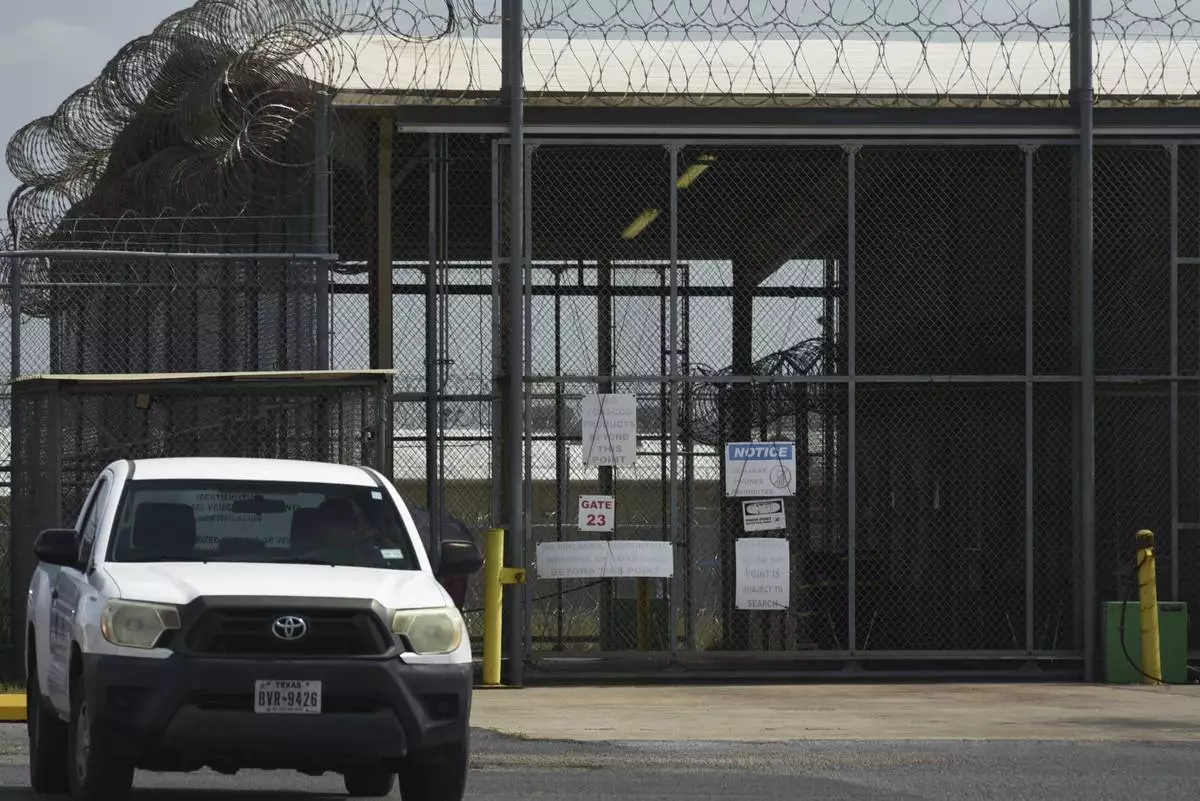
The El Valle Detention Center in Raymondville, Texas is pictured, Thursday, May 1, 2025, after a federal judge in the district barred the Trump administration from deporting any Venezuelans at the south Texas detention center under the Alien Enemies Act, an 18th-century wartime law. (AP Photo/Valerie Gonzalez)

The El Valle Detention Center in Raymondville, Texas is pictured, Thursday, May 1, 2025, after a federal judge in the district barred the Trump administration from deporting any Venezuelans at the south Texas detention center under the Alien Enemies Act, an 18th-century wartime law. (AP Photo/Valerie Gonzalez)

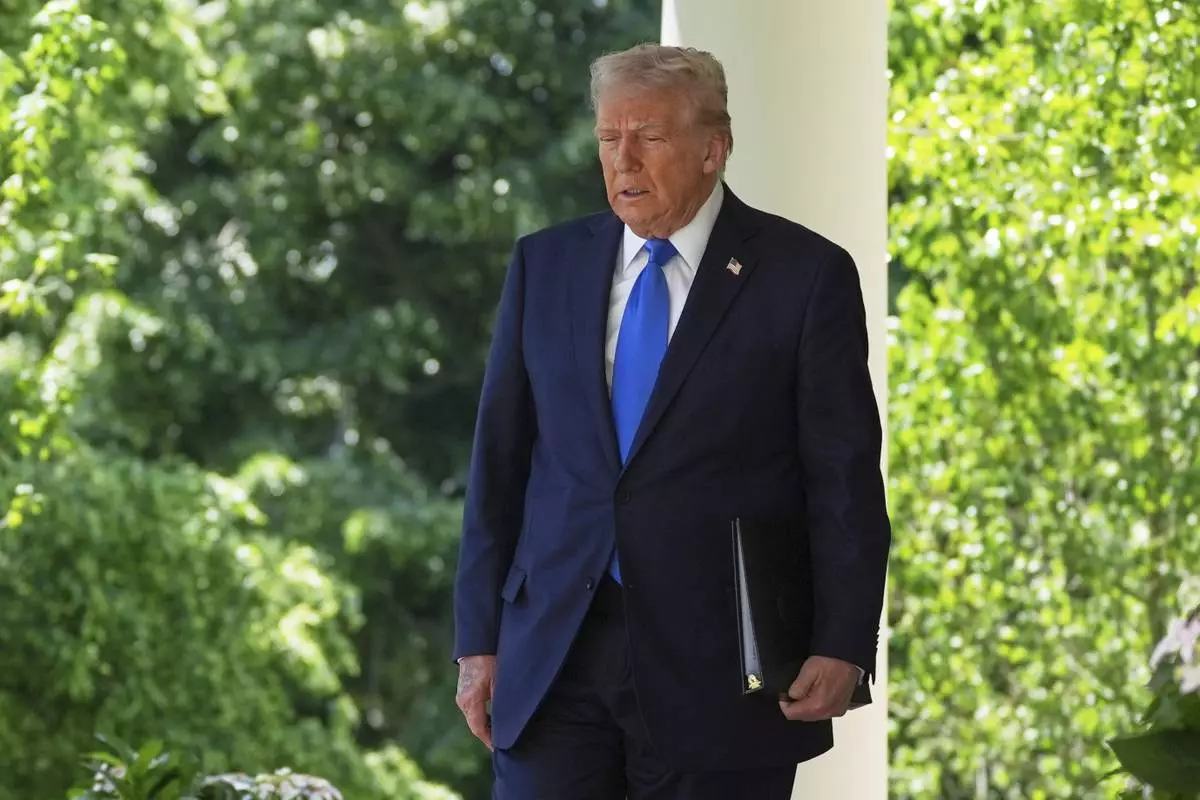
President Donald Trump arrives to speak during a National Day of Prayer event in the Rose Garden of the White House, Thursday, May 1, 2025, in Washington. (AP Photo/Evan Vucci)
President Donald Trump arrives to speak during a National Day of Prayer event in the Rose Garden of the White House, Thursday, May 1, 2025, in Washington. (AP Photo/Evan Vucci)
DUBAI, United Arab Emirates (AP) — The death toll from nationwide protests in Iran surpassed 2,000 people on Tuesday, activists said, as Iranians made phone calls abroad for the first time in days after authorities severed communications during a crackdown on demonstrators.

The number of dead climbed to at least 2,003, as reported by the U.S.-based Human Rights Activists News Agency. That figure dwarfs the death toll from any other round of protest or unrest in Iran in decades and recalls the chaos surrounding the country's 1979 Islamic Revolution.

Iranian state television offered the first official acknowledgment of the deaths, quoting an official saying the country had “a lot of martyrs” and that it did not release a toll earlier because of the dead suffering gruesome injuries. However, that statement came only after activists reported their toll.

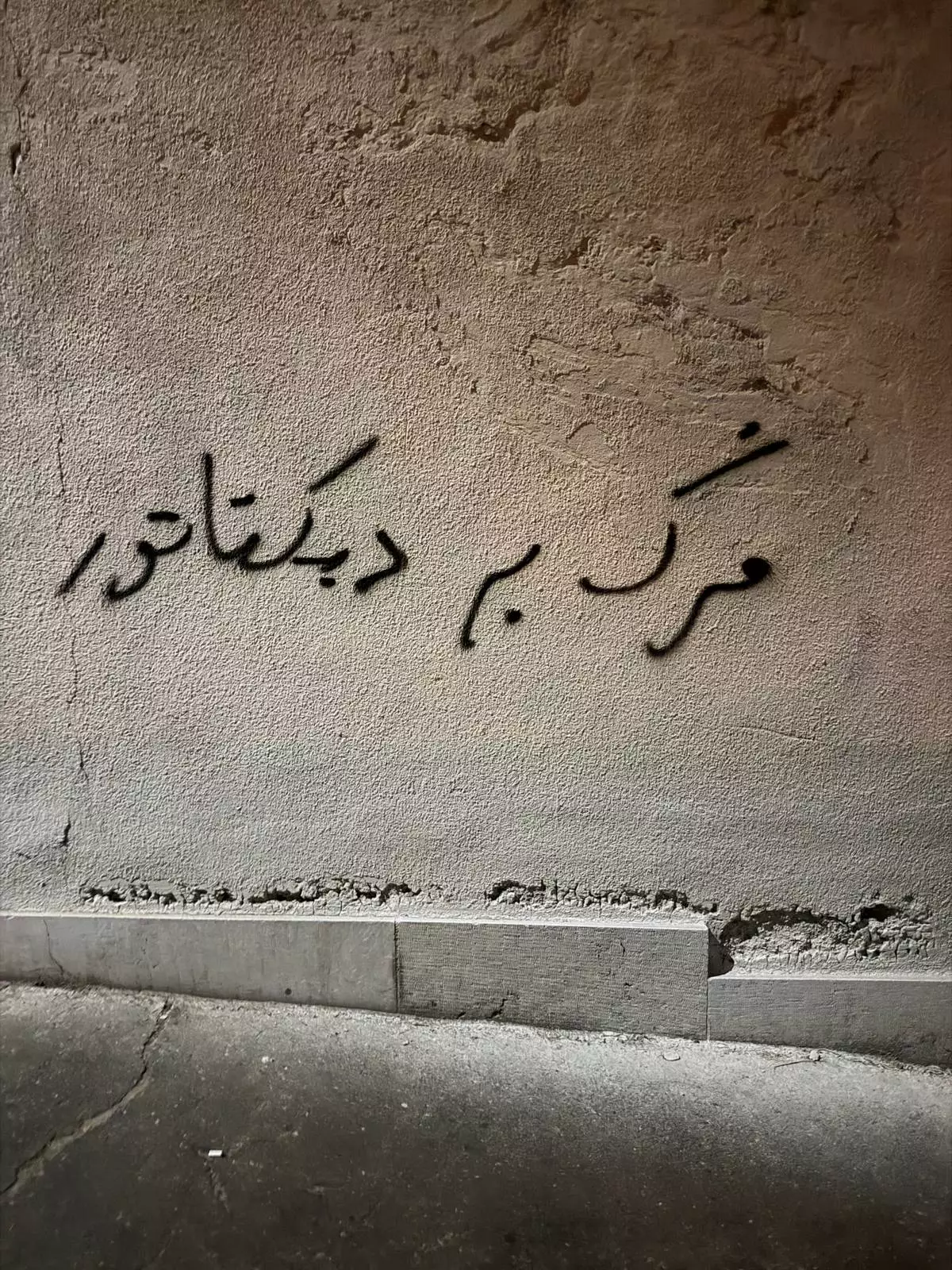
The demonstrations began a little over two weeks ago in anger over Iran’s ailing economy and soon targeted the theocracy, particularly 86-year-old Supreme Leader Ayatollah Ali Khamenei. Images obtained Tuesday by The Associated Press from demonstrations in Tehran showed graffiti and chants calling for Khamenei's death — something that could carry a death sentence.

Soon after the new death toll became public, U.S. President Donald Trump wrote on his Truth Social platform: “Iranian Patriots, KEEP PROTESTING - TAKE OVER YOUR INSTITUTIONS!!!”

He added: “I have cancelled all meetings with Iranian Officials until the senseless killing of protesters STOPS. HELP IS ON ITS WAY.” Trump did not give details.

Iranian Foreign Minister Abbas Araghchi, speaking to the Qatar-funded satellite news network Al Jazeera in an interview aired Monday night, said he had continued to communicate with U.S. envoy Steve Witkoff.

But after Trump's message Tuesday, top Iranian security official Ali Larijani responded by writing: “We declare the names of the main killers of the people of Iran: 1- Trump 2-” Israeli Prime Minister Benjamin Netanyahu.

The activist group said 1,850 of the dead were protesters and 135 were government-affiliated. Nine children were killed, along with nine civilians it said were not taking part in protests. More than 16,700 people have been detained, the group said.

With the internet down in Iran, gauging the demonstrations from abroad has grown more difficult. The AP has been unable to independently assess the toll. Iran’s government has not offered overall casualty figures.

Skylar Thompson with the Human Rights Activists News Agency told AP the new toll was shocking, particularly since it reached four times the death toll of the monthslong 2022 Mahsa Amini protests in just two weeks.

She warned that the toll would still rise: “We’re horrified, but we still think the number is conservative."

Speaking by phone for the first time since their calls were cut off from the outside world, Iranian witnesses described a heavy security presence in central Tehran, burned-out government buildings, smashed ATMs and few passersby. Meanwhile, people were concerned about what comes next, including the possibility of a U.S. attack.

“My customers talk about Trump’s reaction while wondering if he plans a military strike against the Islamic Republic,” said shopkeeper Mahmoud, who gave only his first name out of concern for his safety. “I don’t expect Trump or any other foreign country cares about the interests of Iranians.”

Reza, a taxi driver who also gave just his first name, said protests are on many people's minds. “People — particularly young ones — are hopeless, but they talk about continuing the protests,” he said.

Several people in Tehran were able to call the AP on Tuesday and speak to a journalist. The AP bureau in Dubai, United Arab Emirates, was unable to call those numbers back. Witnesses said text messaging was still down, and internet users in Iran could connect to government-approved websites locally but nothing abroad.

Anti-riot police officers wore helmets and body armor while carrying batons, shields, shotguns and tear gas launchers, according to the witnesses. Police stood watch at major intersections. Nearby, witnesses saw members of the Revolutionary Guard's all-volunteer Basij force, who carried firearms and batons. Security officials in plainclothes were visible in public spaces.

Several banks and government offices were burned during the unrest, witnesses said. Banks struggled to complete transactions without the internet, they added.

Shops were open, though there was little foot traffic in the capital. Tehran's Grand Bazaar, where the demonstrations began Dec. 28 over the collapse of Iran's rial currency, opened Tuesday. A witness described speaking to multiple shopkeepers who said security forces ordered them to reopen no matter what. Iranian state media did not acknowledge that order.

The witnesses spoke on condition of anonymity for fear of reprisal.

It also appeared that security service personnel were searching for Starlink terminals, as people in northern Tehran reported authorities raiding apartment buildings with satellite dishes. While satellite television dishes are illegal, many in the capital have them in homes, and officials broadly had given up on enforcing the law in recent years.

On the streets, people also could be seen challenging plainclothes security officials, who were stopping passersby at random.

State television also read a statement about mortuary and morgue services being free — a signal that some likely charged high fees for the release of bodies amid the crackdown.

Khamenei, in a statement carried by state TV, praised the tens of thousands who took part in pro-government demonstrations nationwide on Monday.

“This was a warning to American politicians to stop their deceit and not rely on traitorous mercenaries,” he said. “The Iranian nation is strong and powerful and aware of the enemy.”

State TV on Monday aired chants from the crowd, which appeared to number in the tens of thousands. They chanted “Death to America!” and “Death to Israel!” Others cried out, “Death to the enemies of God!” Iran’s attorney general has warned that anyone taking part in protests will be considered an “enemy of God,” a death-penalty charge.

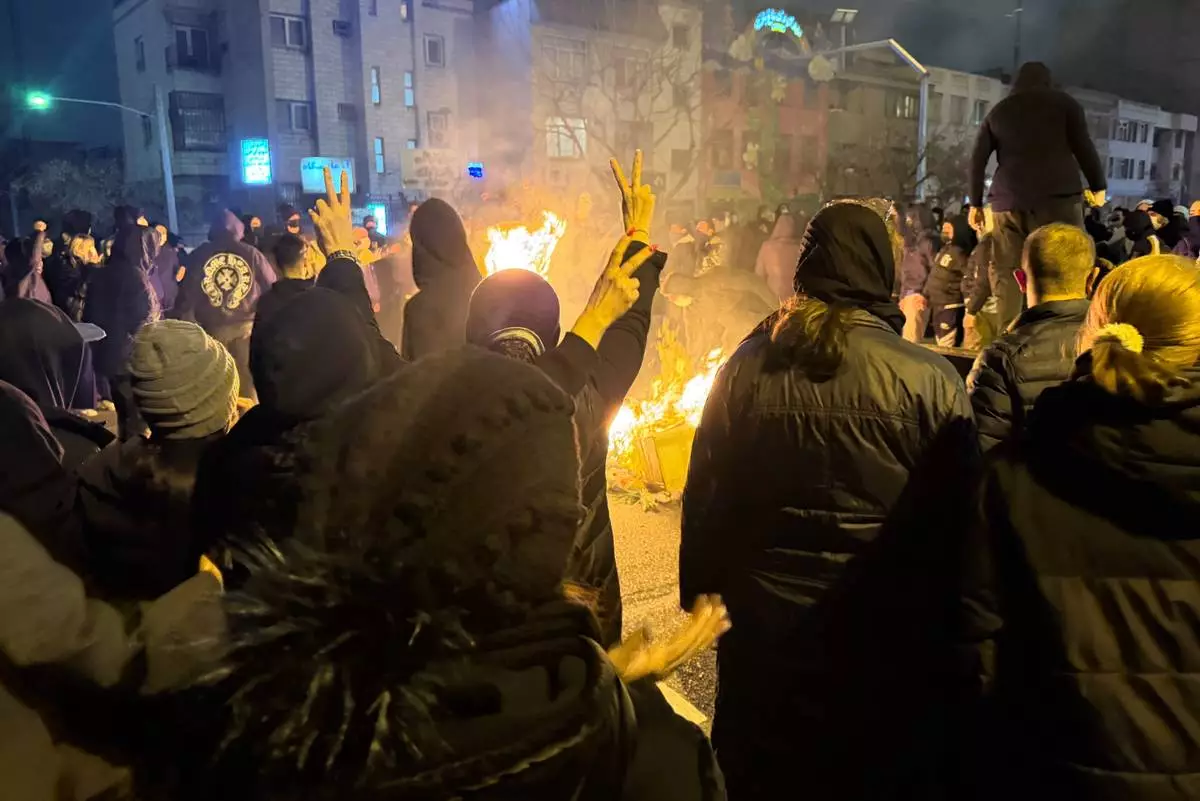
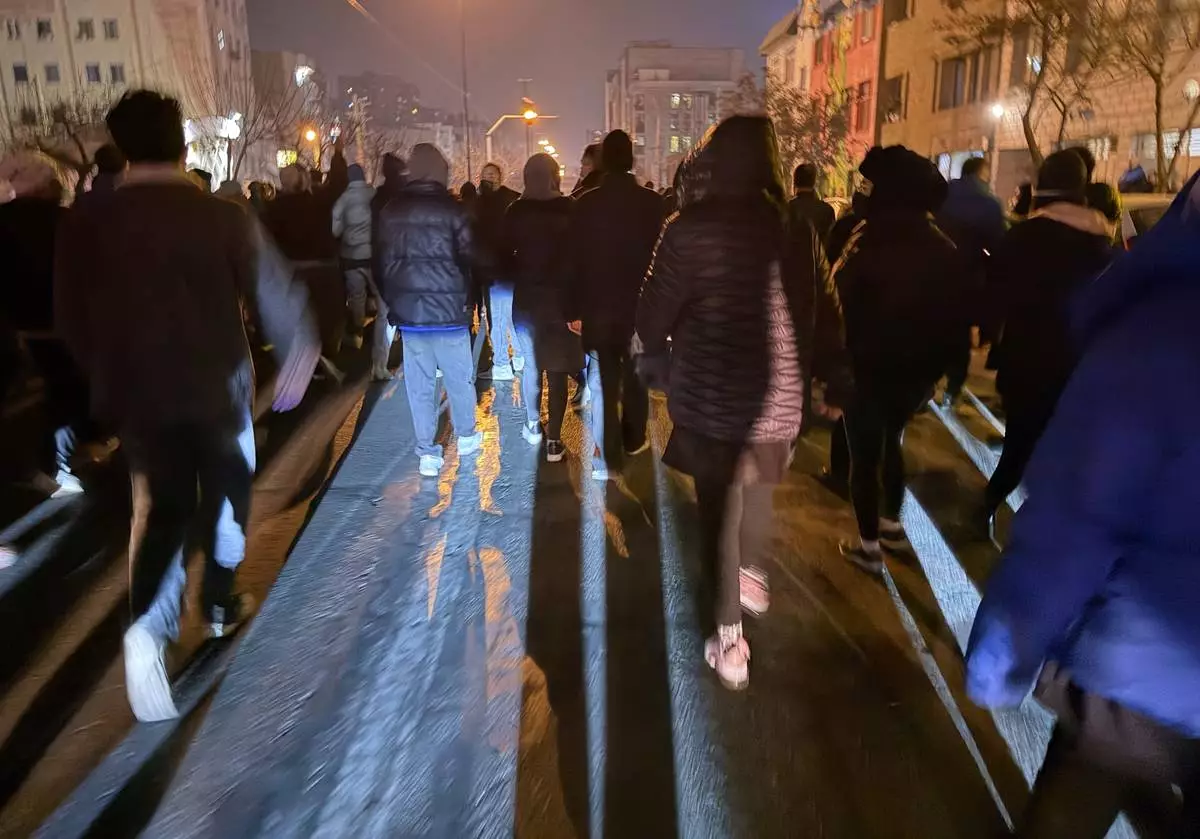
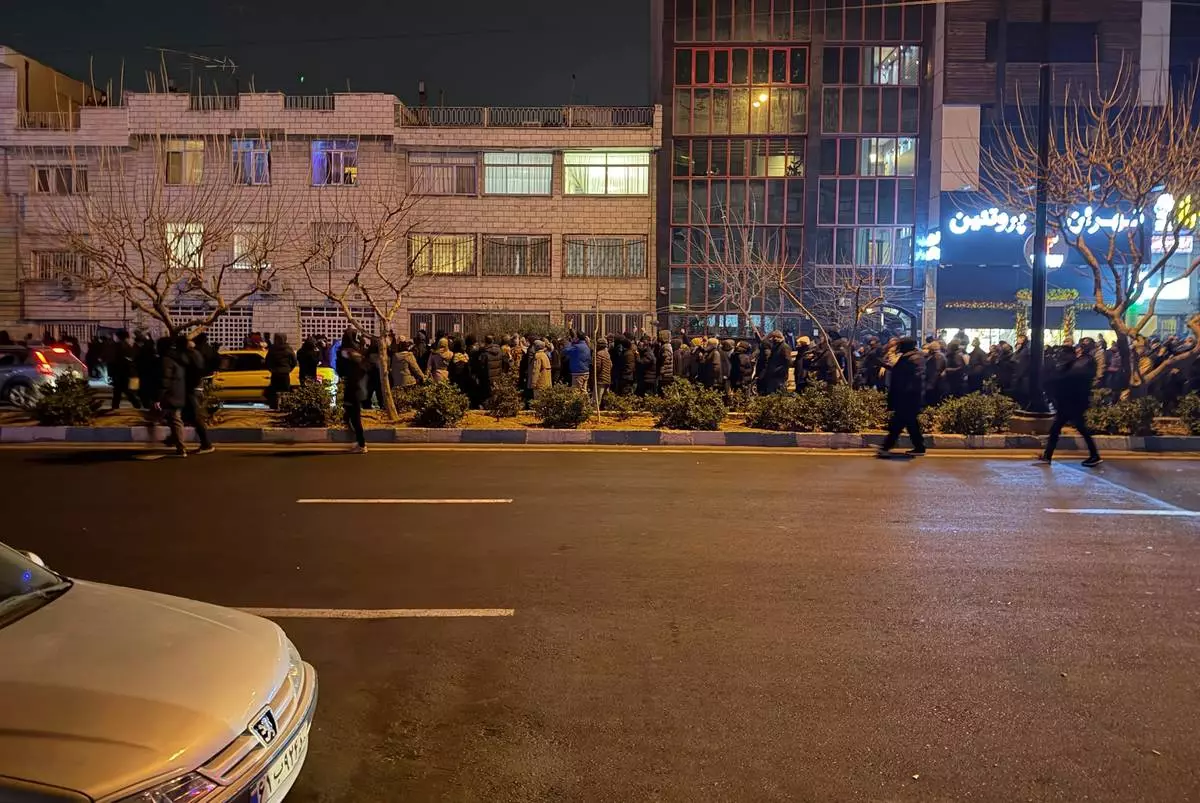
In this photo obtained by The Associated Press, Iranians attend an anti-government protest in Tehran, Iran, Thursday, Jan. 8, 2026.(UGC via AP)

In this photo obtained by The Associated Press, Iranians attend an anti-government protest in Tehran, Iran, Thursday, Jan. 8, 2026.(UGC via AP)

In this photo obtained by The Associated Press, Iranians attend an anti-government protest in Tehran, Iran, Thursday, Jan. 8, 2026. (UGC via AP)

In this photo obtained by The Associated Press, Iranians attend an anti-government protest in Tehran, Iran, Thursday, Jan. 8, 2026. (UGC via AP)

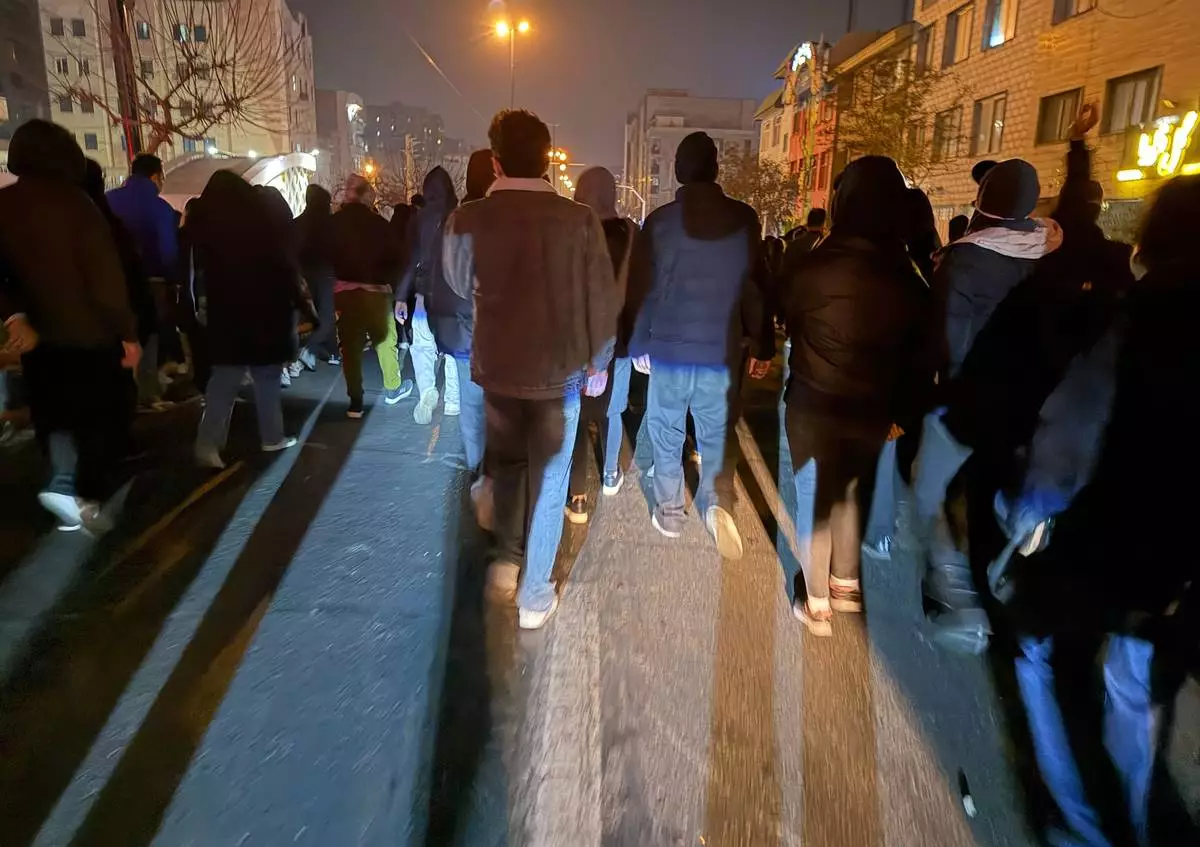
In this photo obtained by The Associated Press, Iranians attend an anti-government protest in Tehran, Iran, Friday, Jan. 9, 2026. (UGC via AP)

In this photo obtained by The Associated Press, Iranians attend an anti-government protest in Tehran, Iran, Friday, Jan. 9, 2026. (UGC via AP)

Iranians attend an anti-government protest in Tehran, Iran, Friday, Jan. 9, 2026. (AP Photo)

Iranians attend an anti-government protest in Tehran, Iran, Friday, Jan. 9, 2026. (AP Photo)

A slogan is written on a wall reading in Farsi: "Death to dictator" in an anti-government protest in Tehran, Iran, Saturday, Jan. 10, 2026. (AP Photo)

A slogan is written on a wall reading in Farsi: "Death to dictator" in an anti-government protest in Tehran, Iran, Saturday, Jan. 10, 2026. (AP Photo)

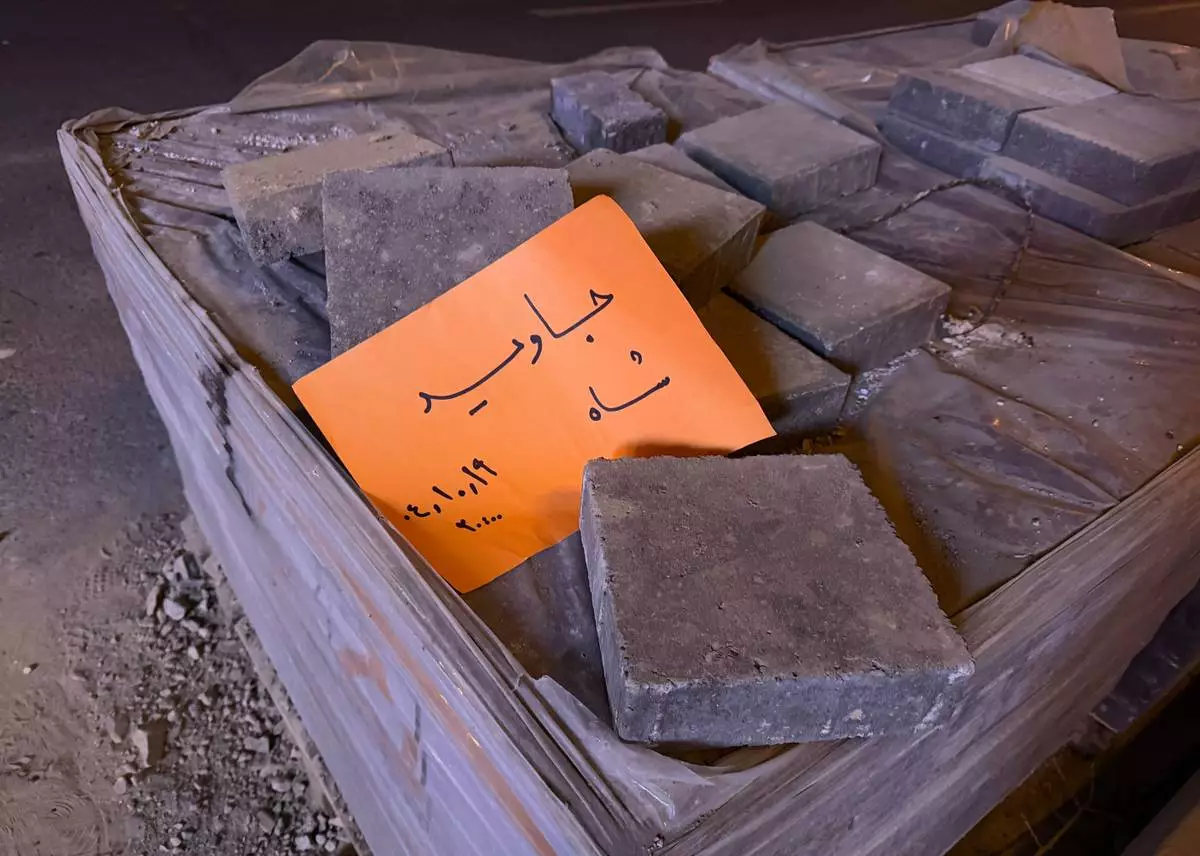
A placard is placed on bricks which reads in Farsi: "Long live the Shah," referring to the Pahlavi dynasty which was toppled by 1979 Islamic Revolution, in an anti-government protest in Tehran, Iran, Friday, Jan. 9, 2026. (AP Photo)

A placard is placed on bricks which reads in Farsi: "Long live the Shah," referring to the Pahlavi dynasty which was toppled by 1979 Islamic Revolution, in an anti-government protest in Tehran, Iran, Friday, Jan. 9, 2026. (AP Photo)

Iranians attend an anti-government protest in Tehran, Iran, Thursday, Jan. 8, 2026. (AP Photo)

Iranians attend an anti-government protest in Tehran, Iran, Thursday, Jan. 8, 2026. (AP Photo)

Iranians attend an anti-government protest in Tehran, Iran, Friday, Jan. 9, 2026. (AP Photo)

Iranians attend an anti-government protest in Tehran, Iran, Friday, Jan. 9, 2026. (AP Photo)

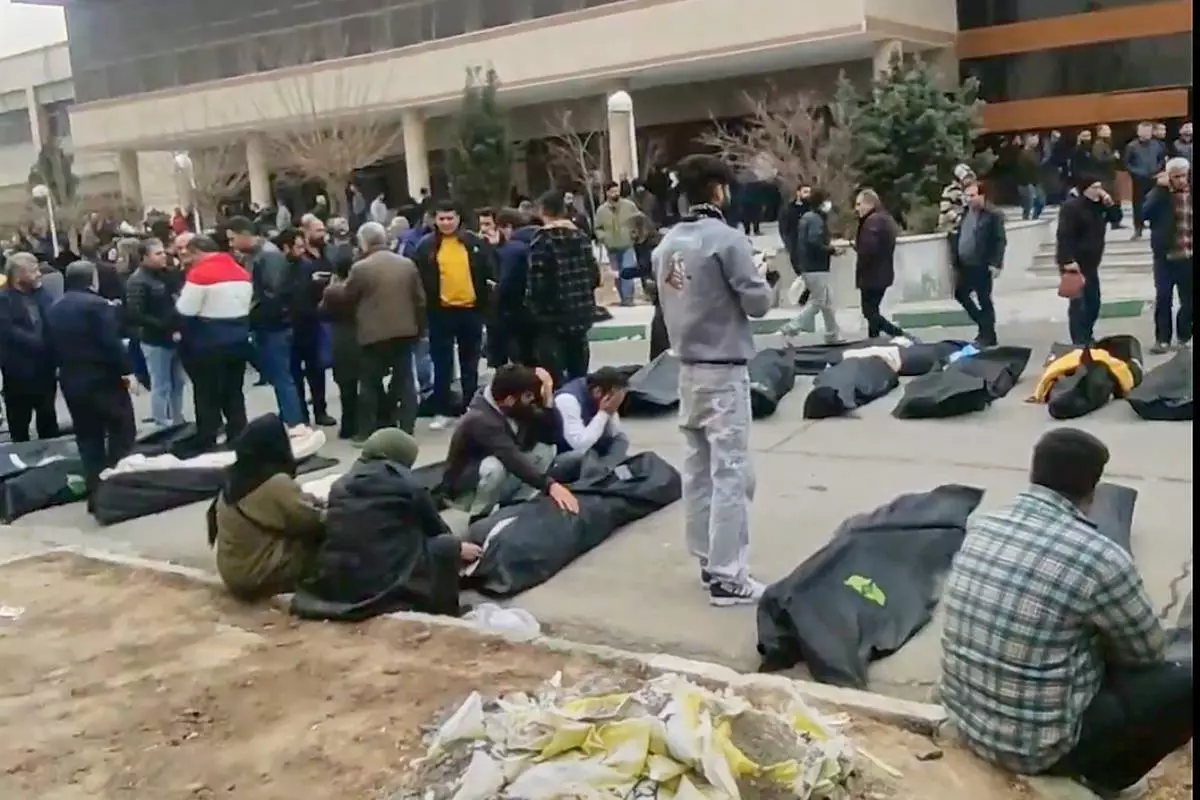
This frame grab from videos taken between Jan. 9 and Jan. 11, 2026, and circulating on social media purportedly shows images from a morgue with dozens of bodies and mourners after crackdown on the outskirts of Iran's capital, in Kahrizak, Tehran Province. (UGC via AP)

This frame grab from videos taken between Jan. 9 and Jan. 11, 2026, and circulating on social media purportedly shows images from a morgue with dozens of bodies and mourners after crackdown on the outskirts of Iran's capital, in Kahrizak, Tehran Province. (UGC via AP)

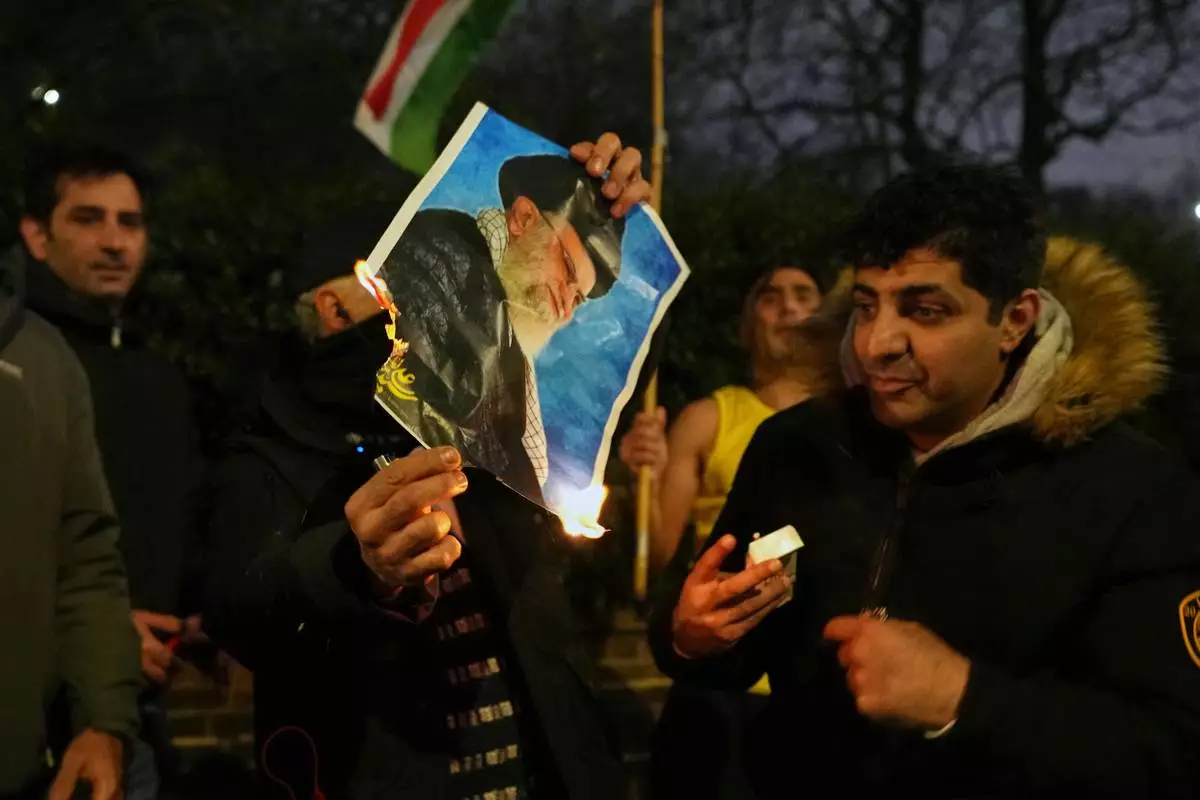
A picture of Ayatollah Ali Khamenei is set alight by protesters outside the Iranian Embassy in London, Monday, Jan. 12, 2026. (AP Photo/Alastair Grant)

A picture of Ayatollah Ali Khamenei is set alight by protesters outside the Iranian Embassy in London, Monday, Jan. 12, 2026. (AP Photo/Alastair Grant)

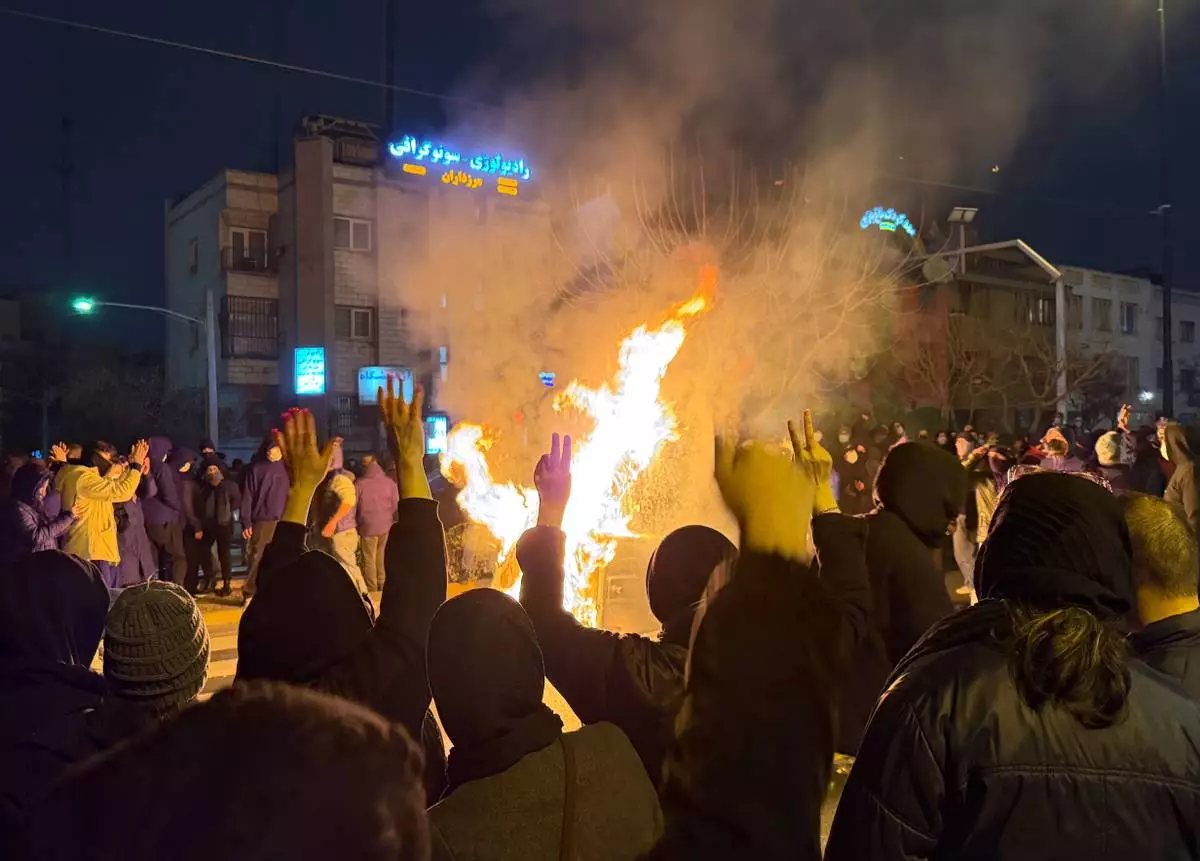
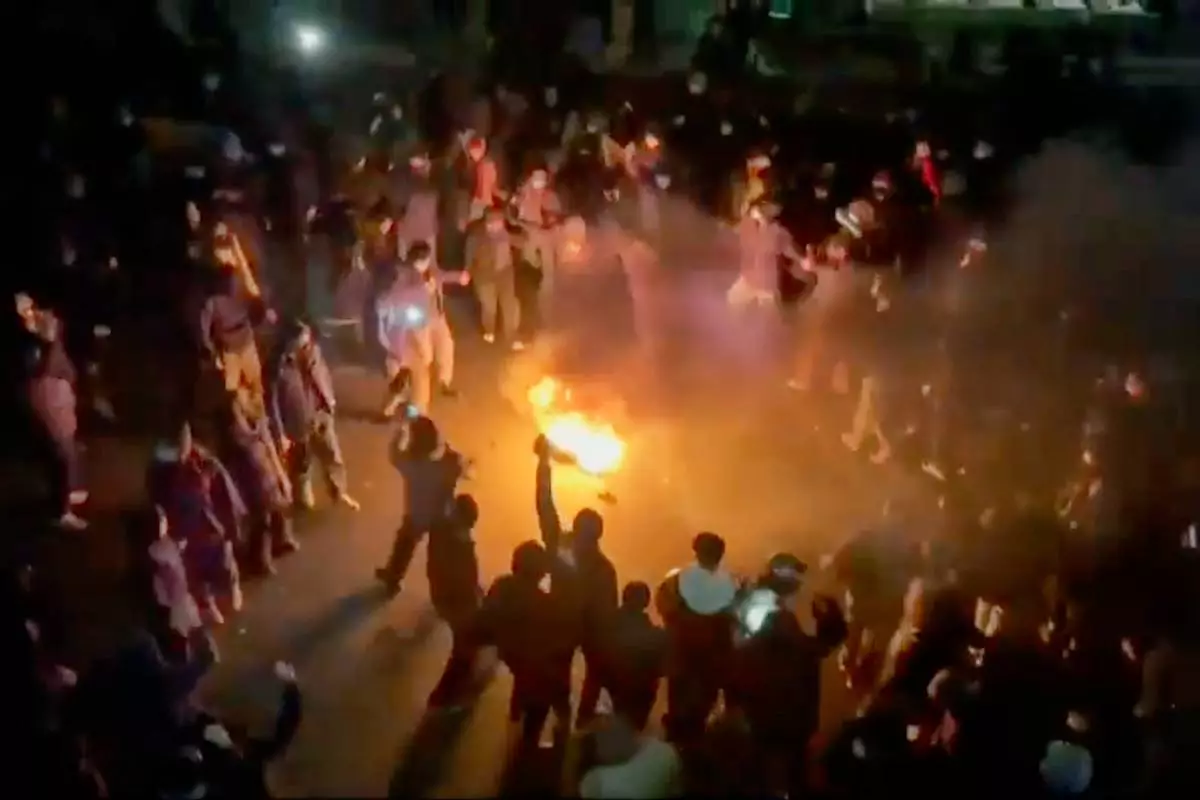
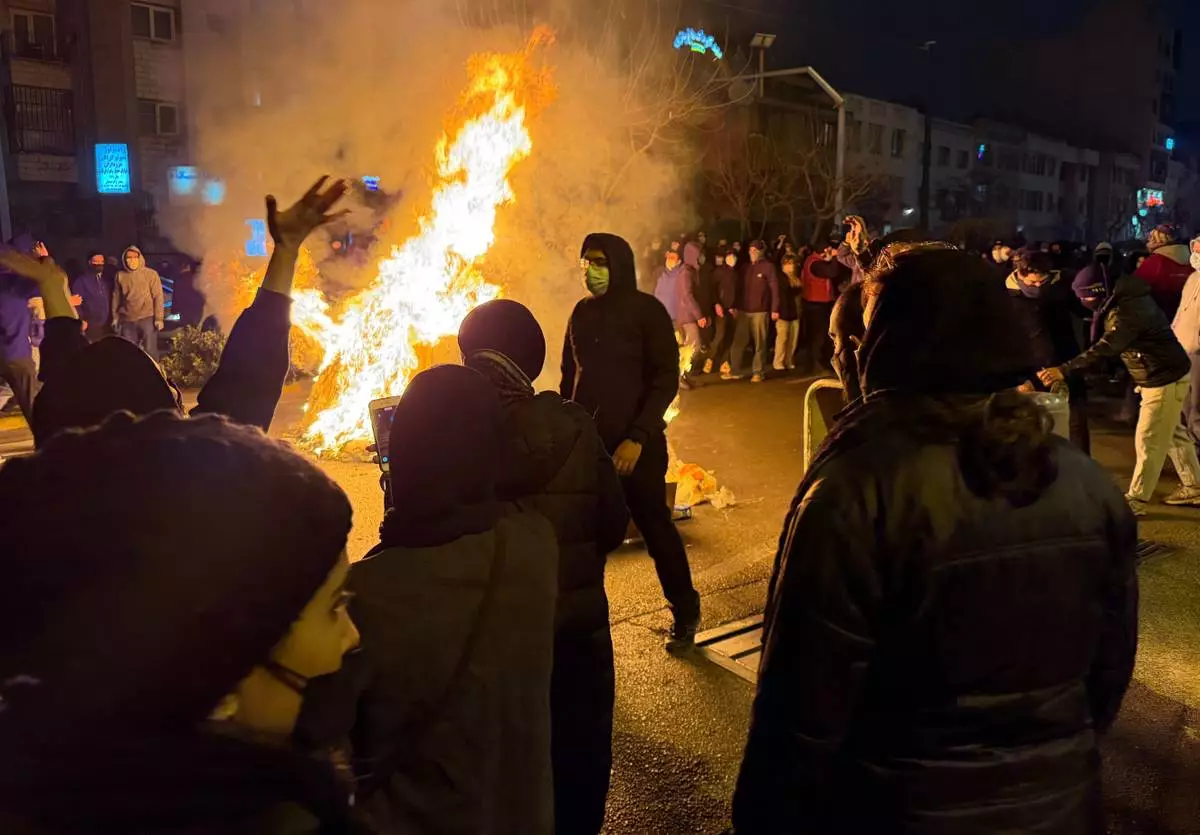
In this frame grab from footage circulating on social media shows protesters dancing and cheering around a bonfire as they take to the streets despite an intensifying crackdown as the Islamic Republic remains cut off from the rest of the world, in Tehran, Iran, Friday, Jan. 9, 2026.(UGC via AP)

In this frame grab from footage circulating on social media shows protesters dancing and cheering around a bonfire as they take to the streets despite an intensifying crackdown as the Islamic Republic remains cut off from the rest of the world, in Tehran, Iran, Friday, Jan. 9, 2026.(UGC via AP)

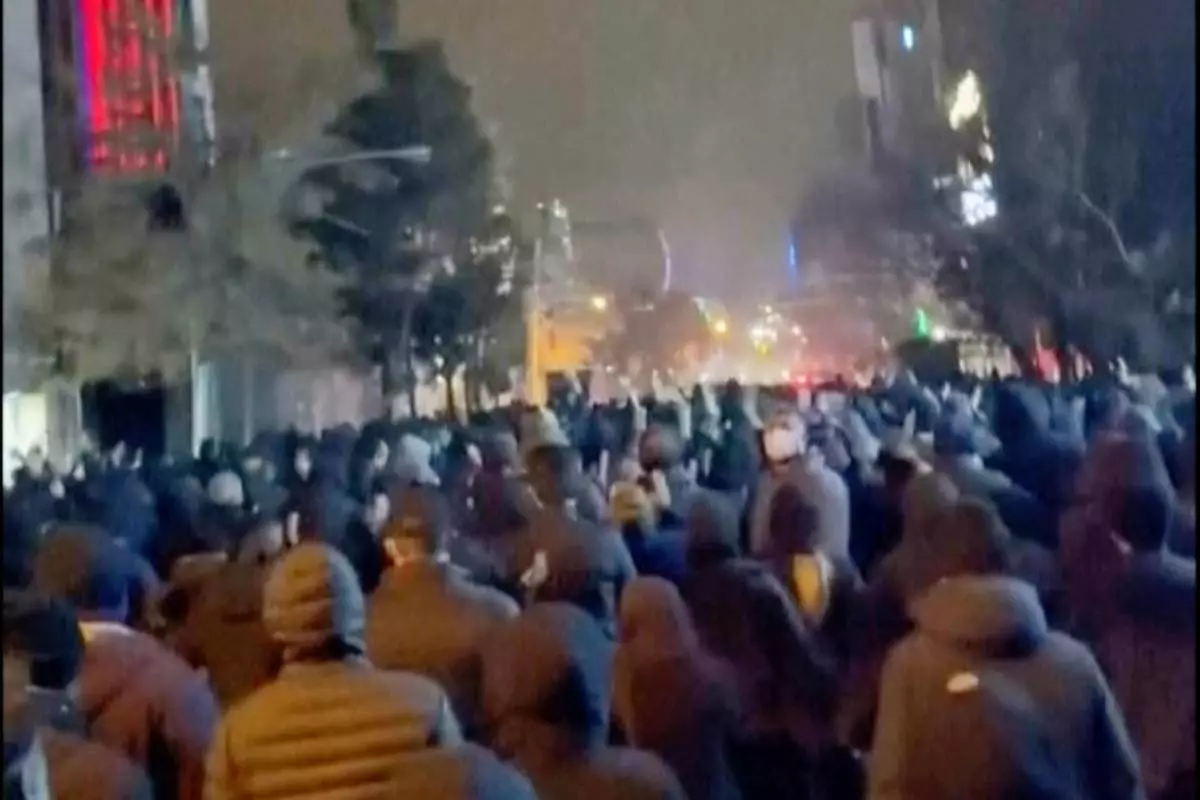
In this frame grab from footage circulating on social media from Iran showed protesters once again taking to the streets of Tehran despite an intensifying crackdown as the Islamic Republic remains cut off from the rest of the world in Tehran, Iran, Saturday Jan. 10, 2026. (UGC via AP)

In this frame grab from footage circulating on social media from Iran showed protesters once again taking to the streets of Tehran despite an intensifying crackdown as the Islamic Republic remains cut off from the rest of the world in Tehran, Iran, Saturday Jan. 10, 2026. (UGC via AP)

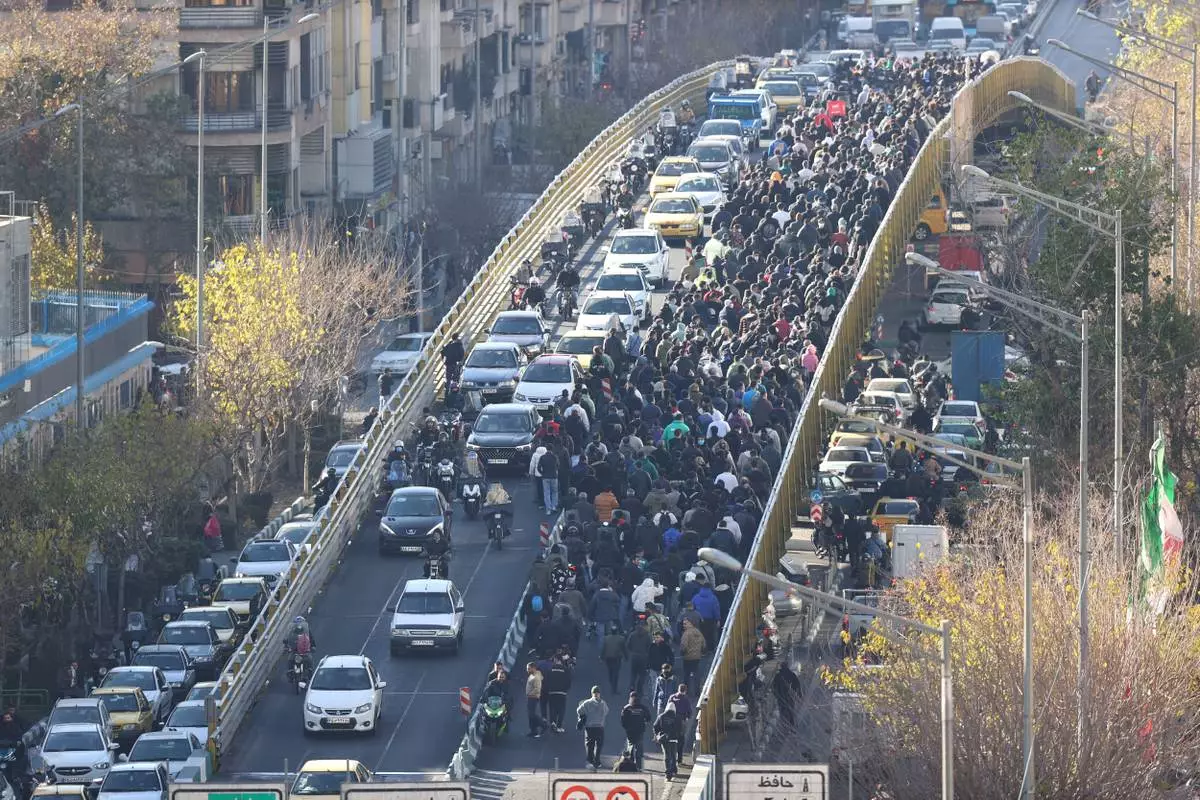
FILE - Protesters march on a bridge in Tehran, Iran, on Dec. 29, 2025. (Fars News Agency via AP, File)

FILE - Protesters march on a bridge in Tehran, Iran, on Dec. 29, 2025. (Fars News Agency via AP, File)

Recommended Articles