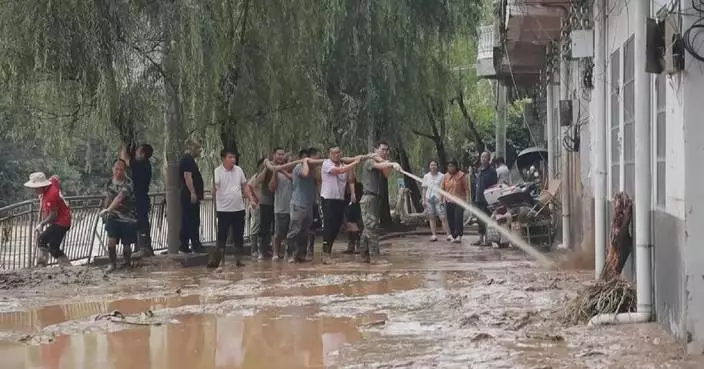
Rising water levels along the Jhelum River in Muzaffarabad in Pakistan-controlled Kashmir have caused concern for thousands of residents living downstream.
With India releasing more water than usual in to the river and the suspension of the Indus Waters Treaty cutting off vital flood data, locals face growing uncertainty and increased risk.
Along the riverbank, 72-year-old Rafiq Hussain and his family of six have been watching floodwaters creep within meters of their home.
"When India released the water, the river rose by eight to ten feet. There's a lot of fear and uncertainty, especially after hearing reports that more water could be released without any warning," he said.
Hussain, a farmer and father of four, said they received no prior notification of the water release. He estimates that over ten thousand people residing in about one thousand homes along the riverbank are directly exposed to the flood risk.
The 1960 Indus Waters Treaty, once a rare symbol of cooperation, is now in question. India claims sovereignty over water use, while Pakistan warns of weaponization of a shared resource.
"Well there are bilateral agreements between India and Pakistan, but this Indus Waters Treaty is trilateral. It's not between only India and Pakistan, but the World Bank is there. And as far as the articles of that agreement is concerned, that no one, either India or Pakistan, can walk away from this. They have to agree mutually if they want to scrap this agreement,” said Raja Muhammad Farooq Haider Khan, Former Prime Minister of Azad Kashmir, a region administered by Pakistan as a nominally self-governing entity in the western portion of the larger, disputed Kashmir region.
For families like Hussain's, this is no longer just about diplomacy — it's about survival.
"I cross the river to fish and sell it locally, just enough to get by. Last week, I set my nets, but two days later, a sudden ten-foot surge of water hit. By the time I returned, the nets were gone. I suffered heavy losses,” said Hameed Hussain, Rafiq's son.
Tensions between India and Pakistan in Kashmir have increased since an attack last week on tourists in Indian-controlled Kashmir that killed at least 26 people, mostly Indian visitors to the region. India has blamed Pakistan for supporting the attack, a charge which Pakistan vigorously denies.

Rising Jhelum River threatens people in Pakistan-controlled Kashmir