BOGOTA, Colombia (AP) — Colombian President Gustavo Petro on Thursday pressed on with his struggling plan to overhaul the country’s labor laws, sending Congress a referendum proposal whose questions for voters include whether workdays should be limited to eight hours and whether workers should receive double pay if they work during holidays.
With much of his agenda repeatedly blocked by Congress, Petro is now betting that the same lawmakers who twice rejected his labor reform will allow voters to decide whether they want his proposed changes. Congress has one month to approve or reject the 12-question referendum.
Click to Gallery
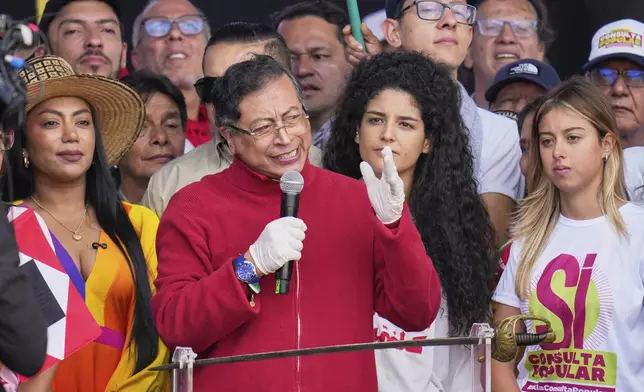
President Gustavo Petro addresses supporters outside Congress in Bogotá, Colombia, Thursday, May 1, 2025, before presenting questions for a referendum on his labor reform proposal to the Senate after two failed attempts in the legislature. (AP Photo/Fernando Vergara)
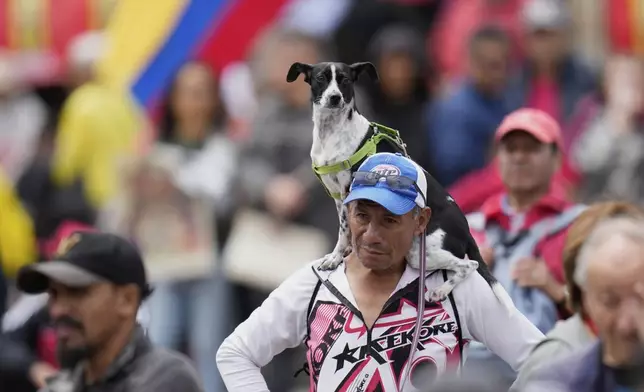
Supporters of President Gustavo Petro rally outside Congress in Bogotá, Colombia, Thursday, May 1, 2025, before he presents questions for a referendum on his labor reform proposal to the Senate, (AP Photo/Fernando Vergara)
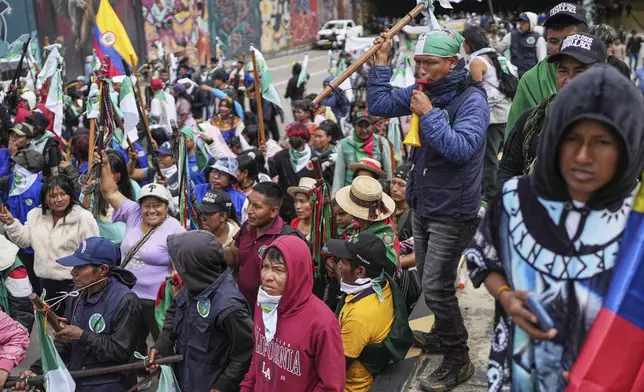
Indigenous supporters of President Gustavo Petro march in favor of a referendum on his labor reform proposal, which he presented to the Senate in Bogotá, Colombia, Thursday, May 1, 2025. (AP Photo/Ivan Valencia)
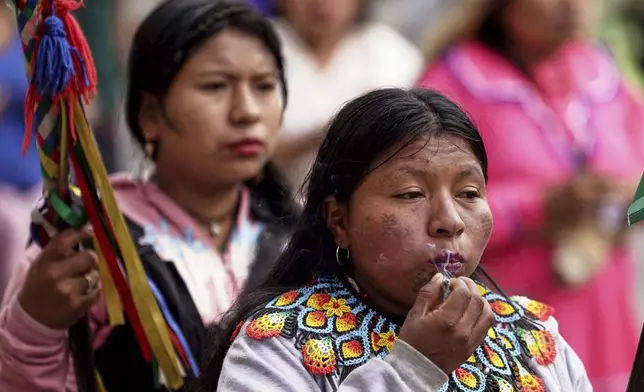
Indigenous supporters of President Gustavo Petro attend a rally in favor of the referendum proposal on his labor reform that he submitted to the Senate in Bogotá, Colombia, Thursday, May 1, 2025. (AP Photo/Ivan Valencia)
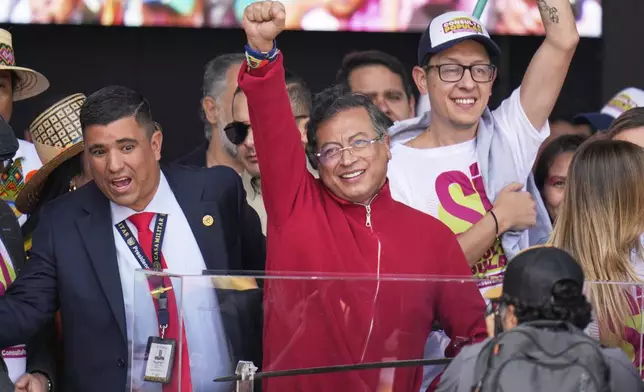
President Gustavo Petro addresses supporters outside Congress in Bogotá, Colombia, Thursday, May 1, 2025, before presenting questions for a referendum on his labor reform proposal to the Senate after two failed attempts in the legislature. (AP Photo/Fernando Vergara)
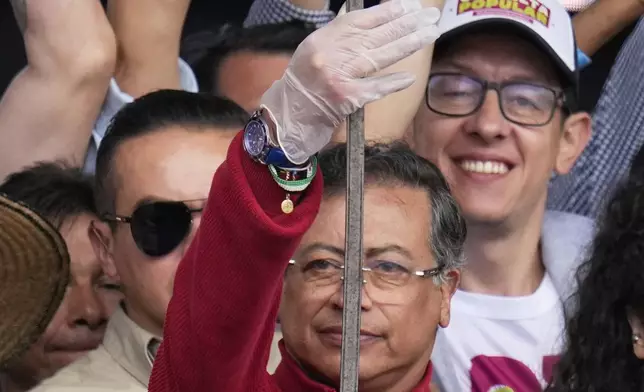
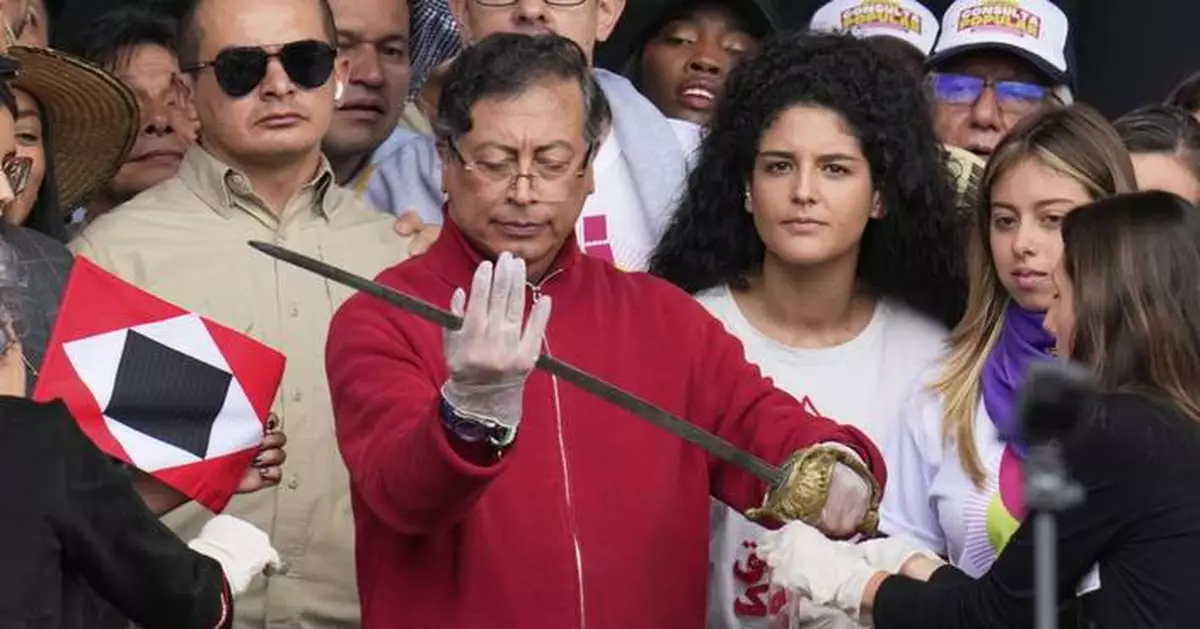
President Gustavo Petro holds a sword that once belonged to independence hero Simón Bolívar during a speech to supporters outside Congress in Bogotá, Colombia, Thursday, May 1, 2025, before presenting a referendum proposal on his labor reform to the Senate following two failed attempts in the legislature. (AP Photo/Fernando Vergara)
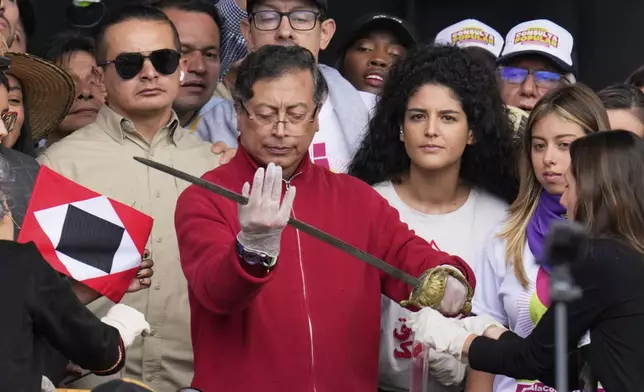
President Gustavo Petro holds a sword that once belonged to independence hero Simón Bolívar during a speech to supporters outside Congress in Bogotá, Colombia, Thursday, May 1, 2025, before presenting a referendum proposal on his labor reform to the Senate following two failed attempts in the legislature. (AP Photo/Fernando Vergara)
Petro, Colombia’s first ever leftist president, sought to rally support for his project by participating in a union demonstration in the capital, Bogota, marking May Day.
“The people of Colombia want to vote for their fundamental rights, for their dignity," Petro said before thousands of demonstrators, asking them to not vote to reelect any lawmaker who votes against the referendum.
If approved by lawmakers, Petro will have to issue a decree summoning Colombians to the polls within three months. Questions for voters would include whether daytime workdays should end at 6 p.m. and whether open-ended contracts should be offered to workers to prioritize job stability.
But overcoming Congress is not Petro’s only concern in seeing his project become a reality. He needs referendum participation to exceed 13 million – that’s more than the number of votes he obtained to become president – and more than half of those votes must be in favor of his proposal.
Analysts agree that Petro has the upper hand in several scenarios, even if Congress does not approve the referendum or if he fails to obtain the necessary votes at the polls. In the former scenario, Sandra Borda, political science professor at the University of the Andes, said lawmakers would give Petro’s government the tools to “play the victim” and strengthen its rhetoric against Congress.
“The message the government has constantly tried to send is that Congress is no longer an entity that represents the interests of the people... but rather defends the interests, as they call them, of the private sector oligarchies,” Borda said.
On the other hand, if voters end up going to the polls, the government could consider itself the winner by securing support from its electoral base, said Javier Garay, a political science professor at the Externship University of Colombia. He noted that the referendum’s underlying purpose is to test the government’s electoral support ahead of the 2026 presidential election.
Union members who were among the thousands of people demonstrating Thursday in Bogota expressed support for the referendum.
“The referendum is a vindication of workers’ rights, which have been a struggle for decades and were taken away from us by previous far-right governments,” said Jesús Parra, 53, one of the protesters.
Follow AP’s coverage of Latin America and the Caribbean at https://apnews.com/hub/latin-america
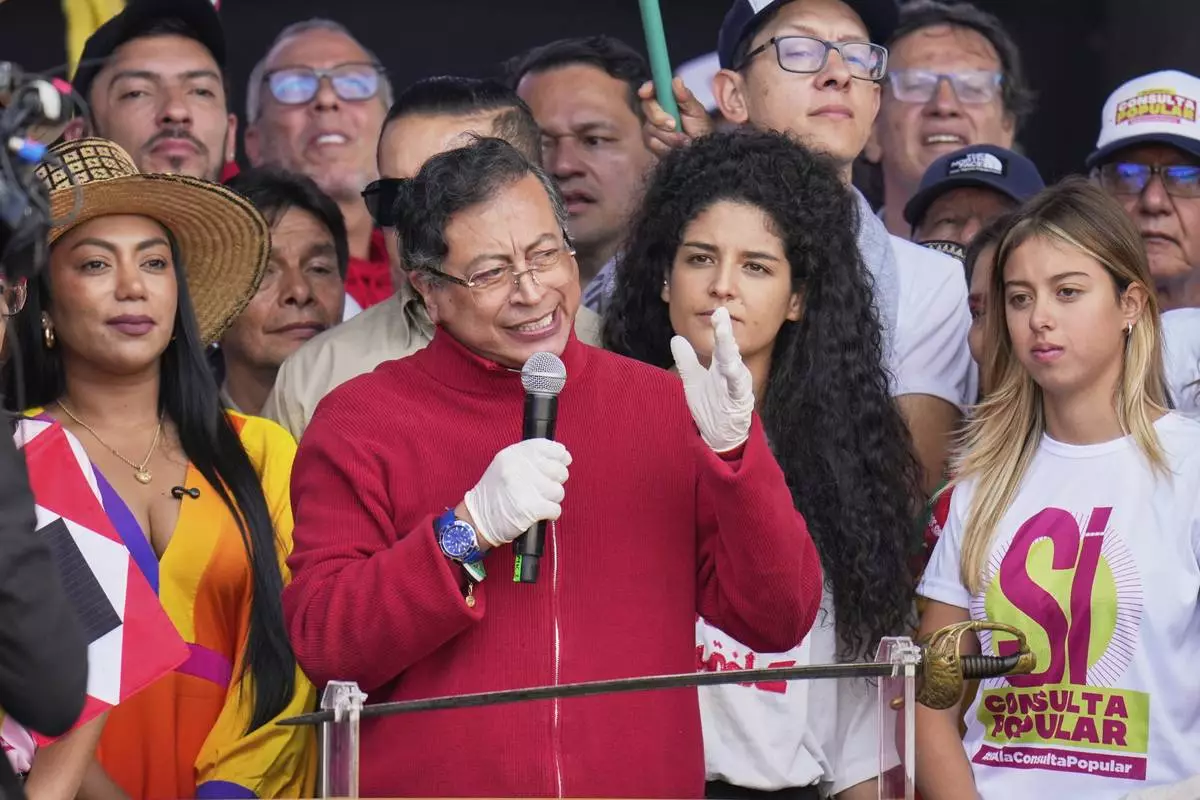
President Gustavo Petro addresses supporters outside Congress in Bogotá, Colombia, Thursday, May 1, 2025, before presenting questions for a referendum on his labor reform proposal to the Senate after two failed attempts in the legislature. (AP Photo/Fernando Vergara)
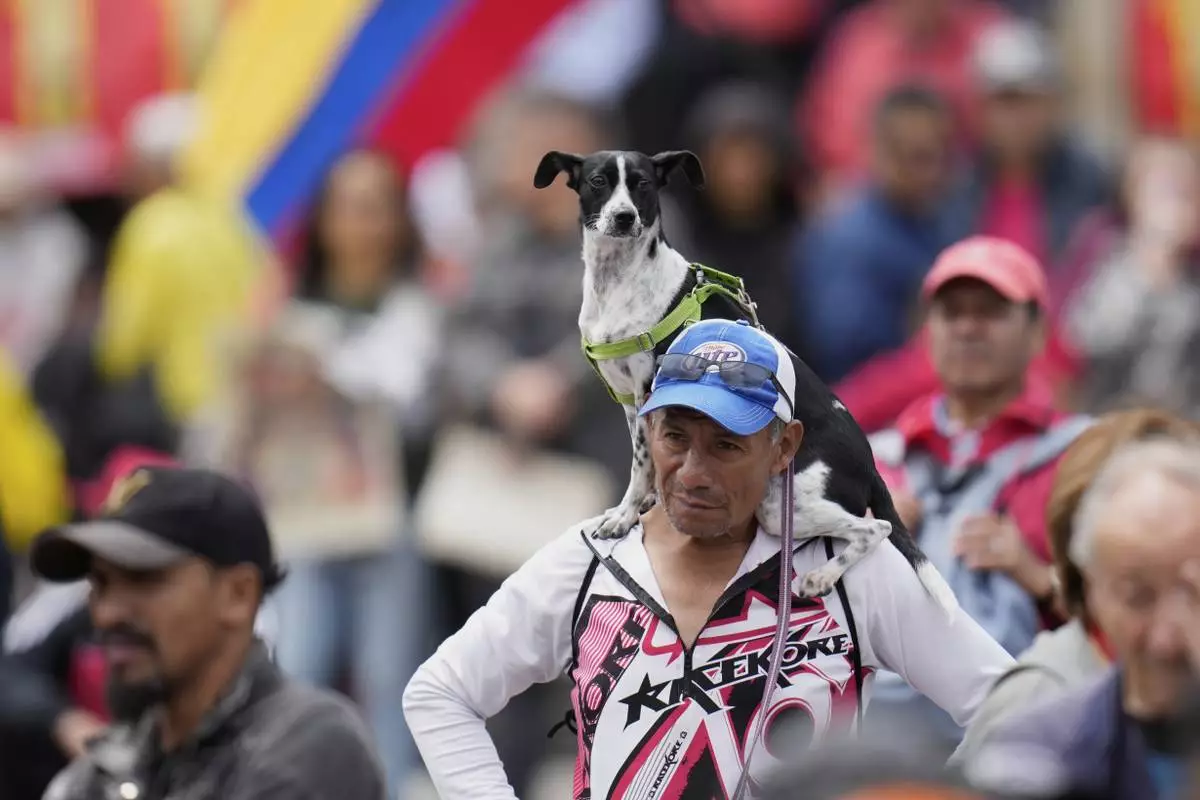
Supporters of President Gustavo Petro rally outside Congress in Bogotá, Colombia, Thursday, May 1, 2025, before he presents questions for a referendum on his labor reform proposal to the Senate, (AP Photo/Fernando Vergara)
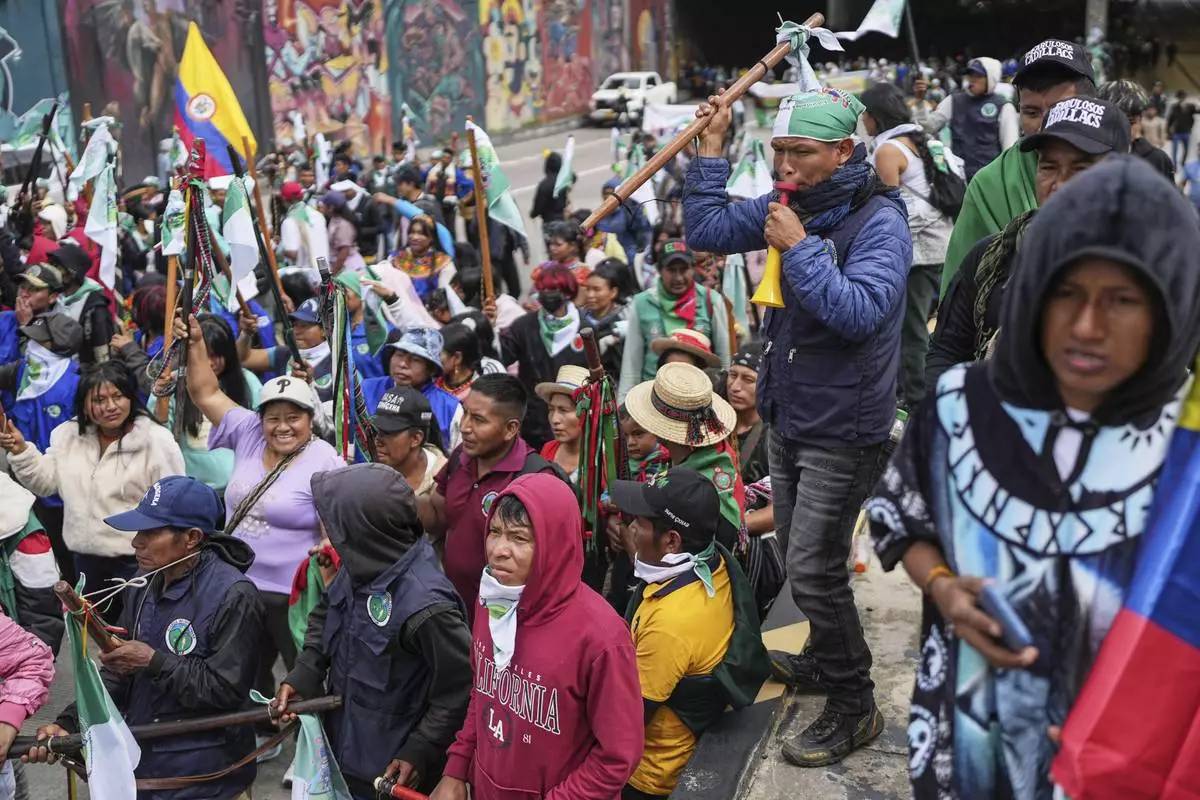
Indigenous supporters of President Gustavo Petro march in favor of a referendum on his labor reform proposal, which he presented to the Senate in Bogotá, Colombia, Thursday, May 1, 2025. (AP Photo/Ivan Valencia)
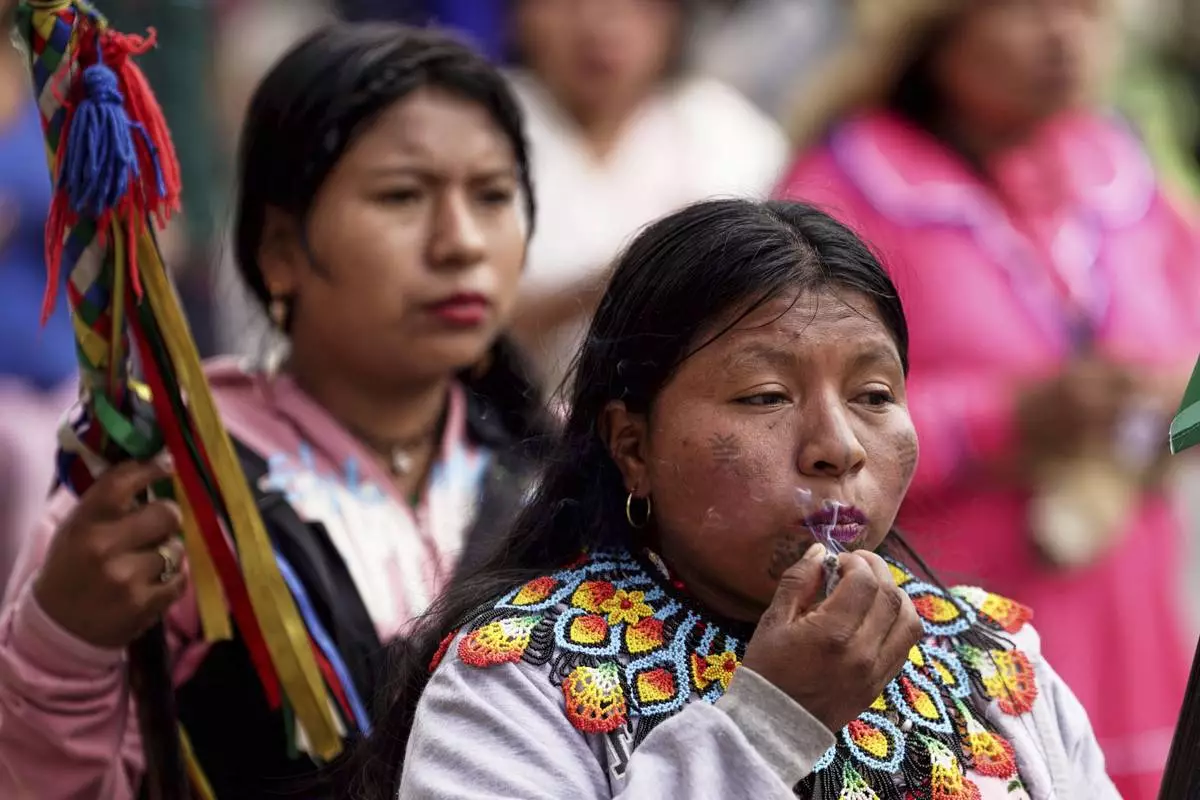
Indigenous supporters of President Gustavo Petro attend a rally in favor of the referendum proposal on his labor reform that he submitted to the Senate in Bogotá, Colombia, Thursday, May 1, 2025. (AP Photo/Ivan Valencia)
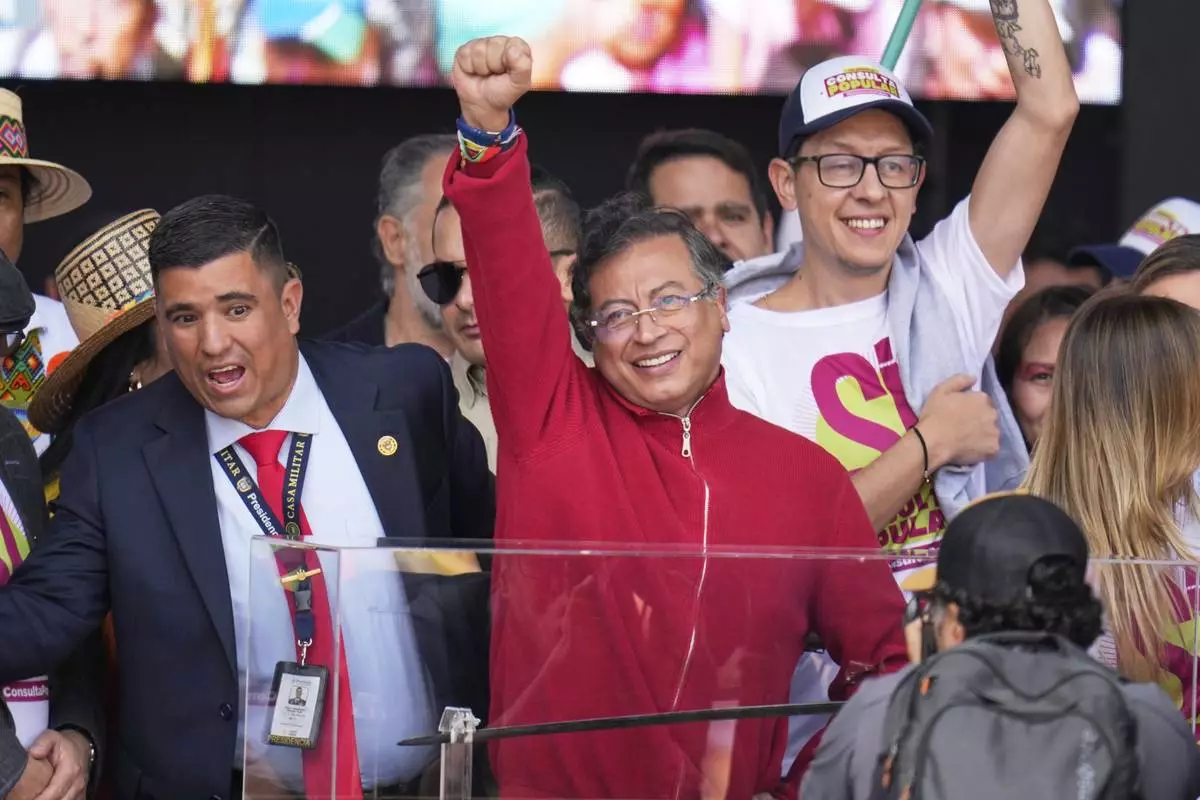
President Gustavo Petro addresses supporters outside Congress in Bogotá, Colombia, Thursday, May 1, 2025, before presenting questions for a referendum on his labor reform proposal to the Senate after two failed attempts in the legislature. (AP Photo/Fernando Vergara)
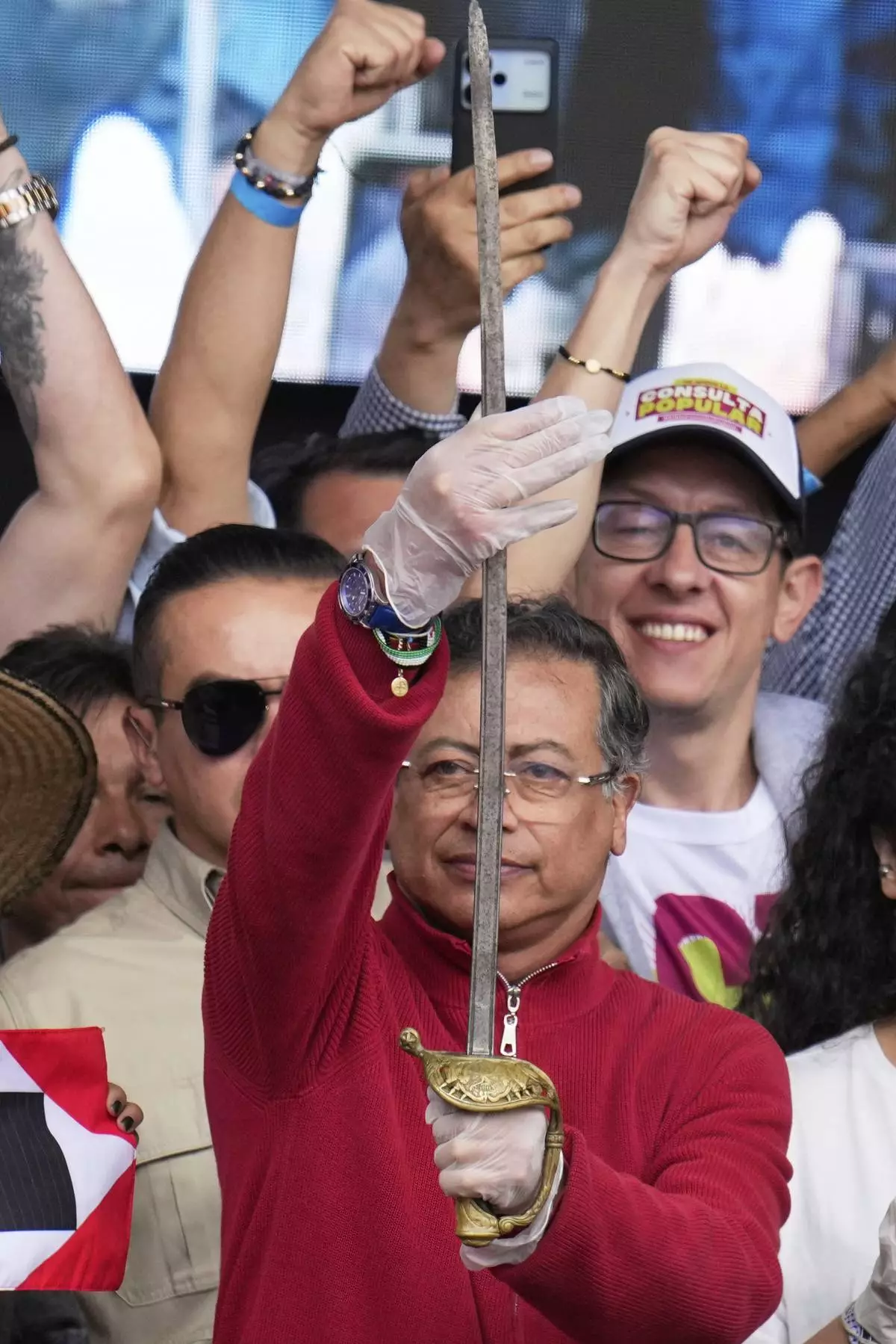
President Gustavo Petro holds a sword that once belonged to independence hero Simón Bolívar during a speech to supporters outside Congress in Bogotá, Colombia, Thursday, May 1, 2025, before presenting a referendum proposal on his labor reform to the Senate following two failed attempts in the legislature. (AP Photo/Fernando Vergara)
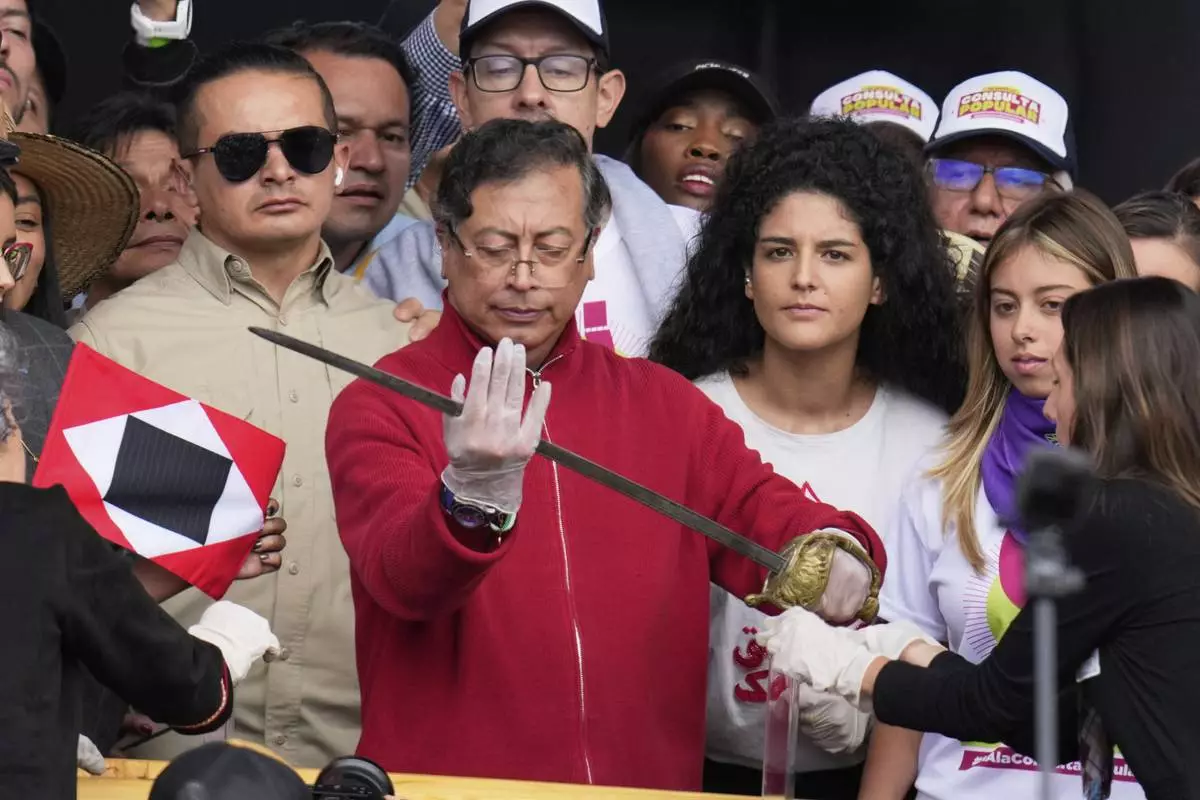
President Gustavo Petro holds a sword that once belonged to independence hero Simón Bolívar during a speech to supporters outside Congress in Bogotá, Colombia, Thursday, May 1, 2025, before presenting a referendum proposal on his labor reform to the Senate following two failed attempts in the legislature. (AP Photo/Fernando Vergara)