Halley's comet swings near Earth every 75 years. But debris left by the comet leads to two major meteor showers every year including the Eta Aquarids.
When this meteor shower lights up the night sky, “you'll know that Earth is crossing the path of the most famous comet,” said Shauna Edson of the Smithsonian's National Air and Space Museum.
The Eta Aquarids are “pretty fast meteors” said NASA's Bill Cooke.
During Tuesday morning’s peak, expect to see 10 to 15 meteors per hour in ideal viewing conditions, said Cooke.
However, the moon will be nearly two-thirds full, which will likely reduce visibility.
Viewing lasts until May 28. Here’s what to know about the Eta Aquarids and other meteor showers.
As the Earth orbits the sun, several times a year it passes through debris left by passing comets and sometimes asteroids. The source of the Eta Aquarids is debris from Halley's comet.
When these fast-moving space rocks enter Earth’s atmosphere, the debris encounters new resistance from the air and becomes very hot, eventually burning up.
Sometimes the surrounding air glows briefly, leaving behind a fiery tail — the end of a “shooting star.”
You don’t need special equipment to see the various meteor showers that flash across annually, just a spot away from city lights.
The best time to watch a meteor shower is in the early predawn hours when the moon is low in the sky.
Competing sources of light — such as a bright moon or artificial glow — are the main obstacles to a clear view of meteors. Cloudless nights when the moon wanes smallest are optimal viewing opportunities.
And keep looking up, not down. Your eyes will be better adapted to spot shooting stars if you aren’t checking your phone.
The next major meteor shower, the Southern Delta Aquarids, peaks in late July.
The Associated Press Health and Science Department receives support from the Howard Hughes Medical Institute’s Science and Educational Media Group. The AP is solely responsible for all content.

FILE - A Perseid meteor streaks across the sky during the Perseid meteor shower in Vinton, California, Aug. 11, 2009. (AP Photo/Kevin Clifford, File)

FILE - A meteor streaks through the sky over Joshua trees and rocks at Joshua Tree National Park in Southern California's Mojave Desert in this 30-minute time exposure ending at 1:15 a.m. PST, Nov. 17, 1998. Stars moving through the sky as the Earth rotates are seen as a series of short lines across the frame. (AP Photo/Reed Saxon, File)
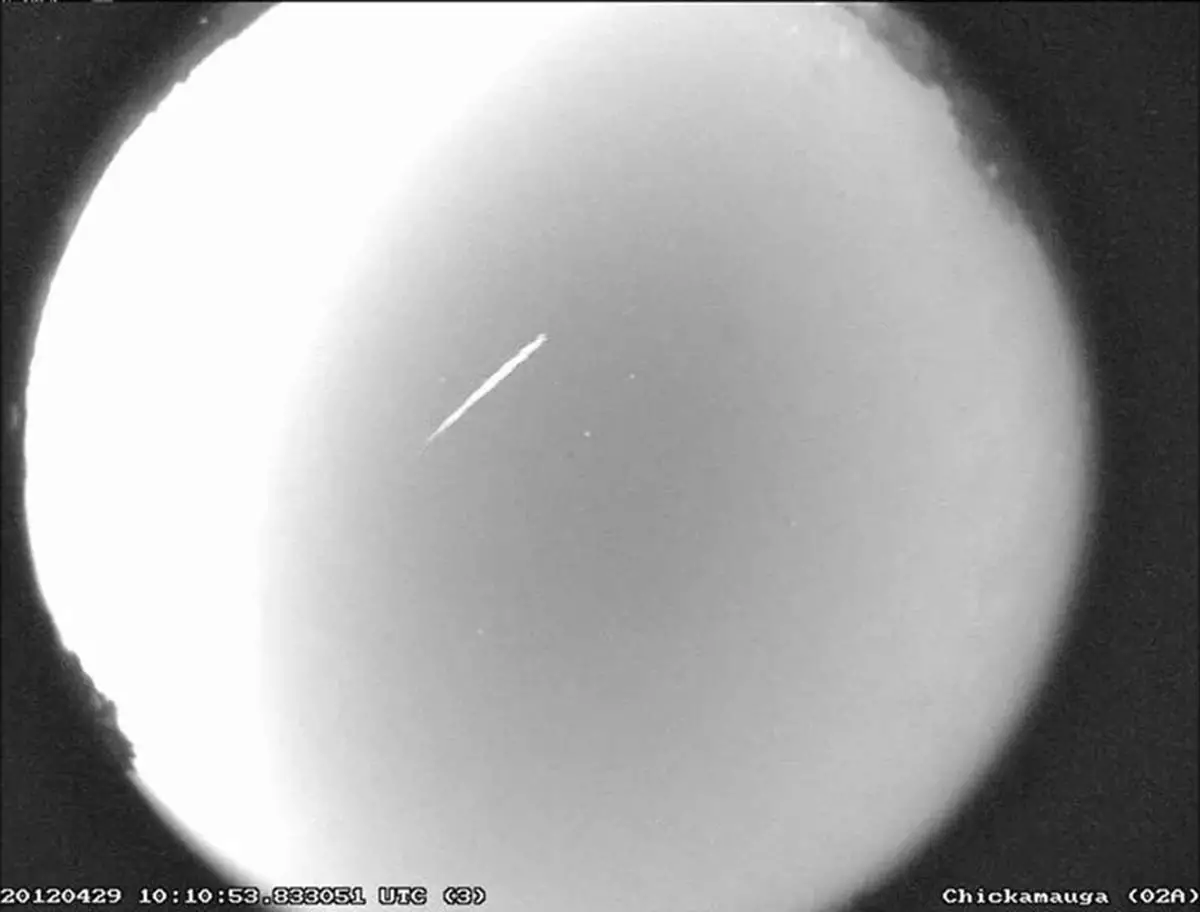
FILE - This photo provided by NASA shows an Eta Aquarid meteor streaking over northern Georgia on April 29, 2012. (B. Cooke/Marshall Space Flight Center/NASA via AP, File)
Glenn Hall, a Hockey Hall of Famer whose ironman streak of 502 starts as a goaltender remains an NHL record, has died. He was 94.
Nicknamed “Mr. Goalie,” Hall worked to stop pucks at a time when players at his position were bare-faced, before masks of any kind became commonplace. He did it as well as just about anyone of his generation, which stretched from the days of the Original Six into the expansion era.
A spokesperson for the Chicago Blackhawks confirmed the team received word of Hall’s death from his family. A league historian in touch with Hall’s son, Pat, said Hall died at a hospital in Stony Plain, Alberta, on Wednesday.
A pioneer of the butterfly style of goaltending of dropping to his knees, Hall backstopped Chicago to the Stanley Cup in 1961. He won the Conn Smythe Trophy as most valuable player of the playoffs in 1968 with St. Louis when the Blues reached the final before losing to Montreal. He was the second of just six Conn Smythe winners from a team that did not hoist the Cup.
His run of more than 500 games in net is one of the most untouchable records in sports, given how the position has changed in the decades since. Second in history is Alec Connell with 257 from 1924-30.
“Glenn was sturdy, dependable and a spectacular talent in net,” Commissioner Gary Bettman said. “That record, set from 1955-56 to 1962-63, still stands, probably always will, and is almost unfathomable — especially when you consider he did it all without a mask.”
Counting the postseason, Hall started 552 games in a row.
Hall won the Calder Trophy as rookie of the year in 1956 when playing for the Detroit Red Wings. After two seasons, he was sent to the Black Hawks along with legendary forward Ted Lindsay.
Hall earned two of his three Vezina Trophy honors as the league's top goalie with Chicago, in 1963 and '67. The Blues took him in the expansion draft when the NHL doubled from six teams to 12, and he helped them reach the final in each of their first three years of existence, while winning the Vezina again at age 37.
Hall was in net when Boston's Bobby Orr scored in overtime to win the Cup for the Bruins in 1970, a goal that's among the most famous in hockey history because of the flying through the air celebration that followed. He played one more season with St. Louis before retiring in 1971.
“His influence extended far beyond the crease," Blues chairman Tom Stillman said. “From the very beginning, he brought credibility, excellence, and heart to a new team and a new NHL market.”
A native of Humboldt, Saskatchewan, Hall was a seven-time first-team NHL All-Star who had 407 wins and 84 shutouts in 906 regular-season games. He was inducted into the Hall of Fame in 1975, and his No. 1 was retired by Chicago in 1988.
Hall was chosen as one of the top 100 players in the league's first 100 years.
Blackhawks chairman and CEO Danny Wirtz called Hall an innovator and “one of the greatest and most influential goaltenders in the history of our sport and a cornerstone of our franchise.”
“We are grateful for his extraordinary contributions to hockey and to our club, and we will honor his memory today and always,” Wirtz said.
The Blackhawks paid tribute to Hall and former coach and general manager Bob Pulford with a moment of silence before Wednesday night’s game against St. Louis. Pulford died Monday.
A Hall highlight video was shown on the center-ice videoboard. The lights were turned off for the moment of silence, except for a spotlight on the No. 1 banner for Hall that hangs in the rafters at the United Center.
Fellow Hall of Famer Martin Brodeur, the league's leader in wins with 691 and games played with 1,266, posted a photo of the last time he saw Hall along with a remembrance of him.
“Glenn Hall was a legend, and I was a big fan of his,” Brodeur said on social media. “He set the standard for every goaltender who followed. His toughness and consistency defined what it meant to play.”
AP Sports Writer Jay Cohen in Chicago contributed to this report.
AP NHL: https://apnews.com/hub/nhl
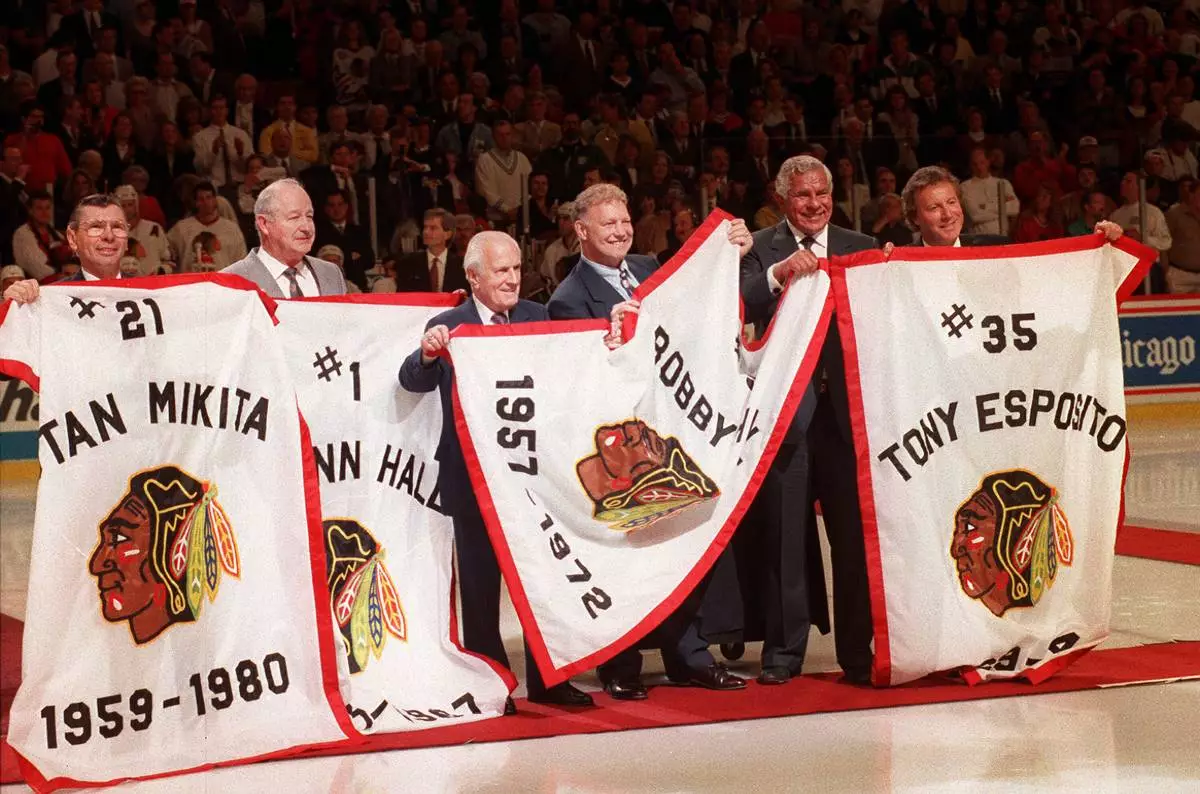
FILE - Glenn Hall, second from left, stands with fellow former Chicago Blackhawks players Stan Mikita, former general manager Tommy Ivan, Bobby Hull, Bill Wirtz and Tony Esposito during a pre-game ceremony at the Chicago Stadium in Chicago, Ill., April 14, 1994. (AP Photo/Fred Jewell, File)
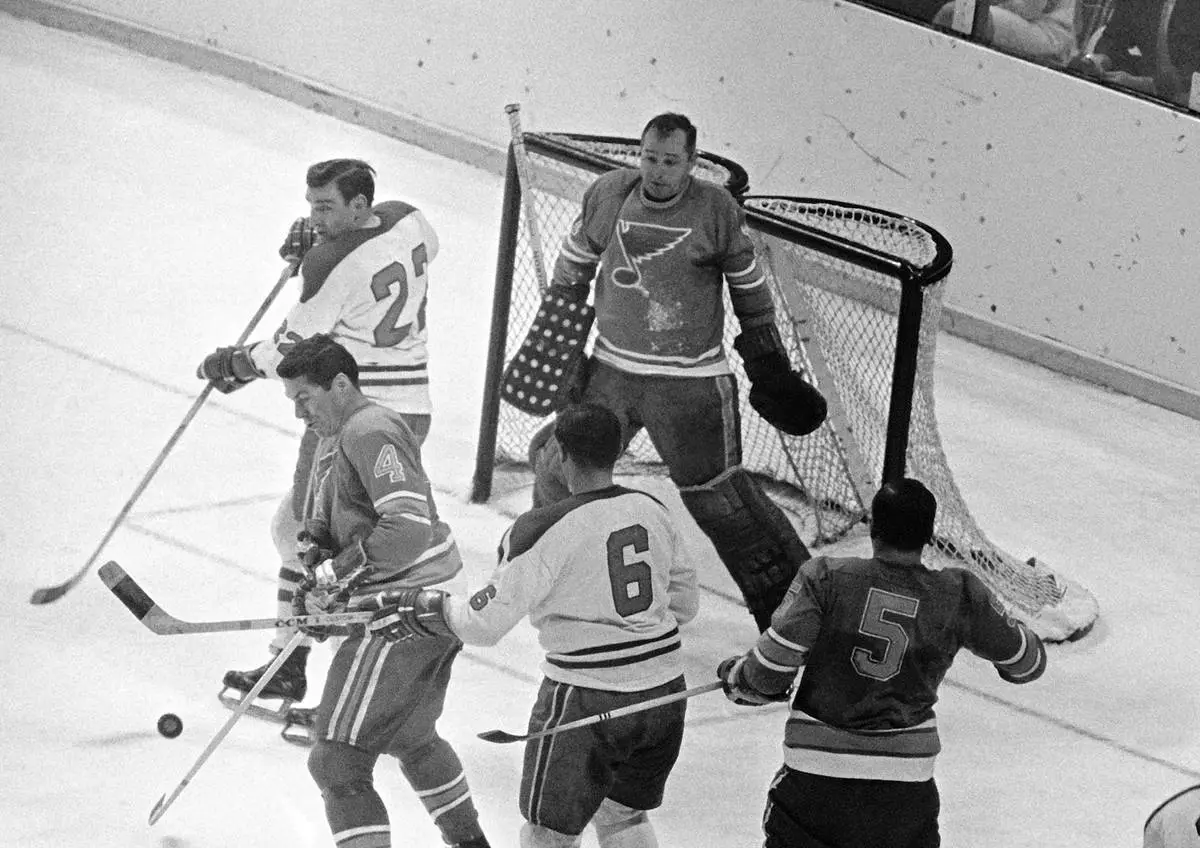
FILE - St. Louis Blues goalie Glenn Hall, top right, is pinned to his net waiting to make a save on a Montreal Canadians shot as Blues' Noel Picard (4) tries to block the puck while Canadiens' John Ferguson (22) and Ralph Backstorm wait for a rebound in the third period of their NHL hockey Stanley Cup game, May 5, 1968. (AP Photo/Fred Waters, File)