The eastern Chinese city of Yiwu, celebrated as "the world's supermarket," is drawing a wave of foreign tourists, spurred by tailored trading strategies and China's robust initiatives, such as promoting overseas travel and enhancing consumer-friendly experiences.
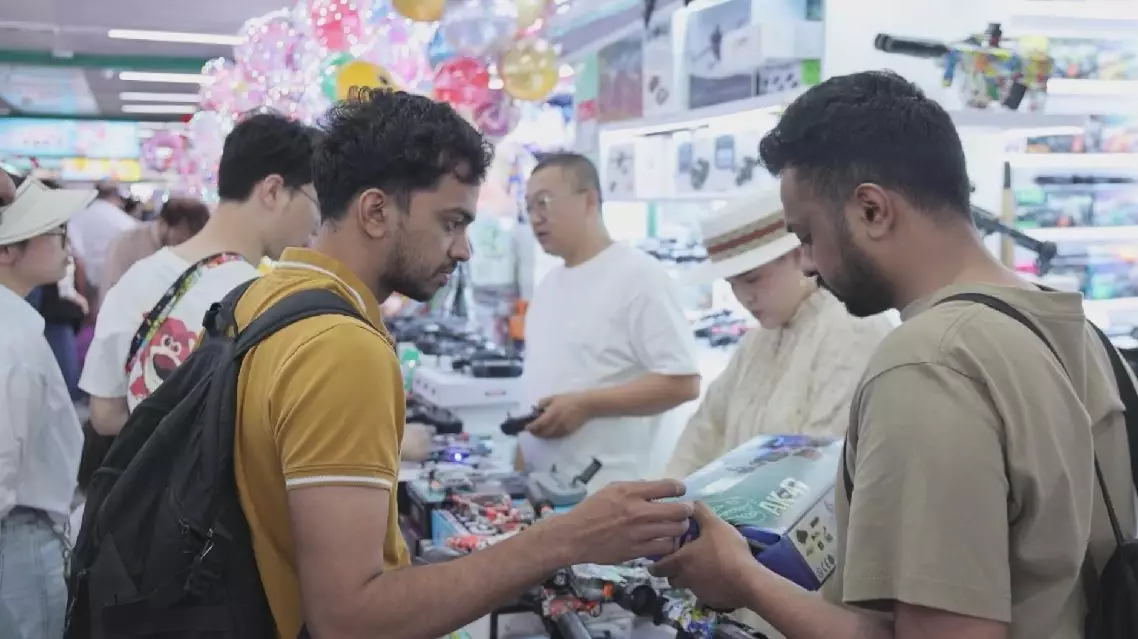
At Yiwu International Trade City, a vast wholesale market complex, shop owners have branched out into retail, attracting an increasing number of both local and international customers.
Meanwhile, foreign travelers are finding Yiwu's products impressive and relish their time exploring the city.
"My friends are [here for] the first time. They also really like Yiwu, because here, many things are very interesting and also eating and living here are more comfortable than in other cities. We just checked the AI products, new robots and also VR products, because they are very interesting and very high-tech," said a foreign tourist.
Many foreign tourists attribute their choice to visit and shop in China to the country's 240-hour (10-day) visa-free transit and departure tax refund policies, which have made travel more convenient and cost-effective.
At the same time, local businesspeople have reported a noticeable uptick in international visitors, further boosting the local economy.
"Usually, foreigners come here to bulk-buy goods, or to do business. Today, I see many foreigners buying small gifts, small items. There are significantly more (foreign) tourists," said Lou Qiaochu, a shop-owner at Yiwu International Trade City.
China's export hub of Yiwu attracts growing number of int'l travelers
Slovenia has become the first European Union member state to bring in fuel rationing as a way of managing disruption to supply caused by the conflict in the Middle East.
Under the new measure, customers with private vehicles will be restricted to 50 liters per day with a 200-liter limit for companies and other special cases such as farmers. The government had already begun releasing strategic reserves in an effort to stabilize the market.
Across the country, long queues have formed at petrol stations, with some locations reporting limited availability of diesel. Notices warning customers about shortages have become increasingly common, reflecting the strain on supply chains.
Despite the visible pressure, many drivers said they are not engaging in panic buying.
"I think that's nonsense. Even if the price goes up ten cents it is not a disaster," said Robert, a motorcyclist.
Others, however, expressed concern over how the situation has been handled.
"I wish they would have released fuel reserves sooner and bought more reserves of the fuel for which we knew a month ago there was going to be difficulties," said Severin, a car driver.
Even with the release of strategic fuel reserves, logistical challenges remain a key issue. Many distributors store fuel outside the country, and transport capacity has struggled to keep pace with the recent spike in demand.
Analysts said consumption has increased sharply, driven in part by behavior linked to previous crises.
"They still remember 2022, when the prices were higher for a longer period of time, so they are hoarding the gasoline if they can. They're buying as much as they can, and I think that's the main reason," said Karel Lipnik, a financial analyst at Delo, a national daily newspaper in Slovenia.
Cross-border demand is also contributing to the strain. Slovenia's relatively low fuel prices compared to neighboring countries have attracted foreign buyers, further increasing consumption.
"Slovenia has the lowest price within all the neighboring countries, and it's also spring, so a lot of farmers buy gasoline to do some farming on the fields," Lipnik said.
While fuel prices in Slovenia remain state-regulated, the impact of global market disruptions is becoming increasingly evident. Analysts warned that the period of stable and relatively low fuel prices may be coming to an end, as external shocks continue to influence supply and demand.
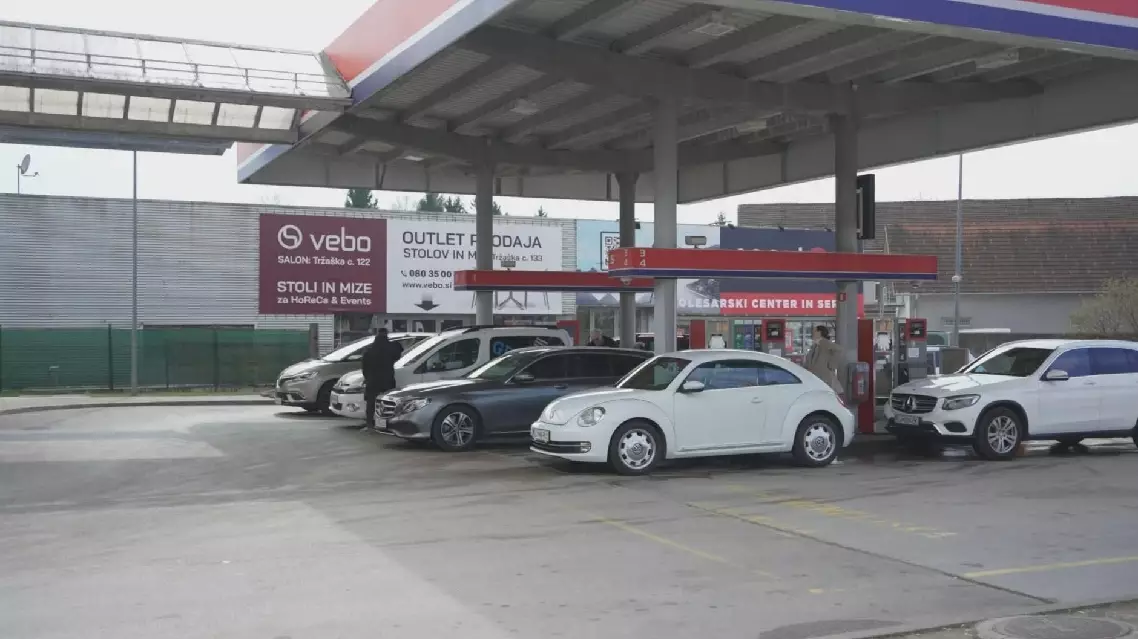
Slovenia caps fuel purchases amid energy shortage