Factories-turned-scenic spots across China are seeing surging crowds of tourists during this year's May Day holiday, evidence of the country's thriving industrial tourism sector.
Since this year's five-day holiday began on Thursday, old industrial landmarks which have been transformed into vibrant museums, cultural parks, and leisure areas across the country have been packed with visitors, as the sites' popularity continues to grow among people interested in these former witnesses to China's industrial boom.
Visitors of all ages are touring the relics of industrial heritage in various regions, including Hunan in central China, Chongqing Municipality in the southwest, Guangxi Zhuang Autonomous Region in the south, and Inner Mongolia Autonomous Region and Shanxi in the north.
One of the most sought-after places for families with children is an urban cultural district rebuilt around an old factory complex in Hengyang, one of the largest cities of Hunan.
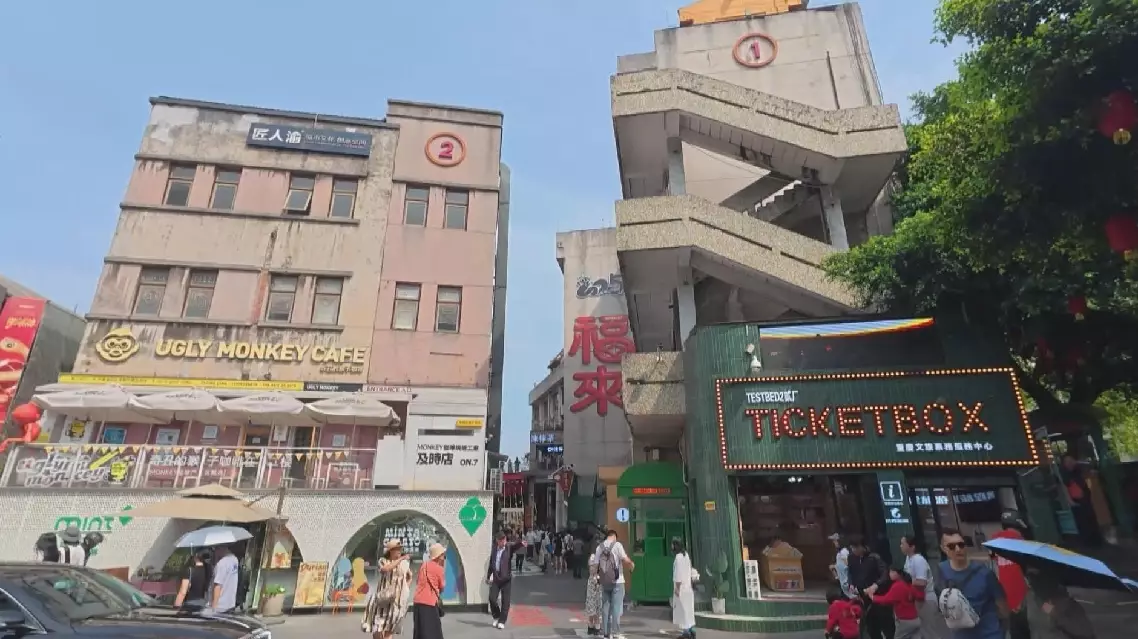
A printing plant-turned-creative park in Chongqing, which perfectly blends industrial imprints with modern cultural trends, are also drawing large numbers of people eager to snap photos.
"The designs here cater to the tastes of the young and they are very trendy," a tourist surnamed Ouyang told the China Central Television while touring the park.
A highlight of the park is its wide array of exhibitions featuring over 100 commercial brands, which are held across a sprawling ground of 30,000 square meters.
"We have kept the old factory's style intact, and added some cultural, artistic and creative touches. Since the May Day holiday began, we have seen at least 60,000 to 70,000 tourist visits daily," said Wang Fei, general manager of the park.
Elsewhere in Erdos City of Inner Mongolia, a main coal-producing region in China, the black open pits of a local coal mine have been transformed into a green ecological park that often hosts themed study tours for youngsters. It has attracted many groups of pupils since the beginning of the public holiday.
"I heard my teacher say that we were going to visit a coal mine, so I expected to see a lot of black. But after I arrived here, all I can see are beautiful flowers and grass," said Zhao Yile, who was among a group of primary school students touring the site.
Similar popular sites incorporating industrial culture and tourism can also be found in Nanning, capital of Guangxi Zhuang Autonomous Region, where a local silk factory has been revamped and turned into an online "celebrity zone" featuring exhibitions, cultural shows, and creative commodities, among others.
"Incorporating industrial culture and modern commerce can prove be very attractive to tourists," said Chen Xi, a visitor.
While in Shanxi's Yangquan City, an old workshop which used to produce pumps over 70 years ago are now a tourist magnet, after an extensive renovation project led to the emergence of a lively cultural park and a bustling shopping street in the adjacent area.
A surging number of tourists during this May Day holiday are giving a boost to the local hospitality sector.
"The development of industrial tourism has driven the growth of catering and entertainment sectors in our scenic area, with the daily revenue exceeding 500,000 yuan (about 68,760 U.S. dollars) and nearby hotels fully booked during the holiday," said Cui Xiaolin, the person in charge at the park.
Official data shows that China has 231 national and 400 provincial-level industrial heritage sites across 31 provinces and cities, providing diversified tourism resources to domestic and foreign tourists alike.
"Efforts to revitalize the industrial heritage and develop industrial tourism can turn idle factories and facilities into tourism resources, create jobs, and facilitate industrial restructuring, thus helping advance economic transformation and foster new growth drivers," said Zhou Lan, head of the Institute of Heritage of the Industrial Culture Development Center, under the Ministry of Industry and Information Technology.
Industrial tourism booms in China during May Day holiday