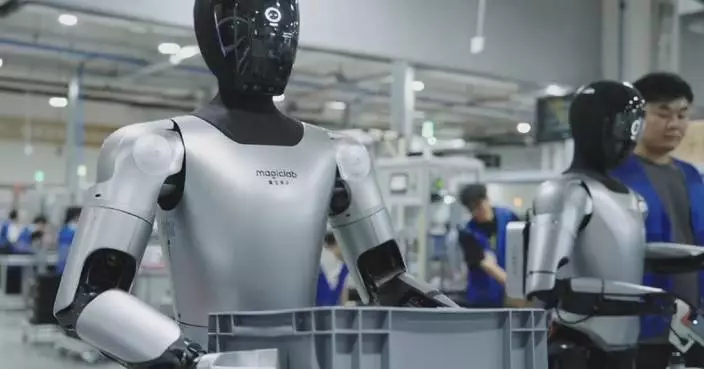
The two-day 8th Digital China Summit, which concluded on Wednesday in Fuzhou City of east China's Fujian Province, showcased the latest advances in artificial intelligence (AI) technologies, offering a glimpse into the future of daily life.
With an experience area of 56,000-square-meter that will remain open until May 4, the summit aimed to highlight China's strides in digital transformation and the expansion of its digital economy.
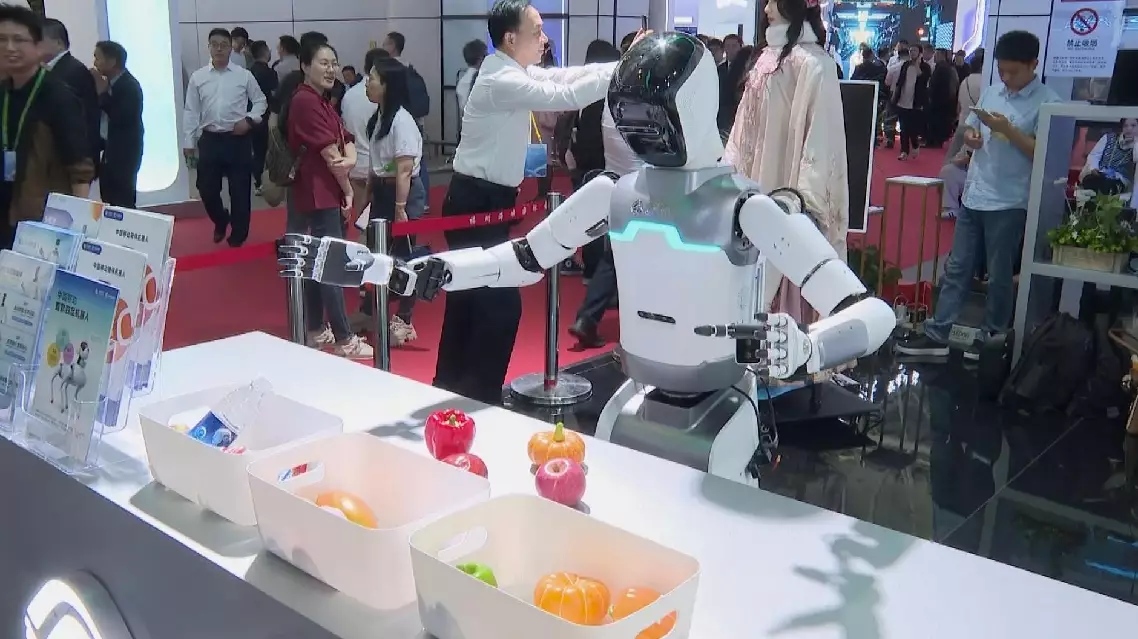
One of the most captivating exhibits at the event is an AI-powered household robot, which is poised to become a crucial part of everyday life in the near future.
Designed to take on various household chores, such as sorting out items, the robot is powered by an advanced "embodied AI model" trained with data from hundreds of thousands of real-world interactions.
"We are demonstrating how the robot organizes things in a kitchen. The robot is now distinguishing between fruits, vegetables, and other items. Behind the robot is our embodied AI large language model, which has been trained with data from hundreds of thousands of real-world interactions," explained Zhang Jian, an exhibitor.
In addition to the home assistant robot, the summit featured a collection of AI-powered robotic dogs. These robots are designed for a range of functions -- some patrol forests for disaster prevention, while others serve as community patrollers to assist with local governance.
A particularly unique model is a six-legged robot dog, built to navigate a variety of terrains, making it far more versatile than traditional four-legged models.
"The robot's main function is to make up for some shortcomings in the daily patrol work of grid-based community workers, such as reaching areas that are inaccessible to humans or dangerous sites, like fire scenes," said Dong Yating, another exhibitor.
The fusion of AI with tourism and cultural consumption is also rapidly accelerating. Several exhibitors presented AI-driven travel assistants, which use digital human avatars infused with local cultural elements. These AI assistants offer personalized services such as sightseeing recommendations and route planning for tourists.
"In the future, we will deploy these AI-based digital humans at popular tourist attractions or museums, incorporating them into augmented reality (AR) glasses. Visitors can have a personalized travel companion by simply wearing the glasses," said Xu Huimin, an exhibitor.
With AI continuing to evolve, the event offered a clear vision of how these innovations are set to change the way people live, work, and explore the world.
AI technologies take center stage at Digital China Summit in Fuzhou