Skip to Content Facebook Feature Image

In Cameroon’s civil war, spoken-word poets speak the unspeakable

ENT

In Cameroon’s civil war, spoken-word poets speak the unspeakable
ENT

ENT

In Cameroon’s civil war, spoken-word poets speak the unspeakable

2025-05-04 19:18 Last Updated At:19:20

BUEA, Cameroon (AP) — A woman cried out upon seeing what looked like a corpse, a sheet-covered form lying on a stretcher. As volunteers wheeled it onto the stage, Boris Taleabong Alemnge recited a poem whose title spoke the unspoken: “Death.”

“The day you die, people will cry,” the 24-year-old told hundreds of audience members in an embattled part of southwest Cameroon. “But this won’t stop the clock from ticking or the flowers from blooming.”

Alemnge is among a group of artists using spoken-word poetry to denounce ongoing bloodshed in Cameroon’s English-speaking regions, where separatists are fighting government forces. The supposed corpse was a stage prop, but the tears and wails that greeted it were real.

The civil war has killed an estimated 6,500 people, a majority of them civilians, and displaced nearly 1 million since 2016.

Spoken word has gained new prominence in Cameroon as poets like Alemnge, who performs under the stage name “Penboy,” believe their art form taps into the everyday dangers of war zones that many people avoid talking about.

“Death is inevitable, yet many people don’t even want to think about it,” he said after a performance he organized in March to launch his latest album, “RED.”

Artists have found eager audiences who say they feel moved by the rhythms of the spoken word.

“I have watched crowds fall silent, then rise like waves, because his words have the power to heal,” said Prosper Langmi Ngunu, who watched Penboy’s performance.

Almost everyone in Anglophone areas has lost someone close to them. Mental health issues are common. So, too, is gang rape by members of the warring parties, contributing to a rise in teenage pregnancy.

“RED” returns to the themes of Penboy’s first album, “Natives of the Universe,” which advocates that people share common humanity and fight for reasons of vanity that don’t justify the human cost.

Despite the linguistic divides deepened by the conflict, Penboy has toured six of Cameroon’s eight Francophone regions to draw people’s attention to atrocities committed in English-speaking regions. There, he said, his poems found empathetic audiences and even turned some listeners into advocates for peace.

International and local organizations have documented looting, killing and torture as well as mass rape and the burning of villages. The warring sides often trade blame for such abuses.

The scars of colonial rule shape discord in modern-day Cameroon along linguistic fault lines. Once a German colony, Cameroon was divided between Britain and France after World War I. They ruled it as two separate entities until the early 1960s, when Cameroon became independent and united as a single, federal, bilingual state.

The arrangement was short-lived. The following decade, Cameroon passed a referendum amending its constitution and dissolving sections guaranteeing the rights of the English-speaking minority.

The English-speaking population makes up about 20% of the country’s roughly 30 million people. They feel marginalized by the Francophone majority. Tensions spiked in 2016 when the government attempted to impose French in English-speaking regions’ schools and courts, igniting protests that security forces violently repressed.

The clashes prompted some English-speaking separatists to take up arms against the government. Both sides have been accused of violence against civilians.

The growing popularity of spoken-word events like Penboy’s March 9 gathering reflects how people are becoming less afraid to express their outrage, said another spoken-word artist who goes by Camila.

“Since we cannot pick guns to fight, we use the power of the spoken word to send across our message. Some find peace in it, others find healing, while some get educated,” she said.

Her performance drew inspiration from an October 2021 attack in which a soldier killed 5-year-old schoolgirl Caro Louise Ndialle after shooting at a car fleeing a checkpoint.

“How can we forget carrying the lifeless body of our baby girl in our hands with her open skull like a trophy won from a tournament?” Camila asked the audience.

Her poems tap into memories of bodies strewn on city streets, and schools and hospitals that stop operating after government soldiers and separatist fighters burn them to the ground.

Other works lampoon what poets see as hypocrisy and nonchalance by the warring sides.

In “Cries Of War,” spoken-word poet and writer Sandra Nyangha tells the story of people fed up with the conflict and eager for a return to peace.

“If you can give the order for something such as war to start, then you can also give the order to end it,” she said.

For Penboy, spoken-word gatherings are part of efforts to bring the arts to crisis-affected communities. He has also worked on initiatives like the Students In Activism Project, launched last year, to help youth build self-confidence through developing their writing and performances.

The war has robbed many of an education, he said.

“My goal here is not just to perfect their skills. It is for them to use the art forms to bring solutions to their communities,” Penboy said. “Artists have the responsibility to use their craft to advocate for change."

For more on Africa and development: https://apnews.com/hub/africa-pulse

The Associated Press receives financial support for global health and development coverage in Africa from the Gates Foundation. The AP is solely responsible for all content. Find AP’s standards for working with philanthropies, a list of supporters and funded coverage areas at AP.org.

This story has been corrected to note that the performance in the sixth paragraph happened in March, not last month.
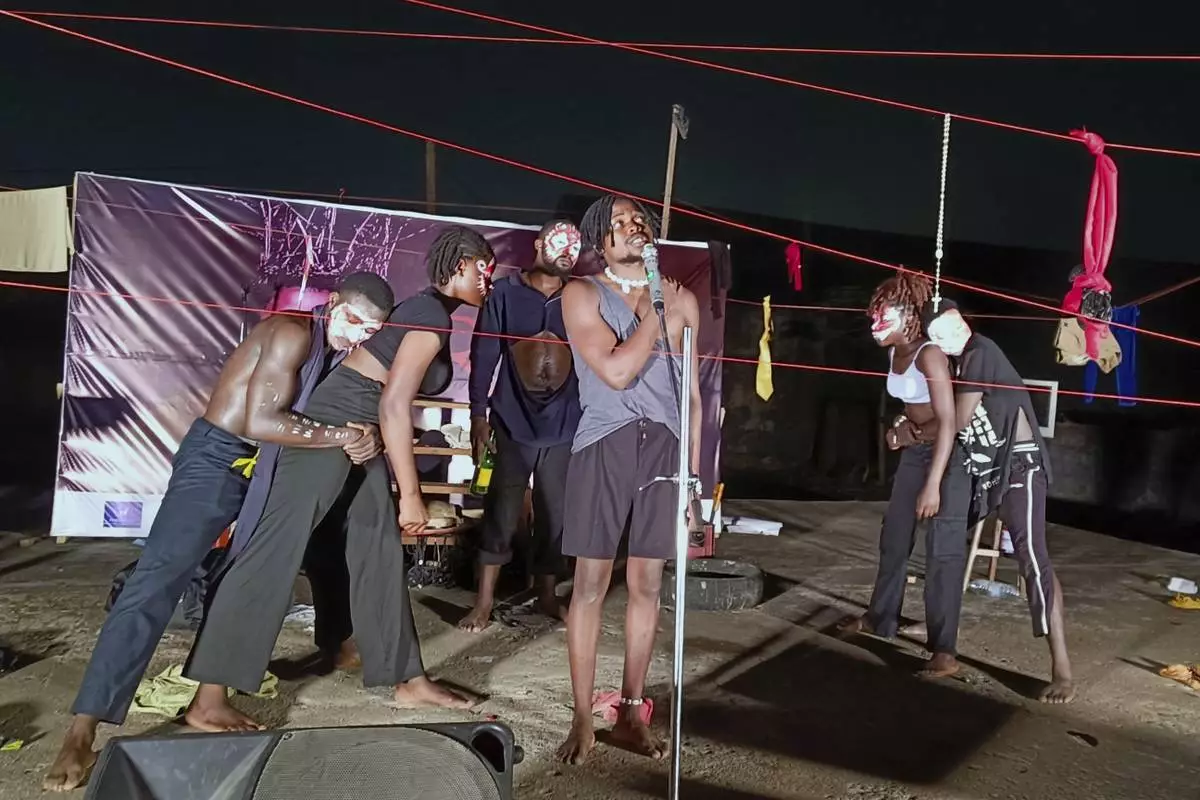
Boris Taleabong Alemnge recites a poem as artists using spoken-word poetry perform "Cries of War" in front of an audience in Buea, Cameroon, Sunday, March 9, 2025. (AP Photo/Nalova Akua)
Boris Taleabong Alemnge recites a poem as artists using spoken-word poetry perform "Cries of War" in front of an audience in Buea, Cameroon, Sunday, March 9, 2025. (AP Photo/Nalova Akua)

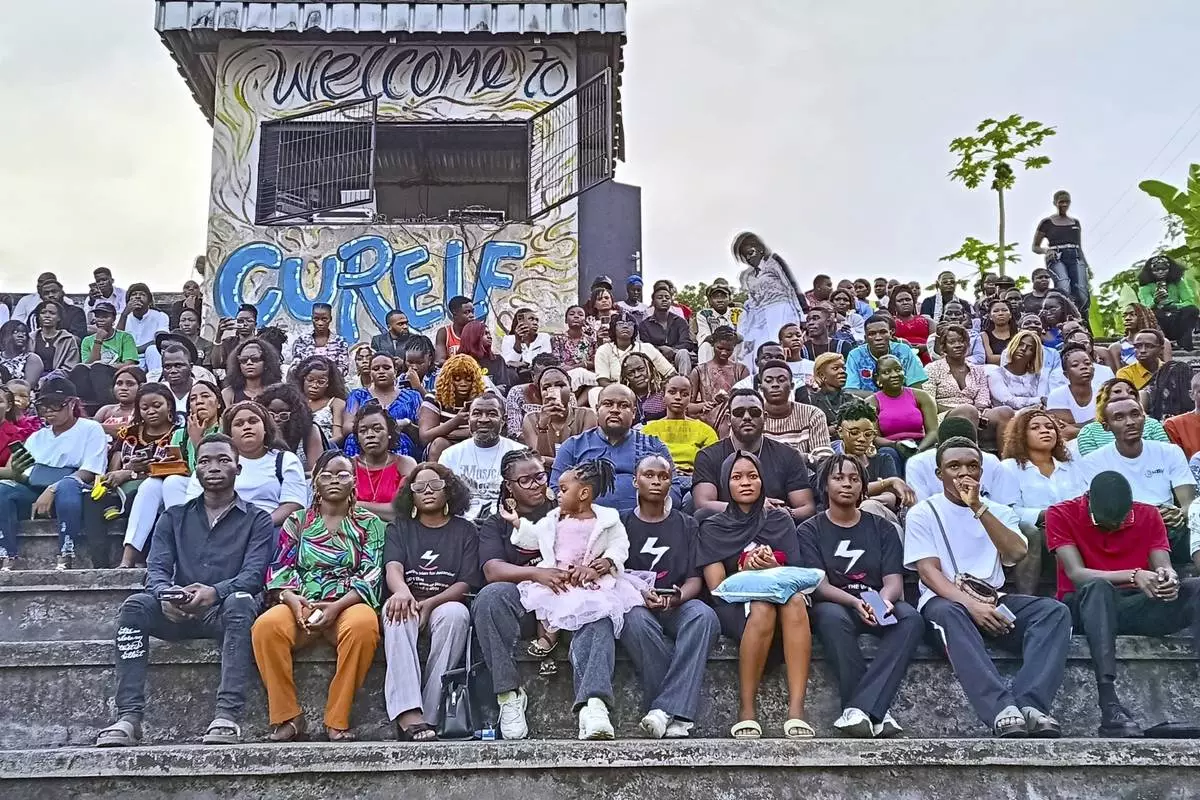
Spectators watch Boris Taleabong Alemnge recite a poem as artists using spoken-word poetry perform "Cries of War" in Buea, Cameroon, Sunday, March 9, 2025. (AP Photo/Nalova Akua)
Spectators watch Boris Taleabong Alemnge recite a poem as artists using spoken-word poetry perform "Cries of War" in Buea, Cameroon, Sunday, March 9, 2025. (AP Photo/Nalova Akua)
LAS VEGAS (AP) — Jury selection began Tuesday in the Las Vegas trial of Nathan Chasing Horse, the former “Dances with Wolves” actor accused of sexually abusing Indigenous women and girls.

Prosecutors allege he used his reputation as a spiritual leader and healer to take advantage of his victims over two decades. Chasing Horse, who was present in the courtroom Tuesday, has pleaded not guilty to 21 charges, including sexual assault, sexual assault with a minor, first degree kidnapping of a minor and the use of a minor in producing pornography.

The case sent shock waves across Indian Country when he was arrested and indicted in early 2023. After several delays, the case finally proceeded to trial after prosecutors added allegations that Chasing Horse filmed himself sexually abusing a girl younger than 14.

Best known for portraying the character Smiles A Lot in the 1990 movie “Dances with Wolves,” Chasing Horse was born on the Rosebud Reservation in South Dakota, which is home to the Sicangu Sioux, one of the seven tribes of the Lakota nation.

After starring in the Oscar-winning film, according to prosecutors, Chasing Horse proclaimed himself to be a Lakota medicine man while traveling around North America to perform healing ceremonies.

Prosecutors say he led a cult called The Circle, and his followers believed he could speak with spirits. His victims went to him for medical help, according to a court transcript from a grand jury hearing.

One victim was 14 years old when she approached him, hoping he would heal her mother, who was diagnosed with cancer. Chasing Horse previously had treated the victim’s breathing issues and her mother’s spider bite, according to a court transcript. He allegedly told her the spirits wanted her to give up her virginity in exchange for her mother’s health. He allegedly sexually abused her and said her mother would die if she told anyone, according to the victim’s testimony to the grand jury.

The original indictment was dismissed in 2024 after the Nevada Supreme Court ruled prosecutors abused the grand jury process when they provided a definition of grooming as evidence without any expert testimony.

The high court, specifying that the dismissal had nothing to do with Chasing Horse's innocence or guilt, left open the possibility of charges being refiled. In October 2024, the charges were refiled with the new allegations that he recorded himself sexually abusing one of his accusers.

Prosecutors have said the recordings, made in 2010 or 2011, were found on cellphones in a locked safe inside the North Las Vegas home that Chasing Horse is said to have shared with five wives, including the girl in the videos.

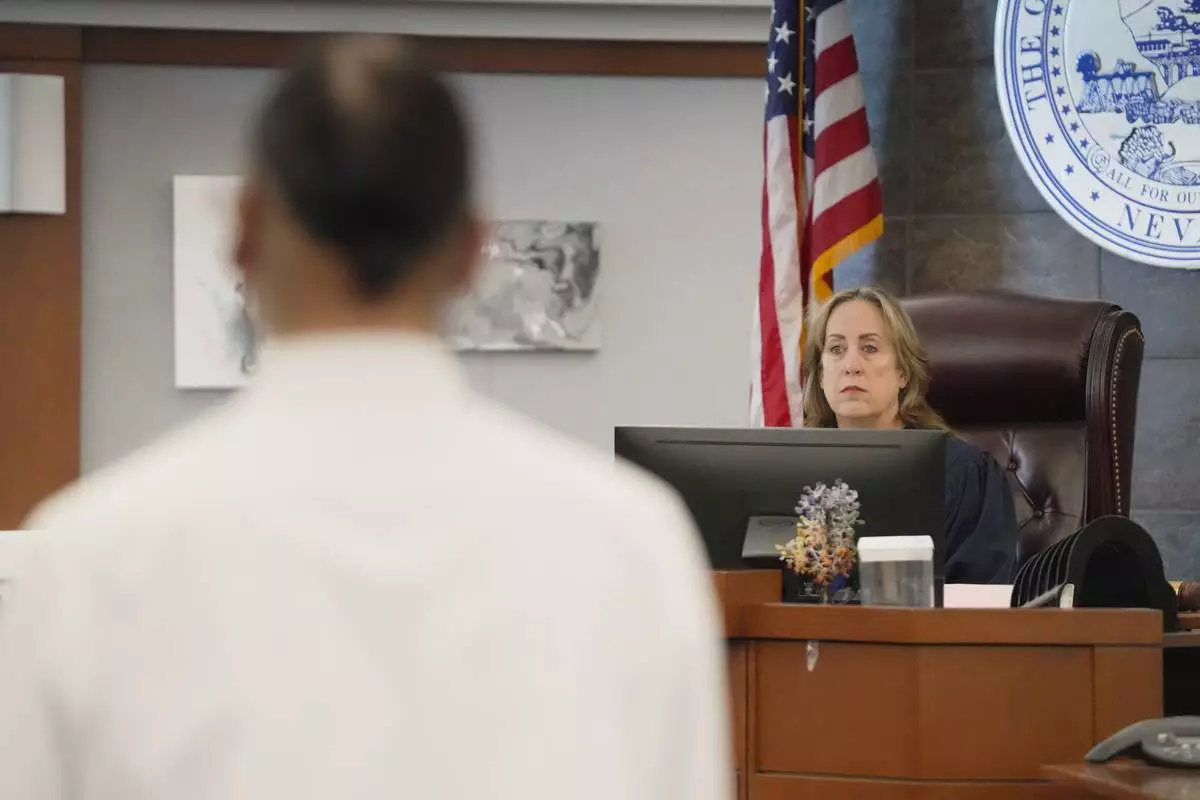
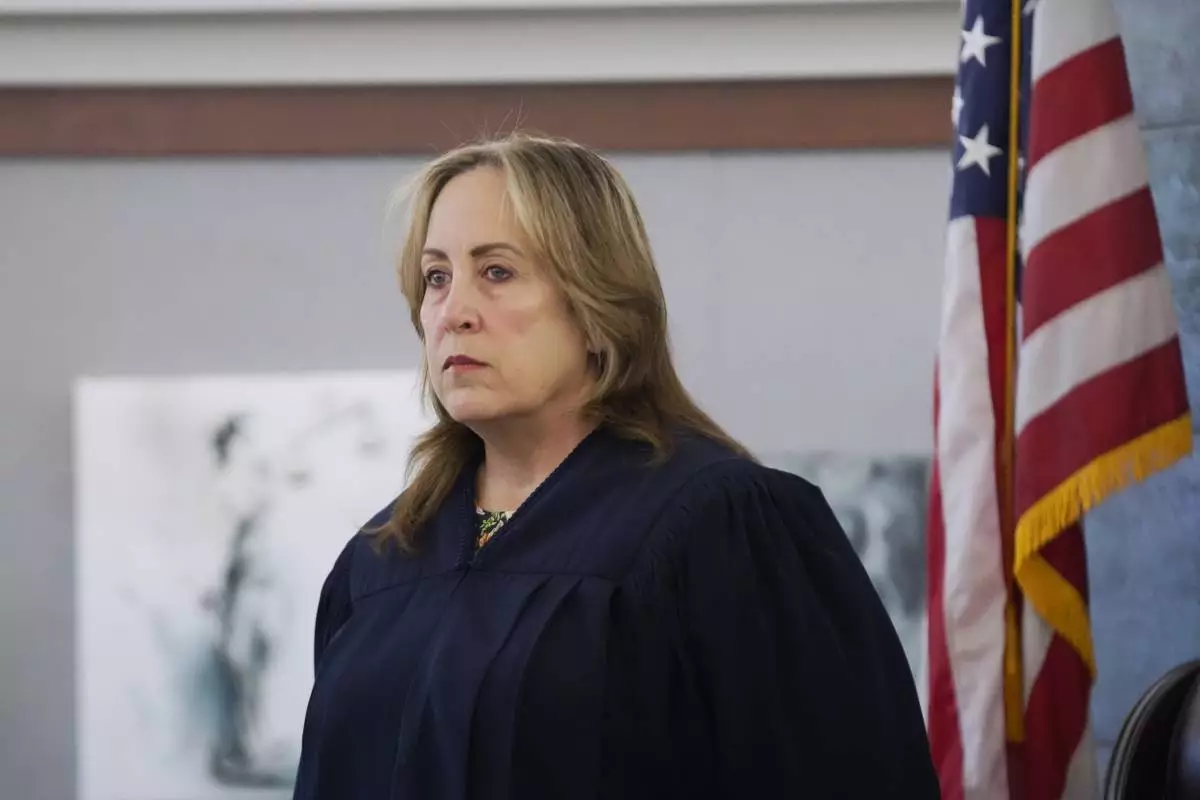
Jury selection is expected to take multiple days. Judge Jessica Peterson asked potential jurors if they could be fair and impartial having heard the charges. Several spoke up about past experiences of sexual assault and said they'd be biased.

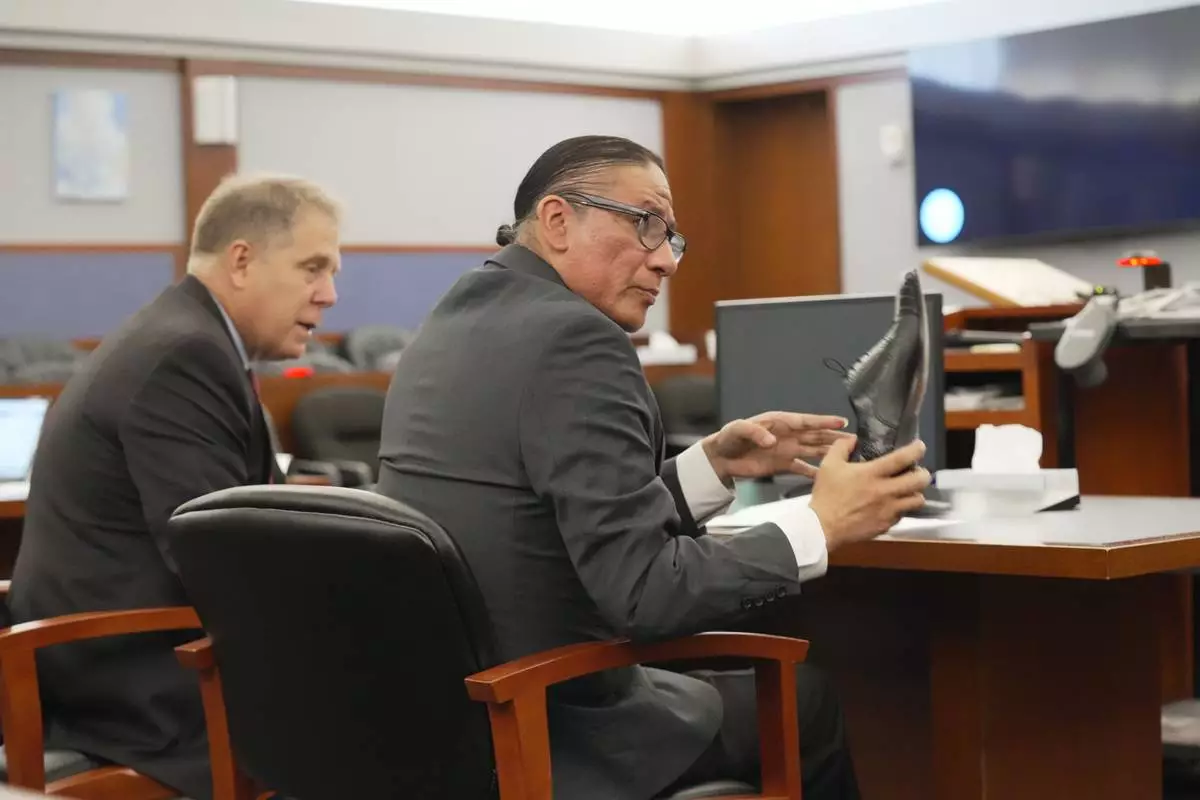
The trial could last four weeks, and prosecutors plan to call 18 witnesses. A week before the trial, Chasing Horse attempted to fire his private defense attorney, saying his lawyer hadn't come to visit him. Peterson removed Chasing Horse from the courtroom when he tried to interrupt her, and she denied his request.

The case is a reminder that violence also occurs within Native communities and is not just something committed by outsiders, said Crystal Lee, CEO and founder of the organization United Natives, which offers services to victims of sexual abuse.

Chasing Horse’s trial requires hard conversations about Native perpetrators, she said.

“How do we hold them accountable?” she said. “How do we start these tough conversations?”

Judge Jessica Peterson presides of the trial of Nathan Chasing Horse on charges of sexually abusing Indigenous women and girls Tuesday, Jan. 13, 2026, in Las Vegas. (AP Photo/Ty ONeil)

Judge Jessica Peterson presides of the trial of Nathan Chasing Horse on charges of sexually abusing Indigenous women and girls Tuesday, Jan. 13, 2026, in Las Vegas. (AP Photo/Ty ONeil)

Nathan Chasing Horse, right, sitting next to attorney Craig Mueller, holds a shoe as he appears for his trial on charges of sexually abusing Indigenous women and girls Tuesday, Jan. 13, 2026, in Las Vegas. (AP Photo/Ty ONeil)

Nathan Chasing Horse, right, sitting next to attorney Craig Mueller, holds a shoe as he appears for his trial on charges of sexually abusing Indigenous women and girls Tuesday, Jan. 13, 2026, in Las Vegas. (AP Photo/Ty ONeil)

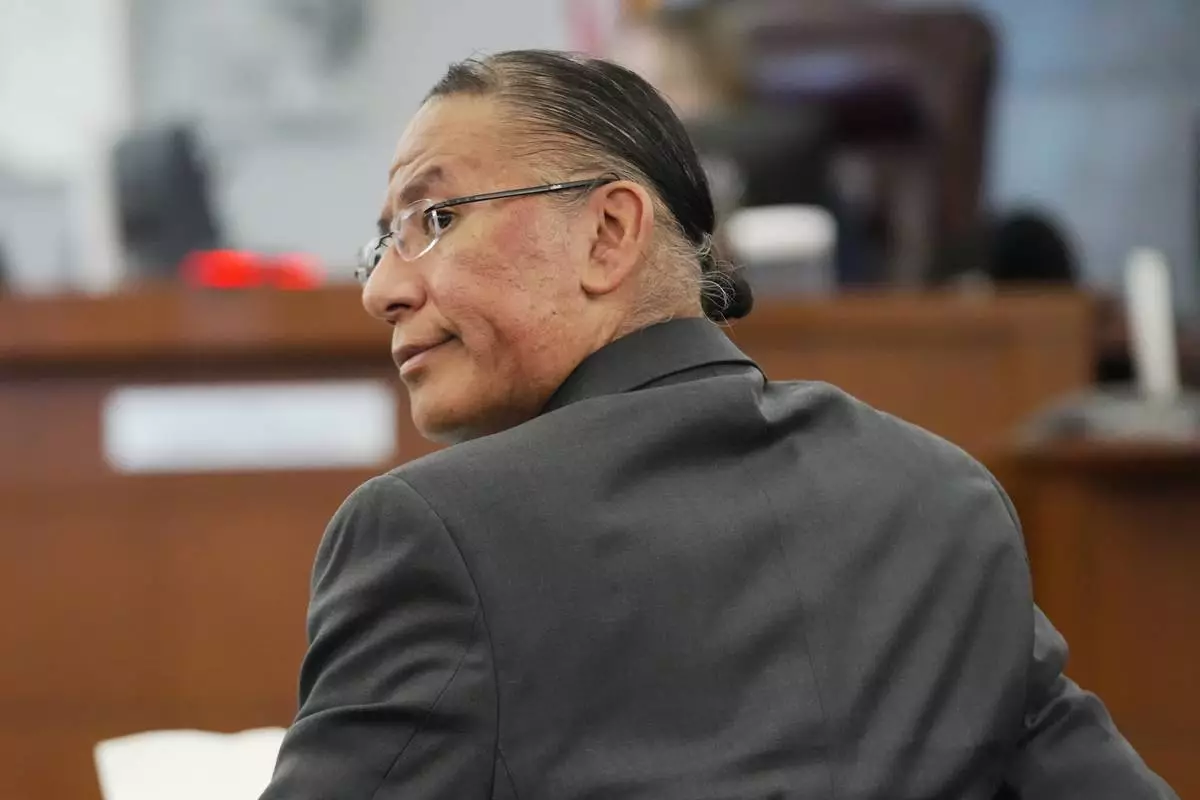
Nathan Chasing Horse appears for his trial on charges of sexually abusing Indigenous women and girls Tuesday, Jan. 13, 2026, in Las Vegas. (AP Photo/Ty ONeil)

Nathan Chasing Horse appears for his trial on charges of sexually abusing Indigenous women and girls Tuesday, Jan. 13, 2026, in Las Vegas. (AP Photo/Ty ONeil)

Nathan Chasing Horse appears before judge Jessica Peterson for his trial on charges of sexually abusing Indigenous women and girls Tuesday, Jan. 13, 2026, in Las Vegas. (AP Photo/Ty ONeil)

Nathan Chasing Horse appears before judge Jessica Peterson for his trial on charges of sexually abusing Indigenous women and girls Tuesday, Jan. 13, 2026, in Las Vegas. (AP Photo/Ty ONeil)

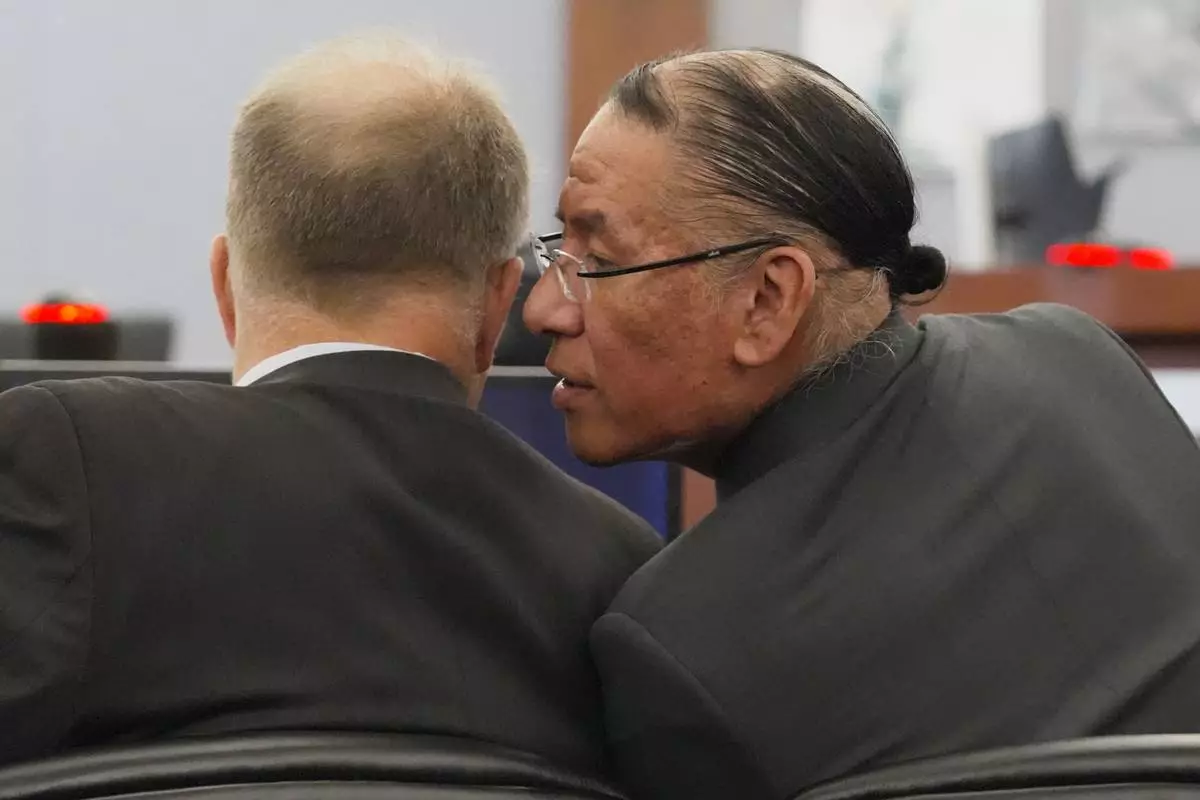
Nathan Chasing Horse, right, talks to his attorney Craig Mueller during his trial on charges of sexually abusing Indigenous women and girls Tuesday, Jan. 13, 2026, in Las Vegas. (AP Photo/Ty ONeil)

Nathan Chasing Horse, right, talks to his attorney Craig Mueller during his trial on charges of sexually abusing Indigenous women and girls Tuesday, Jan. 13, 2026, in Las Vegas. (AP Photo/Ty ONeil)

Recommended Articles