A Chinese female welding engineer and her team of young innovation pioneers have made significant strides in welding techniques with the intrepidity typical of their generation.
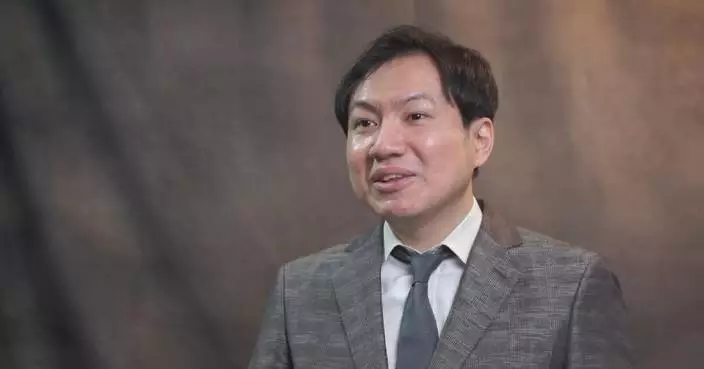
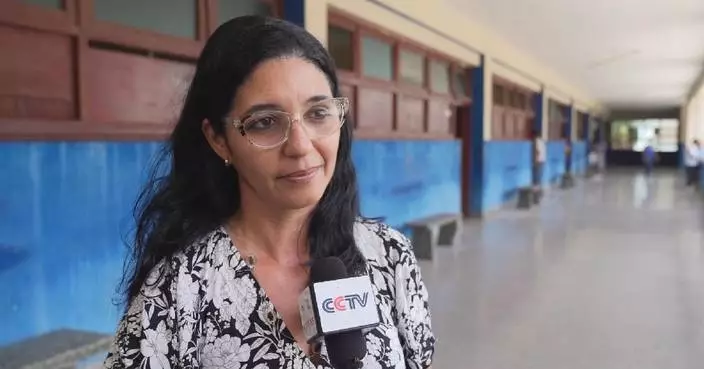
In a recent interview with the China Central Television (CCTV), Hu Fengya, deputy director and researcher of the Welding and Corrosion Research Institute of Ansteel Group Iron and Steel Research Institute, said that boning up on welding technique has been the passion of her life.
From selecting specialized courses of welding technology and engineering at Harbin Institute of Technology to pursuing advanced studies overseas, Hu has been dedicated to the same professional field throughout her journey.
In 2015, Hu chose to forego a full scholarship for a Ph.D. program abroad and instead joined the Ansteel Group Iron and Steel Research Institute.
After arriving at Ansteel Group, her first project was about developing titanium-steel composite plates under the "863 program," a national government-funded high-tech development initiative.
To penetrate the composite plate market, solving the worldwide difficulty of welding composite plates was imperative. In pursuit of a solution, she visited the world's leading welding research institutions for exchanges, but even they had no answers.
"Key core technologies are in our own hands. They cannot be bought or begged for. Wherever China faces development bottlenecks, that's where we will focus our efforts," she said.
After returning to China, she set up a team of innovation pioneers, painstakingly experimenting from scratch in areas such as design, groove welding, welding materials, and process control.
"We went through repeated failures. They were truly failures. At that time, my colleagues said they could still hear the sound of fractures in their dreams at night. The will as strong as steel is no joke, and it is a quality engraved in the bones," she said.
After 1,022 days of unremitting efforts by adjusting 26 variables and conducting thousands of experiments, her team finally developed an intermediate barrier material, reducing the cost of titanium-steel composite plates by 75 percent and achieving industrial application.
"When I am old, or when I speak to my descendants, 'Look, this is something I was a part of.' At that time, the pride I feel will be worth much more than how much money I have," she said.
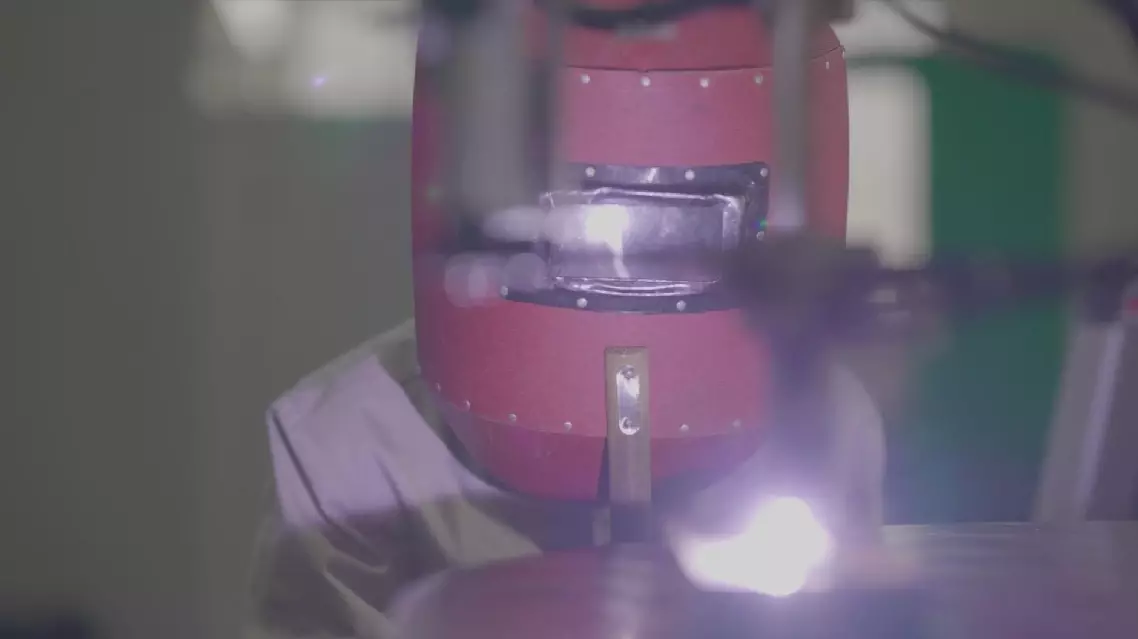
Chinese female engineer leads team to pioneer cutting-edge welding techniques
The 36th extraordinary session of the Council of the International Maritime Organization (IMO) concluded on Thursday in London, with member states split over who should be held accountable for the closure of the Hormuz Strait.
As a specialized UN agency, the IMO's responsibility is to safeguard global shipping safety and the rights and interests of seafarers. At the meeting, all parties had obvious differences regarding the root causes of the situation and the wording of the documents.
According to data provided by the IMO, since the outbreak of the conflict involving the United States, Israel and Iran, at least seven seafarers have been killed in attacks on merchant vessels in the Strait of Hormuz area, with several others seriously injured. Around 20,000 seafarers remain stranded aboard ships in the region.
Some countries urged condemning the actions of certain country that led to the blockade, while others believe that the root cause of the current maritime tensions in the Middle East lies in the military action launched by the United States and Israel against Iran, and that unilaterally blaming one country is neither objective nor comprehensive.
Multiple representatives emphasized that the IMO should not serve as a platform for political confrontation. They called for balanced, neutral language in resolutions and urged the organization to focus on pragmatic measures within the framework of IMO regulations to safeguard maritime corridors.
Iran's delegate pointed out that the IMO must not become a tool for political pressure, and any coordination on navigation security must involve Iran.
The Russian delegate warned that current international maritime declarations appear biased and one-sided, which hinders efforts to ease the crisis. He called on the IMO to adopt a more balanced stance.
China's delegate echoed the need for inclusive and impartial language, proposing that the resolutions reflect a constructive consensus rather than unilateral accusations. The Chinese side also suggested that language condemning or opposing military actions that lead to the escalation of tensions in the Strait should be added to proposal.
The IMO Council highlighted the urgent need to address the peril faced by numerous stranded commercial ships. It encouraged exploring frameworks, such as maritime safety corridors, as an emergency humanitarian measure to facilitate the voluntary evacuation of ships from high-risk zones to safer waters.
Regarding the U.S. proposal to provide naval escort operations, IMO Secretary-General Arsenio Dominguez said that naval escorts are not a long-term sustainable solution to the current crisis in the Strait of Hormuz, and only an end to the conflict can prevent shipping from becoming collateral damage.
While acknowledging that the root causes of the crisis lie beyond the IMO's mandate, he said he would continue to work with countries engaged in diplomatic efforts to address the situation.
Over the past few days, U.S. President Donald Trump has urged European countries and other allies to join naval escort operations in the Strait of Hormuz. However, European powers have largely rebuffed the request, citing concerns that direct military involvement would escalate regional tensions and risk drawing them into a wider conflict.
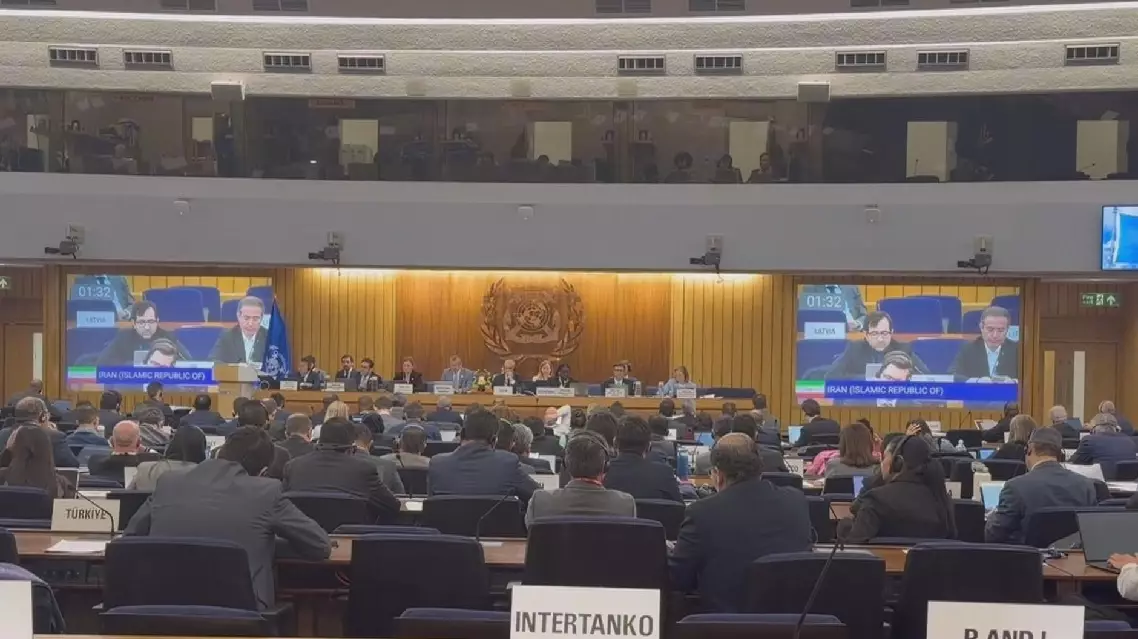
IMO members divided over accountability for closure of Hormuz Strait